By Kirti, Founder & Serial Entrepreneur, HealthyWayFit · Last updated 23 October 2026
US self-pay guide, checked October 2026. HealthyWayFit sells one-on-one lifestyle support and is included below, so we have a commercial interest in this subject.
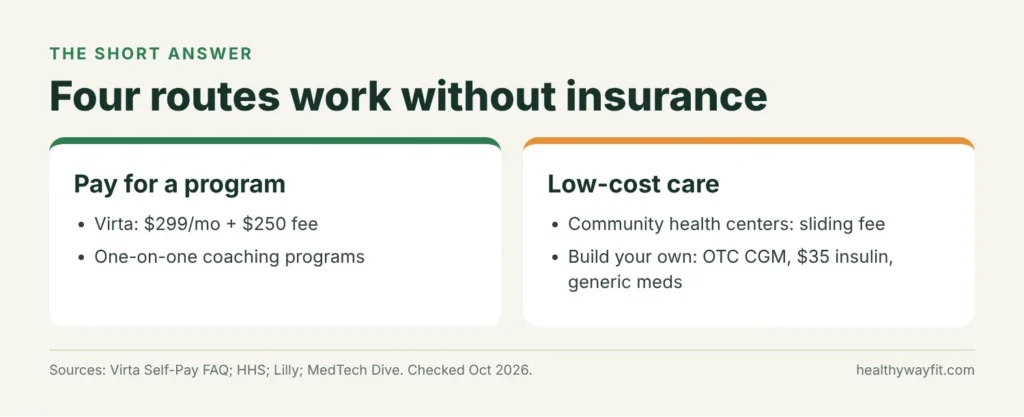
The best diabetes program without insurance is usually one of four routes. Virta Health is the main US virtual diabetes program with a published self-pay price: $299 a month plus a $250 one-time fee. Community health centers offer medical care on a sliding fee. One-on-one coaching programs sell directly. And you can build low-cost support yourself with an over-the-counter CGM, $35 insulin and generic medicines. Twin Health, Omada and Level2 generally need employer or health-plan coverage.
Caution: This article is for informational purposes only and does not constitute medical advice.
Always consult a qualified healthcare professional before making changes to your diet, exercise routine or medication.
Which diabetes programs can you join without insurance?
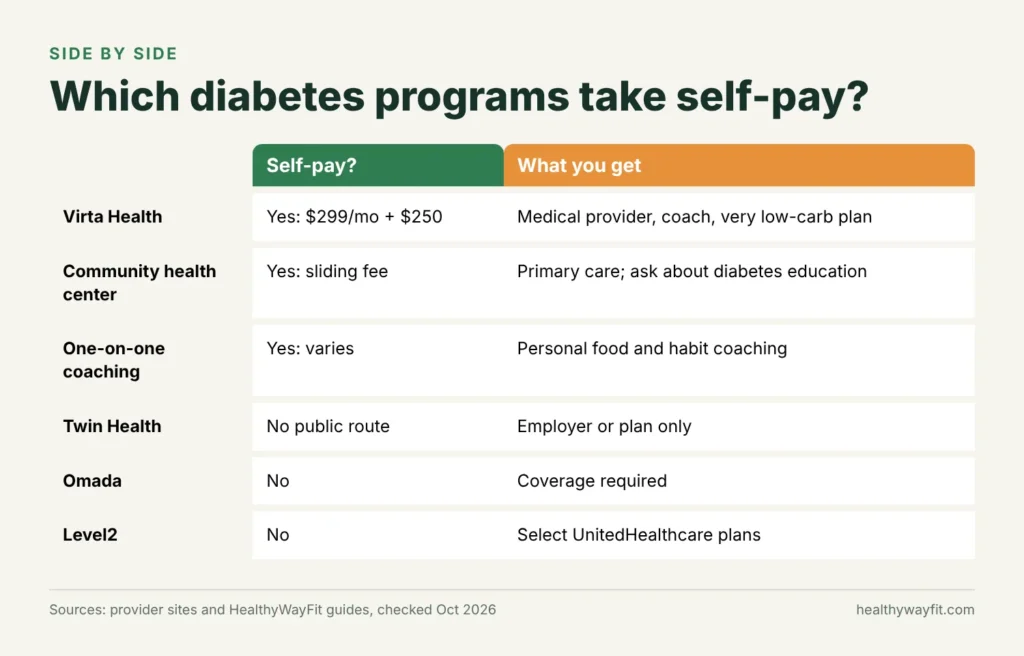
Without insurance, you can join Virta directly, use a community health center, hire a coaching program, or combine low-cost tools with your own clinician. The well-known employer-paid programs, including Twin Health, Omada and Level2, do not publish a self-pay route. The table shows what each option offers.
| Option | Can you self-pay? | What you get |
|---|---|---|
| Virta Health | Yes: $299/month plus $250 one-time fee | Medical provider, health coach, very low-carb plan |
| Community health center | Yes: sliding fee based on income | Primary care; ask about diabetes education, labs and low-cost prescriptions |
| One-on-one coaching | Yes: prices vary | Personal food and habit coaching alongside your own doctor |
| Over-the-counter CGM, $35 insulin, generics | Yes | Tools you combine with your own clinician |
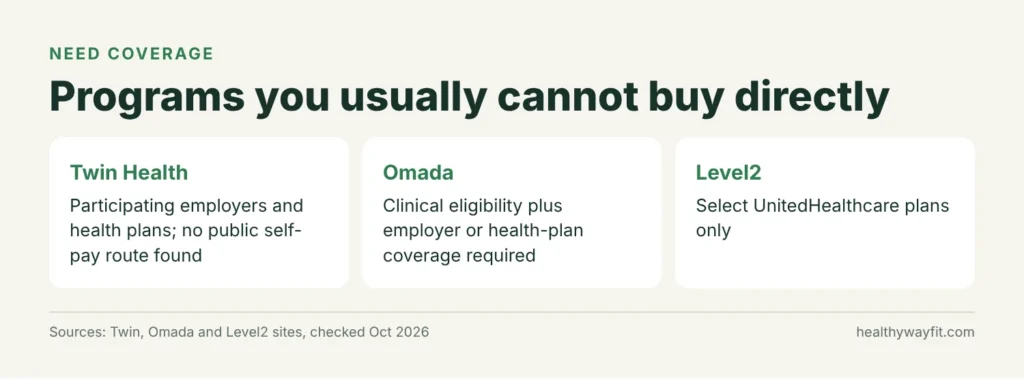
| Twin Health | No public self-pay route found | Participating employers and health plans |
| Omada | No | Clinical eligibility plus employer or plan coverage |
| Level2 | No | Select UnitedHealthcare plans |
Prices and access were checked in October 2026 using the sources linked in each section below. They change, so confirm before you pay.
1. Virta Health: the main self-pay virtual diabetes program
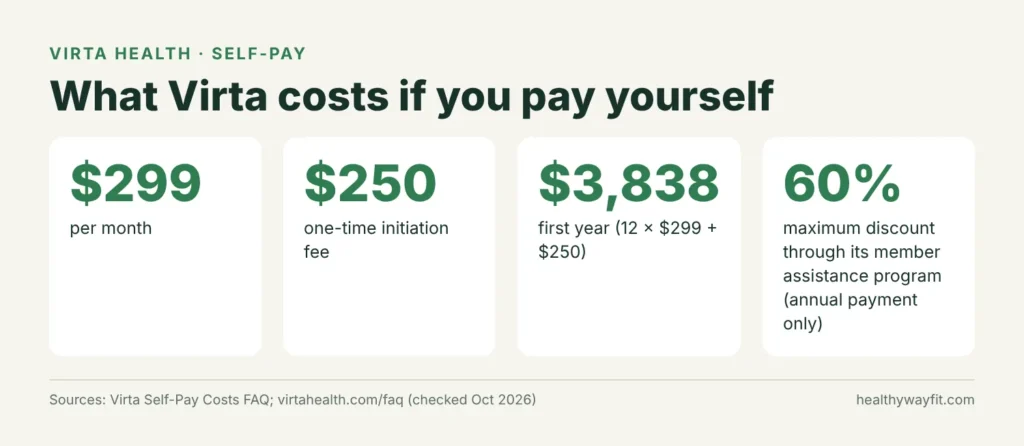
Virta is the strongest choice if you want a full medical diabetes program and can pay for it. Self-pay costs $299 a month plus a one-time $250 initiation fee, or $3,838 for the first year. You get a medical provider who manages your diabetes medications and a coach who supports a very low-carb eating plan aimed at nutritional ketosis.
The price comes from the Virta Self-Pay Costs FAQ, as recorded in our Virta Health cost guide. The Virta FAQ says there is no fee to apply and that its member assistance program offers up to 60% off the annual cost, with no monthly payment option for that discount. If money is tight, ask about the assistance program before you enrol.
Virta’s evidence comes from a non-randomized two-year trial: 17.6% of participants reached strict remission and 53.5% met Virta’s broader “reversal” definition. The diet is demanding, so be honest with yourself about whether you can keep it up. Our Omada vs Virta comparison explains how Virta’s medical model differs from coaching-led programs.
2. Community health centers: the lowest-cost medical care
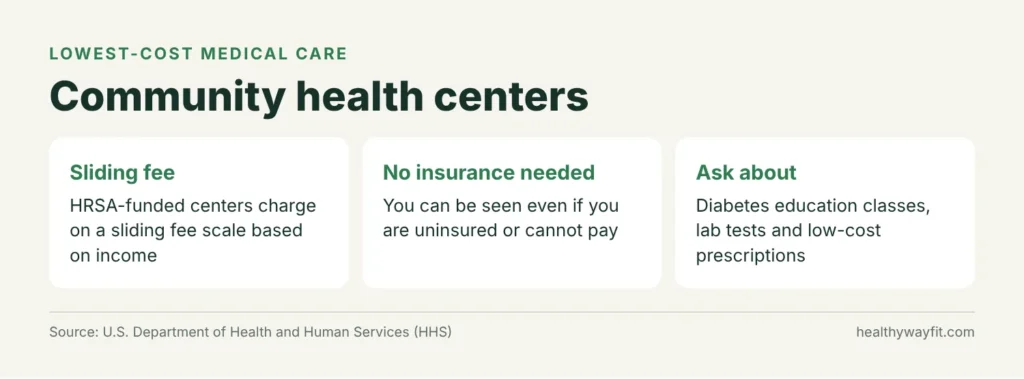
If cost is your main barrier, start with a federally funded community health center. These centers charge on a sliding fee scale based on income, and you can be seen even if you are uninsured or cannot pay. They give you ongoing medical care, which no coaching program or app replaces.
The US Department of Health and Human Services says HRSA-funded health centers “provide care on a sliding fee scale, so it is affordable for anyone.” When you call, ask whether the center offers diabetes self-management education classes, HbA1c and kidney tests, and help with low-cost prescriptions.
A health center can also be your prescribing clinician while you use a coaching program or the low-cost tools below. That combination often gives more support for less money than any single paid program.
3. One-on-one coaching: personal support you pay for directly
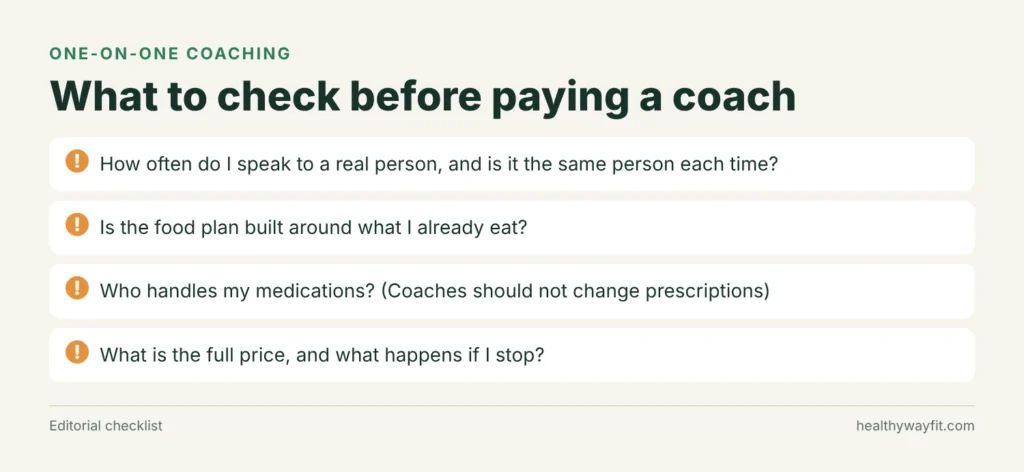
Coaching programs sell directly to individuals, so insurance is not required. They help with the daily part of diabetes: what to eat, how to handle restaurants and travel, and how to keep going when motivation drops. They do not replace a doctor, because coaches should not change your prescriptions.
Before you pay, ask how often you will speak to a real person, whether it is the same person each time, whether the food plan is built around what you already eat, and what the full price and cancellation terms are. A cheap app with no human contact and an expensive program with daily support are not the same product.
HealthyWayFit is one option here. It offers private one-on-one coaching with senior professionals, weekly calls and daily check-ins, built around your food preferences and routine, and works alongside your own doctor rather than prescribing. US availability and pricing should be confirmed directly. You can see how the approach works in our free diabetes training.
4. A supervised low-calorie plan through your doctor
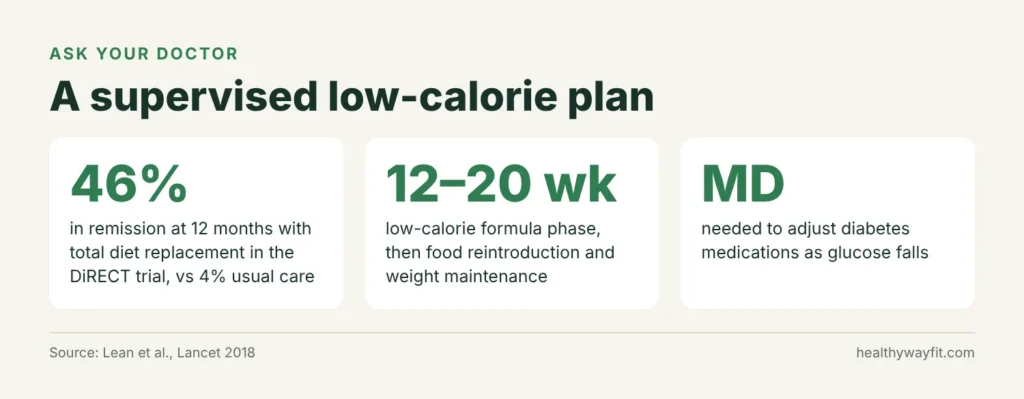
If your goal is remission, the best-evidenced approach is a supervised low-calorie formula diet followed by food reintroduction. In the randomized DiRECT trial, 46% of participants were in remission at 12 months, against 4% with usual care. You do not need a branded program for this, but you do need a clinician to manage your medications.
The DiRECT trial, published in The Lancet in 2018, studied adults with type 2 diabetes diagnosed within six years who were not using insulin. The formula phase lasted 12 to 20 weeks, followed by food reintroduction and long-term weight-maintenance support. Ask a primary care doctor, a health center or an obesity medicine clinic whether a supervised version is suitable for you, and what it would cost.
Our ranking of the best type 2 diabetes remission programs compares this approach with Twin Health, Virta and Level2 on their published remission data.
5. Build your own support with low-cost tools
You can assemble much of what paid programs provide at lower cost. Over-the-counter CGMs let people with type 2 diabetes who do not use insulin see their glucose without a prescription. Lilly sells its insulins for $35 a month to eligible cash-paying patients. Generic diabetes medicines can be inexpensive, so ask your clinician about lower-cost options.
Dexcom’s Stelo, the first over-the-counter CGM, launched at $89 a month as a subscription or $99 for a one-time order of two sensors, according to MedTech Dive in August 2024. It is intended for adults with type 2 diabetes who do not use insulin. Check the current price before buying.
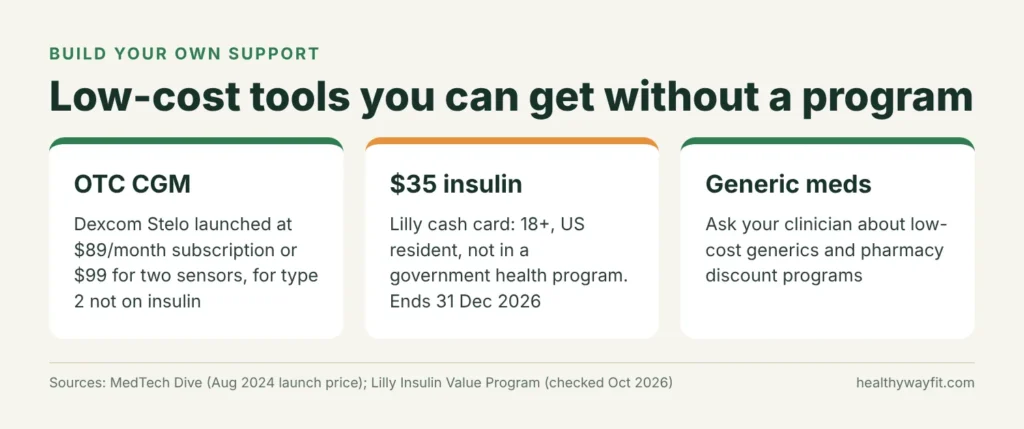
The Lilly Insulin Value Program offers Lilly insulins from $35 for a one-month fill with its cash savings card, for people aged 18 or over who live in the US and are not enrolled in a government health program. The card currently runs until 31 December 2026. You still need a prescription.
A CGM gives you data, not a plan. Pair it with someone who can help you act on the readings: a health center clinician, a diabetes educator or a coach. Our CGM guide explains what the numbers can and cannot tell you.
Which programs need insurance or an employer?
Twin Health, Omada and Level2 are mostly sold to employers and health plans, not to individuals. If you have no insurance, these are usually not open to you, however good their results. If you get a new job or plan, check your benefits portal: one of them may then be free.
Twin describes its program as covered through participating employers and health plans, and we found no public self-pay route; our Twin Health eligibility guide lists the access routes. Omada’s eligibility page says clinical eligibility and employer or health-plan coverage are required, as covered in our Omada diabetes review. Level2 is available through select UnitedHealthcare plans, as our Level2 eligibility guide explains.
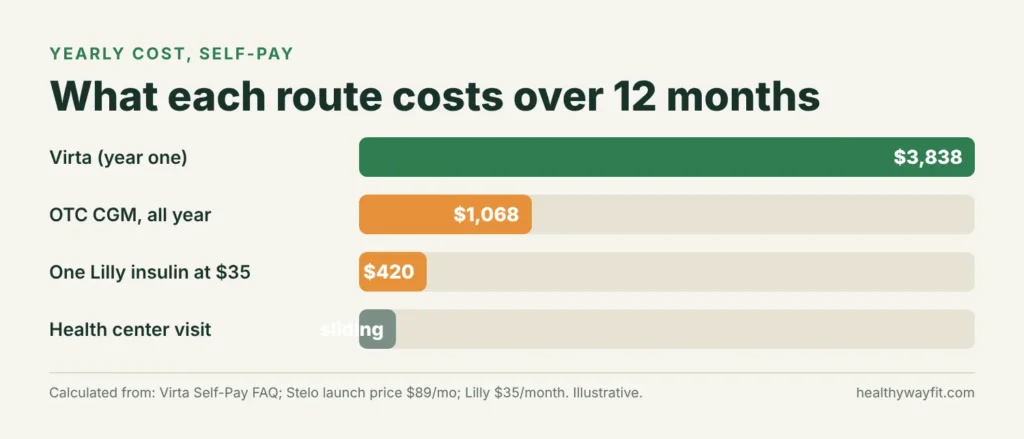
How much does each route cost per year?
Over 12 months, Virta self-pay costs $3,838 in year one. An over-the-counter CGM used all year costs about $1,068 at its $89-a-month launch price. One Lilly insulin at $35 a month is $420 a year. Community health center costs depend on your income. These figures are illustrative; your own costs depend on what you need.
The figures are simple arithmetic from the prices above: 12 × $299 + $250 for Virta, 12 × $89 for the CGM subscription, and 12 × $35 for one insulin. They do not include lab tests, doctor visits or other medicines, which you would need on every route.
Ask any program whether you can pay with a health savings account (HSA) or flexible spending account (FSA). Eligibility depends on the service and your account rules, so confirm with your account administrator before paying.
How do you choose the right self-pay option?
Choose by the help you are missing. If you need a doctor, start with a community health center. If you want a full medical program and can afford it, look at Virta. If you have a doctor but struggle with daily eating and consistency, a coaching program may fill the gap. If money is very tight, combine a health center with low-cost tools.
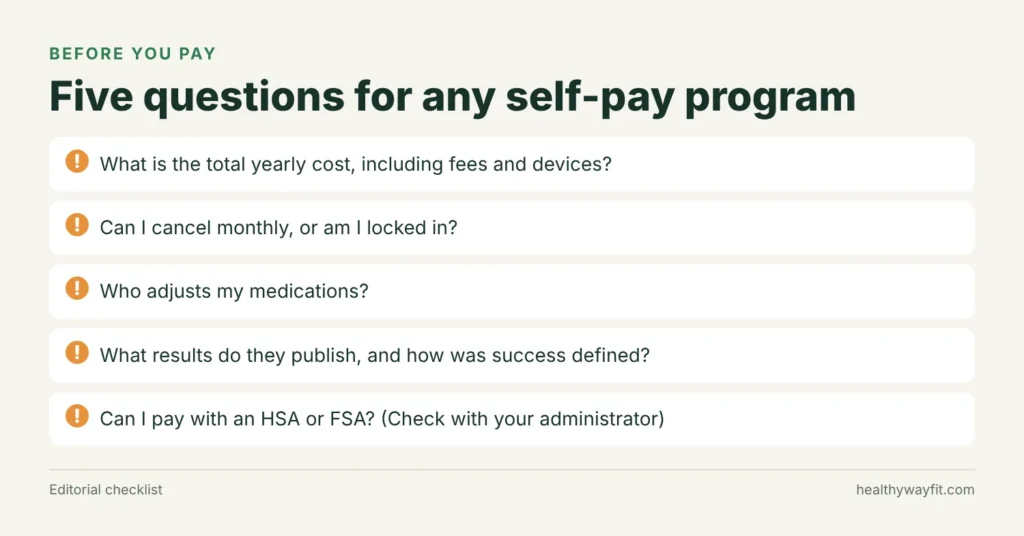
Before you pay anyone, ask five questions: what the total yearly cost is, whether you can cancel monthly, who adjusts your medications, what results they publish and how they defined success, and whether HSA or FSA payment is possible. A program that cannot answer clearly is not a safe place for your money or your health.
If you want to compare more options, including employer-paid ones you might gain access to later, see our guide to the best online diabetes reversal programs.
When should you keep a clinician involved?
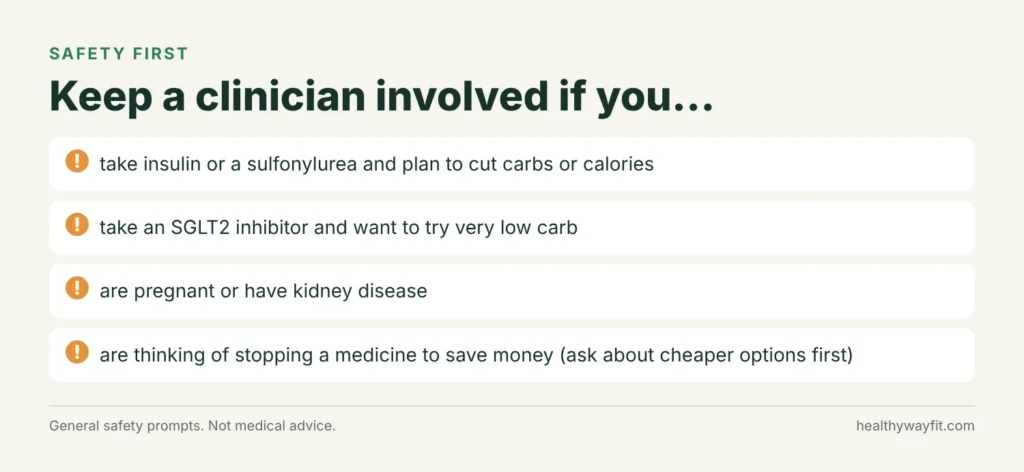
Keep a clinician involved if you take insulin or a sulfonylurea and plan to cut carbohydrates or calories, take an SGLT2 inhibitor and want to try very low-carb eating, are pregnant, or have kidney disease. Never stop a medicine to save money without first asking about cheaper alternatives.
Insulin and sulfonylureas can cause low blood sugar when food intake drops. SGLT2 inhibitors carry an FDA warning about ketoacidosis, which very low-carb eating may make more likely. A community health center can review your medicines and look for lower-cost versions, which is safer than skipping doses.
Frequently asked questions
Is there a free diabetes program without insurance? Community health centers can see you even if you cannot pay, using a sliding fee scale. Many also run diabetes education classes. Full virtual programs like Virta charge a fee.
Can I join Twin Health or Omada without insurance? Generally no. Omada requires employer or health-plan coverage, and we found no public self-pay route for Twin Health as of October 2026.
How much does Virta cost without insurance? $299 a month plus a $250 one-time initiation fee, or $3,838 for the first year. Virta’s member assistance program offers up to 60% off the annual cost for those who qualify.
Do I need a prescription for a CGM? Not for over-the-counter CGMs such as Dexcom Stelo, which are intended for adults with type 2 diabetes who do not use insulin. Prescription CGMs are different devices.
The bottom line on diabetes programs without insurance
Without insurance, the best diabetes program is the one that fills your biggest gap at a cost you can keep paying. Virta is the main self-pay virtual medical program at $299 a month — see our guide to the best virtual diabetes clinics for a full comparison of virtual options with physician access. If some of your care might be covered, see our guide to what insurance covers for diabetes reversal programs. A community health center is the lowest-cost route to a doctor. Coaching programs help with daily habits, and over-the-counter CGMs and $35 insulin cut the cost of tools. Start with a clinician, then add the support you are missing.