By Kirti, Founder & Serial Entrepreneur, HealthyWayFit · Last updated 23 October 2026
Research comparison, checked October 2026. We have not been members of these programs. HealthyWayFit sells one-on-one lifestyle support and has a commercial interest in this subject.
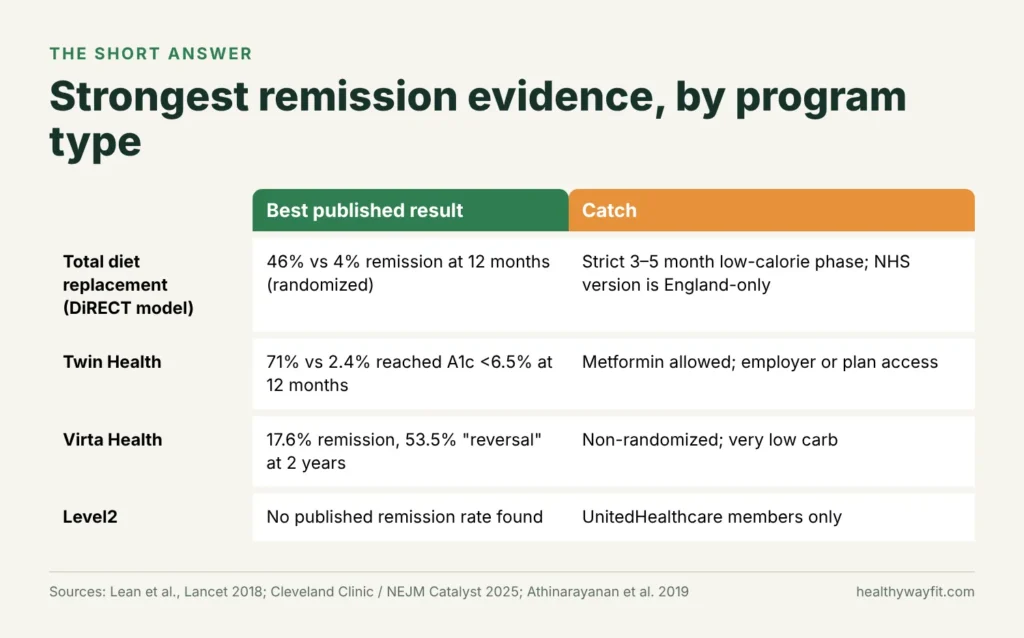
The best type 2 diabetes remission program is the one with real remission data that you can actually join. On published evidence, structured total diet replacement (the DiRECT model) is strongest: 46% of participants were in remission at 12 months in a randomized trial, against 4% with usual care. Twin Health and Virta Health have strong but differently defined results, and many programs that say “reversal” publish no remission rate at all.
Caution: This article is for informational purposes only and does not constitute medical advice.
Always consult a qualified healthcare professional before making changes to your diet, exercise routine or medication.
What counts as type 2 diabetes remission?
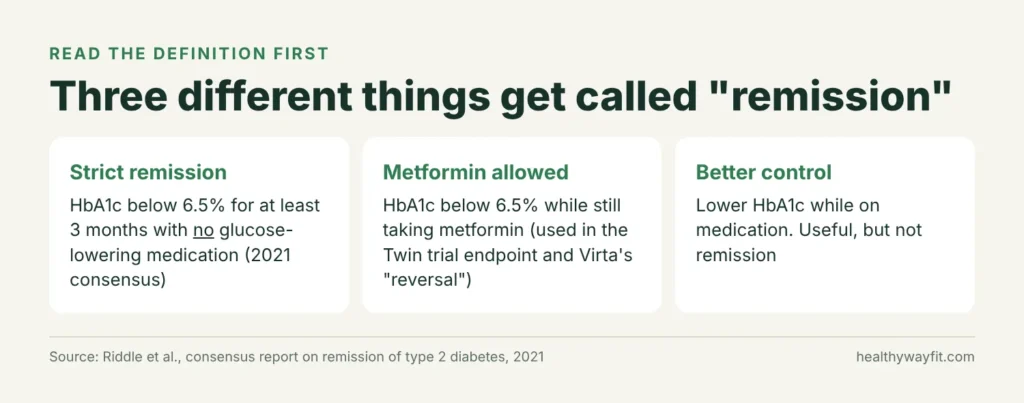
Remission means an HbA1c below 6.5% that lasts at least three months after stopping all glucose-lowering medication. That definition comes from a 2021 international consensus report. Many programs report something looser, such as HbA1c below 6.5% while still taking metformin, so always check which definition sits behind a number.
The consensus report on remission of type 2 diabetes chose the word “remission” over “reversal” or “cure” because diabetes can return. It also recommends continued HbA1c checks and screening for complications after remission is reached.
In practice you will meet three measures. Strict remission means no diabetes medication at all. A metformin-allowed endpoint means HbA1c below 6.5% while taking metformin, which some programs call “reversal”. Better control means a lower HbA1c on medication, which helps your health but is not remission. A program quoting the second or third measure is not comparable with one quoting the first.
Our explainer on type 2 diabetes remission covers who is most likely to reach it and why it is less likely after many years of diabetes or long-term insulin use.
How did we rank these programs?
We ranked programs on four things: whether they publish remission or near-remission results, how strong the study design is, which definition they used, and who can join. A randomized trial with a strict definition ranks above a non-randomized study or a company summary. We did not test any program ourselves.
Programs without published outcome data are not ranked as “best”, however good their marketing. Where a result uses a metformin-allowed endpoint, we say so next to the number. Access matters too: a program you cannot enrol in is not a practical choice for you, so the table later in this article shows who each one serves.
1. Total diet replacement (DiRECT model): strongest evidence
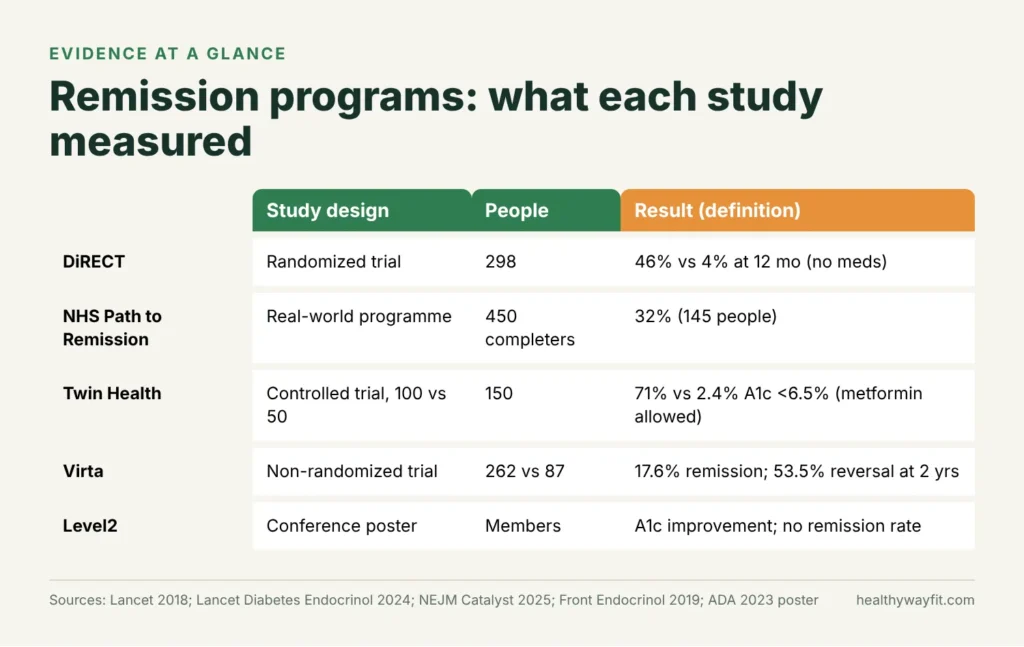
Structured total diet replacement has the strongest remission evidence of any approach. In the randomized DiRECT trial, 46% of people were in remission at 12 months, against 4% with usual care, and 36% were still in remission at 24 months. The approach uses a supervised low-calorie formula diet, then food reintroduction and long-term weight-maintenance support.
The DiRECT trial, published in The Lancet in 2018, enrolled adults aged 20 to 65 who had been diagnosed within six years, had a BMI of 27 to 45 and were not using insulin. Its remission definition required HbA1c below 6.5% after at least two months off all diabetes medication. Those limits matter: the results describe people with recent, non-insulin-treated diabetes and excess weight.
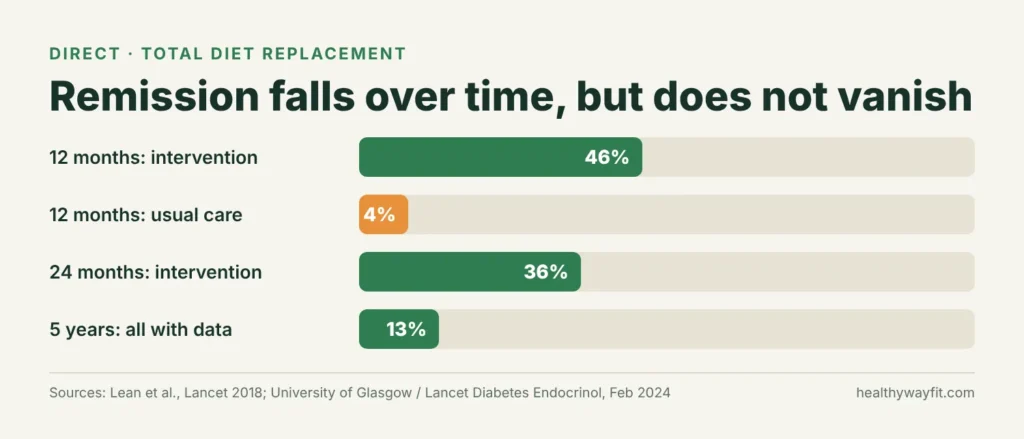
Five-year follow-up, reported by the University of Glasgow in February 2024, found that 13% of participants with five-year data were in remission. The intervention group also had under half the number of illnesses needing hospital admission, 4.8 against 10.2 events per 100 patient-years. Remission fades for many people, but the benefit of weight loss did not disappear.
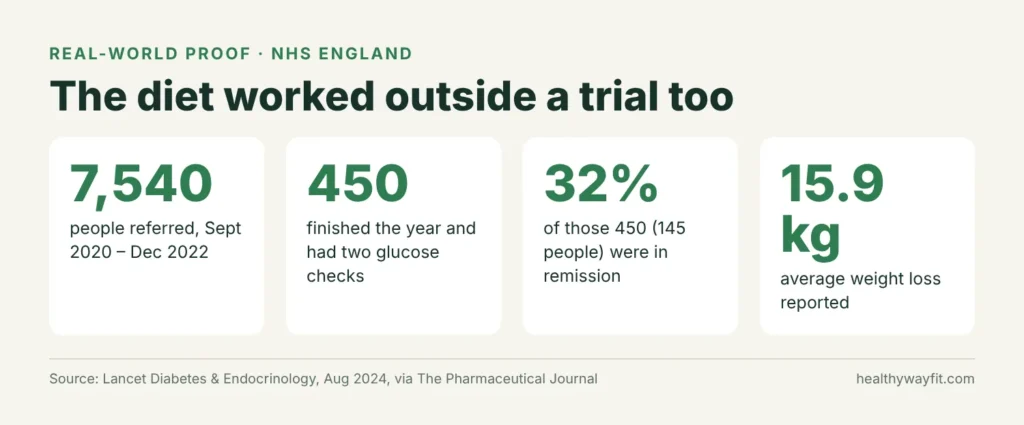
The approach has also worked outside a trial. England’s NHS Type 2 Diabetes Path to Remission programme, analysed in The Lancet Diabetes & Endocrinology in August 2024, received 7,540 referrals. Of 450 people who completed the year and had two glucose checks, 32% (145 people) were in remission, with average weight loss of 15.9 kg.
Who can join: the NHS programme is for eligible patients in England, by referral. In the US there is no single national equivalent; ask your doctor or an obesity medicine clinic about a medically supervised low-calorie meal-replacement program, and confirm who will adjust your medications during it.
2. Twin Health: strong 12-month result, metformin allowed
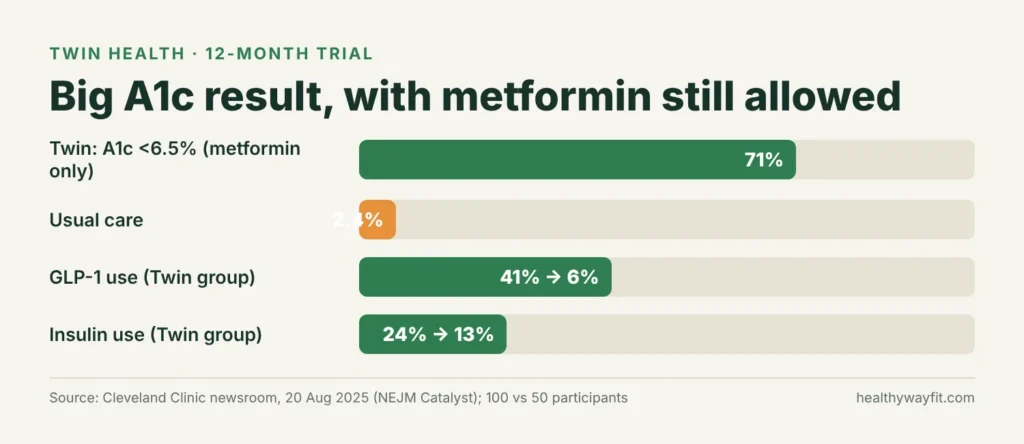
Twin Health has the strongest recent US trial result: 71% of participants reached HbA1c below 6.5% at 12 months, against 2.4% with usual care. That endpoint allowed metformin, so it is not strict remission. Twin combines connected devices, including a CGM, with a care team that personalises food, sleep and activity advice.
The study, announced by the Cleveland Clinic in August 2025 and published in NEJM Catalyst, assigned 100 people to Twin and 50 to standard care. All participants were prescribed metformin. In the Twin group, GLP-1 use fell from 41% to 6% and insulin use from 24% to 13%, and average weight fell 8.6% against 4.6% with standard care.
Who can join: Twin describes its program as covered through participating employers and health plans; we found no public self-pay route. Our Twin Health reviews roundup covers member experience, eligibility and the fine print in more detail.
3. Virta Health: longest follow-up, non-randomized
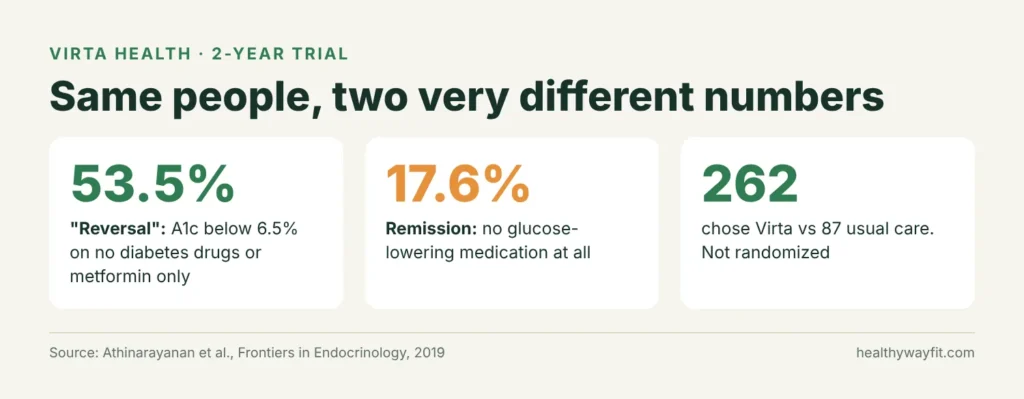
Virta has the longest follow-up of the US programs, but from a non-randomized design. At two years, 17.6% of its trial participants met strict remission and 53.5% met Virta’s “reversal” definition, HbA1c below 6.5% on no diabetes medication or metformin only. Virta uses a very low-carb diet aimed at nutritional ketosis, with a medical provider adjusting medications.
The two-year study, by Athinarayanan and colleagues in Frontiers in Endocrinology (2019), compared 262 people who chose Virta with 87 who chose usual care. Because people picked their own group, it cannot prove the program caused the changes. Prescribed insulin use in the Virta group fell 62%.
Who can join: Virta is available through employers and health plans, or self-pay at $299 a month plus a $250 one-time fee, according to the figures in our Virta Health cost guide. For a direct comparison with a coaching-led alternative, see our Omada vs Virta guide.
4. Level2: remission goal, no published remission rate
Level2, run by UnitedHealthcare, sets ADA-defined remission as its goal, but we found no published remission rate. Its main evidence is a 2023 American Diabetes Association conference poster reporting HbA1c improvements among members, not the share who reached remission. It uses a CGM and a virtual care team following ADA-based guidance rather than a ketogenic diet.
That makes Level2 a reasonable covered option for UnitedHealthcare members who want CGM-led support, but its remission claims cannot yet be compared with DiRECT, Twin or Virta. Our Virta Health vs Level2 comparison and Level2 eligibility guide explain who qualifies.
Who can join: members of select UnitedHealthcare plans only.
What about programs that are not built for remission?
Some well-known programs aim at better day-to-day control rather than remission. Omada, for example, offers diabetes educators, coaches and a CGM for eligible members, and its 2026 randomized trial found a significant HbA1c difference at three months that was not significant at six months. That can be useful support, but it is not a remission program.
If remission is your goal, ask a program for its remission rate using the strict definition. If it cannot give one, treat it as a support or management service and judge it on those terms. Our Omada diabetes review explains what that kind of program does well.
Who can join each remission program?
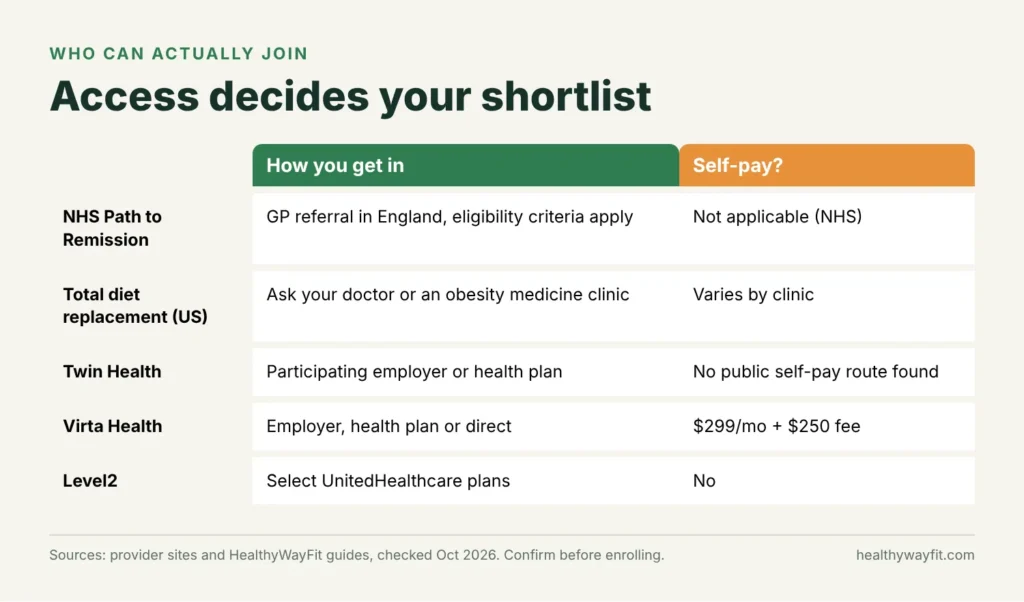
Access narrows the list quickly. The NHS programme serves eligible patients in England; Twin and Level2 need employer or plan coverage; Virta is the only one of the US programs here with a published self-pay price. In the US, a supervised low-calorie diet program usually comes through your own doctor or a specialist clinic.
| Program | Best published result | Definition used | How you join |
|---|---|---|---|
| Total diet replacement (DiRECT) | 46% vs 4% at 12 months; 36% at 24 months | No diabetes medication | NHS referral in England; elsewhere via your doctor |
| NHS Path to Remission | 32% of 450 completers | Programme definition | GP referral in England |
| Twin Health | 71% vs 2.4% at 12 months | HbA1c below 6.5%, metformin allowed | Participating employer or health plan |
| Virta Health | 17.6% remission; 53.5% reversal at 2 years | Strict and metformin-allowed | Employer, plan or self-pay |
| Level2 | No remission rate published | ADA remission is the stated goal | Select UnitedHealthcare plans |
Figures come from the sources linked in each section above, checked in October 2026. Programs change their services and coverage, so confirm details before enrolling.
How do you judge a program’s remission claims?
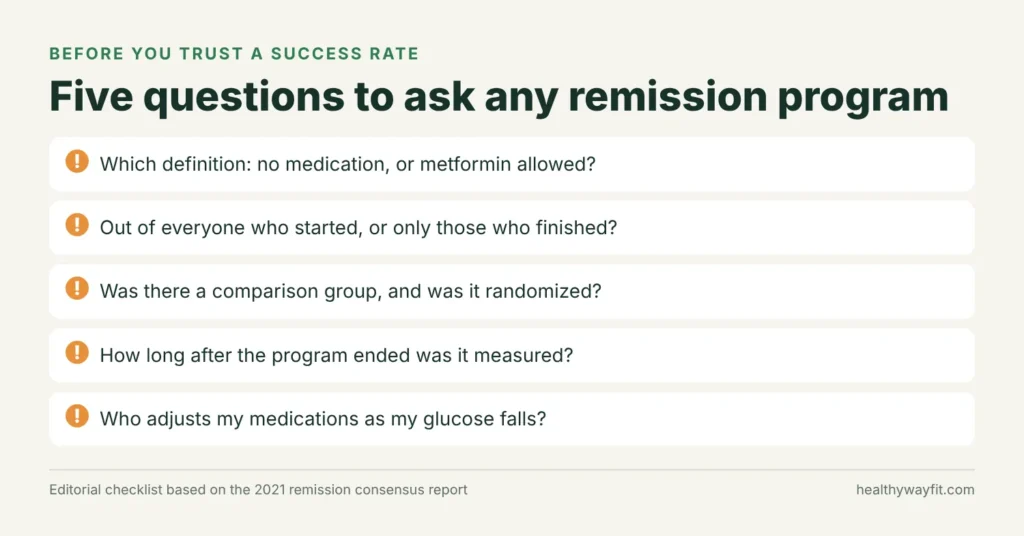
Ask five questions before you trust any success rate. Which definition was used? Out of everyone who started, or only those who finished? Was there a comparison group, and was it randomized? How long after the program was it measured? And who adjusts your medications as your glucose falls?
Completion matters more than most people realise. The NHS figure of 32% describes the 450 people who finished the year with two glucose checks, not all 7,540 referred. Virta’s five-year summary similarly describes the people who stayed. Neither figure is wrong, but both describe a selected group.
Timing matters too. DiRECT’s remission rate fell from 46% at one year to 36% at two years and 13% among those with five-year data. A program that reports only its best early number is telling you part of the story.
Who is most likely to reach remission?
Remission is most likely for people diagnosed recently, who carry excess weight and can lose a significant amount of it, and who are not on insulin. That is the population DiRECT studied. People with long-standing diabetes or high insulin needs can still improve their glucose control, but remission is less likely and the safety precautions matter more.
Weight loss is the common thread across these programs, whether it comes from a low-calorie formula diet, a very low-carb diet or personalised lifestyle changes. Choose the approach you can keep up for years, not weeks, because remission depends on keeping the weight off.
When should you talk to your doctor first?
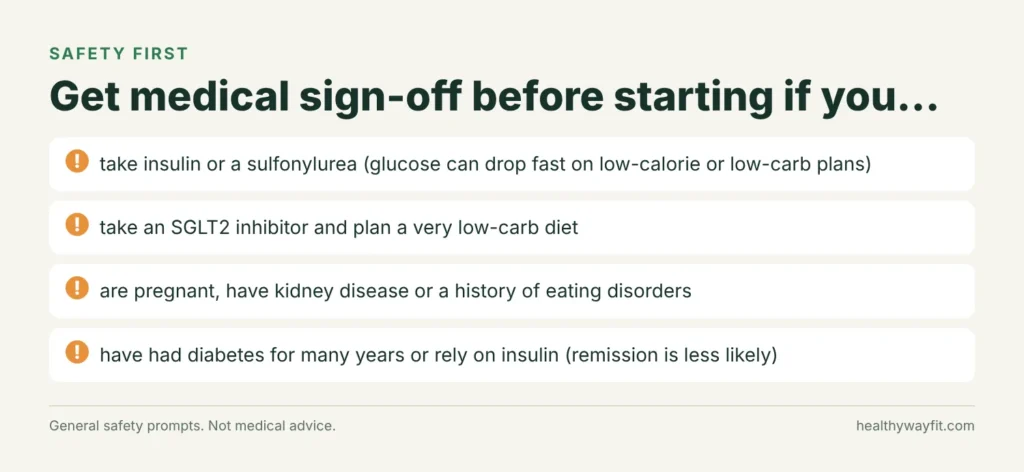
See your doctor before starting any remission program if you take insulin or a sulfonylurea, take an SGLT2 inhibitor, are pregnant, have kidney disease, or have a history of disordered eating. Low-calorie and low-carb plans can lower glucose within days, so some medicines must be reduced before the diet starts.
Insulin and sulfonylureas can cause dangerous low blood sugar when food intake drops sharply. SGLT2 inhibitors carry an FDA warning about ketoacidosis, which very low-carb eating may make more likely. A good program will have a named clinician who manages these changes. Never stop a prescribed medicine on your own to chase a remission result.
What if none of these programs fits you?
If you have no coverage, cannot follow a formula diet or a ketogenic plan, or want more personal contact than an app provides, look for one-on-one support that helps you lose weight in a way you can sustain, alongside your own doctor. The goal is the same as every program above: lasting weight loss and lower glucose, safely supervised.
HealthyWayFit offers private one-on-one coaching with senior professionals, weekly calls and daily check-ins, built around your food preferences and routine. It is not a medical prescriber, so medication decisions stay with your doctor. See how the approach works in our free diabetes training, or compare US services by category in our best online diabetes reversal programs guide.
Frequently asked questions
Which program has the highest remission rate? The DiRECT total diet replacement model has the strongest strict-remission evidence: 46% at 12 months in a randomized trial. Twin Health’s 71% figure is higher but allowed metformin, so it measures something different.
Is diabetes reversal the same as remission? Not always. Remission means HbA1c below 6.5% for at least three months with no glucose-lowering medication. “Reversal” is a marketing term that some programs use for HbA1c below 6.5% while still taking metformin.
Can I reach remission if I take insulin? It is possible for some people, but less likely, and the major trials excluded or limited insulin users. Any attempt needs close medical supervision because insulin doses must fall as glucose drops.
Does remission last forever? No. In DiRECT, remission fell from 46% at one year to 13% among those with five-year data, mostly as weight returned. Ongoing check-ups are recommended even while in remission.
The bottom line on remission programs
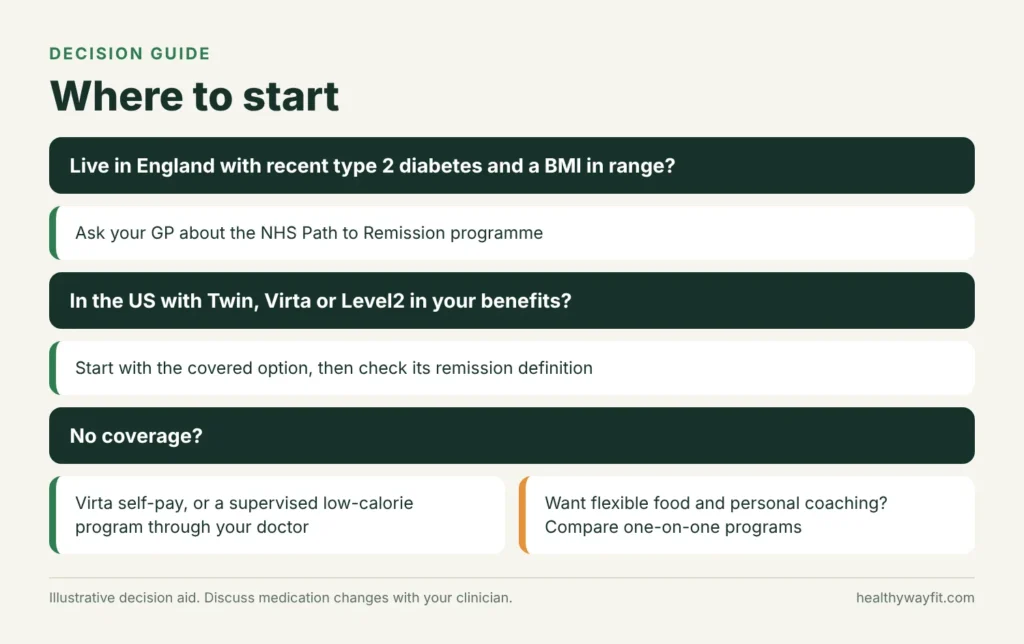
For strict remission, the best evidence belongs to structured total diet replacement: available through the NHS in England and through supervised clinics elsewhere. In the US, Twin Health and Virta have the strongest program-specific data, with Twin’s result allowing metformin and Virta’s coming from a non-randomized study. Start with what your coverage includes, check the definition behind every success rate, and plan for weight maintenance from day one.