By Kirti, Founder & Serial Entrepreneur, HealthyWayFit
Research-led editorial | US access checked 15 October 2026
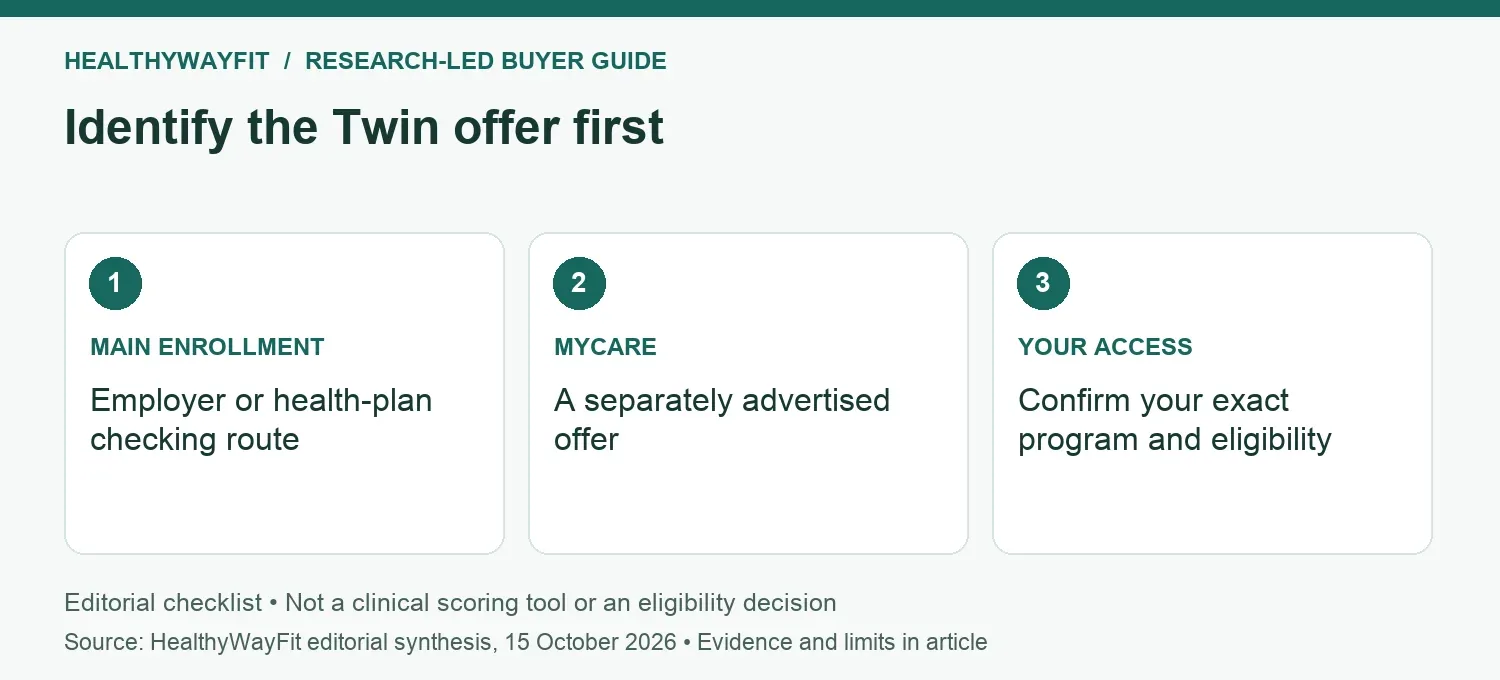
Twin Health eligibility in the US depends on the specific program, your employer or health-plan benefit, and clinical review. Its main enrollment page asks you to check your employer or health plan. However, Twin also advertises a separate MyCare by Twin offer, so “you can only join through an employer” is too broad. Twin’s main enrollment route. MyCare by Twin.
Identify the program first, then confirm coverage and clinical suitability. A benefit-page invitation, a direct-pay offer, and acceptance for treatment are different stages of access.
Note: This article is for informational purposes only and does not constitute medical advice.
Always consult a qualified healthcare professional before making changes to your diet, exercise routine or medication.
HealthyWayFit also offers health-related support. This article evaluates public enrollment information; it does not report personal use of Twin or prove that another service produces better outcomes.
How do you check Twin Health eligibility through your plan?
Start by identifying whether you are looking at an employer or health-plan benefit, or the separate MyCare offer. The pages describe different enrollment routes and should not be combined into one universal set of eligibility rules. Ask Twin which program addresses your situation.
| Route | What the public page establishes | What still needs confirmation |
|---|---|---|
| Main Twin enrollment | A search for a participating employer or health plan | Your exact benefit and clinical acceptance |
| MyCare by Twin | A separately advertised GLP-1 support offer | Your eligibility, location, and treatment scope |
| An employer’s benefit document | Rules for that named benefit | Whether they apply to your current plan year and enrollment |
The main enrollment page establishes the organization-checking route. The MyCare page establishes a distinct advertised offer. Neither page alone confirms that you have been accepted for care.
Keep the exact program name on any quote or enrollment email. This helps prevent a common comparison error: using features or prices from one offer to evaluate another.
How do you check employer or health-plan eligibility?
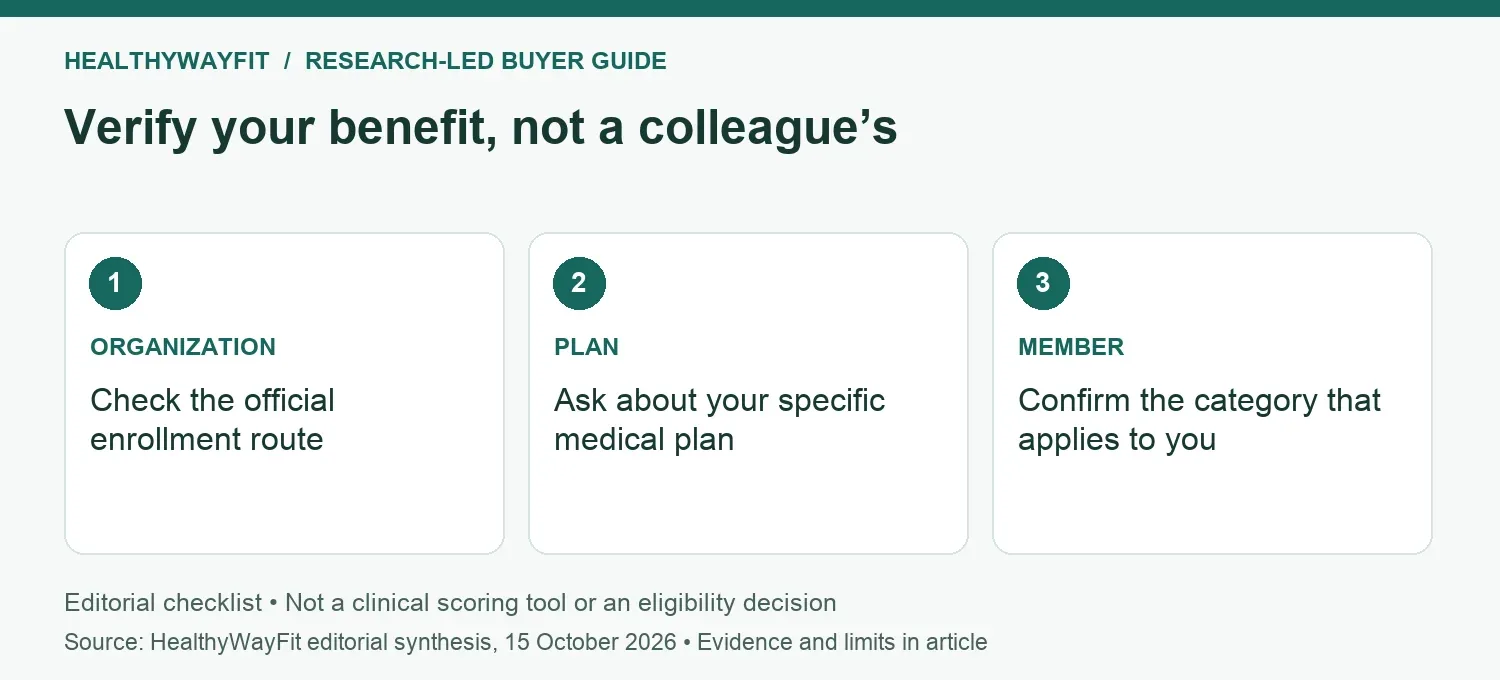
Use Twin’s official enrollment route and confirm the result with your benefits team or health plan. A participating organization is a starting point; ask whether your specific plan, employee category, or dependent status is included. Do not assume a colleague’s access proves your own.
Have the information from your benefit documents ready, but share personal information only through the official enrollment process. Ask your benefits team where the verified enrollment link is located if you are unsure about an invitation.
A useful benefits question is: “Does my current medical plan include Twin, which program is offered, and what requirements apply to me?” Request the relevant benefit document rather than relying on an answer about the employer in general.
If the search does not show your organization, confirm the spelling and ask the benefits team whether the program is offered under a health-plan or administrator name. This is an information check, not a reason to invent an eligibility workaround.
Avoid assuming that a brand logo on a provider’s website means all employees, all insurance products, or all dependents have access.
Can you join Twin Health without an employer?
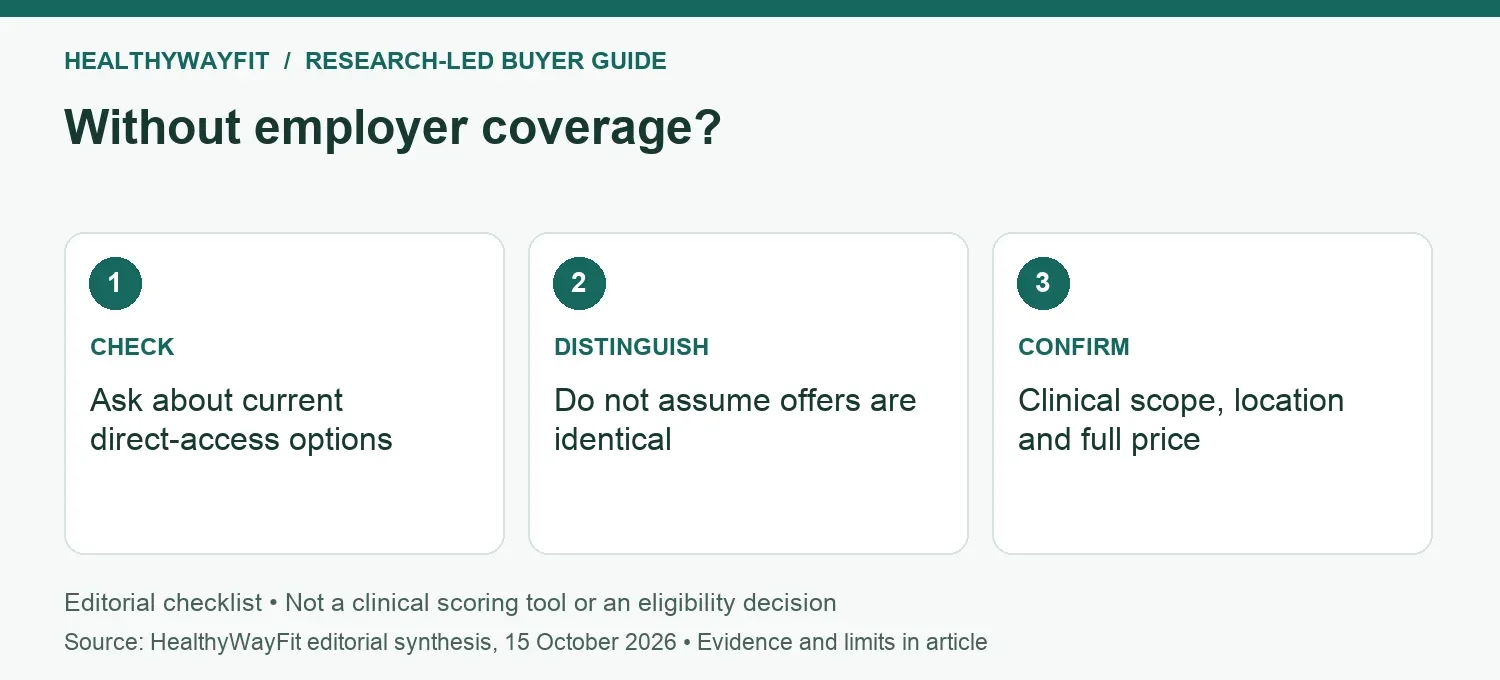
Do not assume the main employer-benefit program is available to anyone at a universal self-pay price. Equally, do not conclude that every Twin service requires employer coverage: MyCare is separately advertised. Ask which direct-access options are currently available and whether they match your diabetes care needs.
As checked on 15 October 2026, MyCare’s public page lists $215 per month and says GLP-1 medication cost and fulfillment are not included. That is the advertised price for that offer, not a verified self-pay price for every Twin diabetes program. Prices and eligibility may change. MyCare’s published offer and exclusions.
Before paying, ask whether the service accepts your diagnosis and current treatment, who provides medical care, whether prescribing is included, and what location restrictions apply. Request payment and cancellation terms as well.
If your main goal is type 2 diabetes management, state that explicitly. A GLP-1 support offer should not be assumed to include all the same care as a particular employer-sponsored diabetes benefit.
Do you need type 2 diabetes, prediabetes, or a particular HbA1c?
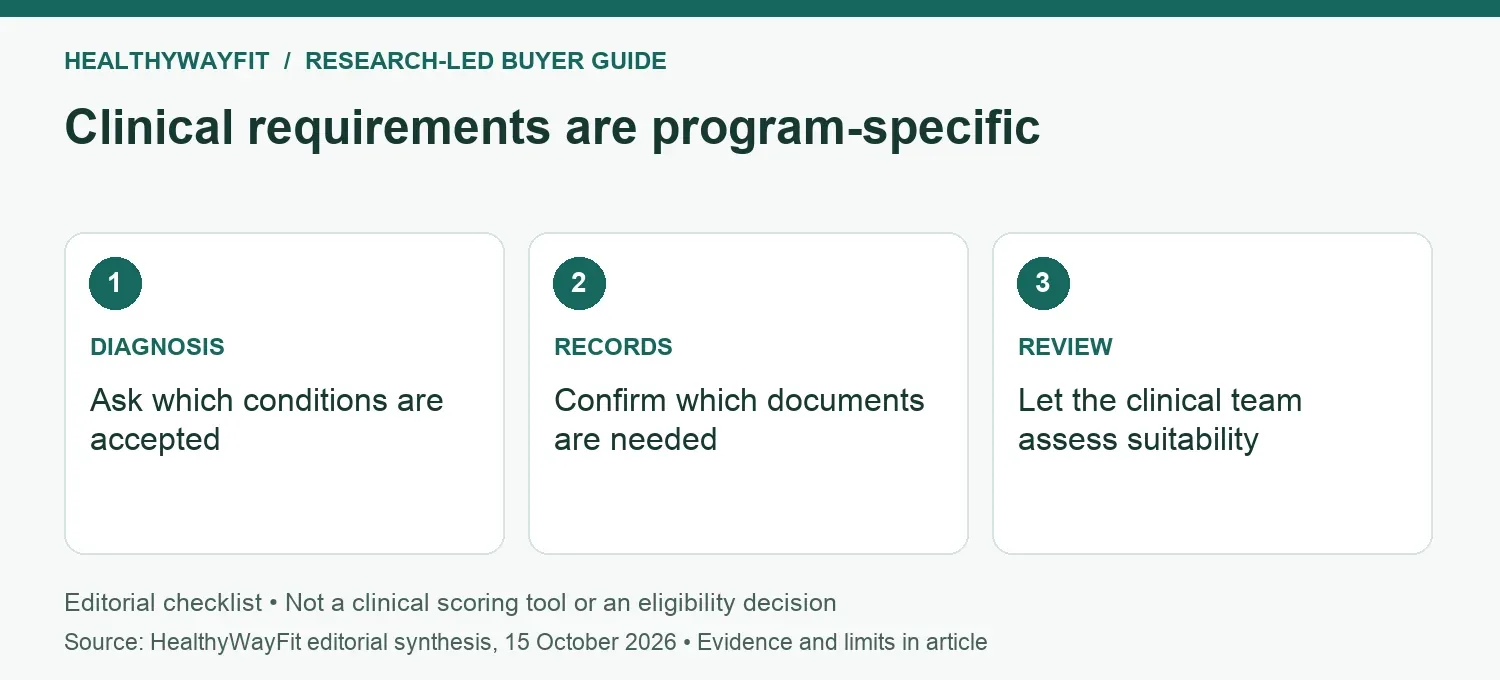
Clinical requirements should be checked against your specific program. An employer’s published rules or a trial’s inclusion criteria cannot safely be turned into a universal Twin eligibility threshold. Ask the enrollment team what diagnosis and records are required for the offer available to you.
For example, a GuideStone-hosted Twin FAQ describes access for qualifying employees, spouses, or adult dependents on the company’s medical plan with a type 2 diabetes diagnosis. That document illustrates one benefit’s requirements, not every current Twin contract. GuideStone-hosted Twin benefit FAQ.
Do not interpret your laboratory results solely to qualify for a program. If your diagnosis is uncertain, discuss it with your clinician. Our HbA1c guide explains the test’s role, while your treating team determines its meaning for you.
Ask whether any other health conditions or treatments require additional review. A benefits representative may explain access, but the clinical team should determine whether the proposed care is appropriate.
Can spouses, dependents, retirees, or uninsured people apply?
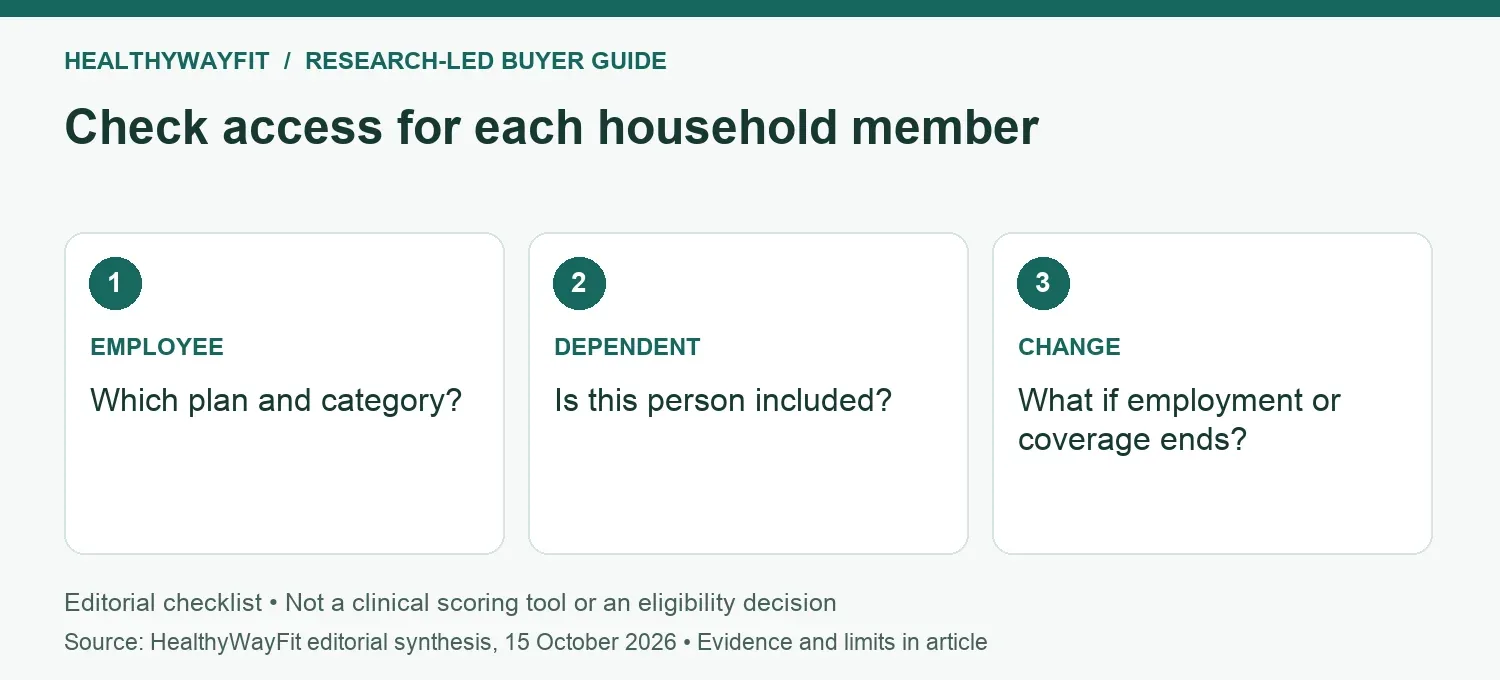
These groups should ask about their own eligibility rather than extrapolating from employee coverage. The answer depends on the benefit or direct-access offer. A program may be included for one household member and unavailable to another.
Use this checklist when asking the benefits team:
- Am I enrolled in the medical plan that offers the benefit?
- Are spouses or adult dependents included under this plan?
- Does eligibility differ for retirees or former employees?
- What happens if my employment or insurance changes?
- Is there another enrollment route if I am not covered?
The GuideStone-hosted FAQ is an example of a document that explicitly mentions spouses and adult dependents. It does not establish access for every spouse, retiree, or uninsured applicant. Example of dependent eligibility language.
If you are uninsured, ask both about program access and how you will obtain care outside its scope. Joining a program should not be mistaken for obtaining health insurance. Twin’s terms state that it is not an insurer. Twin’s terms of use.
What technology and location requirements should you check?
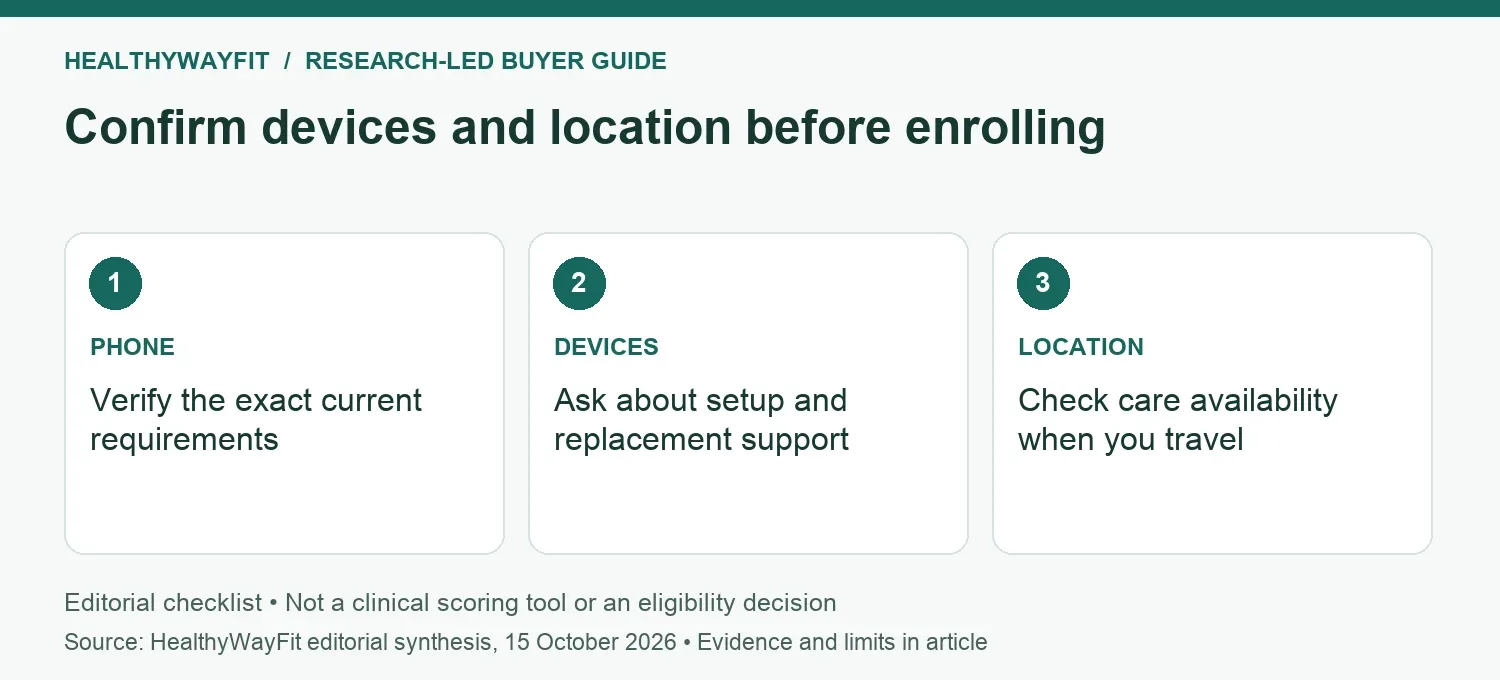
Ask which phone, operating system, sensors, and connectivity your program currently requires. Do not buy a device using an older benefit PDF as a compatibility list. Ask the enrollment team to confirm your exact phone model before you commit to equipment or a subscription.
The GuideStone-hosted FAQ describes a compatible smartphone and wearable-device requirements for its program. Technology and device models change, so use it to identify questions rather than as a current shopping specification. Example of Twin’s device requirements.
Ask whether someone can help you set up devices, what happens if a sensor fails, and how readings are reviewed. Our CGM explainer provides background on that monitoring method.
The US terms describe adult access and US-location restrictions, with services subject to availability in individual states. Confirm the current rules for your program, especially if you travel or move. Do not assume a US benefit covers care during an overseas stay. Twin’s US availability terms.
Is Twin free if your employer offers it?
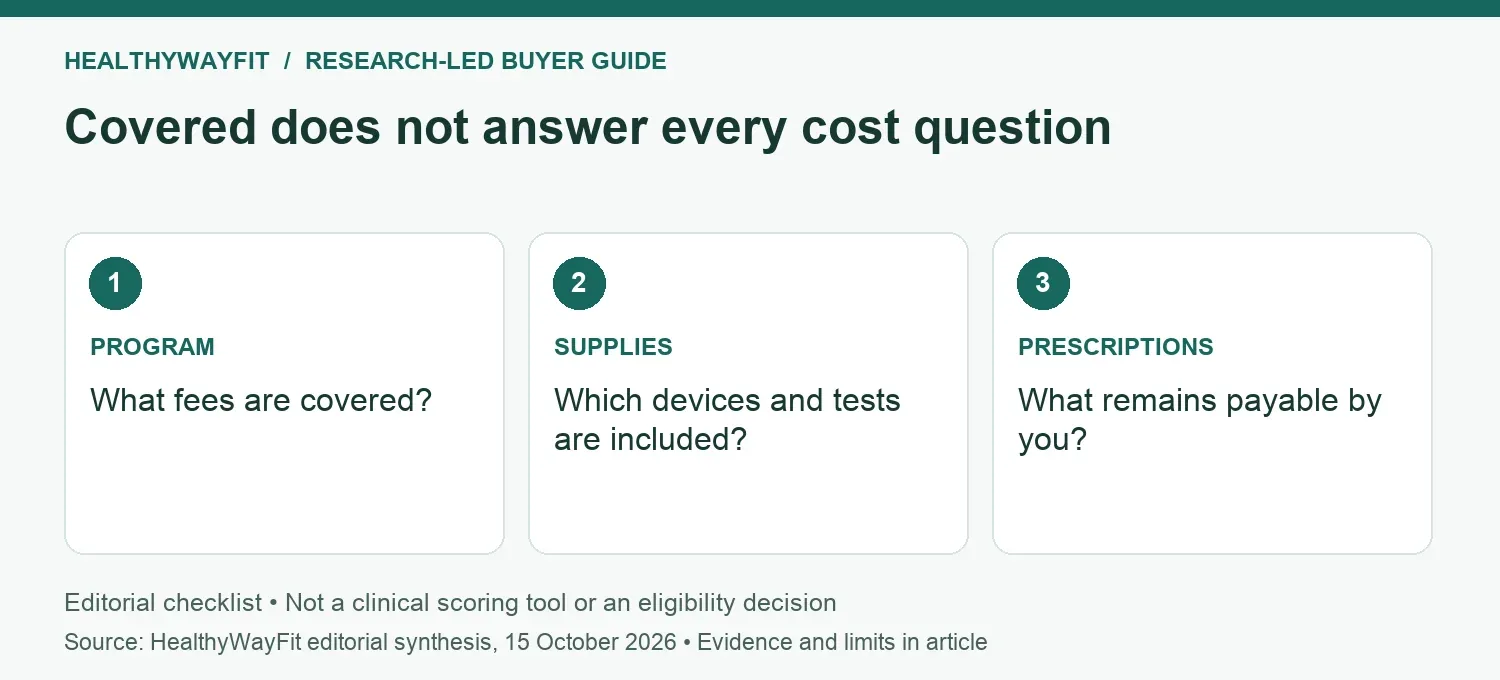
Ask which costs your own benefit covers. “Covered” should be followed by a breakdown of program fees, devices, laboratory work, and prescriptions. An example of a no-cost benefit is not evidence that every member has no out-of-pocket expenses.
The GuideStone-hosted FAQ describes covered care-team access, devices, and Twin-ordered labs, while identifying prescription copays and some supplements as potential member expenses. Those details belong to that benefit description and require confirmation for your plan. Example of covered items and remaining costs.
For your own comparison, create four columns: confirmed included, confirmed excluded, amount payable by you, and unresolved. Ask the benefits team or provider to resolve the last column before enrollment.
Keep a separate note of any existing healthcare appointments that should continue. A program can add support without replacing all other care. Check continuity if coverage changes, including access to records and the professional responsible for prescriptions.
Does clinical research establish that you qualify or will benefit?
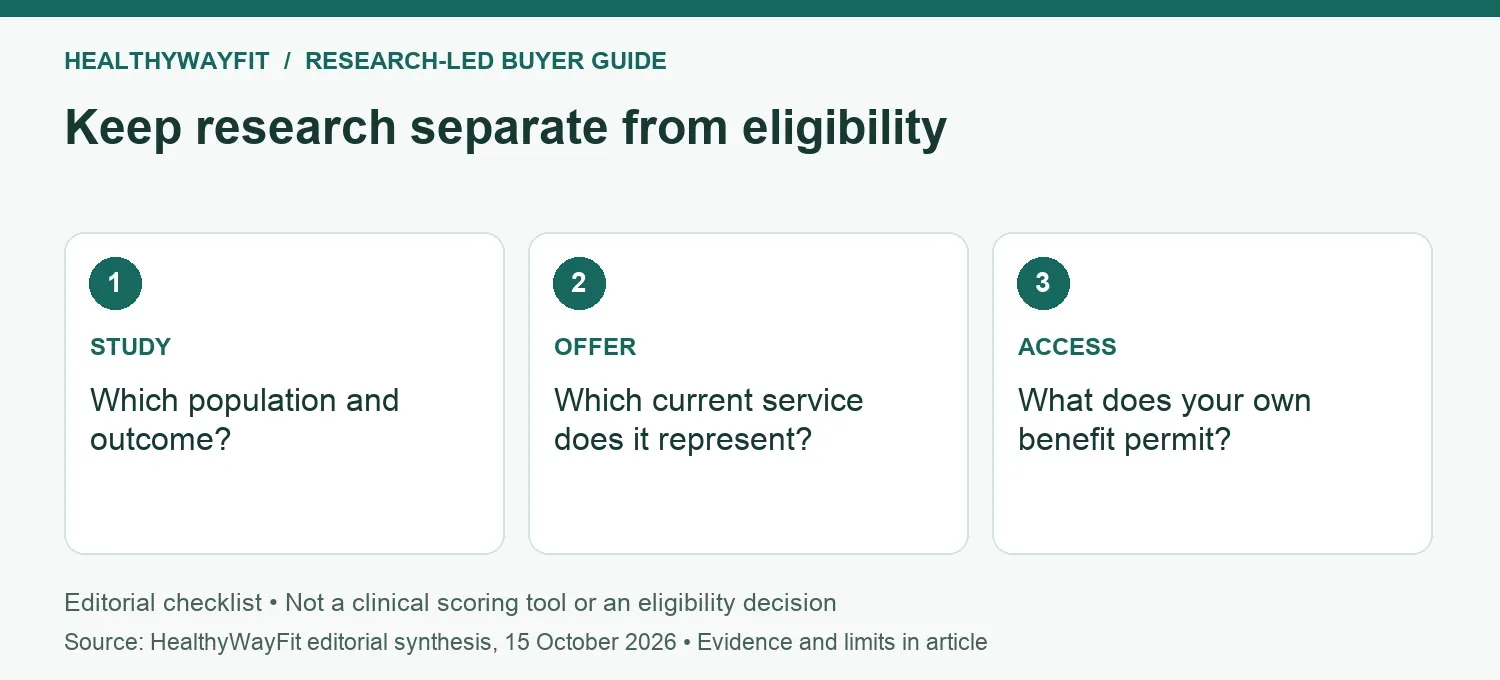
Clinical studies can inform questions about a program’s approach, but they do not determine your benefit eligibility or guarantee your result. Read them separately from enrollment information. A headline about technology does not tell you whether your employer pays for it.
One published study, by Shamanna and colleagues, reports a secondary analysis of a randomized trial in India involving 319 people with type 2 diabetes. It assessed blood-pressure outcomes with a digital-twin intervention versus standard care. This is relevant research, but it does not establish current US access rules or prove that every advertised Twin offer produces identical outcomes. Shamanna et al., JACC Advances, 2024.
Ask which research applies to the exact program you are offered, whether the population resembles your situation, and whether the outcome is one you want help with. Review funding and company affiliations as part of that assessment.
For remission claims, ask for the definition, follow-up period, and denominator. Our remission guide explains why improved glucose, less medication, and remission should be distinguished. For the 2025 Cleveland Clinic RCT evidence on Twin specifically, see our Twin Health diabetes reversal review.
What can you do if you are not eligible?
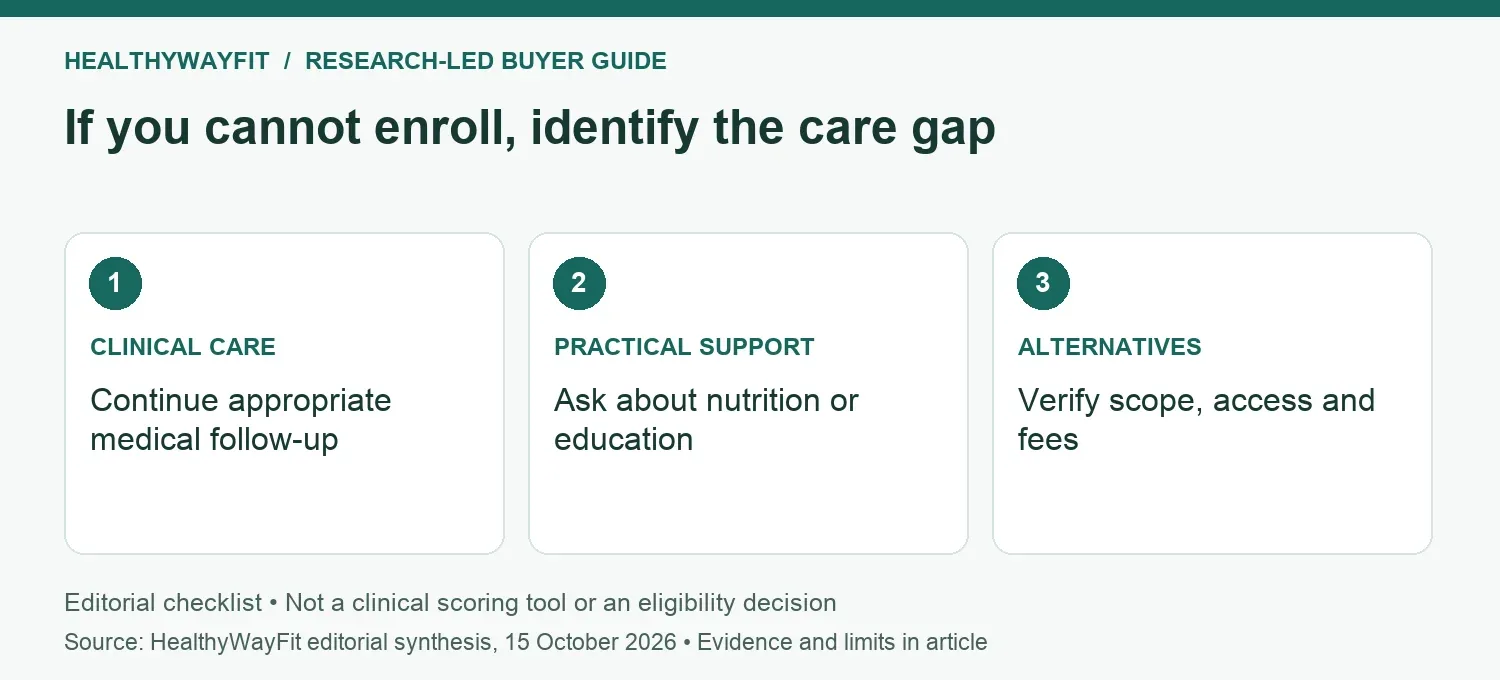
Continue appropriate medical care while investigating other support. Start with the gap you need filled: clinical treatment, nutrition care, diabetes education, monitoring help, or accountability. Compare alternatives by that need rather than searching only for another app with similar marketing language. Another benefit-based service to investigate is covered in our Omada diabetes review. If you need a different service rather than another enrollment route, compare Twin Health alternatives by care model and location.
Ask your clinician or health plan about available services. If investigating a private provider, verify the professional’s qualifications, location eligibility, scope, price, and coordination with your existing care. A coaching service should not be presented as a replacement for licensed medical treatment.
Our online diabetes coaching guide can help frame those questions. If you want to explore HealthyWayFit, request its current service description before judging fit. This article does not establish its US prescribing capability, insurance coverage, or equivalence to Twin.
Do not delay care while an eligibility question is unresolved. Twin’s terms state that its service is not for emergencies. Use local emergency services when needed rather than waiting for an application decision or app response. Twin’s emergency-care limitation.
What should you confirm before enrolling?
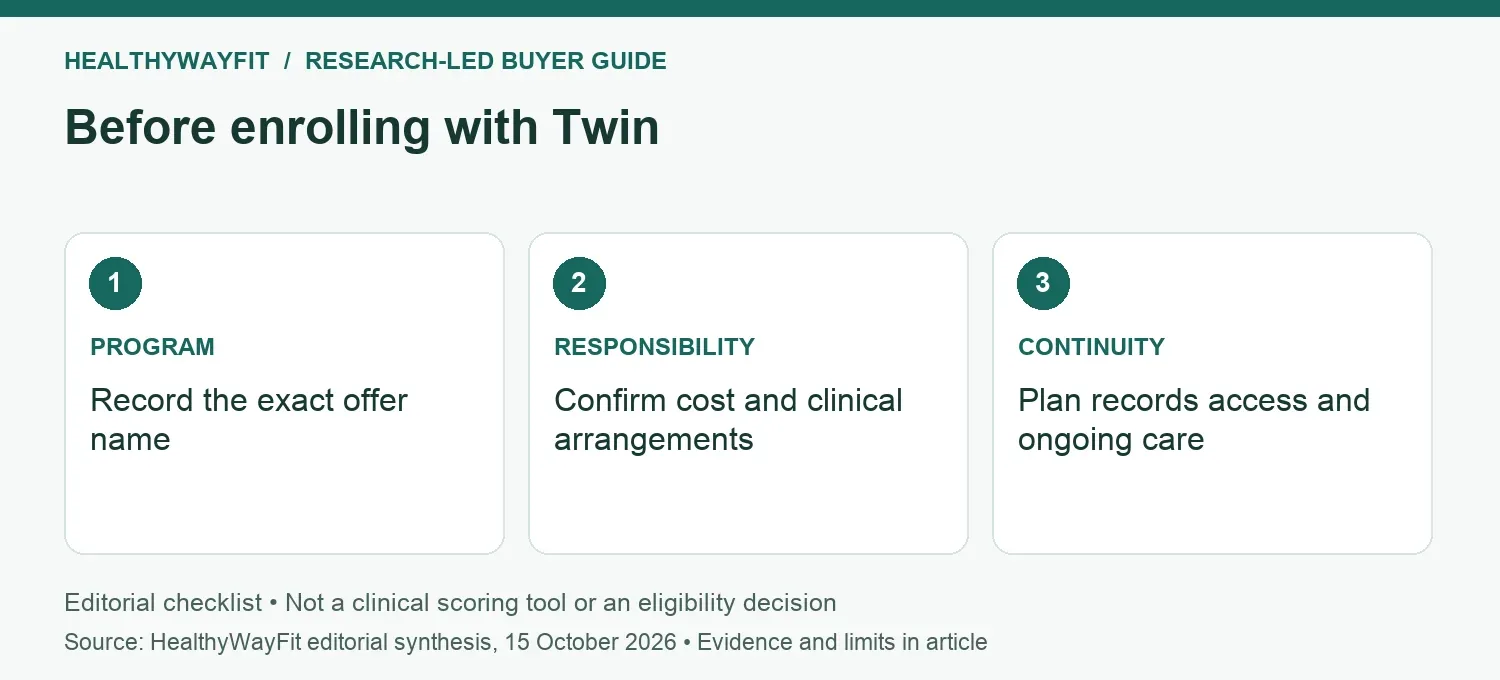
Confirm the exact program, your financial responsibility, clinical acceptance, technology requirements, and continuity arrangements. Keep a copy of the dated offer and relevant benefit document. The strongest reason to proceed is a clear match between your needs and a service you can access.
Does downloading the app mean I am enrolled?
No. Twin’s terms describe validation and registration for authorized users. Confirm that your enrollment and clinical onboarding are complete rather than treating app access as acceptance for care. Twin’s registration terms.
Can I stop medicines while waiting to join?
Follow your existing prescription and discuss changes with the responsible clinician. An application or expected future program does not replace your current treatment plan.
What if I want to compare HealthyWayFit?
Contact HealthyWayFit for current information on services, qualifications, fees, and location eligibility. Compare its documented scope with the particular Twin offer available to you, without assuming identical care or outcomes.
Your next step is a specific question: “Which program am I eligible for, what will it cost me, and who will be responsible for my care?” Get those answers before paying or changing an existing care arrangement.