By Kirti, Founder & Serial Entrepreneur, HealthyWayFit
Updated October 14, 2026
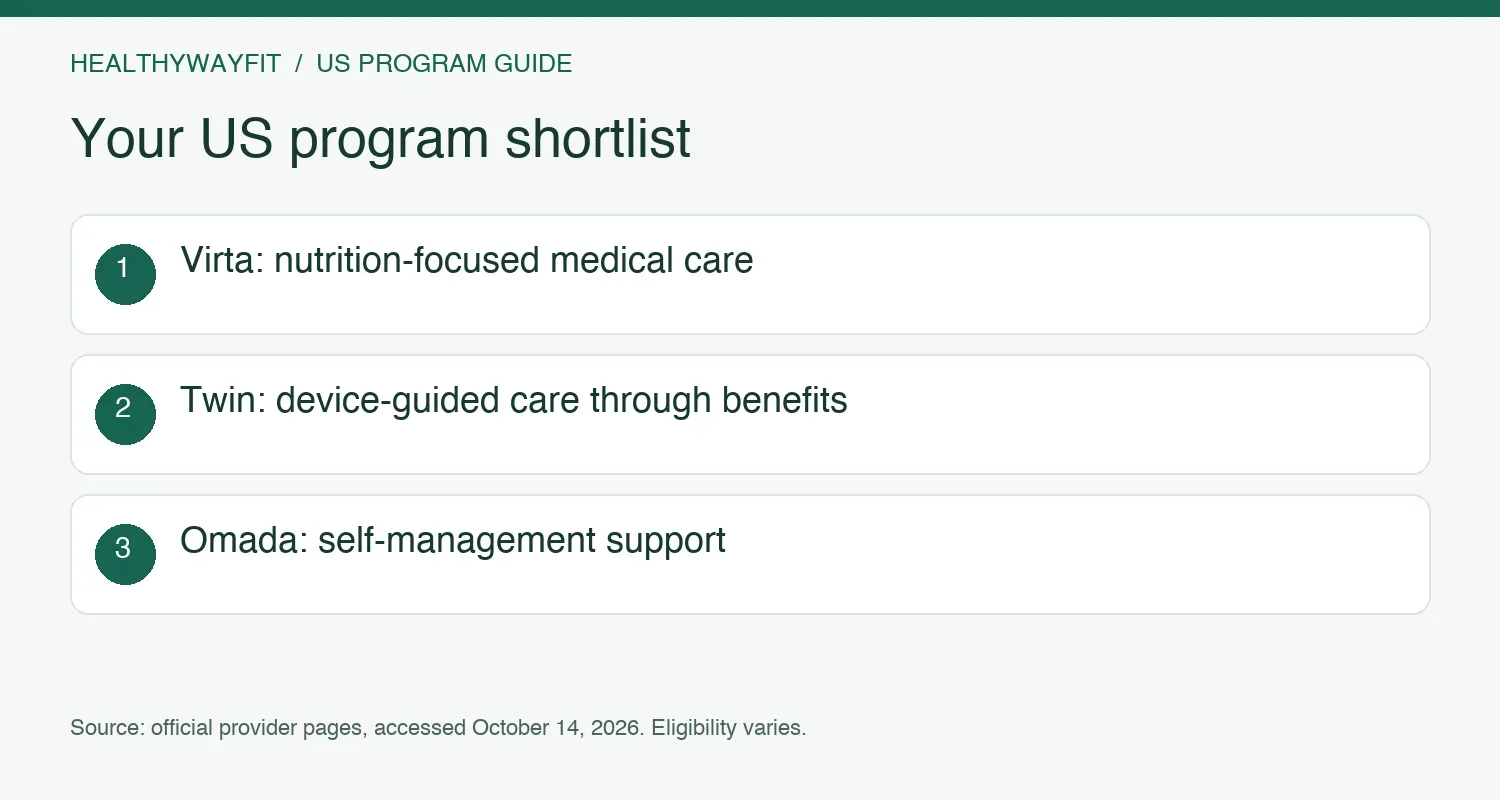
For US adults comparing the best online diabetes reversal program, Virta Health is a candidate for nutrition-focused medical care, Twin Health for device-guided care through participating benefits, and Omada for diabetes self-management support. HealthyWayFit is another service to inquire about, with US enrollment and clinical arrangements to confirm before joining.
You may be looking for better blood sugar readings, fewer confusing food rules, or support that fits around work and family. Those are useful goals. A promise to permanently cure diabetes is a different claim, and it should not determine your choice.
At HealthyWayFit, we encourage you to compare the care behind the promise. Start with the US shortlist, then assess what “reversal” means and which support fits your needs.
This article is for informational purposes only and does not constitute medical advice. Always consult a qualified healthcare professional before making changes to your diet, exercise routine or medication.
1. Best online diabetes reversal program: US category picks
Our category picks use each provider’s publicly described care model, support, and enrollment route, checked October 14, 2026. We have not personally tested these services or established a winner for remission rates. This article is published by HealthyWayFit, which is included below; that relationship should be part of your assessment.
| Option | Publicly described approach | Questions to resolve before joining |
|---|---|---|
| Virta Health | Nutrition-focused virtual medical care | Confirm benefit coverage, state availability, eligibility, and suitability of its low-carbohydrate approach |
| Twin Health | Device-guided personalization with a clinical team | Check access through your employer or health plan and confirm device and tracking requirements |
| Omada | Diabetes education, coaching, and self-management support | Check participating coverage, device eligibility, and who handles prescriptions |
| HealthyWayFit | Personalized nutrition and habit support to inquire about | Confirm US enrollment, clinician arrangements, time-zone support, and full costs |
Virta Health: a candidate for nutrition-focused medical care
Virta describes a US online clinic offering individualized nutrition counseling, biomarker monitoring, coaching, and medical-provider management of diabetes medication. Its approach emphasizes carbohydrate restriction and nutritional ketosis. Consider it if you want nutrition support and medical management within the same service, subject to clinical suitability.
Tradeoff: the dietary approach and tracking workload need to fit your life. Its FAQ describes no treatment cost for members covered through participating employer-sponsored plans; confirm your own benefit and any self-pay quote. See Virta’s care model and enrollment and coverage information.
Twin Health: a candidate for device-guided care
Twin’s US member page describes an app connected to smart devices, with support from licensed providers, registered nurses, and health coaches working with your primary care provider. Devices may include a CGM, smartwatch, scale, and blood pressure cuff; individual kits vary.
Tradeoff: check organizational access before comparing it with a direct-pay service. Twin describes its program as fully covered through participating organizations. Ask about eligibility and the daily tracking involved. Its digital twin technology describes its delivery approach; it does not establish superior remission outcomes. See Twin’s US member information.
Omada: a candidate for diabetes self-management support
Omada describes diabetes education and support from Certified Diabetes Care and Education Specialists and health coaches, with connected monitoring devices. It belongs in this comparison because some searchers need ongoing diabetes management rather than a particular remission intervention.
Tradeoff: do not treat a management program as a promise of medication-free remission. Ask who handles prescriptions and which devices your benefit includes. Omada states that clinical eligibility and employer or health-plan coverage are required. See Omada’s diabetes program and its eligibility guidance.
A coaching service and virtual medical clinic can have different responsibilities. Decide whether you need help implementing your doctor’s advice or medical management within the program. HealthyWayFit’s approach and the US-specific questions to resolve are covered below.
If you need specialist treatment that an online service cannot provide, ask your usual healthcare team about appropriate in-person care. Convenience should fit around clinical needs.
2. What does diabetes reversal mean?
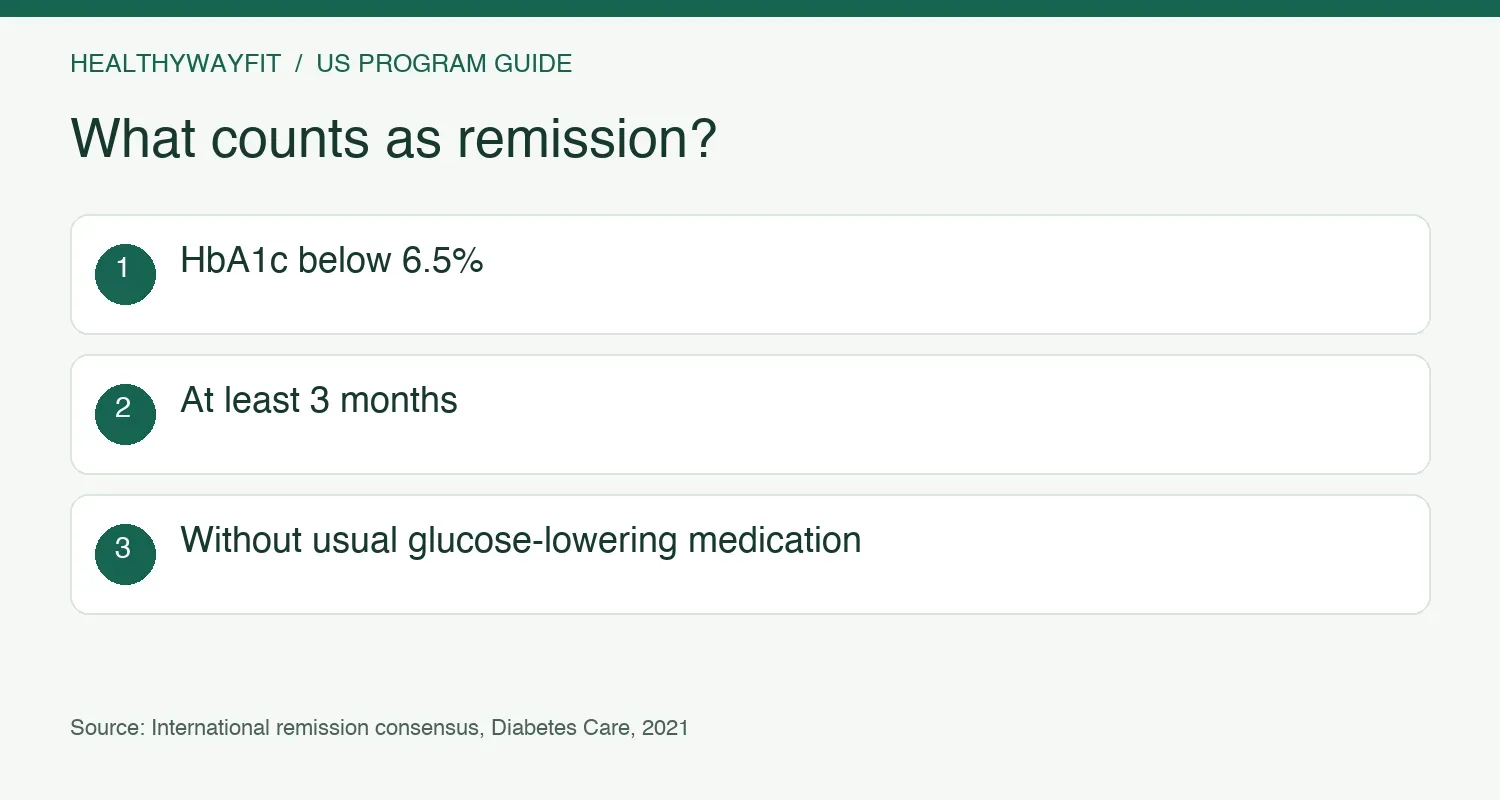
“Diabetes reversal” is a common search and marketing term. For type 2 diabetes, the more precise medical term is remission: HbA1c below 6.5%, maintained for at least three months without usual glucose-lowering medication. Remission can end, so ongoing follow-up remains important.
HbA1c is a blood test that reflects average glucose over roughly the preceding three months. A lower HbA1c while taking medication may represent better diabetes control, but it does not automatically meet the definition of remission.
The international consensus report on type 2 diabetes remission recommends continued glucose monitoring and screening for complications after remission. Avoid treating one good reading as proof that diabetes has disappeared.
3. What does the research support?
Research supports the possibility of type 2 diabetes remission in some people through structured interventions. It does not establish that every online program works equally well, or that a particular person will achieve remission. Ask providers for evidence about their own service, not only studies about lifestyle changes in general.
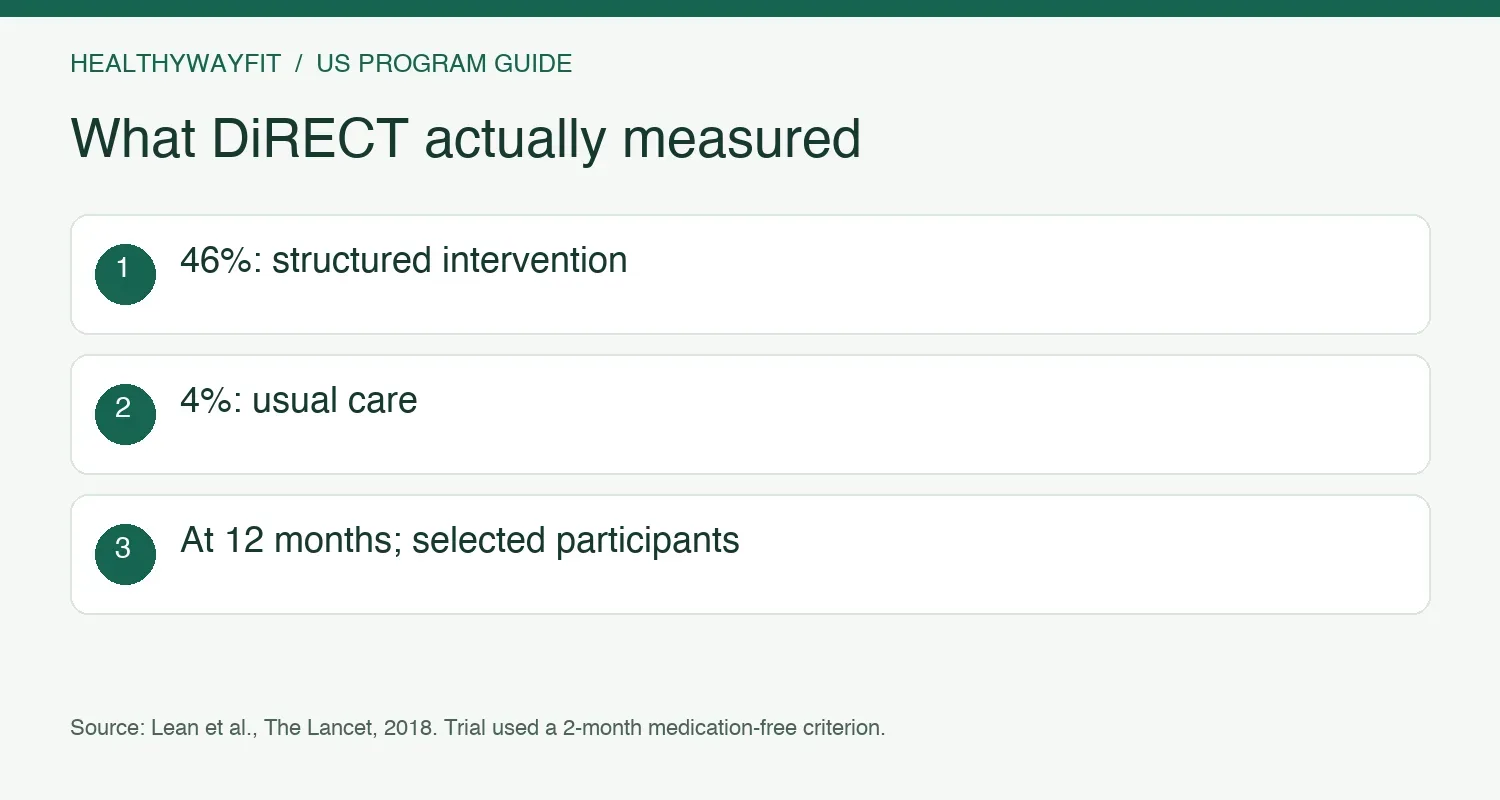
In the DiRECT randomized trial, published in The Lancet in 2018, 46% of participants assigned to a structured weight-management intervention met the study’s remission criteria at 12 months, compared with 4% receiving usual care.
Participants were aged 20–65, had type 2 diabetes diagnosed within six years, had a BMI of 27–45, and were not using insulin. The intervention involved supervised diet replacement, food reintroduction, and weight-maintenance support. Its remission definition required at least two months without diabetes medication, predating the later three-month consensus standard.
These results demonstrate what a defined intervention achieved in a selected population. They are not HealthyWayFit results, a guarantee for people outside that population, or evidence that an ordinary meal-plan subscription delivers the same outcome.
When a provider cites research, check whether its actual program resembles the intervention studied. The amount of support, clinical involvement, participant eligibility, and outcome definition all affect how relevant the findings are to you.
4. How to evaluate the best online diabetes reversal program
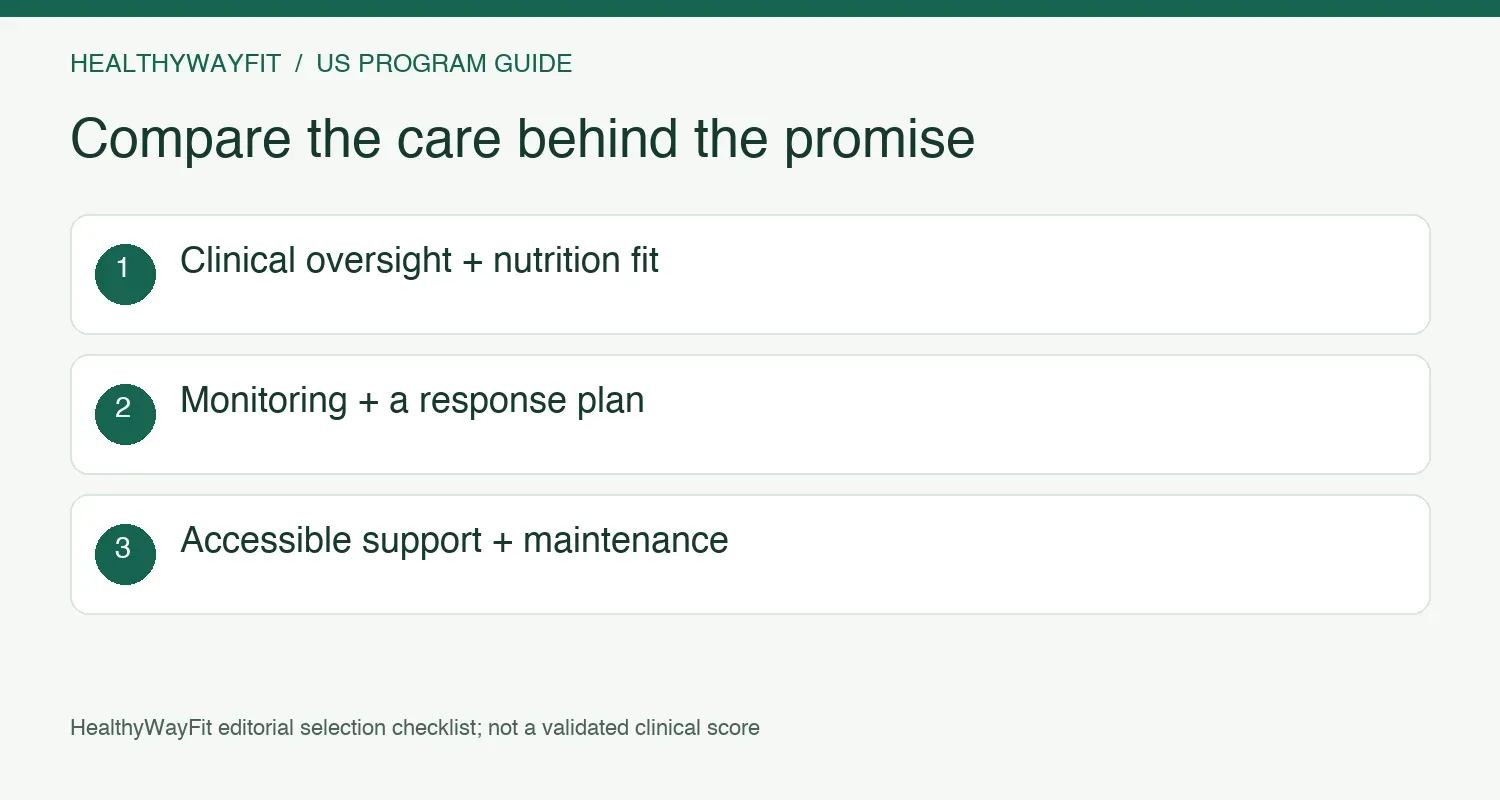
Evaluate an online program by its care team, safety process, personalization, follow-up, and evidence. A polished app or long testimonial page cannot answer those questions. Ask for concrete details about who reviews your information, what support you receive, and how the plan changes when your needs change.
Qualified clinical oversight
Ask which licensed clinician is responsible for medical decisions and whether they can provide care where you live. Distinguish a physician, registered dietitian, and health coach: their roles and permitted activities differ. A coach should not independently change your prescriptions.
Clarify whether the program provides medical treatment or supports lifestyle changes alongside your existing doctor. Both models can be useful, but you need to know who owns each decision.
Nutrition that fits your daily life
Request an explanation of how the team accounts for your health history, food preferences, budget, allergies, and usual meals. A downloadable diet chart alone does not tell you how to handle travel, restaurant meals, or a plan that leaves you hungry.
Ask for a sample coaching conversation rather than a guaranteed meal prescription. You should be able to see how the team helps someone solve an everyday problem and when it refers questions to a clinician.
Monitoring with a response plan
Find out what information you will track, who reviews it, and how often. If a continuous glucose monitor, or CGM, is included, ask how readings are interpreted. A sensor supplies information; the provider should explain what decisions that information supports.
Support between appointments
Compare scheduled calls, messaging access, response hours, and arrangements when your usual coach is unavailable. “Unlimited support” needs a definition. It may mean unlimited messages during business hours rather than immediate clinical help.
Maintenance after the initial phase
Ask how follow-up works after intensive coaching ends. You need a plan for changes in routine, difficulties following the diet, and glucose readings that rise again. The handover to your regular healthcare team should be clear.
Our guide to choosing a diabetes coaching program offers additional questions about coaching quality and fit.
5. How much does an online diabetes program cost?
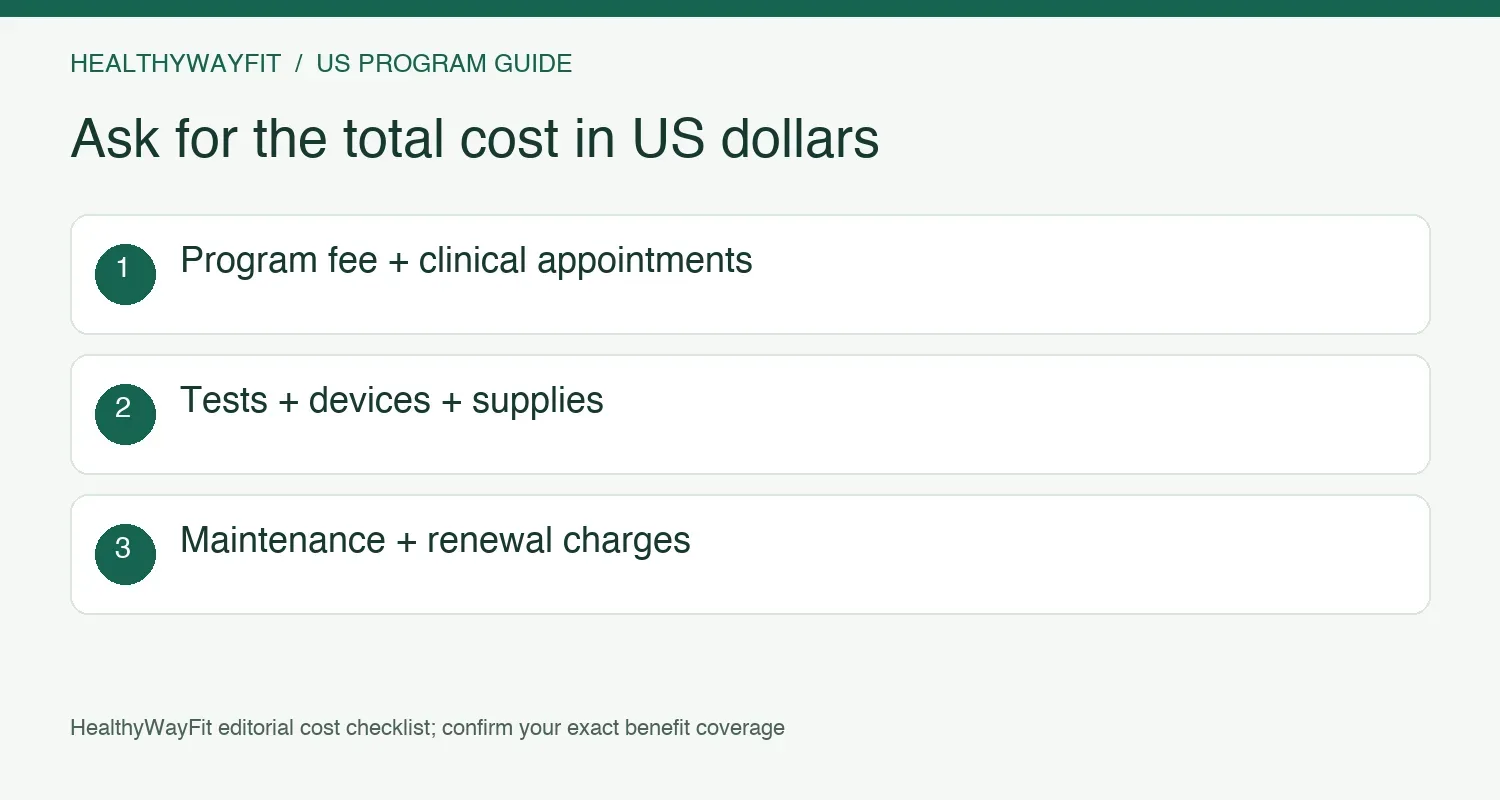
For US readers, start with your employer’s benefits portal or health plan’s member services. Ask whether an online diabetes program is included in your specific plan. Then compare total costs in US dollars, separating program fees, clinician visits, laboratory tests, devices, supplies, and maintenance.
Before paying, confirm whether the fee includes:
- Initial assessment and follow-up consultations.
- Nutrition appointments and coaching calls.
- Glucose meters, test strips, or CGM sensors when prescribed or recommended.
- Laboratory testing and review of results.
- Support after the initial program.
- Taxes, shipping, renewal charges, and cancellation fees.
Ask whether devices are optional, how replacements are paid for, and what happens if the team determines that the program is unsuitable after your assessment. Read the refund policy before enrollment.
Confirm whether dependents qualify and whether any separate tests or prescriptions create out-of-pocket charges. If you have Medicare or Medicaid, ask about your exact coverage rather than applying an employer-plan offer to your situation. Verify any HSA or FSA payment eligibility with your plan administrator.
A lower price is useful only when you understand what it buys. A higher price does not establish better care or a greater chance of remission.
6. Where does HealthyWayFit fit?
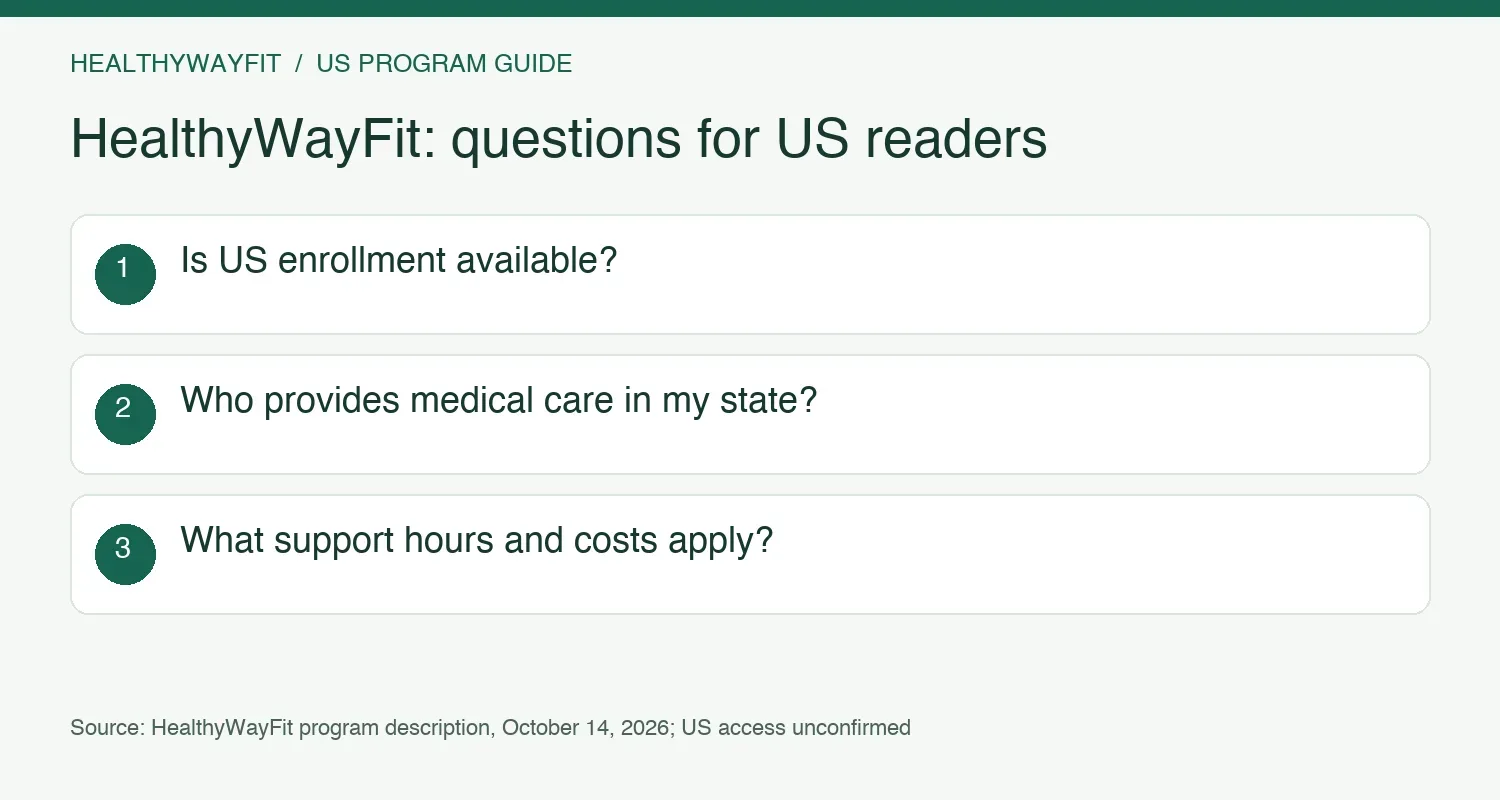
HealthyWayFit may be worth inquiring about if you want personalized food and daily-habit support. Our published program description includes nutrition, movement, habit coaching, glucose monitoring, and doctor supervision. US residents should confirm enrollment availability and the scope of clinical care before treating it as a US medical program.
The starting question is whether that approach fits your needs. Tell the team what you find difficult: following a meal plan, staying consistent during travel, understanding readings, or finding movement you can manage. Ask how coaching addresses that specific problem.
For example, someone who regularly eats away from home should ask how the team handles restaurant choices and changing schedules. Someone with limited mobility should ask how movement guidance is adapted and when medical clearance is needed. These are examples of questions to ask, not reports of client outcomes.
Our site describes working alongside your current doctor. Ask whether support is coaching alongside your own US clinician or includes medical care from a provider authorized to treat you in your state. Confirm who adjusts medication, how records reach your primary care team, and which US time-zone hours are covered.
Food guidance should respect the meals you regularly eat, including restaurant meals and family favorites. For US readers who eat South Asian foods, our diabetes-friendly Indian meals guide offers relevant examples. An individual plan still needs to account for your health and treatment.
HealthyWayFit is one option to assess against the same criteria used for other providers. Your decision should rest on suitability, clear responsibilities, and realistic expectations.
7. What should you ask during the first consultation?
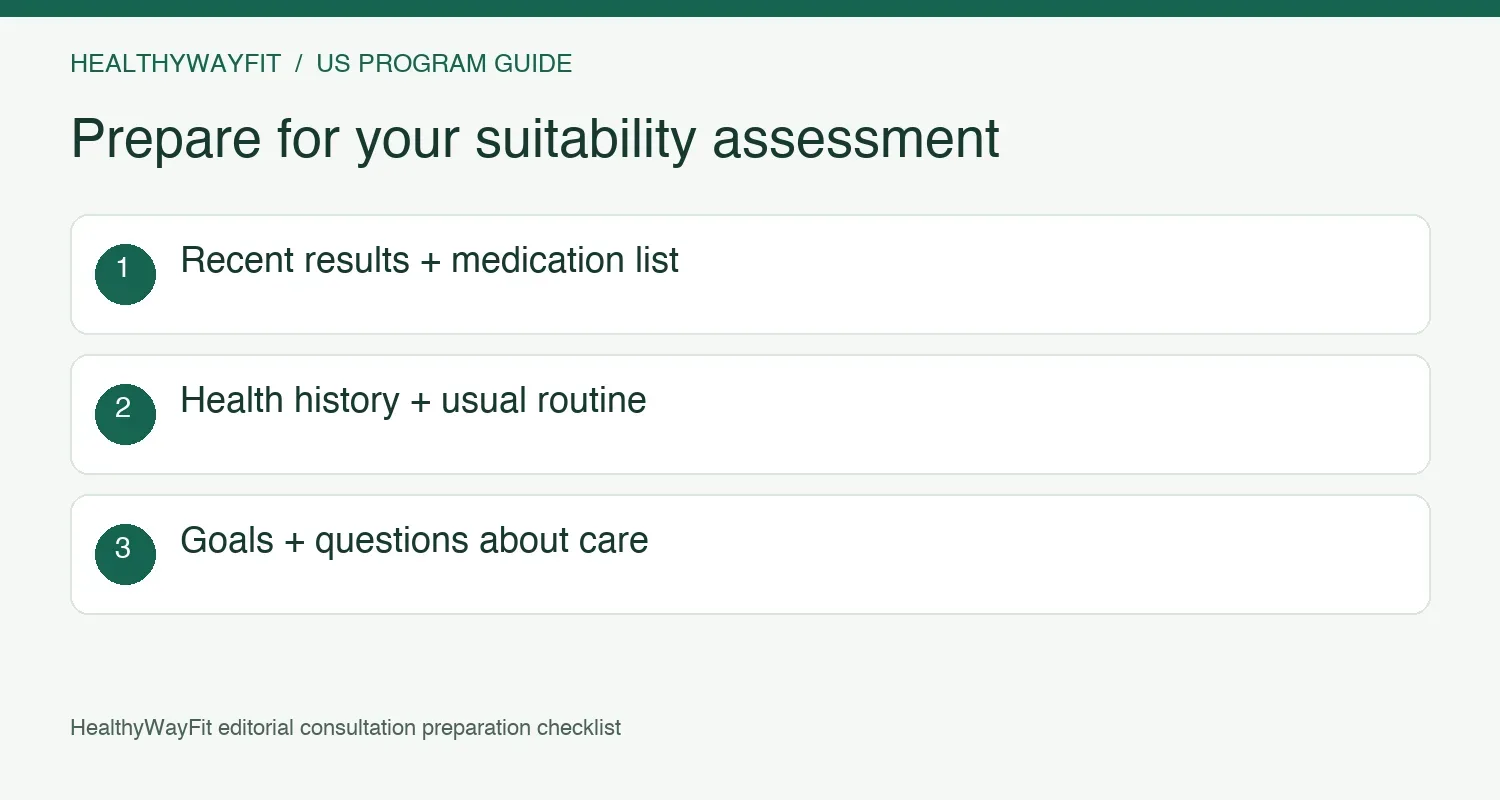
Use the first consultation to establish eligibility, responsibilities, and the practical workload. Describe your diagnosis, medication, health history, and usual routine accurately. Ask the team to explain the proposed service in terms you understand, including what it can provide and what requires your regular clinician.
Bring recent test results if available, a medication list, relevant medical history, and your main goals. If you have glucose records, ask whether and how the team wants to review them.
Use these questions as a consultation checklist:
- Am I suitable for this program? Ask what could make enrollment inappropriate.
- Who is responsible for medical decisions? Get names, roles, and relevant credentials.
- What will my week look like? Clarify appointments, tracking, food preparation, and messaging.
- How will progress be assessed? Ask which measures matter and when reviews occur.
- What happens if the plan is difficult to follow? Look for an adjustment process.
- What happens if readings become concerning? Establish contact and escalation arrangements.
- What support remains after the program ends? Discuss maintenance and handover.
Ask the team to send the agreed scope and costs in writing. That gives you something concrete to compare with another service and discuss with your doctor.
If you are still learning the basics after diagnosis, our guide for people newly diagnosed with type 2 diabetes can help you organize your next questions.
8. What results and timelines are realistic?
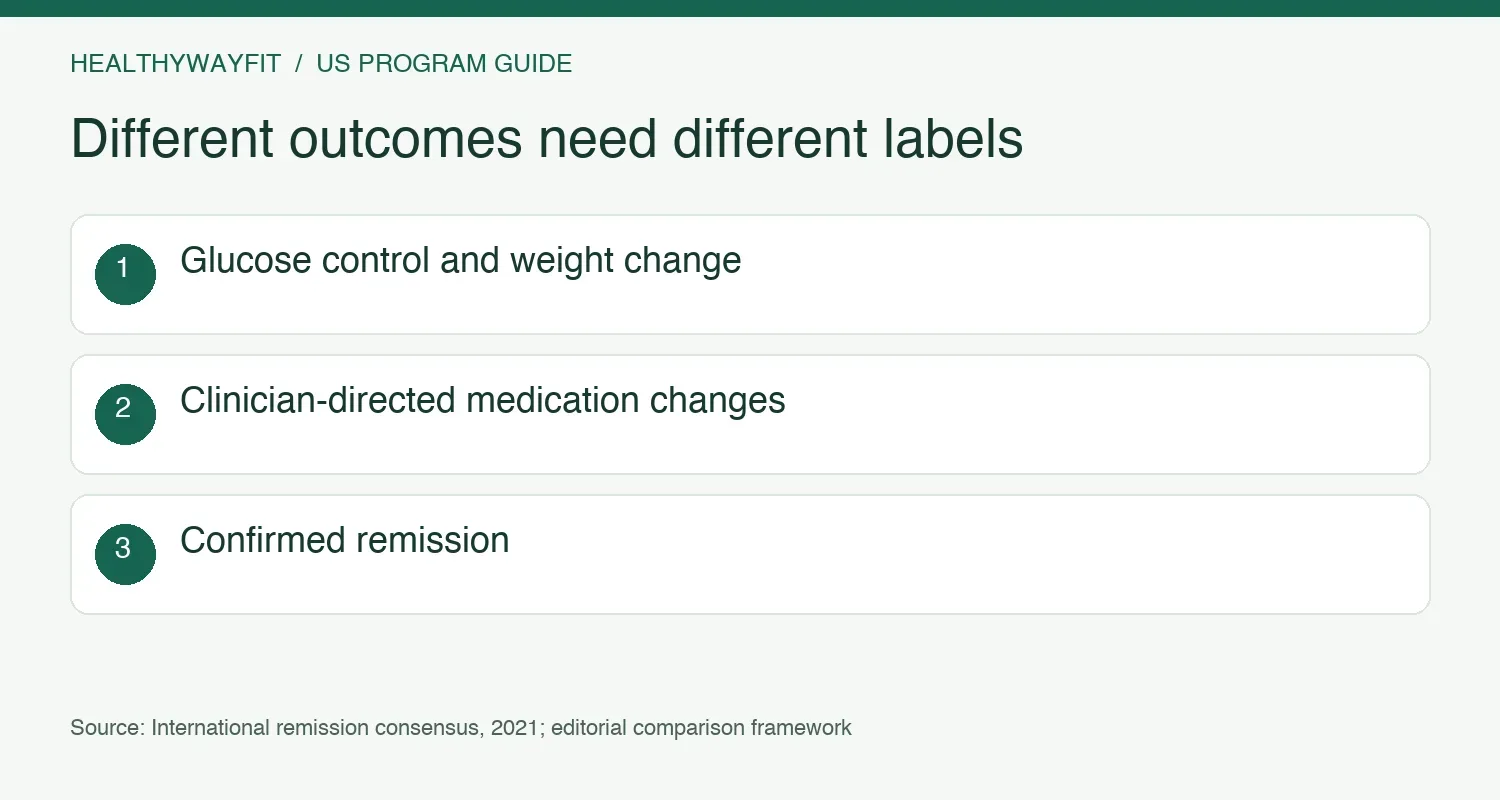
Set goals with your clinician that reflect your starting point and treatment. A program should distinguish improved glucose control, weight change, medication changes, and confirmed remission. Those outcomes are related but different. Ask when progress will be reviewed and how the plan changes if your initial goals are not met.
Can I achieve remission in 90 days?
No provider can guarantee that you will achieve remission in 90 days. The consensus definition includes a medication-free assessment period, and clinical assessment determines whether remission criteria are met. A program’s advertised duration is not a promise of your medical outcome.
Can I join if I use insulin?
Ask the provider and your prescribing clinician. Eligibility varies, and insulin use makes clear medication oversight especially important. Do not assume that results from studies excluding insulin-treated participants apply directly to you.
Do I need a CGM?
A CGM is not automatically required for everyone. Ask your clinician whether it would be useful, what question it would help answer, and whether finger-prick monitoring is an appropriate alternative. Consider cost and your willingness to wear and use the device.
Does continuing medication mean the program has failed?
Medication may remain an appropriate part of your care. A program should not pressure you to stop treatment to improve its success figures. Review your glucose control, treatment burden, and agreed goals with your clinician rather than judging progress only by whether you take medicine.
9. What are the safety red flags?
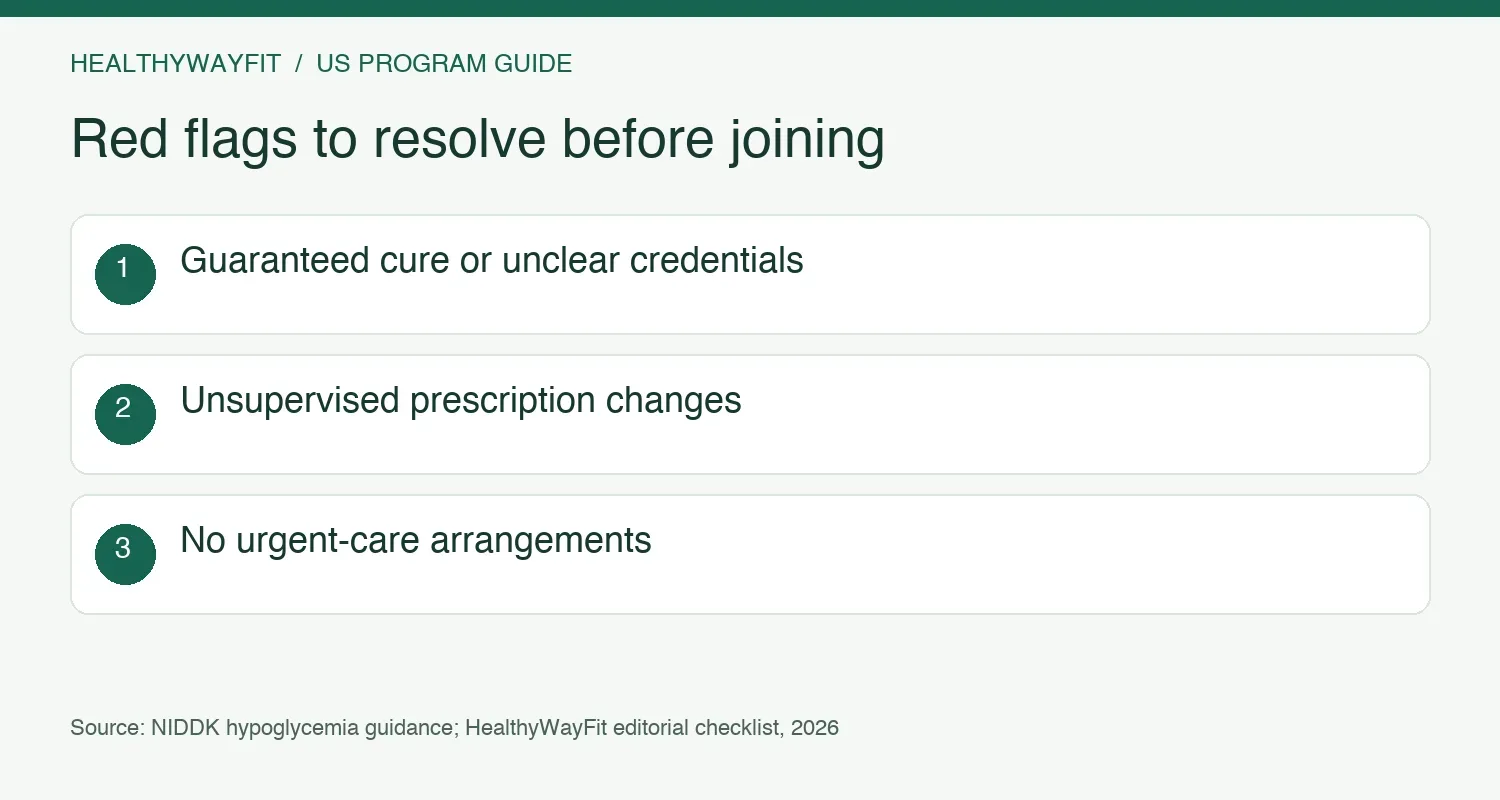
Question programs that guarantee a cure, tell you to stop prescribed medication without a clinician, or provide no route for urgent concerns. Be cautious when sales staff cannot explain eligibility or medical oversight. Safety arrangements should be explicit before you begin major changes to eating or activity.
Low blood glucose is a particular concern for people taking insulin or certain diabetes medicines, including sulfonylureas. Eating fewer carbohydrates, skipping meals, and increasing activity can affect glucose levels. Discuss planned changes with your prescribing clinician. See NIDDK’s guidance on low blood glucose.
Follow your agreed hypoglycemia treatment plan. Severe confusion, seizures, or loss of consciousness require immediate emergency help. Do not wait for a coaching message in an emergency.
Pregnancy, kidney disease, a history of eating disorders, or uncertainty about your diabetes type warrants individual clinical assessment before a restrictive program. An online type 2 diabetes program should not be presented as a replacement for insulin treatment in type 1 diabetes. NIDDK explains type 1 diabetes and its treatment.
10. Choose a program you can assess and sustain
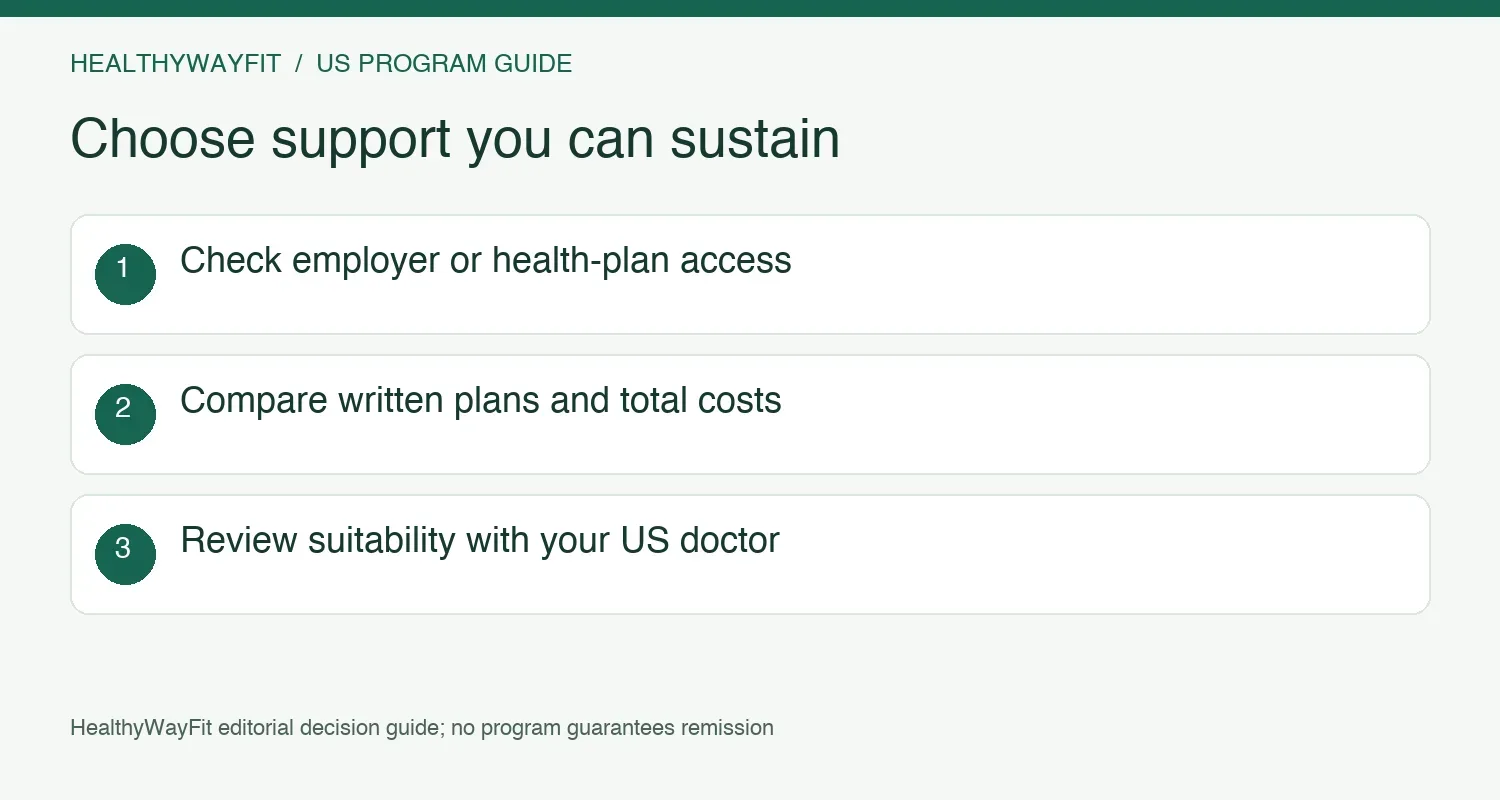
For a US shortlist, investigate Virta for nutrition-focused medical care, Twin for device-guided care through participating benefits, and Omada for self-management support. Ask HealthyWayFit about US availability if its coaching approach interests you. Compare written care plans, coverage, and state-specific clinical arrangements with your doctor before enrolling.
Before committing, check that you can name the responsible clinician, understand the weekly workload, afford the full cost, and explain what happens when you need more help. If any answer is unclear, resolve it during the consultation.
Want to explore HealthyWayFit? Contact our team to discuss your health history, current treatment, and goals. Ask for a suitability assessment and a clear explanation of the support available to you.