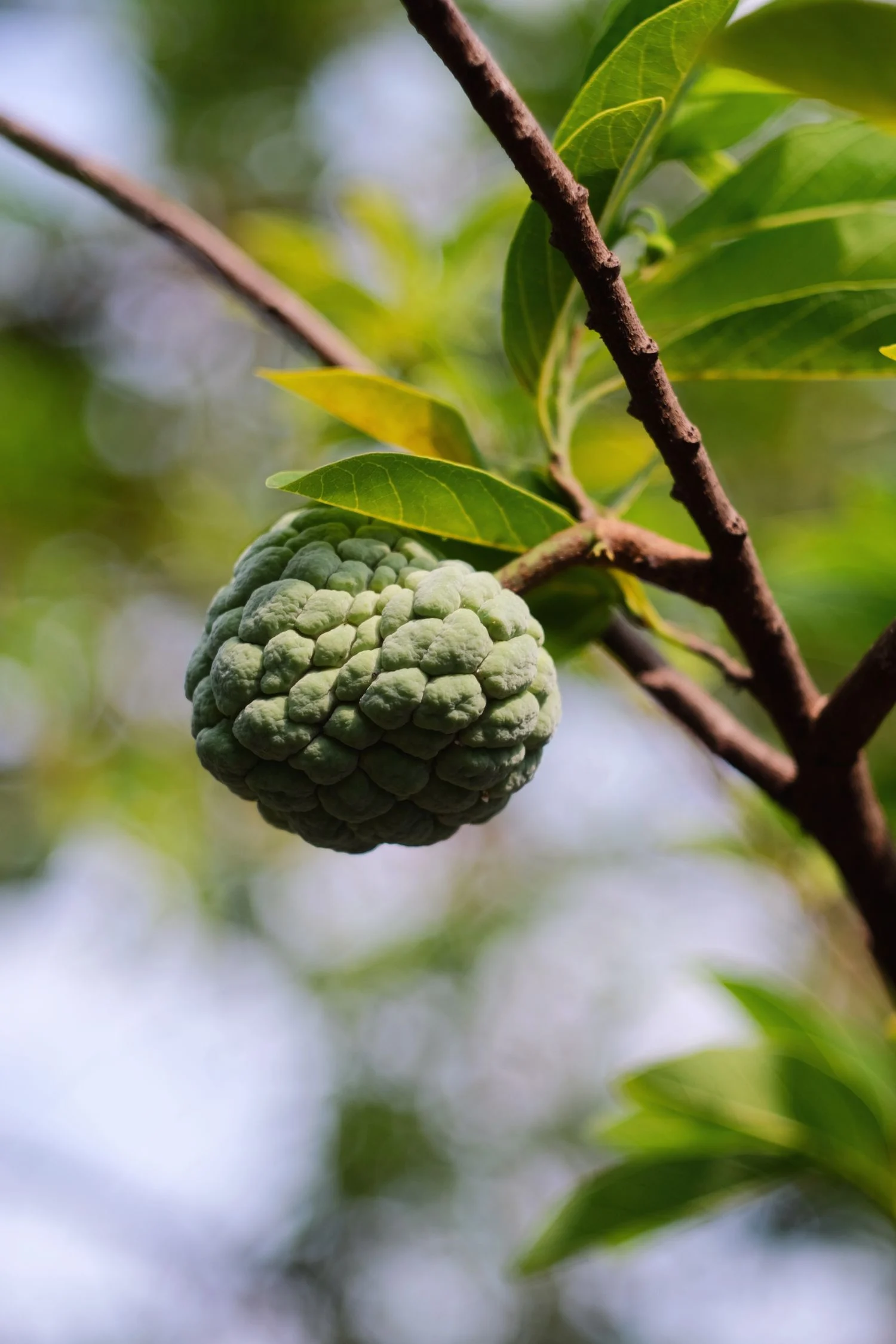
Custard apple can be part of a diabetes-friendly diet when eaten in the right portion. With a glycemic index of 54, it falls in the low-to-medium GI range—lower than ripe mango, pineapple, and many other tropical fruits. Its 4.4 grams of fiber per 100g further slows glucose absorption after eating. The practical limit for most people with diabetes is 100–150g at a sitting, which is roughly half a medium fruit.
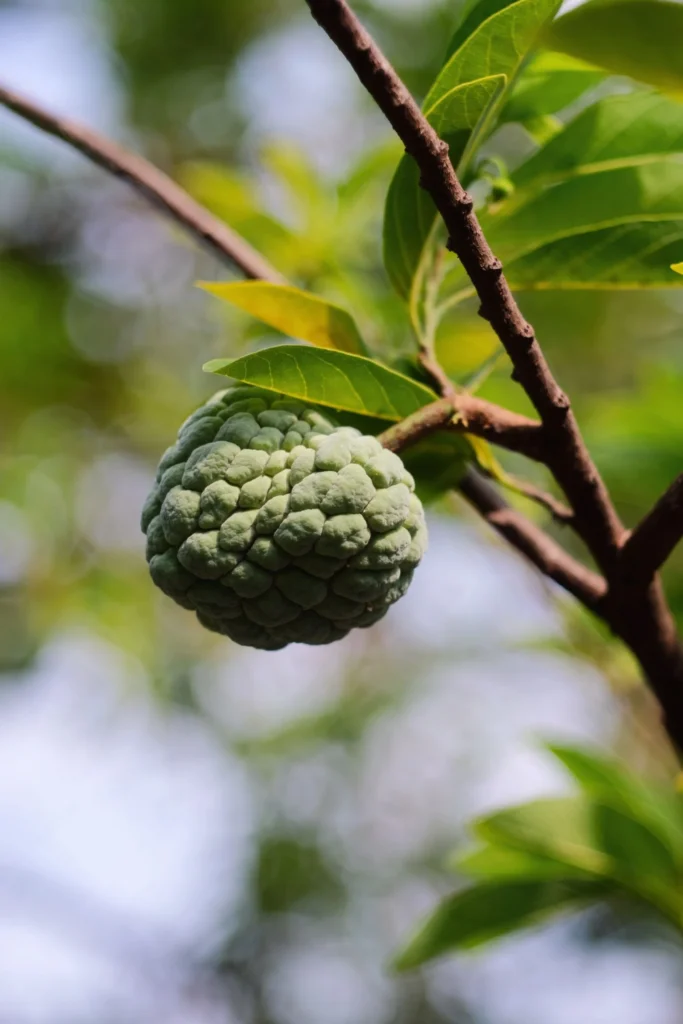
That said, custard apple is not a “free” food. It contains 23.6g of carbohydrates per 100g, which adds up quickly if you eat a whole fruit. Juice made from custard apple removes most of the fiber and causes a sharper blood sugar spike than whole fruit. And individual responses to fruit can vary depending on overall diet, physical activity, current medications, and how well blood glucose is controlled.
This article covers the evidence—the glycemic index, glycemic load, full nutrition profile, safe serving sizes, and practical tips for eating custard apple with diabetes. It also identifies who should be extra careful and how custard apple compares to other common fruits.
What Is Custard Apple?
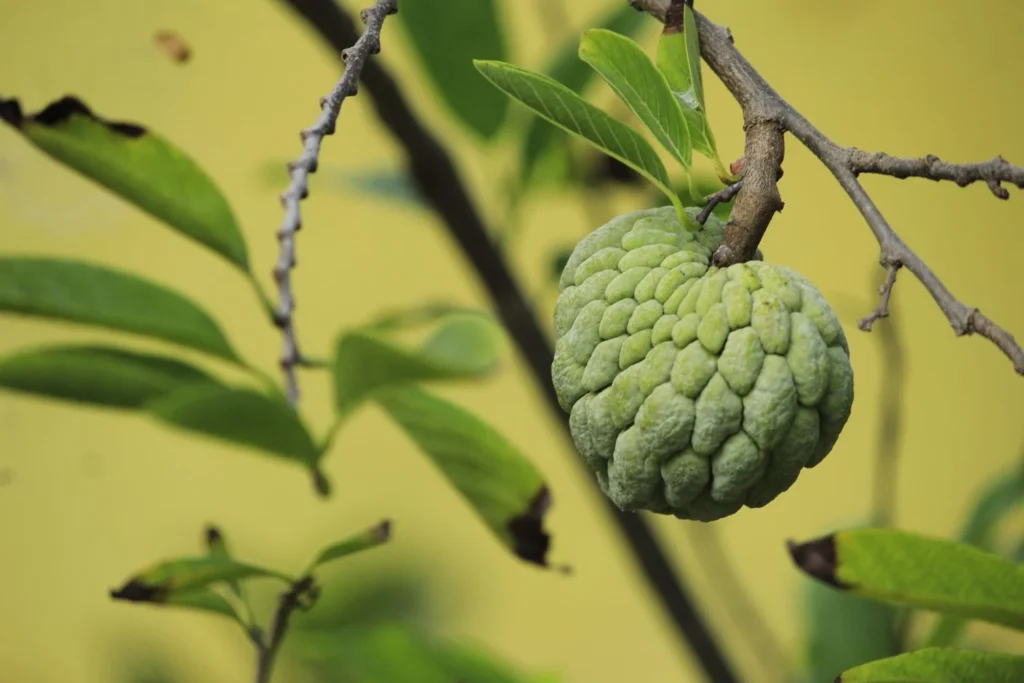
Custard apple (Annona squamosa) is a tropical fruit native to the tropical Americas and the Caribbean, now grown widely across Asia, Africa, and parts of Australia and the Pacific. Depending on the region, it is also called sugar apple, sitaphal, or sweetsop. A related species, cherimoya (Annona cherimola), is sometimes grouped under the same common name but is technically distinct.
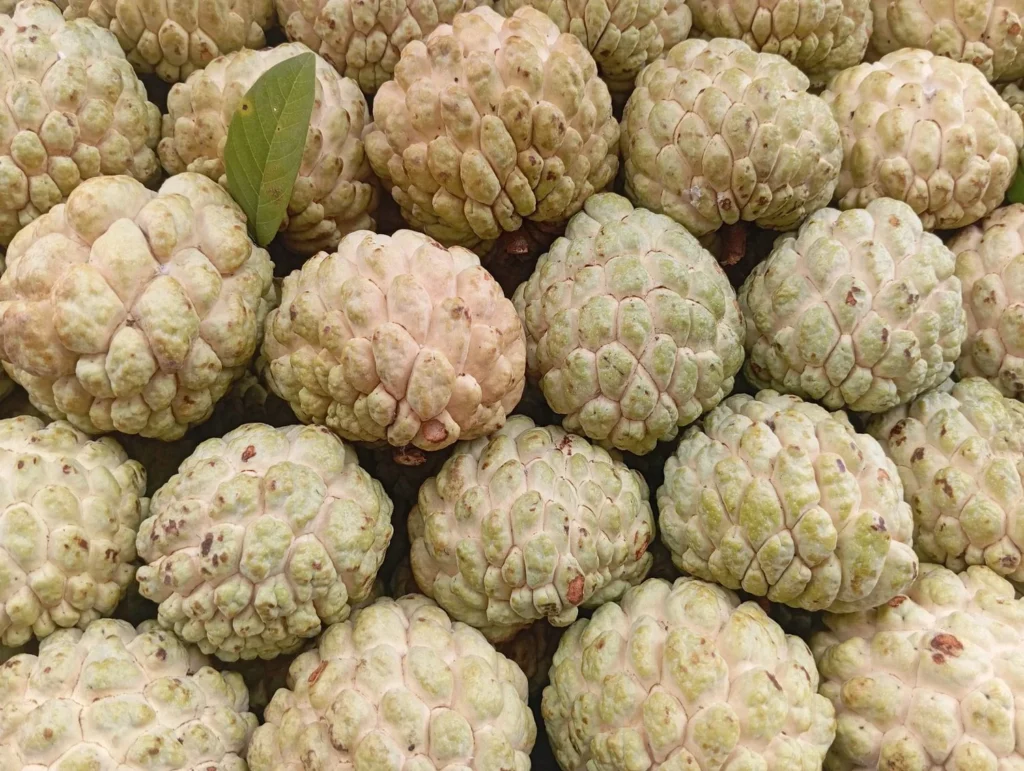
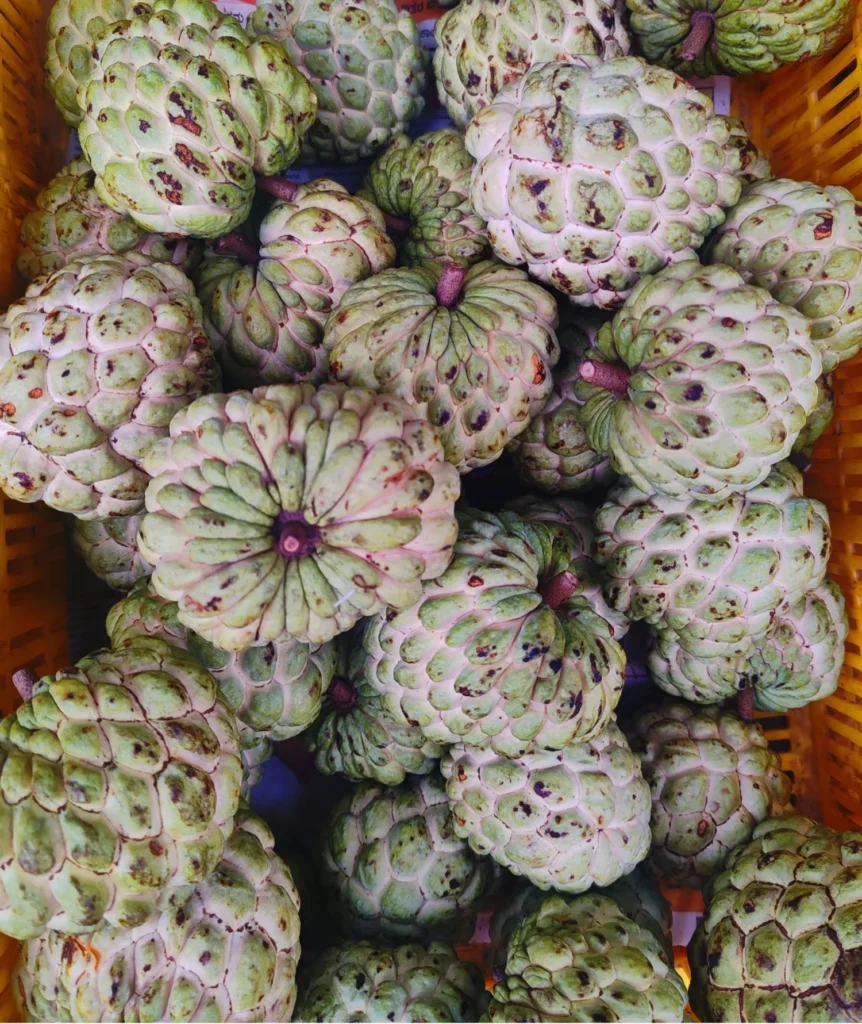
The fruit has a distinctive knobbly, pale green outer skin and a soft, creamy white flesh with a sweet, custard-like flavor—hence the name. Black seeds are distributed throughout the flesh and are not eaten. A typical medium custard apple weighs 200–300g; the edible flesh makes up roughly 60–70% of the whole fruit.
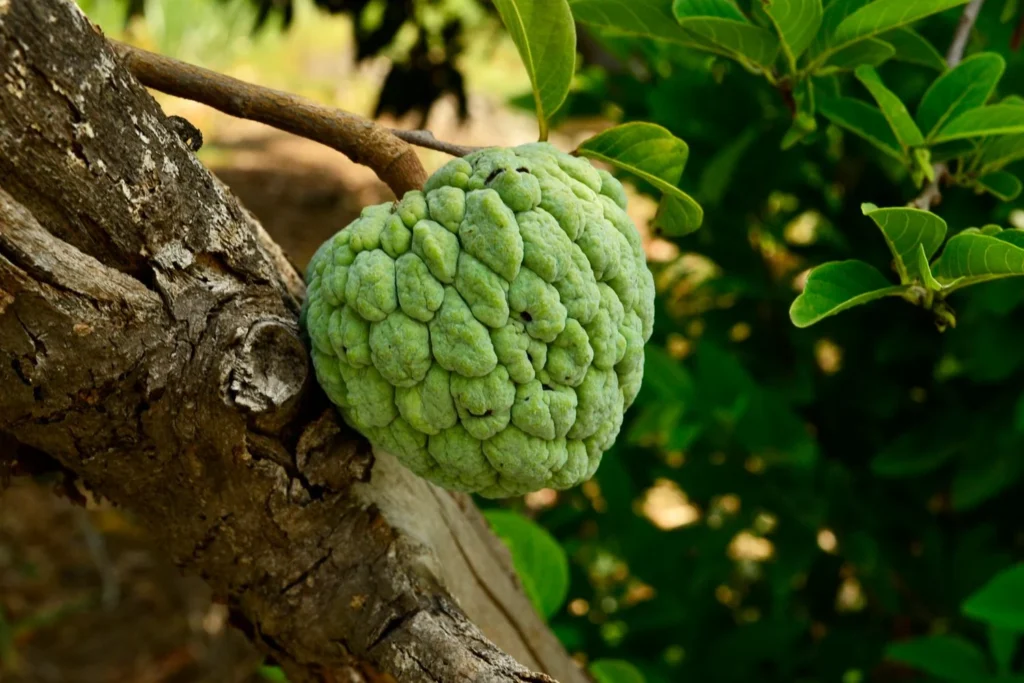
Custard apple is typically eaten fresh and chilled, scooped directly from the skin with a spoon. It is also used in smoothies and desserts in some cultures, though adding sweeteners or mixing with high-GI ingredients changes its nutritional profile significantly. For people with diabetes, fresh whole fruit is always the better option.
The fruit has a short season—generally late summer through autumn in tropical regions—and bruises easily, which is why it remains less common in global supermarkets than fruits like mango or papaya.
Glycemic Index of Custard Apple
The glycemic index (GI) ranks carbohydrate-containing foods on a scale of 0–100 based on how quickly they raise blood glucose compared to pure glucose (GI = 100). A GI of 55 or below is considered low, 56–69 is medium, and 70 or above is high.
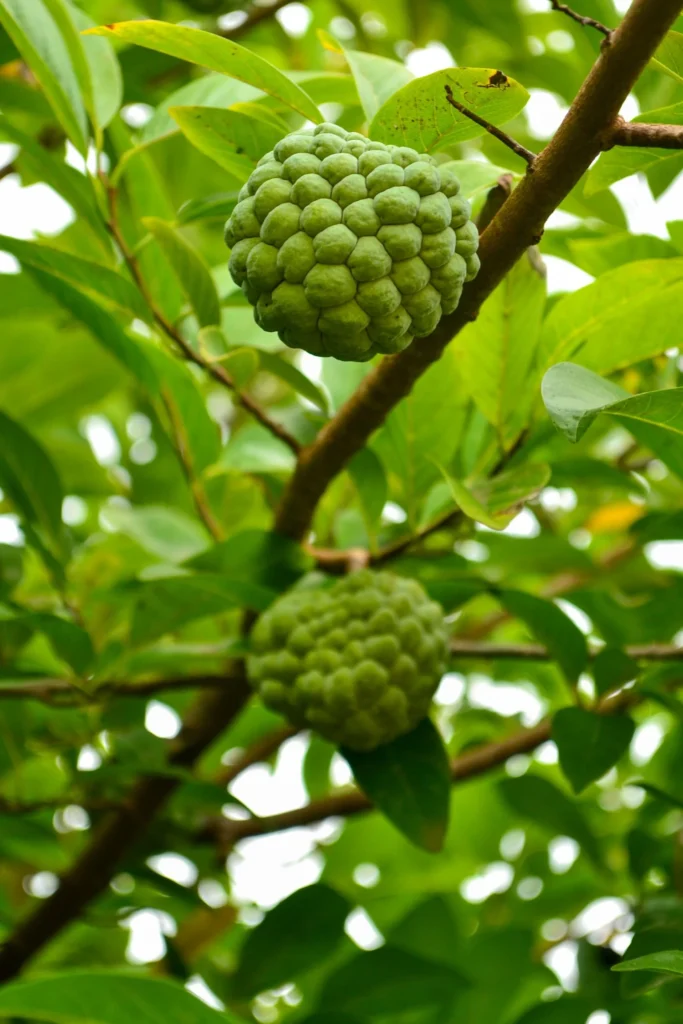
Custard apple has a GI of approximately 54, placing it at the upper edge of the low GI category. This is a more favorable rating than many people expect from such a sweet fruit, and it compares well with other tropical and sub-tropical fruits.
| Fruit | Glycemic Index | GI Category |
|---|---|---|
| Guava | 12 | Low |
| Apple | 36 | Low |
| Pear | 38 | Low |
| Banana | 51 | Low–Medium |
| Custard Apple | 54 | Low–Medium |
| Papaya | 56 | Medium |
| Mango (ripe) | 60 | Medium |
| Pineapple | 66 | Medium |
| Watermelon | 72 | High |
GI values sourced from published glycemic index research and nutritional databases.
The relatively lower GI of custard apple, compared to mango or pineapple, comes partly from its fiber content and the composition of its sugars. However, GI alone does not tell the full story. The quantity you eat matters enormously—a concept better captured by glycemic load, which is covered in the blood sugar section below.
Custard Apple Nutrition Profile
A thorough understanding of custard apple’s nutrition helps explain both its suitability and its limitations for people with diabetes.
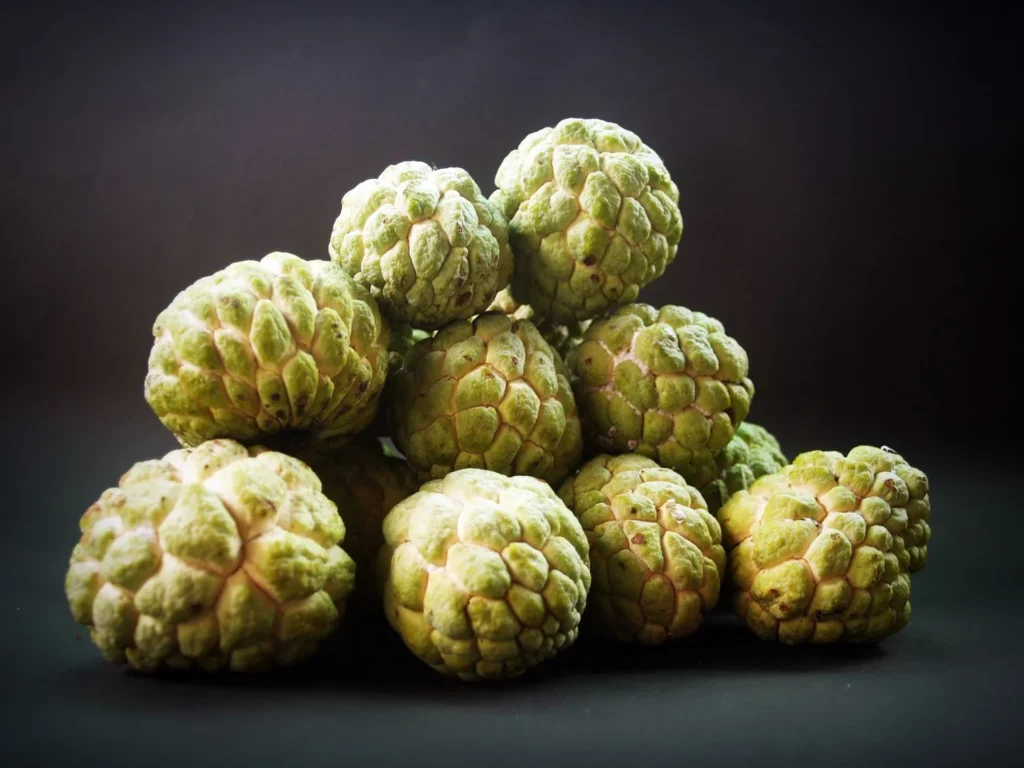
Per 100g of custard apple flesh (Source: USDA FoodData Central):
| Nutrient | Amount per 100g | % Daily Value |
|---|---|---|
| Calories | 94 kcal | — |
| Carbohydrates | 23.6g | — |
| Natural Sugars | 18.9g | — |
| Dietary Fiber | 4.4g | 16% |
| Protein | 2.1g | 4% |
| Fat | 0.6g | 1% |
| Vitamin C | 36.3mg | 40% |
| Potassium | 247mg | 5% |
| Magnesium | 18mg | 4% |
| Calcium | 24mg | 2% |
| Iron | 0.6mg | 3% |
Several nutritional aspects stand out for people managing diabetes:
Fiber (4.4g per 100g): This is meaningfully higher than in mango (1.6g), papaya (1.8g), and even apple (2.4g). Dietary fiber slows the digestion and absorption of carbohydrates, which helps blunt the rise in blood glucose after eating. The fiber content is one of the main reasons custard apple’s blood sugar impact is more moderate than its sweetness might suggest.
Vitamin C (36.3mg per 100g): A 100g serving provides roughly 40% of the daily recommended intake. Vitamin C acts as an antioxidant and may support immune function and blood vessel health—both areas of concern for people with long-term diabetes.
Magnesium (18mg per 100g): Magnesium plays a role in insulin secretion and glucose metabolism. Research has found that lower magnesium levels are more common in people with type 2 diabetes, and dietary intake of magnesium-rich foods is associated with improved insulin sensitivity.
Potassium (247mg per 100g): Potassium supports healthy blood pressure, which is especially relevant for people with diabetes who have a higher risk of hypertension. However, for those with diabetic kidney disease, higher potassium intake may need to be monitored.
How Custard Apple Affects Blood Sugar
Glycemic load (GL) gives a more practical picture of blood sugar impact than GI alone, because it accounts for both the GI of a food and the actual carbohydrate content in a realistic portion.
Glycemic Load formula: GL = (GI × grams of available carbs per serving) ÷ 100
Available carbs = total carbs minus fiber (since fiber is not digested and absorbed as glucose)
For custard apple:
- Available carbs per 100g = 23.6g total carbs − 4.4g fiber = 19.2g
- GL at 100g = (54 × 19.2) ÷ 100 = ~10.4
| Serving Size | Total Carbs | Fiber | Available Carbs | Glycemic Load |
|---|---|---|---|---|
| 50g | 11.8g | 2.2g | 9.6g | ~5.2 |
| 100g | 23.6g | 4.4g | 19.2g | ~10.4 |
| 150g | 35.4g | 6.6g | 28.8g | ~15.6 |
| 200g (1 whole) | 47.2g | 8.8g | 38.4g | ~20.7 |
A GL of 10 is generally classified as medium-low. For most people with well-controlled type 2 diabetes, a 100g serving is manageable. A 150g serving (GL ~15.6) remains within the acceptable range. Eating an entire fruit (200g of flesh, GL ~21) begins to push into territory where blood sugar impact becomes more significant.
One important distinction: eating whole custard apple produces a notably different blood sugar response compared to custard apple juice. Juicing strips out most of the fiber, which means the sugars are absorbed much more rapidly. Whole fruit is always the better choice.
Individual responses to fruit vary. If you want to know exactly how custard apple affects your blood glucose, test your levels before eating and again 2 hours after—this gives you personalized, real-world data. For context on what those numbers mean, see our guide on fasting blood sugar vs HbA1c.
How Much Custard Apple Can a Person with Diabetes Eat?
Portion size is the most important practical factor when including custard apple in a diabetes-friendly diet.
Recommended serving: 100–150g of fresh custard apple flesh per sitting
This is roughly half a medium-sized custard apple. At this amount, the glycemic load stays in the 10–16 range, which is manageable for most people with stable blood glucose control.
| Serving Size | Carbohydrates | Glycemic Load |
|---|---|---|
| 50g | 11.8g | ~5.2 |
| 100g | 23.6g | ~10.4 |
| 150g | 35.4g | ~15.6 |
Based on USDA FoodData Central data and GI of 54.
Count custard apple’s carbohydrates as part of your total carbohydrate budget for that meal or snack. If your dietitian or healthcare provider has recommended 45–60g of carbohydrates per meal, a 100g serving of custard apple contributes about 19–24g of that allowance—roughly a third to a half of your budget. That leaves room for vegetables, legumes, and whole grains in the same meal. For a complete list of diabetes-friendly foods to build meals around, see our best foods for blood sugar control guide.
The timing of consumption also matters. Eating custard apple as a standalone snack between meals—rather than at the end of a high-carbohydrate meal—can help keep the total glycemic impact of any one eating occasion more manageable.
Eating the fruit fresh and chilled also tends to feel satisfying with a smaller portion than you might consume if it were processed or sweetened.
Best Ways to Eat Custard Apple with Diabetes
How you eat custard apple influences its blood sugar impact as much as how much you eat.
Eat it whole, not as juice or extract. Juicing removes the majority of the fiber, turning a medium-GI food into a fast-absorbing sugar drink. Smoothies that blend the whole fruit—including pulp—retain more fiber and are a better option than juice, though they can still concentrate calories and carbs if multiple fruits are used.
Pair it with a protein or healthy fat source. Eating custard apple alongside a small handful of unsalted nuts, plain yogurt, or a boiled egg helps slow carbohydrate absorption and produces a smoother, more gradual blood sugar response. This is one of the most practical strategies for managing the GI of any fruit.
Choose fruit that is ripe but not overripe. As custard apple ripens further, its starch content converts to simple sugars, increasing the overall sugar concentration. A fruit that yields gently to pressure but is not mushy has a lower sugar content than one that is very soft and deeply fragrant.
Eat it earlier in the day. Many people with diabetes find that carbohydrates are processed more efficiently earlier in the day when insulin sensitivity tends to be higher. Mid-morning or early afternoon is generally a better time for fruit consumption than immediately before bed, when elevated blood glucose is harder to monitor and correct.
Keep it occasional, not daily. Eating 100–150g of custard apple two to three times per week is more manageable for blood glucose control than daily consumption, particularly for those whose diabetes is not yet fully stable.
Avoid adding sweeteners. Custard apple is naturally sweet—adding honey, condensed milk, or sugar in desserts defeats the purpose of choosing a lower-GI fruit and significantly increases the carbohydrate load.
Who Should Be Extra Careful
Custard apple suits many people with diabetes well, but certain groups need to approach it with more caution or avoid it during specific periods.

People with poorly controlled blood glucose. If your HbA1c is above 8% or your fasting blood glucose is consistently elevated despite medication, limiting all moderate-carbohydrate foods—including fruit—is sensible until better control is established. Work with your healthcare provider on the overall dietary approach before adding new foods.
Those on blood glucose-lowering medications. Sulfonylureas (such as glipizide or glyburide), meglitinides, and insulin all lower blood sugar directly. Adding carbohydrate-containing foods without accounting for their effect can cause blood glucose to drop too low (hypoglycemia). Always count custard apple’s carbohydrates within your total carbohydrate plan, and consult your doctor or diabetes educator if you’re unsure how to adjust.
People with diabetic kidney disease (diabetic nephropathy). Custard apple provides 247mg of potassium per 100g. For people with chronic kidney disease alongside diabetes, potassium intake may need to be limited based on kidney function tests. If your nephrologist or dietitian has advised a low-potassium diet, custard apple should be discussed with them before including it regularly.
People with type 1 diabetes. Custard apple can be included in a type 1 diabetes diet, but it requires precise carbohydrate counting to match insulin dosing accurately. The 100g serving contains approximately 23.6g of total carbohydrates, which should be factored into your mealtime insulin calculation. Always confirm dietary changes with your diabetes care team.
How Custard Apple Compares to Other Fruits for Diabetes
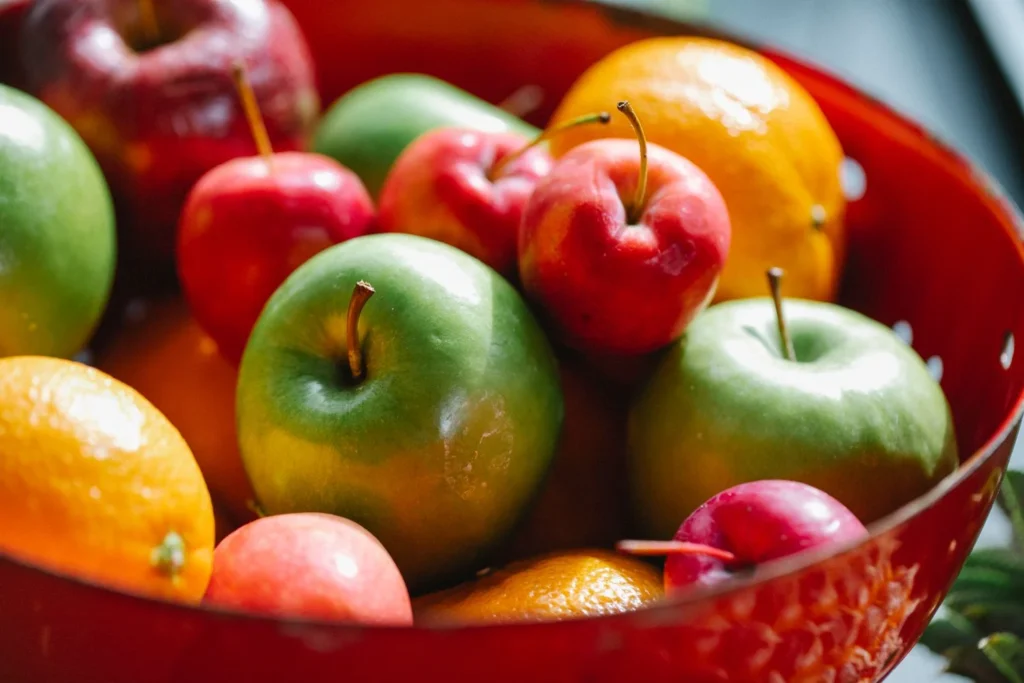
People with diabetes are often given blanket advice to avoid sweet fruits entirely—but fruit suitability depends on GI, fiber content, and the realistic portion you eat.
| Fruit | GI | Fiber (per 100g) | Carbs (per 100g) | GL at 100g | Suitability |
|---|---|---|---|---|---|
| Guava | 12 | 5.4g | 14.3g | ~1.1 | Excellent |
| Apple | 36 | 2.4g | 13.8g | ~4.3 | Very good |
| Pear | 38 | 3.1g | 15.5g | ~4.7 | Very good |
| Custard Apple | 54 | 4.4g | 23.6g | ~10.4 | Good with portion control |
| Papaya | 56 | 1.8g | 11g | ~5.2 | Good in small portions |
| Mango (ripe) | 60 | 1.6g | 15g | ~8.1 | Eat in limited amounts |
| Banana | 51 | 2.6g | 22.8g | ~10.5 | Eat in smaller portions |
| Grapes | 46 | 0.9g | 17.2g | ~7.4 | Moderate – small portions |
Sources: USDA FoodData Central, published GI research.
Custard apple has a higher carbohydrate content per 100g than most other common fruits, but its fiber content is also among the highest—higher than mango, papaya, and grapes. This partially offsets the carbohydrate load and contributes to a more moderate glycemic response than the raw carb number would suggest.
Compared directly to mango: custard apple has a lower GI (54 vs. 60) and nearly three times the fiber (4.4g vs. 1.6g), making it a more diabetes-friendly choice between the two.
Compared to guava: guava is significantly better in terms of both GI and GL. If you’re looking for the most diabetes-friendly everyday tropical fruit, guava and apple are typically better options. Custard apple fits well as an occasional choice rather than a daily staple.
The Bottom Line
Custard apple is a nutritious fruit with a glycemic index of 54, 4.4g of fiber per 100g, and useful amounts of vitamin C, potassium, and magnesium. For most people with type 2 diabetes that is reasonably well managed, a 100–150g serving (roughly half a medium fruit) can be included in a balanced diet without causing significant blood glucose problems.

The critical factors are portion size, eating the whole fruit rather than juice, and ideally pairing it with a protein or fat source to further moderate the glucose response. People with poorly controlled diabetes, kidney disease alongside diabetes, or those on medications that directly lower blood sugar should consult their healthcare provider or registered dietitian before making it a regular part of their diet.
As with all dietary advice for diabetes, individual responses vary. Checking your blood glucose before and two hours after eating custard apple will tell you more about how your body specifically handles it than any table or guideline can. To understand what your readings mean, see our guide on what HbA1c means and how it tracks long-term blood sugar control.
This article is for general informational purposes only and is not a substitute for personalized medical or nutritional advice. Always consult your healthcare provider or registered dietitian for guidance tailored to your specific situation.
Frequently Asked Questions
What is the glycemic index of custard apple?
Custard apple has a glycemic index of approximately 54, placing it at the upper boundary of the low GI range (≤55). This means it raises blood sugar more slowly than medium-to-high GI foods like ripe mango (GI 60), pineapple (GI 66), or white bread (GI 75). However, a favorable GI does not remove the need for portion control, since the total carbohydrate content per serving still matters.
Can people with type 2 diabetes eat custard apple every day?
Daily consumption is generally not recommended, particularly if you’re monitoring carbohydrate intake carefully. A 100g serving contains approximately 23.6g of carbohydrates, which adds up meaningfully if eaten every day. Eating custard apple two to three times per week in a 100–150g portion is a more sustainable approach for most people. If you do eat it daily, tracking its carbohydrate contribution within your overall daily budget is essential.
Is custard apple better than mango for diabetes?
Yes, custard apple compares favorably to ripe mango for blood sugar management. Custard apple has a lower GI (54 vs. approximately 60 for ripe mango) and significantly more fiber per 100g (4.4g vs. 1.6g). Both should be eaten in controlled portions, but between the two, custard apple produces a more moderate blood sugar response. That said, mango’s carbohydrate content per 100g is lower (around 15g vs. 23.6g), so the overall glycemic load difference is smaller than GI alone suggests.
What is the glycemic load of custard apple?
At a 100g serving, the glycemic load of custard apple is approximately 10.4—in the medium-low range. At a 150g serving, the GL rises to around 15.6. A GL under 10 is considered low, 11–19 is medium, and 20 or above is high. Most people with well-managed type 2 diabetes can handle a GL of 10–16 from a single food, particularly when the rest of the meal is low in carbohydrates.
When is the best time to eat custard apple if you have diabetes?
Mid-morning or early afternoon tends to work best for most people. Insulin sensitivity is generally higher during the day, which means carbohydrates—including those from fruit—are handled more efficiently. Eating custard apple as a standalone snack, rather than at the end of a carbohydrate-heavy meal, keeps the total glycemic load of any eating occasion more manageable. Eating it late at night, particularly just before bed, makes it harder to monitor and respond to elevated blood glucose during sleep.