You got a number back from your doctor.
Maybe it was 6.1%. Maybe it was 8.4%.
And maybe nobody explained what it meant — you just walked out of the office with a piece of paper and a vague sense that something was either fine or not fine.
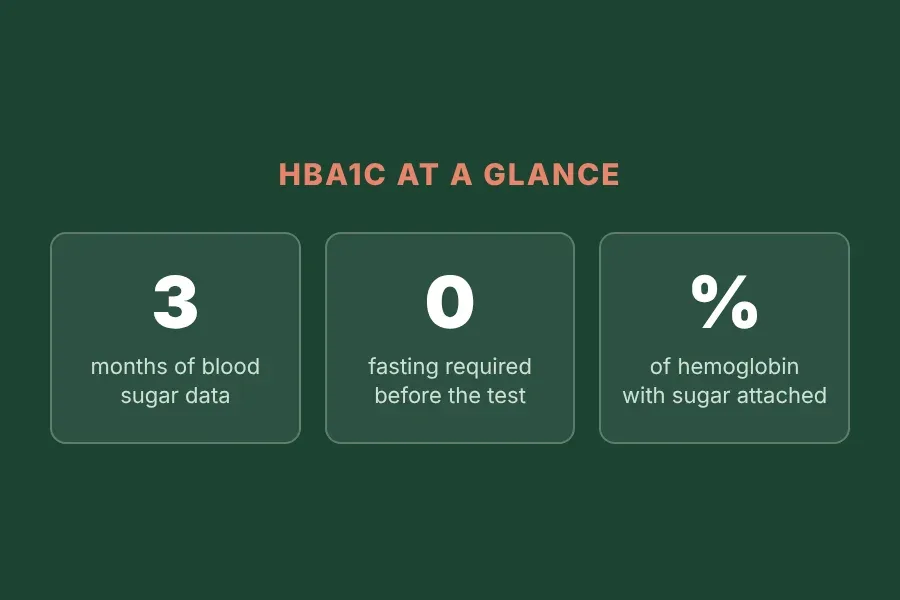
Here’s what HbA1c actually is: a blood test that measures your average blood sugar over the past two to three months. One number. Three months of information. No fasting required.
It’s the most important test in diabetes diagnosis and management. And once you understand what your number means, what can make it wrong, and what actually moves it — everything gets a lot clearer.
That’s what this covers.
This article is for informational purposes only. It is not a substitute for professional medical advice, diagnosis, or treatment. Always consult your doctor or a qualified healthcare provider with questions about your health.
What Is HbA1c?
HbA1c stands for hemoglobin A1c. You’ll also see it written as A1c, glycated hemoglobin, or glycosylated hemoglobin. They all mean the same thing.
Here’s the idea.
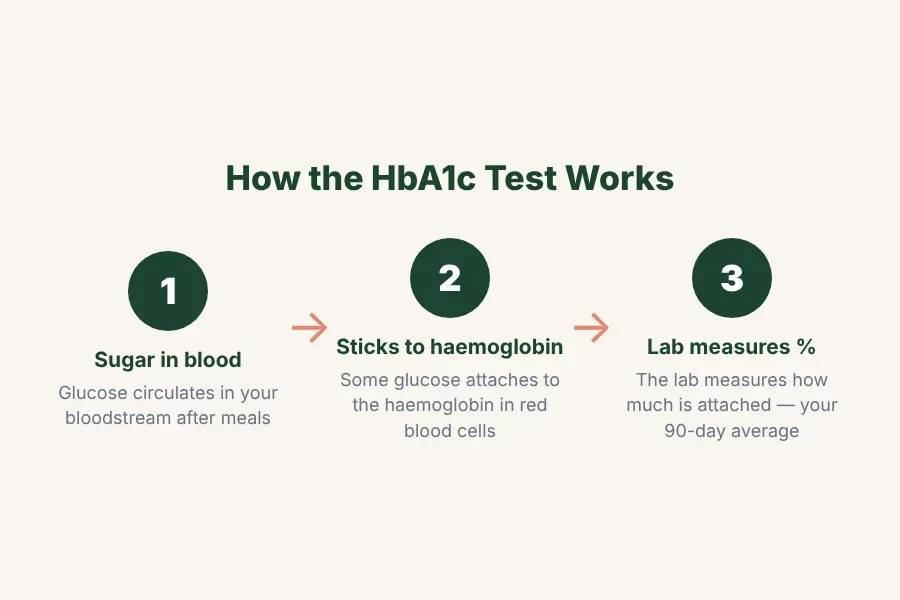
Your red blood cells carry a protein called hemoglobin. When sugar is present in your bloodstream, some of it sticks to that hemoglobin. The more sugar in your blood, the more sticks.
Red blood cells live for about 90 to 120 days. So the HbA1c test measures how much sugar has attached to your hemoglobin over that entire period — giving your doctor a picture of your average blood sugar over roughly three months, not just what it was this morning.
That’s why it’s more reliable than a single fasting glucose reading. One morning reading can be misleading. HbA1c captures the whole picture.
It’s used to diagnose both type 1 and type 2 diabetes, monitor ongoing management, and catch prediabetes before it progresses.
In the UK and Europe, results are reported in mmol/mol. In the US, Canada, and Australia, they’re reported as a percentage. If your result says 48 mmol/mol, that’s the same as 6.5%.
How Does the HbA1c Test Work?
A nurse draws a small amount of blood — usually from a vein in your arm, sometimes from a finger prick.
That sample goes to a lab. The lab measures what percentage of your hemoglobin has sugar attached to it.
The key thing: you don’t need to fast beforehand.
Because the test captures a three-month average, what you ate for breakfast doesn’t change the result. You can have the test at any time of day. Most results come back within a few days. Some clinics offer point-of-care testing where you get the number in minutes.
HbA1c Results: What Your Number Means
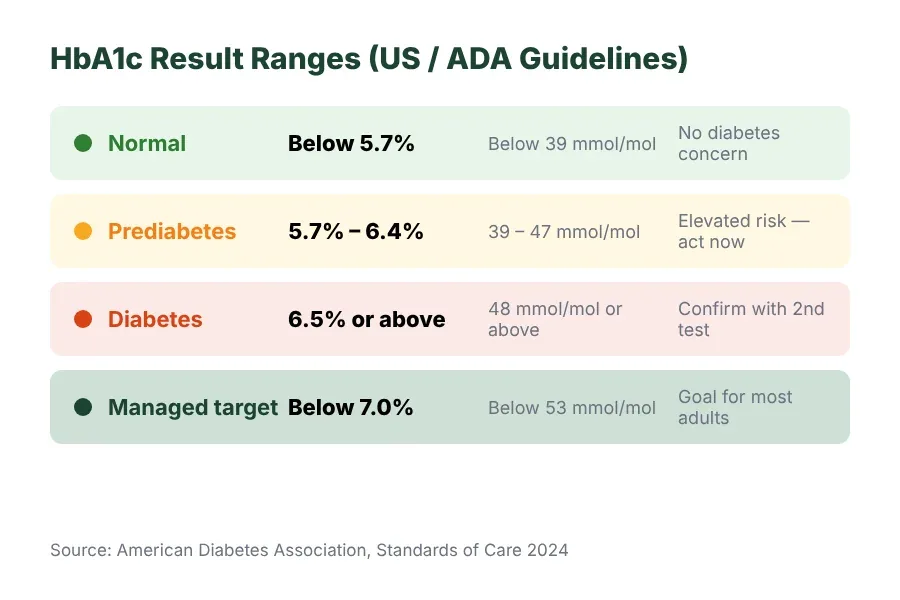
This is where it gets a little more complicated — because the thresholds aren’t the same everywhere.
In the US (ADA guidelines):
| Result | % | mmol/mol | What It Means |
|---|---|---|---|
| Normal | Below 5.7% | Below 39 mmol/mol | No diabetes concern |
| Prediabetes | 5.7% – 6.4% | 39 – 47 mmol/mol | Elevated risk — lifestyle changes can reverse it |
| Diabetes | 6.5% or above | 48 mmol/mol or above | Diabetes |
| Managed diabetes target | Below 7.0% | Below 53 mmol/mol | Goal for most adults with diabetes |
In the UK and Australia (WHO/NHS guidelines):
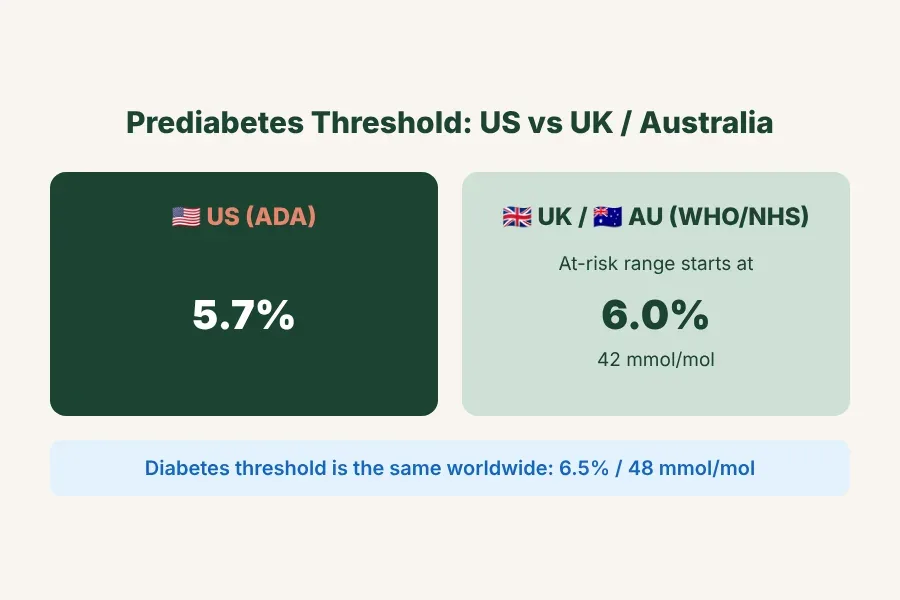
The lower bound of the “at risk” range is 42 mmol/mol (6.0%), not 39 mmol/mol (5.7%). If your result sits between 39–41 mmol/mol, you’re in the grey zone — normal by US standards, potentially borderline by UK/Australian standards. Your doctor will tell you which guideline applies to your care.
The diabetes threshold of 6.5% / 48 mmol/mol is consistent worldwide.
Confirming a Diabetes Diagnosis
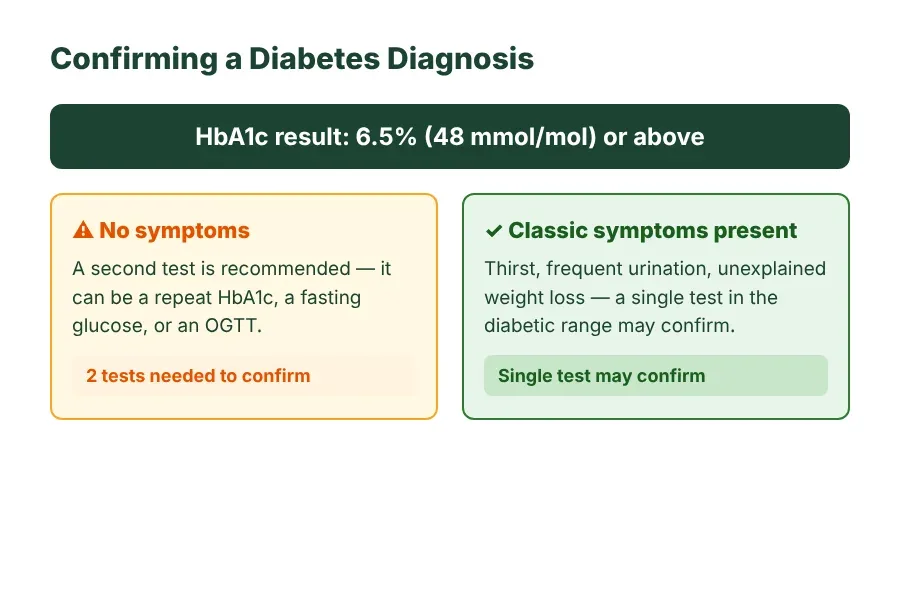
A result of 6.5% (48 mmol/mol) or above suggests diabetes — but in most cases, your doctor will want to confirm it.
Here’s what that actually looks like in practice.
If you have no symptoms: a second test is typically recommended, either a repeat HbA1c, a fasting plasma glucose test, or an oral glucose tolerance test. The second test doesn’t have to be another HbA1c.
If you have classic symptoms — excessive thirst, frequent urination, unexplained weight loss — a single test in the diabetic range may be enough to confirm the diagnosis without waiting for a second draw.
Your doctor will make this call based on your full picture. The key message: one high result isn’t automatically a confirmed diagnosis, but it should always be followed up promptly.
What to Do Based on Your Result
Below 5.7% (US) or below 42 mmol/mol (UK/AU) — normal. Keep doing what you’re doing. If you have risk factors — overweight, family history of diabetes, sedentary lifestyle — get retested every one to three years.
5.7%–6.4% (US) or 6.0%–6.4% (UK/AU) — elevated risk. This is where lifestyle changes matter most. The Diabetes Prevention Program — a large US clinical trial — found that losing 5–7% of body weight and getting 150 minutes of moderate exercise per week reduced the risk of progressing to type 2 diabetes by 58%. That’s not a small effect.
6.5% and above — diabetes range. Your doctor will follow up to confirm and discuss next steps. The important thing: this number moves. Many people lower their HbA1c significantly within three to six months. If you’ve been asking whether type 2 diabetes can be reversed, the answer is more encouraging than most people expect.
Above 10% — high priority. At this level, complications aren’t a distant risk. Your doctor will likely recommend medication alongside lifestyle changes, and promptly. Don’t wait this one out.
HbA1c Target Ranges: What Should Yours Be?
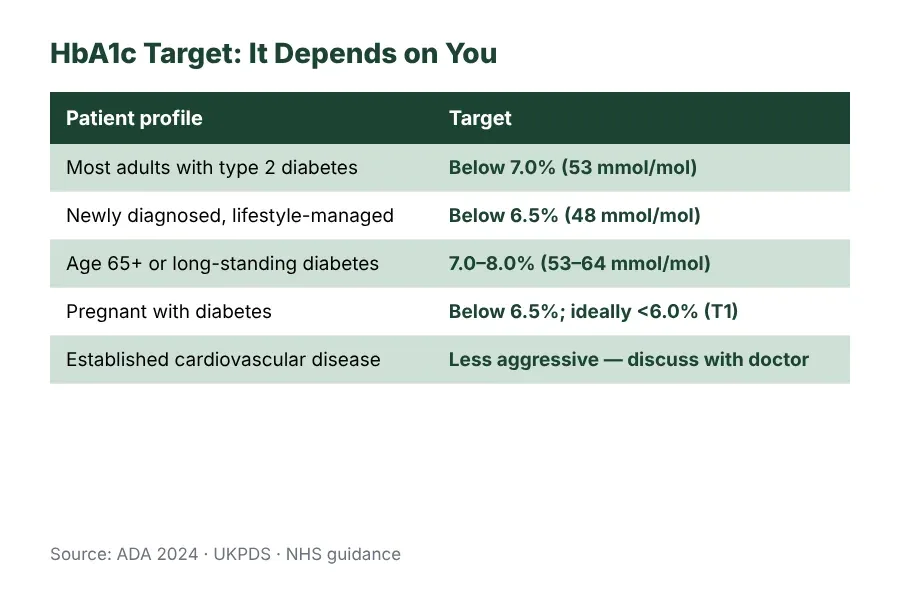
The standard target — below 7.0% (53 mmol/mol) — applies to most adults with type 2 diabetes.
But it’s not right for everyone.
If you have type 1 diabetes: targets and management are fundamentally different. You’re insulin-dependent from the start, and your doctor may set tighter targets depending on your hypoglycemia history. The strategies in the “how to lower” section below are designed primarily for type 2 — if you have type 1, work directly with your care team.
If you’re over 65, or have had diabetes for many years: a slightly higher target of 7.0–8.0% (53–64 mmol/mol) is often appropriate. Pushing lower increases hypoglycemia risk, which is more dangerous in older adults.
If you’re newly diagnosed or managing through lifestyle alone: some doctors aim for below 6.5%. Evidence from the UK Prospective Diabetes Study shows that tighter control early in the disease reduces long-term complication risk.
If you’re pregnant with diabetes: targets are tighter — usually below 6.5% (48 mmol/mol), and ideally below 6.0% in the first trimester. High blood sugar affects fetal development.
If you have established cardiovascular disease: your doctor may set a less aggressive target to reduce hypoglycemia risk, which can trigger cardiac events.
Your HbA1c target is personal. What’s right for a 38-year-old just diagnosed with type 2 is different from what’s right for a 72-year-old managing it for two decades. Talk to your doctor about what target makes sense for your situation.
Can HbA1c Be Inaccurate? (And Who It Misleads)
Here’s something most guides don’t tell you.
The HbA1c test can be wrong.
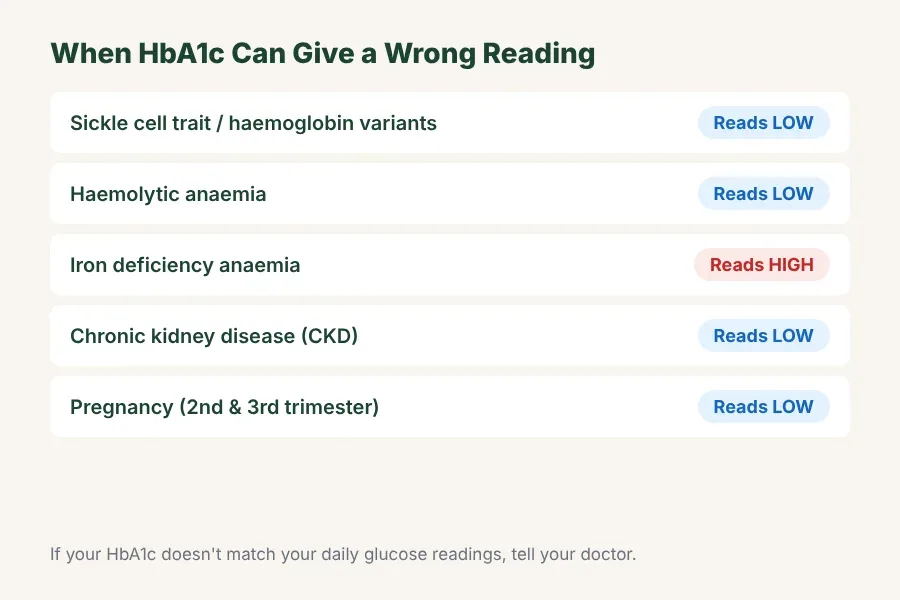
Not often. But for certain people, it consistently gives a false reading — either too high or too low. And if you’re in one of these groups and nobody’s flagged it, you might be making decisions based on the wrong number.
Sickle cell trait or other hemoglobin variants. The test relies on hemoglobin A. People with sickle cell trait, hemoglobin C, or other variants have structurally different hemoglobin — and depending on the lab method used, results can read falsely low. Sickle cell trait affects roughly 8% of Black Americans and is common in parts of Africa, the Mediterranean, and South Asia.
Hemolytic anemia. Red blood cells that die faster than normal haven’t been around long enough to collect as much sugar. HbA1c reads falsely low.
Iron deficiency anemia. The opposite — red blood cells last longer than normal, giving more time for sugar to accumulate. HbA1c reads falsely high.
Chronic kidney disease (CKD). CKD causes shortened red blood cell survival, which pushes HbA1c falsely low. This matters because CKD is common in people with diabetes — it can make blood sugar control look better than it is.
Pregnancy. Especially in the second and third trimesters, red cell turnover changes and results can read low. Continuous glucose monitoring (CGM) or a fructosamine test is often more reliable during pregnancy.
Ethnic background. There’s a separate and significant issue worth knowing about. Research published in major peer-reviewed journals, among them the Annals of Internal Medicine, has found that HbA1c reads systematically higher in Black Americans, and in some South Asian populations, at equivalent blood glucose levels. This isn’t about sickle cell trait. It appears to reflect differences in red blood cell lifespan and glycation rates. The practical implication: in these populations, HbA1c may overestimate blood sugar control problems at the individual level. If your doctor suspects a mismatch between your HbA1c and your daily glucose readings, they may order additional tests.
If any of this applies to you and your HbA1c result doesn’t match your daily glucose readings or how you’re feeling, say so. Your doctor can order a fructosamine test — a measure of average blood glucose over the past two to three weeks that doesn’t depend on hemoglobin — or calculate a Glucose Management Indicator (GMI) from your CGM data.
The wrong number means the wrong decisions.
How to Lower HbA1c: Ranked by How Much Each Works
The research here is fairly clear.
Some strategies move the number a lot. Some move it a little. And combining several of them is more powerful than any single one.
Here’s what the evidence shows for average HbA1c reduction in people with type 2 diabetes:
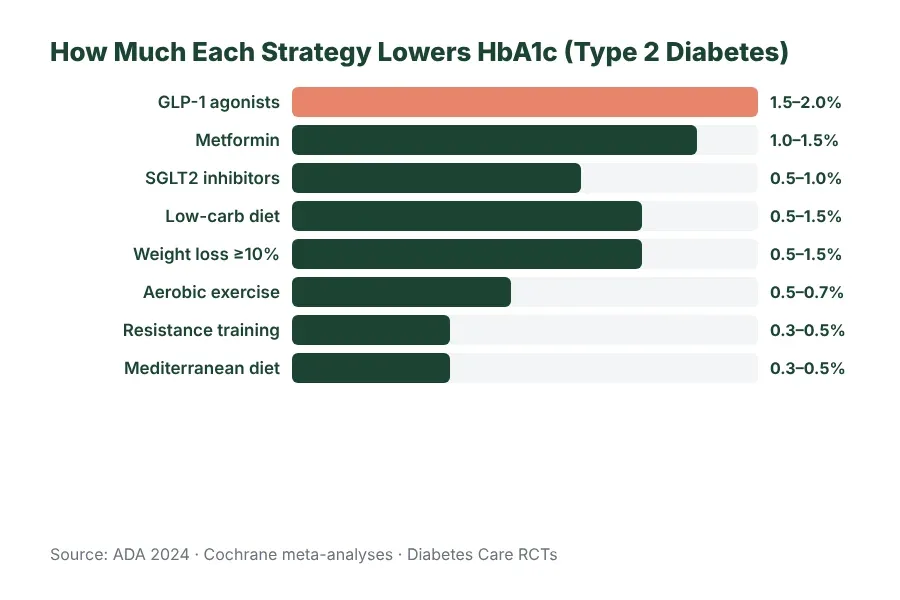
| Strategy | Average A1c Reduction | Typical Timeframe | Notes |
|---|---|---|---|
| GLP-1 receptor agonists (e.g. semaglutide, liraglutide) | 1.5% – 2.0% | 3–6 months | Prescription required; cost varies significantly — discuss with your doctor |
| SGLT2 inhibitors (e.g. empagliflozin, dapagliflozin) | 0.5% – 1.0% | 3 months | Also reduce cardiovascular and kidney risk |
| Metformin | 1.0% – 1.5% (up to 2.0% from very high baseline) | 3 months | Usually the first medication prescribed |
| Low-carbohydrate diet (under 130g carbs/day; under 50g for very low-carb) | 0.5% – 1.5% | 3 months | Effect size depends on baseline A1c and adherence |
| Significant weight loss (≥10% body weight) | 0.5% – 1.5% | 3–6 months | Especially powerful in early-stage T2D |
| Aerobic exercise (150+ min/week) | 0.5% – 0.7% | 3 months | Walking, cycling, swimming all count |
| Resistance training (2–3x per week) | 0.3% – 0.5% | 3 months | Builds insulin-sensitive muscle |
| Mediterranean-style diet | 0.3% – 0.5% | 3 months | More sustainable long-term than strict carb restriction for many |
A few things worth knowing:
Diet changes work faster than most people expect. Research published in Diabetes Care found that people with type 2 diabetes who significantly reduced carbohydrate intake lowered their HbA1c by an average of 1.0% in just 12 weeks — without changing their medication.
Aerobic and resistance training together outperform either alone. Multiple meta-analyses show the combination consistently beats a single exercise type.
Medication has the largest individual effect — but lifestyle changes can achieve meaningful results on their own, particularly when A1c isn’t severely elevated. They also improve other markers: blood pressure, cholesterol, weight.
Look, there’s no single magic fix. The people who lower their HbA1c most dramatically are usually doing several things at once — cutting refined carbs, moving more, losing some weight, sleeping better. The effects compound. For a detailed breakdown of how to do this without medication, see our guide on how to lower A1c without medication.
How Long Does It Take to Lower HbA1c?
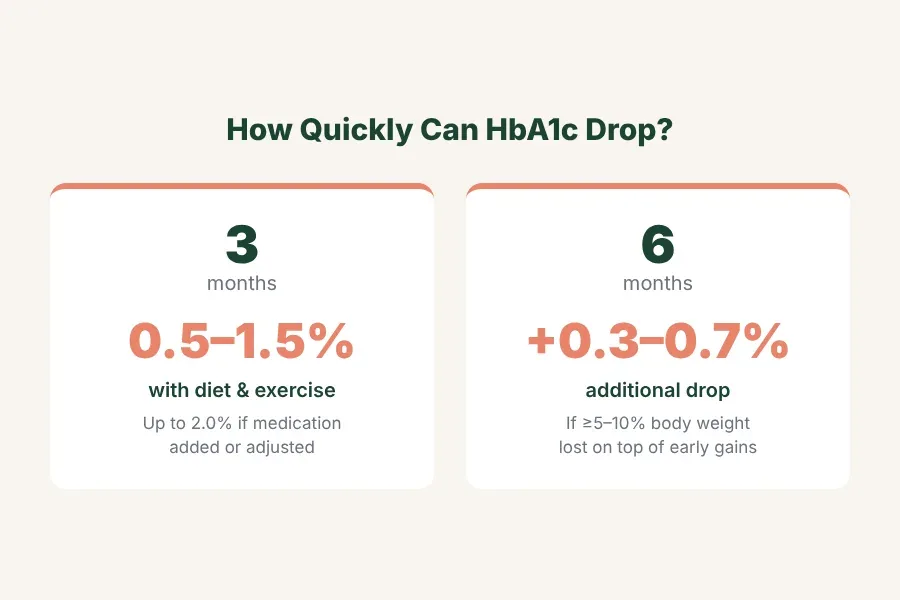
Faster than most people expect.
Because HbA1c reflects a three-month average, consistent changes you make today will show up at your next test. You’re not waiting years to see progress.
At 3 months: Most people making genuine dietary and exercise changes see a drop of 0.5% to 1.5%. If medication has been added or adjusted, the drop can reach 1.0% to 2.0%.
At 6 months: If weight loss has occurred — even 5–10% of body weight — HbA1c typically drops an additional 0.3% to 0.7% on top of early gains.
What gets in the way: Life. Stress spikes blood sugar — cortisol raises glucose directly. Poor sleep does the same. Work pressure, family demands, shift work — these aren’t excuses, they’re real metabolic factors that affect your A1c even when your diet is dialled in. If your numbers aren’t moving the way you expected, it’s worth looking at sleep and stress alongside food and exercise.
And here’s why small drops matter even if they don’t look dramatic:
Research from the UK Prospective Diabetes Study found that each 1% reduction in HbA1c is associated with roughly a 25–37% reduction in microvascular complications — eye damage, kidney damage, nerve damage.
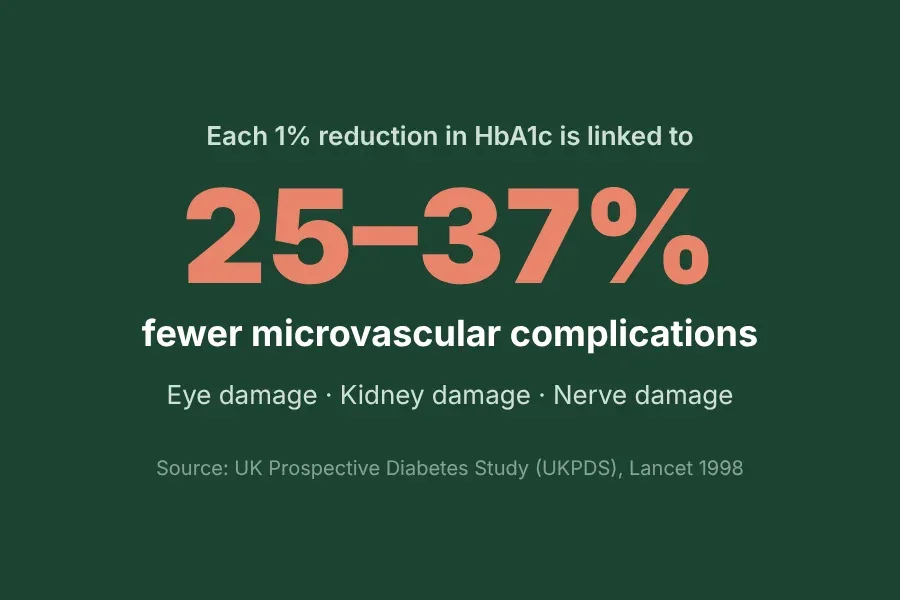
You don’t need a perfect result. You need a better one than last time.
HbA1c vs. Blood Sugar: What’s the Difference?
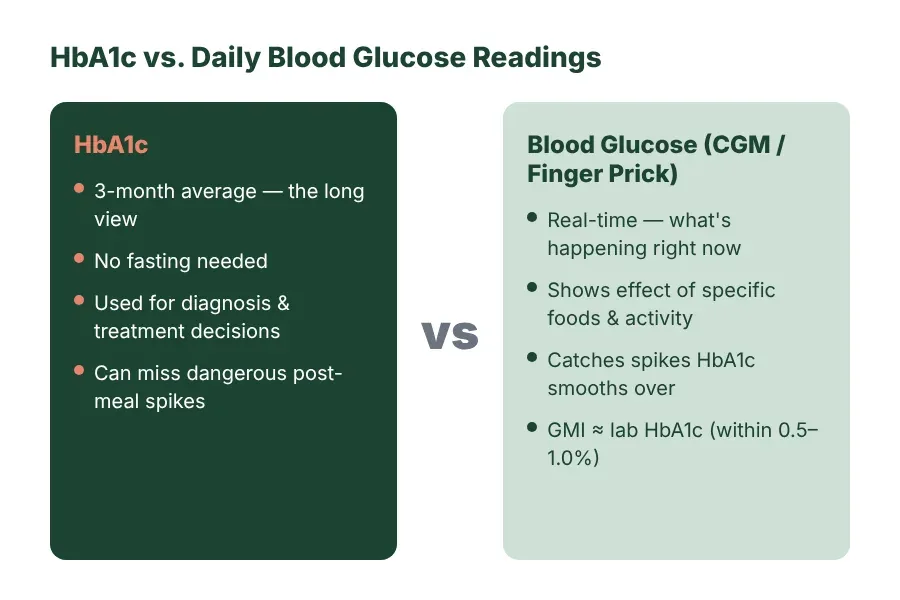
Both measure blood sugar. But they answer different questions.
HbA1c answers: what has my average blood sugar been over the last three months? It’s the long view. It’s what your doctor uses to assess overall control and adjust your treatment plan.
Blood glucose readings — from a finger prick meter or CGM — answer: what is my blood sugar right now? They tell you what specific foods, stress, and activity do to your sugar in real time.
The thing is, you need both.
A decent HbA1c can hide dangerous spikes after meals that a three-month average smooths over. Someone with wild swings — very high and very low — might show an HbA1c in the “normal” range that masks serious instability. For a deeper look at when each test matters and what the numbers mean side by side, see our guide on fasting blood sugar vs HbA1c.
If you’re using a CGM, your device likely shows a Glucose Management Indicator (GMI) — an estimated HbA1c calculated from your average sensor readings. On average, GMI falls within 0.5–1.0% of a lab result — but individual variation can be wider, particularly if you have a condition that affects red blood cell lifespan. Think of it as a useful directional signal, not a substitute for your lab draw.
How Often Should You Get Tested?
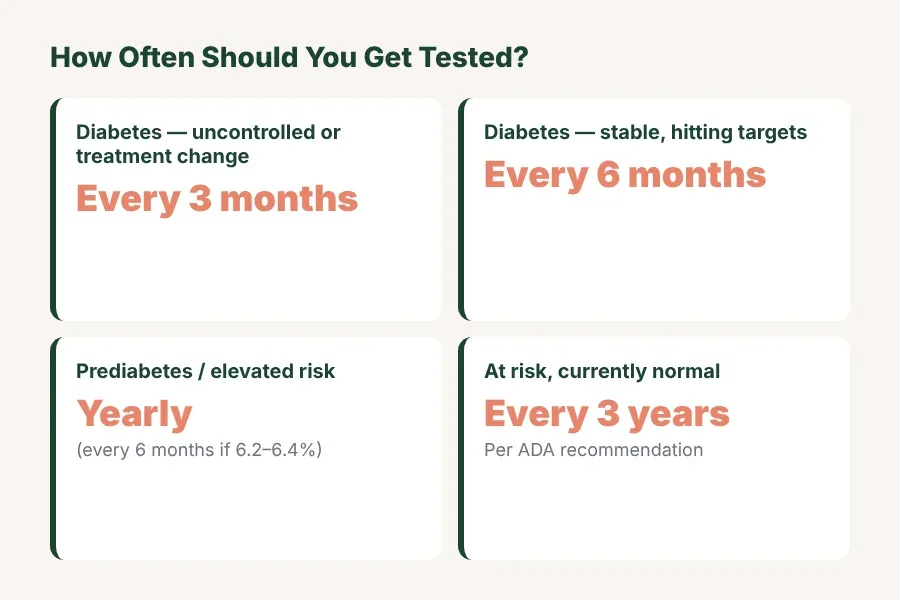
It depends on where you are.
If you have diabetes and it’s not yet well controlled, or you’ve recently changed treatment: every 3 months.
If you have diabetes and you’re stable and hitting your targets: every 6 months.
If you have prediabetes (or are at elevated risk): once a year is typical. Every 6 months if your reading is in the upper end of the range (6.2–6.4% / 44–47 mmol/mol).
If you’re at risk but your result is currently normal: the ADA recommends testing every 3 years for adults with risk factors — overweight, family history of diabetes, sedentary lifestyle.
More frequent testing is rarely harmful. Catching a trend early gives you more time to respond.
Frequently Asked Questions
What does HbA1c stand for? HbA1c stands for hemoglobin A1c. “Glycated hemoglobin” and “glycosylated hemoglobin” mean the same thing. All three refer to the same test.
Do I need to fast before an HbA1c test? No. Because the test measures a three-month average rather than your current blood sugar, eating beforehand doesn’t affect the result. You can have the test at any time of day.
Can I lower my HbA1c without medication? In many cases, yes — particularly for prediabetes or newly diagnosed type 2 diabetes. Diet, regular exercise, and weight loss can lower HbA1c meaningfully. See our full guide on how to lower A1c without medication for the strategies with the strongest evidence. Whether medication is also needed depends on how high your number is, how quickly it needs to come down, and whether you have type 1 or type 2. For type 1, insulin is always required — lifestyle changes support it but can’t replace it.
Can I lower my HbA1c in 30 days? Unlikely to see much on a 30-day timeline — because the test reflects a full 90-day average, early changes are diluted by the weeks before you started. What you can do in 30 days: make real changes that will show up clearly at your next test three months from now. Think of HbA1c as a report card on the last quarter, not yesterday’s quiz.
Is a home HbA1c test accurate? Home test kits are available and some are FDA-cleared, but they generally carry a larger margin of error than a certified lab test — typically ±0.5–1.0%. Use them as a rough trend indicator between appointments, not as a replacement for your official lab draw.
What’s a normal HbA1c for someone without diabetes? Below 5.7% (39 mmol/mol) by US/ADA standards. Below 42 mmol/mol (6.0%) by UK/Australian standards. Most adults without diabetes fall between 4.5% and 5.6%. There’s no benefit to pushing lower — a result under 5.7% simply confirms healthy blood sugar regulation.
Can HbA1c be high even if my blood sugar readings seem fine? Yes, in some cases. If you have a condition that affects red blood cell lifespan — iron deficiency anemia, for example — your HbA1c can read higher than your actual average glucose. If your daily readings and your HbA1c seem to tell different stories, mention it to your doctor.
Want to understand the role nutrition plays in blood sugar control? See our guide on the best foods for blood sugar control — or speak with your doctor about what target and timeline make sense for your situation.
Sources
- American Diabetes Association. Standards of Care in Diabetes — 2024. Diabetes Care. 2024;47(Suppl 1).
- NHS. HbA1c test — what it’s used for, how it’s done.
- World Health Organization. Use of glycated haemoglobin (HbA1c) in the diagnosis of diabetes mellitus. WHO, 2011.
- Knowler WC, et al. Reduction in the incidence of type 2 diabetes with lifestyle intervention or metformin. N Engl J Med. 2002;346:393–403. (Diabetes Prevention Program)
- UK Prospective Diabetes Study (UKPDS) Group. Intensive blood-glucose control with sulphonylureas or insulin compared with conventional treatment and risk of complications in patients with type 2 diabetes. Lancet. 1998;352:837–853.
- Sainsbury E, et al. Effect of dietary carbohydrate restriction on glycemic control in adults with diabetes. Diabetes Res Clin Pract. 2018;139:239–252.
- Umpierre D, et al. Physical activity advice only or structured exercise training and association with HbA1c levels in type 2 diabetes. JAMA. 2011;305(17):1790–1799.
- Selvin E, et al. Racial differences in glycemic markers. Ann Intern Med. 2011;154(5):303–309.
- National Institute of Diabetes and Digestive and Kidney Diseases (NIDDK). The A1C Test & Diabetes.



