By Kirti, Founder & Serial Entrepreneur, HealthyWayFit
Updated October 14, 2026
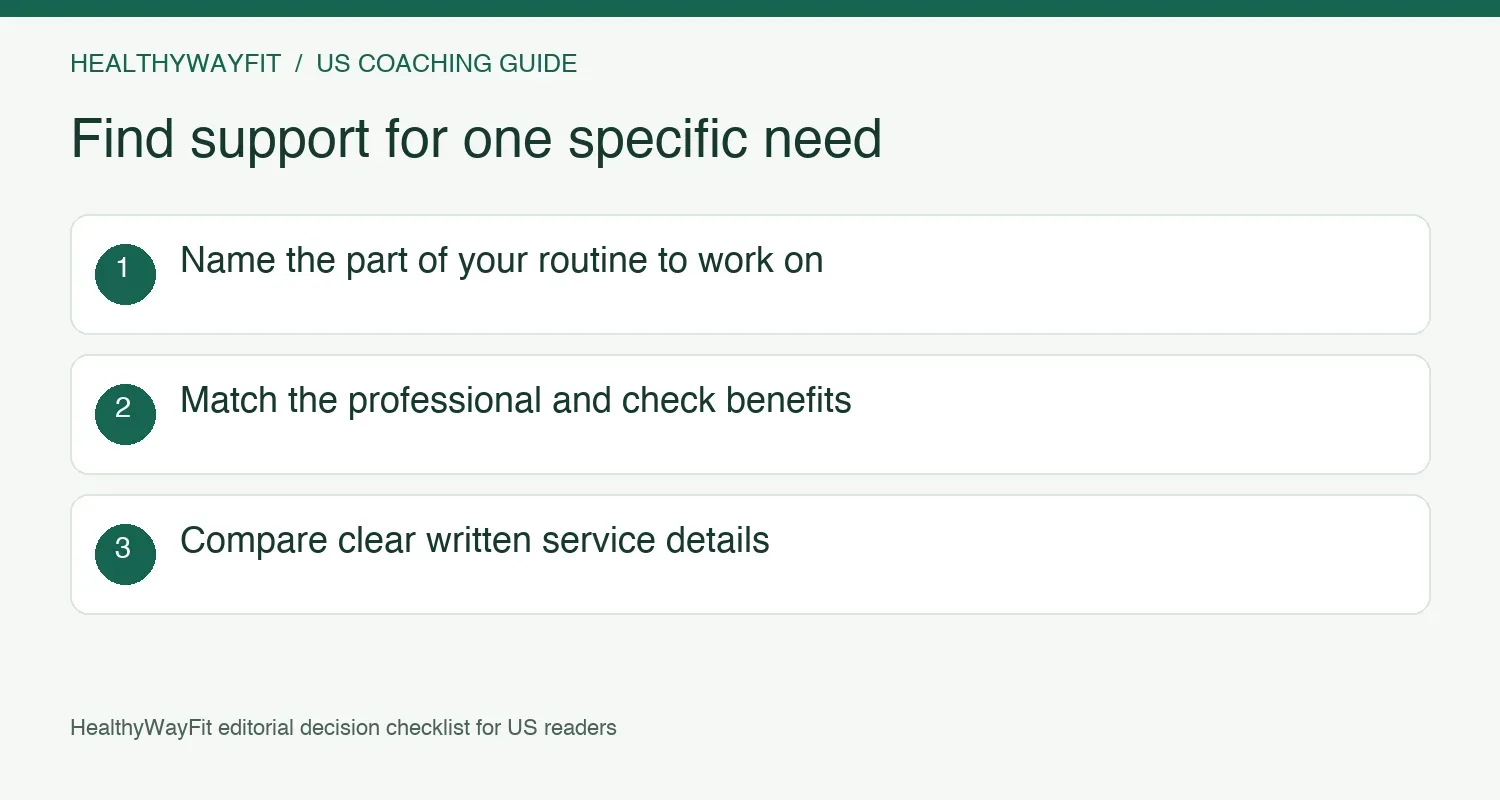
An online diabetes coach helps you put your diabetes care plan into practice through remote conversations, goal setting, and ongoing support. In the US, start by asking your healthcare team about diabetes education, checking employer or insurance benefits, and comparing qualified private coaches. Choose support that fits your needs and works alongside medical care.
Perhaps you understand the advice but struggle to use it on busy days. You want help planning meals, making sense of your routine, or staying consistent between appointments. The right service should explain who will help you, what they are qualified to do, and how you will work together.
At HealthyWayFit, we encourage you to look beyond the word “coach.” It can describe different professionals and different services. Your first decision is what kind of support you need.
This article is for informational purposes only and does not constitute medical advice. Always consult a qualified healthcare professional before making changes to your diet, exercise routine or medication.
1. What does an online diabetes coach do?
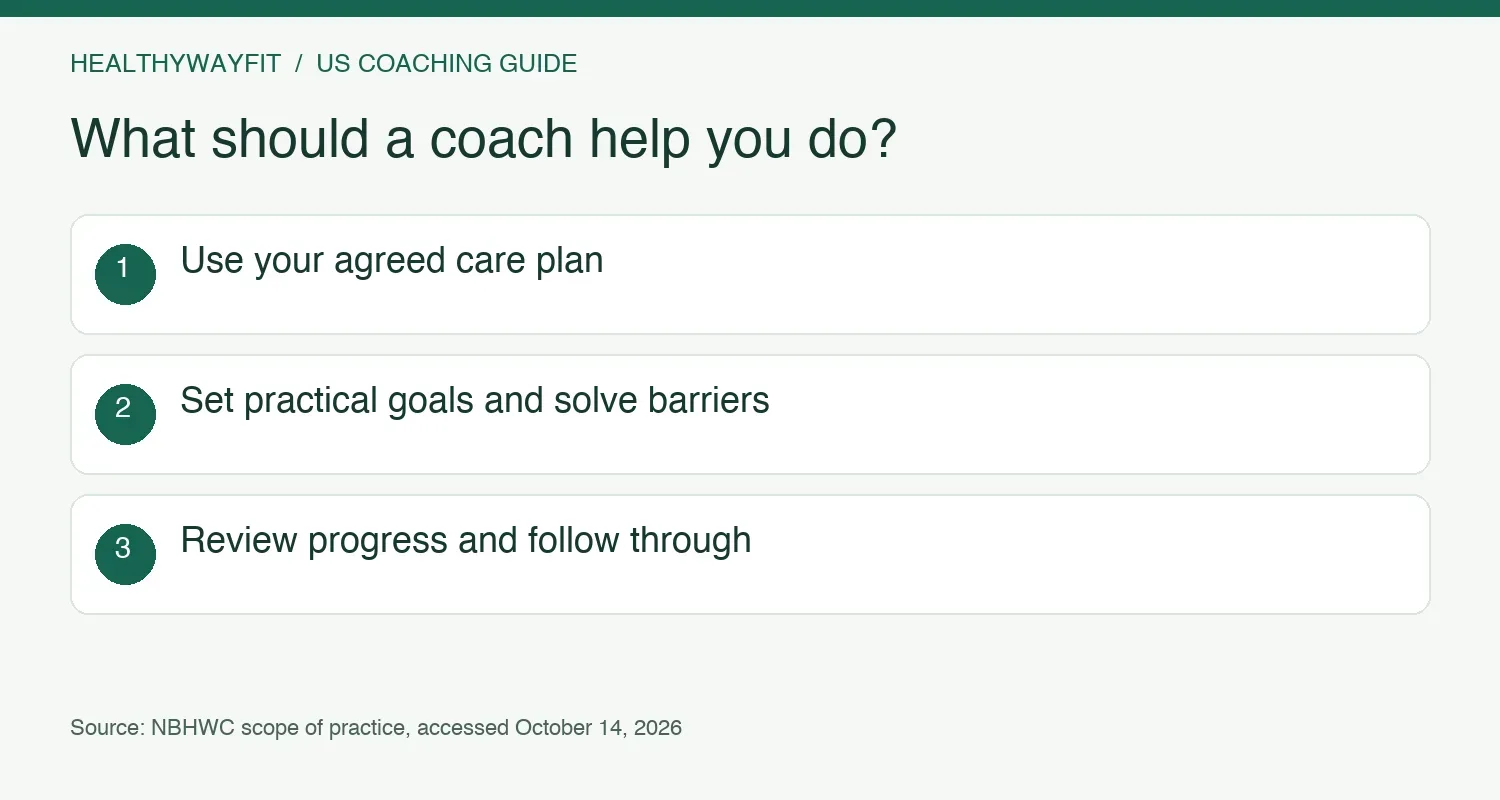
An online diabetes coach supports the day-to-day work of managing diabetes, usually through video, phone, or messaging. A coach may help you set realistic goals, identify barriers, and follow through on an agreed care plan. The specific services depend on the professional’s qualifications and the program you join.
For example, you might want help organizing grocery shopping around your clinician’s nutrition advice or finding a routine that works with your shift schedule. Coaching can turn a broad intention into a specific action you can discuss at the next appointment.
The National Board for Health & Wellness Coaching describes coaching as support for self-directed goals and behavior change informed by the healthcare team’s treatment plan. Coaching alone does not authorize a professional to diagnose conditions or prescribe medication. Someone with additional professional credentials may provide services within that separate scope. See the NBHWC scope of practice.
When a website advertises “personalized diabetes coaching,” ask what personalization means. Will someone speak with you, review your concerns, and help adapt your goals? Or does the service mainly provide automated reminders and recorded lessons? Either can be useful, but they offer different kinds of support.
2. Coach, diabetes educator, dietitian, or medical provider?
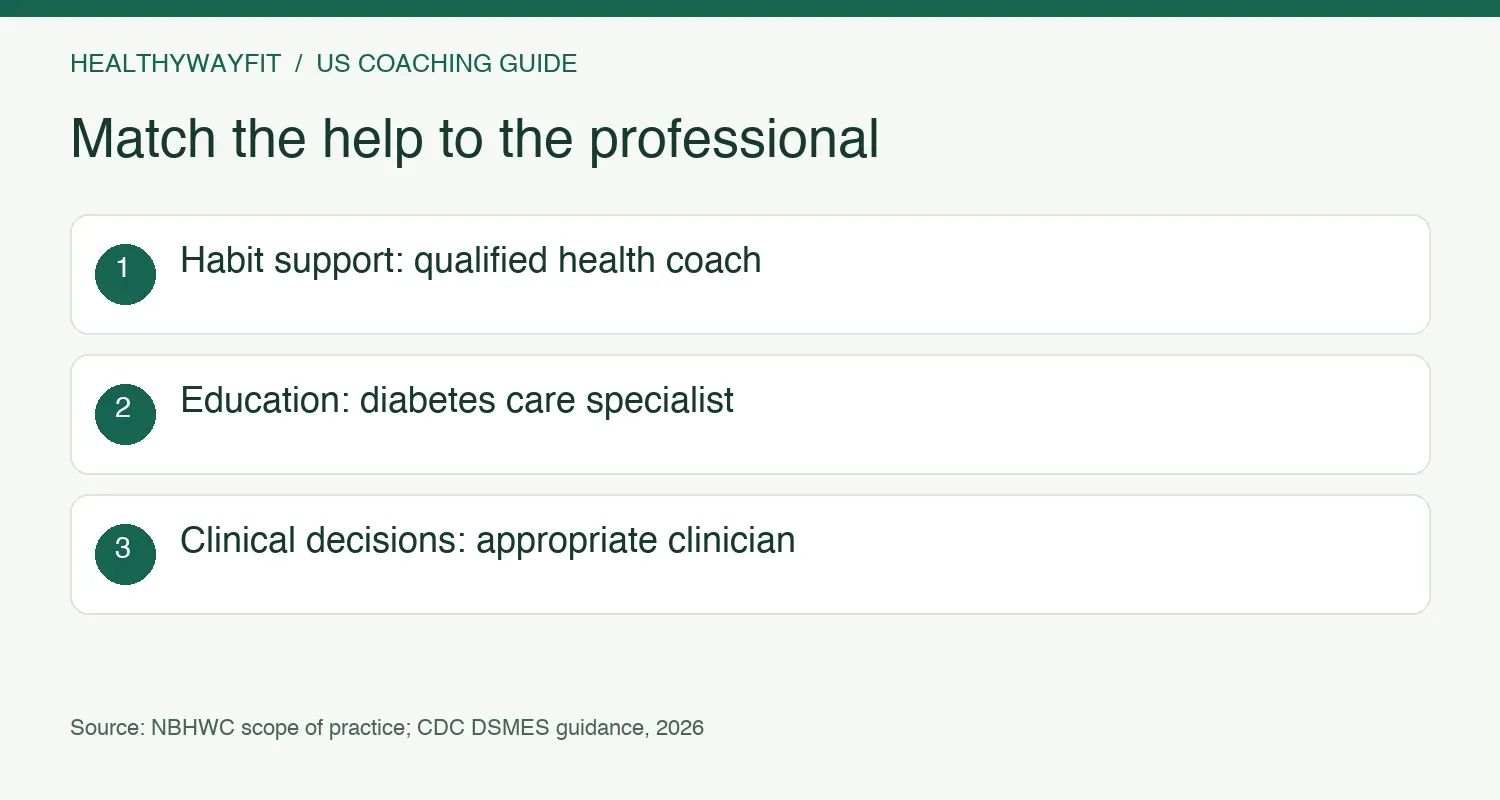
Choose a professional whose qualifications match the question you need answered. Habit support, diabetes education, clinical nutrition, and prescription decisions are different needs. One person may hold several credentials, but the provider should make those roles clear rather than relying on the general title “diabetes coach.”
| Your main need | Professional or service to ask about | What to clarify |
|---|---|---|
| Help following through on agreed goals | A qualified health coach familiar with diabetes | Training, experience, referral boundaries, and connection to your healthcare team |
| Diabetes self-management skills and education | A diabetes care and education specialist or DSMES service | Experience with your diabetes type and the education provided |
| Individual clinical nutrition advice | A registered dietitian nutritionist, ideally with diabetes experience | Clinical scope, state availability, and whether medical nutrition therapy is offered |
| Medication, diagnosis, or complication assessment | Your prescribing clinician or relevant medical specialist | Who makes treatment decisions and how follow-up works |
CDCES stands for Certified Diabetes Care and Education Specialist. If someone advertises that credential, verify it through the Certification Board for Diabetes Care and Education’s verification service. Ask about their underlying professional qualification as well.
DSMES means diabetes self-management education and support. It is a service, not another name for any private coaching subscription. The CDC describes personalized education covering skills such as eating, activity, monitoring, taking medicine as prescribed, coping, and problem solving. See the CDC’s introduction to DSMES.
A provider who explains what they can do and when they refer you elsewhere gives you a clearer basis for choosing care. More impressive initials do not remove the need to check experience, communication, and fit.
3. Where can you find an online diabetes coach in the US?
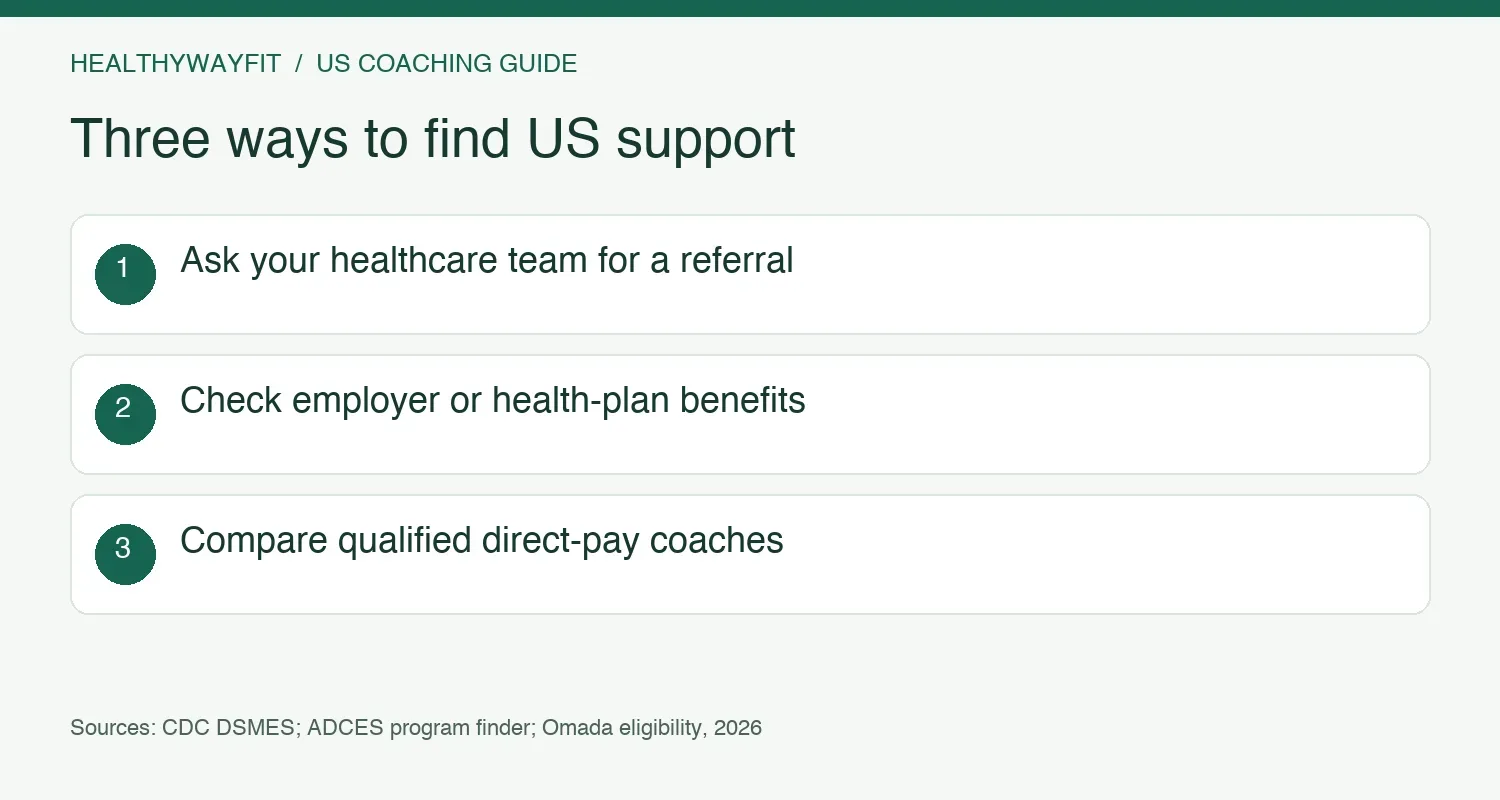
US readers have three practical starting points: a diabetes education referral, an employer or health-plan benefit, and direct-pay coaching. Investigate covered services first if cost matters. Then compare availability, credentials, appointment hours, and the type of support offered rather than assuming every online program serves the same purpose.
Route A: ask your healthcare team about diabetes education
Ask your primary care provider or endocrinology team whether they refer to a diabetes education service with remote appointments. You can also use the ADCES accredited program finder to identify programs and ask about telehealth availability.
Say what you need help with when requesting the referral. “I need help learning my monitoring routine” gives the team a more useful starting point than “I need a coach.” Confirm whether sessions are individual or group-based and whether a referral or order is required.
Route B: check employer and health-plan benefits
Search your benefits portal for diabetes support, diabetes education, or virtual care. If you cannot find an answer, call member services and ask which programs are available under your exact plan.
For example, Omada describes diabetes specialists, health coaches, and connected monitoring tools. Its eligibility guidance requires clinical eligibility and coverage through a participating employer or health plan. See Omada’s diabetes support program and its enrollment requirements.
An employer benefit may give you access to a broader care team rather than a coach you select independently. Ask whether you can request a different coach if communication or scheduling does not work.
Route C: compare direct-pay coaching
Private coaching lets you inquire directly about availability, but you need a written explanation of qualifications, fees, and service boundaries. Ask whether the coach works with people who have your diabetes type and whether they coordinate with your clinician.
HealthyWayFit is one service to inquire about for personalized nutrition and daily-habit support. US enrollment, clinical arrangements, and support hours should be confirmed before joining; the questions to ask are covered later in this guide.
4. What should remote coaching look like in practice?
A clear coaching service explains the first assessment, the goals you will work on, and how follow-up happens. Ask how often you meet, what you share between sessions, and who responds when you need help. The arrangement should be understandable before you commit to a subscription or package.
The first conversation
Expect to discuss what you want help with, your usual routine, and the medical care you already receive. Ask what information is required and why. Your medication list and recent results may be relevant, but a coach should explain how those details are used within their role.
You should also discuss appointment format, privacy, payment, and how to contact the service. A first meeting that focuses only on selling a long package leaves important questions unanswered.
An illustrative coaching goal
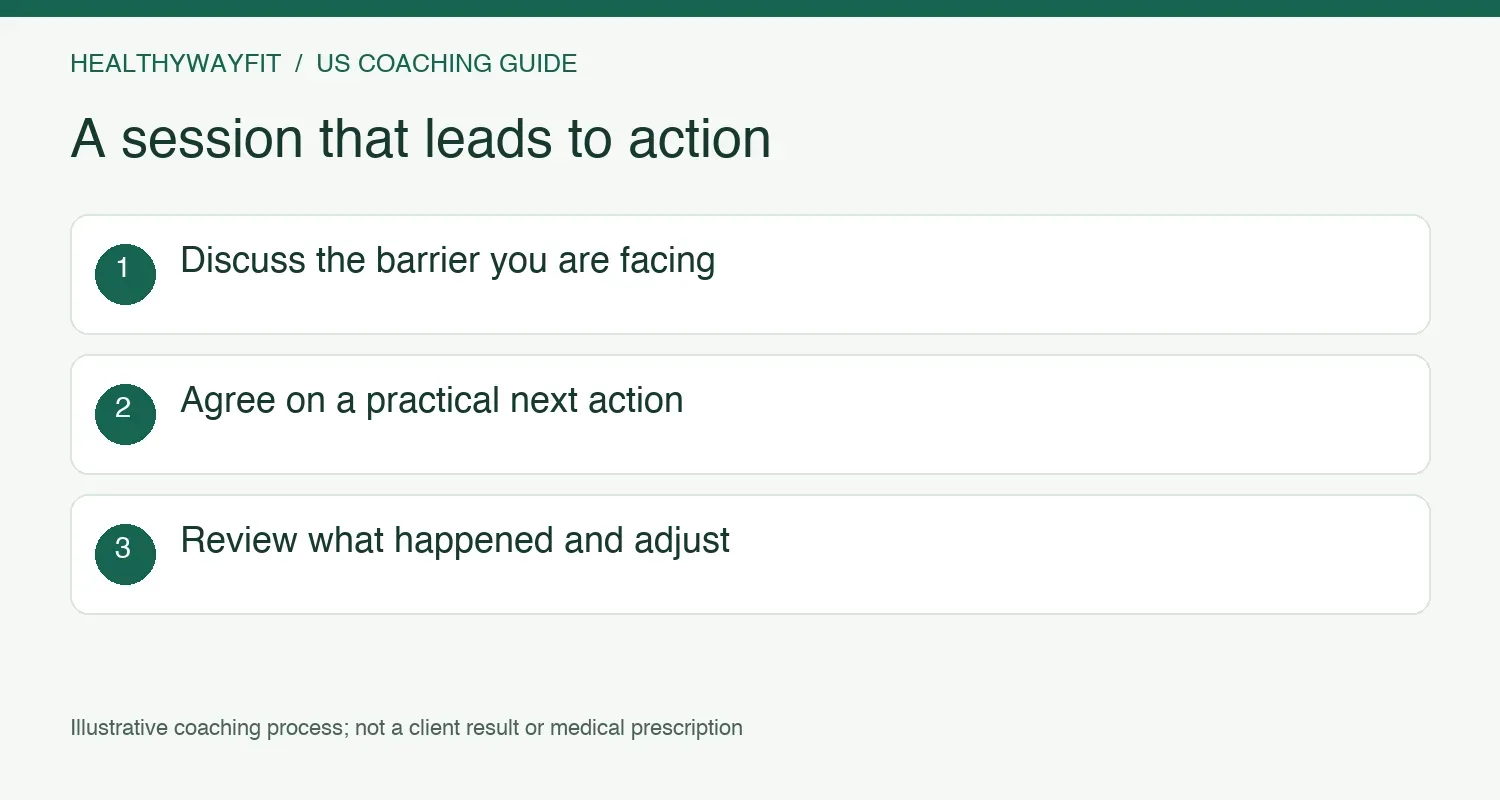
Suppose your clinician has recommended changes to your meal routine, but late meetings keep disrupting dinner. A coaching conversation might help you identify the obstacle, plan a practical backup meal, and decide what to record before your next discussion.
This is an example of how a session could work, not a HealthyWayFit client story or a prescribed meal plan. The goal is to make the existing care plan easier to use, then learn from what happened.
Follow-up that helps you adjust
Ask whether appointments review your goals and barriers or repeat the same instructions. If the agreed action did not work, you need space to discuss why: preparation time, food access, competing priorities, or advice that needs clarification from your healthcare team.
For a broader service-quality checklist, see our guide to evaluating a diabetes coaching program.
5. How much does an online diabetes coach cost?
There is no single US price for online diabetes coaching. Charges depend on the professional, appointment format, contact frequency, and what the package includes. Ask for the full cost in US dollars and compare it with covered services. A monthly fee may not include clinical visits, laboratory work, or monitoring devices.
For private coaching, get these details in writing:
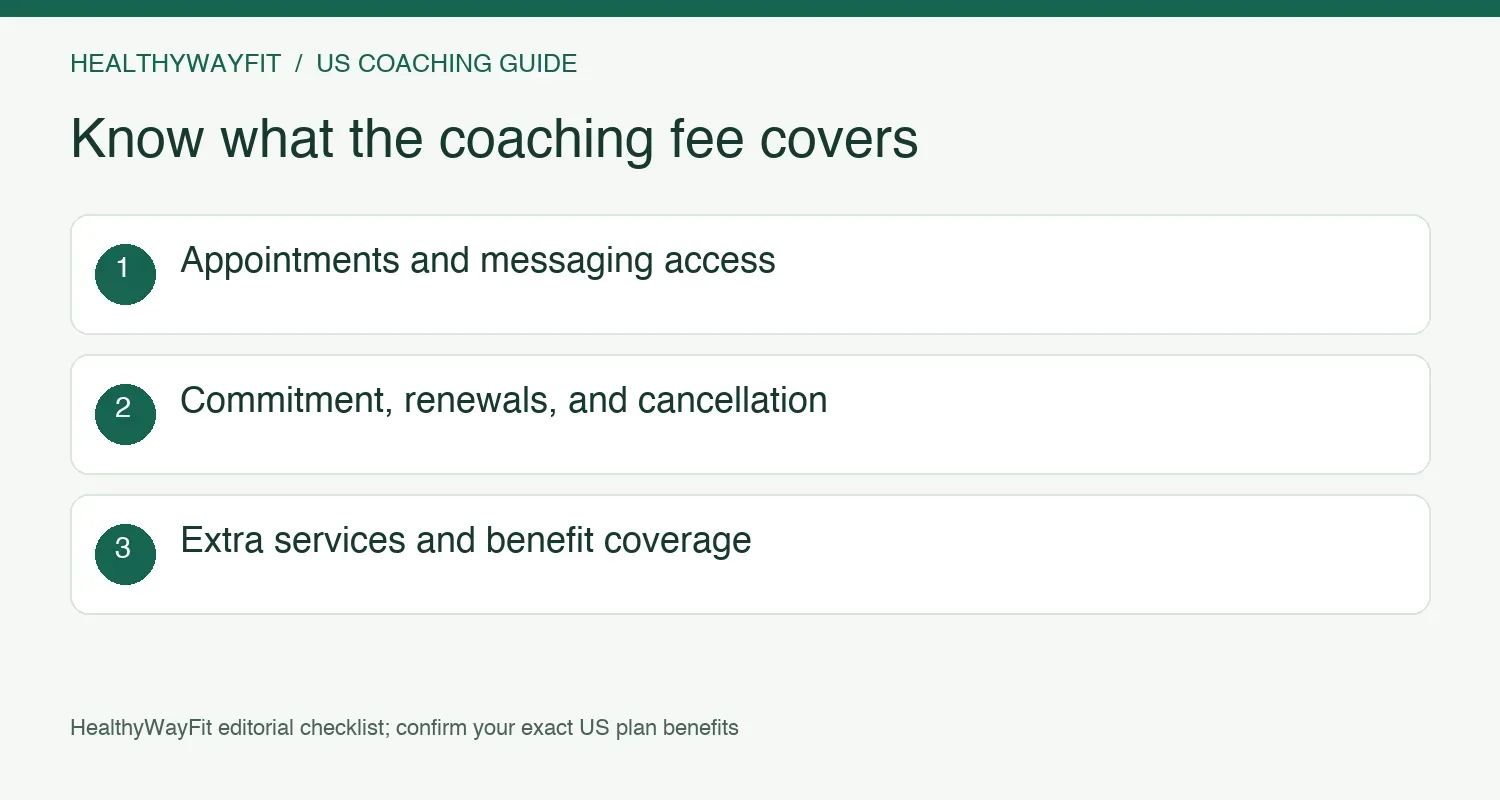
- Session length, number of appointments, and individual versus group format.
- Messaging access, response hours, and limits.
- Initial assessment, renewal charges, and minimum commitment.
- Cancellation, pause, refund, and missed-appointment policies.
- Separate charges for dietitian visits, clinical appointments, tests, or devices.
Does insurance cover online diabetes coaching?
Coverage depends on the service, provider, and your plan. A private health-coaching package is not automatically covered because diabetes education is covered. Ask your insurer about the exact service and provider, network status, referral requirements, and your expected out-of-pocket cost before booking.
What about Medicare?
Medicare Part B covers eligible outpatient diabetes self-management training with an order from a doctor or other healthcare provider. Its coverage page lists up to 10 hours of initial training and possible follow-up training. After the Part B deductible, the patient generally pays 20% of the Medicare-approved amount.
These are training benefits, not a blanket entitlement to any coaching subscription. Confirm current telehealth eligibility, provider participation, and costs with Medicare and the service. See Medicare’s diabetes self-management training coverage, checked October 14, 2026.
6. How do you check qualifications, availability, and privacy?
Before enrolling, verify the professional’s claimed credentials and ask how they can serve someone in your state. Clarify whether the arrangement is coaching, clinical nutrition, or medical care. Also ask how health information is collected and shared. Remote access does not make those responsibilities disappear.
Use this short verification process:
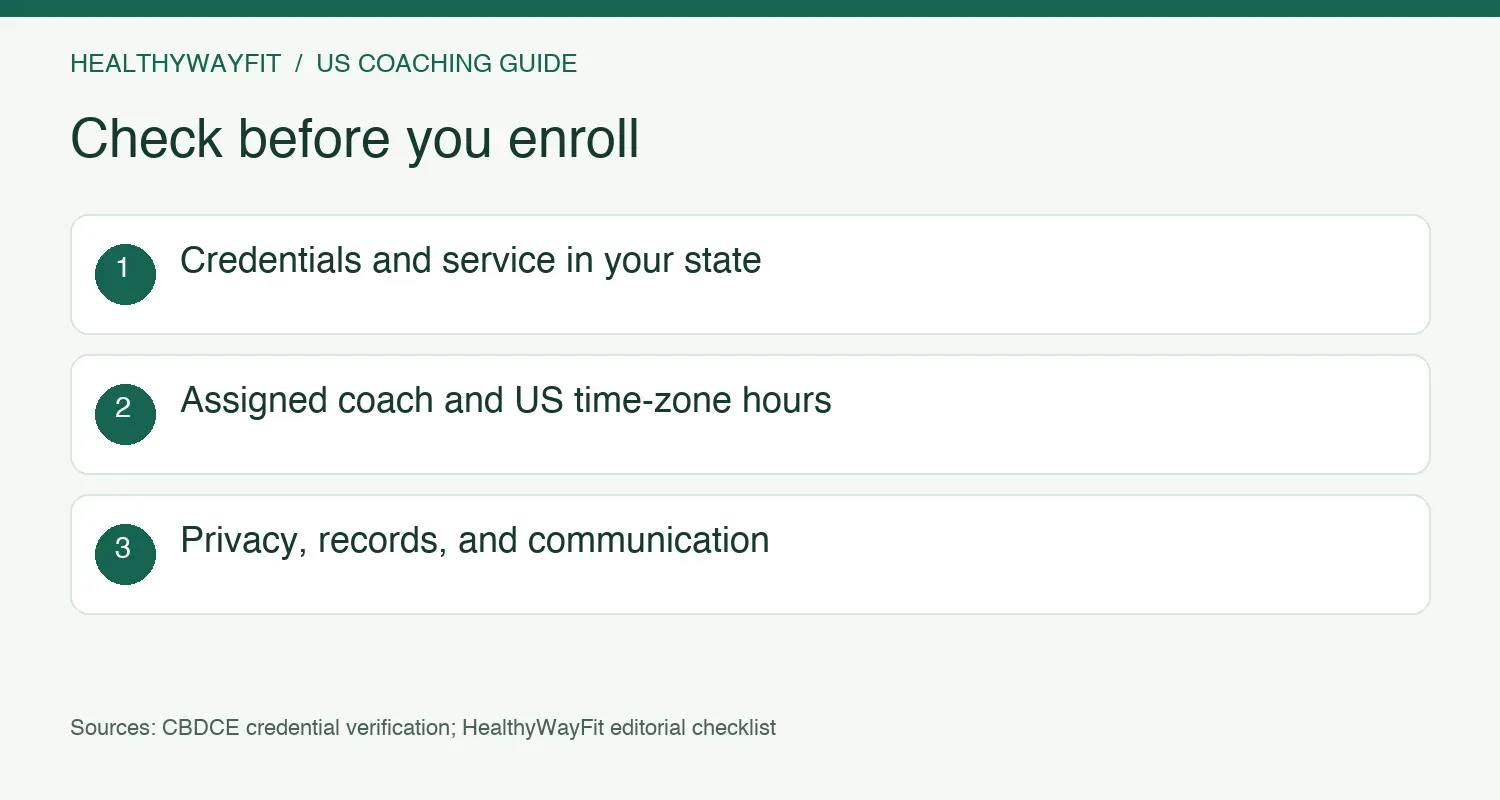
- Get the provider’s full name and credentials. Verify certifications with the issuing body and any relevant license through the appropriate state board.
- Describe your location and care needs. Ask whether the service can provide the proposed care where you live.
- Confirm who you will meet. A senior expert on the website may not be your assigned coach.
- Check appointment hours. Make sure sessions and messaging hours work in your US time zone.
- Ask about records and communication. Establish how summaries reach your healthcare team and what consent is needed.
For privacy, ask where you should send results and whether messages are handled in a dedicated platform or a general chat app. Find out who can access your information, whether sessions are recorded, and whether you can download your records when leaving.
If you prefer phone appointments or need accessible technology, ask before paying. A service that requires a smartphone, video calls, or frequent device uploads may not fit your preferences or circumstances.
7. Who should seek more specialized support?
Choose support with experience in your diabetes type and circumstances. A general habit coach may be useful alongside care, but medication questions, complex nutrition needs, and complications warrant the appropriate clinical professional. Tell the provider about relevant health conditions before they recommend a service or routine.
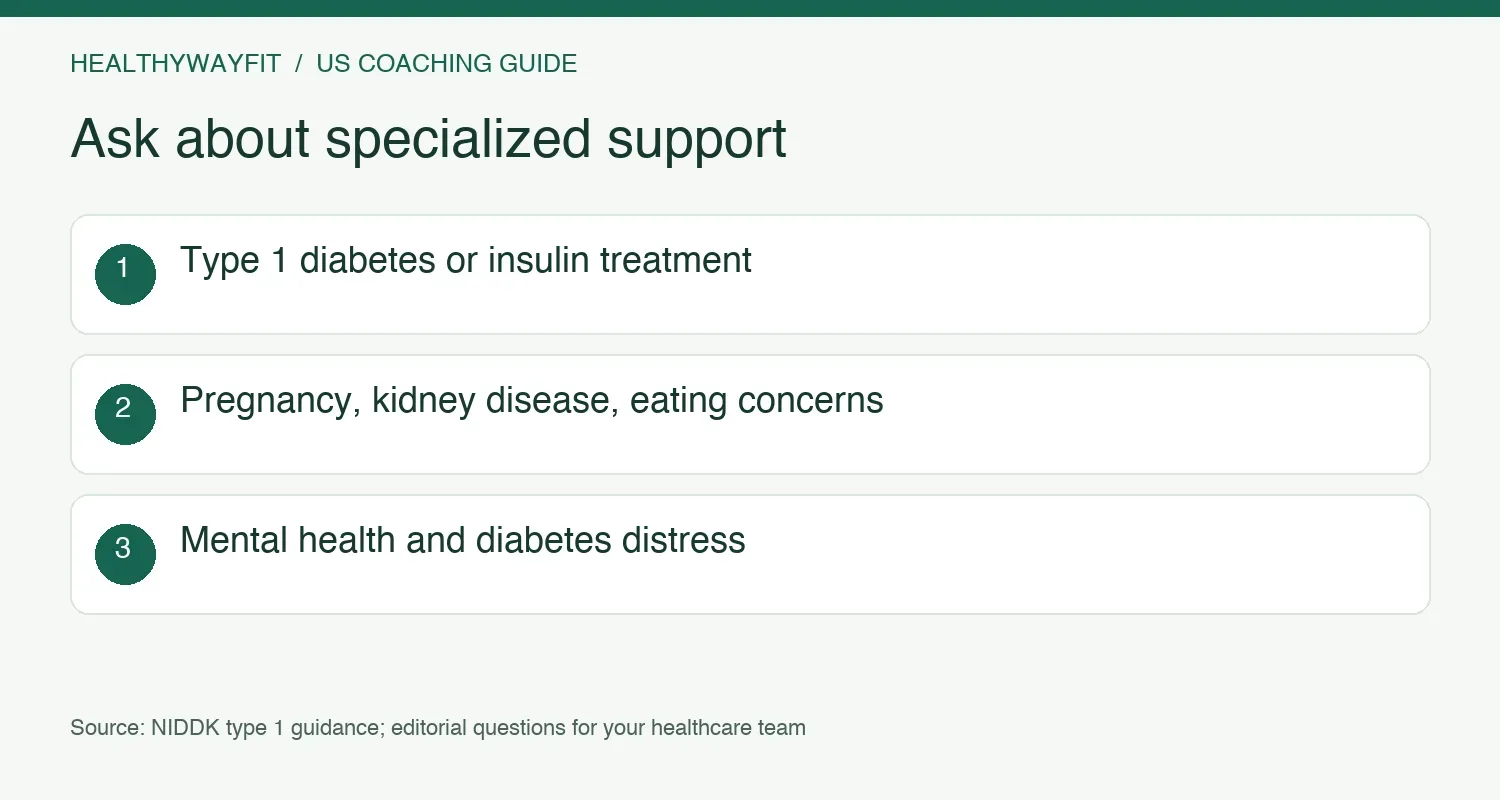
Type 1 diabetes or insulin treatment
Ask specifically about type 1 experience and coordination with your prescribing team. Lifestyle coaching does not replace insulin treatment. If the service offers advice about insulin, clarify who is authorized to make those decisions. See NIDDK’s explanation of type 1 diabetes treatment.
Pregnancy, kidney disease, or eating concerns
Discuss these situations with your healthcare team before starting a restrictive diet or a program centered on weight loss. Ask which specialist should guide the plan and what role coaching can appropriately play.
Diabetes distress and emotional support
Tell the team if the daily demands of diabetes feel overwhelming. Ask whether support includes coping skills and when a mental health professional would be more appropriate. Coaching and mental health treatment are different services; a provider should be clear about which it offers.
If you have just received a diagnosis, our newly diagnosed type 2 diabetes guide can help organize the questions you bring to your healthcare team.
8. What can you expect from HealthyWayFit?
HealthyWayFit’s public program description includes personalized nutrition, movement guidance, habit coaching, glucose monitoring, and doctor supervision. If you are in the US, ask about current enrollment availability and how support works alongside your existing medical care. Confirm the exact package and responsibilities during a suitability conversation.
Describe the specific problem you want to solve. Do you need help maintaining routines while traveling, finding practical meals, or following through on your clinician’s recommendations? Ask how the proposed coaching addresses that problem and which professional you will work with.
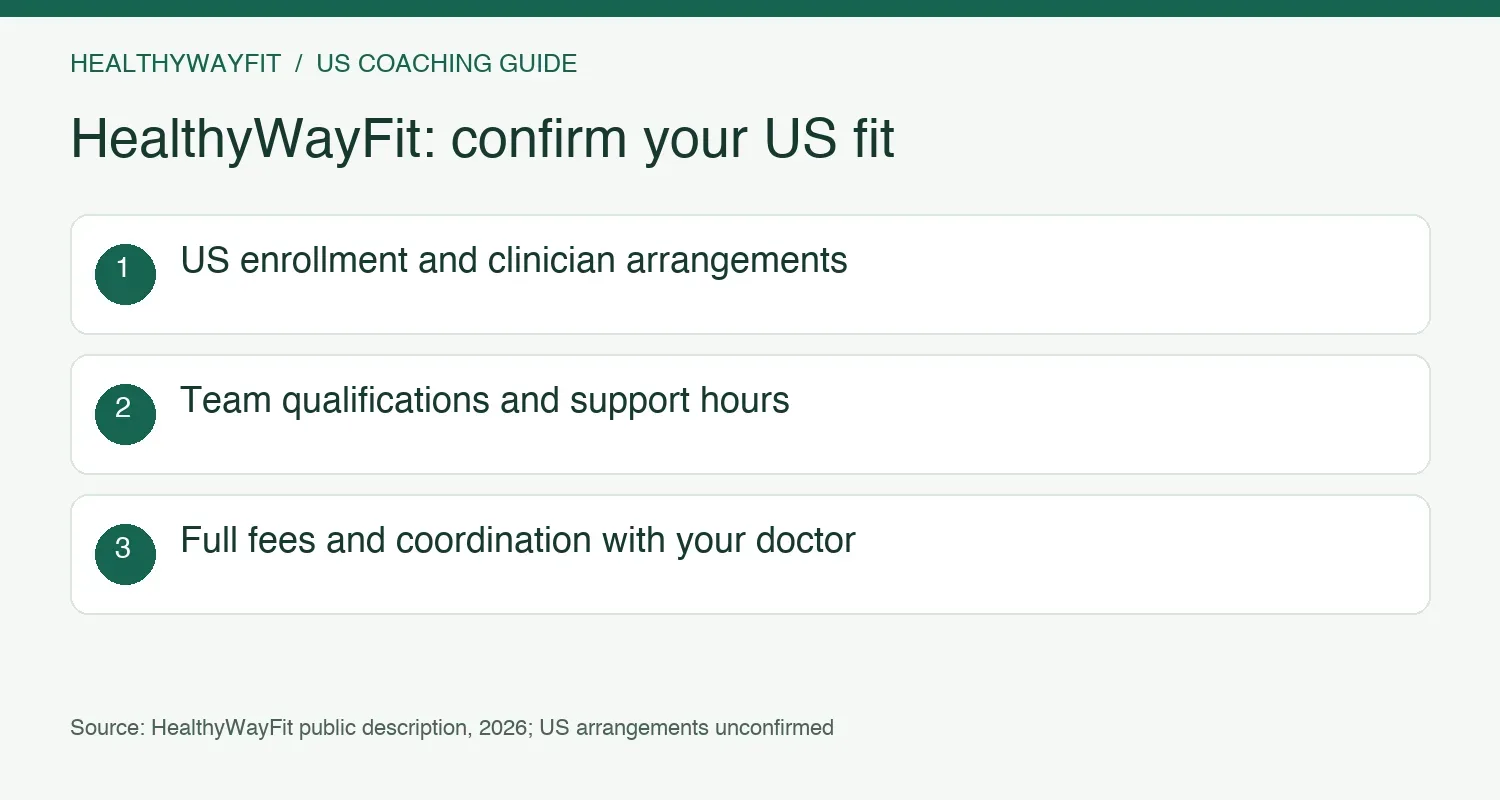
Before joining, US readers should confirm:
- Whether HealthyWayFit currently serves residents of their state.
- Whether the arrangement is coaching alongside their own US clinician or includes locally authorized medical care.
- The assigned team’s qualifications and experience.
- Available appointment and messaging hours in their time zone.
- Total fees in US dollars and what is included.
- How their primary care provider receives relevant updates.
If your household eats South Asian foods, you can ask how coaching respects those preferences rather than requiring separate meals. Our diabetes-friendly Indian meals guide offers examples relevant to that food pattern; an individual plan should still reflect your medical needs.
HealthyWayFit publishes this article, so use the same questions to evaluate our offering as you would any other service. Contact our team for a suitability discussion and written service details.
9. What are the warning signs of unsuitable coaching?
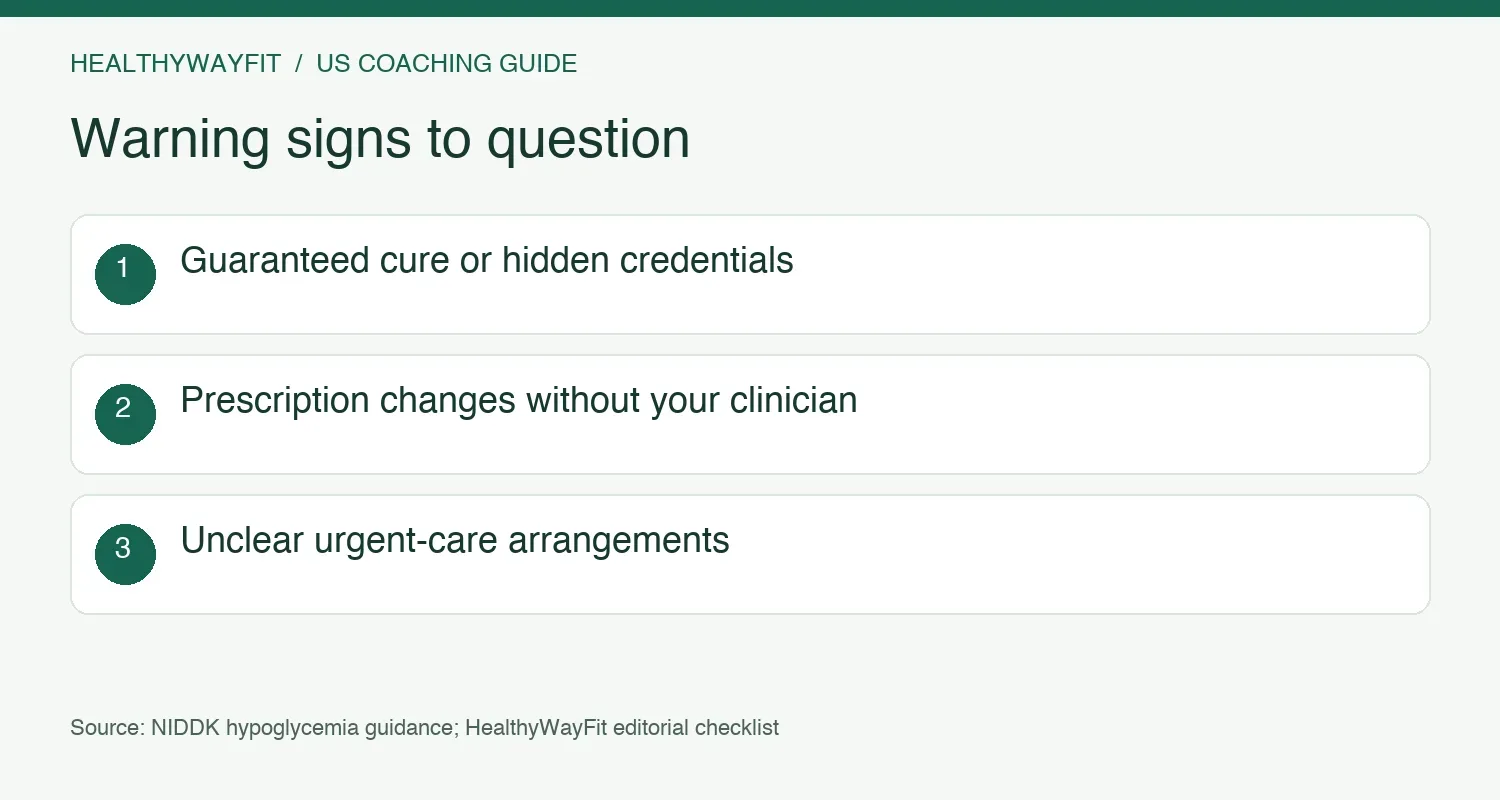
Question services that promise a cure, hide the coach’s qualifications, pressure you into a long contract, or encourage prescription changes without your clinician. A credible service should explain its limits, costs, and referral process. Ask how urgent concerns are handled before relying on between-session messaging.
Low blood glucose is a concern for people using insulin or certain other diabetes medicines. Changes in eating or activity may require discussion with the prescribing team. Follow your individual monitoring and treatment plan; a general coach should not independently reduce your medication. See NIDDK’s hypoglycemia guidance.
Severe confusion, seizures, or loss of consciousness require immediate emergency help. In the US, call 911. Coaching messages are not an emergency response service.
Be cautious if a provider describes supplements as the essential solution but cannot explain the evidence, costs, or clinical review. Ask whether purchases are optional and whether the coach benefits financially from recommending them.
Testimonials can show what an individual says about a service, but they do not tell you what result to expect. Do not choose a coach based on promised A1c changes or a fixed timeline to stop medication.
10. How to choose your next step
Start with the task you need help with, then find the appropriate professional and an accessible way to work together. For US readers, check diabetes education referrals and benefits before comparing direct-pay coaching. Choose a service with clear qualifications, practical support, transparent fees, and coordination with your medical care.
Bring one concrete question to your next conversation: “Who can help me with this part of my daily diabetes routine, and is that service covered?” That question helps narrow the search before you commit to a package.
If you are interested in HealthyWayFit, ask our team about coaching suitability and US availability. Share your goals and current care arrangements, then request a clear explanation of the support available to you.