By Kirti, Founder & Serial Entrepreneur, HealthyWayFit
Updated 14 October 2026
If you are searching for a diabetes reversal doctor near me, look for a registered clinician whose experience fits your diabetes type and treatment needs. In India, verify the doctor’s registration, ask about their qualifications and confirm who will assess you. The doctor should explain appropriate goals and medical follow-up without guaranteeing a cure.
You may be worried about another high HbA1c result, unsure whether your treatment needs changing or interested in structured lifestyle support. A medical consultation should establish what is appropriate before a programme is sold to you.
This guide focuses on choosing and working with a clinician. It does not recommend a particular doctor as nearest to you or imply that a “reversal” label proves specialist qualifications.
This article is for informational purposes only and does not constitute medical advice. Always consult a qualified healthcare professional before making changes to your diet, exercise routine or medication.
1. Which kind of doctor should you approach?
Start with the clinician who currently treats you, if you have one, and describe the question you need answered. Ask whether they can address it or recommend specialist review. When comparing new doctors, look for relevant clinical experience and a clear scope of care rather than relying on the phrase “diabetes reversal specialist.”
You may encounter physicians, diabetologists and endocrinologists in local searches. Ask about formal qualifications, diabetes experience and the conditions each clinician manages. The advertised label alone does not establish the training behind it.
If you have complex needs or uncertainty about your diagnosis, ask your usual doctor which specialist is appropriate. A programme focussed on type 2 lifestyle support should not be assumed suitable for every person with high glucose.
For type 1 diabetes, insulin remains essential treatment; lifestyle coaching does not replace it. See NIDDK’s type 1 diabetes guidance.
The right starting point is a clinical need and an appropriately qualified professional, not a promise to remove all medicines.
2. What can a doctor say about diabetes remission?
A clinician can assess your current treatment, discuss possible goals and explain how progress would be evaluated. Ask what is realistic in your circumstances and which outcomes the proposed plan targets. Improved control and treatment changes should be described accurately rather than presented as proof that diabetes has permanently disappeared.
Type 2 remission means HbA1c below 6.5% for at least three months without usual glucose-lowering medication. The international consensus provides the clinical definition.
Tell the doctor what you hope to achieve, but also ask how they prioritise safety and your broader health. Continuing medication may remain appropriate; participation in a lifestyle programme does not automatically make withdrawal the right goal.
Ask how eligibility for a proposed programme is assessed and what could make it unsuitable. An answer should consider your actual clinical information rather than only your willingness to pay.
Our guide to type 2 diabetes remission can help you prepare questions about terminology and follow-up.
3. How do you verify a diabetes reversal doctor near me?
Request the doctor’s full name, registration number, council and relevant qualifications before the appointment. Check the claimed details through official sources and confirm that this is the clinician you will see. If an online entry is unclear, contact the appropriate council or provider for clarification rather than making assumptions from a search result.
The NMC Indian Medical Register provides registration searches and notes ongoing updates. The National Medical Register portal is another official resource; the relevant State Medical Council can help resolve details.
Ask about the doctor’s experience with your diabetes type, current treatment and any additional conditions. A short programme certificate and a clinical qualification should be explained for what each represents.
Verify branch-specific appointment information. A website may feature a senior doctor while the local appointment is with another member of the team.
Reviews may help you learn about communication or waiting times, but they do not independently validate clinical qualifications or promised remission outcomes.
4. What information should you bring to the consultation?
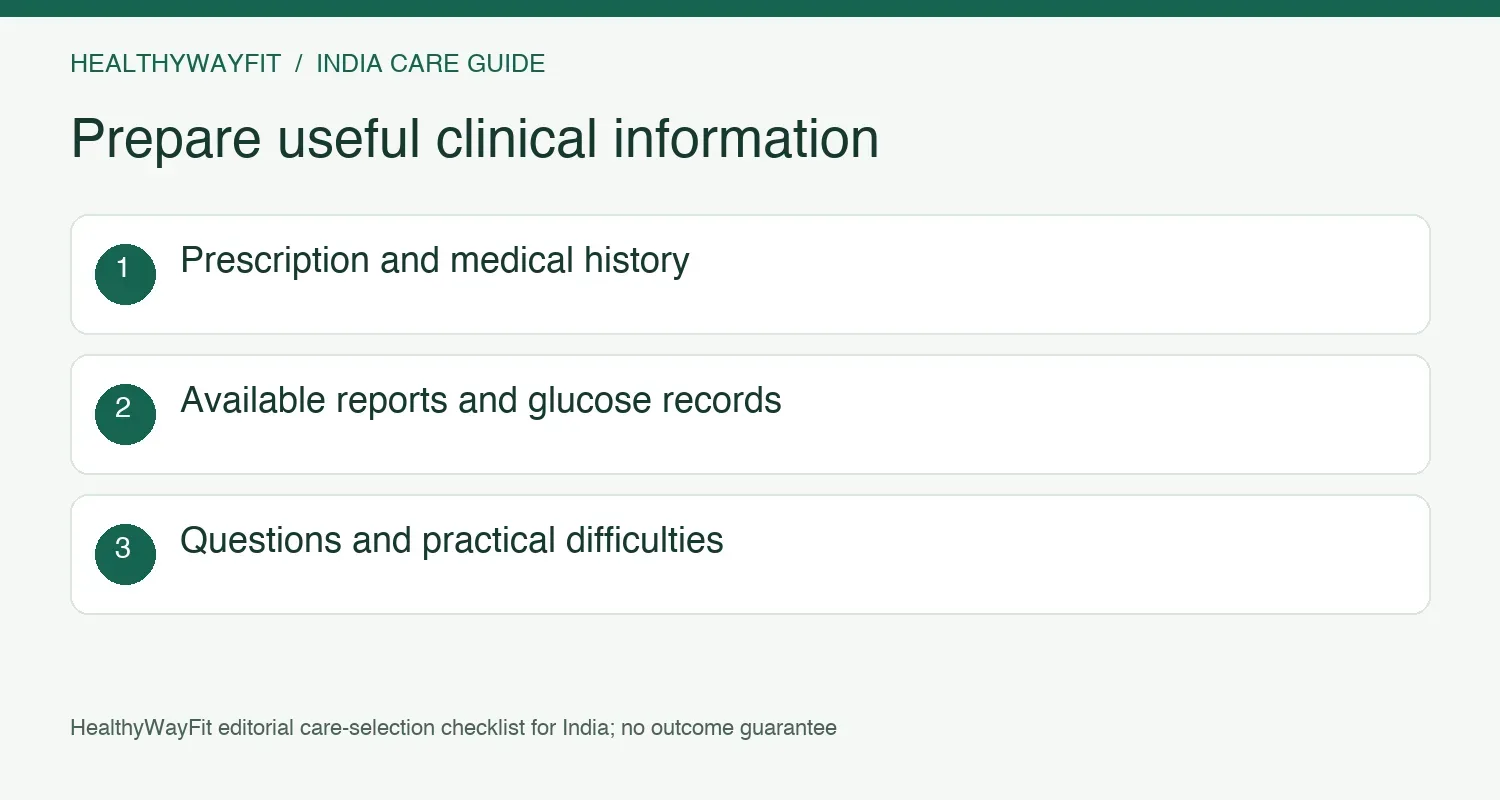
Bring your prescription, available reports, relevant health history and a list of concerns. The purpose is to give the clinician context, not to arrive with a self-selected package of tests. Ask the clinic whether fasting or additional preparation is needed, and follow your existing treatment unless your clinician advises otherwise.
Useful information includes:
- When and how diabetes was diagnosed.
- Current medicine names, doses and usual timing.
- Recent reports and previous results available to you.
- Glucose records with the timing of readings.
- Allergies, other medical conditions and treatment history.
- Any symptoms or difficulties using the current plan.
Tell the doctor if you have not been able to follow instructions consistently. That information can affect the discussion; hiding it to appear compliant makes the assessment less useful.
Write down the main question you want answered. For example, “Who should review these readings?” or “How can I fit nutrition support around my work schedule?” helps keep the appointment focussed.
Our newly diagnosed type 2 diabetes guide offers a starting point if you are still organising your care.
5. How should medication decisions be handled?
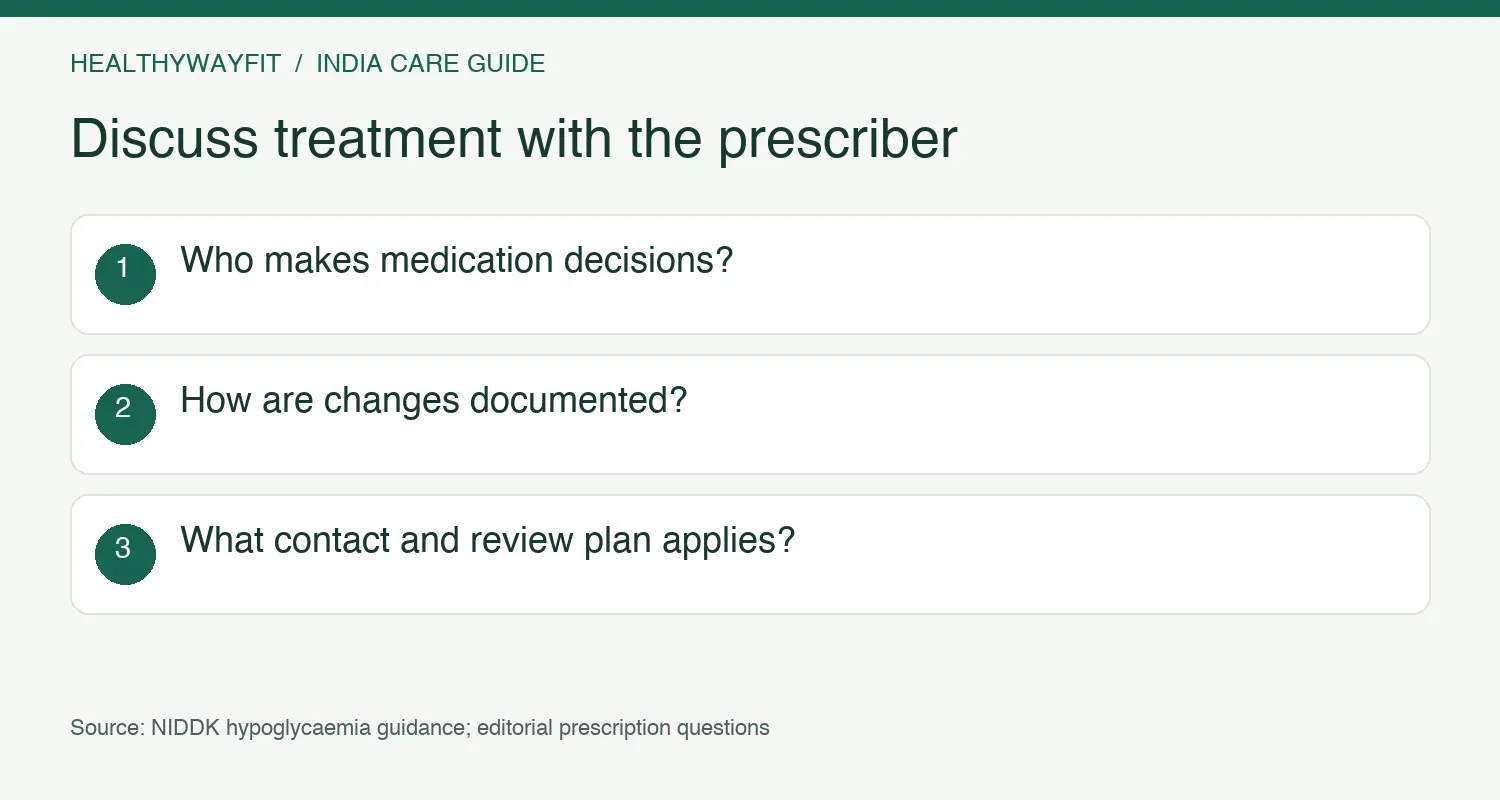
The prescribing clinician should decide whether treatment changes are appropriate and explain the instructions clearly. Ask who reviews your readings, how changes are documented and when follow-up is needed. A programme coach or sales adviser should not independently reduce prescriptions to meet a promised outcome or enrolment target.
Insulin and certain other diabetes medicines can cause low glucose. Planned changes to eating or activity should be discussed with the prescribing team. See NIDDK’s hypoglycaemia guidance.
Ask for written instructions after a clinical review and clarify what to do if you do not understand them. If more than one doctor is involved, establish which clinician coordinates diabetes prescriptions.
Do not stop treatment because a testimonial describes another person becoming medicine-free. Their situation and clinical decisions do not establish what is suitable for you.
If readings or symptoms concern you, follow your agreed clinical plan and seek appropriate assessment. Routine messaging should have explicit boundaries and should not be treated as emergency care.
6. What should the doctor discuss beyond blood glucose?
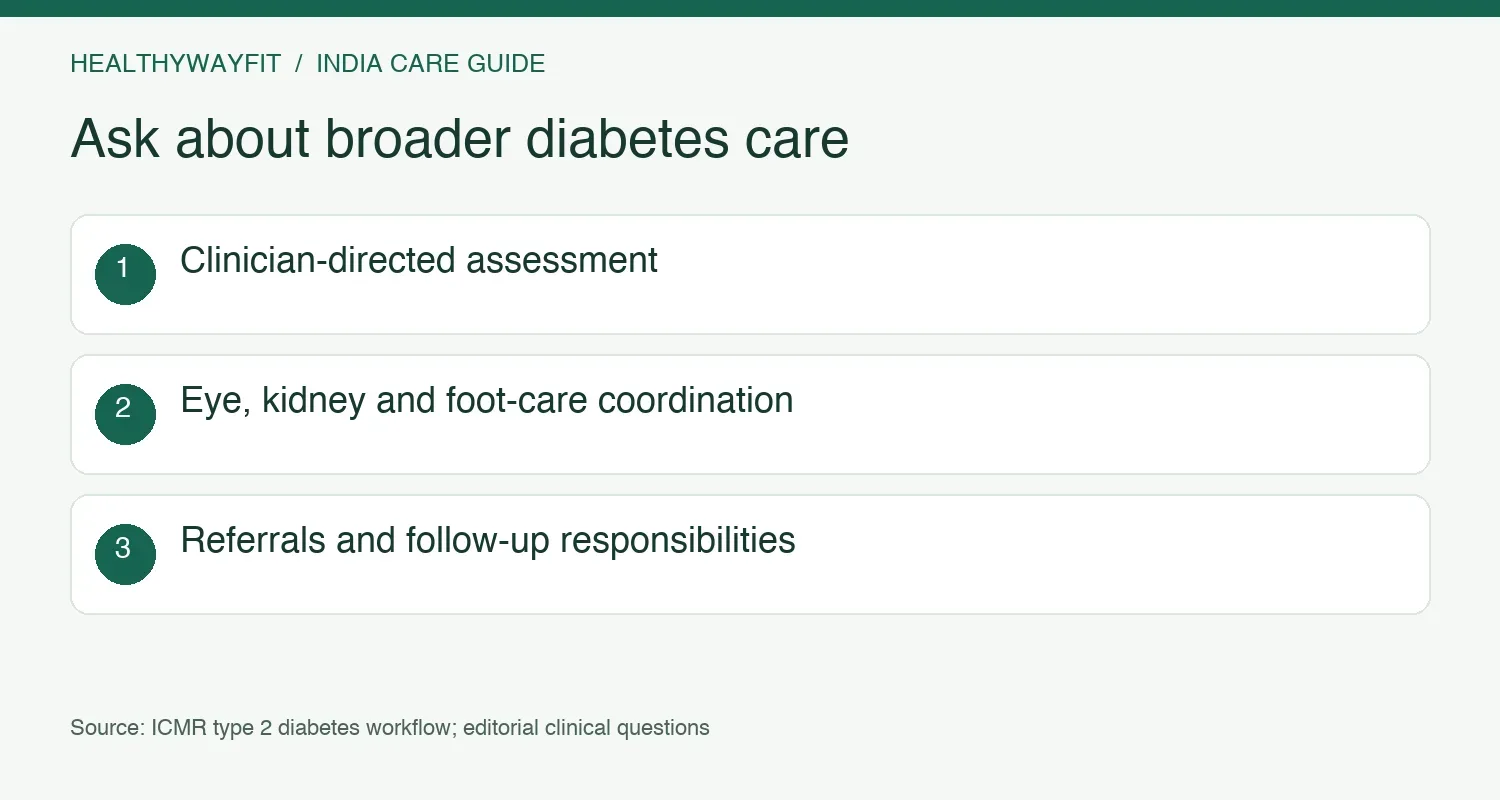
Ask how your overall diabetes care is assessed and who arranges any additional examinations or referrals. A consultation focussed on remission should still leave clear responsibilities for ongoing care. Tests should have a clinical purpose, with an explanation of what the results will help the doctor decide.
The ICMR type 2 diabetes workflow includes eye, kidney and foot-care assessment or referral alongside glucose management. It also acknowledges individual variation in treatment. See the ICMR clinical workflow.
Ask what can be done at the current clinic and what needs another provider. If you already have relevant reports or specialist care, bring the information so the doctor can consider it.
Request a clear explanation of proposed investigations rather than assuming that a larger number of tests means a better programme. Find out what is included in the consultation fee and what is charged separately.
If symptoms need attention, raise them during the appointment rather than waiting for a lifestyle package to address them. The clinician should explain the next steps and appropriate care setting.
7. How should the doctor work with nutrition and lifestyle support?
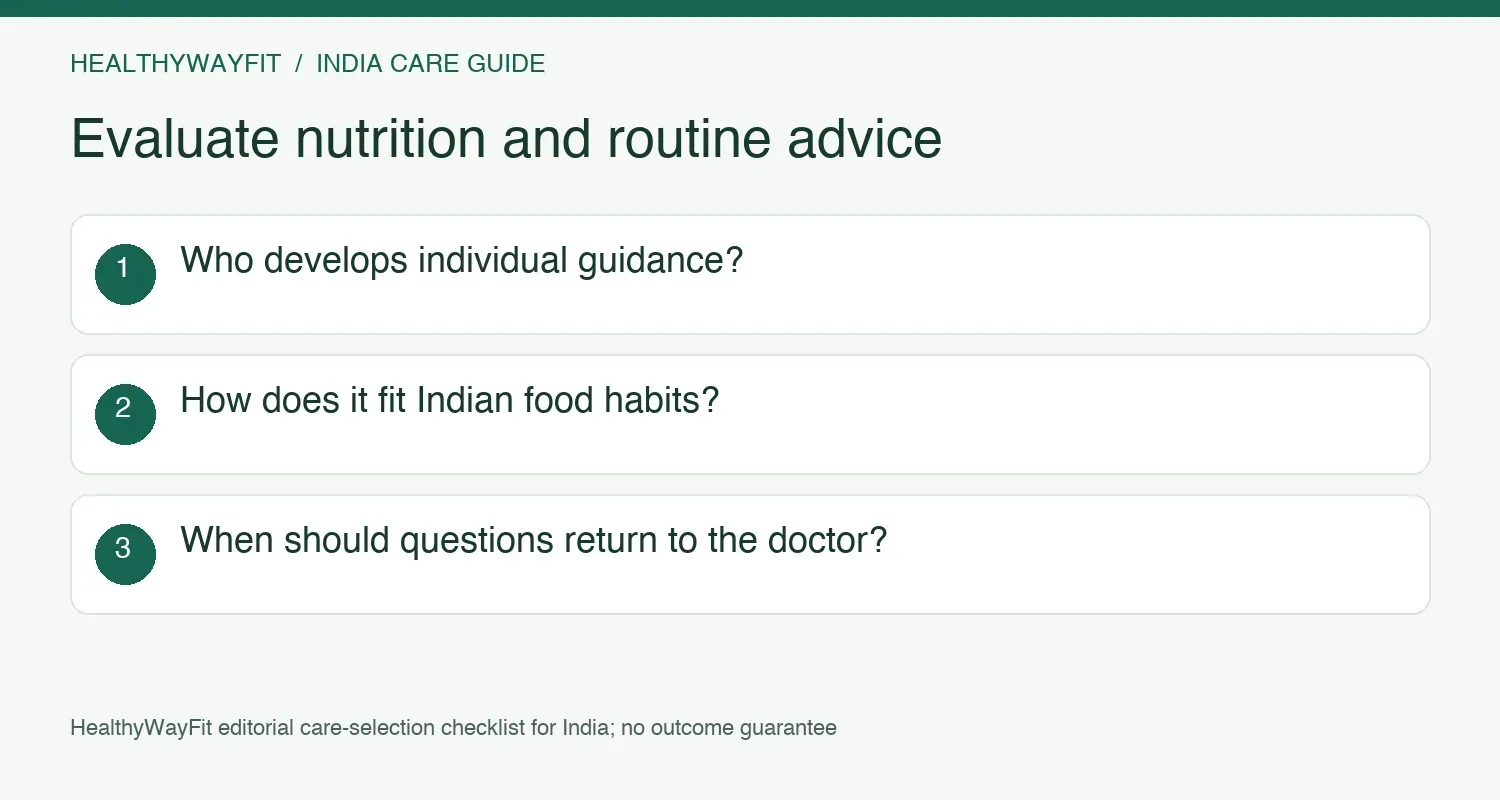
Ask how the medical plan connects with nutrition advice, education and routine support. A clinician may provide some guidance directly or refer you to another qualified professional. You should know who develops the individual plan, how it fits your circumstances and when questions need to return to the doctor.
Explain your usual meals, household cooking and work pattern. If advice depends on foods or routines you cannot manage, ask about practical alternatives within your treatment plan.
Indian nutrition guidance should account for regional preferences and your actual circumstances. Our diabetes-friendly Indian meals guide offers examples to discuss, rather than a prescription for every reader.
Ask whether the team shares a care summary and how adjustments are communicated. If a nutrition professional and doctor are working separately, establish how questions involving treatment are escalated.
Coaching can help with implementation, but it should not obscure clinical accountability. For questions to ask about continuing support, read our diabetes coaching programme guide.
8. How do you compare consultation fees and follow-up?
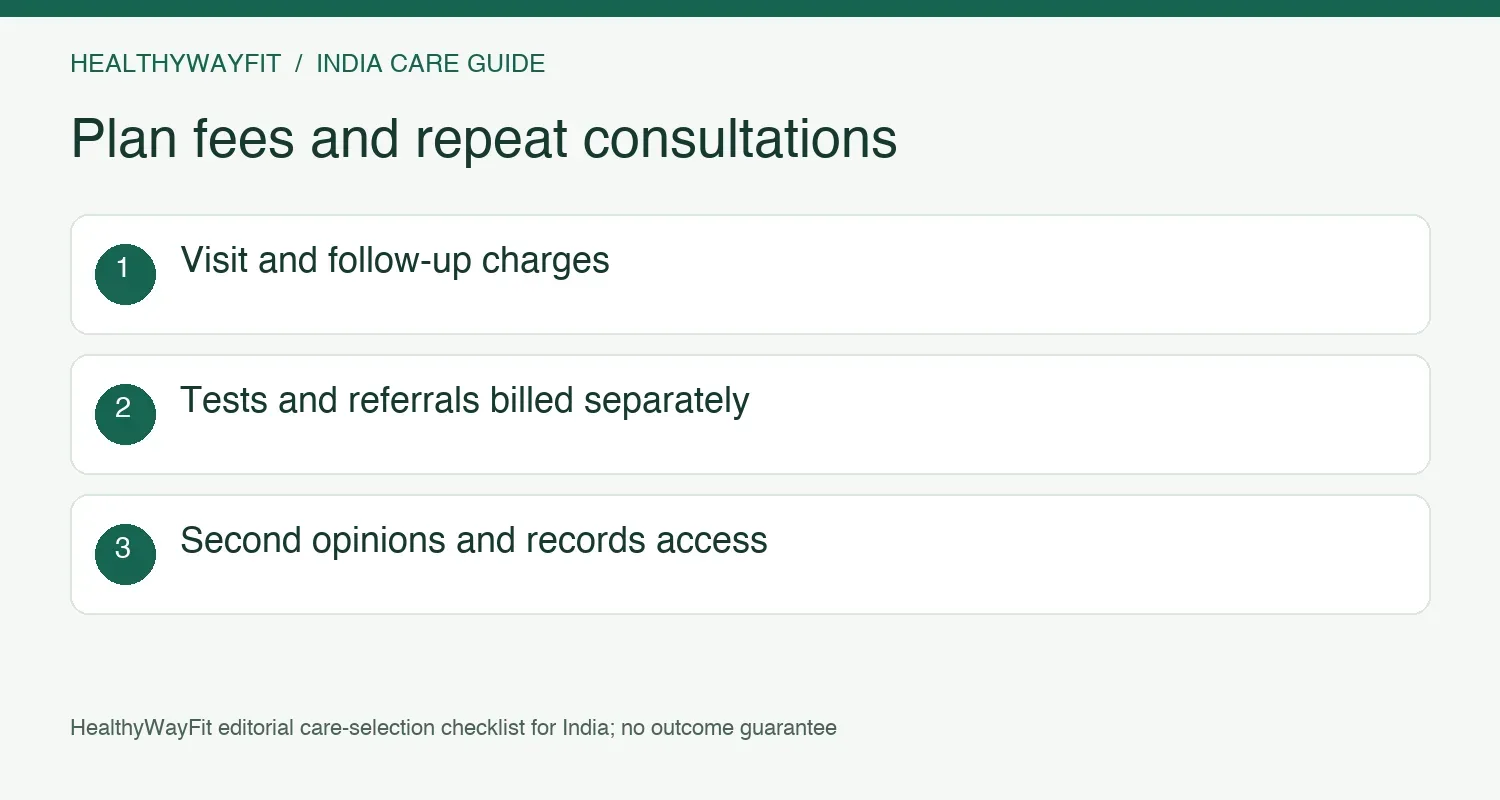
Compare the consultation and ongoing care you will actually receive, with fees stated in rupees. Ask about visit duration, review charges, reports, referrals and remote follow-up. A low advertised appointment fee does not explain the cost of a longer programme or the additional services recommended after assessment.
Ask the clinic:
- What does the first consultation cover?
- Are report reviews or follow-up calls charged separately?
- Which tests or outside appointments could create extra costs?
- Can I consult the doctor before deciding on a programme?
- What happens if the assigned clinician is unavailable?
- Can I obtain copies of prescriptions and consultation summaries?
If you have insurance, check your own OPD or teleconsultation benefit and provider requirements. Do not assume a coaching package is covered because the doctor’s consultation is reimbursable.
A second opinion can be useful when you need to clarify a recommendation or compare care arrangements. Keep records so another clinician can understand what was assessed and prescribed.
Choose an appointment schedule you can attend. Follow-up arrangements are part of the care, rather than an afterthought to the first visit.
9. How does HealthyWayFit coordinate with a doctor?
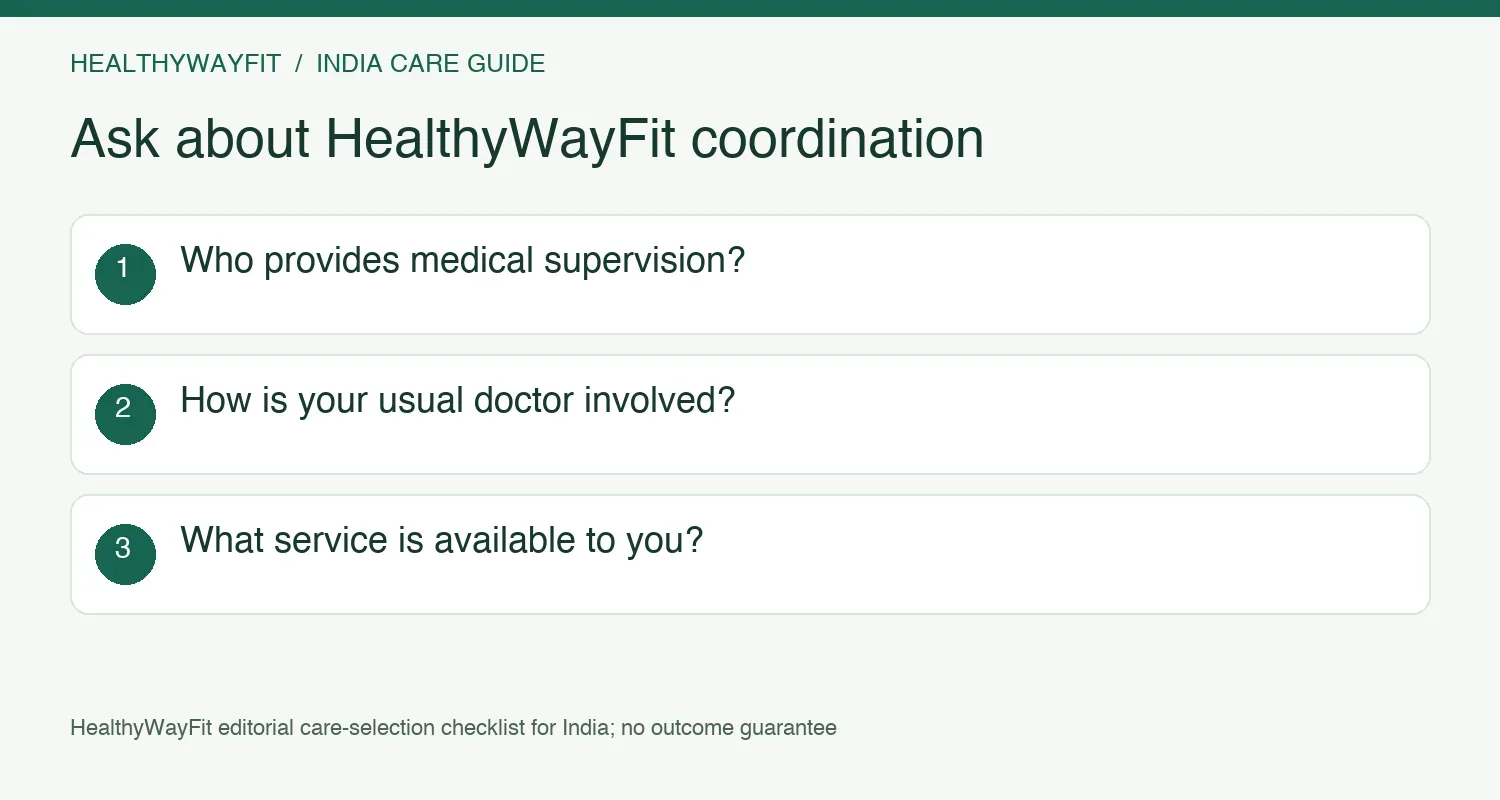
HealthyWayFit’s public programme description includes doctor supervision alongside nutrition, movement, monitoring and habit support. Ask who provides that supervision for your proposed service and how it works with your usual clinician. Confirm appointment availability and delivery format instead of assuming a named doctor or nearby branch.
Give the team your city, current treatment and the reason you are seeking support. Ask whether clinical appointments are remote or in person and who makes medical decisions.
If you already have a treating physician or endocrinologist, clarify how records and recommendations are shared with your consent. Ask which team handles prescription questions and which provides routine support.
Do not infer qualifications from the general phrase “doctor-supervised.” Request names, registration details and the precise responsibilities in your programme.
HealthyWayFit publishes this guide; it does not claim that its clinician is nearest to you or that a particular outcome is guaranteed. Contact our team to discuss suitability and clinical coordination.
10. What should you leave the appointment understanding?
You should leave with an explanation of your current assessment, the treatment plan, agreed goals and follow-up arrangements. Choose a clinician who makes those responsibilities understandable and can refer you appropriately. A remission discussion should add clarity to your care, rather than pressure to stop medication or purchase a package.
Check that you understand the next appointment, any investigations, contact route and written instructions. Ask for clarification before leaving if a recommendation is unclear.
Keep your prescriptions and reports accessible and tell the doctor about any other programme you join. Clear information helps teams coordinate rather than work at cross-purposes.
To explore HealthyWayFit support, share your location and clinical-care questions with our team. Ask about the assigned professionals, available consultations and coordination with your current doctor.