This article is for informational purposes only and does not constitute medical advice. If you are managing diabetes, please consult your healthcare provider or a registered dietitian before making dietary changes.
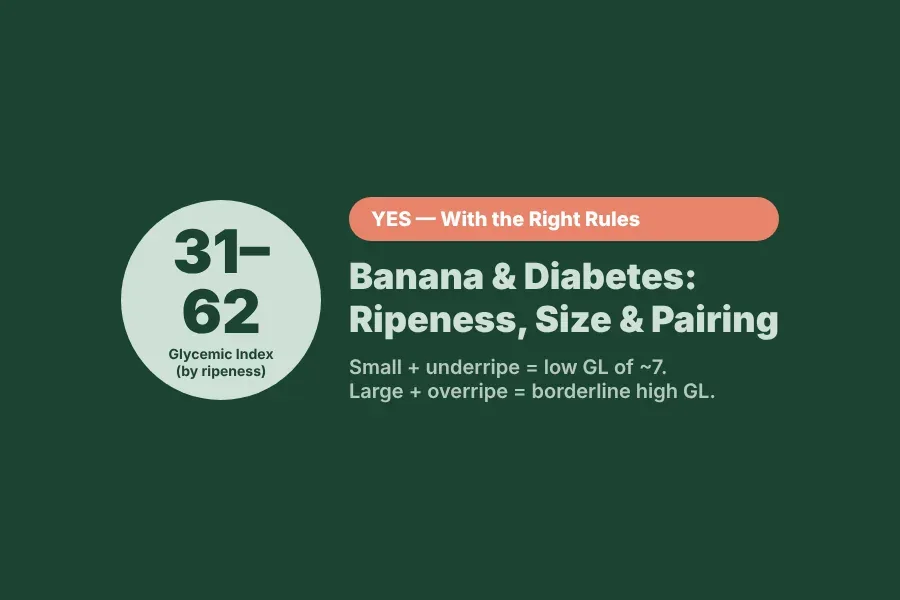
Yes, people with diabetes can eat bananas — but the answer that stops there is incomplete. Whether a banana raises your blood sugar sharply or gently depends on three variables that almost no article walks through together: ripeness, size, and what you eat alongside it.
A small, slightly underripe banana and an extra-large overripe banana are technically the same fruit. Their glycemic loads differ by a factor of four.
This article works through each variable with actual numbers so you can make a decision, not just receive a verdict.
Does Banana Raise Blood Sugar?
Yes — but the size of the rise depends on which banana you chose and how you ate it.
Bananas raise blood sugar because they contain carbohydrates, and carbohydrates raise blood sugar. A medium banana (about 118 g) delivers roughly 27 g of total carbohydrate according to USDA FoodData Central, of which about 14 g is sugar and 3 g is fiber.
The fiber matters because it slows the rate at which glucose enters the bloodstream, making the blood-sugar rise more gradual than it would be from 27 g of pure sugar. The American Diabetes Association recommends including fresh fruit in a diabetes eating plan specifically because whole fruit delivers carbohydrates packaged with fiber, vitamins, and minerals — unlike refined-sugar foods.
What Is the Glycemic Index of a Banana?
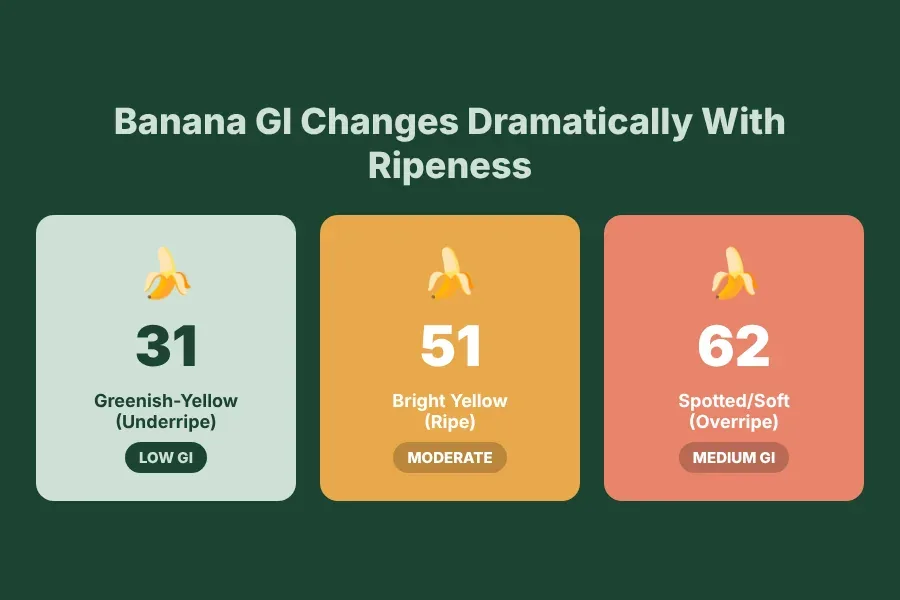
The glycemic index (GI) of a banana ranges from approximately 31 (underripe) to 62 (very ripe), according to the University of Sydney’s GI database.
The standard classification:
- Low GI: ≤ 55
- Medium GI: 56–69
- High GI: ≥ 70
A firm, slightly underripe banana (greenish-yellow peel) sits in the low GI range — around 31–42. A fully ripe banana (bright yellow with no brown spots) sits at around 51. An overripe banana (spotted or very soft) can reach 62, putting it at the low end of medium GI.
This range matters because GI is measured on a fixed 50 g of available carbohydrate from the food, not a normal serving size. That distinction leads directly to the more useful number: glycemic load.
Glycemic Load — the Number That Actually Predicts the Spike
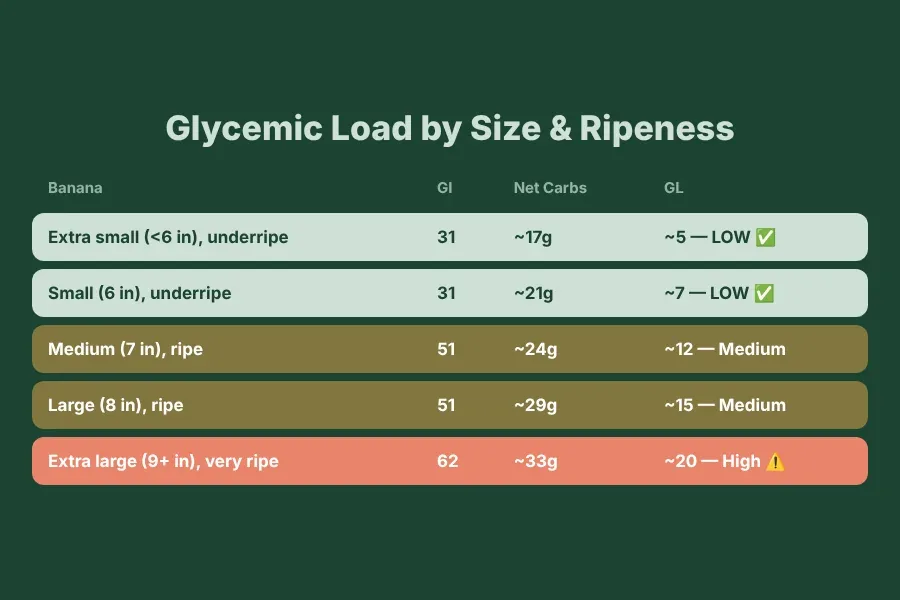
Glycemic load (GL) adjusts for how much of the food you actually eat. For most banana choices, GL falls in the low-to-medium range.
GL = (GI × grams of net carbs in the portion) ÷ 100
A GL below 10 is considered low; 11–19 is medium; 20 or above is high.
The table below shows how ripeness and size interact:
| Banana | GI (approx.) | Net carbs | GL |
|---|---|---|---|
| Extra small (< 6 in / 81 g), underripe | 31 | ~17 g | ~5 — low |
| Small (6 in / 101 g), underripe | 31 | ~21 g | ~7 — low |
| Medium (7 in / 118 g), ripe | 51 | ~24 g | ~12 — medium |
| Large (8 in / 136 g), ripe | 51 | ~29 g | ~15 — medium |
| Extra large (9+ in / 152 g), very ripe | 62 | ~33 g | ~20 — borderline high |
Net carbs = total carbs − fiber. GI values from the University of Sydney database; carb figures from USDA FoodData Central.
A small, slightly underripe banana has a genuinely low glycemic load — within the same low-GL range as a small apple. An overripe extra-large banana reaches borderline high glycemic load territory. The fruit has not changed; the ripeness and the portion have.
How to Eat Banana With Diabetes: Four Rules That Change the Numbers
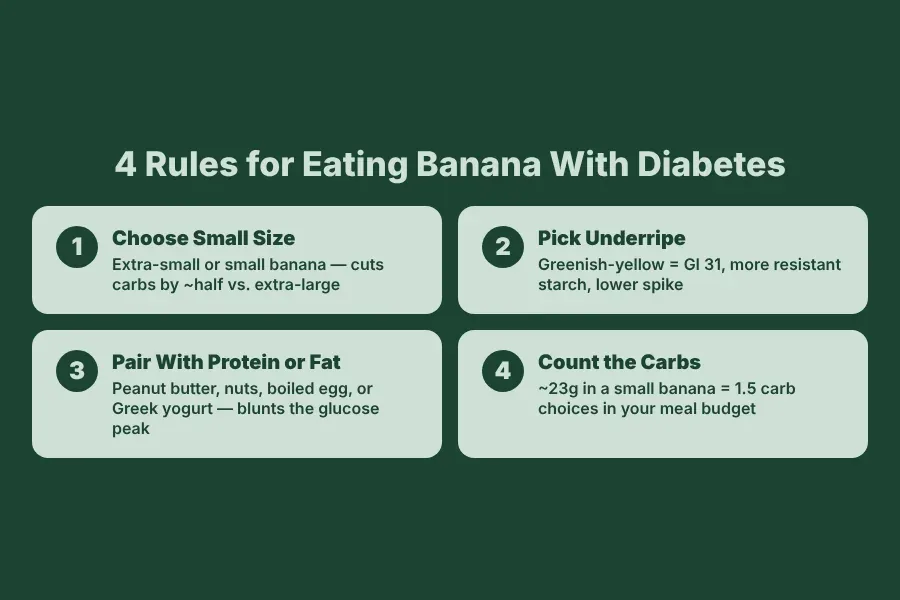
The practical answer: choose a small, slightly underripe banana, pair it with protein or fat, and count its carbs in your meal budget.
1. Choose an extra-small or small banana
Carb content scales with size. An extra-small banana (under 6 inches) has about 18 g of carbohydrate; an extra-large one has about 35 g. USDA FoodData Central lists the full size breakdown. Picking the smaller size cuts the glycemic load roughly in half compared to the largest.
2. Pick it slightly underripe
A greenish-yellow banana delivers more resistant starch, a lower GI, and the same potassium and vitamin B6 as a ripe one. It is somewhat less sweet — that is a taste question, not a health one.
Already have ripe bananas on the counter? The pairing and portion rules below still apply and will meaningfully blunt the glucose rise.
3. Pair it with protein or fat
Consuming carbohydrate alongside protein or fat slows gastric emptying and blunts the glucose peak. A 2021 controlled study confirmed that mixing macronutrients at a meal reduces the blood-sugar response compared to eating carbohydrates alone. Practical pairings: a tablespoon of peanut or almond butter, a handful of walnuts, a boiled egg, or a small bowl of plain Greek yogurt.
Eating a banana as a standalone snack on an empty stomach — when gastric emptying is fastest — produces the sharpest glucose rise.
4. Count it in your carbohydrate budget, not separately from it
One small banana (~23 g carb) counts as roughly 1.5 standard carbohydrate choices (where 1 choice = 15 g). The American Diabetes Association recommends tracking total carbohydrate intake at each meal rather than treating fruit as a free food. If your meal carbohydrate target is 45 g, a small banana accounts for about half of it.
If you use insulin, count the banana’s carbs toward your insulin-to-carb ratio the same way you would any other food.
Why Ripeness Changes the Blood-Sugar Impact
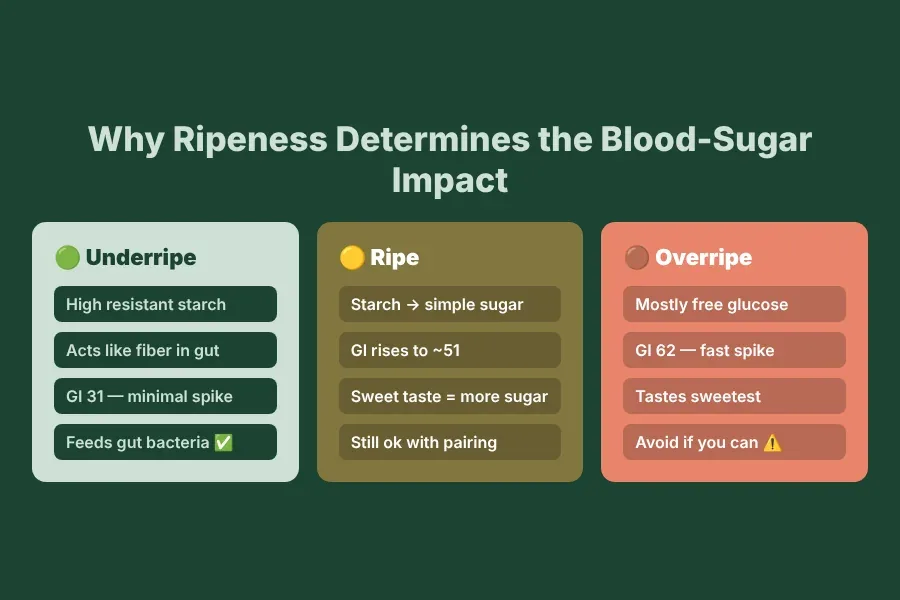
As a banana ripens, its starch converts to sugar. Specifically:
- Unripe (green to greenish-yellow) bananas contain a high proportion of resistant starch — a type of carbohydrate that resists digestion in the small intestine, functions similarly to fiber, and has minimal direct effect on blood glucose, unlike digestible starch. Resistant starch also feeds beneficial gut bacteria, with downstream effects on metabolic health. A 2023 study (García-Vázquez et al., Nutrients, 15(8):2992) in 17 adults with type 2 diabetes found that native banana starch reduced fasting blood sugar and blunted the postprandial spike, as well as reducing hunger.
- Ripe (yellow) bananas contain less resistant starch and more free sugars. The GI rises and the glycemic load rises proportionally for the same weight of fruit.
- Overripe (spotted or brown) bananas have completed much of that conversion. They taste sweeter because they are sweeter — more of the starch has become fast-acting glucose and fructose.
Healthline’s medically reviewed guidance puts it clearly: “Fully ripe bananas have a higher GI and will cause your blood sugar to rise faster than green unripe bananas.”
Banana’s Nutritional Benefits for People With Diabetes
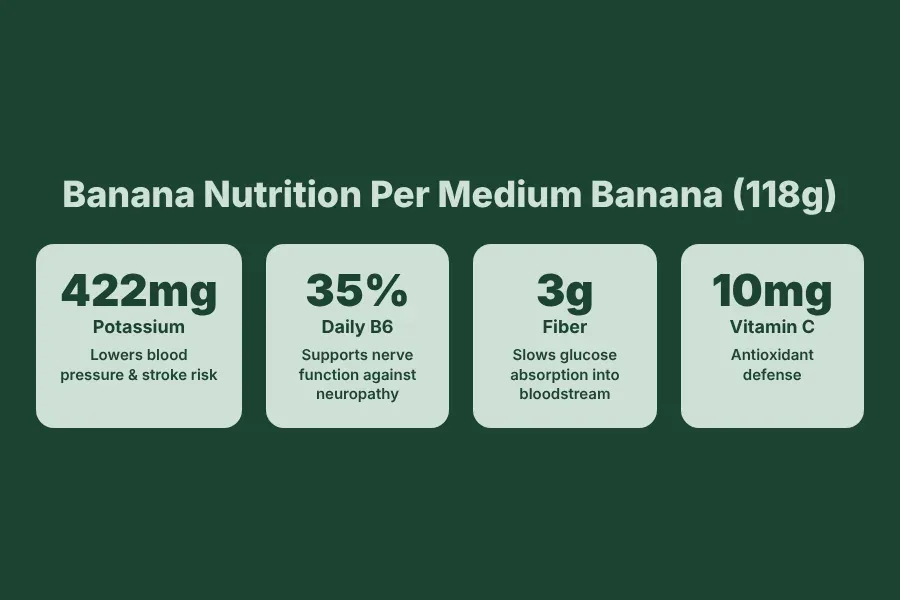
Beyond blood sugar, there are genuine reasons bananas belong in a diabetes diet:
Potassium. One medium banana (118 g) provides about 422 mg of potassium, or roughly 9% of the daily adequate intake. Potassium is associated with lower blood pressure and reduced stroke risk — both directly relevant because people with diabetes carry elevated cardiovascular risk.
Vitamin B6. A medium banana provides about 0.46 mg of vitamin B6, approximately 35% of the daily recommended intake for adults (RDA: 1.3 mg). B6 supports nerve function, which matters given the neuropathy risk that comes with long-term elevated blood glucose.
Vitamin C. About 10 mg per medium banana, contributing to antioxidant defense.
Fiber. Three grams per medium banana. Dietary fiber in whole fruit slows glucose absorption and supports digestive health. The CDC notes that fiber helps keep blood sugar in target range.
These nutrients are not exclusive to bananas, but they add up meaningfully in a balanced diet.
How Banana Compares to Other Common Fruits
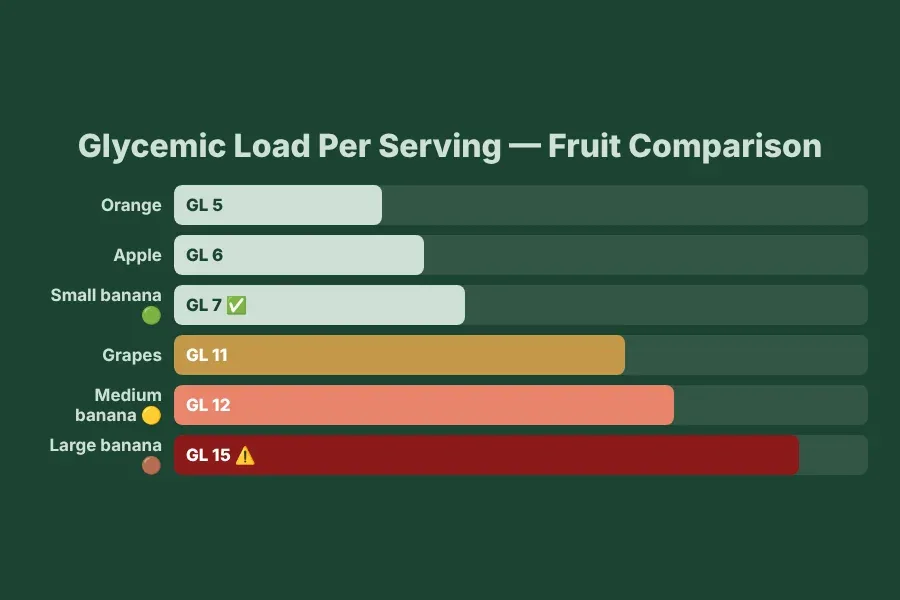
Are bananas worse than other fruit for blood sugar? For a small underripe banana, no — it falls in the same low-GL range as an apple or orange.
| Fruit | GI | Typical portion | GL per portion |
|---|---|---|---|
| Apple (1 medium, 182 g) | 38 | 182 g | ~6 |
| Orange (1 medium, 131 g) | 45 | 131 g | ~5 |
| Small underripe banana | 31 | 101 g | ~7 |
| Grapes (1 cup, 92 g) | 59 | 92 g | ~11 |
| Mango (1 cup, 165 g) | 55 | 165 g | ~12 |
| Medium ripe banana | 51 | 118 g | ~12 |
| Large ripe banana | 51 | 136 g | ~15 |
A small underripe banana sits with apple and orange in the low-GL range. A large ripe banana sits above grapes and mango. The fruit is the same; the serving and ripeness determine where it falls.
What to Avoid: Processed Banana Products
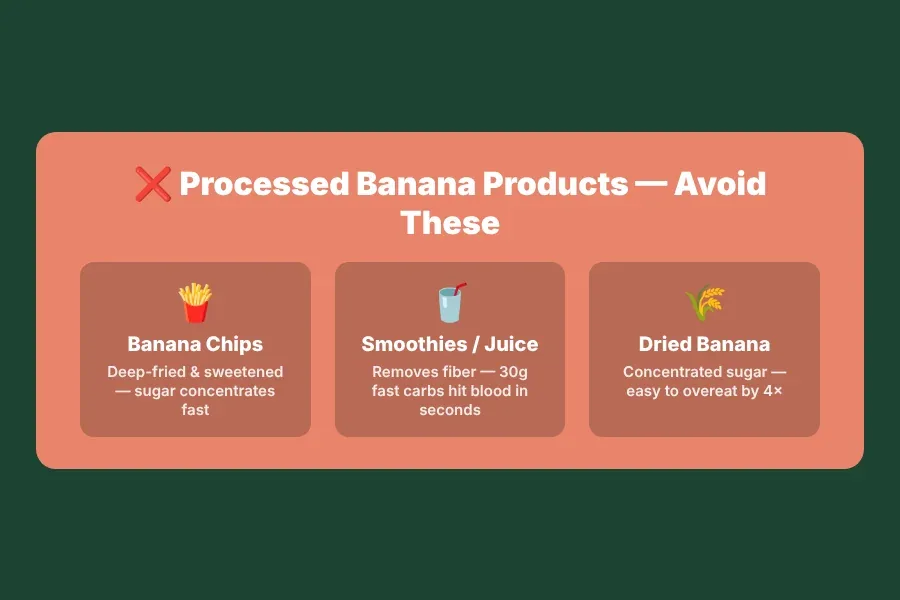
Whole, fresh banana is materially different from processed banana products:
- Banana chips: typically deep-fried and sweetened, concentrating the calories and sugar into a format where it is easy to eat several portions.
- Banana smoothies or juices: blending or juicing removes the structural fiber that slows glucose absorption. Research on food form effects consistently shows that liquid carbohydrates produce faster and higher glucose peaks than the same carbohydrates consumed whole. A smoothie made from one large banana can deliver 30+ g of fast-acting carbohydrate in seconds.
- Dried banana: concentrates sugar into a small volume — easy to overeat.
If you want the benefits of banana, eat the whole fruit.
How Many Bananas Can a Person With Diabetes Eat?
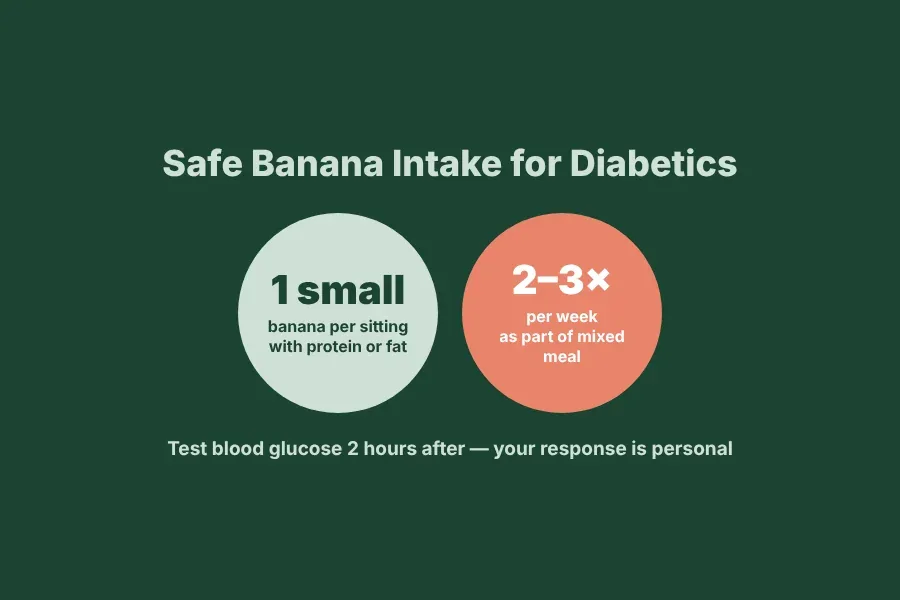
There is no universal number. The practical starting point for most people with type 2 diabetes is one small to medium banana, two to three times per week, eaten as part of a mixed meal.
The ADA does not set a specific banana limit; it recommends tracking total carbohydrate and keeping portions of all foods consistent with your personal glucose goals.
Check your blood glucose two hours after eating to see your individual response.
Note: The ADA’s general postprandial target is below 180 mg/dL (10 mmol/L) two hours after the start of a meal, with many clinicians aiming for below 140 mg/dL (7.8 mmol/L) for tighter control.
If a banana consistently pushes you above your personal target, adjust the portion or ripeness before eliminating the fruit entirely.
If you use a continuous glucose monitor (CGM), your response to banana — and how pairing with protein or fat changes it — will be directly visible in your data.
Timing matters too. A banana eaten before or after exercise tends to produce a smaller net glucose impact than the same banana eaten at rest, because working muscle takes up glucose more readily. If you’re exercise-managing your blood sugar, a small banana can be a practical pre-workout carbohydrate source.
If you are on a very-low-carbohydrate diet (under 50 g of carbs per day), even a small banana takes up a significant portion of that budget; in that case, berries — lower in carbs per portion — are a more practical option.
The Bottom Line
Banana is not a fruit to avoid with diabetes. It is a fruit to manage the same way you manage any carbohydrate-containing food: by controlling ripeness, size, and what accompanies it.
A small, slightly underripe banana paired with protein or fat has a low glycemic load and produces a blunted blood glucose response, while delivering meaningful amounts of potassium, B6, and fiber. An overripe extra-large banana eaten alone on an empty stomach reaches borderline high glycemic load territory. The difference between those two choices is the difference between a blood-sugar-friendly snack and a spike.
For help building a meal plan that puts this into practice — with fruit, grains, and all the other variables your eating pattern involves — see our diabetes-friendly meal guide and the Indian diet plan for diabetes. For a look at how other foods compare, see our guide to foods for blood sugar control.
If you would like a plan built around your own food habits and glucose patterns, HealthyWayFit offers medically supervised coaching for people managing diabetes.
References
- USDA FoodData Central. Bananas, raw. FDC ID 173944. https://fdc.nal.usda.gov/food-details/173944/nutrients
- University of Sydney Glycemic Index Database. GI Search. https://glycemicindex.com/gi-search/
- American Diabetes Association. Fruit. https://diabetes.org/food-nutrition/reading-food-labels/fruit
- García-Vázquez C, et al. (2023). Effects of resistant starch on glycemic response, postprandial lipemia and appetite in subjects with type 2 diabetes. Nutrients, 15(8), 2992. https://pubmed.ncbi.nlm.nih.gov/37083722/
- Basturk B, Koc Ozerson Z, Yuksel A. (2021). Evaluation of the Effect of Macronutrients Combination on Blood Sugar Levels in Healthy Individuals. Iranian Journal of Public Health, 50(2), 280–287. https://pubmed.ncbi.nlm.nih.gov/33747991/
- NIH Office of Dietary Supplements. Potassium: Fact Sheet for Health Professionals. https://ods.od.nih.gov/factsheets/Potassium-HealthProfessional/
- CDC. The Role of Fiber in Diabetes Management. https://www.cdc.gov/diabetes/library/features/role-of-fiber.html
- Phillips KM, et al. (2021). Dietary fiber, starch, and sugars in bananas at different stages of ripeness in the retail market. PLOS ONE, 16(7), e0253366. https://www.ncbi.nlm.nih.gov/pmc/articles/PMC8266066/
- Rashed AA, et al. (2022). Effects of resistant starch interventions on metabolic biomarkers in pre-diabetes and diabetes adults. Nutrients, 14(4), 850. https://www.ncbi.nlm.nih.gov/pmc/articles/PMC8790517/
Written by Kirti, Founder & Serial Entrepreneur, HealthyWayFit. Last updated: October 2026.



