This Twin Health diabetes reversal review covers what the research actually shows, what real users experience, and whether you can even access the program — because that last part is the most common frustration.
Most people with type 2 diabetes are told the same thing: take your medication, watch your diet, and manage this condition for the rest of your life. Twin Health challenges that entirely — and it now has a peer-reviewed randomized controlled trial from the Cleveland Clinic to back up its claims.
This is an independent review. I’m not affiliated with Twin Health and earn no commissions from any program mentioned here. I’ve analyzed the published research, read through hundreds of verified user reviews, and compared Twin Health to competing programs so you have everything you need to make an informed decision.
In this review, you’ll learn exactly how Twin Health works, what the science actually shows (and where it falls short), what real users are saying, what it costs, and — crucially — whether you can even access it.
If you’re exploring diabetes reversal more broadly, our complete guide to reversing type 2 diabetes is a good starting point before diving into any specific program.
Medical disclaimer: This article is for informational purposes only and is not medical advice. Always consult your doctor before starting or stopping any diabetes treatment program.
What Is Twin Health?
Twin Health is a digital health company founded in 2018 and headquartered in the San Francisco Bay Area. Its core product is the Whole Body Digital Twin™ — an AI model of your individual metabolism, built from continuous data streams and updated in real time.
Here’s what makes it different from every other diabetes program you’ve probably seen:
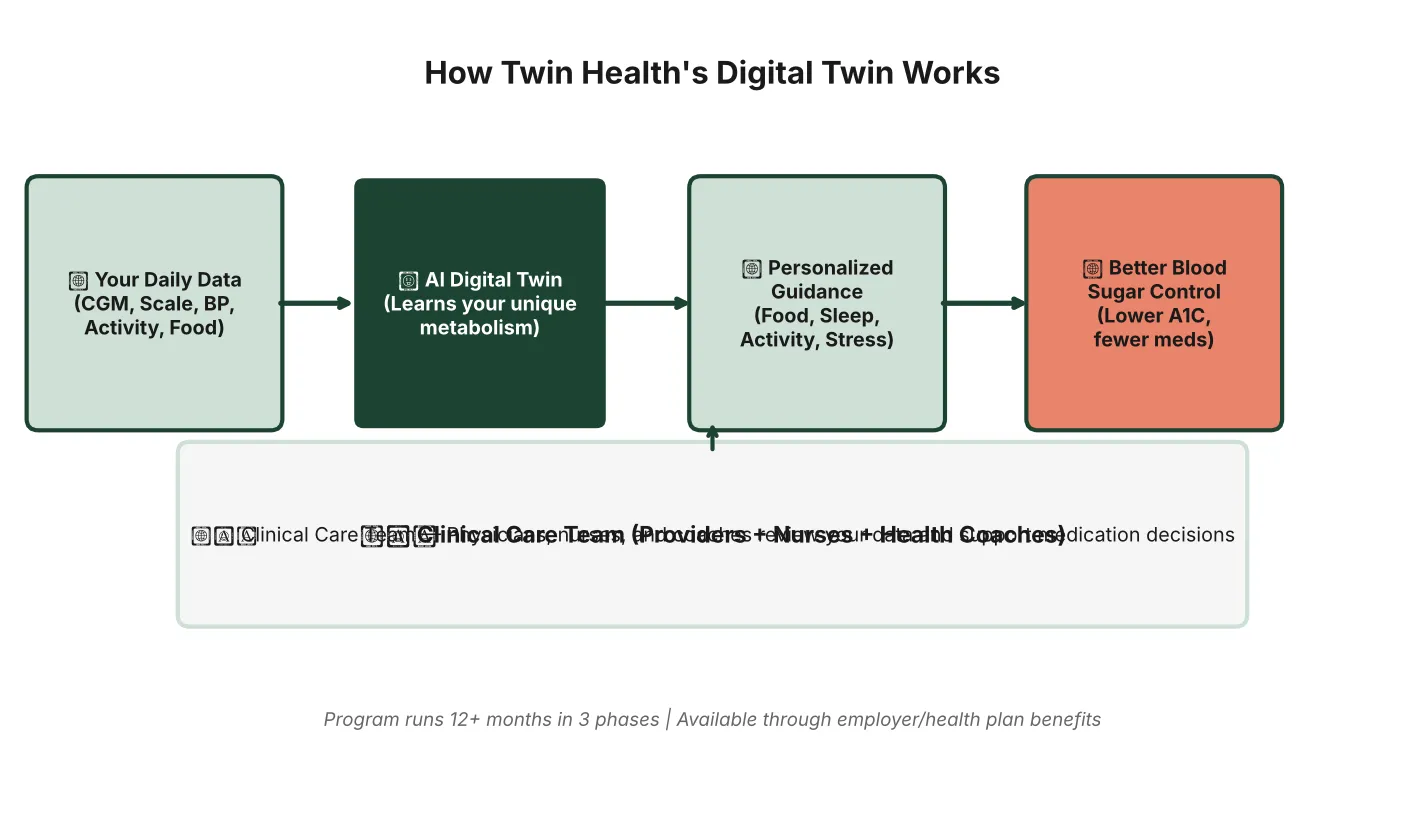
Most digital health programs give everyone roughly the same meal plan or coaching protocol. Twin Health builds a model of your specific metabolic response — how your blood sugar reacts to your meals, sleep patterns, stress, and movement — and then uses that model to generate personalized daily guidance.
The program pairs this AI layer with a real clinical care team: a physician, a registered dietitian, and a health coach who all have access to your real-time data.
The device kit you receive at enrollment:
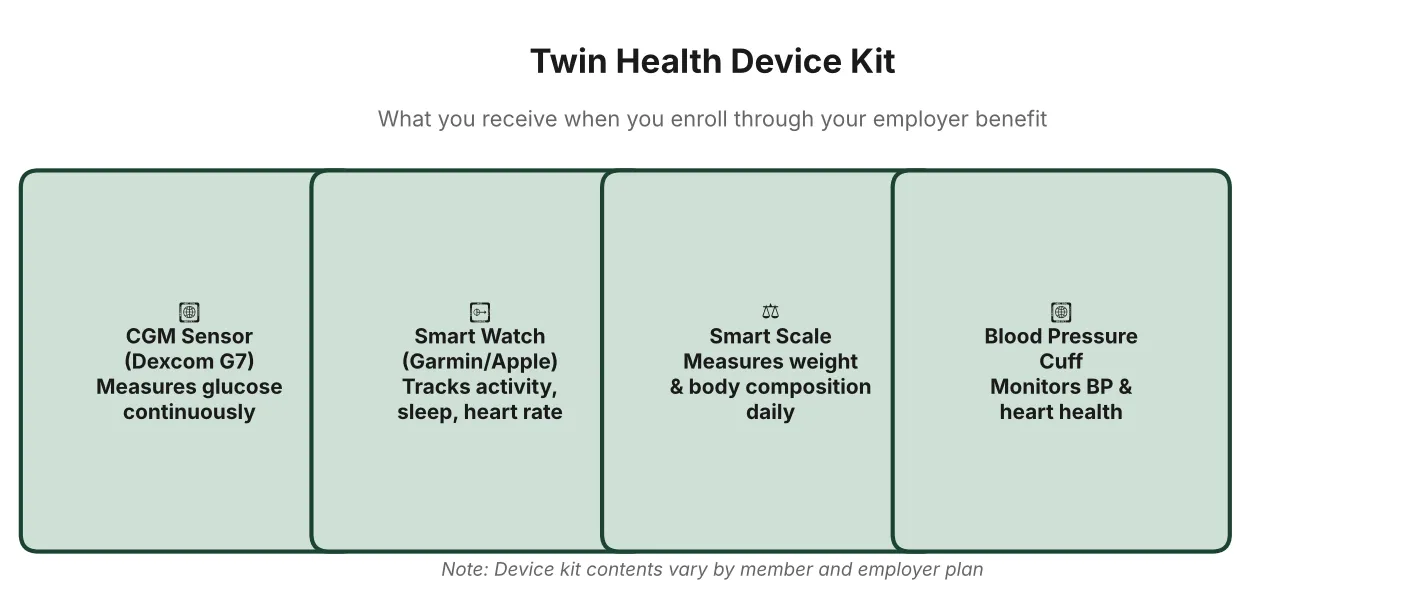
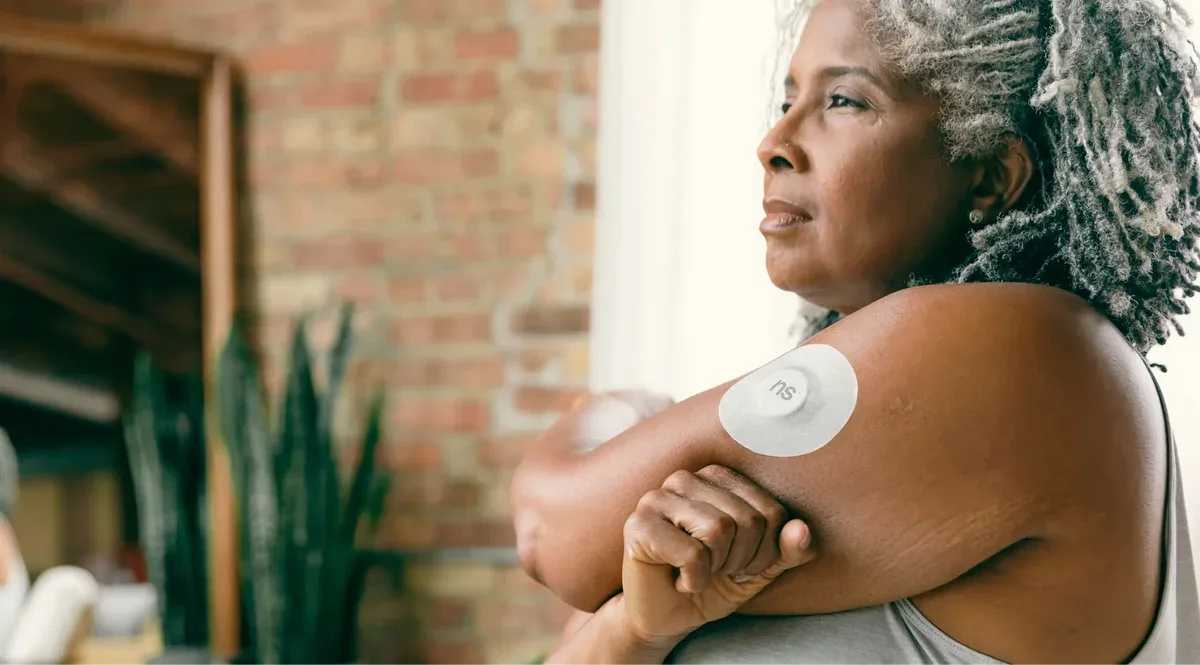
When you join, Twin Health ships you four devices: a continuous glucose monitor (CGM) sensor that tracks blood sugar every few minutes, a smart watch for activity and heart rate, a smart scale for daily weight and body composition, and a blood pressure cuff. All data flows into the Twin Health app, which the AI uses to continuously refine your metabolic model.
The Science: Two Key Studies
Cleveland Clinic RCT (NEJM Catalyst, 2025): The Strongest Evidence
The most rigorous evidence for Twin Health comes from a randomized controlled trial conducted at the Cleveland Clinic and published in NEJM Catalyst in 2025. This is the study that matters most — because it’s the only peer-reviewed, randomized design Twin Health has published to date.
The study enrolled 221 adults with type 2 diabetes across two groups: 113 in the Twin Health program and 108 in a control group receiving standard care. Both groups were followed for 12 months.
The study’s design is worth noting: participants were randomized (meaning assigned by chance, not self-selected), and the control group received “enhanced standard care” — not just advice to eat better, but active support from their primary care physicians. This makes the comparison more meaningful than most observational studies in this space.
The results were striking:
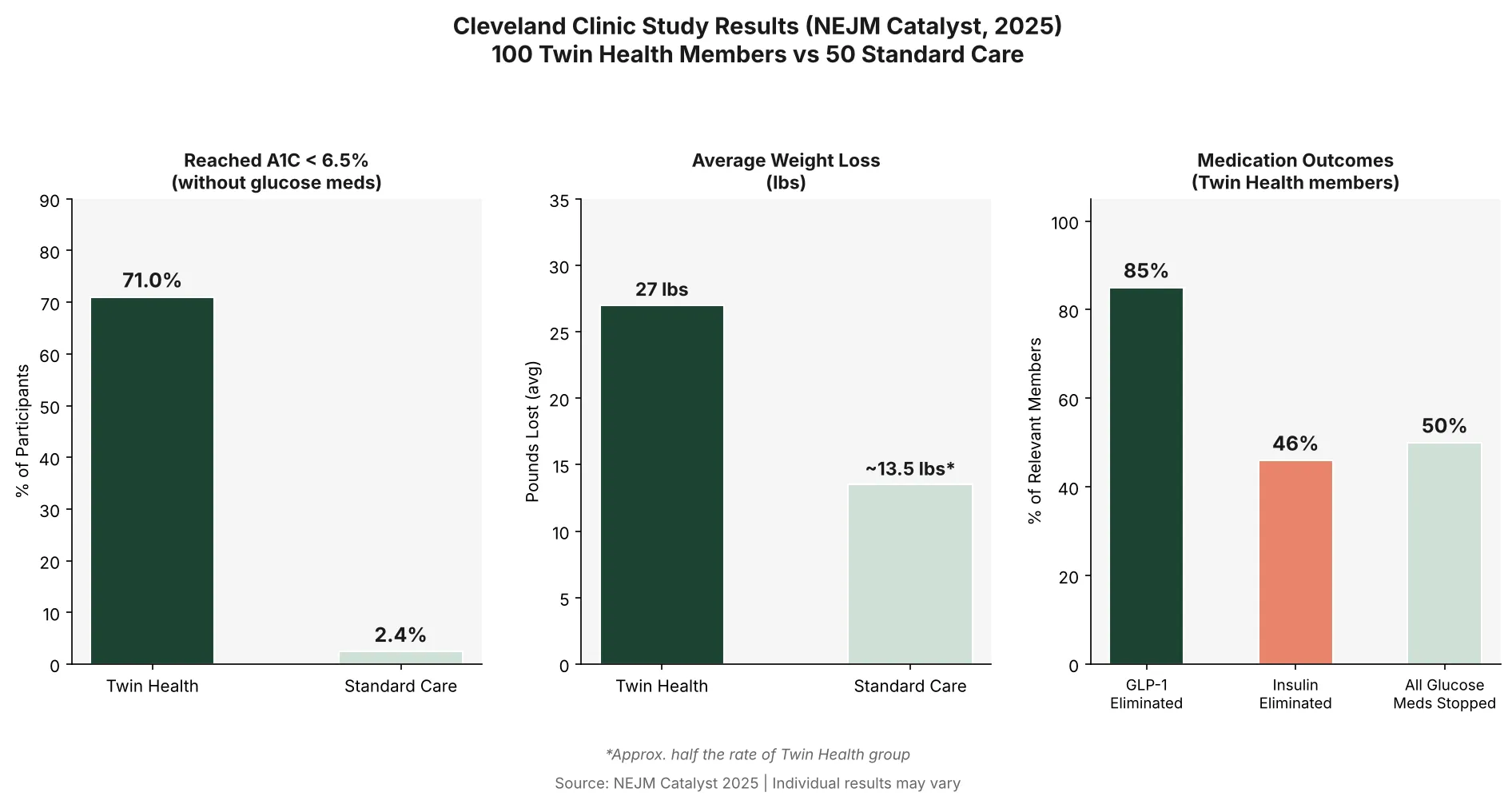
- 71% of Twin Health participants achieved an A1C below 6.5% (the diagnostic threshold for diabetes) without being on glucose-lowering medications — compared to just 2.4% in the control group
- Twin Health participants lost an average of 27 pounds, vs approximately 13.5 pounds in the control group
- 85% of those on GLP-1 receptor agonists at baseline had eliminated those medications by month 12
- 46% eliminated insulin entirely
- 50% stopped sulfonylureas
These are genuinely impressive outcomes, especially the medication reduction numbers. The GLP-1 elimination finding is particularly notable given that GLP-1 medications like Ozempic and Mounjaro have become a first-line standard of care.
Important context: “Diabetes reversal” in this study means achieving A1C below 6.5% while off glucose-lowering medications. Remission may not be permanent, and continued lifestyle adherence is required to maintain results. See our guide on whether type 2 diabetes reversal is permanent for the full picture.
ADA 2022 Conference Data: Real-World Numbers
At the 2022 American Diabetes Association Scientific Sessions, Twin Health presented outcomes data from 326 participants in their employer-sponsored program. This was not a randomized controlled trial — it was an observational analysis — but the scale and real-world nature of the data is still informative.
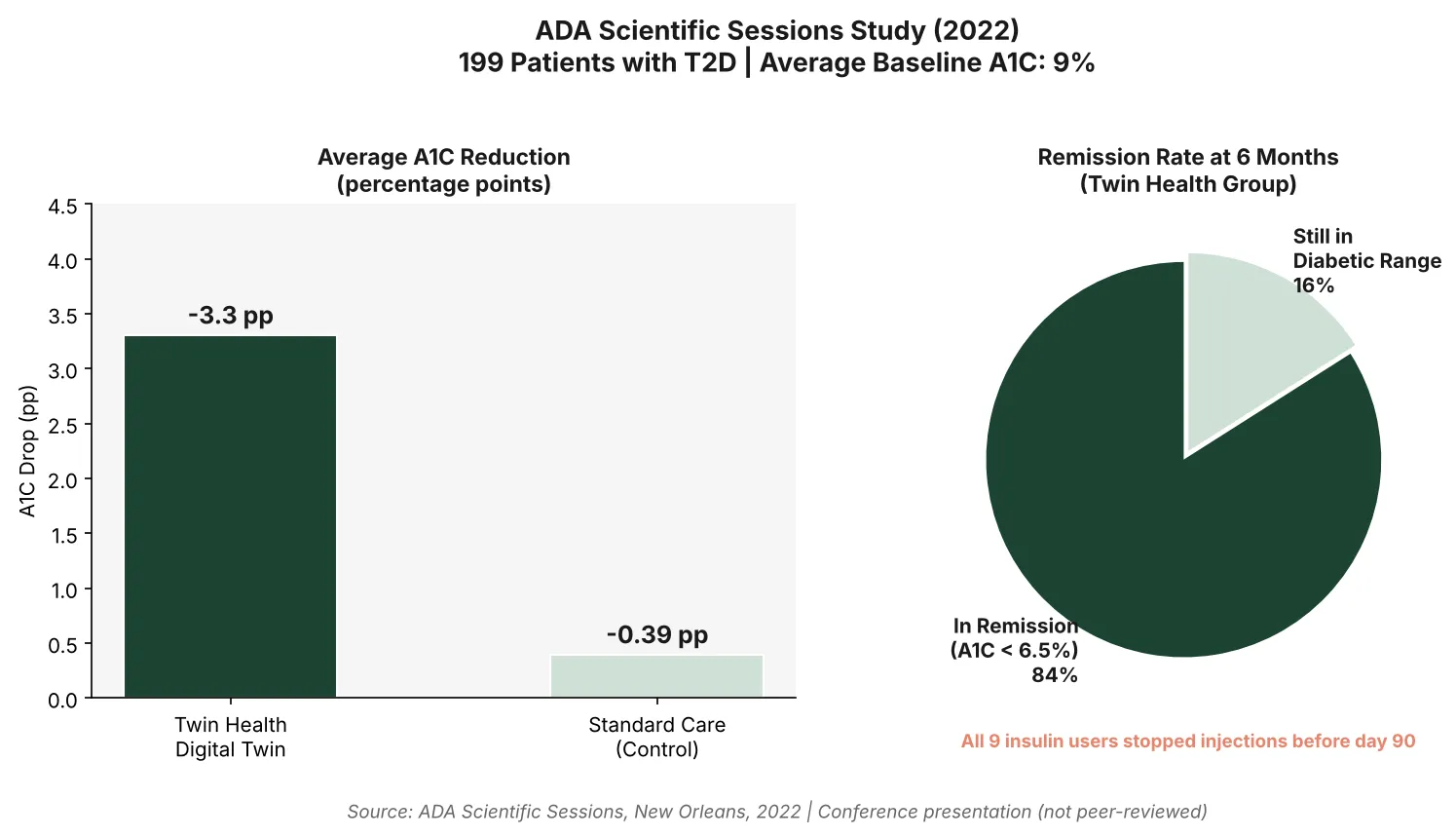
Key findings from the ADA 2022 presentation:
- 84% of participants achieved diabetes remission (defined as A1C below 6.5% off medications for 6+ months)
- Average A1C dropped 3.3 percentage points in the Twin Health group, vs only 0.39 percentage points in a matched comparison group
- Results held across age groups and baseline A1C levels
Note: The ADA 2022 data has not been peer-reviewed and should be interpreted with appropriate caution.
The Cleveland Clinic RCT published in NEJM Catalyst is the gold-standard evidence for this program.
Taken together, both studies point in the same direction: Twin Health consistently outperforms standard care for metabolic outcomes in participants who complete the program.
Inside the Twin Health Program: What the 12 Months Look Like
Understanding what you actually do in the program is important — because results like 71% reversal don’t happen by accident. The program is intensive.
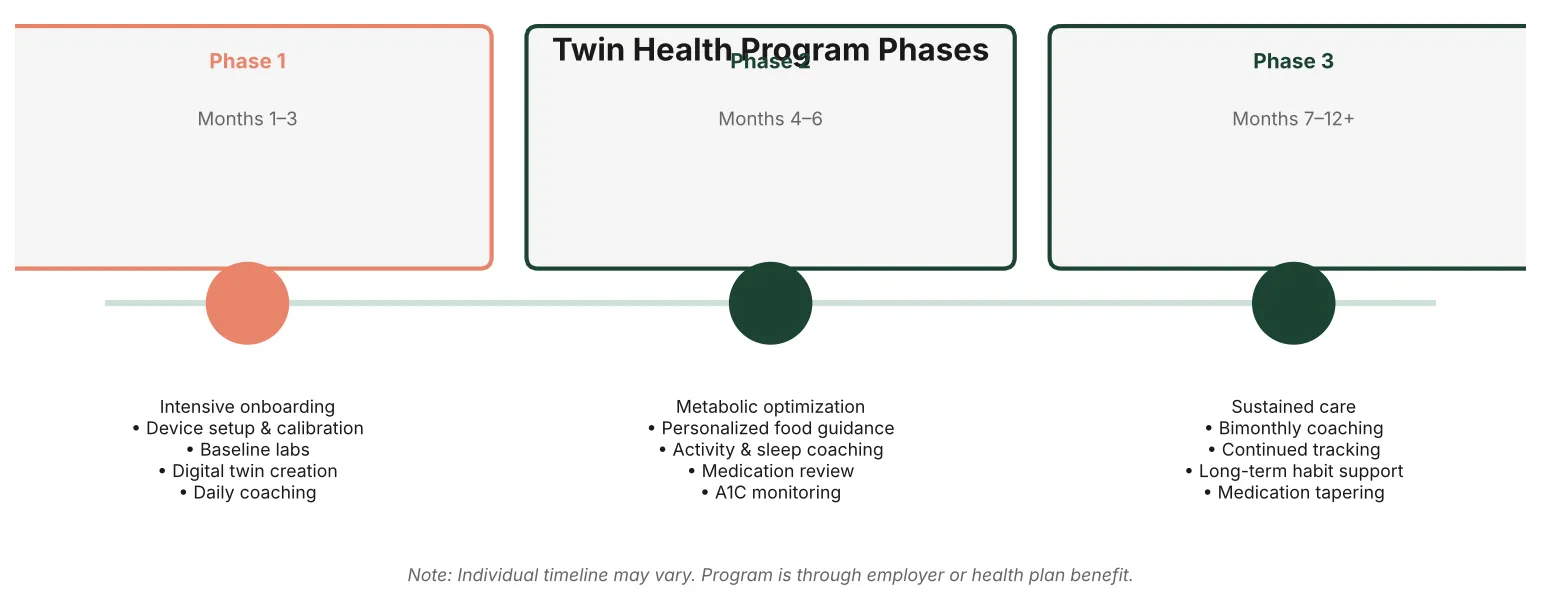
Phase 1 — Intensive Onboarding (Months 1–3):
You receive your device kit and set up CGM monitoring. Your health coach meets with you weekly (sometimes more frequently at the start). The AI begins building your digital twin from your CGM data, activity, sleep, weight, and blood pressure readings. You get a personalized nutrition plan — not a one-size-fits-all meal plan, but guidance tuned to your metabolic responses. Your physician reviews your medications and may begin tapering those that are no longer needed as your blood sugar improves.
Phase 2 — Optimization (Months 4–6):
By now, your digital twin is well-developed. The AI’s guidance gets more precise. Coach check-ins typically shift from weekly to bi-weekly. The focus moves from establishing habits to optimizing them — refining your food choices, activity patterns, and stress management based on the data.
Phase 3 — Sustained Remission (Months 7–12+):
This phase focuses on locking in your gains. Physician and dietitian reviews shift to quarterly. The app continues real-time monitoring and guidance. The goal is making your new metabolic baseline your permanent one. If you’ve achieved remission, this phase also begins the process of weaning from CGM monitoring — transitioning to periodic (rather than continuous) blood sugar tracking.
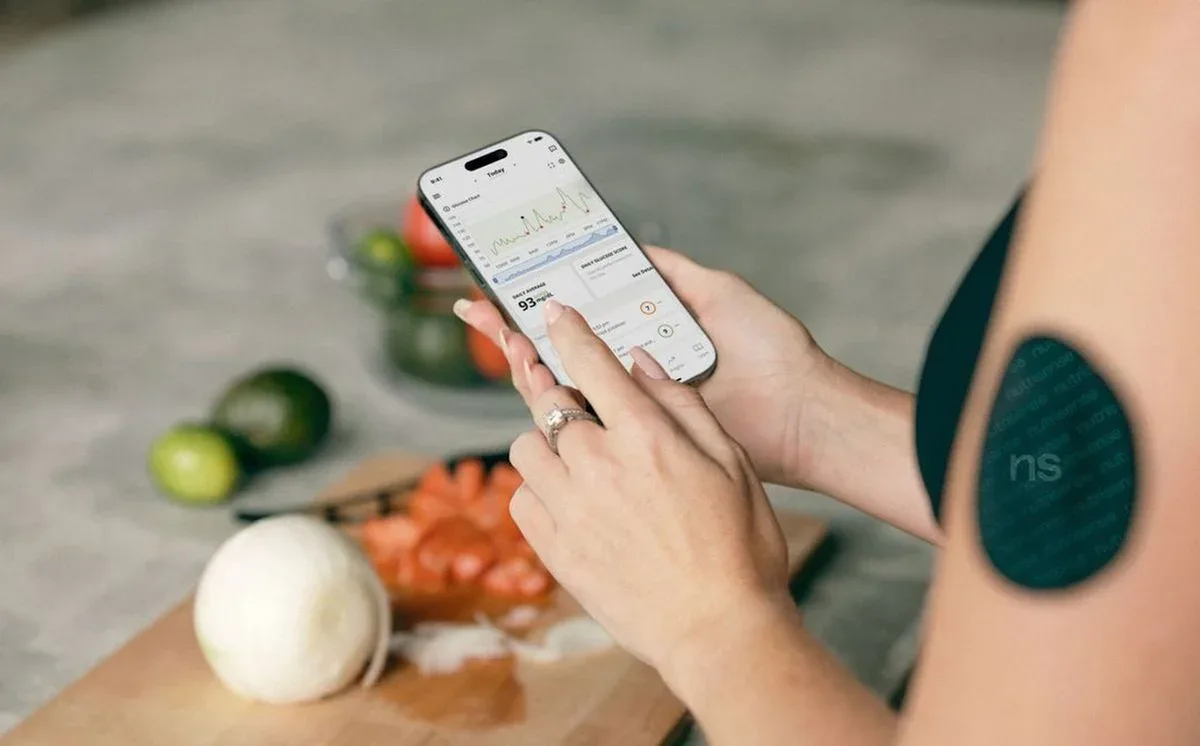
What the day-to-day experience actually looks like: You’ll log meals in the app (or use food scanning), review your overnight CGM trends each morning, get AI-generated insights about what affected your blood sugar the previous day, and receive a brief check-in notification from your health coach 3–4 times per week. The time commitment is roughly 20–30 minutes per day — less than you might expect, but more than any passive medication regimen.
One limitation worth noting from the Cleveland Clinic study: only about 19% of eligible employer plan members actually enrolled when given access to Twin Health. The program demands real commitment — daily monitoring, coaching calls, and consistent dietary changes. It’s not a passive treatment.
What Real Users Are Saying
Beyond the clinical studies, we looked at reviews from verified Twin Health members across multiple platforms.
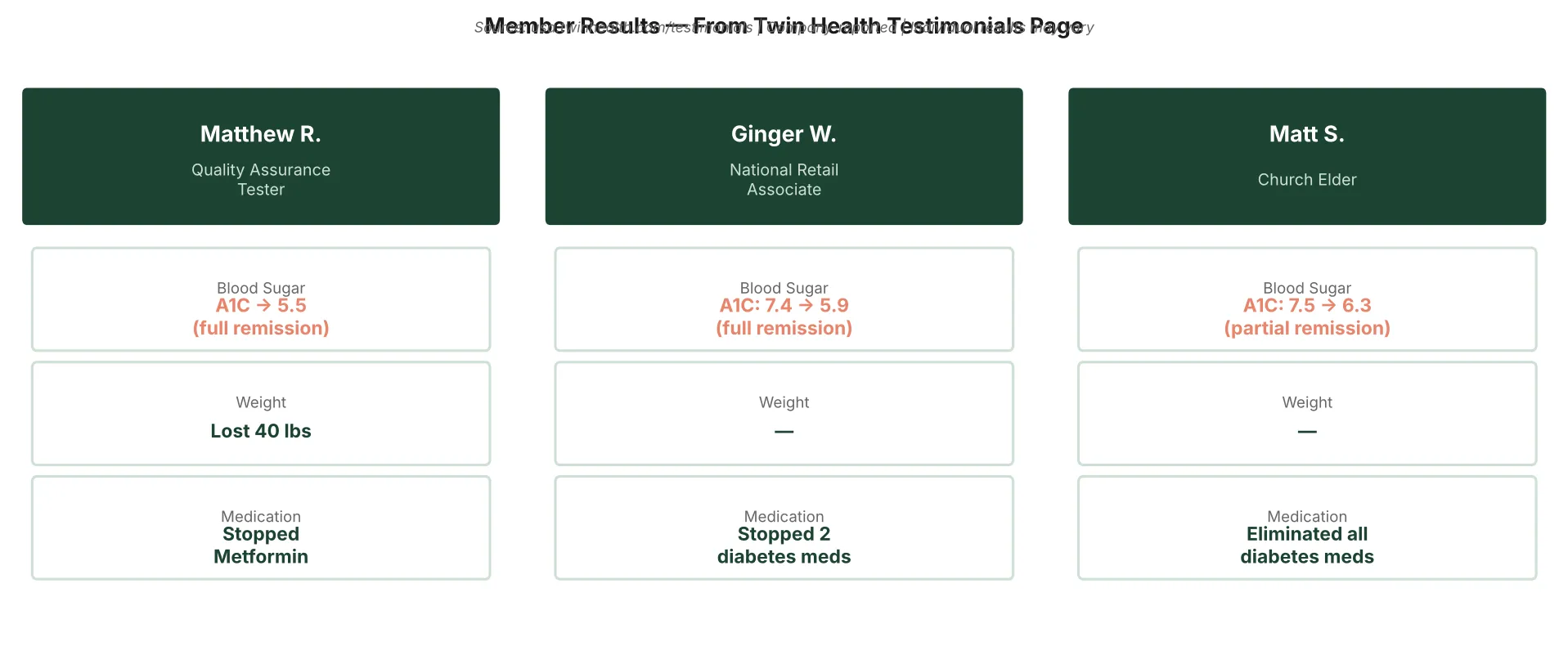
The pattern in positive reviews is consistent: significant A1C drops (often 2–4 percentage points), meaningful weight loss, and — most importantly to members — getting off diabetes medications they expected to take forever. Several reviewers specifically mention the coaching as a differentiator; having a real person reviewing your CGM data and answering questions in the app makes a tangible difference for accountability.
One reviewer noted their A1C dropped from 9.1 to 6.3 over eight months and they had been taken off metformin entirely. Another described the CGM data as “eye-opening” — discovering that foods they considered healthy (certain fruits, white rice, oatmeal) were spiking their blood sugar significantly, while foods they’d avoided were actually neutral for their metabolism.
The pattern in negative reviews is equally consistent: access frustration. Twin Health is primarily distributed through employer benefits. Users who found the program through a Google search — or whose employers don’t offer it — hit a wall. The $215/month MyCare direct-pay option (more on this below) is available but doesn’t include GLP-1 medications, which some reviewers say they need.
A third category of criticism: some users who completed the program felt the results were modest and didn’t justify the cost and effort compared to working with a conventional dietitian. A small number of reviewers also noted technical issues with the CGM sensor connectivity and app syncing, though Twin Health has iterated on the app significantly since 2023.
The honest picture: Twin Health works very well for people who are highly engaged and complete the full program. It’s not magic — it’s a very intensive intervention with real results for those who commit.
Twin Health: Honest Pros and Cons
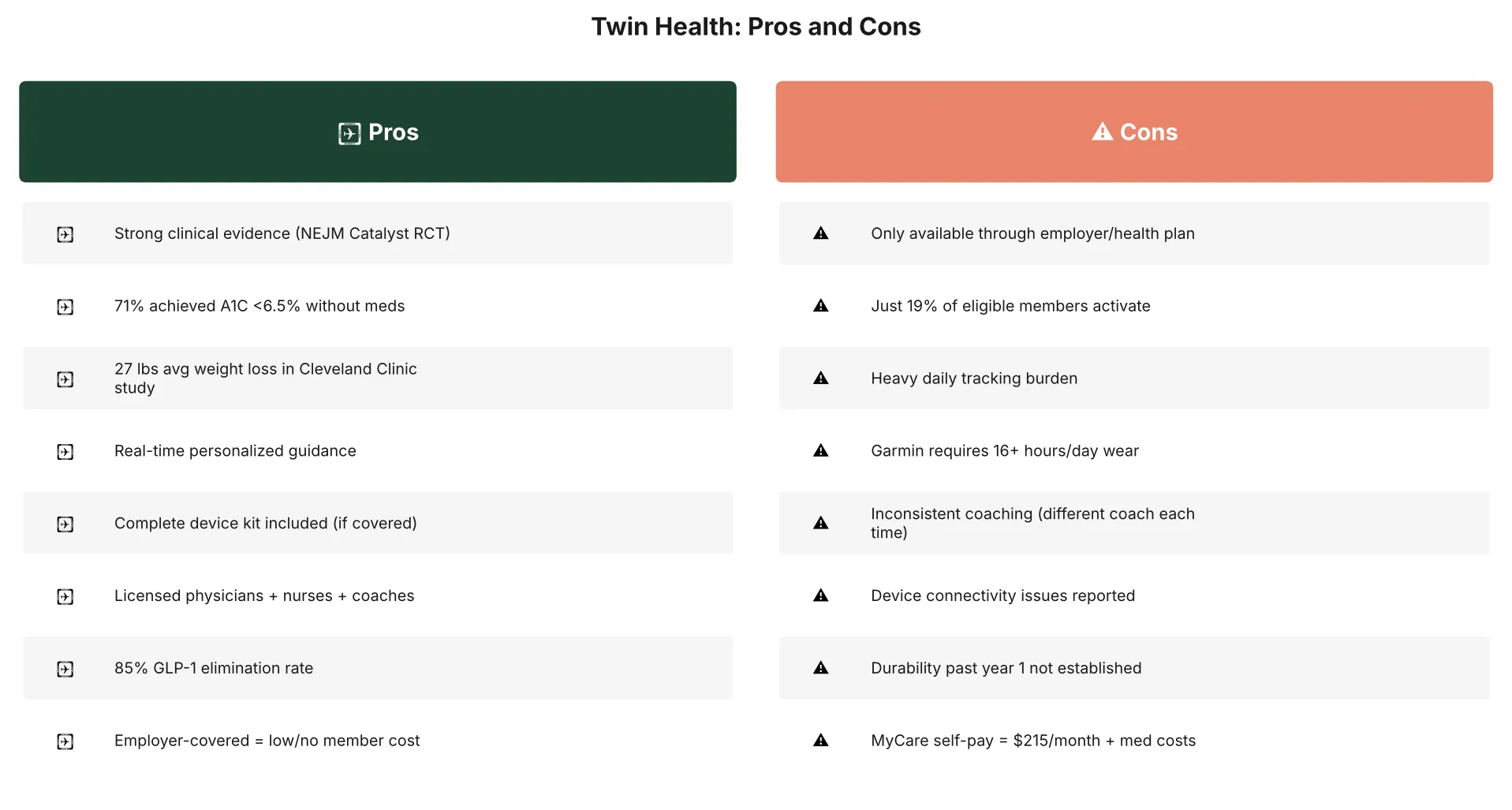
The strongest arguments for Twin Health:
- The only digital diabetes reversal program with a published, peer-reviewed randomized controlled trial
- Individualized approach (not a generic protocol) genuinely differentiates it from most competitors
- Clinical care team included — not just an app and automated nudges
- Medication reduction outcomes (especially GLP-1 and insulin elimination) are clinically meaningful
The real limitations:
- Available to most people only through employer benefits — individual access requires MyCare at $215/month
- GLP-1 medications not included in MyCare pricing; some users need these for meaningful outcomes
- Requires sustained behavioral change over 12 months — passive users won’t see results
- Long-term durability data (beyond 12 months post-completion) remains limited
How Does Twin Health Compare to Other Programs?
Twin Health isn’t the only serious player in digital diabetes reversal. Here’s how it stacks up against the two most common alternatives:
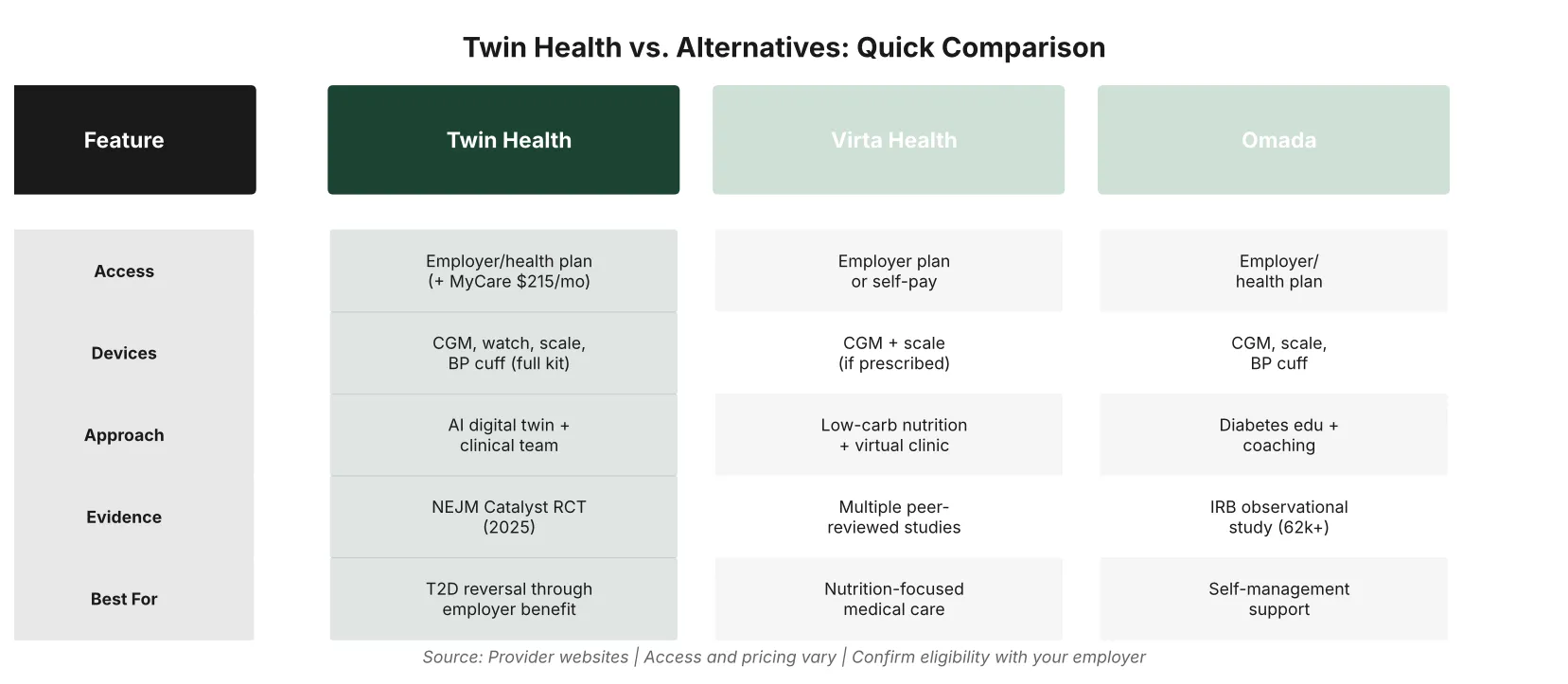
Virta Health uses a ketogenic diet approach and also has strong peer-reviewed clinical data — including 5-year follow-up data showing sustained remission for many participants. It’s available through employers and directly at approximately $375/month. GLP-1 medications are available through Virta’s clinical team. For people who can commit to a ketogenic diet and want direct individual access, Virta is Twin Health’s closest comparable competitor.
Omada Health is a lower-intensity, insurance-covered digital coaching program focused on weight management and diabetes prevention. It’s widely available through insurers and doesn’t require employer coverage. If your A1C is in prediabetes range (5.7–6.4%), Omada may be the right entry point before needing a program as intensive as Twin Health.
For a full head-to-head comparison of digital diabetes reversal programs, including cost breakdowns and outcomes data, see our best online diabetes reversal program guide. For programs specifically comparable to Twin Health, our Twin Health alternatives review covers the full landscape. If you’re deciding specifically between Twin Health and Virta Health, our detailed Virta vs Twin Health comparison covers clinical outcomes, costs and who each programme suits best.
Who Can Access Twin Health? Eligibility and Pricing
This is the section that matters most for many readers, because Twin Health’s distribution model creates real access barriers.
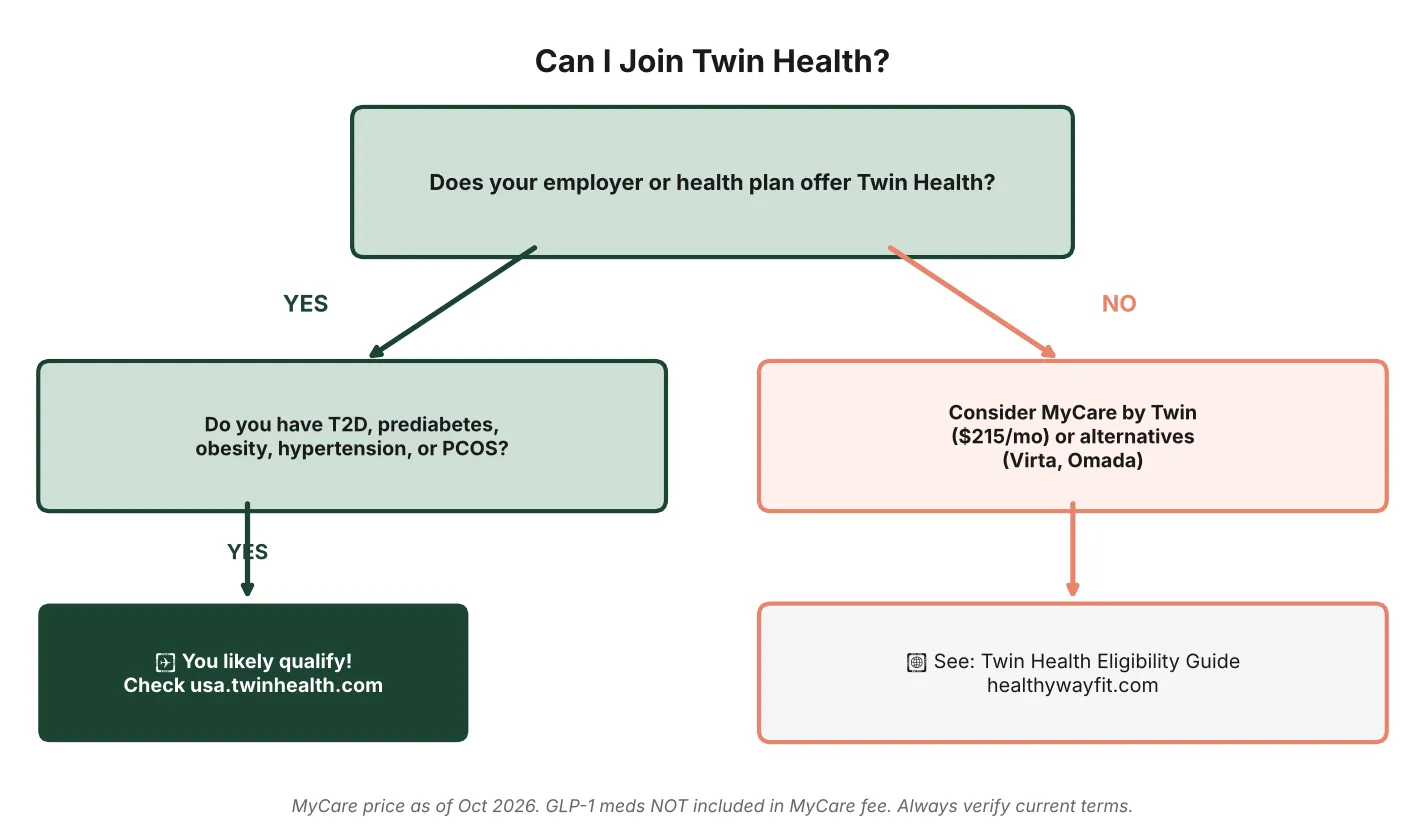
Medical eligibility (applies regardless of access route):
- Type 2 diabetes diagnosis (not Type 1)
- Age 18 or older
- BMI of 27 or higher
- Not currently on GLP-1 medications (or willing to discuss discontinuation with your physician)
- No active heart failure or end-stage kidney disease
Access Route 1 — Employer Benefits (most common):
Twin Health partners primarily with large and mid-size employers. If your employer offers Twin Health as part of your health benefits, it’s typically covered at no additional cost to you. Check your benefits portal or HR department. Fortune 1000 companies and large self-insured employers are the most likely to have it.
Access Route 2 — MyCare by Twin ($215/month):
Twin Health offers a direct-pay option called MyCare by Twin for people whose employers don’t cover the program. As of the most recent update on our Twin Health eligibility page, MyCare costs approximately $215 per month. Important: GLP-1 medications are not included in this pricing and must be obtained and paid for separately if prescribed.
If neither route works for you:
See our alternatives to Twin Health guide for programs with broader individual access.
Note: Twin Health is primarily available in the United States through employer plans.
For readers in India, our separate Twin Health diabetes reversal review for India covers availability through Twin Health India’s domestic employer partnerships, which operate under a different structure.
For a detailed breakdown of the eligibility criteria and how to check if your employer offers Twin Health, see our dedicated Twin Health eligibility guide.
Our Verdict
Twin Health is the most evidence-backed digital diabetes reversal program currently available. The 2025 Cleveland Clinic RCT is a genuinely impressive result — 71% diabetes reversal vs 2.4% in the control group is not a small effect.
The honest caveat: the program works for people who work it. The 19% activation rate among eligible employer members tells you something real about the commitment this requires. It’s not a medication you take and forget — it’s a 12-month behavioral overhaul with continuous monitoring and coaching.
Twin Health is the right choice if:
- Your employer covers it (or you can afford $215/month out of pocket)
- You’re highly motivated to make lasting lifestyle changes
- You’re looking to reduce or eliminate diabetes medications
- You have type 2 diabetes (not type 1) with BMI ≥27
Consider alternatives if:
- You need GLP-1 medication coverage included in your program cost
- You don’t have employer access and find $215/month cost-prohibitive
- You prefer a less intensive approach or have prediabetes (not yet diagnosed T2DM)
If you’re based in India and comparing Breathe Well-Being against Twin Health and other India programmes, our guide to Breathe Well-Being alternatives covers all five leading options with pricing.
Ready to learn more about reversing type 2 diabetes more broadly? Our free training at HealthyWayFit covers the foundational principles of metabolic reversal that apply regardless of which program you choose.
Frequently Asked Questions
Is Twin Health available without an employer?
Yes. Twin Health offers MyCare by Twin, a direct-pay option at approximately $215 per month. This gives you access to the full program without needing employer coverage. GLP-1 medications are not included.
Does Twin Health work for everyone with type 2 diabetes?
No program works for everyone. In the Cleveland Clinic RCT, 71% of participants achieved reversal — which means approximately 29% did not. Results appear strongest for people who are highly engaged with coaching and consistently use the wearable devices.
How much does Twin Health cost?
Through employer benefits: typically $0 additional cost to you. Through MyCare direct: approximately $215/month. GLP-1 medications are additional if prescribed and not covered by your health insurance.
How quickly do people see results with Twin Health?
Most participants in the clinical studies saw meaningful A1C improvements within 3–6 months. The full 12-month program is designed for sustained, durable reversal rather than rapid short-term fixes.
Is Twin Health available in India?
Twin Health operates separately in India through Twin Health India, with a different employer partnership structure and pricing. For India-specific details, see our Twin Health diabetes reversal review focused on India.
What happens after the 12-month program ends?
Participants who achieve remission typically transition to a maintenance mode with less frequent check-ins. Long-term durability depends on continued lifestyle adherence — remission is not guaranteed to be permanent without sustaining the behavioral changes that produced it. For a detailed, evidence-based look at how long remission typically lasts across different approaches, see our guide to whether diabetes reversal is permanent.
Can I use Twin Health alongside GLP-1 medications like Ozempic?
This is program-specific and physician-dependent. In many cases, one goal of the Twin Health program is to reduce reliance on GLP-1 medications over time. Discuss your current medications with the Twin Health clinical team during the enrollment process.
Reviewed by Kirti, Founder & Serial Entrepreneur, HealthyWayFit. Last updated: October 2026.