
Finding a diabetes program for Indian Americans starts with three checks: does it fit your diagnosis, can its advice work with the food you eat, and how does it connect with your healthcare team in the United States?
A familiar meal should be something you can discuss with your adviser. Rice, roti, dal, family dinners, restaurant meals, and a changing work schedule all belong in that conversation. The service also needs to be practical: appointments you can attend, costs you understand, and clear responsibilities for clinical decisions.
By Kirti, Founder & Serial Entrepreneur, HealthyWayFit. Updated October 14, 2026.
Note: This article is for informational purposes only and does not constitute medical advice.
Always consult a qualified healthcare professional before making changes to your diet, exercise routine or medication.
Which diabetes program for Indian Americans fits your diagnosis?
Choose the type of support before comparing providers. Prediabetes prevention, education for diagnosed diabetes, and lifestyle coaching have different purposes. Ask your treating clinician which service fits your situation, then check that any program you consider accepts people with your diagnosis and explains its scope clearly.
For prediabetes, ask about a CDC-recognized National Diabetes Prevention Program. Its yearlong lifestyle change program is designed for people with prediabetes or elevated risk who do not already have diabetes. It includes a trained coach, group support, and online or in-person options. Read the CDC’s National DPP overview.
For diagnosed diabetes, ask about diabetes self-management education and support, or DSMES. A diabetes care and education specialist helps with skills such as eating, activity, monitoring, and managing daily challenges. Private coaching may add support for routines; it should explain how that support relates to clinical care. Read the CDC’s DSMES guidance.
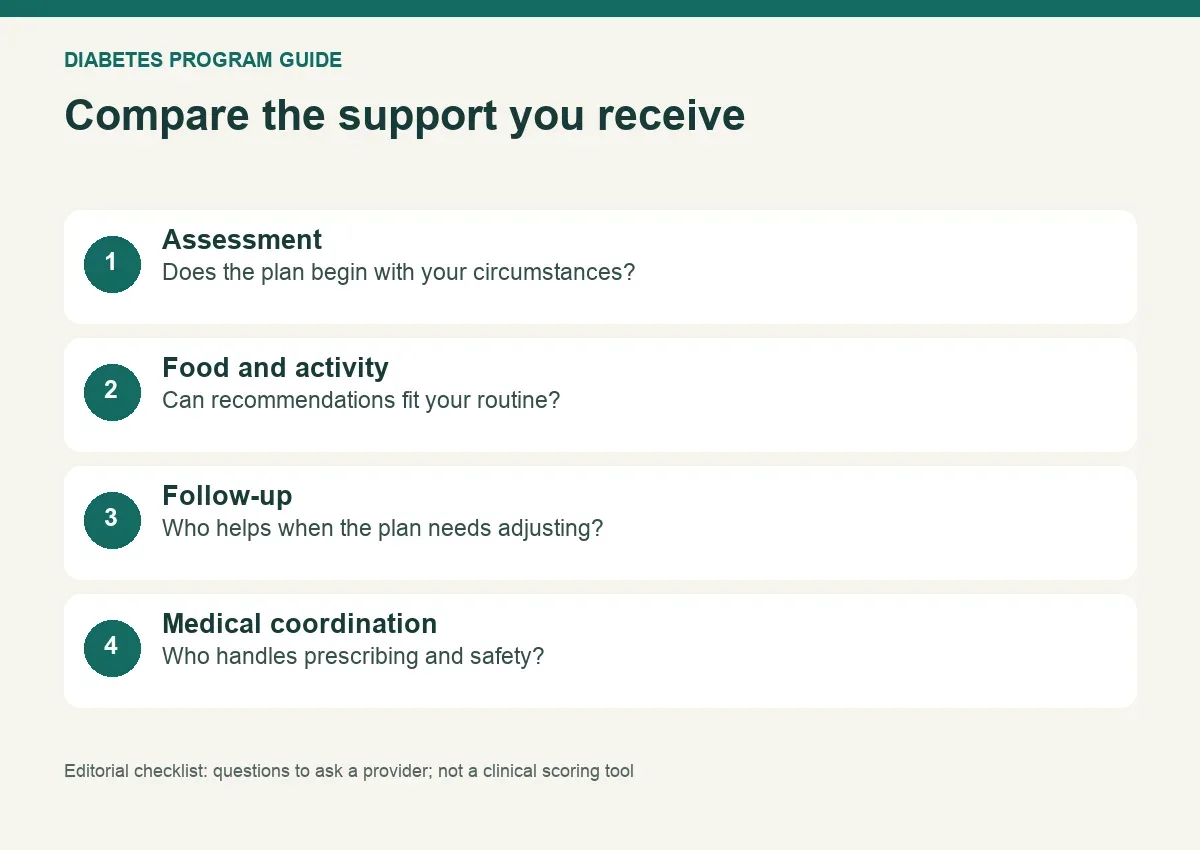
Do not assume a program advertised for type 2 diabetes is appropriate for type 1 diabetes, pregnancy-related diabetes, or a complex medical history. Describe your situation before paying. Ask who reviews suitability and what happens if the service cannot meet your needs.
Use the first conversation to establish responsibilities: who provides education, who supports habits, and who makes treatment decisions. A clear answer helps you understand what you are buying and which parts of your care remain with your existing team.
What does culturally relevant diabetes support look like?
Culturally relevant support begins with your own preferences and routines. It should not assume all Indian Americans eat alike, follow the same religion, or want the same language. Ask whether the adviser can work through a meal you cook and explain how they would adapt guidance to your household.
Describe what a regular week looks like. You might cook Gujarati vegetarian meals, eat a South Indian breakfast, prepare Punjabi dishes, or combine Indian cooking with American convenience foods. Those details give the adviser a better starting point than a broad label such as “Indian diet.”
If someone else cooks, ask whether they can join a meal-planning discussion with your permission. Explain whether you serve food in shared bowls, pack lunches, eat late after work, or frequently host guests. These are planning questions, not judgments about your family’s habits.

Researchers have tested culturally adapted lifestyle interventions among Asian Indian communities in the US. A 2017 study examined a tailored program among Gujarati Asian Indians without diagnosed diabetes. That study does not establish results for all Indian Americans or for HealthyWayFit. Read Patel and colleagues’ study in the Journal of Diabetes Research.
The practical test is whether advice becomes specific enough to use. Ask: “Can we work through my usual breakfast and lunch?” Assess the explanation, not whether the provider uses culturally familiar words in its marketing.
For broader food and lifestyle considerations, see HealthyWayFit’s guide to choosing a type 2 diabetes program for South Asians.
Can you keep rice, roti, dal, and other Indian foods?
Discuss your usual foods as part of an individualized meal plan. A useful adviser should explain portions, ingredients, and the whole meal rather than declaring an entire cuisine off limits. Ask a registered dietitian or your diabetes care team to review a representative meal before adopting a plan found online.
The CDC describes the plate method as a starting framework: half the plate holds nonstarchy vegetables, one quarter lean protein, and one quarter carbohydrate foods. It also notes that beans contain carbohydrate. Mixed dishes and individual treatment needs require discussion rather than a rigid interpretation of the diagram. Read the CDC’s diabetes meal-planning guidance.
Bring your own recipes or meal photos. For a rice-and-dal lunch, ask the adviser to consider both foods, the vegetables served alongside them, and how you usually portion the meal. For roti, describe the size, flour, number eaten, and accompanying dishes. These details make the consultation concrete.
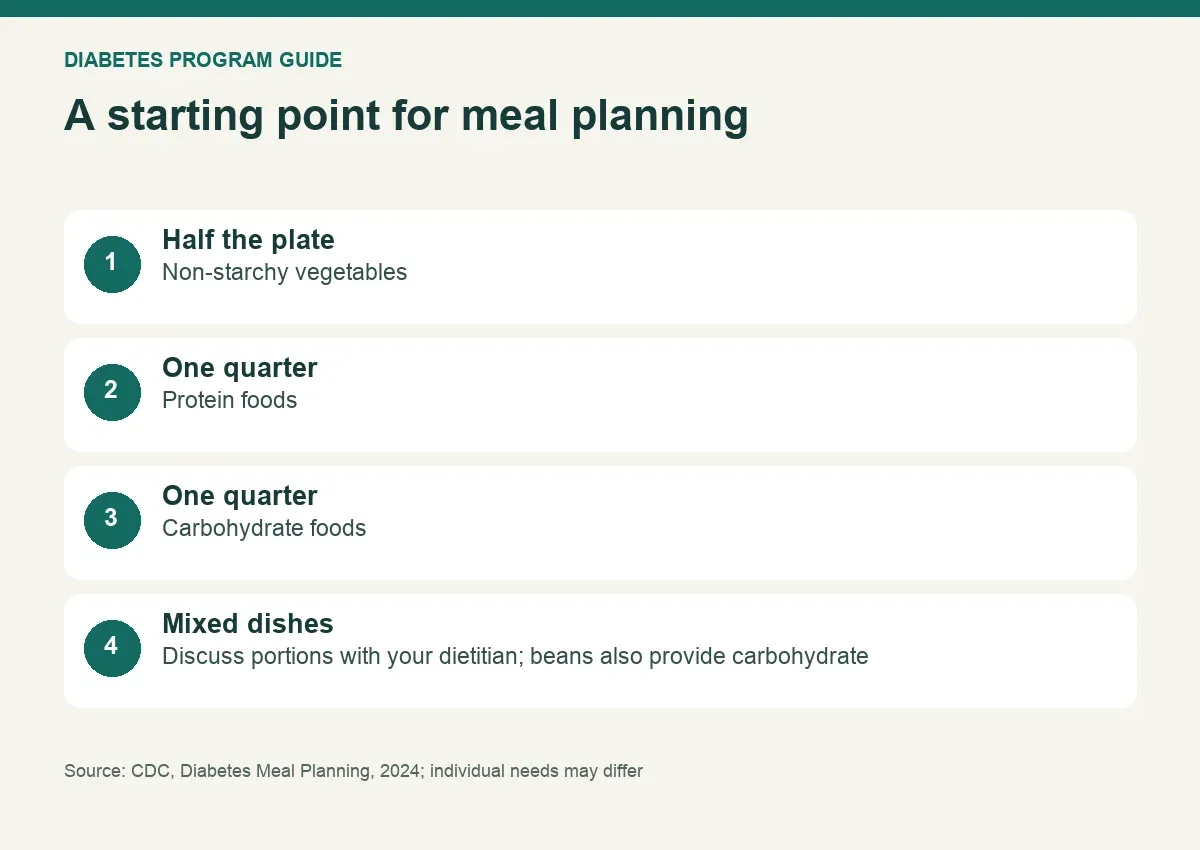
An example of a useful meal-planning conversation
“Can I eat rice?” is a reasonable starting question. A more useful follow-up is: “I usually eat rice, dal, and sabzi at lunch. How should we plan that meal for my needs?” This is an illustrative consultation prompt, not a prescribed menu or portion.
If you are vegetarian, ask how the plan addresses the full meal and your preferred protein sources. Share restrictions, allergies, and any advice you already received. NIDDK explains that favorite foods may still fit with adjustments to amounts or frequency. Read NIDDK’s healthy living guidance.

For more meal examples, see our guide to diabetes-friendly Indian meals. Request help with one meal you repeat often before requesting an elaborate weekly menu. A lunch plan that fits your kitchen and workday is easier to assess than a list of unfamiliar recipes. Tell the adviser which suggestions are affordable, available, and realistic for you.
Where can you look for diabetes support in the United States?
Start with your treating clinic and ask about diabetes education and nutrition services. Then compare local, online, and culturally tailored options against your needs. A program’s location or cultural focus does not establish suitability; confirm current enrollment, staff roles, service availability, and how it connects with your care.
Your primary care clinician or endocrinologist can help you identify an appropriate referral. Ask specifically about DSMES if you have diagnosed diabetes, and about prevention services if you have prediabetes. The CDC’s education guidance includes a program-finding route as well as advice on getting a referral.
Community and academic initiatives are another place to investigate. Emory’s DREAM initiative describes culturally tailored community health worker support for South Asians in metropolitan Atlanta. Its research page is a starting point for an inquiry; confirm current participation opportunities directly. Read Emory’s DREAM program description.

For an online provider, give your state and time zone. Ask which services it can provide where you live, who delivers them, and how appointments work across time zones. Confirm whether sessions are individual or group-based and whether you can share a summary with your clinician.
You do not need one provider to perform every role. Write down the support you already receive and the gap you want to fill. That makes it easier to compare a clinical education service with additional lifestyle coaching without treating them as interchangeable.
Will insurance cover the program, and what will you pay?
Insurance coverage depends on the service, provider, and your plan. Before enrolling, ask both the provider and insurer about benefits, referral requirements, network status, and out-of-pocket costs. A covered diabetes education benefit does not establish coverage for a separate commercial coaching package, even when the services sound similar.
The CDC notes that many insurance plans cover diabetes education, but coverage varies. Ask the provider for the service description and any billing information your insurer needs. Avoid assuming that “diabetes support” is one insurance category with the same rules for every company.
If you are paying privately, request a written price and a list of inclusions. Check the number and length of consultations, support between sessions, program duration, renewal terms, and any charges for devices, tests, supplements, or additional appointments.
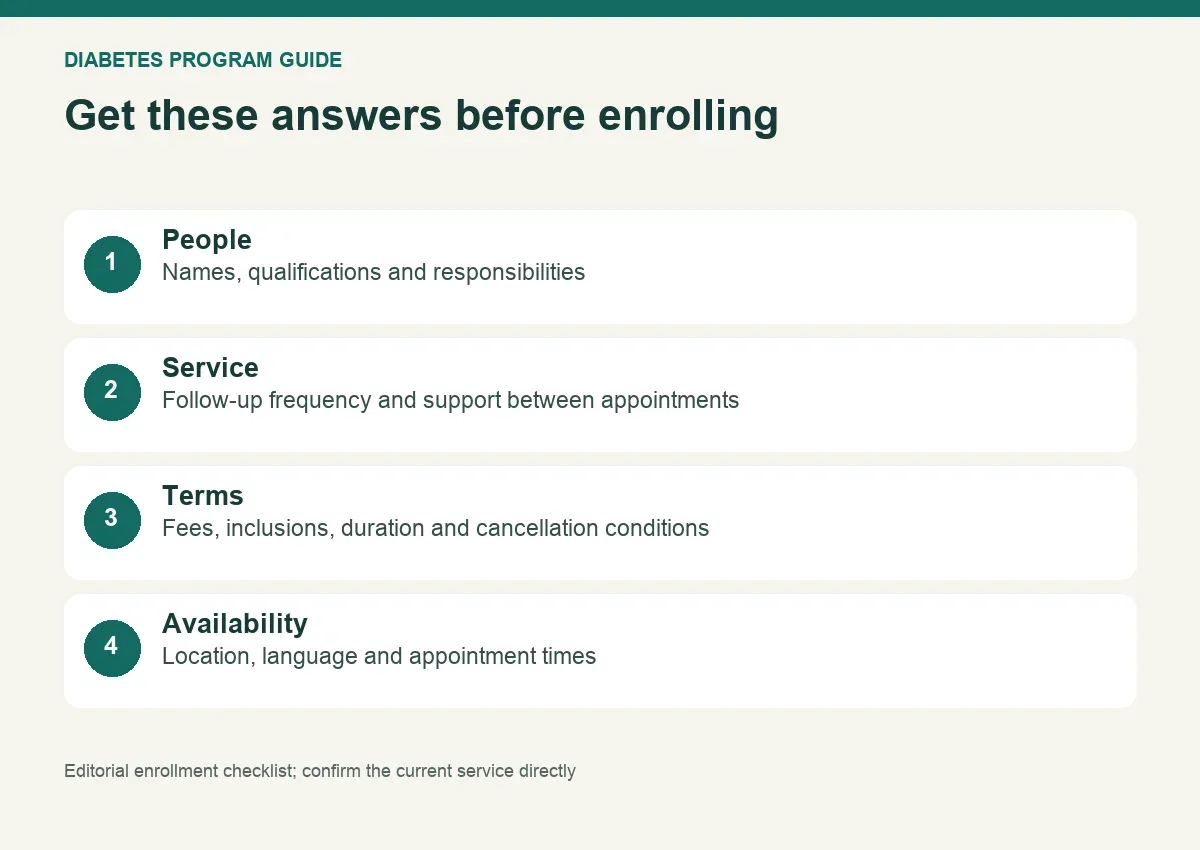
Use these questions when comparing offers:
| Cost question | What to confirm |
|---|---|
| What is the complete price? | Currency, taxes if applicable, and required extra purchases |
| What consultations are included? | Number, duration, provider, and format |
| Does the price renew? | Renewal date and whether renewal is automatic |
| What if I cancel? | Current cancellation and refund terms |
| Is insurance involved? | Billing arrangements and your insurer’s confirmation |
| What happens after the package ends? | Whether continued support costs extra |
For HealthyWayFit, read the published cancellation and refund policy and request terms specific to the offer you are considering. Do not infer a US price or insurance benefit from a general website description.
How should activity guidance fit your routine?
Activity guidance should account for your ability, treatment, schedule, and preferences. Discuss safety with your healthcare professional before starting a new routine. In a program consultation, ask how the adviser will help you choose a practical starting point and respond when an activity is uncomfortable or difficult to maintain.
NIDDK advises discussing activity changes with your healthcare team. Exercise and delayed meals can contribute to low blood sugar for people taking insulin or certain other medicines. Ask for precautions that fit your treatment rather than copying another participant’s routine or medication adjustments.
Describe where activity might fit: before work, during a break, indoors in bad weather, or with a family member. Explain mobility limitations and activities you enjoy. Ask what to do if your routine changes during travel or a demanding workweek.

A useful follow-up conversation includes what you attempted, what was difficult, and what help you need. You might need a different appointment time, an accessible activity option, or advice from your clinician before proceeding. Specific feedback gives the provider a chance to adapt the plan.
If a coach recommends medication changes, ask who is clinically responsible for that decision. Treatment adjustments belong with the appropriately qualified clinician caring for you. Keep your own care team’s instructions available when working with additional providers.
How will the program review progress?
Ask what information the provider reviews, how often reviews happen, and what decisions follow. Clinical goals should come from your healthcare team. A coaching program should explain its role in helping you follow the plan, identify practical difficulties, and communicate relevant information without making unsupported promises about results.
HbA1c reflects average blood sugar over roughly three months, while a home glucose reading reflects a particular moment. These measures answer different questions. Your clinician should advise which tests or monitoring methods you need and how to interpret the results. Read the CDC’s A1C explanation.
Ask whether the provider requires a continuous glucose monitor, often called a CGM, and why. Check whether its cost is included and who reviews its data. Do not assume a device is necessary for every person or that buying it establishes the quality of a program.
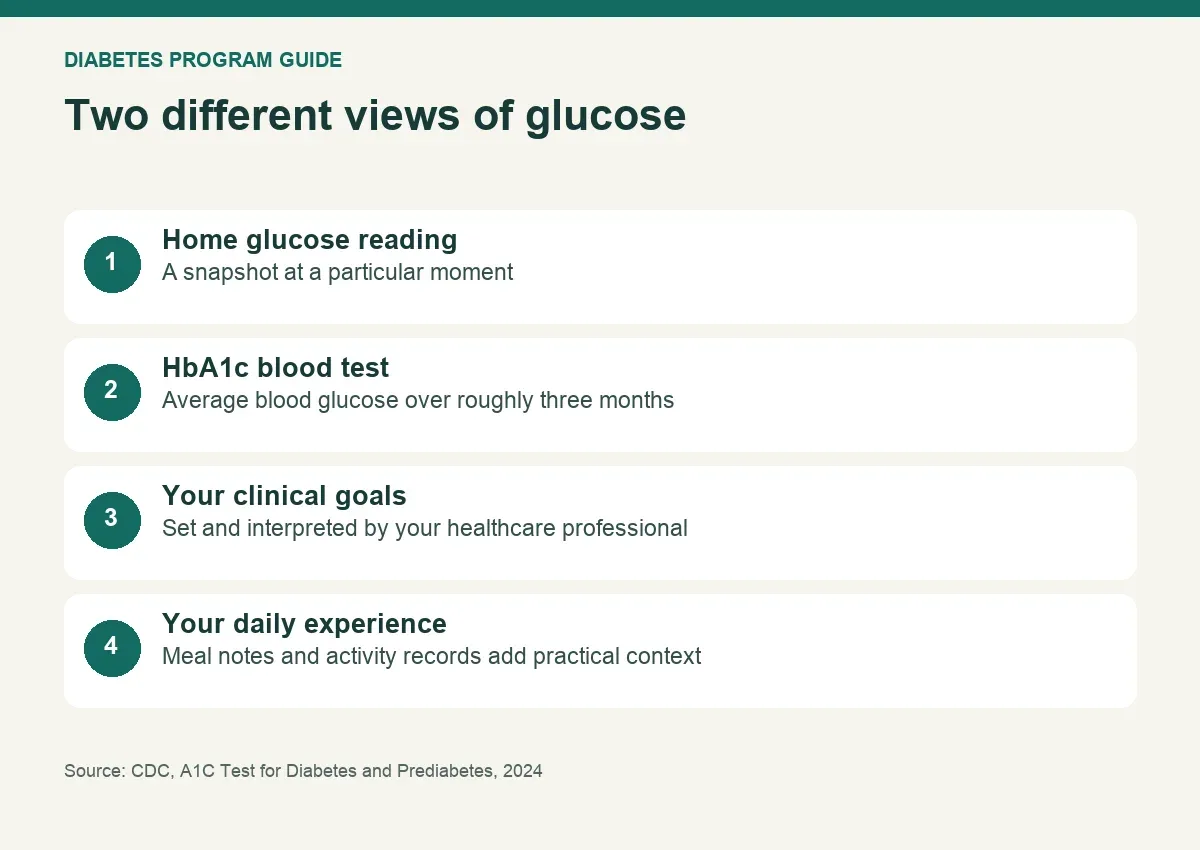
Bring practical goals into the review as well: whether you can prepare lunches, attend appointments, understand the advice, and follow your clinician’s plan. These observations add context; they do not replace clinical measurements or establish a program’s medical effectiveness.
NIDDK recommends working with your healthcare team on a care plan and keeping track of progress. Ask who will summarize your results and responsibilities after each review. Read NIDDK’s diabetes management guidance.
When should you contact a clinician or seek emergency help?
A coaching message is not an emergency-care route. Ask your diabetes team for an individualized plan covering low blood sugar, illness, and readings outside your recommended range. Make sure you know when to contact the treating clinician and when to call 911, without waiting for a program appointment or reply.
Severe low blood sugar can cause seizures or unconsciousness. Call 911 for these symptoms. Do not give food or drink to someone who cannot swallow safely. Follow the emergency plan your healthcare team has provided. Read NIDDK’s low blood glucose guidance.
Vomiting with inability to keep fluids down, trouble breathing, or several signs of diabetic ketoacidosis together require emergency assessment. DKA is a serious diabetes complication; follow your sick-day plan and seek emergency care for concerning symptoms. Read the CDC’s DKA emergency guidance.
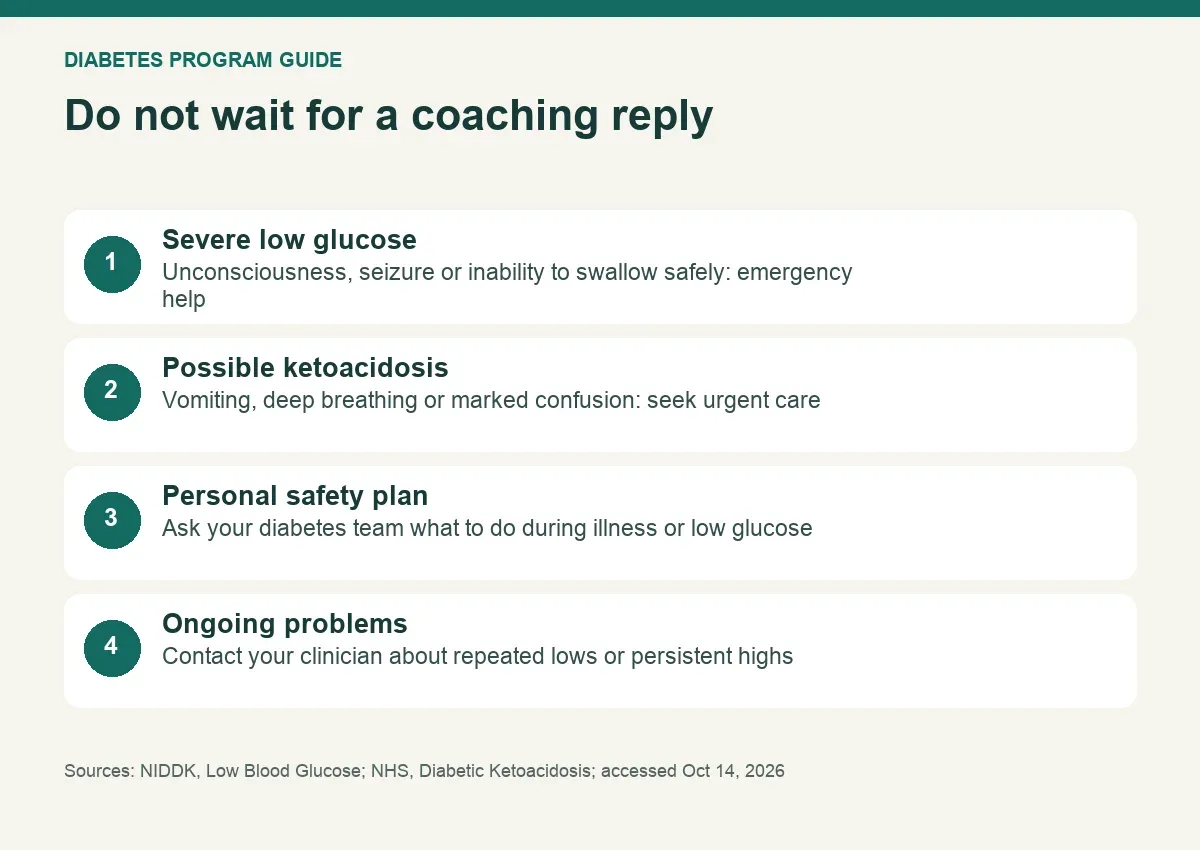
For repeated low readings, persistent readings outside your prescribed range, or new symptoms, contact your healthcare team for advice. Ask who is available outside office hours and keep that contact information separate from the coaching service’s messaging channel.
Before joining, ask the program how it handles a safety concern. It should explain when it directs participants to their treating clinician or emergency services. A provider’s response time promise is not a substitute for a clinical emergency plan.
What should you bring to the first consultation?
Prepare a short picture of your current care and daily routine. Include information your clinician recommends sharing, the meals you usually eat, and the main difficulty you want help addressing. Ask the provider how it receives personal information before sending medical records through a messaging app or unfamiliar form.
Useful preparation may include your diagnosis, recent test results, medication and supplement list, existing monitoring records, food preferences, allergies, and appointment availability. Share what is relevant to the service and use the provider’s agreed process for handling personal health information.
Write down one priority in your own words: “I need help with workday lunches,” “I want advice that includes our family meals,” or “I need appointments outside working hours.” These are illustrative prompts. Your own priority should guide the conversation.
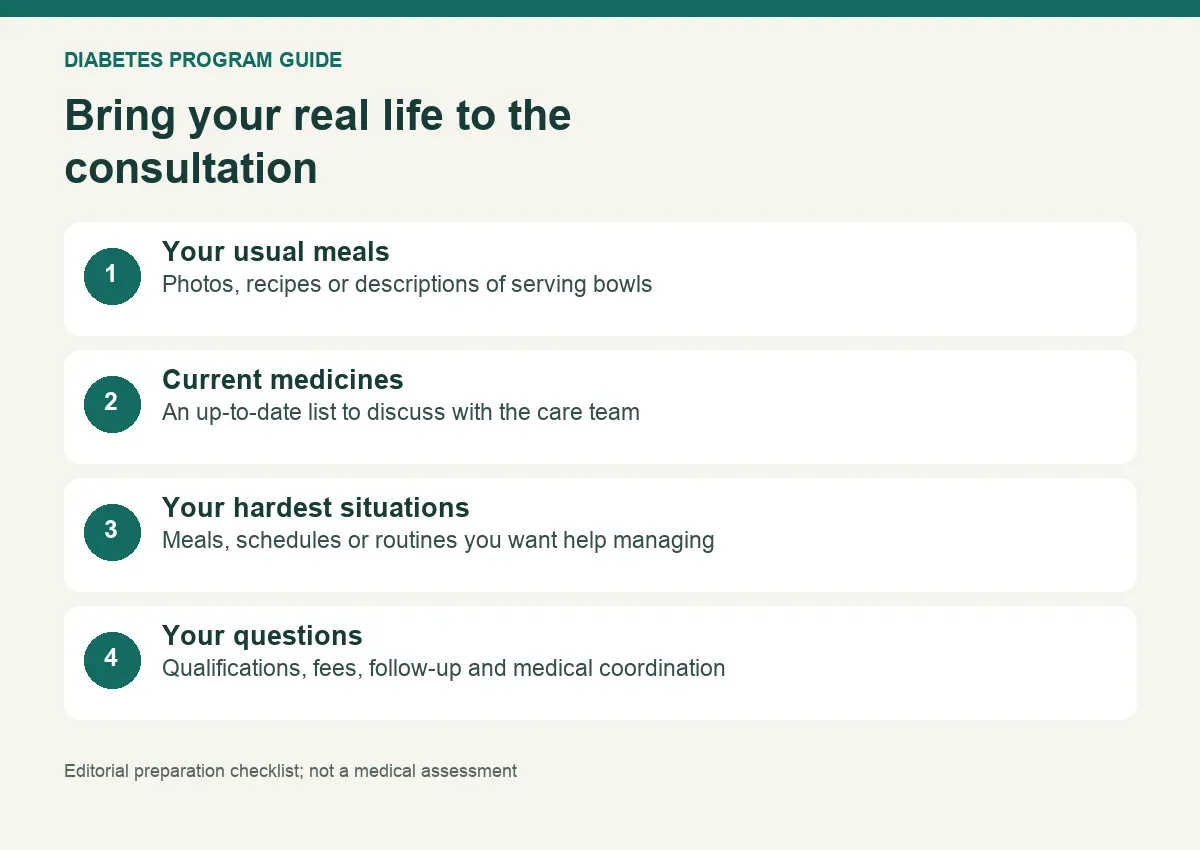
Ask for the proposed next steps in writing. Who will provide them? When will you meet again? Which questions should go to your treating clinician? What happens if the recommendations are difficult to follow? You should leave knowing what happens next, even if you decide not to enroll.
Do not judge the consultation by how much material you receive. Assess whether the provider answered your questions and explained a realistic service. A shorter plan with clear responsibilities can be more useful for your decision than a large packet of general advice.
How to take the next step with HealthyWayFit
If you are considering HealthyWayFit, request its current program details and compare them with your needs. Confirm support for your diagnosis, US availability, staff qualifications, scheduling, fees, and medical coordination. HealthyWayFit’s contact page invites questions about its program; it does not establish insurance coverage or suitability for every reader.
Use this message to begin: “I live in the United States and want diabetes support that understands Indian food. Please explain which program may fit my diagnosis, who provides the advice, and how it works alongside my healthcare team.” Add your state, time zone, and appointment preferences.
Ask the team to explain the scope of nutrition and lifestyle support, how follow-up works, and who handles clinical questions. Keep the questions specific. Do not assume that advertised outcomes establish the result you will experience.

The right next step is a clear conversation about the support you need and the service available to you. Use the checklist above, discuss medical decisions with your treating team, and compare written offers before enrolling.
Contact HealthyWayFit to ask about current program availability and suitability.