
Managing type 2 diabetes can feel frustrating when the advice does not match the food you eat or the life you lead. You may understand that meals and activity matter, yet still wonder how to manage rice, roti, dal, family dinners, or a changing work schedule.
A type 2 diabetes program for South Asians should help you turn medical guidance into everyday decisions. Look for support that understands your meals, adapts to your health needs, and works alongside your diabetes care team.
The goal is a practical plan you can follow—and adjust—over time.
This article is for informational purposes only and does not constitute medical advice. Always consult a qualified healthcare professional before making changes to your diet, exercise routine or medication.
Why South Asian context matters in diabetes care
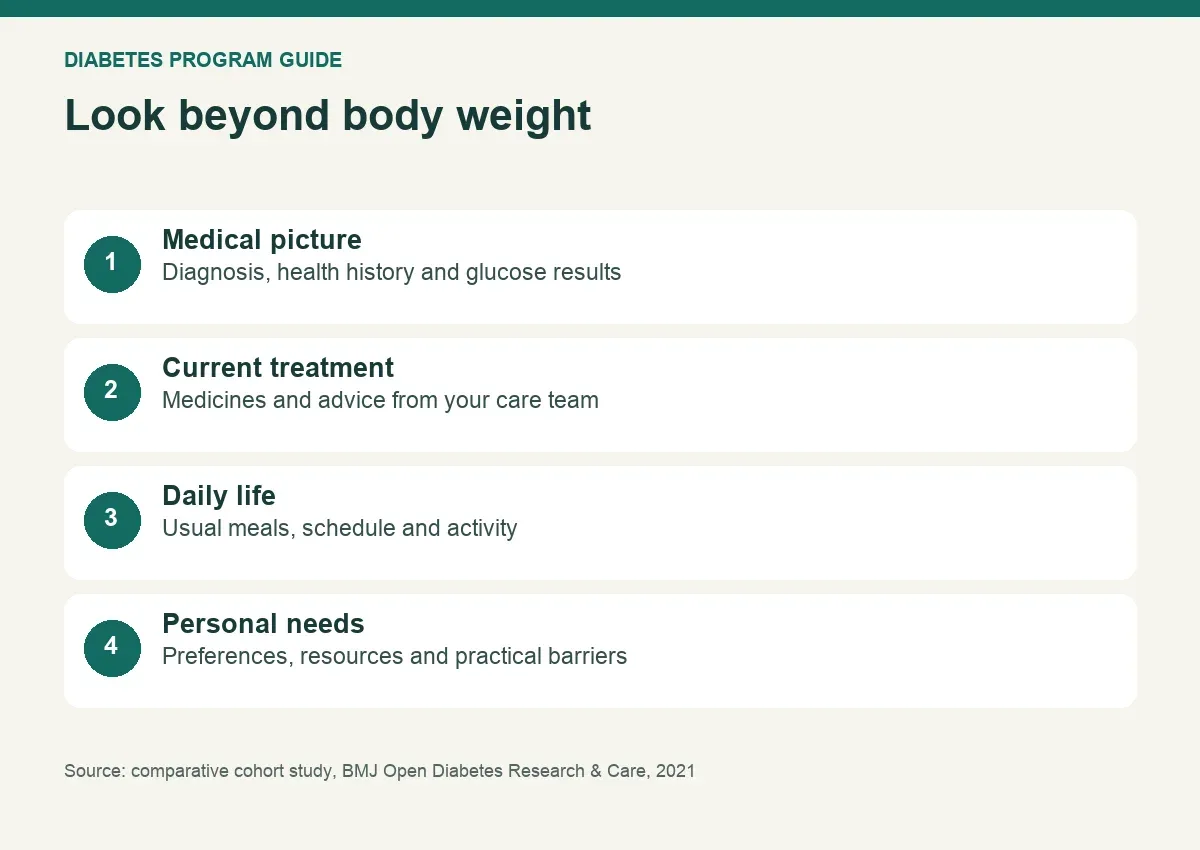
South Asian adults can develop type 2 diabetes at a lower body mass index, or BMI, than some other populations. This means body weight alone may not tell the full story. A useful program should consider your medical history, glucose results, current treatment, and daily habits.
Research comparing adults in India and Pakistan with US populations found higher diabetes incidence among South Asians than White adults, particularly in groups without obesity. These findings support looking beyond whether someone appears overweight when assessing diabetes risk. They do not mean every South Asian person has the same risk or needs the same treatment. Read the comparative cohort study.
Once you have diabetes, the practical question becomes: what support helps you manage it in your circumstances?
A meal plan may be nutritionally sound but difficult to use if it assumes you eat sandwiches for lunch when your usual meal is rice, dal, and vegetables. An exercise schedule may be reasonable but unrealistic if it ignores shift work, caring responsibilities, or mobility limitations.
Culturally relevant care starts with those details. It also recognizes that South Asian communities are diverse. Indian, Pakistani, Bangladeshi, Sri Lankan, Nepali, and other South Asian households have different foods, languages, traditions, and routines.
Your plan should reflect your life rather than a standard picture of it.
What should a type 2 diabetes program for South Asians include?
A useful program should combine personalized food guidance, realistic activity planning, ongoing support, and clear coordination with medical care. Cultural familiarity helps, but it is only one part of quality. You also need to know who provides the advice, how progress is reviewed, and who handles medication decisions.
For a broader comparison framework, see our guide to choosing a diabetes coaching program.
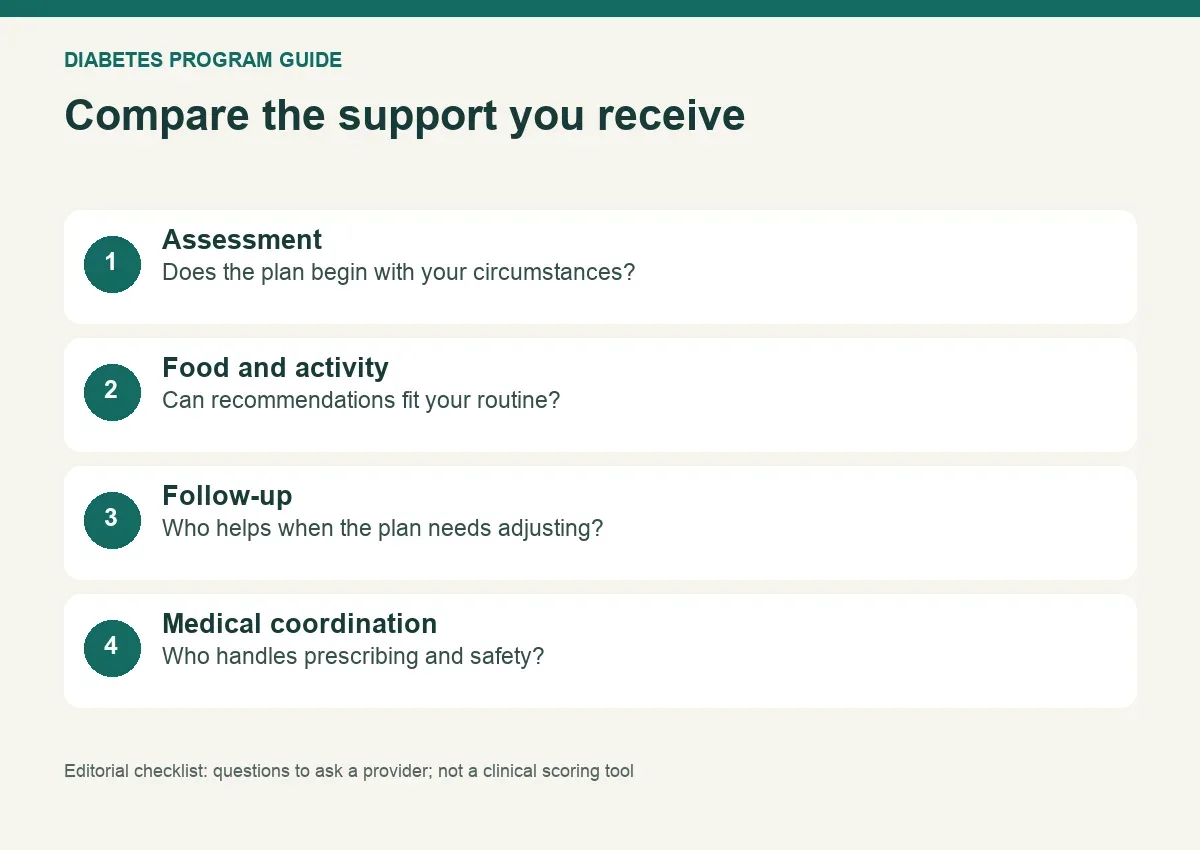
Use this checklist when comparing programs:
| Area | What to look for | Question to ask |
|---|---|---|
| Initial assessment | Review of your diagnosis, treatment, health conditions, and routines | “What information do you need before recommending changes?” |
| Food guidance | Advice based on meals you actually eat | “Can we work with my usual home-cooked food?” |
| Individualization | Adjustments for preferences, budget, and medical needs | “How would the plan change if I have kidney disease or take insulin?” |
| Activity support | A starting point suited to your ability and schedule | “How do you adapt exercise recommendations?” |
| Follow-up | A clear process for reviewing difficulties and progress | “What happens when a plan is not working for me?” |
| Medical coordination | Defined boundaries around prescribing and treatment | “Who reviews medication safety?” |
| Costs and access | Written information about fees, availability, and support | “What does the price include?” |
Be cautious about choosing solely because a program uses words such as “personalized” or “South Asian.” Ask what those terms mean in practice.
For example, personalization should involve more than changing your name on a meal chart. It should explain how recommendations respond to your food preferences, glucose patterns, treatment, and barriers.
A program should also distinguish diabetes management from diabetes prevention. If you already have type 2 diabetes, ask how it supports people with an established diagnosis.
Can you keep eating rice, roti, and other familiar foods?
Diabetes meal planning can include carbohydrate foods. The task is to understand their portions and how they fit into the overall meal. A culturally relevant program should help you make those decisions using familiar dishes, rather than giving you a list of foods to abandon.
The CDC explains that carbohydrates raise blood glucose and that portion planning can help manage intake. Its plate method uses roughly half the plate for non-starchy vegetables, one quarter for protein, and one quarter for carbohydrate foods. See the CDC’s diabetes meal-planning guidance.
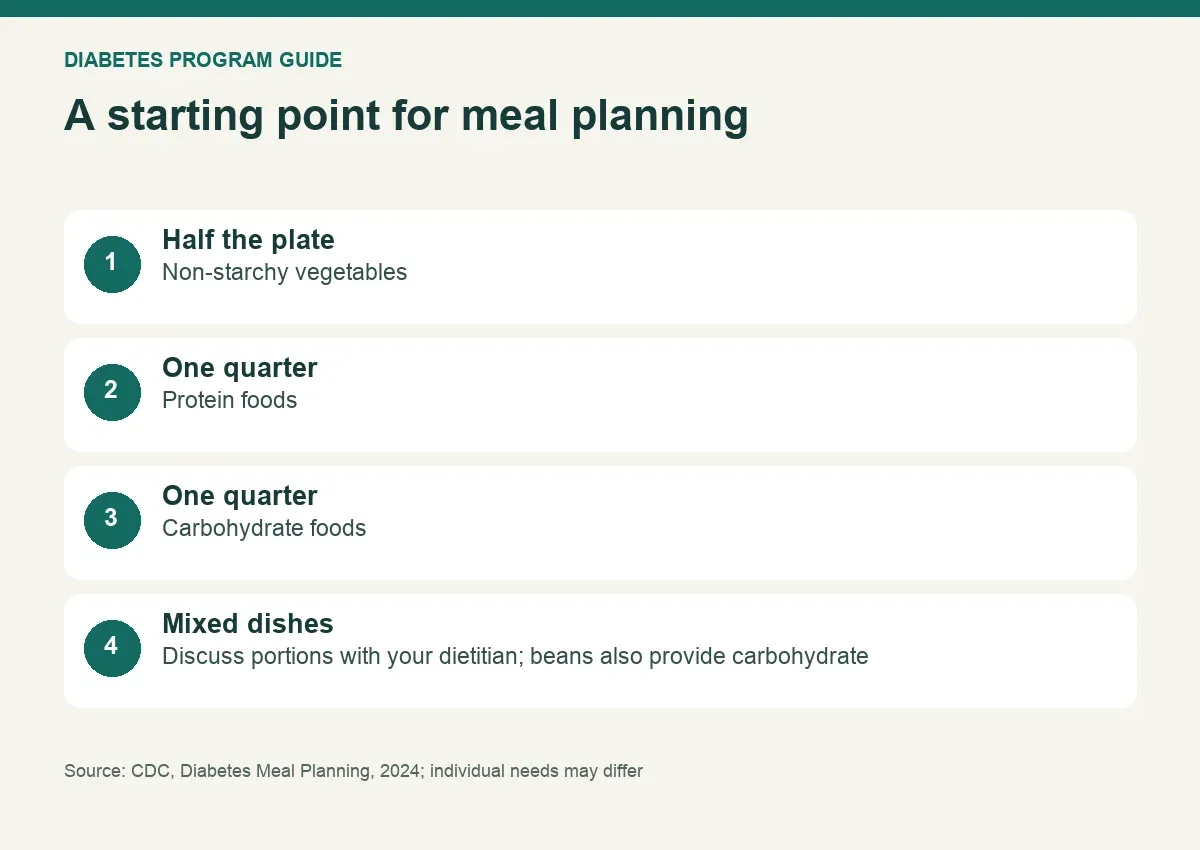
South Asian meals often contain mixed dishes, so applying that framework takes some thought.
Dal, chana, and rajma provide carbohydrate as well as protein. Potatoes count toward carbohydrate intake even when they are served as a vegetable dish. Rice and roti may both appear in the same meal.
Those details matter more than labeling an entire cuisine “good” or “bad.” Our diabetes-friendly Indian thali guide explores meal composition in more detail.
Start with the meal you already eat
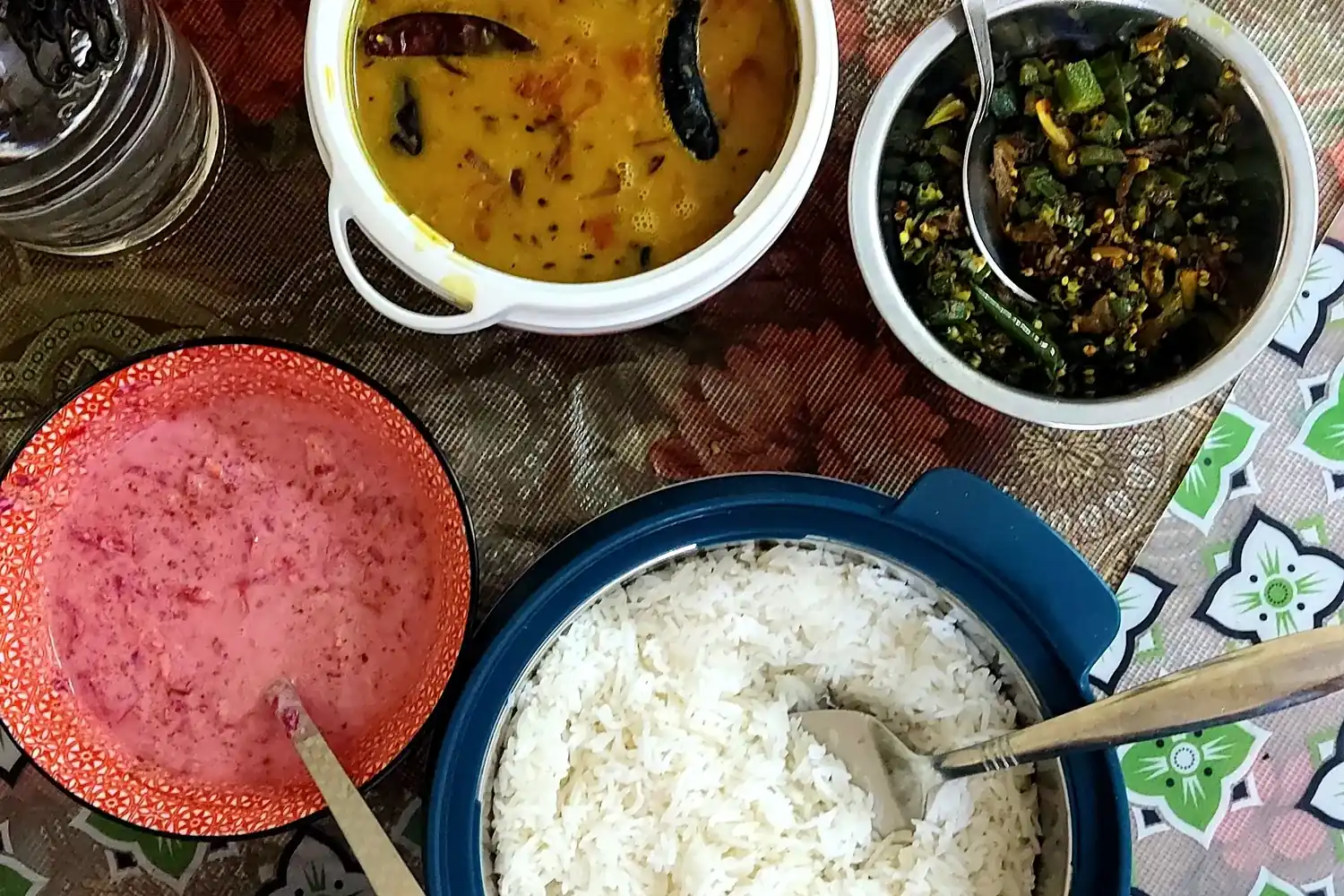
Consider an illustrative lunch of rice, dal, potato sabzi, and a small salad. A dietitian might discuss the rice portion, how the dal and potatoes contribute carbohydrate, and whether more non-starchy vegetables would make the meal easier to balance.
The right changes depend on your needs. This example is a conversation starter, not a prescribed meal.

Bring your actual meals to the discussion. Photos, recipes, or a description of your usual serving bowls can be more useful than saying, “I eat a normal amount.”
Ask questions such as:
- How should I approach a meal containing both rice and roti?
- How do I account for lentils and beans?
- What changes would fit my usual breakfast?
- How should I handle sweetened chai or other drinks?
- Can you help me plan restaurant meals?
Useful guidance explains the reasoning so you can make decisions when a meal does not match the chart.
Vegetarian plans need their own attention
If you eat vegetarian food, ask how the program plans protein and carbohydrate together. A vegetarian label does not tell you the balance of a meal.
Share whether you eat dairy, eggs, soy, lentils, or beans. Also explain any religious restrictions or foods you avoid.
The aim is a plan built around what you can eat, afford, prepare, and enjoy. For more familiar-food examples, explore our guide to diabetes-friendly Indian meals.

How should a program handle family meals, celebrations, and fasting?
A practical program should help you prepare for situations that disrupt your routine. Shared meals, weddings, festivals, travel, and religious fasting deserve specific discussion. You need a plan that addresses food choices and medical safety without assuming every family or tradition works the same way.
If someone else cooks at home, consider involving them—with your consent—in a food-planning conversation. Explain the changes you want help with, such as serving portions separately or keeping an unsweetened drink available.
For celebrations, ask the program to work through a real example. What would you do at a buffet? How would you approach a late dinner? What if the only available meal differs from your usual plan?
A useful answer should leave you with choices you understand, rather than rules you cannot apply.
Fasting needs a separate medical discussion. Skipped meals and changes in routine can increase the risk of low blood glucose for people taking insulin or certain other diabetes medicines. Speak with your diabetes care team before fasting and ask for an individualized safety plan. Read NIDDK’s guidance on low blood glucose.
A coach should not independently tell you to stop, skip, or alter prescribed medication to accommodate a fast.
What should exercise support look like?
Exercise support should begin with your current ability, health conditions, and schedule. A useful program helps you find activities you can repeat and explains how to stay safe. It should also consider your diabetes medicines, particularly if they can cause low blood glucose.
Regular physical activity can help with diabetes management, including blood glucose and cardiovascular health. NIDDK recommends discussing new activity or changes in activity with your healthcare professional, who can account for your treatment and health needs. Read NIDDK’s guidance on activity with diabetes.

In a program consultation, describe what currently gets in the way.
Perhaps you spend most of the day sitting. Perhaps knee pain makes walking difficult. Perhaps you can exercise on weekends but struggle during the working week.
Those are planning details, not reasons to receive the same schedule as everyone else.
Ask the program to help you identify a manageable starting point and a way to review it. The plan may include walking, home-based movement, or suitable strengthening activities, depending on your circumstances.
If you use insulin or another medicine associated with low glucose, ask your medical team how activity affects your monitoring and treatment plan. Any medication adjustment belongs with the professional responsible for prescribing it.
How should progress be measured?
Progress should be reviewed through appropriate clinical measures and through the habits you are trying to build. A program should explain what information it tracks, why it matters, and how it uses the results. A single reading or a change on the scale cannot answer every question.
HbA1c is a blood test that reflects average blood glucose over roughly three months. It differs from a home glucose reading, which shows a particular moment. Your clinician should set your individual treatment goals and interpret the results. Learn about the A1C test from the CDC.
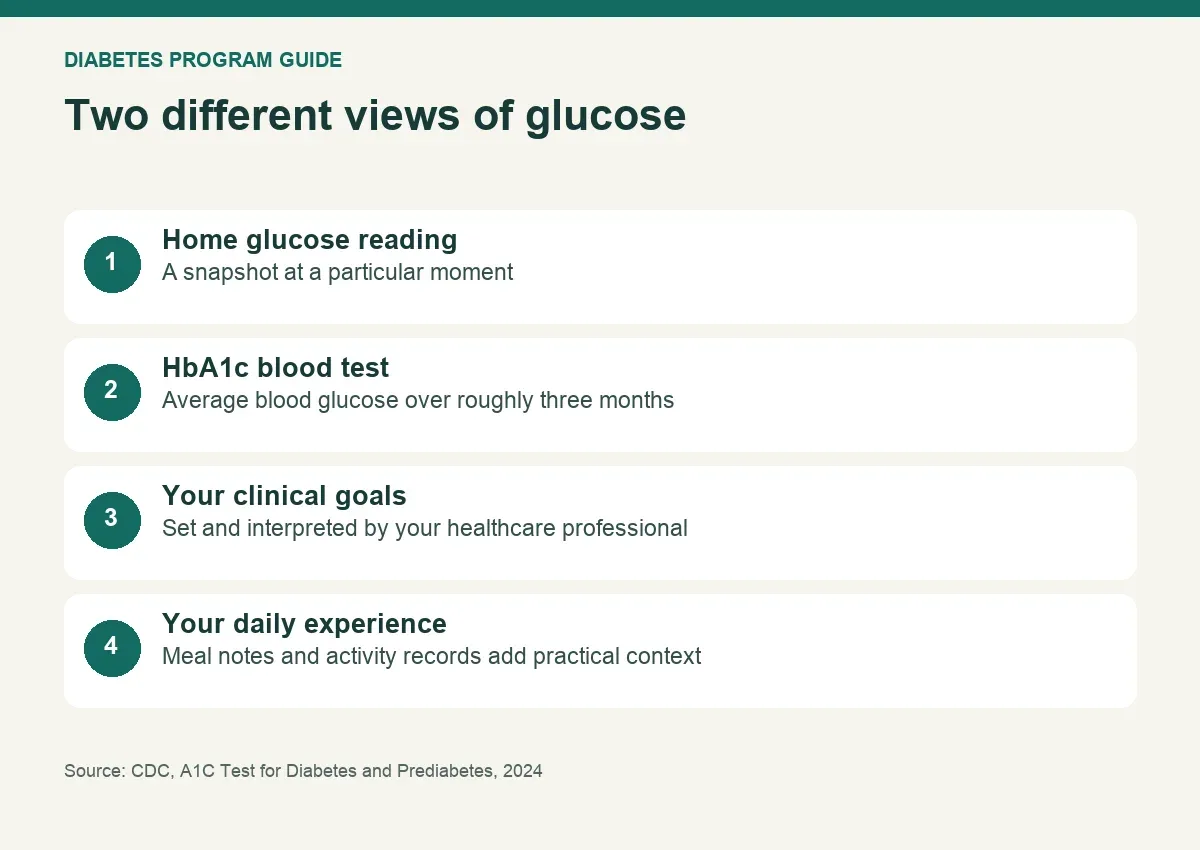
Ask how the program will review your experience alongside those results.
For example:
| What you are reviewing | What it helps you discuss |
|---|---|
| Clinician-directed glucose records | Patterns that may need assessment |
| Meal notes | Which recommendations fit your routine |
| Activity records | What you can sustain and where you need adaptations |
| Difficulties or symptoms | Whether you need medical review |
| Your confidence with food decisions | Whether education is becoming useful in daily life |
Tracking should have a purpose. You should know what to record, how often, and who will respond if something needs attention.
Keep routine diabetes appointments as well. The CDC’s care schedule includes blood pressure review, kidney testing, eye examinations, and other checks—not only glucose monitoring. Your healthcare team can explain the schedule appropriate for you. See the CDC’s diabetes care schedule.
Can a program promise diabetes remission?
Some people with type 2 diabetes may achieve remission, but a program cannot responsibly guarantee it for you. Ask what a provider means by remission, how it assesses eligibility, and what medical supervision is involved. General research findings do not establish that a particular commercial program produces the same results.
The NHS Type 2 Diabetes Path to Remission Programme describes a structured intervention for eligible people with type 2 diabetes and overweight or obesity. It includes a specific dietary approach followed by ongoing support. This is different from assuming any diet or coaching package will deliver remission. Read about the NHS remission programme.
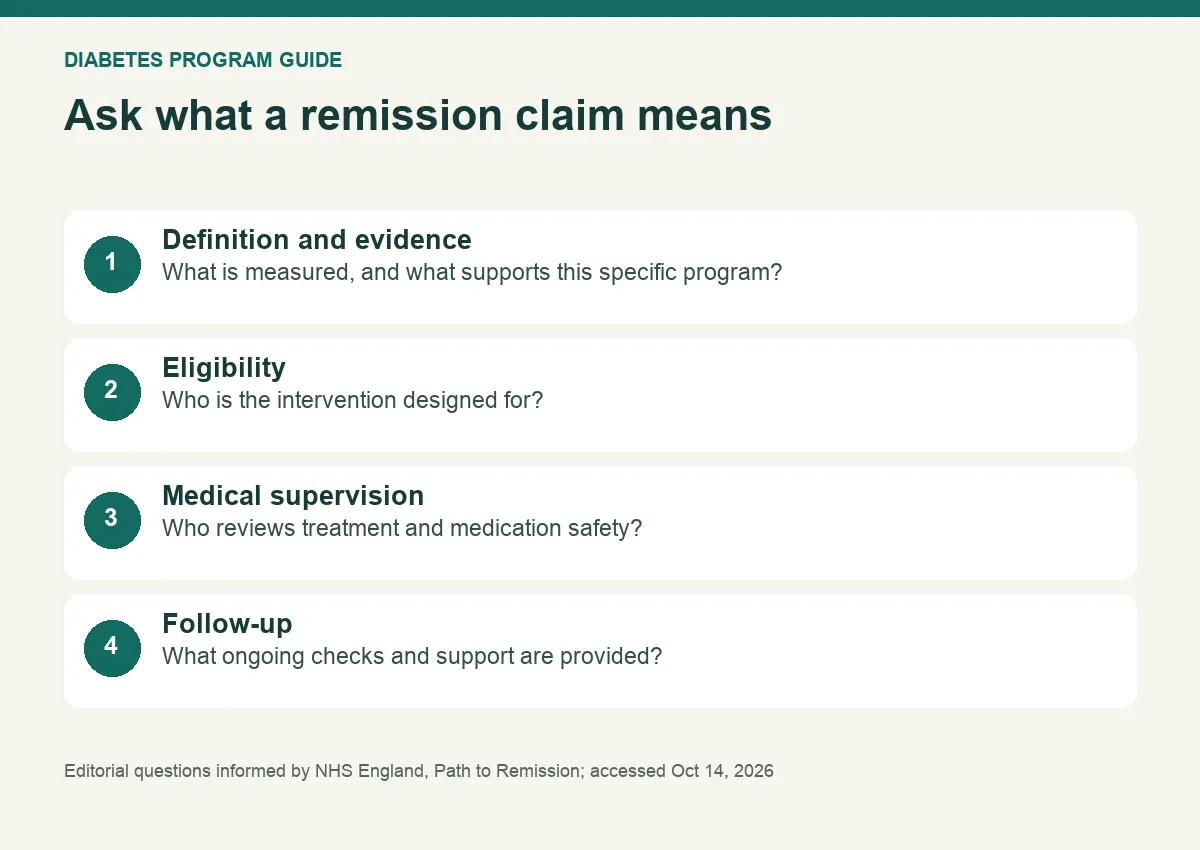
Be careful with promises such as “permanent cure,” “guaranteed medication freedom,” or a fixed result within a short deadline.
You should be able to ask:
- Is this a general goal or a guaranteed claim?
- What evidence supports this specific program?
- Which participants were included in the results?
- Who supervised treatment changes?
- What follow-up was provided?
Taking prescribed medicine does not make your effort less worthwhile. Food, activity, education, and medication can all be parts of diabetes care. NIDDK recommends working with your healthcare team on a plan that includes the treatment you need. Read NIDDK’s overview of type 2 diabetes care.
Questions to ask before joining HealthyWayFit or another provider
Before joining, get a clear explanation of the service, the people delivering it, and its limits. You should understand what happens after enrollment, what support costs, and how medical concerns are handled. Written answers make it easier to compare options and decide whether the service fits your needs.
HealthyWayFit’s website describes personalized lifestyle plans, glucose monitoring, coaching, and doctor supervision. Confirm the current package and availability directly; these service descriptions are not independent evidence of clinical outcomes.
Use these questions for a conversation with HealthyWayFit or any other provider:
- Who will work with me? Ask for names, qualifications, and responsibilities. Find out who provides nutrition advice and who handles clinical concerns.
- How will you assess my needs? Ask whether the process considers your treatment, relevant health conditions, usual meals, and personal goals.
- Can you work with my cuisine and preferences? Give examples of the food you eat rather than relying on a broad “South Asian” label.
- How often will we review the plan? Clarify the format of follow-up and what happens between appointments.
- Who handles medication decisions? Ask how the provider communicates with your treating clinician and what it does when medical review is needed.
- What is included in the fee? Confirm the duration, consultations, messages, tests or devices, renewal terms, and cancellation conditions.
- Do you support people in my location? If care is online, confirm availability, appointment times, language options, and any geographic limits.
- What happens after the initial program ends? Ask how you will continue using the plan and what ongoing support is available.
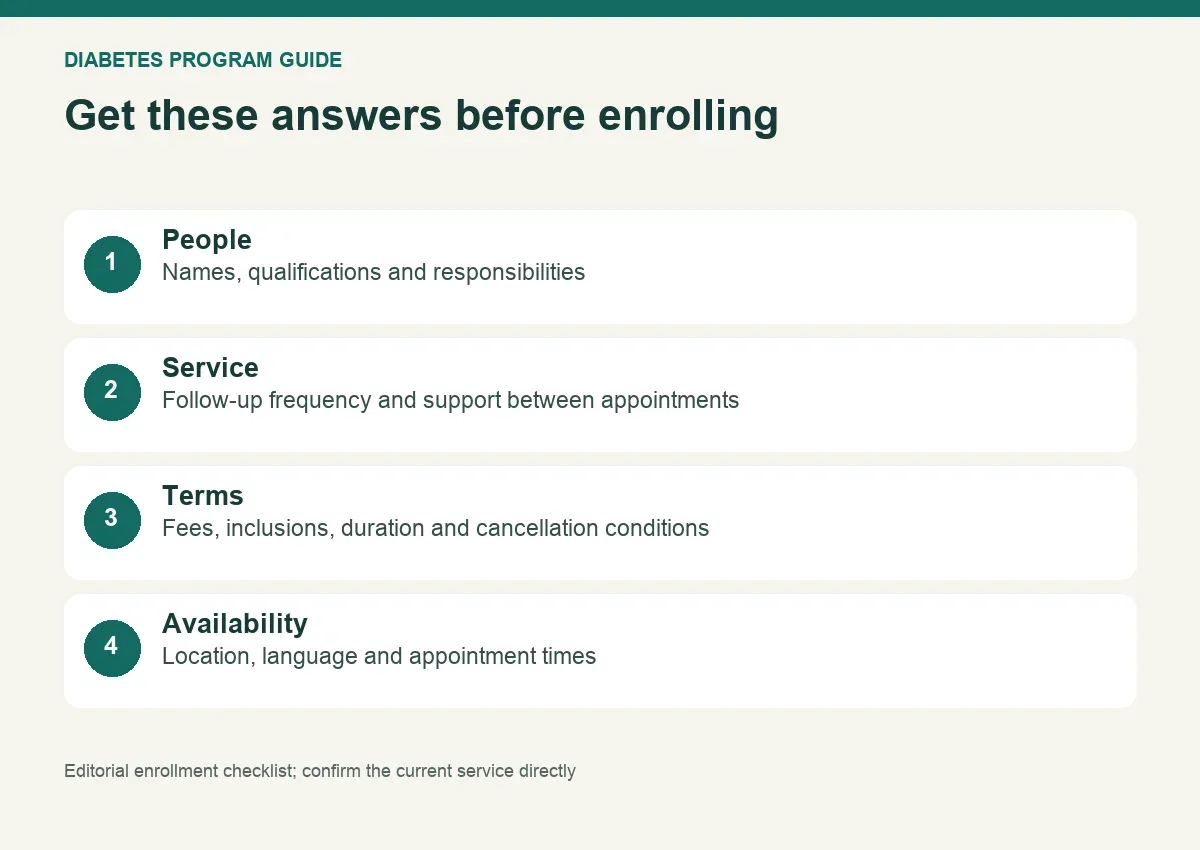
These questions are especially useful when a provider advertises a transformation package without explaining its day-to-day service.
A good fit should become clearer through the answers, not through pressure to enroll.
For a discussion of your circumstances, contact HealthyWayFit. Bring your questions about food preferences, treatment, and follow-up.
When you need medical care rather than a coaching appointment
Coaching is not the right place to wait when you have symptoms that need urgent treatment. Your program should make that boundary clear and direct you to appropriate care. Ask your diabetes team for written guidance on low glucose, illness, and when to seek emergency help.
Low blood glucose may cause shaking, dizziness, sweating, or confusion. Severe episodes can cause seizures or unconsciousness and require immediate help. Follow your clinician’s treatment plan, and contact emergency services if someone is unconscious, having a seizure, or cannot safely swallow. See NIDDK’s hypoglycemia guidance.
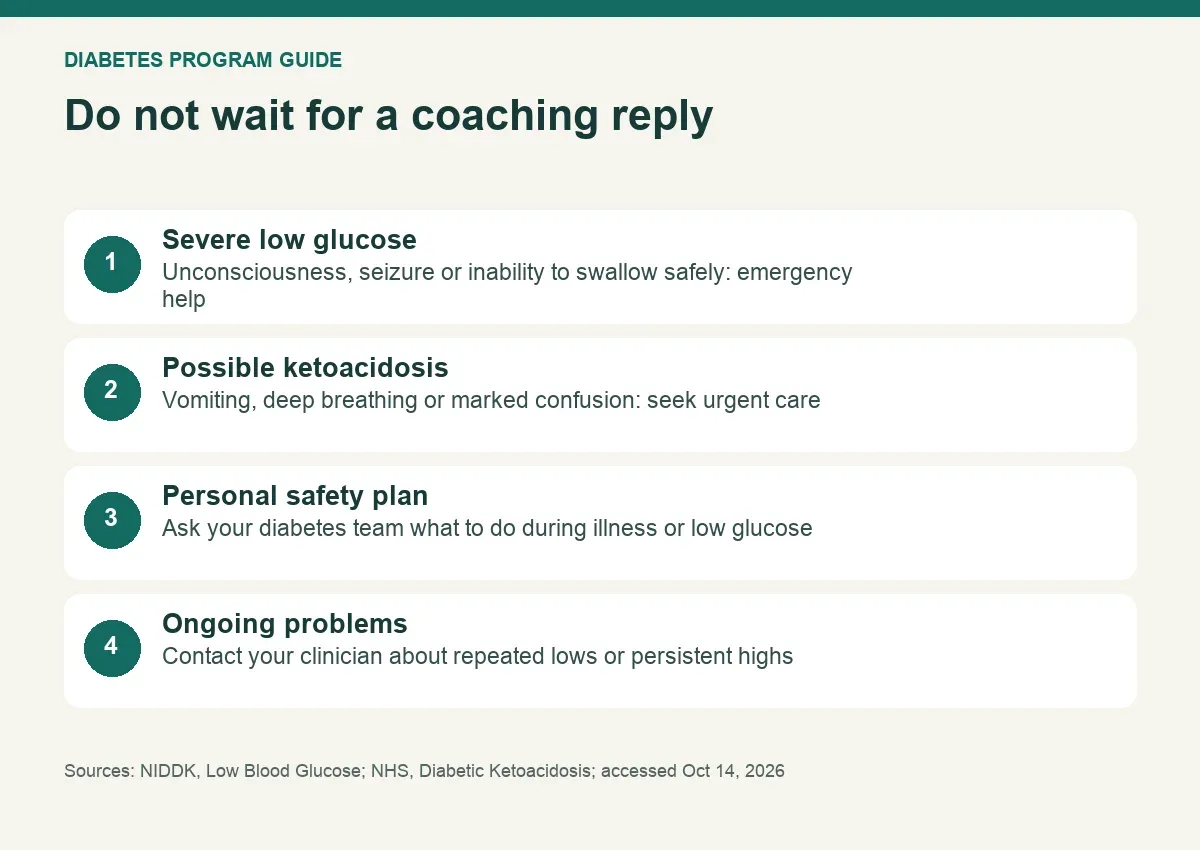
Diabetic ketoacidosis is another medical emergency. Symptoms can include vomiting, abdominal pain, deep breathing, fruity-smelling breath, and marked sleepiness or confusion. It can occur in people with diabetes and requires urgent hospital treatment. Seek emergency care for suspected symptoms rather than waiting for a program reply. Read the NHS guidance on diabetic ketoacidosis.
For recurring difficulties that are not emergencies—such as repeated low readings, persistent high readings, or problems tolerating medication—contact your treating clinician promptly.
Frequently asked questions
Can I join a lifestyle program if I take insulin?
Possibly, but confirm that the provider supports people using insulin and has a clear process for medical coordination. Changes to meals and activity may affect glucose levels. Your prescribing clinician should guide medication decisions and safety precautions.
Do I need a continuous glucose monitor to participate?
Ask the provider whether it requires a device and why. Monitoring needs depend on your treatment and clinical circumstances. Discuss the appropriate approach with your diabetes care team before buying a device solely because a program promotes it.

Is an online program suitable for South Asians living abroad?
It may suit your schedule, but confirm that the provider serves your location. Also check language options, access to follow-up, familiarity with locally available foods, and how it coordinates with your healthcare team.
What if I do not want to lose weight?
Tell the provider at the start. Ask how it will set goals based on your clinical needs rather than assuming weight loss is appropriate. Diabetes care involves more than body weight, and your clinician should help determine suitable priorities.
Choose support you can use in everyday life
The most useful type 2 diabetes program for South Asians helps you make informed decisions about your own meals, routines, and treatment. It explains the plan, adapts when difficulties arise, and keeps medical care central.
Start by writing down your usual meals, current medicines, and the three situations you find hardest to manage. Use those details to assess whether a provider can offer relevant support.
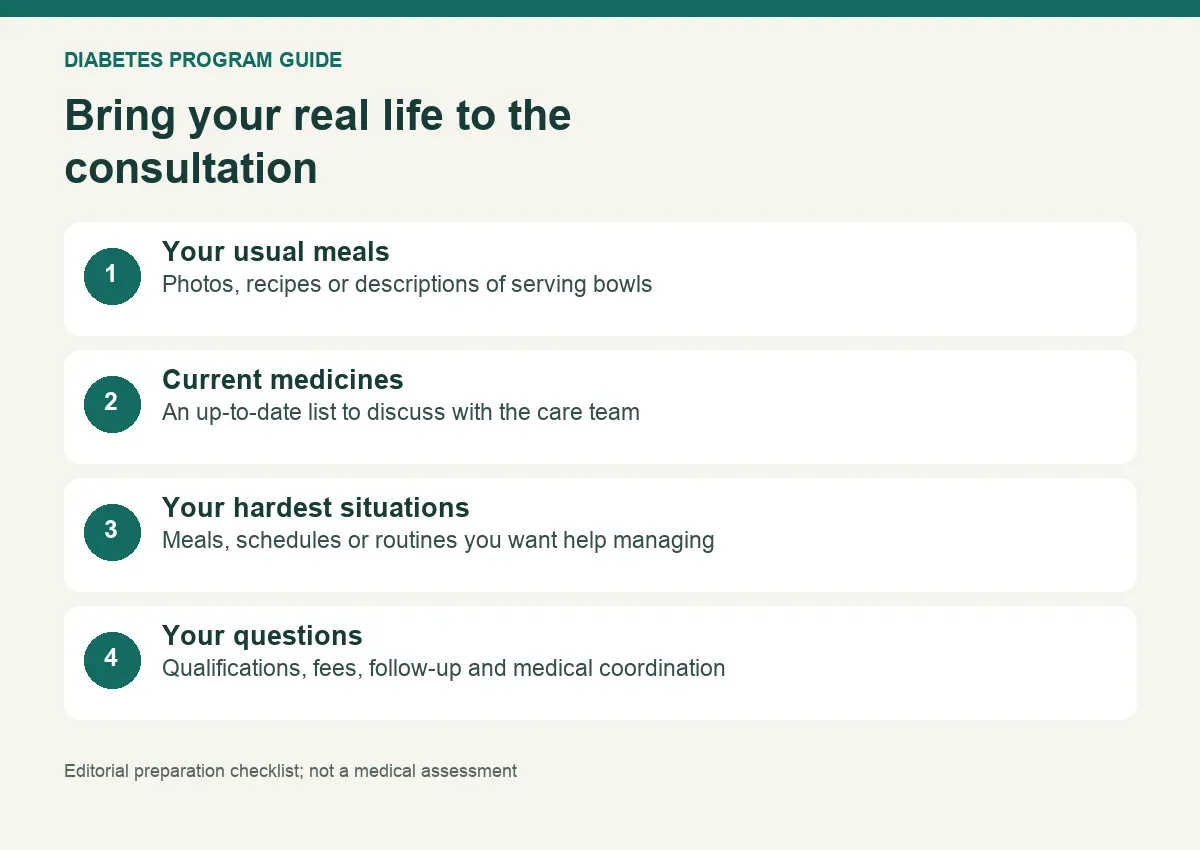
To explore your options, contact HealthyWayFit about a consultation. Ask about current services, qualifications, eligibility, and follow-up.
Choose a program only when you understand how its support will fit your life.
Written by Kirti, Founder & Serial Entrepreneur, HealthyWayFit.
Last updated: October 14, 2026. This article has not received an independent medical review.
Living in the United States? Our guide to choosing a diabetes program for Indian Americans covers US care coordination, insurance questions, appointment availability, and enrollment checks.