By Kirti, Founder & Serial Entrepreneur, HealthyWayFit
Updated 14 October 2026
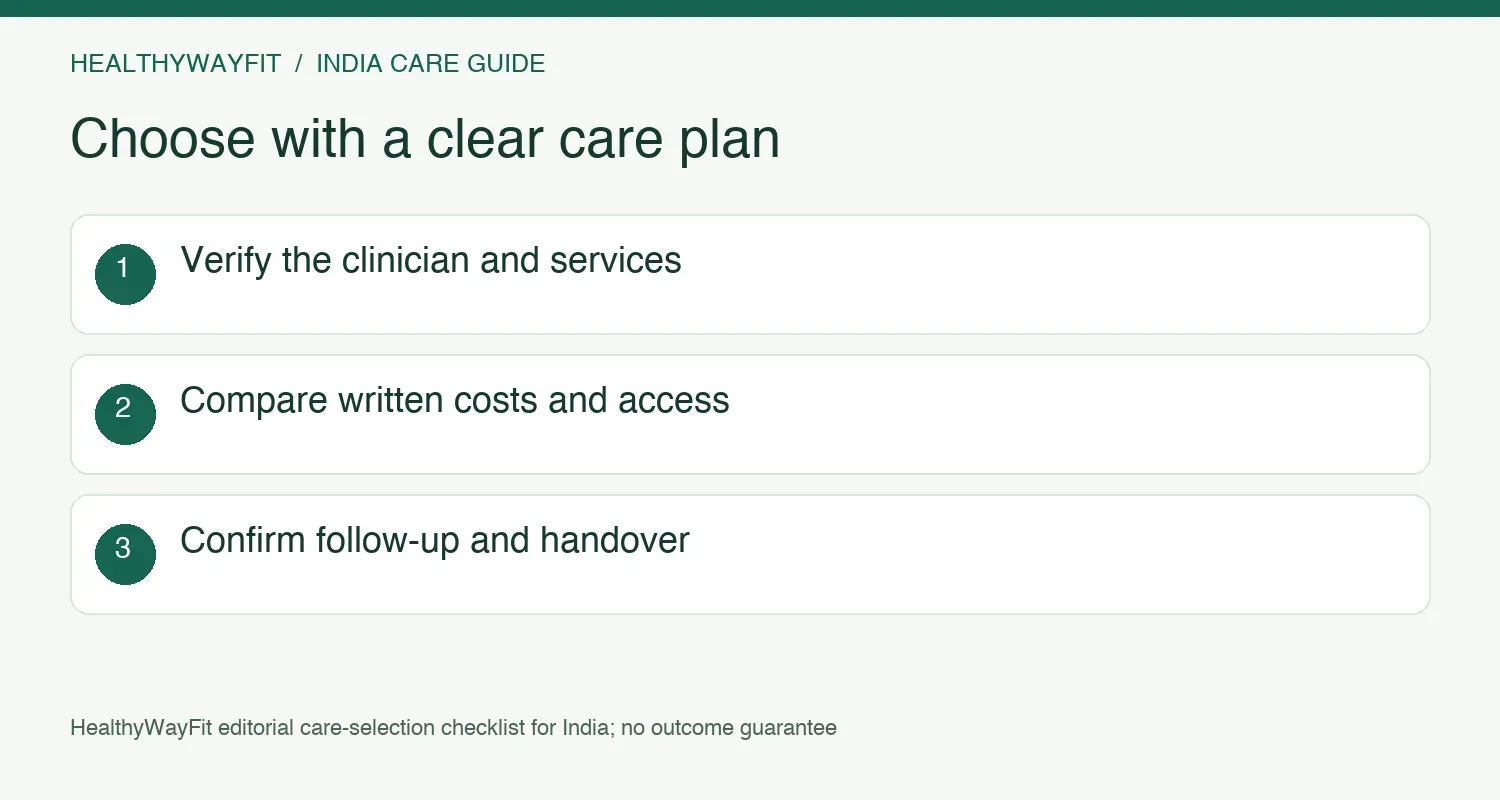
If you are searching for a diabetes reversal clinic near me, start with nearby services that offer a doctor’s assessment, nutrition support, clear medication responsibilities and follow-up. In India, verify the treating doctor’s registration and confirm the clinic’s address, appointment availability and full fees before booking. A nearby location is useful only if the service fits your care needs.
You may want help after another high HbA1c result, a confusing meal plan or difficulty staying consistent between appointments. A clinic should explain what it can offer without promising that everyone will stop medication.
This is a guide to finding and assessing local care, rather than a list claiming to know your nearest clinic. HealthyWayFit does not have a verified branch in your locality simply because you found this page through a local search.
This article is for informational purposes only and does not constitute medical advice. Always consult a qualified healthcare professional before making changes to your diet, exercise routine or medication.
1. What should a diabetes reversal clinic actually offer?
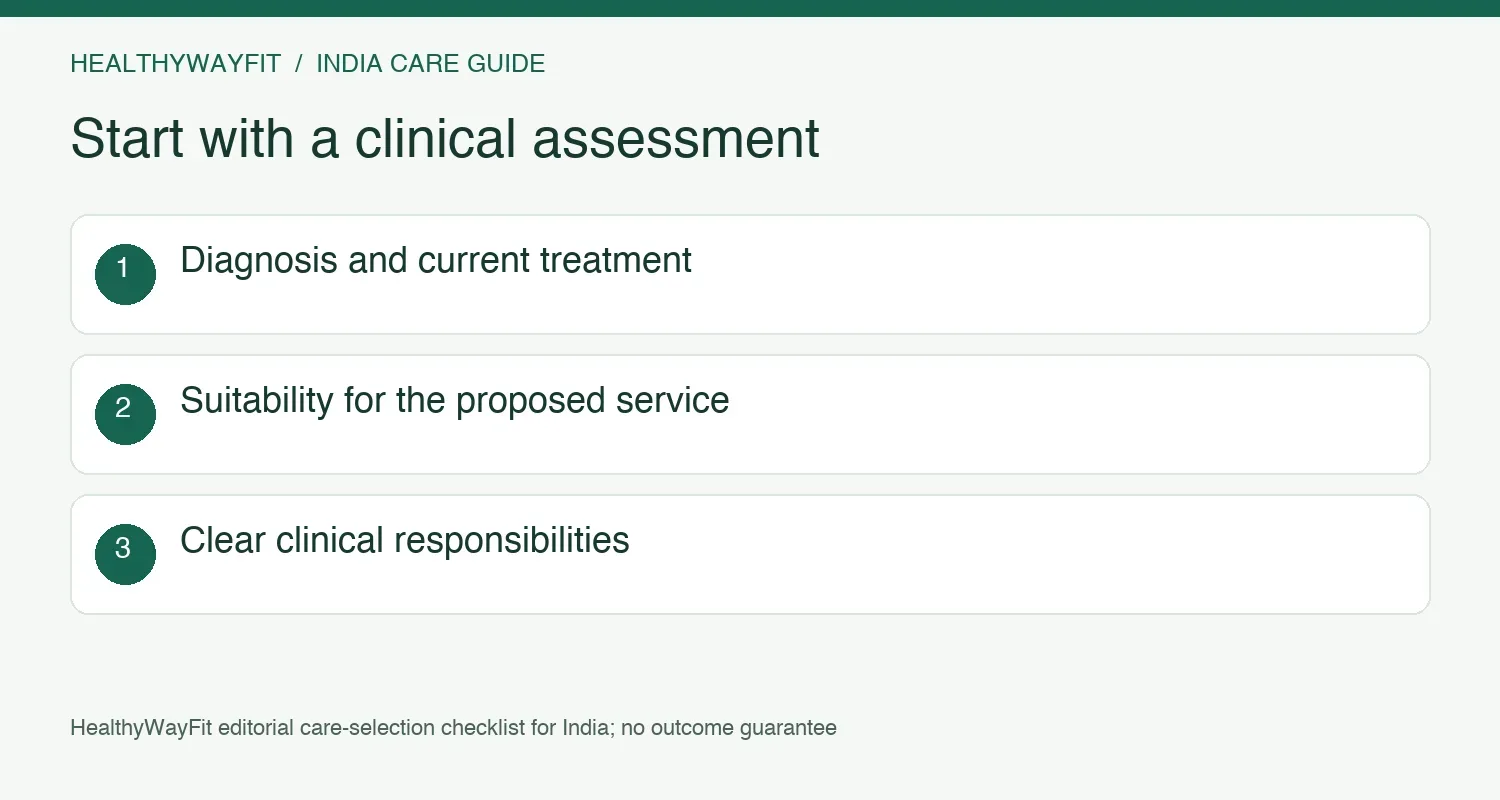
A clinic should begin by assessing your diagnosis, current treatment and health history. Ask who leads the medical care, who provides nutrition guidance and how concerns are handled between visits. The word “reversal” describes a proposed goal; it does not tell you which services are available or whether you are suitable.
For type 2 diabetes, the clinical term is remission: HbA1c below 6.5% for at least three months without usual glucose-lowering medication. This does not mean a permanent cure. See the international remission consensus.
Ask whether the clinic distinguishes improved glucose control, reduced medication and confirmed remission in its results. Those are different outcomes. A photograph of a glucose meter or a testimonial about feeling better does not explain which outcome occurred.
A useful first question is: “What would you assess before deciding whether your programme is appropriate for me?” Look for a specific answer rather than an immediate sales pitch.
2. How to find a diabetes reversal clinic near me
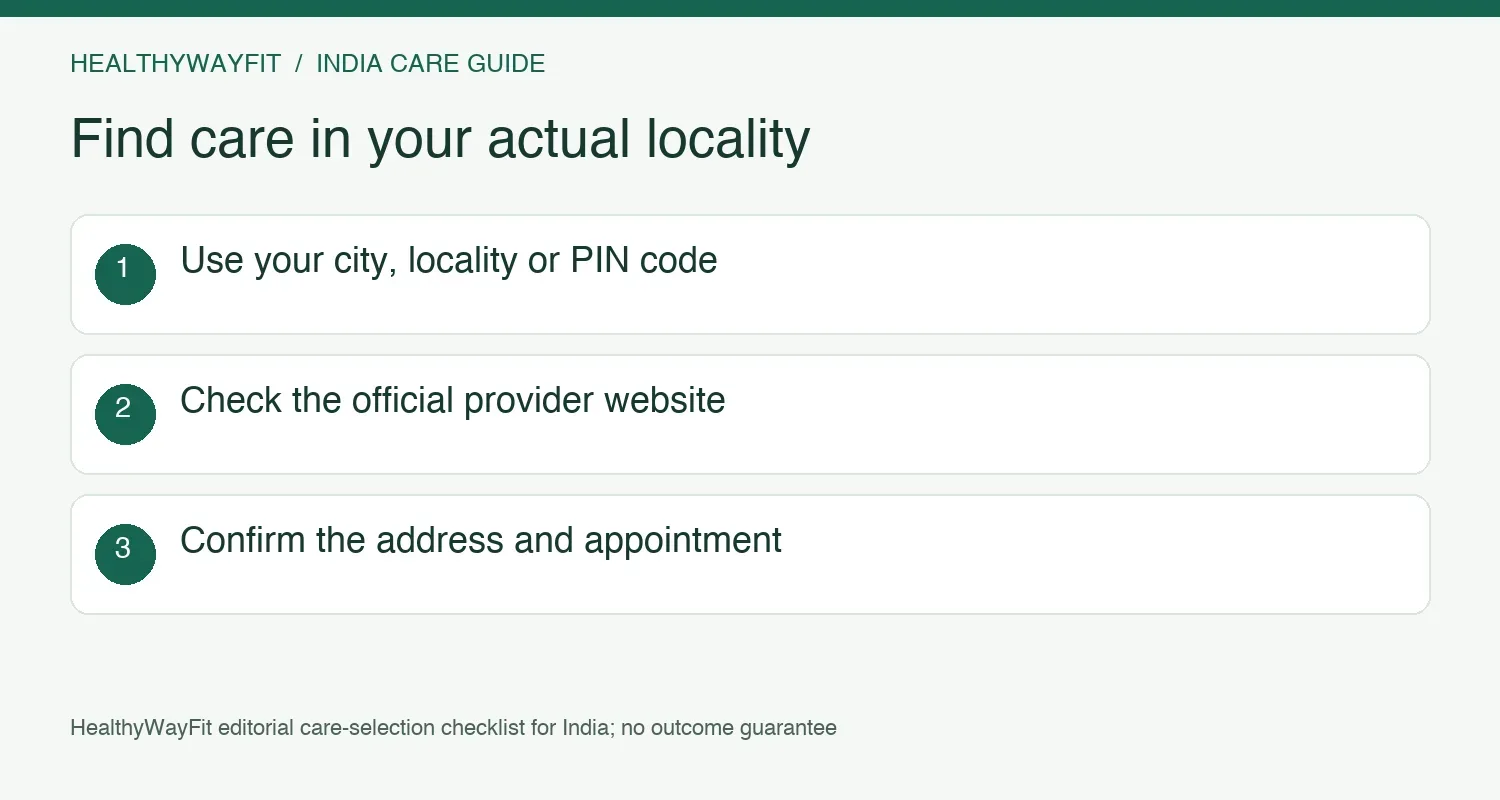
Use your locality or PIN code to identify nearby diabetes clinics, hospital diabetes departments and endocrinology services. Compare the actual services rather than requiring “reversal” in the business name. Confirm information through the provider’s official website and a direct call before travelling or paying a booking fee.
Try searches that include your area, such as “diabetes clinic in [locality]”, “endocrinology clinic in [city]” or “diabetes lifestyle programme in [city]”. These are search templates, not claims that particular providers are available.
Save a short list with the official website, address, treating doctor, consultation format and contact details. Check whether the listing is for a current branch, an old address or a booking agent.
Call the shortlisted clinics and ask whether a doctor will see you at the first visit. A programme enquiry with a salesperson is different from a medical consultation, and both should be identified clearly.
You can also ask your current physician for a referral. They may know which nearby service can address the specific gap in your care, such as nutrition counselling or specialist review.
3. How do you verify the doctor and clinic?
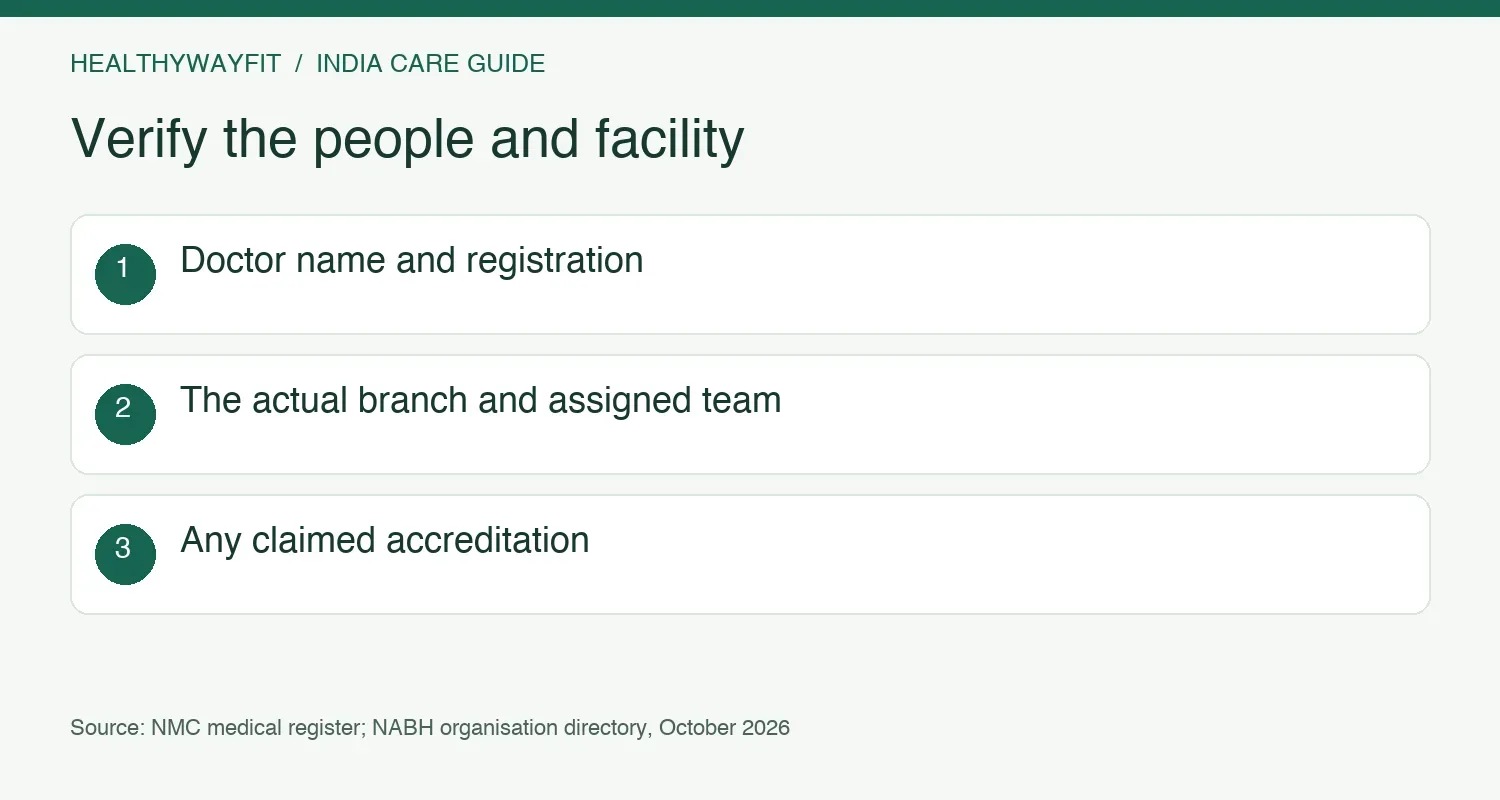
Ask for the treating doctor’s full name, qualifications and registration number, then check the relevant register. If a clinic claims accreditation, verify the organisation and scope directly. These checks help you assess the people and facility; they do not establish that a particular programme will produce remission.
The National Medical Commission’s Indian Medical Register supports searches by doctor and registration details. Its data is being updated; unresolved details should be checked with the relevant State Medical Council rather than treated as proof that a doctor is unregistered.
Ask who will provide care if the named doctor is away. Check whether reviews on the listing refer to that doctor, the same branch and the service you are considering.
If NABH accreditation is advertised, use the NABH organisation directory. Check the listed programme and status. The directory notes that information may be incomplete during migration; an absent listing alone does not settle a facility’s quality.
Registration and accreditation checks are starting points. You still need an explanation of clinical responsibilities, costs, communication and follow-up.
4. What care can happen locally, and what can happen online?
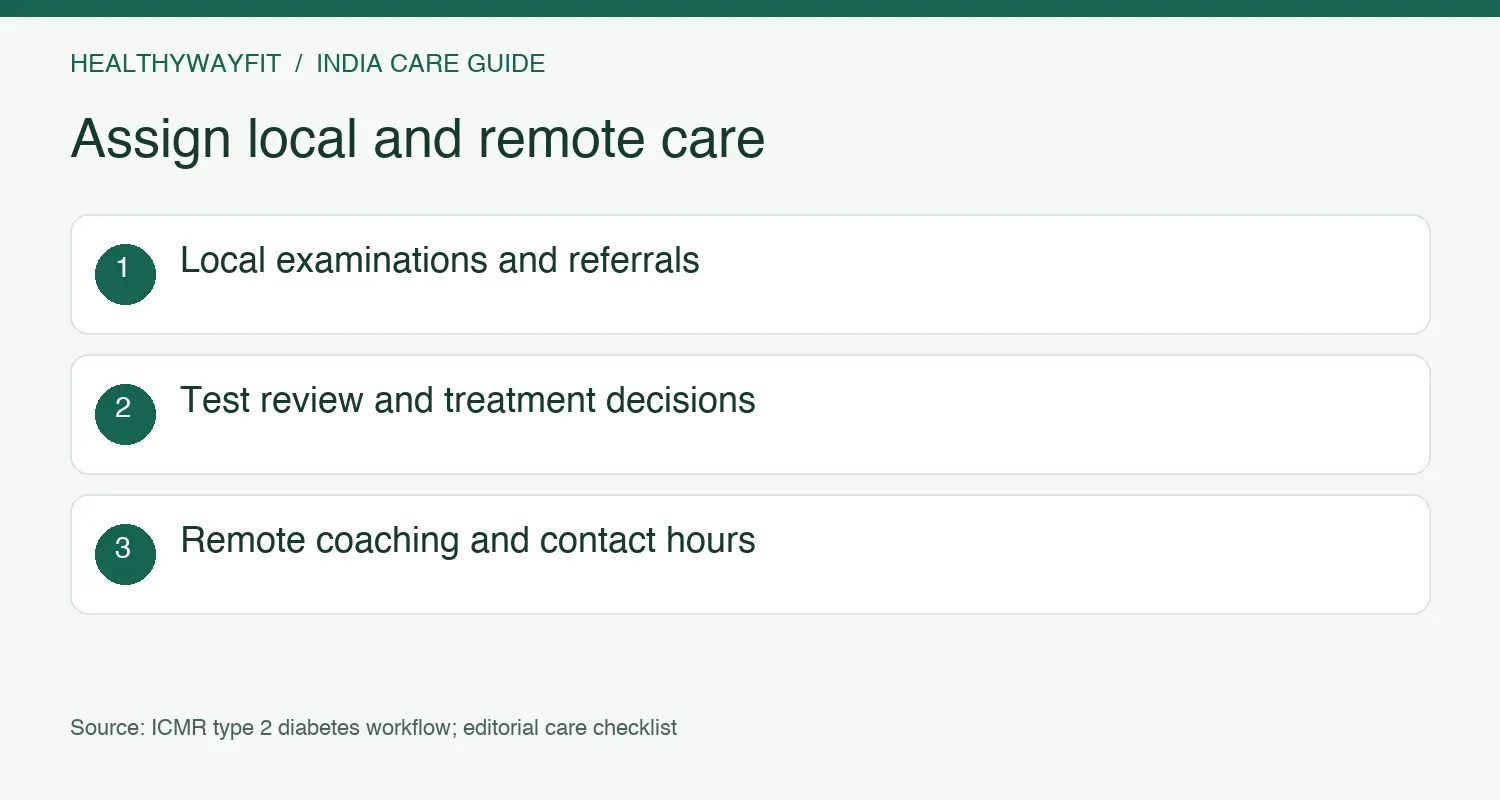
Ask the clinic which assessments require attendance and which follow-ups can be remote. A mixed arrangement may suit someone who wants local medical care and regular coaching without repeated travel. Establish who reviews test results, who makes treatment decisions and where you go if a physical examination is needed.
India’s ICMR type 2 diabetes workflow includes glucose management alongside eye, kidney and foot assessment or referral. It also recognises that individual management varies. A programme focused on food changes should not leave the rest of your diabetes care unassigned. See the ICMR type 2 diabetes treatment workflow.
Ask whether screening is done at the clinic or referred elsewhere, and whether the cost is included. “Comprehensive care” needs an explanation of the services and their responsible clinicians.
For remote follow-up, confirm how you send records and receive advice. Make sure you can access the platform and use it in the language you prefer.
Do not confuse convenient messaging with emergency cover. Ask where urgent concerns are directed and what response hours apply.
5. What should you take to your first visit?
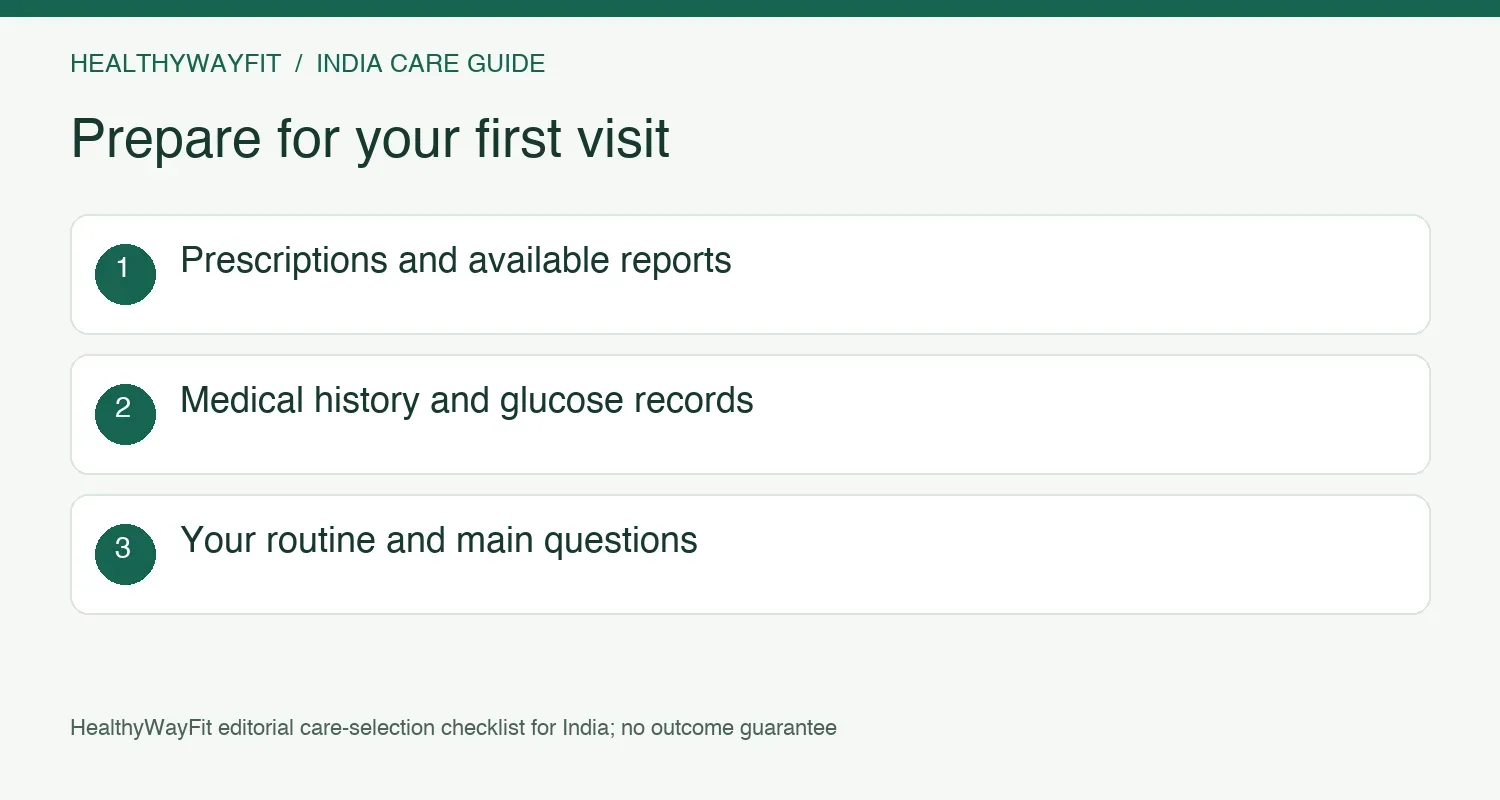
Take the information that helps the clinician understand your current care: prescriptions, available test results, relevant medical history and the questions you want answered. Ask the clinic in advance whether fasting is required or tests are planned. Do not change medication or skip meals solely because a programme appointment is booked.
Prepare these items if available:
- Your latest prescription, including medicine names and doses.
- Recent HbA1c and other reports your clinician has requested.
- Glucose records, with notes about when readings were taken.
- Information about allergies, other conditions and previous treatment.
- A description of your usual meals, working hours and activity.
- Your priorities, such as practical meal support or clearer monitoring advice.
Tell the clinician what has been difficult to follow. “I eat dinner late after work” is more useful than saying that you lack discipline. It gives the team a practical problem to discuss.
If a family member cooks or helps with care, ask whether they can attend the education part. Confirm your own consent and privacy preferences rather than assuming all information can be shared.
6. How should the plan fit Indian meals and daily routines?
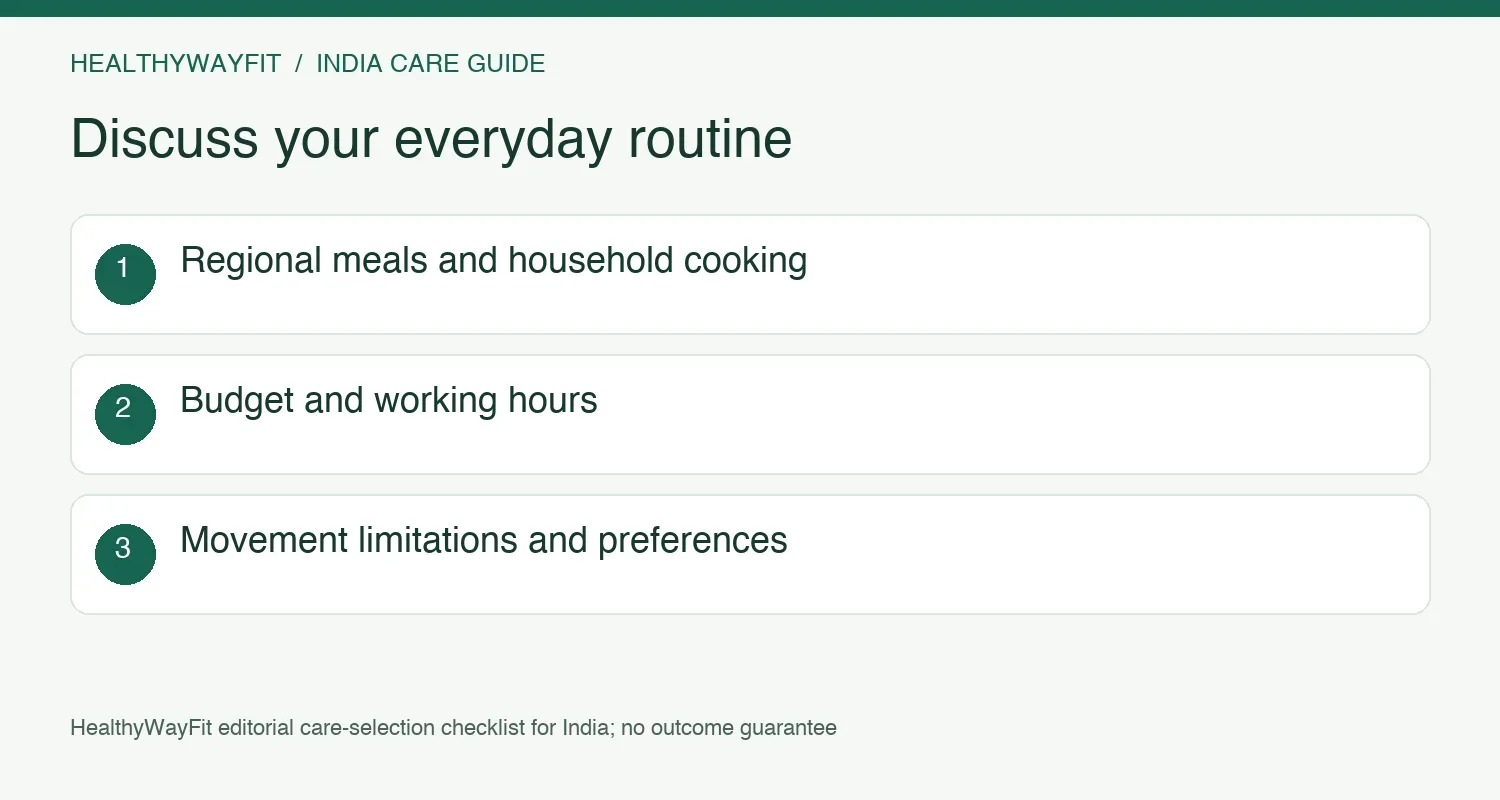
Ask how the clinic adapts nutrition support to the food you actually eat, your budget and your household routine. A plan should explain how guidance is personalised rather than treating all Indian meals as interchangeable. Describe regional preferences, vegetarian choices, religious practices and travel so the team can discuss practical adjustments.
For example, someone who usually eats rice-based meals has different planning questions from someone who takes a packed lunch with rotis. These are examples of routine differences, not prescriptions about which food everyone should avoid.
Ask who develops clinical nutrition advice and how questions are handled after the first appointment. Request an explanation of how the plan changes if you cannot follow it or if your medical needs change.
Our diabetes-friendly Indian meals guide offers food-pattern examples you can discuss with your care team. An individual plan still needs to account for treatment and health history.
Movement guidance should also fit your circumstances. Explain joint problems, work demands or other limitations and ask when medical assessment is required before changing activity.
7. How do you compare clinic fees in India?
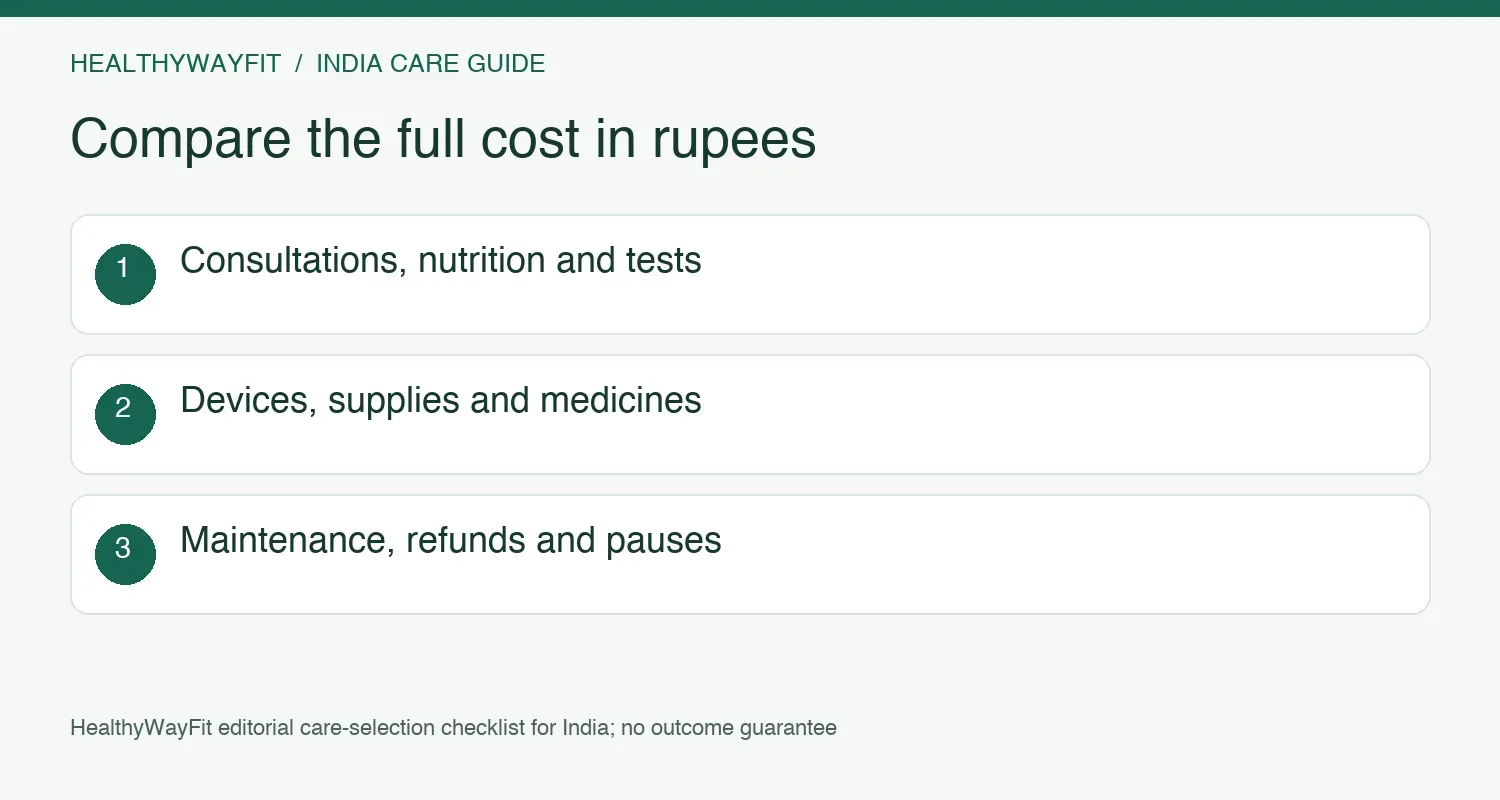
Compare the full cost in rupees over the proposed period of care. Ask whether the consultation, tests, dietitian appointments, monitoring supplies and follow-up are separate. A low first-visit fee may lead to a larger package offer, so request written details before deciding whether the programme represents value for you.
| Cost item | What to ask |
|---|---|
| Doctor consultations | How many visits are included, and are additional visits charged? |
| Nutrition or coaching | Is support individual or group-based, and who delivers it? |
| Laboratory tests | Which tests are planned, why, and where are they performed? |
| Devices and supplies | Are they required, optional or prescribed separately? |
| Medicines | Are pharmacy costs separate, and can I use my usual pharmacy? |
| Maintenance | What support continues after the initial package? |
Ask about cancellation, refunds and pauses for illness or travel. Find out what happens if the clinician decides the package is unsuitable after assessing you.
If you have insurance, check your actual OPD, testing or teleconsultation benefits directly. Do not assume that a lifestyle coaching package is covered because the clinic accepts insurance for another service.
There is no verified universal price for diabetes reversal care in India. Use written quotes from the clinics you can actually attend, with the same items included in each comparison.
8. What warning signs should make you pause?
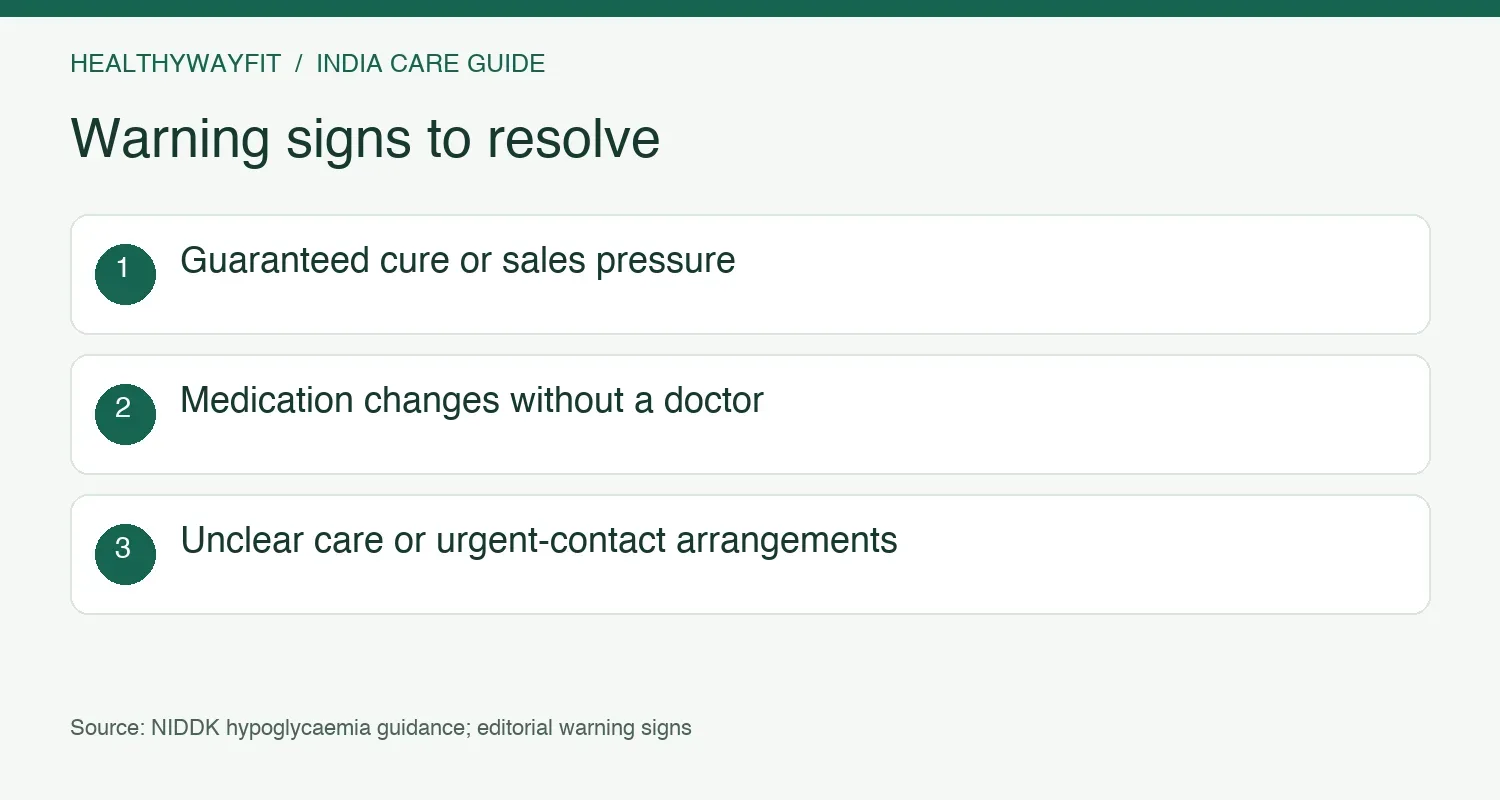
Pause if a provider guarantees a cure, tells you to stop prescribed medicines without medical review or cannot name the doctor responsible for your care. Ask for evidence behind outcome claims and a clear escalation process. Your decision should rest on the service offered, not pressure to pay during the first conversation.
Insulin and some other diabetes medicines can cause low glucose; changes in food or activity require appropriate treatment guidance. Do not independently adjust medication because readings improve. See NIDDK’s hypoglycaemia guidance.
If supplements or alternative treatments are central to the package, ask what they contain, whether they are optional and how the treating clinician reviews safety. A “natural” label does not answer those questions.
Ask whether reported results include everyone enrolled or only people who completed the programme. Clarify the outcome definition and follow-up duration instead of accepting a success percentage at face value.
Severe symptoms need urgent clinical help rather than a routine coaching response. Know the nearest appropriate emergency service and your clinician’s instructions before relying on a messaging group.
9. Can HealthyWayFit support someone looking for nearby care?
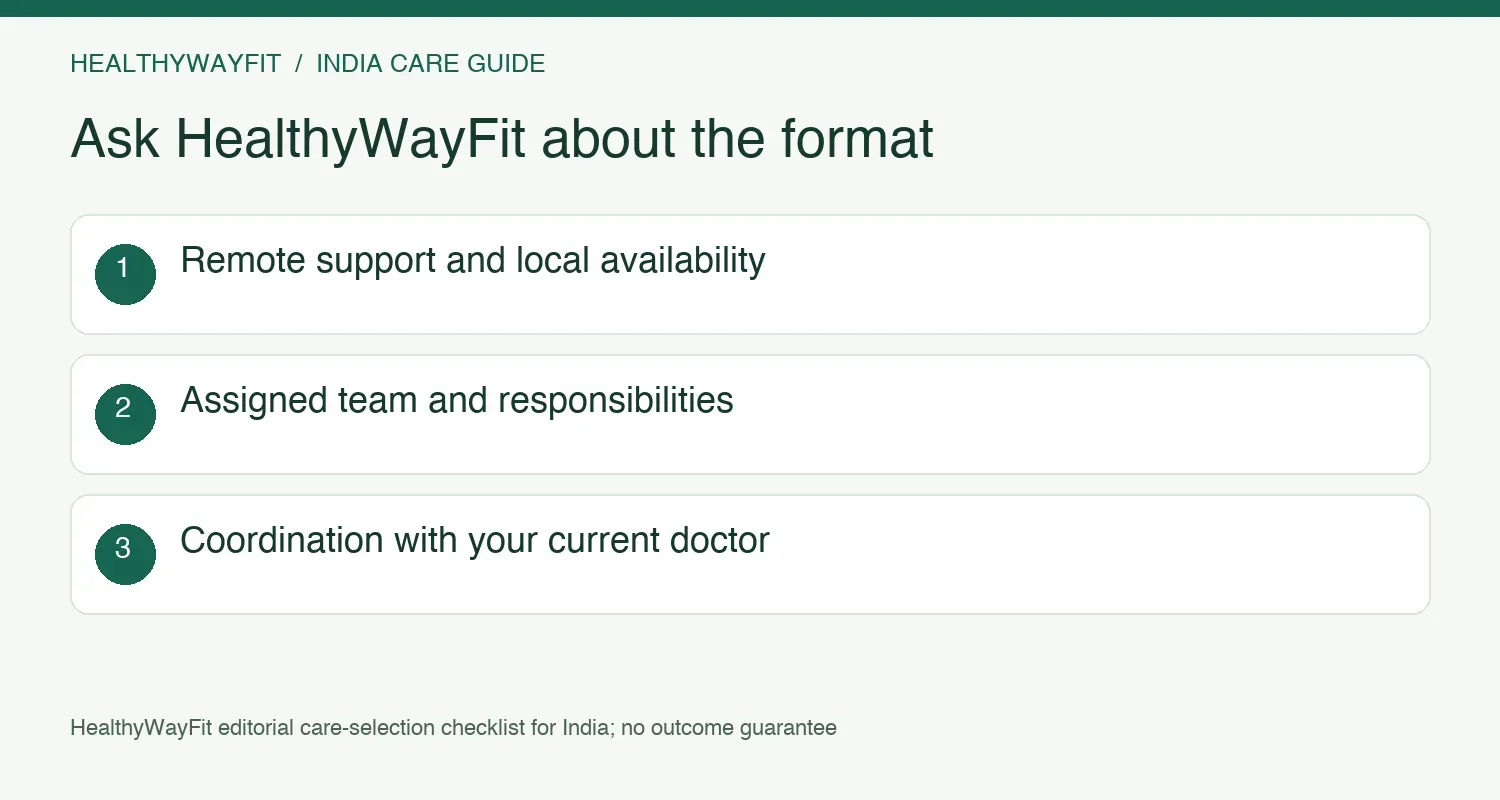
HealthyWayFit’s published offering describes personalised nutrition, movement guidance, habit support, glucose monitoring and doctor supervision. Ask how those services would work with your local medical care. Confirm the consultation format and location availability directly; this article does not establish a HealthyWayFit physical clinic in your city.
Tell the team where you live and which part of care you want help with. Ask whether support is remote, whether any in-person appointments are available and who coordinates with your current doctor.
If your priority is an examination or specialist treatment, arrange appropriate local care rather than assuming a remote programme provides it. If you want help implementing an agreed plan between visits, ask how coaching fits that role.
Our coaching programme guide provides further questions about support quality. Ask for the exact HealthyWayFit service, assigned team, communication hours and full charges before joining.
Use the same standards to evaluate HealthyWayFit as other providers. We publish this article, and no independently verified claim of superiority is made here.
10. How do you make the final choice?
Choose a clinic you can access, with a verified treating doctor, suitable services and a clear follow-up plan. Compare written quotes and practical responsibilities before committing. If two clinics seem similar, ask which offers the specific support you need and how your usual clinician stays involved.
After the first consultation, you should be able to explain the assessment, next steps, planned costs and contact arrangements. If you cannot, request clarification before purchasing a long programme.
Keep copies of prescriptions and reports so that care remains understandable if you change providers or need a second opinion. A programme should make your ongoing care easier to coordinate.
To explore HealthyWayFit, contact our team with your city and care goals. Ask about suitability, available formats and how support can work alongside local medical care.