
By Kirti, Founder & Serial Entrepreneur, HealthyWayFit
Research-led editorial | Prepared 15 October 2026
A diabetes dietitian online can help turn your treatment goals into meals you can manage at home, at work, and while eating out. Before booking, check the professional’s credentials, diabetes experience, follow-up arrangements, and coordination with your prescribing clinician. Compare the service you will receive, rather than the number of recipes in a package.
The most useful first question is specific: “Can this person help me solve the food problem I am paying to address?” That might be planning around shift work, understanding carbohydrate portions, or finding meals that fit both diabetes and another health condition.
Note: This article is for informational purposes only and does not constitute medical advice.
Always consult a qualified healthcare professional before making changes to your diet, exercise routine or medication.
What should an online diabetes dietitian help you do?
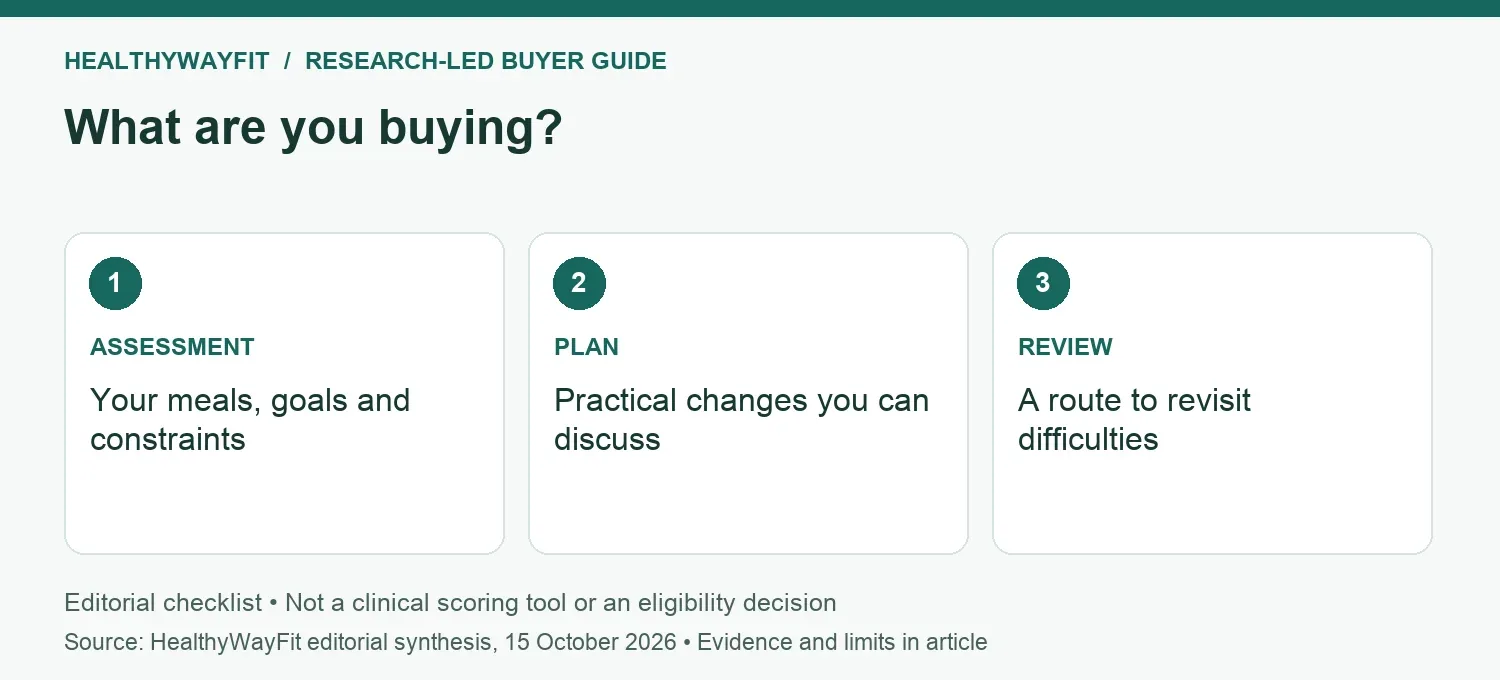
You are paying for nutrition assessment, an individualized eating plan, and help reviewing how that plan works in your life. The American Diabetes Association’s 2026 Standards recommend individualized medical nutrition therapy from a registered dietitian nutritionist, preferably one experienced in diabetes care. A downloadable diet chart is a different service. Source: ADA Standards of Care, nutrition recommendations.
Ask how the provider moves from your information to a recommendation. Will they discuss your usual meals, cooking arrangements, food budget, medicines, and health history? Will you agree on priorities together? Can they explain why a proposed change is relevant to your goals?
For example, “I need lunches I can assemble without a kitchen” is a useful booking brief. “Send me the perfect diabetes diet” leaves too much undefined. A service can then explain whether it offers the assessment and practical help you need.
Ask to see an anonymized sample of the written material clients receive. It should show the format and level of detail without disclosing another person’s health information. You can assess clarity before buying without expecting a personal treatment plan during a sales call.
Should you choose a dietitian, nutritionist, coach, or doctor?
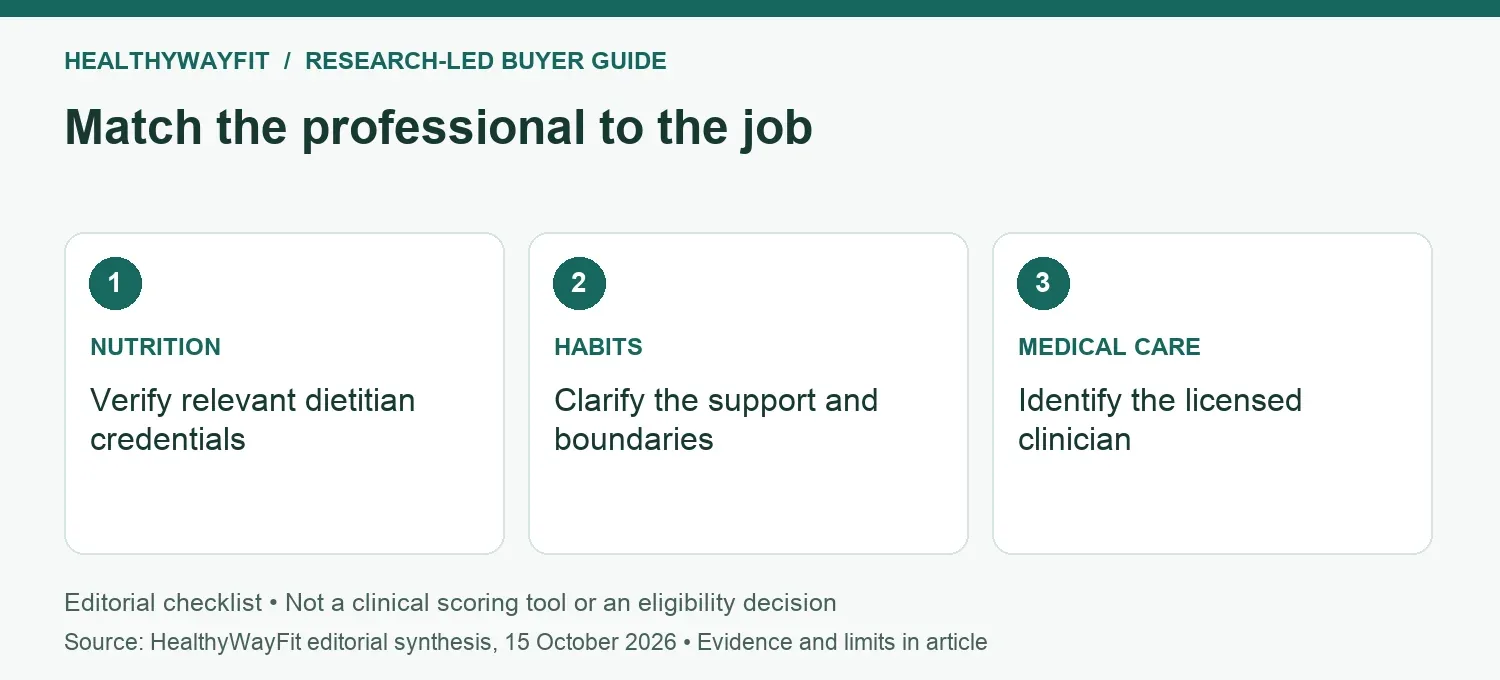
Choose according to the job and the professional’s verified scope. Nutrition assessment, habit support, and medical treatment are related services, but their titles do not establish identical qualifications. Ask what credential the person holds, who awarded it, and whether they can provide the proposed service where you live.
| Your main reason for booking | What to look for | What to clarify |
|---|---|---|
| Help adapting meals to diabetes | A qualified dietitian with relevant clinical experience | Assessment, written plan, and review process |
| Help following an existing plan | A suitably trained coach or diabetes educator | Boundaries and referral arrangements |
| Diagnosis, medicine review, or new symptoms | A licensed medical clinician | Whether remote care is appropriate |
| Several needs at once | A coordinated team | Who is responsible for each part of care |
A person may hold more than one qualification. Ask about the role they will perform in your package, rather than assuming every credential comes with every appointment.
“Nutritionist” and “dietitian” are regulated differently across countries. Verify the relevant local credential rather than treating a social-media biography as proof. Our guide to online diabetes coaching can help you compare the broader support role.
What does research say about personalized nutrition support?
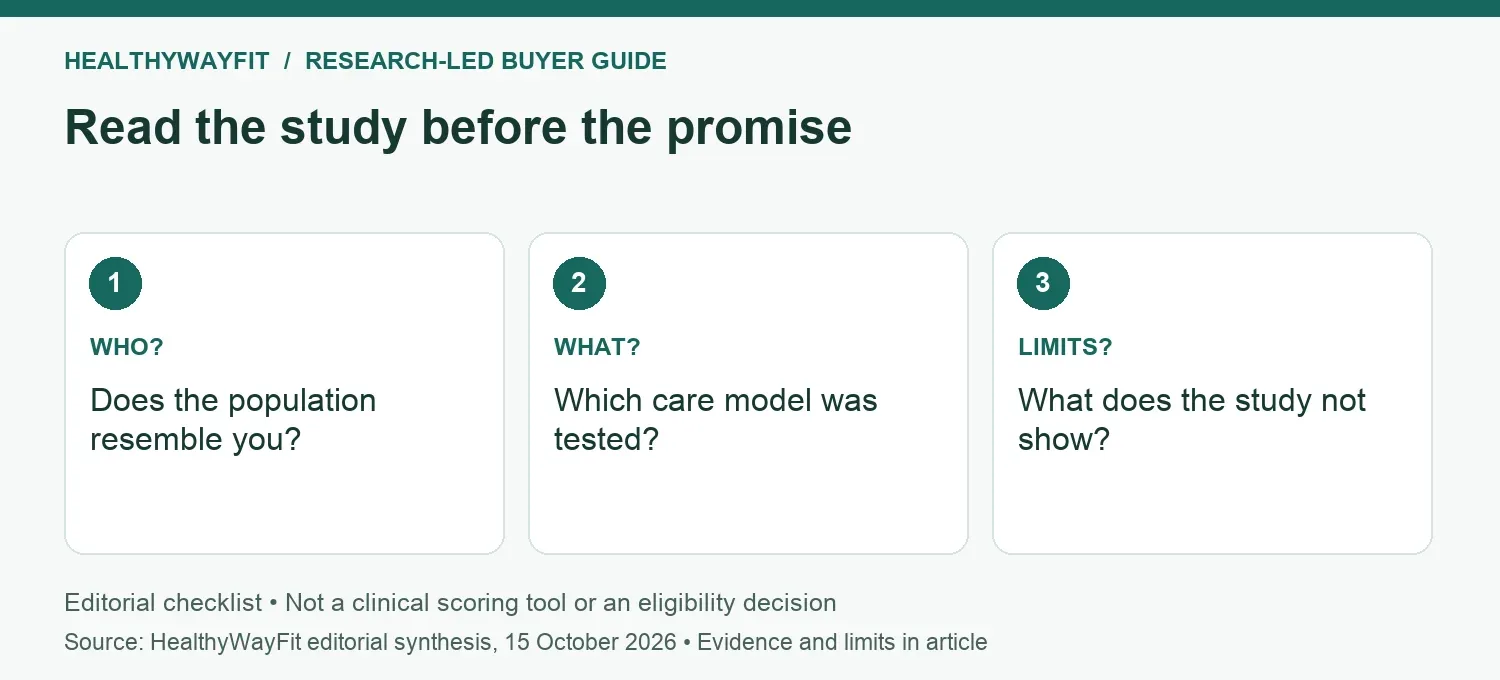
Research supports individualized nutrition care, but a study cannot guarantee the result of a particular commercial package. Look for trials that describe the people enrolled, the care delivered, and the comparison group. Then ask whether the service you are considering resembles that intervention.
In a randomized trial by Omura and colleagues, 136 Japanese adults with type 2 diabetes were assigned individualized or conventional dietary advice; 126 were included in the analysis. Both groups received three face-to-face dietitian sessions. At six months, adjusted HbA1c changes were −1.1 percentage points and −0.7 percentage points, respectively; the between-group comparison had a P value of 0.0495. These were group averages, not predicted results for new clients. Omura et al., randomized nutrition trial, 2022.
A separate randomized telemedicine study, ENHANCED, involved 118 adults in rural Minnesota. It evaluated dietitian-led team care, including protocol-based medication management, alongside nutrition therapy. Its findings cannot be attributed to meal advice alone or generalized to every online dietitian. ENHANCED telemedicine trial, 2019.
The buying implication is practical: ask about assessment, contact, and coordination. A provider citing research should be able to explain both its relevance and its limits. Neither study establishes that video appointments are universally better than in-person visits.
What should happen before your first appointment?
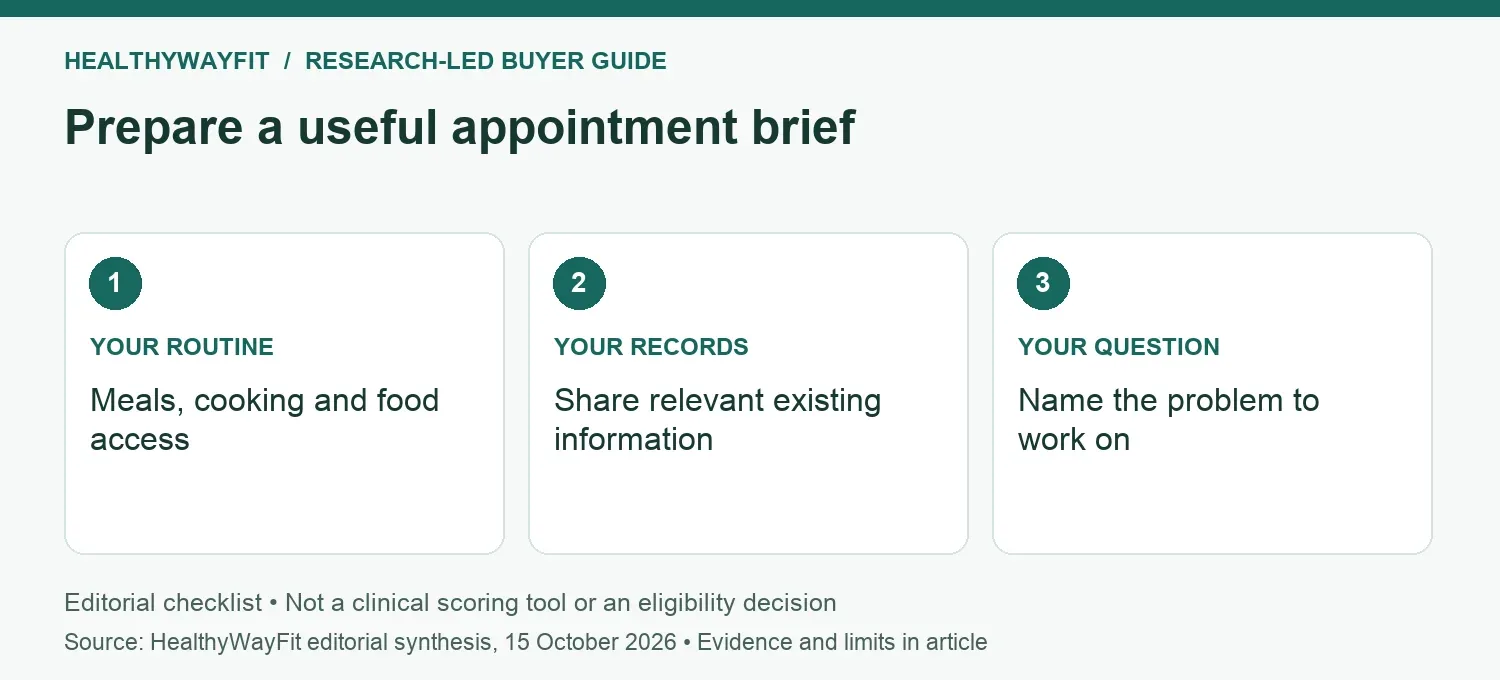
A useful intake should establish what you want help with and whether the provider is equipped to help. Ask what records are needed, how they should be shared, and whether the professional reviews them before the appointment. Do not buy a long package before understanding this process.
Prepare a short account of your eating routine. Include when meals happen, who prepares them, which foods you enjoy, and what has been hard to maintain. Note practical limits such as limited refrigeration, travel, religious practices, or an unpredictable workday.
If you already have laboratory results, glucose records, and a current medicine list, ask which are relevant. Do not order extra tests merely to make an intake folder look complete. The treating team should explain the purpose of any new investigation.
For context on one commonly discussed blood test, see what HbA1c measures. Your own targets and testing schedule belong in a conversation with your clinician.
Ask whether a family member can join if they shop or cook for you. That may make the appointment more practical, but you should control who is present and what information is shared.
How can you tell whether a meal plan is personalized?
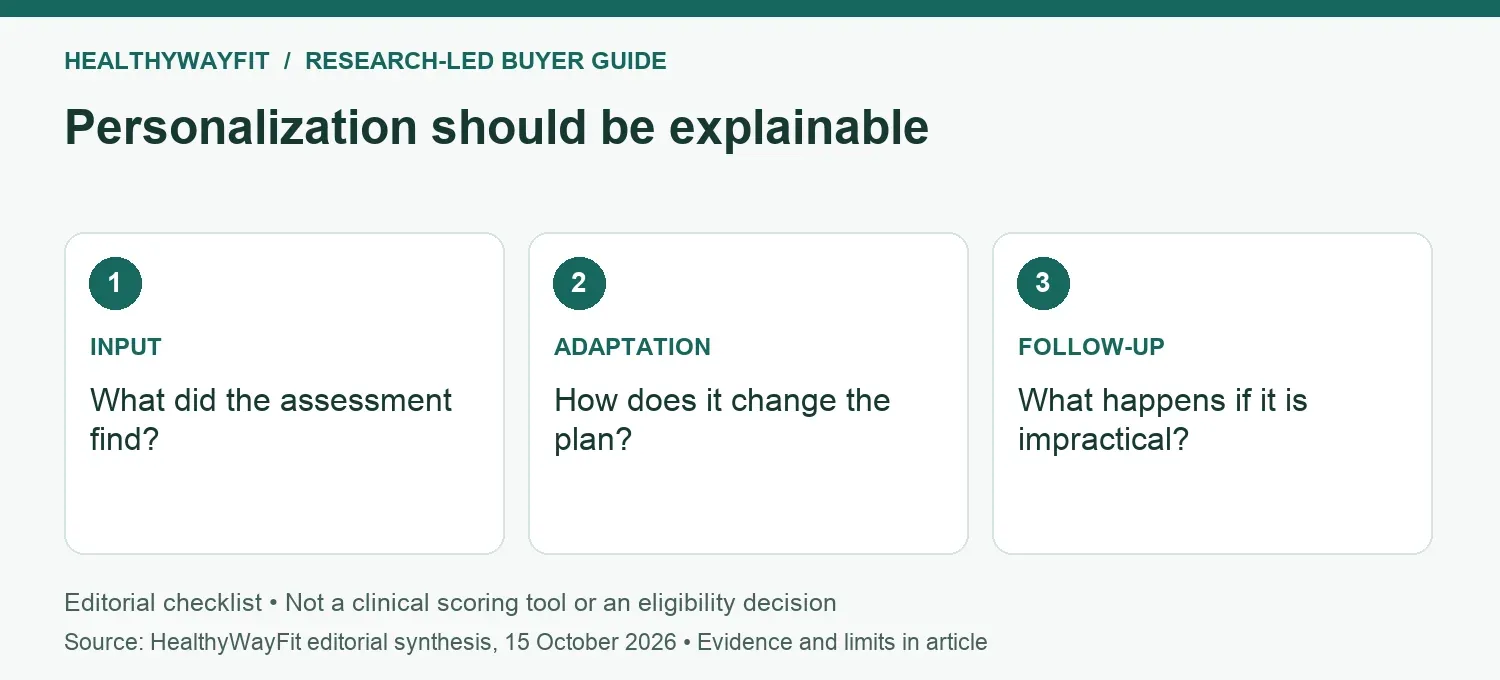
A personalized plan should respond to information gathered about you. Ask the dietitian to describe how recommendations change when someone’s schedule, food access, preferences, or medical needs differ. Adding your name to a standard chart does not demonstrate that work. For a deliverables checklist, see what to expect from a personalised diabetes diet plan.
Use an ordinary challenge during the introductory conversation: “I often buy lunch at work. How would we approach that?” Look for a description of the assessment and problem-solving process. The professional does not need to prescribe your lunch before completing an assessment.
Useful questions include:
- Can we use foods I already eat and can afford?
- What happens if I dislike or cannot obtain a suggested food?
- Will the written plan explain substitutions and portions?
- How will we discuss eating out, celebrations, or travel?
- What happens if a recommendation is difficult to follow?
In India, you might ask whether the provider can work with your actual regional meals, including rice, roti, dal, or other staples you use. Familiarity should lead to practical options, rather than a universal instruction to remove a culturally important food.
A plan also needs a review route. Ask how you report difficulties and who decides whether the plan needs to change. That process is easier to compare than vague promises of “complete personalization.”
How should you compare fees and follow-up packages?
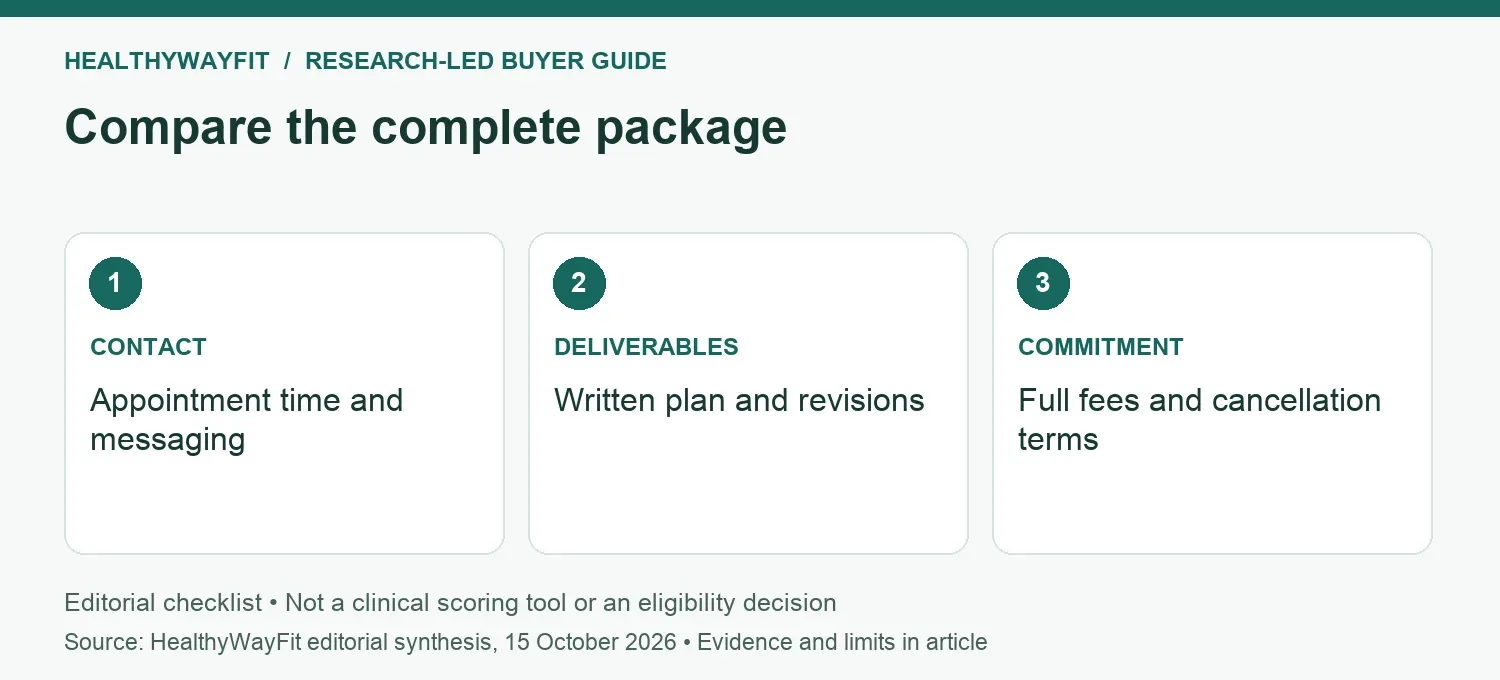
Compare the full package over the same period. A consultation price is incomplete without appointment length, number of reviews, messaging access, and cancellation terms. Request an itemized quote rather than assuming the cheapest first call creates the lowest total cost.
| Ask for this detail | Why it changes the purchase |
|---|---|
| Initial appointment and review lengths | Distinguishes assessment time from a brief check-in |
| Number of appointments | Makes packages comparable |
| Who answers messages | Clarifies whether access is to the dietitian or support staff |
| Response hours and usual response time | Sets expectations between appointments |
| Written materials and revisions | Identifies what is included after the call |
| Device, test, or supplement charges | Prevents an incomplete budget |
| Cancellation, refund, and renewal terms | Shows the financial commitment |
In the US, Medicare describes coverage for qualifying medical nutrition therapy with a doctor’s referral and eligible providers. This does not establish that any online package you find is covered. Check the provider, delivery method, and your own benefit before booking. Medicare’s medical nutrition therapy coverage.
There is no verified universal fee in this article. Location, qualifications, appointment structure, and coverage differ. Ask two shortlisted providers the same questions and compare their written answers.
Who handles medicines and glucose-related concerns?
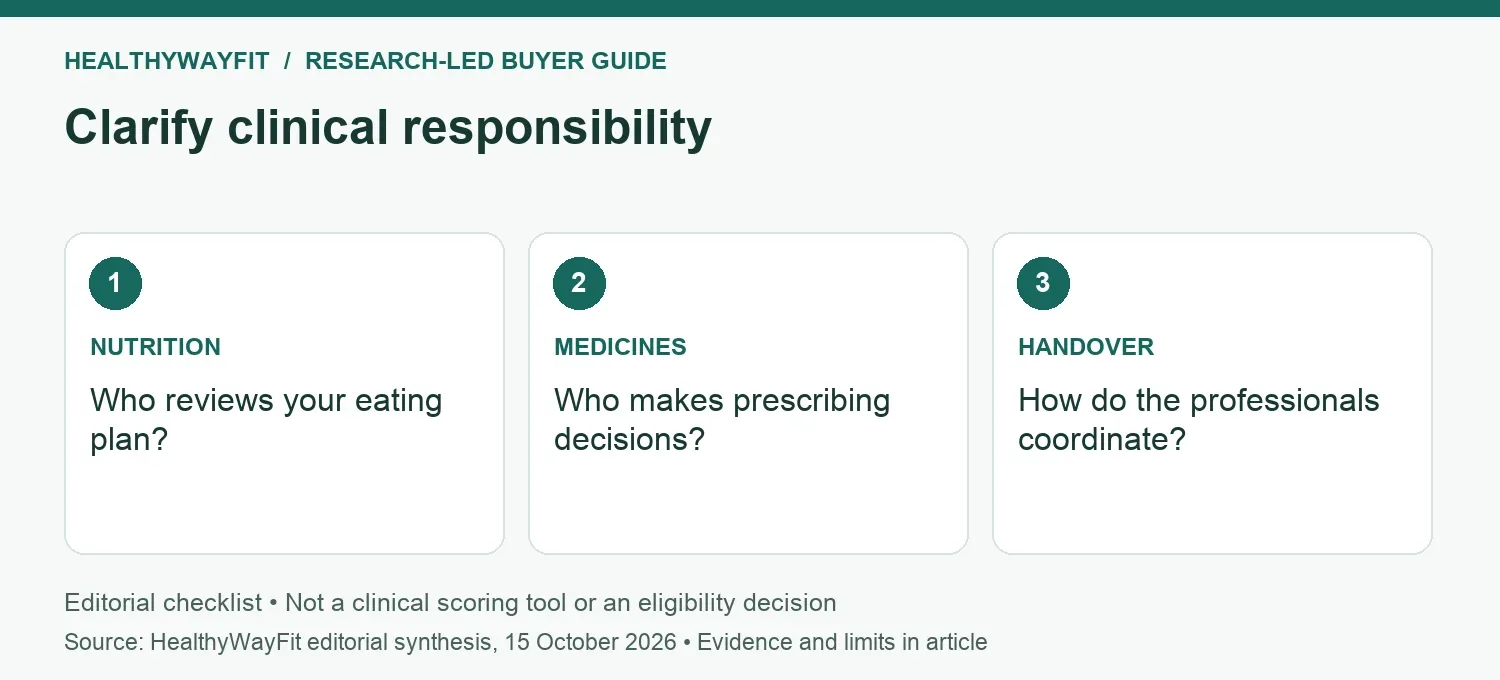
The package should identify who is responsible for medical decisions and how nutrition advice is coordinated with that person. Do not assume that a messaging channel includes prescribing or urgent clinical review. Ask where you should take a medication question before starting.
Changes in eating or activity can affect low-glucose risk for people using certain diabetes medicines. NIDDK advises discussing prevention and treatment of low blood glucose with the healthcare team. Tell the dietitian about prescribed medicines and any history of low readings. NIDDK guidance on low blood glucose.
Ask how the service communicates with your clinician, whether that communication needs your consent, and what happens if recommendations conflict. A clear handover matters more than a general claim that the team is “always available.”
If a provider promises to stop medicines as a condition of success, request clarification before paying. Better glucose control while continuing appropriate treatment can be a valuable outcome. Medication changes require the responsible prescriber’s assessment, not a package milestone.
Which promises should make you pause before paying?
Pause when a service guarantees a cure, avoids naming the professional delivering care, or will not explain its fees and scope. These are purchasing concerns you can investigate directly. A testimonial or a scientific reference does not answer questions about your own care arrangements.
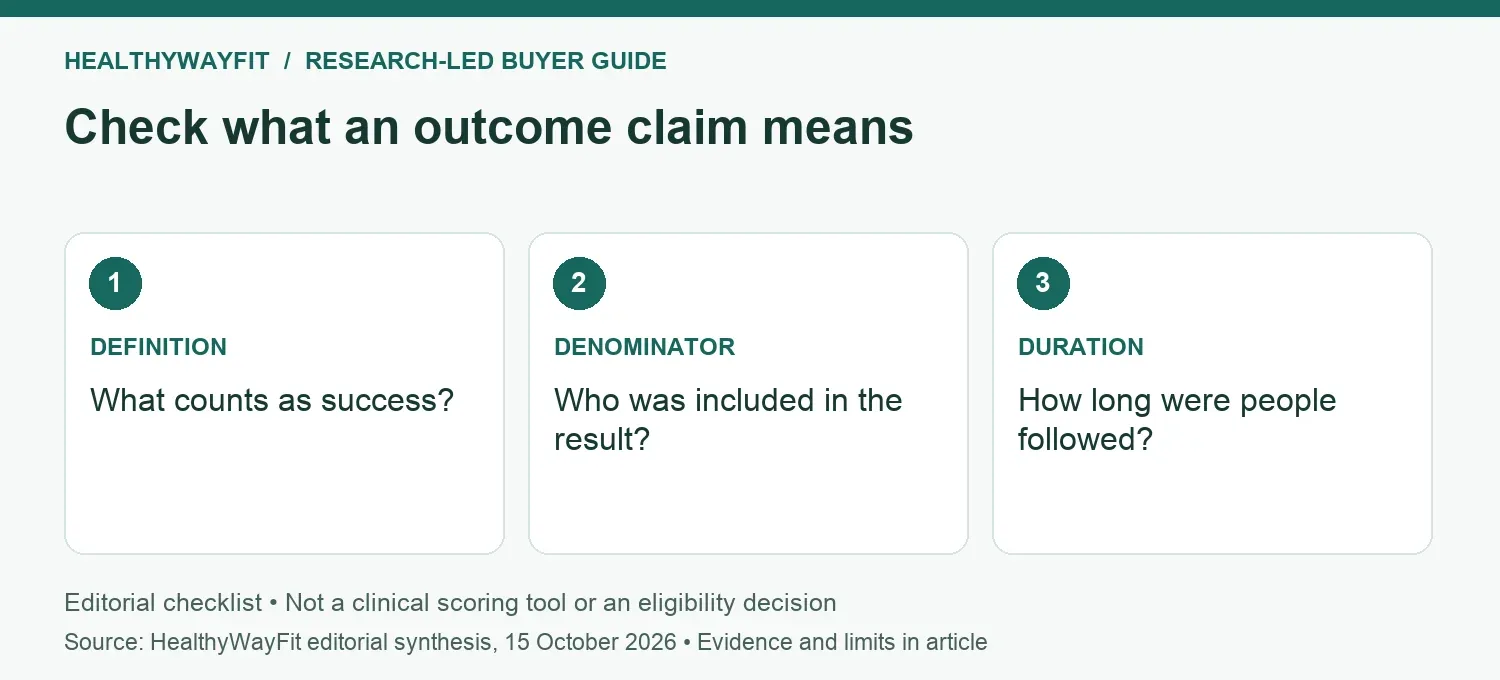
Ask what a quoted success rate measures: lower HbA1c, weight change, less medication, or remission. Request the denominator and follow-up period. Results among selected completers can describe a different population from everyone who enrolled.
The international consensus generally defines type 2 diabetes remission using HbA1c below 6.5%, assessed at least three months after stopping glucose-lowering medication. That definition is not a recommendation to stop treatment, and remission does not mean a permanent cure. Riddle et al., remission consensus, 2021.
For a fuller explanation, read what type 2 diabetes remission means. A provider can discuss goals without promising that you will achieve a particular endpoint.
When should you seek medical care before nutrition coaching?
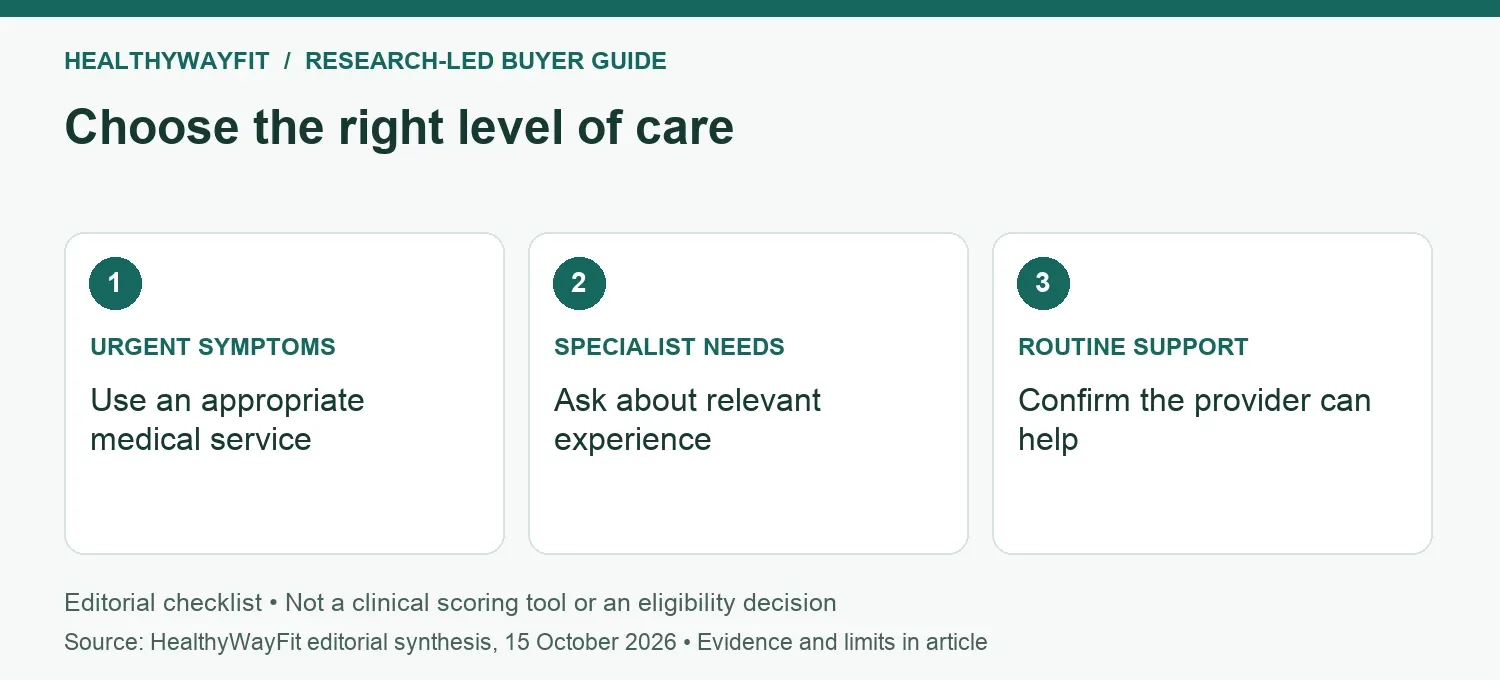
New or worsening symptoms should be assessed through an appropriate medical service rather than deferred until a nutrition appointment. Severe confusion, a seizure, or loss of consciousness can indicate an emergency, including severe low blood glucose. Seek immediate help through your local emergency service. NIDDK’s severe hypoglycemia guidance.
A routine dietitian appointment also needs the right level of experience. Tell the provider before booking if you are pregnant, have kidney disease, have an eating disorder or relevant history, or need support for a child. Ask whether they accept that type of case and how specialist input is arranged.
Do not interpret a referral elsewhere as evidence that the professional is unhelpful. A clear limit on scope can help you find the service you need. Nutrition support may form part of care, while another professional addresses a more urgent or specialized issue.
What should you confirm before you book?
Book when you can identify the professional, the work included, the cost, and the route for follow-up. You should also understand how the service coordinates with medical care. If an important answer is missing, request it before committing to a longer package.
Do I need a CGM before seeing an online dietitian?
Ask the provider what information is necessary for your assessment. A device should have a stated purpose; it should not be an unexplained condition of purchasing nutrition advice. Our CGM guide explains the monitoring concept.
Can the service work with a vegetarian diet?
Ask about the professional’s experience and request an explanation of how they assess food preferences. A claim of vegetarian support is more useful when the provider can describe its assessment, planning, and review process.
Is HealthyWayFit an option to ask about?
You can contact HealthyWayFit to request current information about nutrition support, the qualifications of the professional involved, location eligibility, fees, and follow-up. Confirm those details before deciding whether its offer matches your needs.
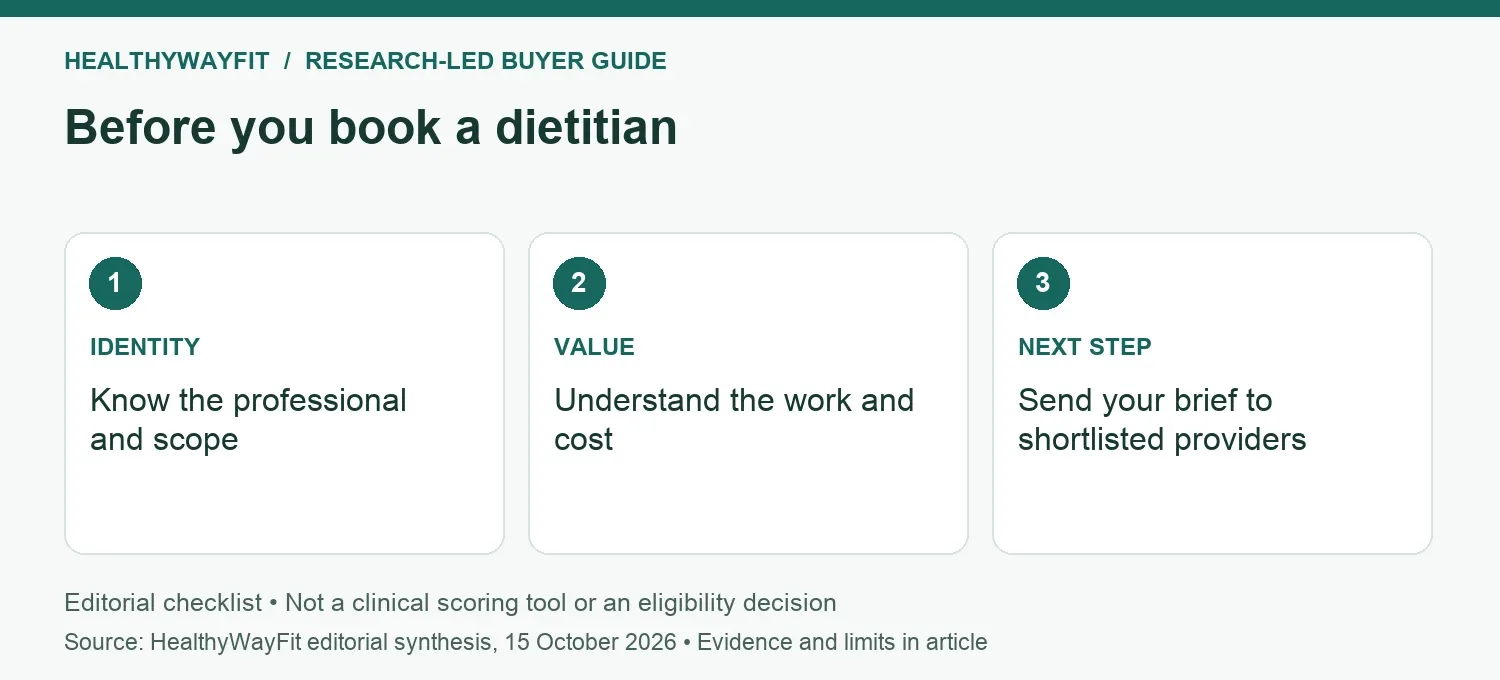
The next useful step is to send the same brief to two providers: your main food challenge, the support you want, and your questions about scope and cost. Choose from the answers you can verify.