

Dragon fruit is increasingly popular in Indian cities and health-conscious households — and if you have diabetes, you may be wondering whether its natural sweetness is a problem. The short answer is: dragon fruit is one of the more diabetes-friendly fruits available. It has a low glycemic index, high fibre content, and compounds that early research suggests may help improve blood sugar control.
Here is what the evidence says.
What Is Dragon Fruit?
Dragon fruit (also called pitaya) is a tropical fruit from several cactus species in the genus Hylocereus. The most common varieties in India are:
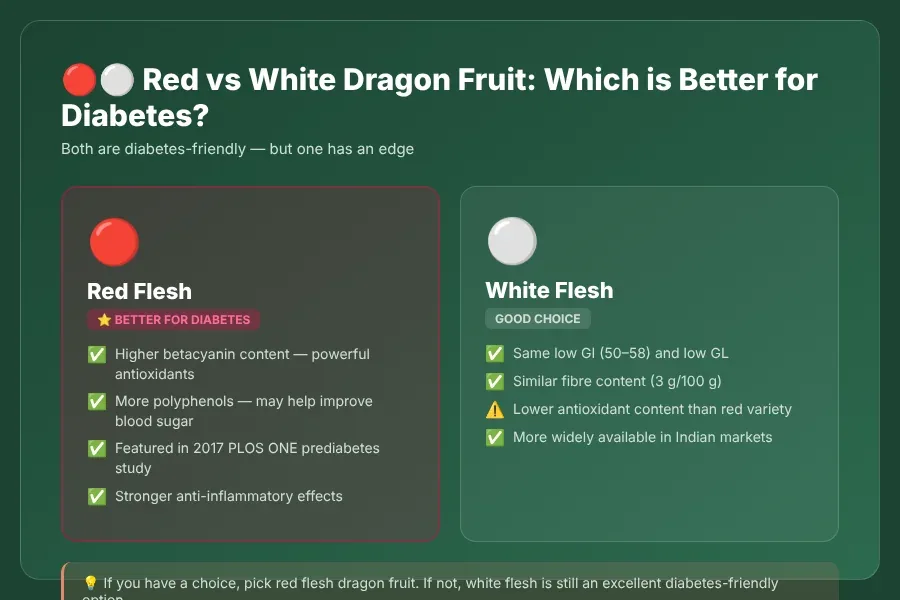
- White flesh dragon fruit — pink/red skin with white flesh
- Red flesh dragon fruit — pink/red skin with red-purple flesh
Both varieties are available in India. The red-flesh variety has attracted more research attention for its higher polyphenol and antioxidant content.
Glycemic Index of Dragon Fruit
Dragon fruit has a low glycemic index of approximately 50–58, placing it comfortably below the high-GI threshold of 70. The glycemic load per standard serving (100–150 g) is low at approximately 4–6.
This low GI is explained by:
- High fibre content (both soluble and insoluble fibre from the seeds)
- Relatively low total sugar content compared to many other tropical fruits
- The presence of polyphenols that may slow carbohydrate digestion
What Does Research Say About Dragon Fruit and Blood Sugar?
Human Studies
A 2017 study published in PLOS ONE investigated the effect of dragon fruit on glycemic control in people with prediabetes and Type 2 diabetes. Key findings:
- Dragon fruit consumption produced a significant improvement in blood sugar levels for people with prediabetes specifically
- Those with higher baseline blood sugar showed greater benefit
- The effect was dose-dependent — higher amounts produced greater improvement
A 2025 review noted that red flesh dragon fruit contains polyphenols and showed positive results in lowering glucose levels in at-risk individuals.
Note: Much of the evidence comes from animal studies and small human trials.
The research is promising, but larger, longer-term randomized controlled trials are needed to confirm the magnitude of benefit.
Animal Studies
Multiple animal studies have found that dragon fruit regenerates pancreatic beta cells (the cells that produce insulin), reduces markers of oxidative stress, and lowers fasting blood glucose. These findings are suggestive but require further human research.
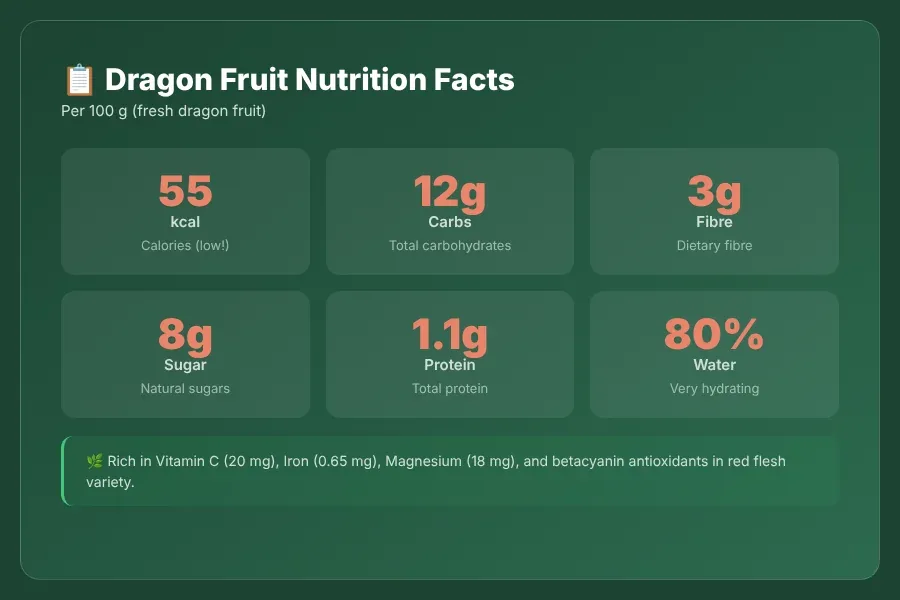
Nutritional Profile of Dragon Fruit (per 100 g)
| Nutrient | Amount |
|---|---|
| Calories | 50–60 kcal |
| Carbohydrates | 11–13 g |
| Fibre | 3 g |
| Natural sugars | 7–9 g |
| Protein | 1.1 g |
| Vitamin C | 20 mg |
| Iron | 0.65 mg |
| Magnesium | 18 mg |
| GI | ~50–58 |
| GL (150 g serving) | ~5–6 |
Benefits of Dragon Fruit for Diabetics
1. Low Glycemic Impact
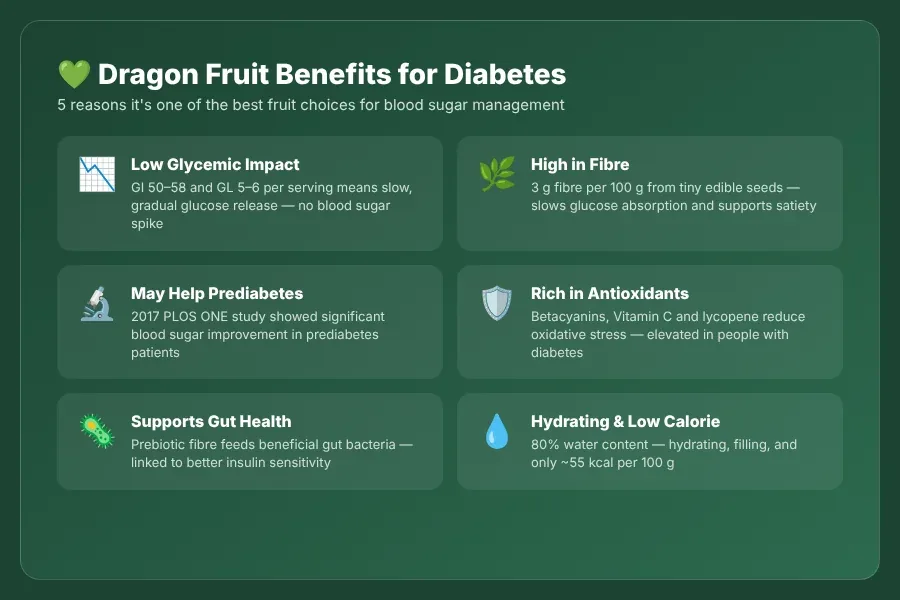
At a GI of ~50–58 and a GL of 5–6 per serving, dragon fruit causes a slow, gradual release of glucose rather than a spike. This makes it safer than high-GI fruits like mango, watermelon, or chikoo for people with diabetes.
2. High in Fibre
Dragon fruit contains about 3 g of fibre per 100 g, largely from the tiny edible seeds throughout its flesh. Fibre slows glucose absorption, supports gut health, and helps with satiety.
3. Rich in Antioxidants
Dragon fruit is high in betacyanins (red flesh variety) — the same class of pigments found in beetroot — as well as Vitamin C and lycopene. Since people with diabetes experience elevated oxidative stress, antioxidant-rich foods like dragon fruit are particularly valuable.
4. Supports Gut Health
The prebiotic fibre in dragon fruit promotes growth of beneficial gut bacteria. Emerging research links gut microbiome health with better insulin sensitivity and metabolic function.
5. Hydrating
Dragon fruit is approximately 80% water, making it hydrating and filling with relatively few calories.
How Much Dragon Fruit Can Diabetics Eat?
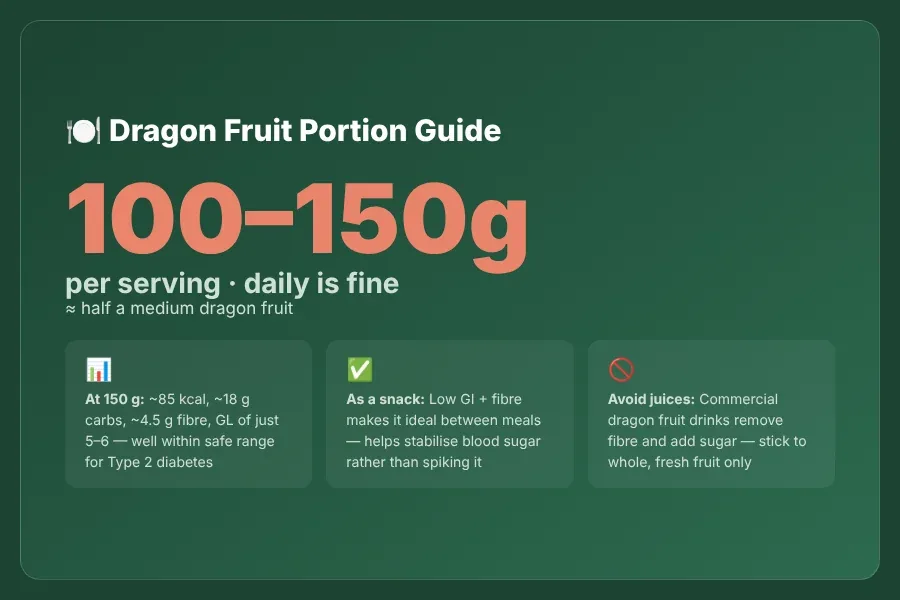
A standard serving of 100–150 g (roughly half a medium dragon fruit) is safe for most people with Type 2 diabetes. This provides approximately 55–90 kcal, 11–19 g carbohydrates, and 3–4.5 g fibre at a low glycemic load.
Do not eat dragon fruit in large quantities at once, as the total carbohydrate load adds up even with a low GI.
Best Ways to Eat Dragon Fruit for Diabetes
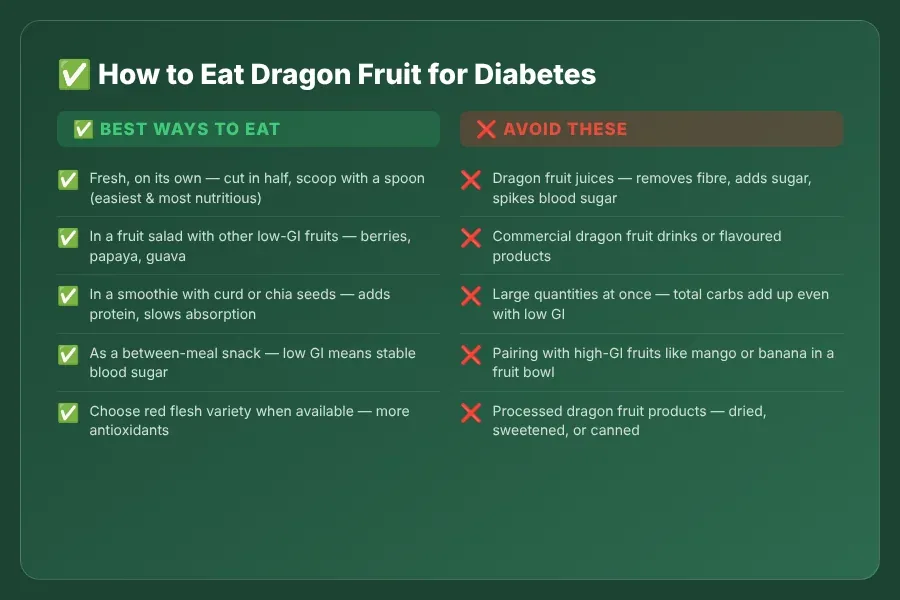
- Fresh, on its own — simply cut in half and scoop out the flesh with a spoon; the easiest and most nutritious way
- In a fruit salad — pair with other low-GI fruits like berries, papaya, or guava; avoid pairing with high-sugar fruits like mango
- In a smoothie — blend with curd (yogurt) or a handful of chia seeds to add protein and further slow absorption
- As a snack between meals — the low GI and fibre make it suitable as a blood-sugar-stable snack
Avoid dragon fruit juices or commercial dragon fruit drinks, which typically remove fibre and add sugar.
Dragon Fruit Compared to Other Fruits for Diabetes
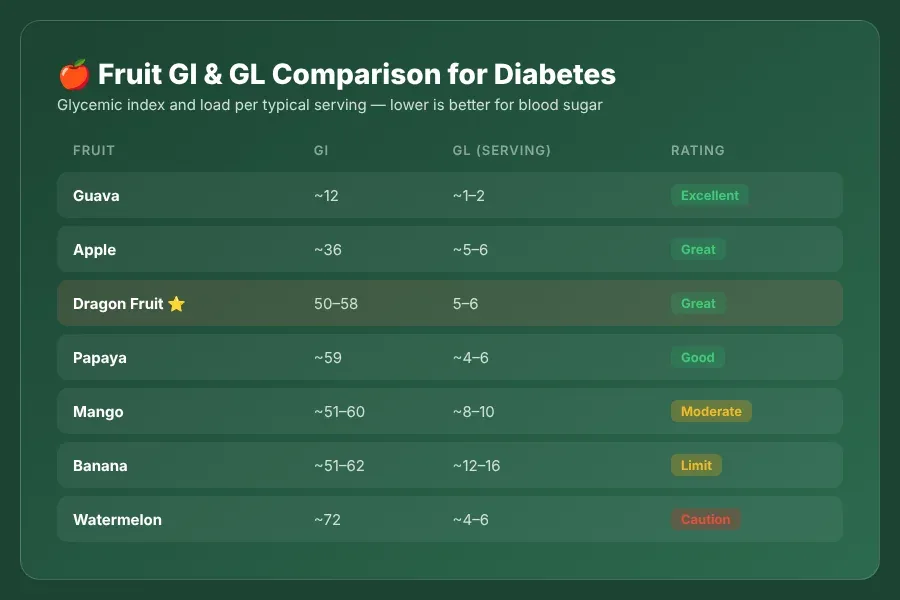
| Fruit | GI | GL (typical serving) | Notes |
|---|---|---|---|
| Dragon fruit | ~50–58 | ~5–6 | Low GI; excellent choice |
| Papaya | ~59 | ~4–6 | Low-moderate; good choice |
| Guava | ~12 | ~1–2 | Excellent; very low GI |
| Apple | ~36 | ~5–6 | Good choice |
| Mango | ~51–60 | ~8–10 | Moderate; portion-controlled |
| Banana | ~51–62 | ~12–16 | Higher GL; limit |
| Watermelon | ~72 | ~4–6 | High GI; small portions |
Dragon fruit compares favourably to most commonly eaten Indian fruits.
Common Questions About Dragon Fruit and Diabetes
Q: Does dragon fruit raise blood sugar?
In normal portions (100–150 g), dragon fruit is unlikely to cause a significant blood sugar spike. Its low GI and high fibre content mean glucose is released slowly. Some studies suggest it may actually help lower blood sugar in prediabetes.
Q: Which colour of dragon fruit is better for diabetes — white or red?
Red flesh dragon fruit has higher levels of betacyanins and polyphenols, which have greater antioxidant activity and may offer more metabolic benefit. If you have a choice, red flesh dragon fruit is the better option.
Q: Can diabetics eat dragon fruit every day?
Yes, in a serving of 100–150 g, dragon fruit can be eaten daily as part of a balanced diet for most people with Type 2 diabetes. Monitor your own blood glucose response, as individual reactions vary.
Q: Is dragon fruit available and affordable in India?
Dragon fruit is now grown commercially in Gujarat, Maharashtra, Karnataka, and Tamil Nadu, and is increasingly available in major cities. If cost is a concern, guava is a similarly excellent low-GI fruit that is far cheaper and more widely available.
The Bottom Line
Dragon fruit is one of the better fruit choices for people with diabetes. Its low glycemic index (~50–58), high fibre content, and rich antioxidant profile make it a blood-sugar-friendly option. Early research — particularly for people with prediabetes — suggests it may also actively help improve blood sugar control. Eat 100–150 g at a time, choose whole fruit over juice, and pair it with a meal or protein-rich snack for the best blood sugar outcome.
References
- Tran HT, et al. (2017). Effect of dragon fruit on glycemic control in prediabetes and type 2 diabetes. PLOS ONE. https://pmc.ncbi.nlm.nih.gov/articles/PMC5590977/
- HerbalGram. Red Dragon Fruit May Reduce Risk of Type 2 Diabetes. 2025. https://www.herbalgram.org/resources/herbclip/issues/2025/issue-775/red-dragon-fruit-diabetes/
- WebMD. Dragon Fruit: Uses, Side Effects, and More. https://www.webmd.com/vitamins/ai/ingredientmono-1580/dragon-fruit
- Apollo 247. Is Dragon Fruit Suitable for Diabetes Management? https://www.apollo247.com/blog/article/is-dragon-fruit-suitable-for-diabetes-management