By Kirti, Founder & Serial Entrepreneur, HealthyWayFit
US research review, checked 15 October 2026. We have not used Omada as members or audited a representative sample of customer reviews. HealthyWayFit sells lifestyle support and has a commercial interest in this subject.
Omada for Diabetes is worth investigating if you can access it through a participating employer or health plan and want help with diabetes self-management between medical visits. Confirm your eligibility and exact benefit first. Its research supports a qualified discussion about support and monitoring, rather than a promise of remission or a replacement for every aspect of clinical care.
This article is for informational purposes only and does not constitute medical advice. Always consult a qualified healthcare professional before making changes to your diet, exercise routine or medication.
What is our Omada diabetes review verdict?
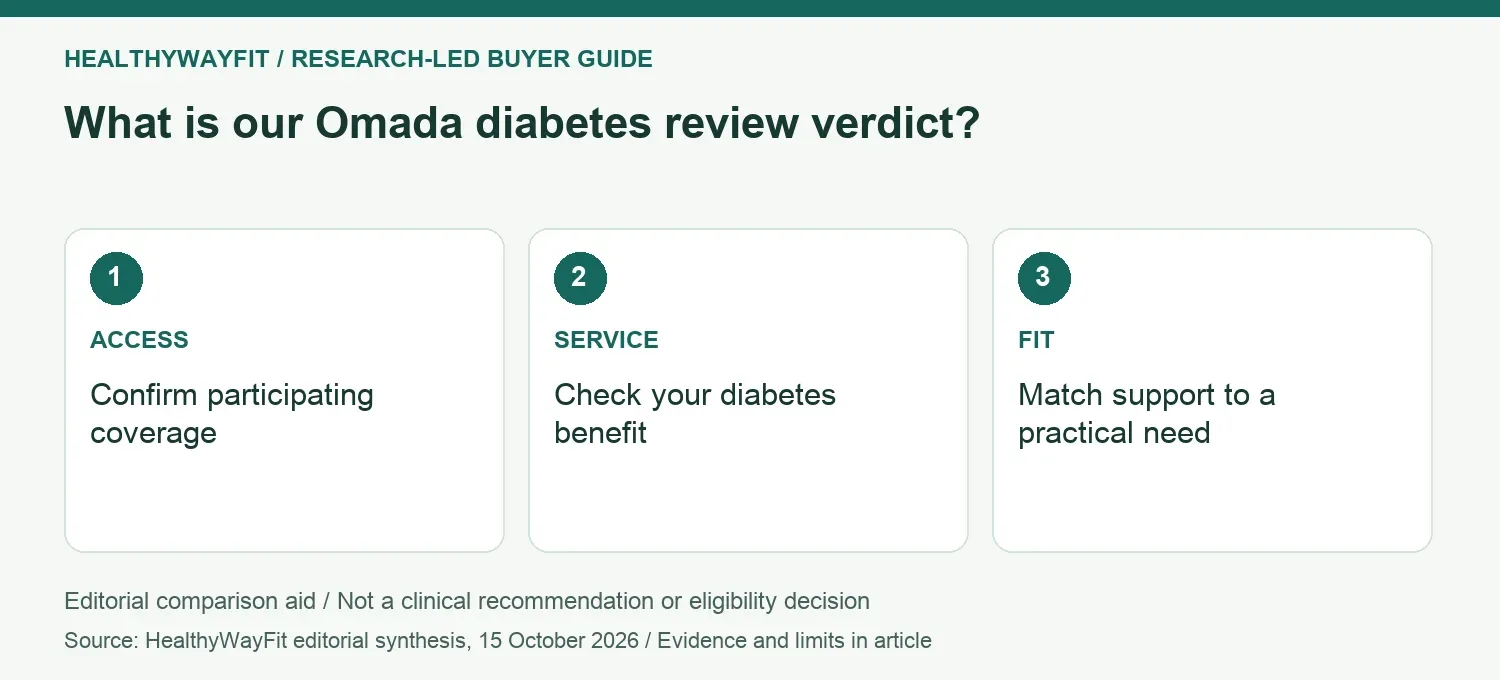
Omada is a credible option to investigate for covered self-management support, but eligibility, benefit details and your particular care needs determine whether it fits. This desk review does not establish a personal success rate or a consumer star rating.
| Buyer question | Assessment |
|---|---|
| What are you joining? | Check that it is the diabetes service, not a different Omada track |
| Can you access it? | Clinical eligibility and participating coverage matter |
| What support is described? | Coaching, diabetes education, connected monitoring and community features |
| Does research prove remission? | The trial reviewed evaluates glucose outcomes, not a universal remission promise |
| What remains personal? | Your devices, costs, support arrangements and clinical responsibilities |
Start with access, then evaluate the service. An attractive feature is irrelevant if it is outside your actual benefit.
What does Omada for Diabetes provide?
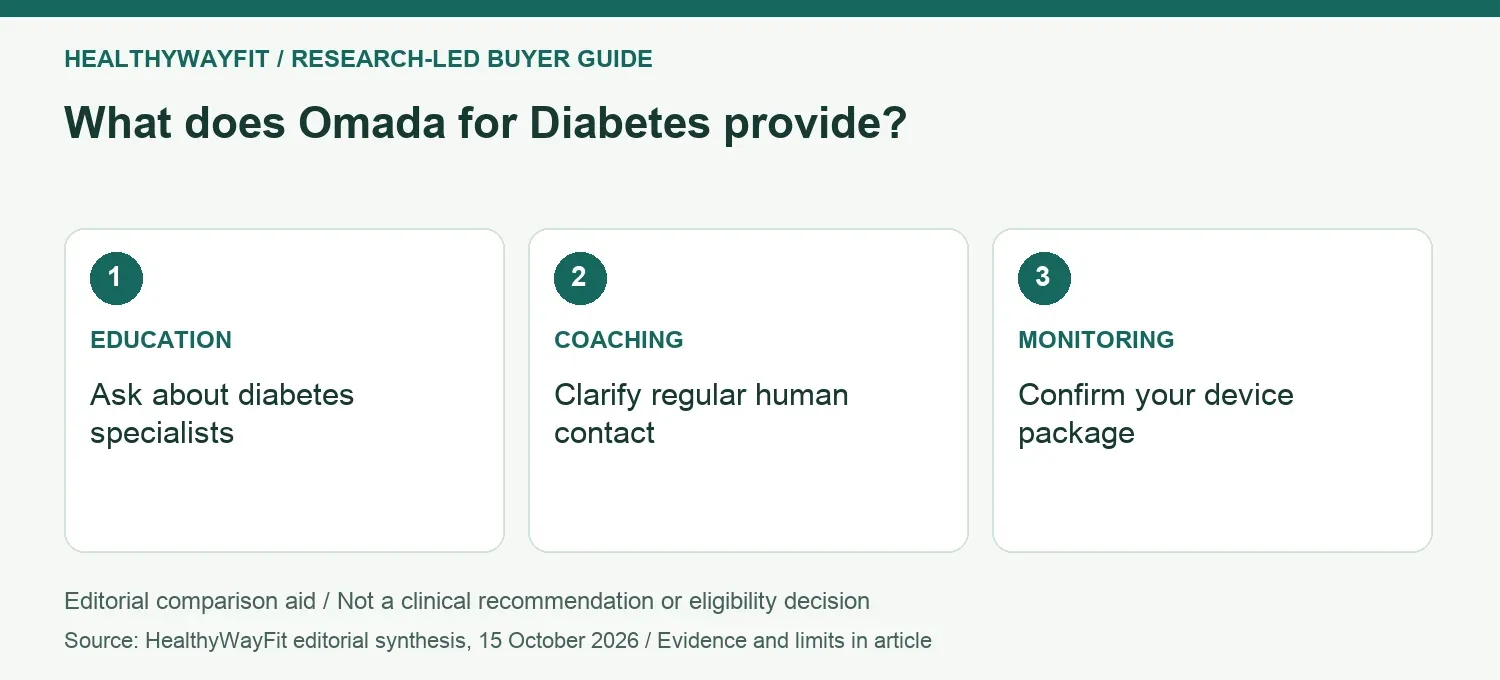
The official diabetes page describes support from Certified Diabetes Care and Education Specialists and professional health coaches, alongside connected devices and peer communities. Confirm which elements are available to you.
Ask how you meet or message your team, whether a regular coach follows your progress, and how the program coordinates with your existing clinician. “Digital care” can include different combinations of education, monitoring and professional support.
If you primarily want to understand professional roles, our online diabetes coach guide explains why coaching credentials, diabetes education and prescribing responsibilities should be checked separately.
Who can join through an employer or health plan?
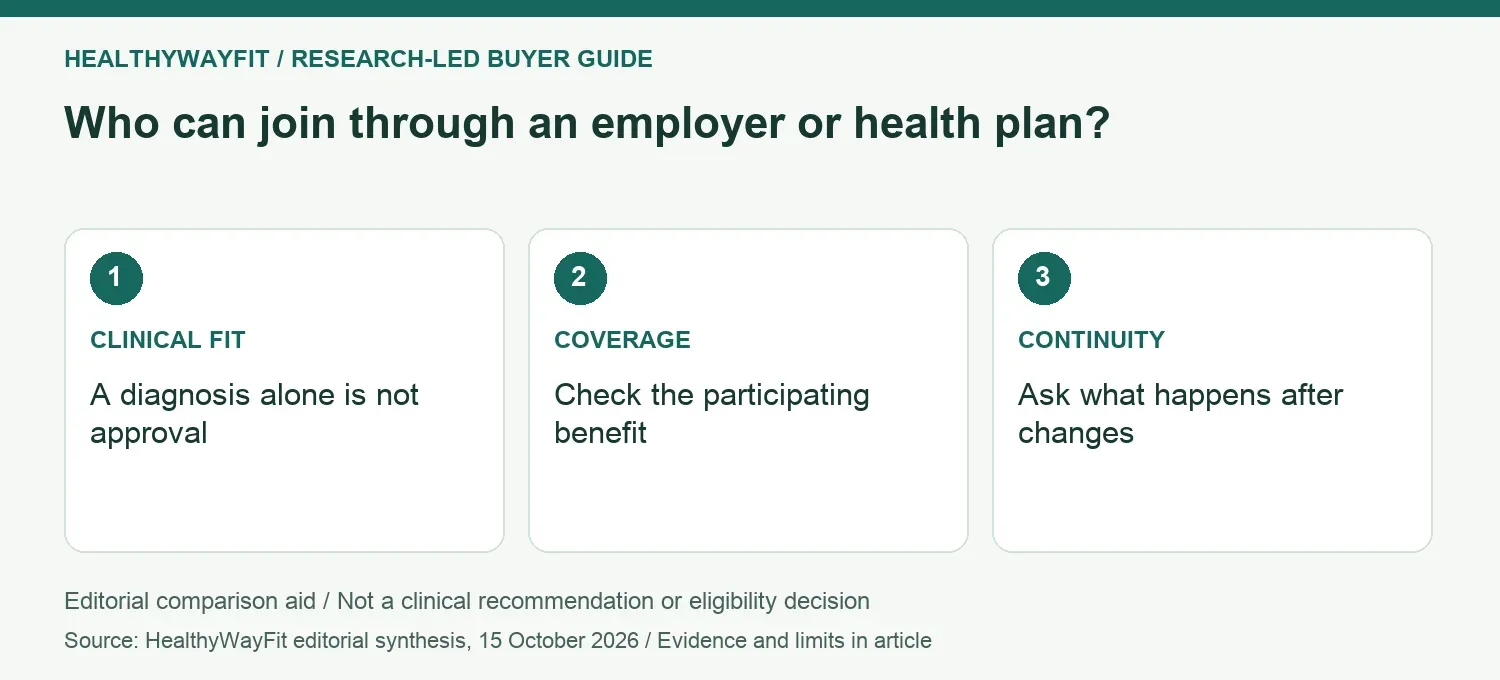
Omada’s eligibility help page says both clinical eligibility and coverage through an employer or health plan are required. Having diabetes alone does not confirm access.
Use your organization’s official enrollment route and check the specific program offered. Ask whether dependents can apply, whether your plan type qualifies and how a change of employment or insurance affects continued participation.
An invitation is a reason to check, not proof that every service or device is included. Keep your benefit confirmation so you understand what was approved. We have not established a general self-pay route for people without participating coverage.
What did the 2026 randomized trial find?
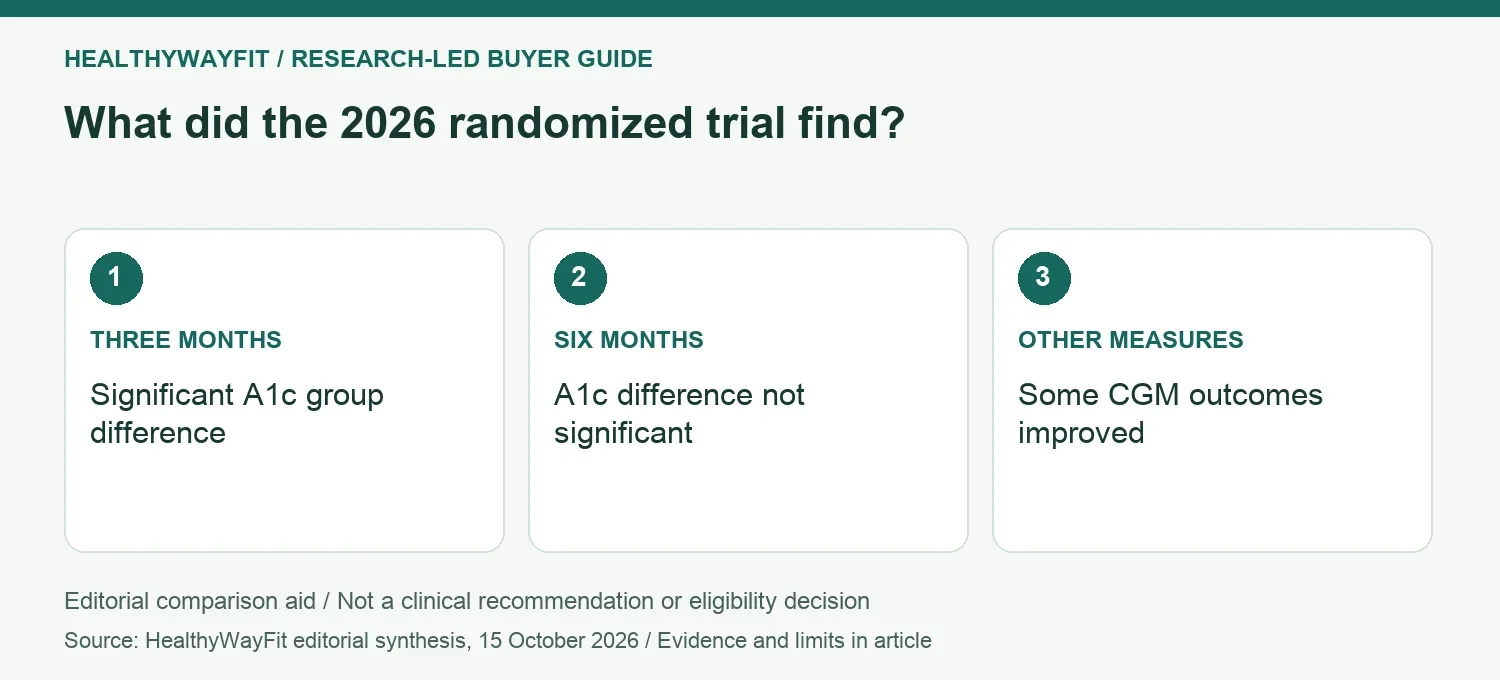
A 2026 randomized trial compared digital diabetes education and support plus CGM with usual care in 100 adults with type 2 diabetes and elevated HbA1c. Participants using mealtime bolus insulin were excluded. The study had company funding and industry-affiliated authors.
The between-group HbA1c difference favored the intervention and reached statistical significance at three months, but did not reach significance at six months. Several CGM measures improved significantly at six months. These results should be reported together rather than selecting only the most favorable endpoint.
The trial does not establish permanent remission, superiority to another commercial program or the outcome for every eligible member. It evaluates a particular combined service in a defined population; a different benefit package may not reproduce that intervention.
How should you interpret older studies and satisfaction claims?
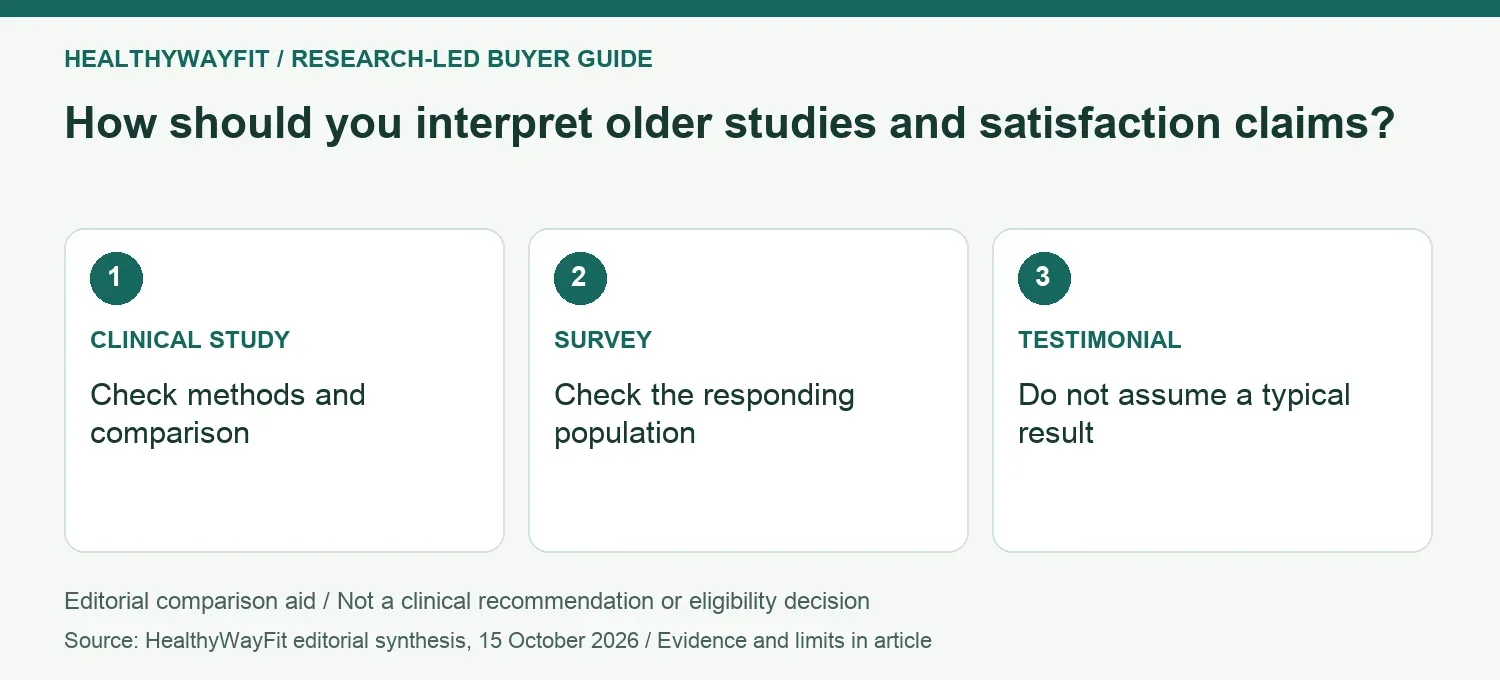
Separate clinical research, member surveys and marketing testimonials. They answer different questions and can include different subsets of participants.
A 2024 retrospective cohort study examined A1c in commercially insured Omada diabetes members. Observational evidence can describe changes over time, but it cannot isolate the program’s contribution as confidently as a well-designed randomized comparison.
Provider-published satisfaction figures are not independent review-platform ratings. We have not verified survey representativeness or compiled complaint rates. If member experience matters to you, examine recent, specific descriptions of coach continuity, device logistics and problem resolution, while recognizing that individual reviews can be unrepresentative.
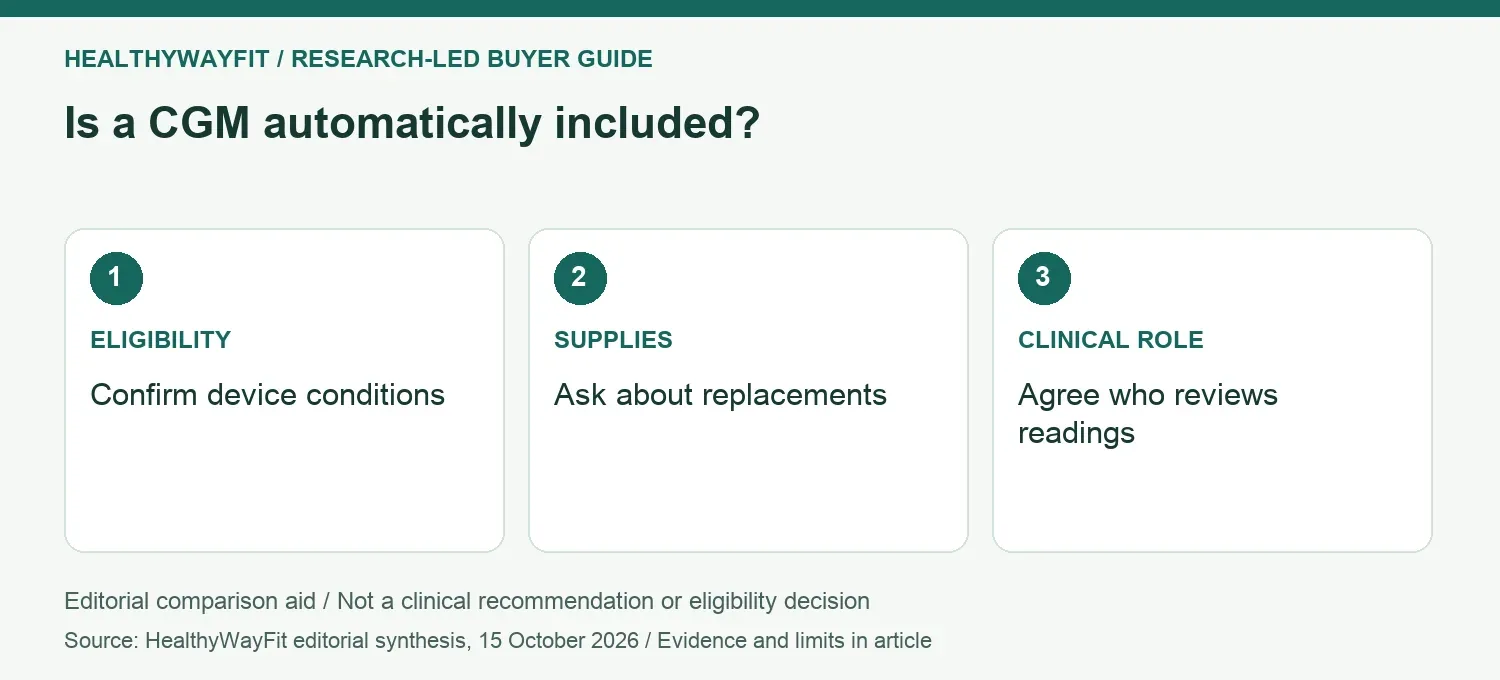
Is a CGM automatically included?
Do not assume that every Omada participant receives the same device or sensor supply. Confirm the device, prescription requirements, compatibility and coverage conditions for your exact enrollment.
The official diabetes page places conditions on its no-cost CGM offer, including payer exclusions. Ask about replacement sensors, shipping, technical support and what happens when eligibility ends. Keep the clinical purpose of monitoring separate from the appeal of receiving a device.
Our CGM guide provides background questions. Ask your clinician whether the proposed monitoring is appropriate and who will help interpret readings. A sensor is one part of care, not a stand-alone outcome guarantee.
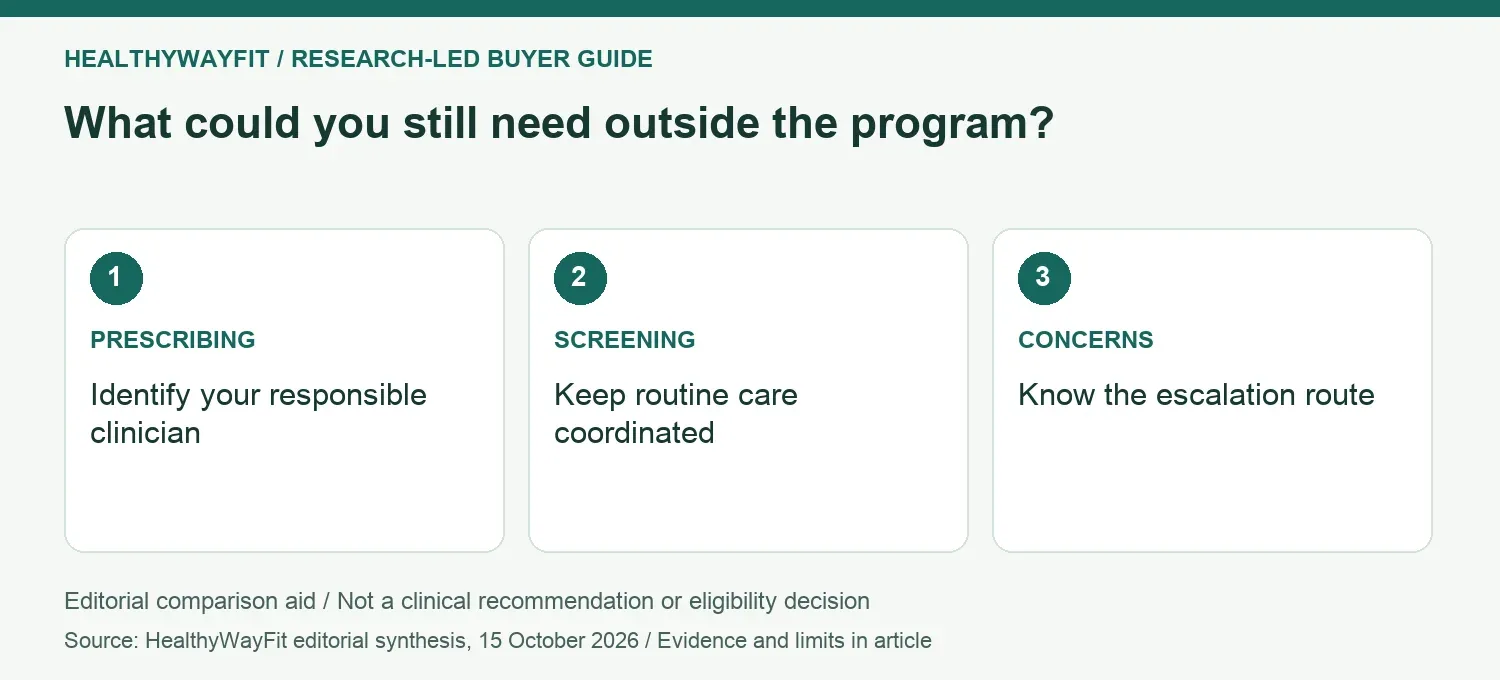
What could you still need outside the program?
Clarify which medical services remain with your own clinicians. Education and coaching do not automatically include comprehensive prescribing, urgent assessment or all routine screening.
Ask who handles medication changes, orders laboratory tests and communicates concerns to your treating team. If the program identifies an issue, find out whether it offers a clinical appointment, sends a recommendation to your clinician or asks you to arrange care yourself.
Keep your existing appointments until you have a clear coordinated plan. Do not stop treatment because you enrolled in a support program. Choose a service whose boundaries you understand, particularly when your health needs are complex.
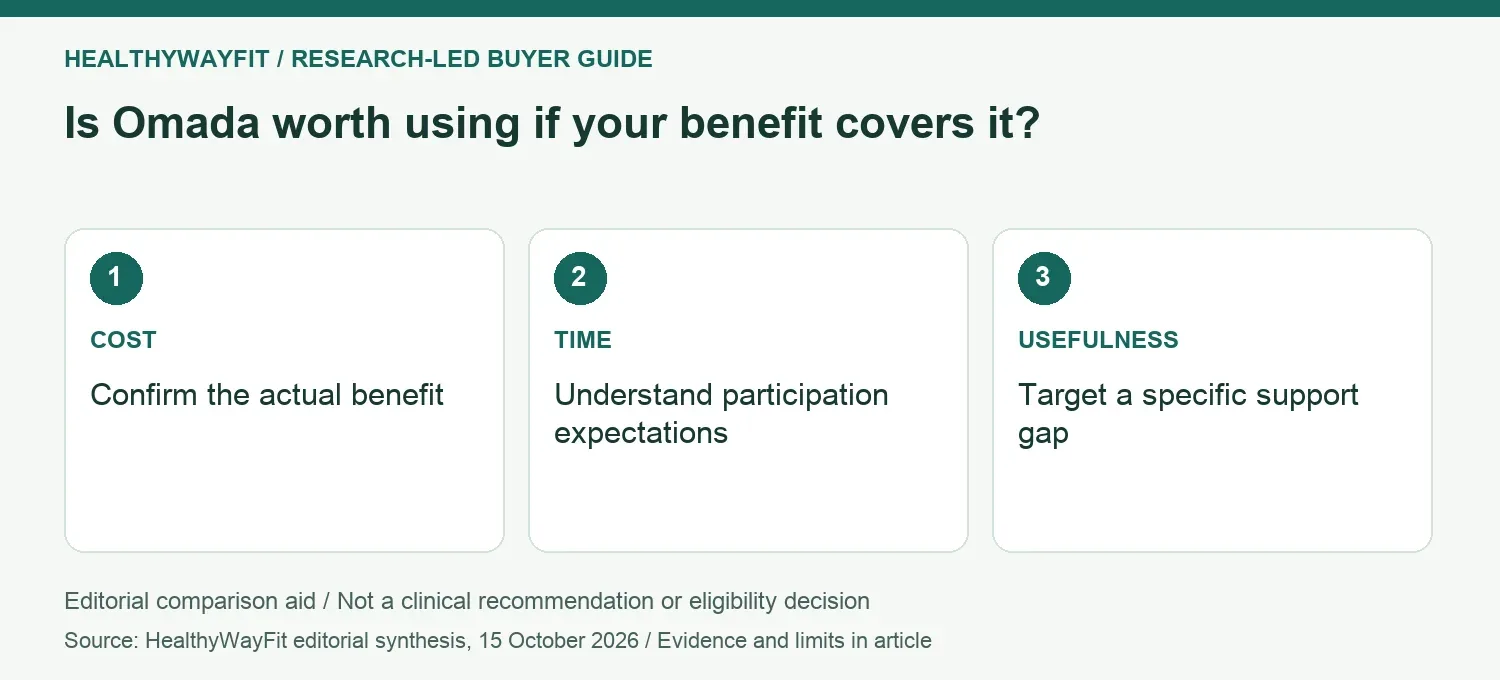
Is Omada worth using if your benefit covers it?
It may be worth using when the support matches a problem you want help solving and the time commitment is manageable. Coverage is a reason to assess the benefit before paying for a separate service, rather than proof of universal fit.
Ask what participation is expected, how reminders work and whether there are engagement requirements attached to your benefit. Confirm what, if anything, you pay for the program, devices and other medical services. “Covered” should not be interpreted as confirmation that every related health expense disappears.
Consider practical fit too: phone access, accessibility needs, preferred communication style and whether regular food or activity logging feels sustainable. Ask how the team adapts support if you struggle with the process.
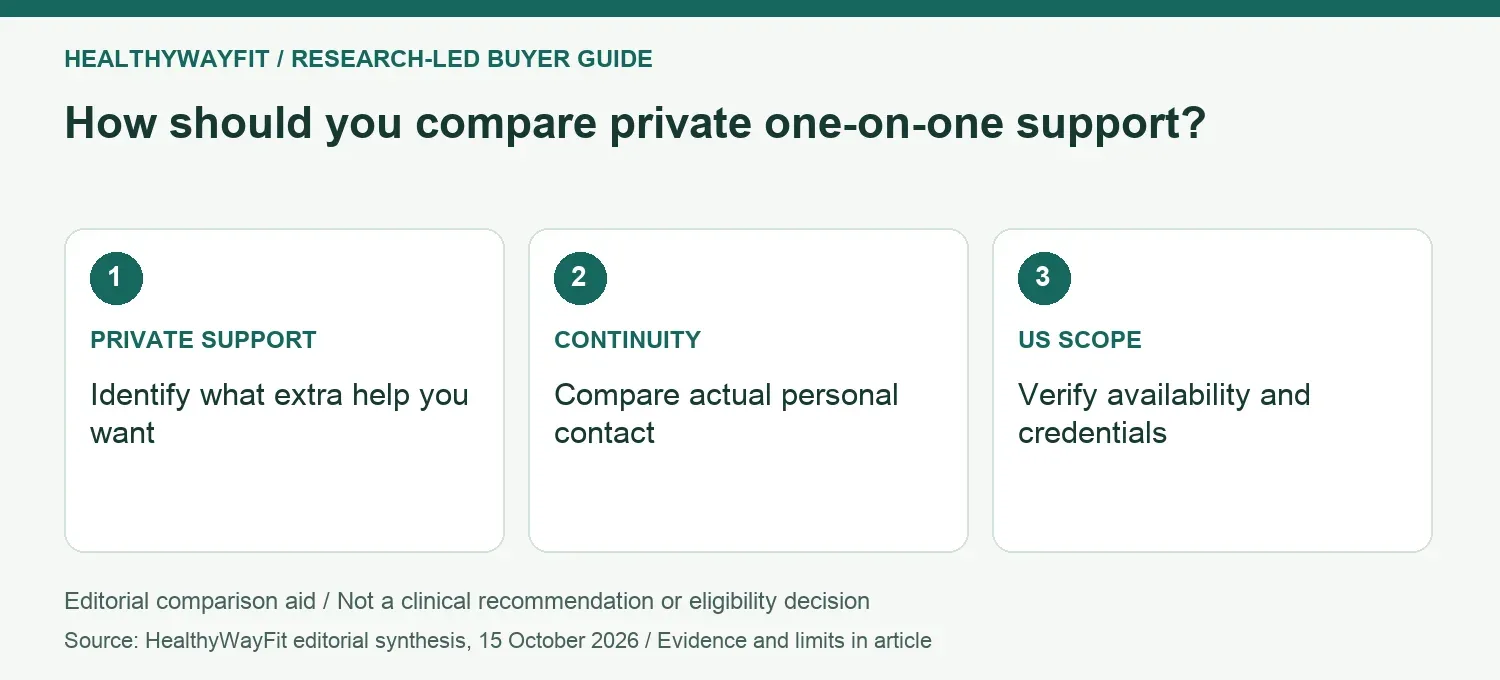
How should you compare private one-on-one support?
Compare private support when you want a particular relationship or service beyond what your benefit provides. Identify the gap first, so you do not pay twice for similar help. If you are also considering Noom, check our Noom for diabetes program review. If you are deciding which part of a clinical program you need to replace, our Virta alternatives guide compares different care roles.
HealthyWayFit describes a private, one-on-one program with senior professionals, not interns, tailored to food preferences, lifestyle and individual challenges. Its model includes weekly calls and daily check-ins. US enrollment, fees and the qualifications and lawful scope of any medical professional must be confirmed before treating it as an available clinical option.
Omada also describes qualified human support; this is not a comparison between “people” and “just an app.” Ask both services about actual individual contact, continuity and clinical coordination. No head-to-head outcome advantage is established here.
What should you check before enrolling?
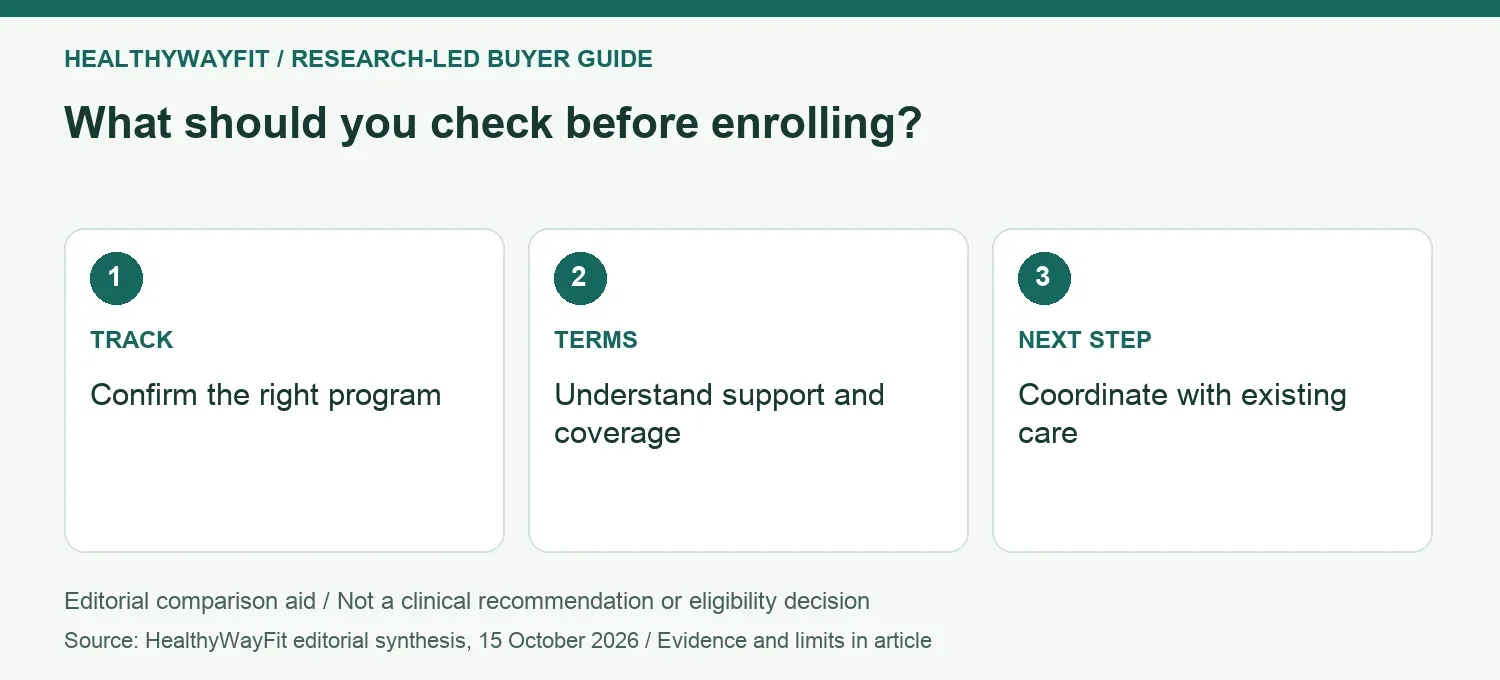
Confirm the diabetes track, your eligibility, your benefit costs, the support schedule and the responsibilities of each clinical team. Then decide whether the service addresses a specific need in your current care. If Level2 is another benefit option, compare our Level2 diabetes care review.
Is this an independent member-rating audit? No. It is a disclosed review of official service information and primary research, without invented personal experience or ratings.
Does the trial mean everyone should get a CGM? No. The study population and intervention were specific; personal monitoring decisions belong in clinical assessment.
Where can I compare other approaches? Our US online diabetes program guide explains different service categories. You can also ask HealthyWayFit about private support, with US availability and scope confirmed first.