By Kirti, Founder & Serial Entrepreneur, HealthyWayFit
Updated 14 October 2026
When comparing a diabetes reversal center near me, ask each provider for the same information: the assigned doctor, included services, total rupee cost, appointment access and follow-up arrangements. In India, a branch’s facilities and package terms may differ from the wider organisation’s website. Compare the service available to you before paying.
You may already have a shortlist but find the offers difficult to compare. One includes devices, another emphasises consultations and another sells a longer coaching package. A clear service comparison helps you understand what each price buys.
This guide focuses on comparing shortlisted centres and maintaining care over time. It does not claim to identify your nearest branch or establish that any provider guarantees type 2 diabetes remission.
This article is for informational purposes only and does not constitute medical advice. Always consult a qualified healthcare professional before making changes to your diet, exercise routine or medication.
1. How do you compare centres fairly?
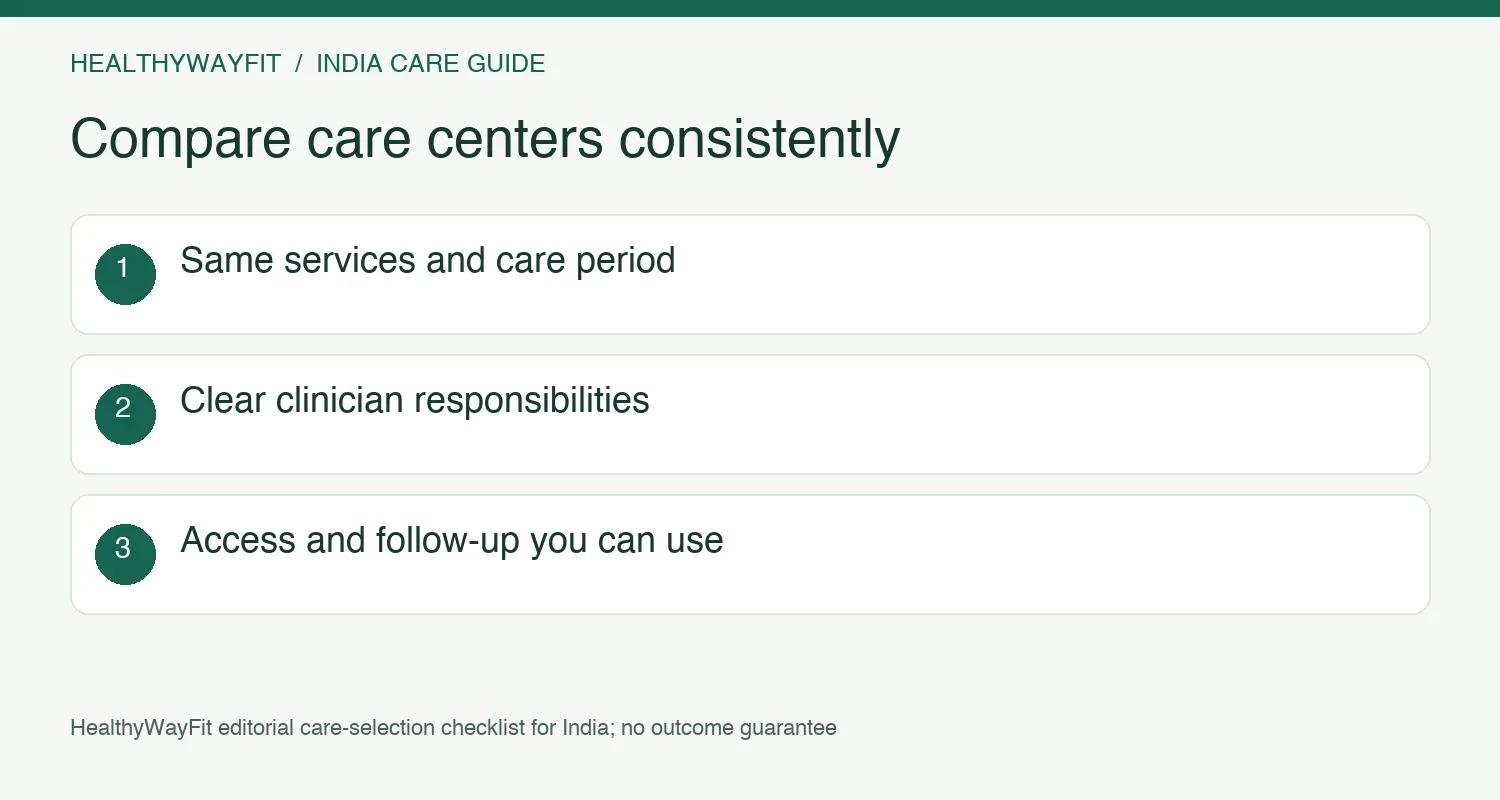
Compare the same services over the same period, with clear responsibilities and costs. Avoid deciding from a headline fee or a long feature list alone. Ask each centre to identify what you would receive, which professional delivers it and what happens if you need care beyond the package.
Start with your clinical and practical needs rather than the programme with the most impressive name. Ask your treating clinician which gaps should be addressed through local care, specialist review or continuing support.
Separate assessment from enrolment. A provider should explain when suitability is checked, who makes that decision and whether you can book an initial consultation without committing to a long programme.
If two offers seem similar, compare the details that affect use: individual contact, attendance requirements, team continuity, report access and charges for additional appointments.
Price is one part of the decision. A package is useful only if it provides support you need and can access consistently.
2. What should your service comparison include?
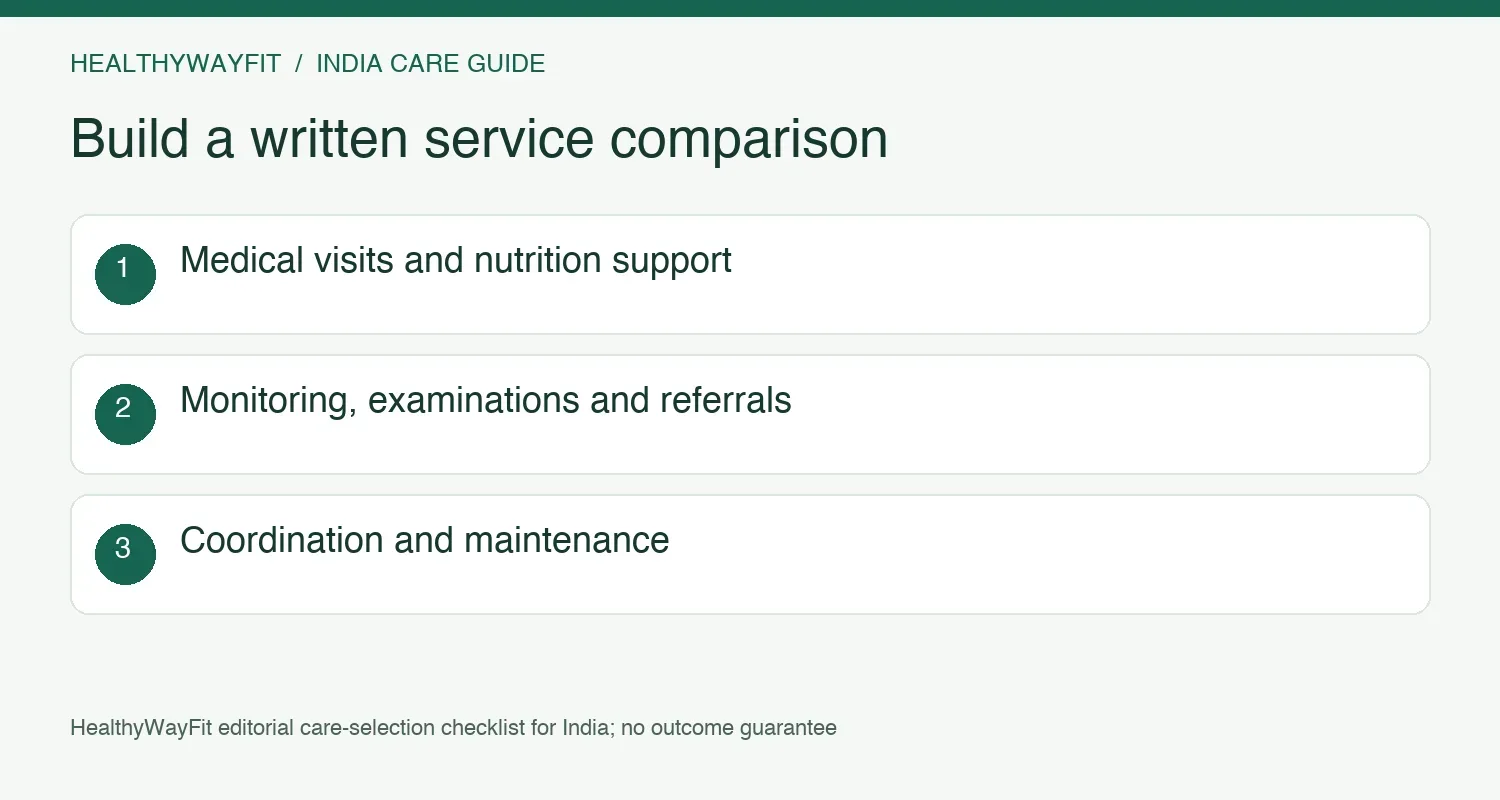
Make a written comparison of medical appointments, nutrition support, monitoring, referrals and maintenance. Ask whether each element is included, optional or charged separately. The centre should explain which services occur at your branch and which are delivered remotely or through another provider.
| Service | Question for each centre |
|---|---|
| Doctor assessment | Who sees me and what does the visit include? |
| Follow-up | How are review appointments arranged and charged? |
| Nutrition | Who develops the individual plan and answers questions? |
| Coaching | Is contact individual, group-based, automated or mixed? |
| Monitoring | What information is collected and who reviews it? |
| Examinations and referrals | What happens locally and what happens elsewhere? |
| Maintenance | What support continues after the core programme? |
Add a column for your own priorities. Someone who wants regular conversations with a dietitian may value a different package from someone whose main need is a medical second opinion.
Ask for a written description rather than reconstructing the offer from several sales messages. Our coaching programme guide can help you assess the ongoing-support part.
3. How do you check a diabetes reversal center near me?
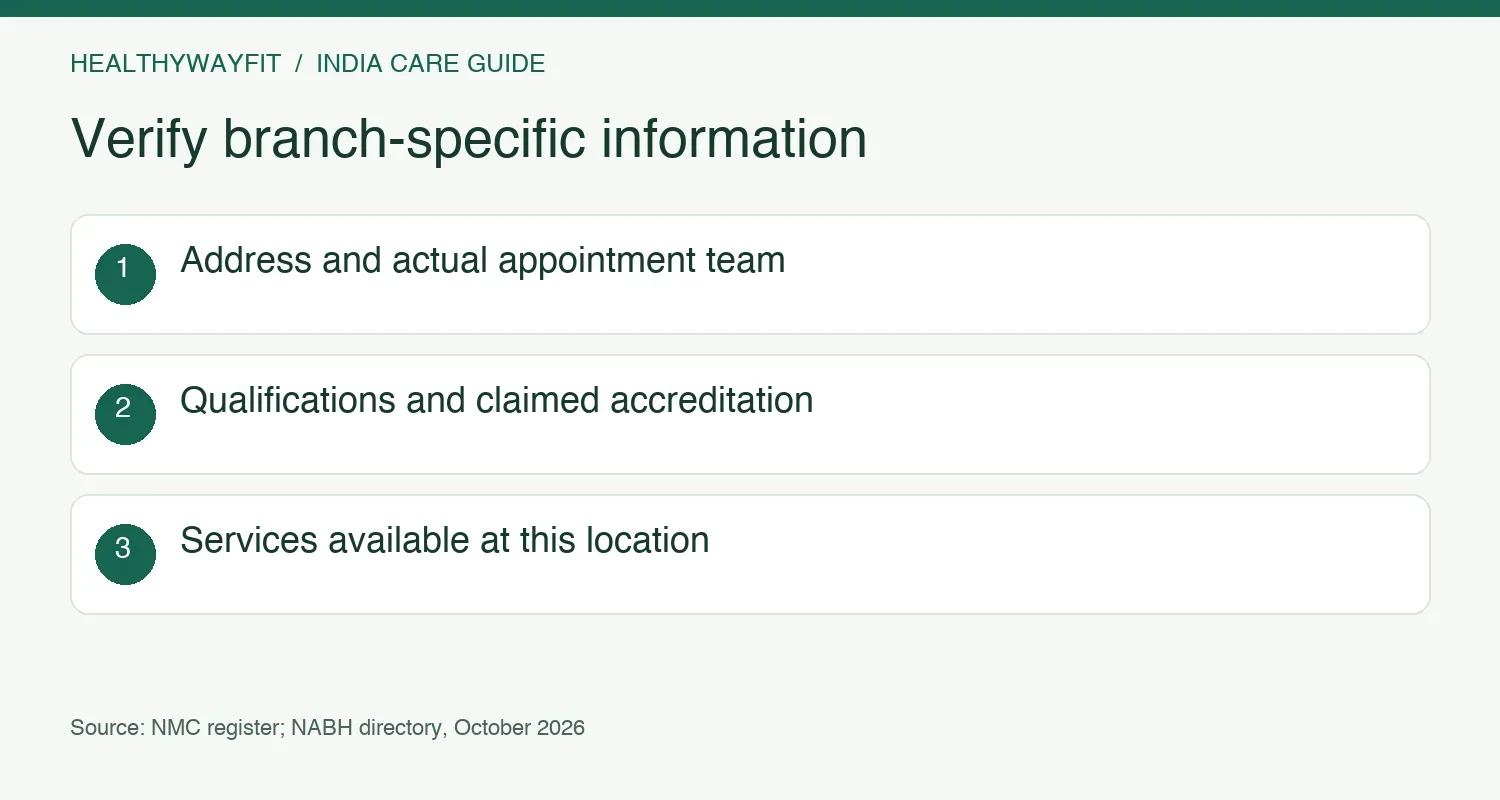
Verify the specific branch, treating professional and service rather than relying only on the organisation’s general reputation. Confirm the address, appointment team, opening arrangements and claimed credentials directly. If accreditation is advertised, check the listed organisation and programme through the relevant official directory.
Ask for the treating doctor’s registration details. The NMC registration resource and the relevant State Medical Council can help you check them.
For a claimed NABH status, use the NABH organisation directory. Check the scope and status; the directory warns that migration may leave information incomplete. Do not equate a certificate with a guaranteed programme outcome.
Read reviews for the same location and service, and use them mainly to identify questions about access or communication. A star rating does not explain medical suitability or verify remission claims.
If the address or appointment details conflict across listings, contact the branch before travelling. Save the confirmed information and ask whether the advertised professional will personally see you.
4. How do you calculate the full cost in rupees?
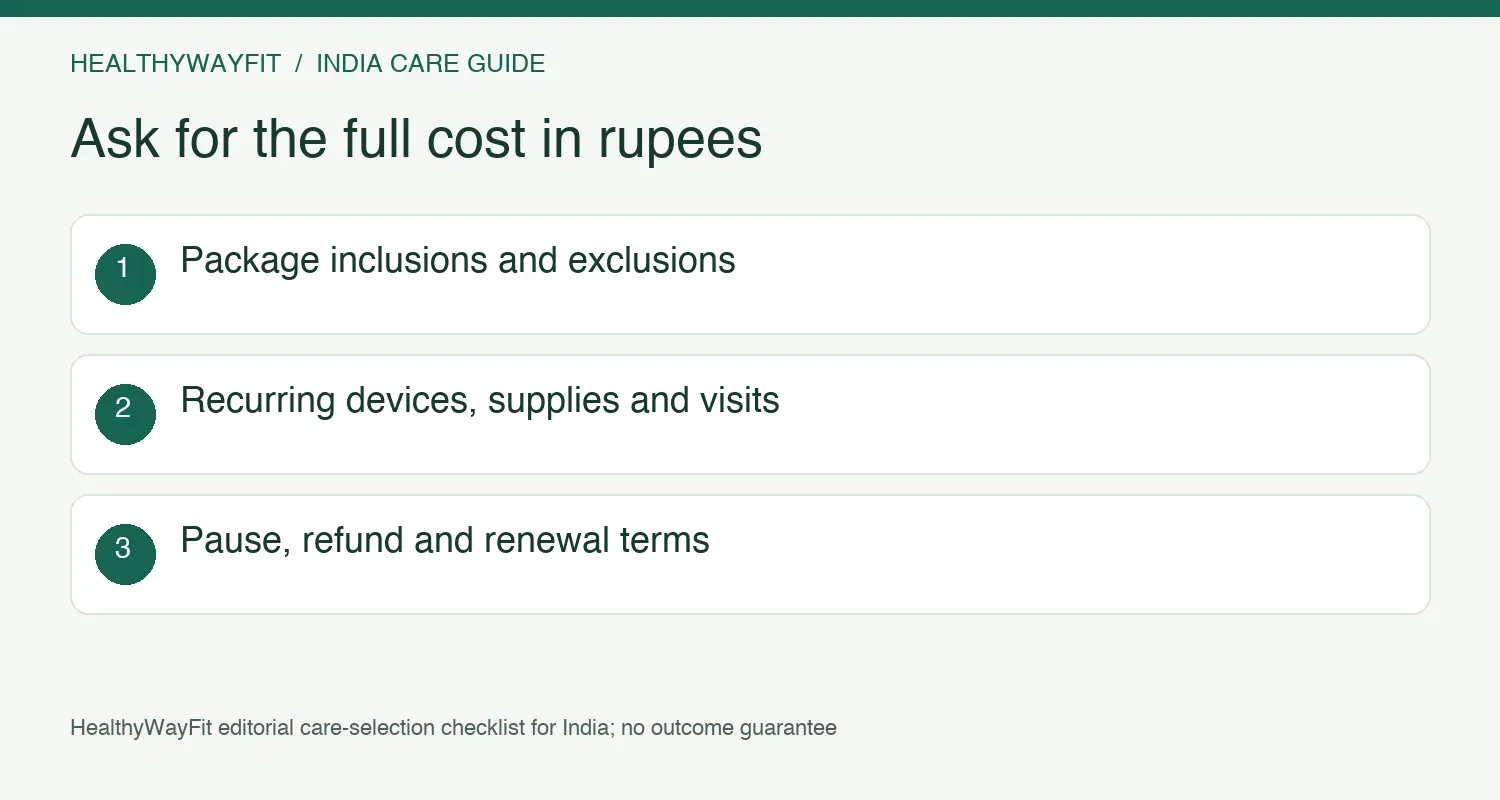
Ask for the complete cost over the proposed care period, including recurring charges. Identify which fees are fixed, which depend on clinical need and which are optional. Do not assume that consultation, tests, medicines or replacement monitoring supplies are included because the offer is described as comprehensive.
Request details for:
- Initial and follow-up medical consultations.
- Nutrition and coaching appointments.
- Laboratory tests and interpretation.
- Devices, replacement sensors, strips or other supplies.
- Medicines and outside referrals.
- Travel or repeated in-person attendance.
- Maintenance and automatic renewal.
Ask whether the initial quote changes after clinical assessment. If it does, request the final written offer before enrolling.
Read the pause, cancellation and refund terms. Clarify what happens if you become ill, move away or the doctor decides that another care setting is more appropriate.
For insurance, ask your insurer about the exact service and provider. A centre may accept insurance for one type of care without its lifestyle package being reimbursable. Keep the written response and relevant billing documents.
5. How should you assess monitoring devices in a package?
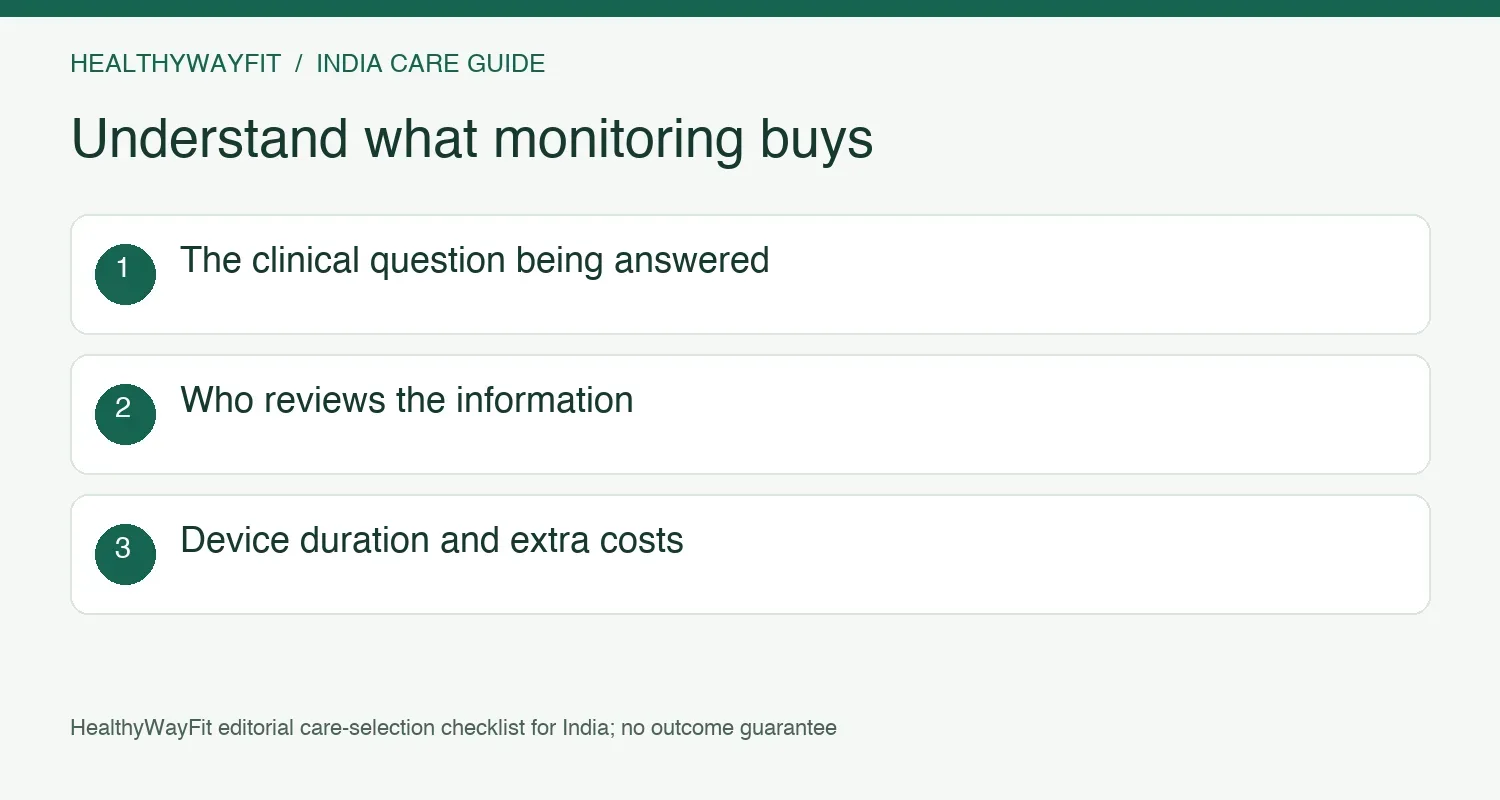
Ask what clinical or practical question a device is intended to answer, who reviews its information and how long you would use it. Technology should have a defined role in the care plan. An included sensor or connected scale is a package feature, not evidence that the programme is suitable or clinically superior.
If a CGM is proposed, ask the treating clinician whether it is appropriate for you and how readings will be interpreted. Check whether the quote includes the whole proposed period of use or only an initial sensor.
For any device, ask about setup support, compatible phones, replacements and what happens if it stops working. Find out whether you can obtain and share your own records.
Ask what the provider does when data needs clinical attention. A chart in an app should connect to an understandable review process, rather than leaving you to decide treatment from the display.
Compare the support around the technology. A service with fewer devices may still address your needs, while one with more technology may create costs or tasks you cannot manage.
6. How do you compare contact and continuity?
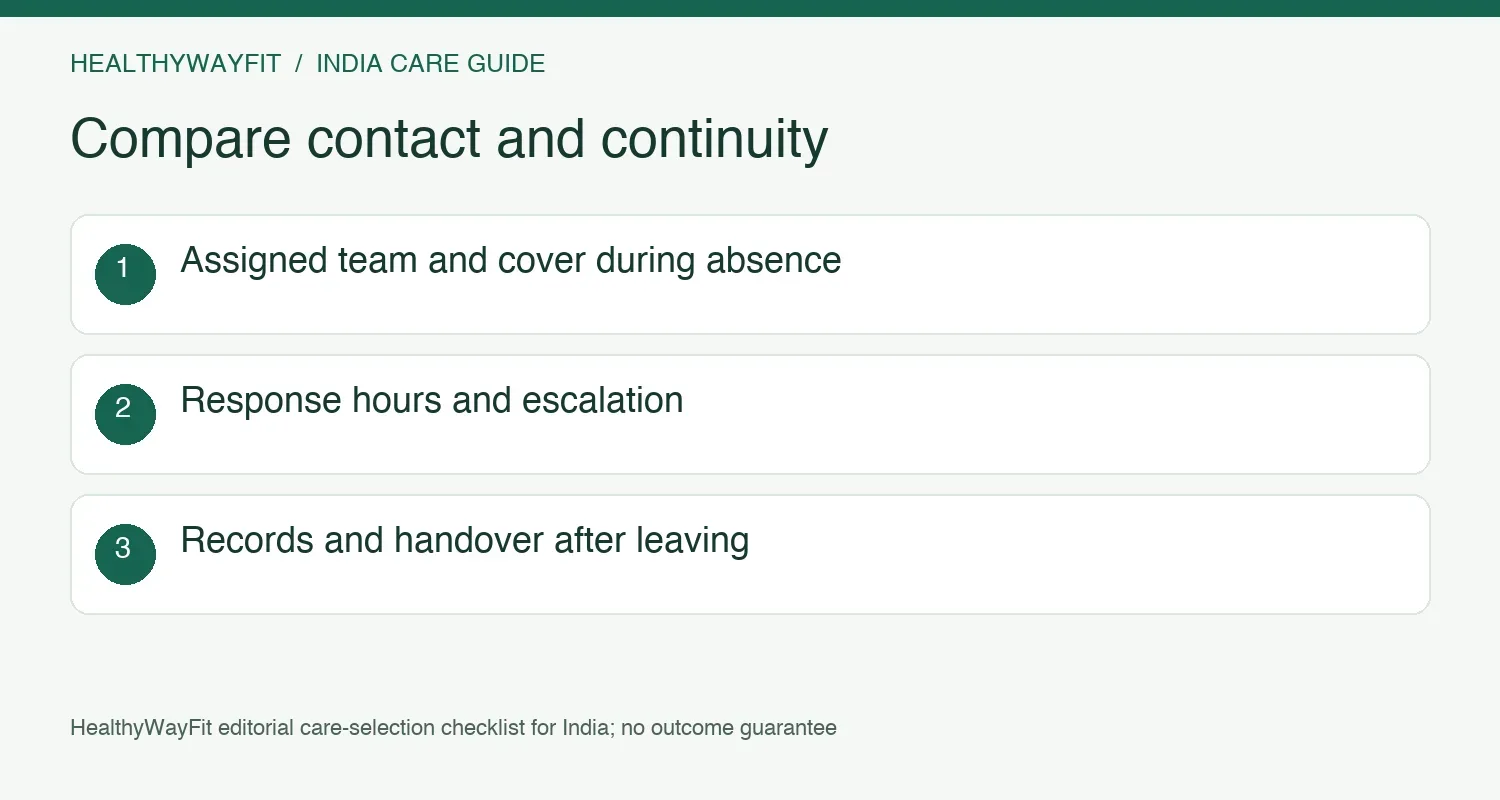
Ask who you contact between appointments, what response hours apply and who covers the assigned team’s absence. Clarify the route for medical questions and urgent concerns. “Unlimited support” needs an explanation of the channels, personnel and availability rather than an assumption that a doctor answers immediately at all times.
Distinguish scheduled consultations, routine coaching and administrative contact. A central helpline may organise bookings without providing clinical advice.
Ask how the team follows up after missed appointments or unanswered messages. Find out whether you can request a different professional if communication or scheduling is unsuitable.
Before leaving or pausing the programme, you should be able to obtain prescriptions, reports and a care summary. Ask how your usual clinician receives relevant information with your consent.
Establish that emergencies are handled through appropriate local services, not a routine chat group. Clear boundaries help you know which contact route to use.
7. How do you judge whether the plan fits long-term life?
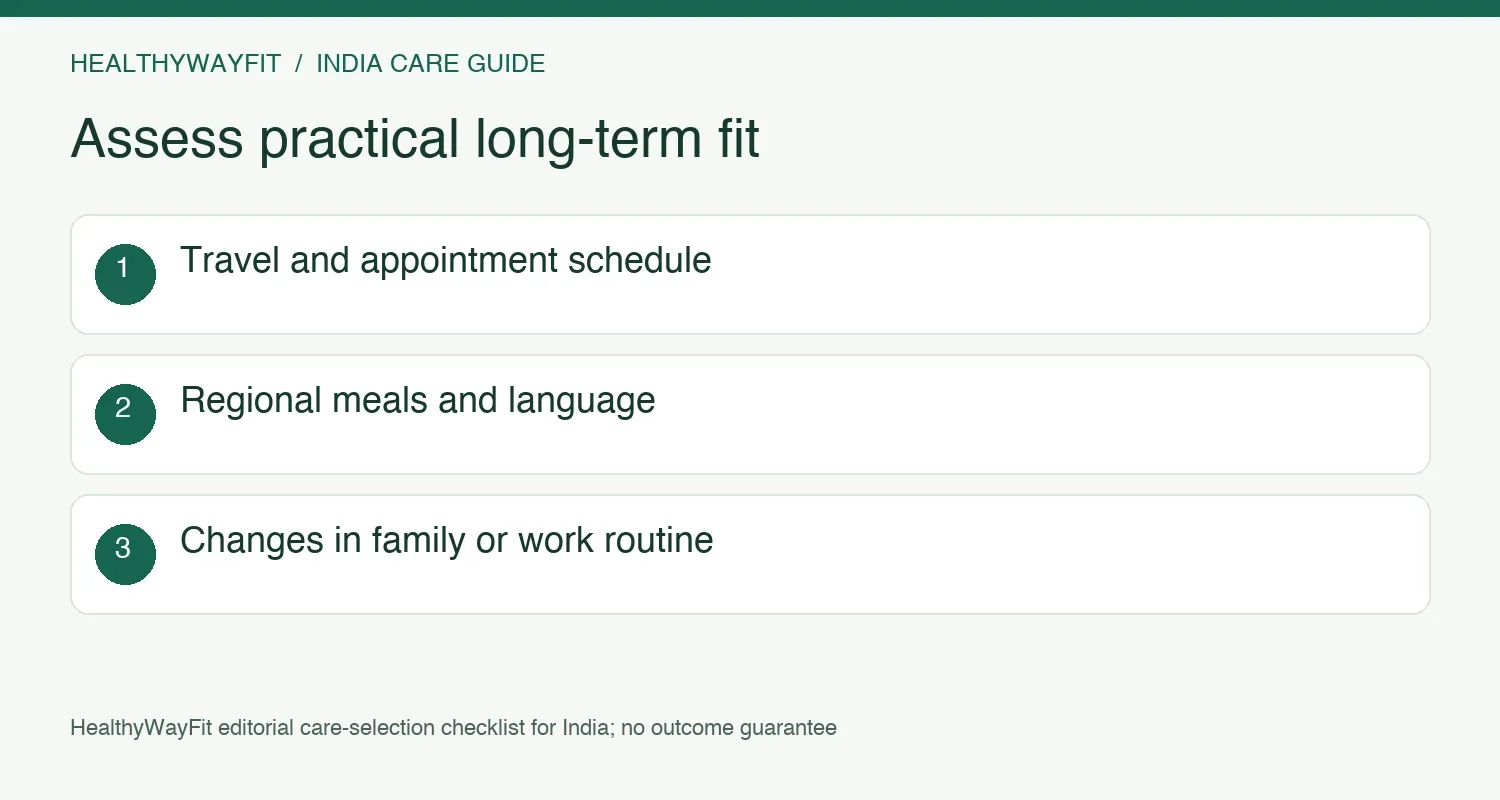
Choose support that fits your appointments, food routines, language and practical circumstances. Ask how the service adapts when work, family responsibilities or travel change. A programme may be well organised but still difficult for you to use if it assumes frequent visits, unfamiliar meals or a rigid schedule.
Discuss regional foods, household cooking and budget during assessment. Ask who develops clinical nutrition guidance and how follow-up addresses difficulties with the plan.
The RSSDI-ESI recommendations emphasise individualised nutrition in the Indian context. Use that as a reason to ask about adaptation rather than assuming one chart suits every household. See the RSSDI-ESI recommendations.
Our diabetes-friendly Indian meals guide offers examples for discussion, not a personalised prescription.
Ask how maintenance is organised after the first phase. You need a plan for continued medical care, ongoing questions and changes in routine, whether or not the initial programme goals are achieved.
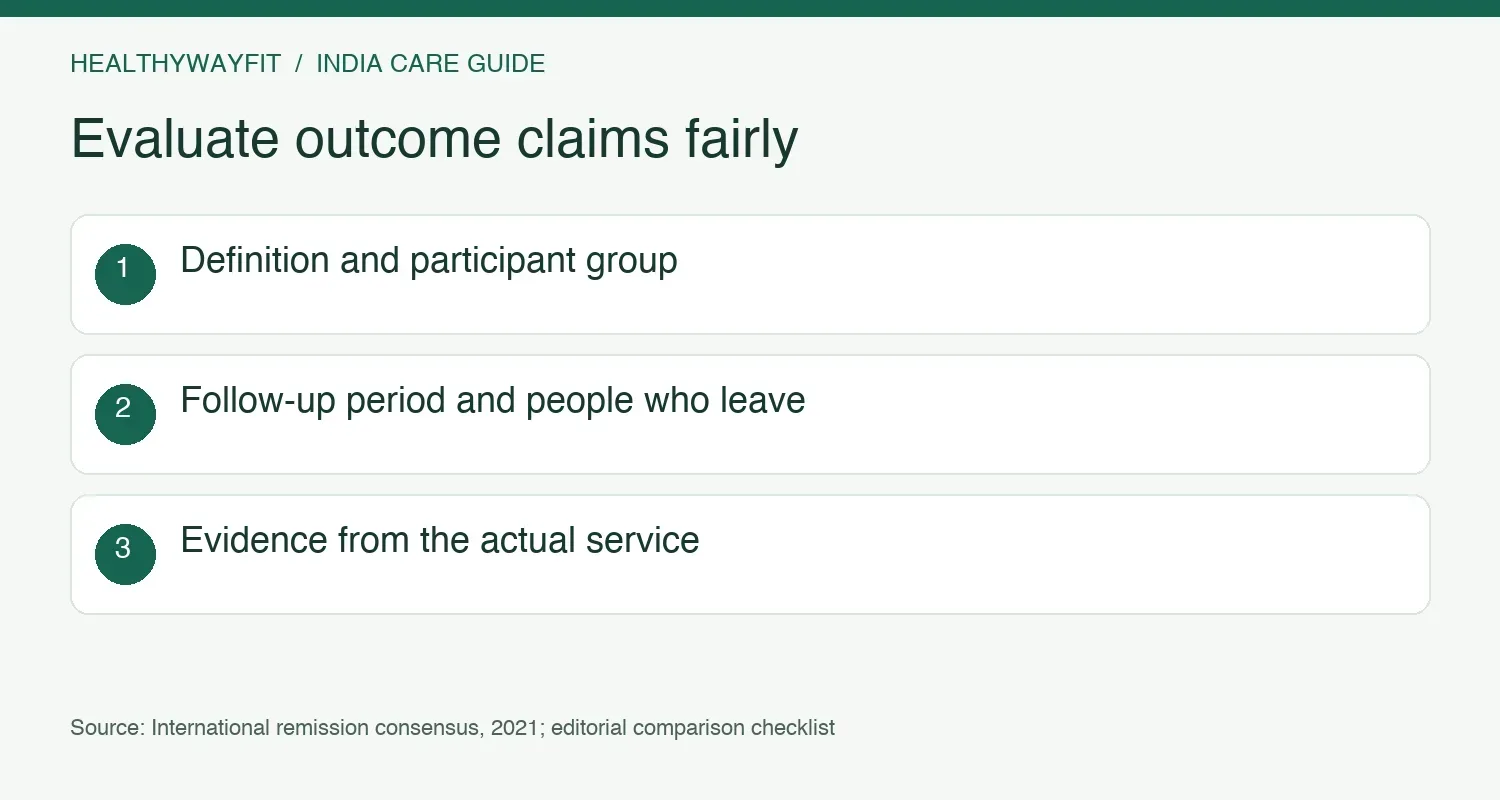
8. How do you compare outcome claims fairly?
Ask each centre which outcome it measures, who is included in the reported results and how long follow-up lasts. Distinguish its own data from research on another intervention. A testimonial or percentage without those details cannot establish what you should expect from the particular service being offered.
For type 2 remission, the clinical criterion is HbA1c below 6.5% for at least three months without usual glucose-lowering medication. See the remission consensus.
Ask whether a reported “success” means improved glucose, weight change, fewer medicines or meeting remission criteria. Do not compare percentages that measure different things.
Find out whether the centre reports outcomes for all enrolled participants or only those who remain in the programme. Ask about results after the initial period, rather than judging from a selected good week.
Reject a guaranteed-cure promise as a basis for purchase. Discuss realistic goals and assessment with your treating clinician. Our remission guide explains why the terminology matters.
9. How should HealthyWayFit be included in your comparison?
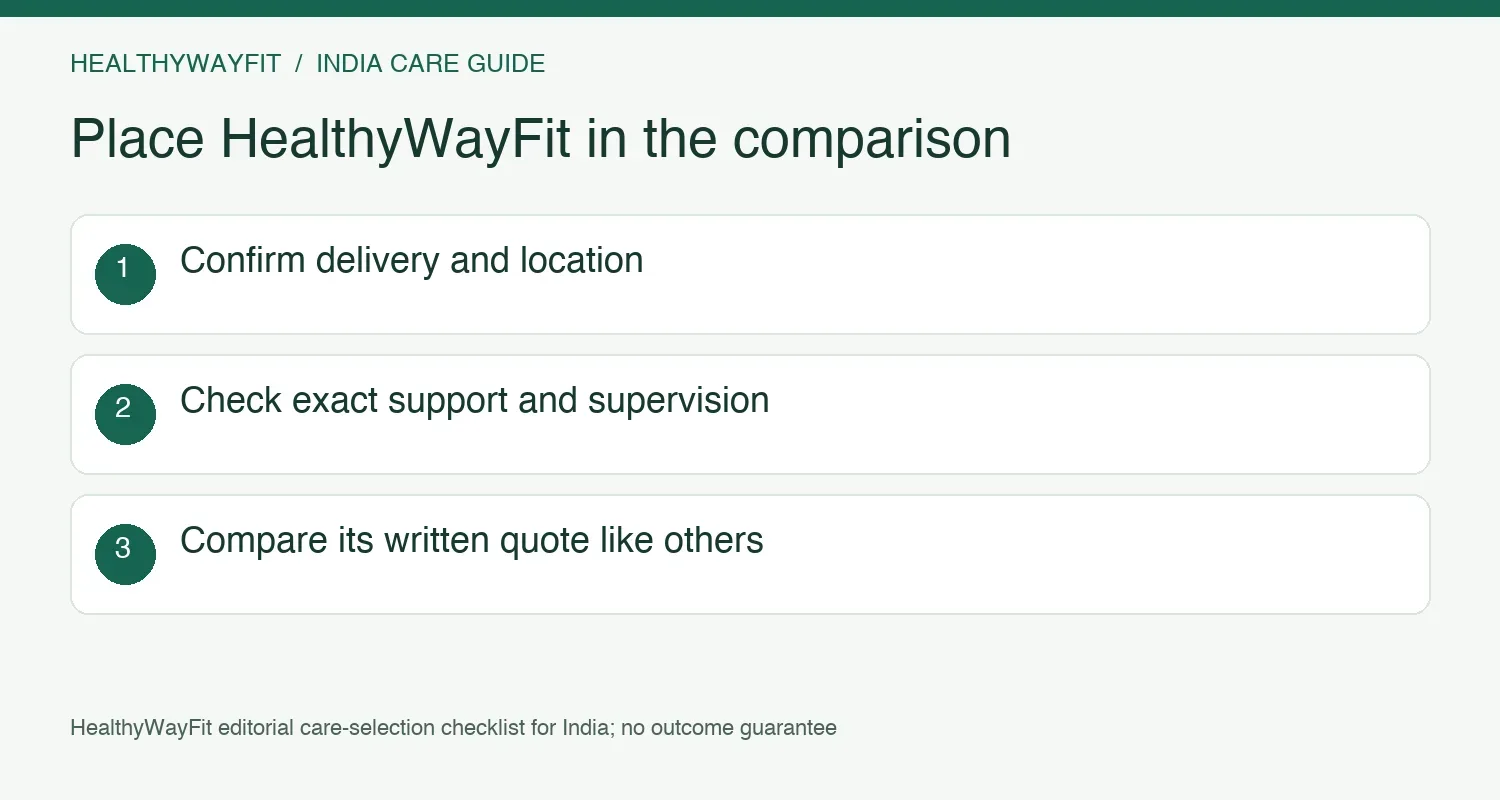
Ask HealthyWayFit for the same written details you request from other providers. Its public description includes nutrition, movement, monitoring, habit support and doctor supervision. Confirm which services apply to you, who provides them and whether delivery is remote or at a verified physical location.
This article does not establish a HealthyWayFit centre in your locality. Give the team your city and ask about actual availability, consultation arrangements and local medical coordination.
Request the assigned professionals’ details, programme schedule, full rupee charges and support hours. If the offering does not address a need that requires local assessment, establish who provides that care separately.
Review the HealthyWayFit programme description, then use the proposed written offer for the comparison. Broad website descriptions do not replace the terms of your own service.
HealthyWayFit publishes this guide. No independent ranking places it above another centre here, and the same verification standards should apply to its offering.
10. What should be clear before you commit?
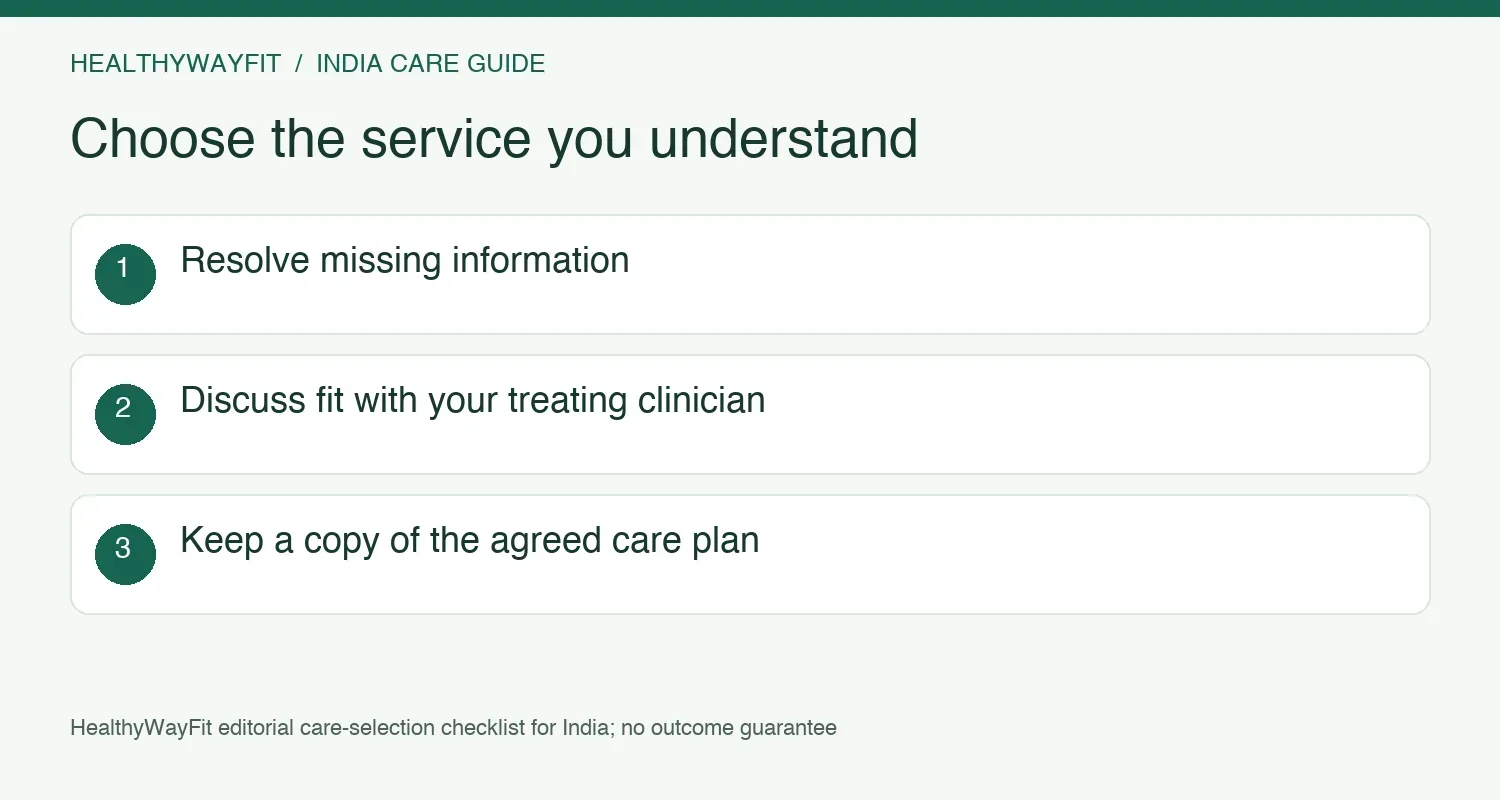
Before joining a centre, confirm the care plan, responsible clinicians, full cost and practical access. Resolve missing information in writing and discuss medical suitability with your treating clinician. Choose the service you understand and can use, with realistic goals and a route for continuing care when the package ends.
Keep a copy of the agreed offer and the appointment plan. Note what happens if you need extra medical review, cannot attend or want to leave.
You should be able to explain why this centre addresses your needs better than the other services you considered, without relying on unverified rankings or outcome promises.
To explore HealthyWayFit, contact our team with your city and comparison questions. Ask about suitability, available formats and a written breakdown of support and costs.