By Kirti, Founder & Serial Entrepreneur, HealthyWayFit
Updated 14 October 2026
Searching for diabetes reversal near me can mean several things: a doctor nearby, a nutrition programme, help following a care plan or an alternative to repeated clinic travel. In India, decide which support you need before comparing locations. Some care requires local assessment; other support may be delivered remotely alongside your usual clinician.
A nearby address does not tell you whether the service fits your needs. An online programme does not tell you how local examinations, prescriptions or urgent concerns will be handled. Ask each provider to explain the proposed arrangement.
This guide helps you choose a care model and make local searching more useful. It does not identify your nearest provider or claim a HealthyWayFit branch in your city.
This article is for informational purposes only and does not constitute medical advice. Always consult a qualified healthcare professional before making changes to your diet, exercise routine or medication.
1. Should you choose local, online or combined support?
Choose the format according to the task, rather than assuming that all care must happen in one place. Discuss examination and treatment needs with a clinician. For help implementing an agreed plan, ask whether remote coaching is appropriate. A combined arrangement needs clear communication between the local and remote teams.
| Care model | Practical advantage to consider | Question to resolve |
|---|---|---|
| In-person care | Direct access to the clinician and available local services | What is offered at this specific branch? |
| Online support | Less travel for routine conversations and education | Which needs must still be handled locally? |
| Combined care | Local medical care plus remote routine support | Who coordinates records and decisions? |
For type 2 diabetes, remission means HbA1c below 6.5% for at least three months without usual glucose-lowering medication. It is not a permanent-cure promise. See the clinical remission consensus.
The proposed outcome and delivery format are separate questions. A service should explain both rather than suggesting that a convenient format guarantees remission.
2. What problem do you want nearby support to solve?
Name the specific difficulty behind your search. You may need treatment review, help understanding your routine or regular nutrition conversations. Those needs may involve different professionals. A clear description lets your current clinician or a prospective service explain what it can provide and where a referral is needed.
Try completing this sentence: “I need help with…” Then describe the task in everyday terms, such as organising meals during work travel or understanding the monitoring instructions you already received.
Avoid making medication withdrawal the only way you measure support. Your treating clinician should determine appropriate goals, and a programme should help you follow the agreed plan.
If your main concern is a high laboratory result, new symptoms or uncertainty about the diagnosis, start with clinical assessment. If the treatment plan is clear but implementation is difficult, ask about suitable education or coaching.
Our diabetes coaching programme guide can help you distinguish practical support from broader clinical services.
3. How do you search for diabetes reversal near me accurately?
Include your city, locality or PIN code when searching and verify each result through the provider. Search for diabetes care and endocrinology as well as reversal programmes. A relevant service may not use “reversal” in its name. Confirm the actual location, appointment team and consultation format before booking.
Local results may show branches, booking platforms, advertisements and remote services together. Read the address and appointment details rather than assuming every result is physically nearby.
Make a short list with the official website, contact number, appointment location, assigned clinician and service description. Ask whether the phone number belongs to the branch or a central enquiry team.
If a provider says it serves your city, clarify what that means. It may offer online enrolment without a local clinic, home services in selected areas or an occasional visiting specialist.
Do not rely on an old map listing for current fees or schedules. Confirm those details directly and keep the booking instructions so you know where to attend.
4. How can local and remote teams work together?
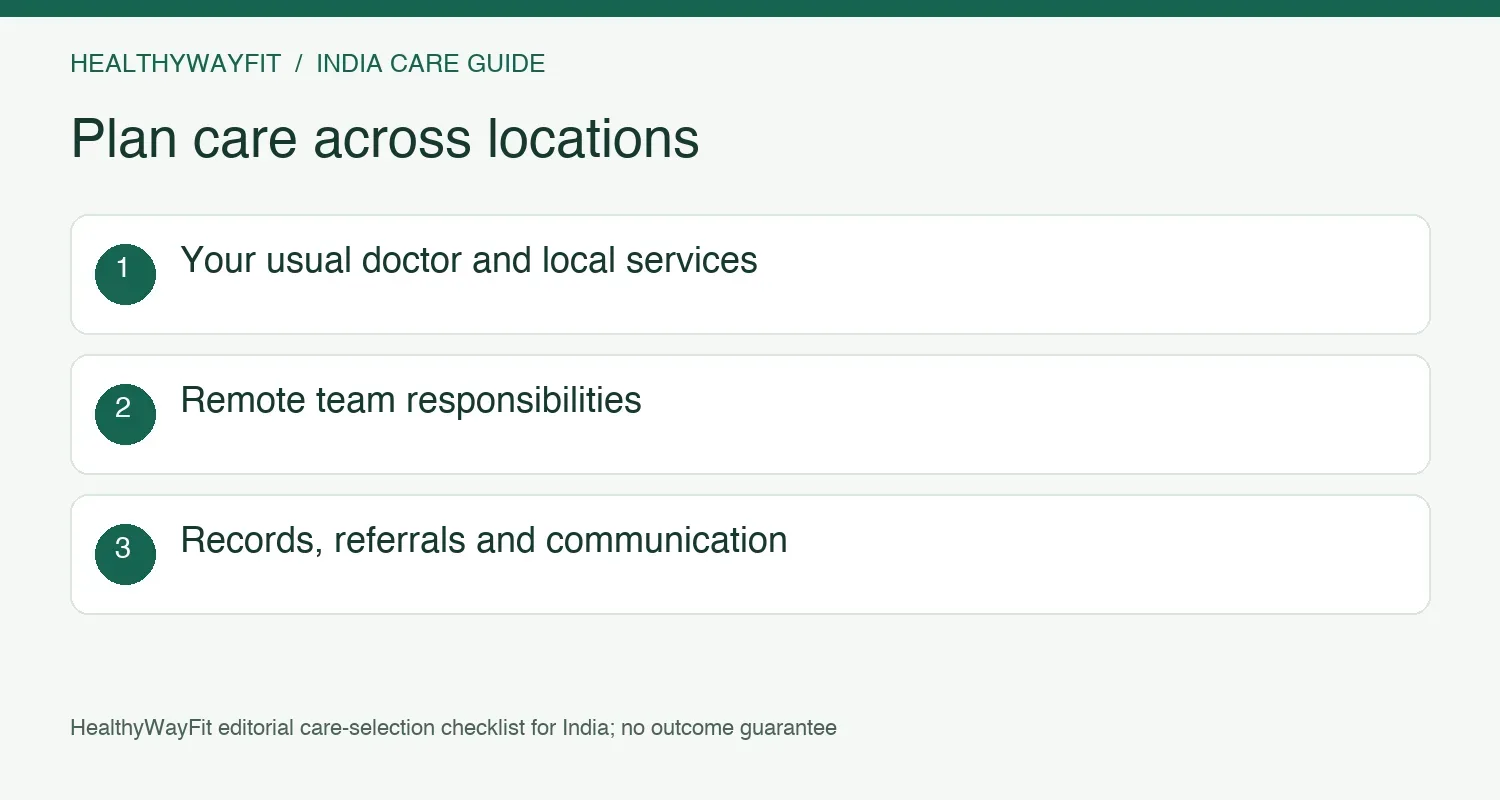
A combined arrangement should specify who provides medical care, who supports routine changes and how information moves between them. Ask which professional can adjust prescriptions, which reports are shared and when a local appointment is required. Coordination needs a process, rather than relying on you to interpret conflicting instructions.
Bring your existing care plan to the remote team and explain who currently treats you. Ask whether the service requests consent to share relevant summaries with that clinician.
India’s ICMR workflow includes glucose care alongside assessment and referral for other diabetes needs. Use that as a prompt to ask how local examinations and specialist referrals remain covered. See the ICMR type 2 diabetes workflow.
If two teams offer different advice, ask the treating clinicians to clarify the plan. Do not independently combine prescriptions or follow whichever message arrives most recently.
Keep an accessible folder of prescriptions, reports and care summaries. If you need help storing them digitally, ask how the provider supports sharing without exposing unnecessary personal information.
5. What does practical access mean in India?
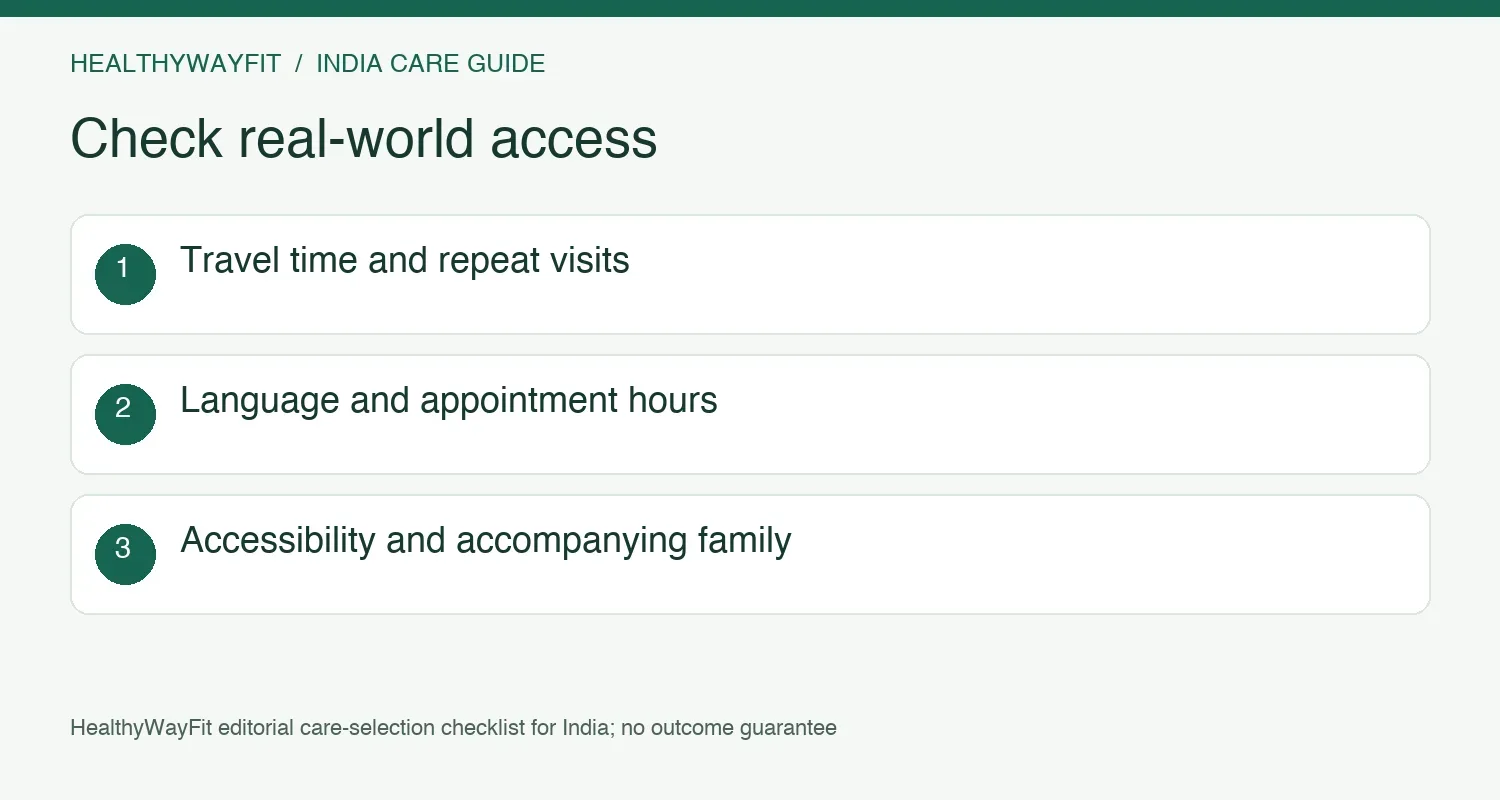
Practical access includes travel time, appointment hours, language, physical accessibility and the support available between visits. A clinic that is geographically close may still be difficult to use regularly. An online service may also be unsuitable if its technology or communication hours do not fit your circumstances.
Consider the total journey rather than distance alone. Ask about parking, public transport, stairs or lifts, waiting arrangements and whether an accompanying person can attend when appropriate.
For online appointments, check whether video is essential, whether phone support is available and what happens if connectivity fails. Confirm that you can understand the discussion in your preferred language.
Ask how often you must attend in person and whether tests can be arranged locally. If the service expects frequent daytime visits, consider how they fit work and family responsibilities.
If a family member helps with care, establish their role and your privacy preferences. Convenience should not mean losing control over who receives your medical information.
6. What if festivals, fasting or work travel change your routine?
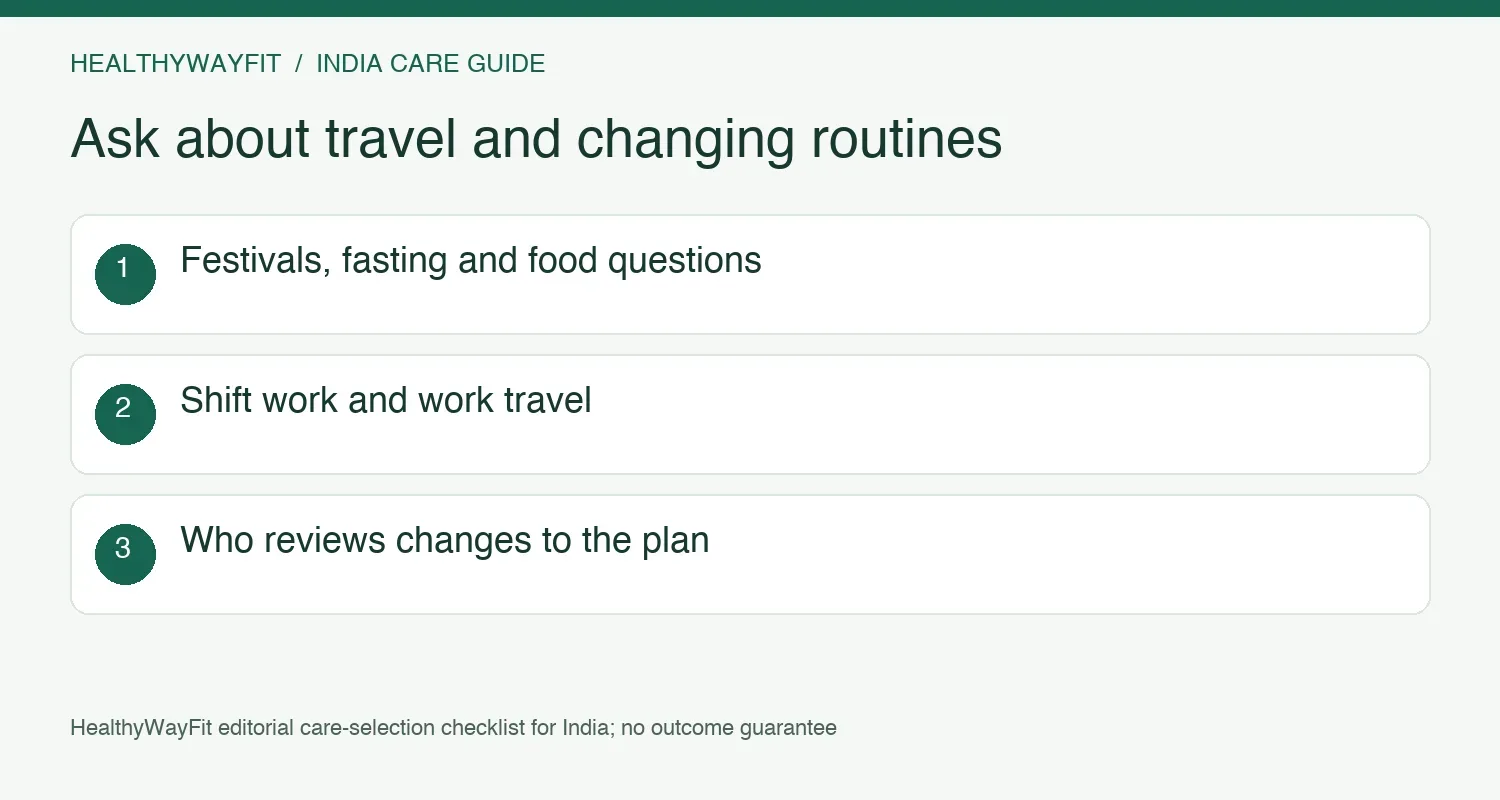
Tell the clinical team about predictable changes to meals, activity and medication routines before they occur. Ask how the programme handles work travel, shift changes, festivals or planned fasting. You need individual guidance and a way to ask follow-up questions, not a generic instruction to maintain the same routine everywhere.
For religious fasting, discuss suitability and any treatment implications with your clinician in advance. A coach should not independently alter prescriptions or give universal advice about skipping meals.
Explain where you eat during travel, how meals are arranged at home and which tasks you can realistically manage. Ask the nutrition professional to help you plan within the agreed medical advice.
Our diabetes-friendly Indian meals guide offers examples for conversation with your team. It should not be treated as a personal travel or fasting prescription.
Check how support works when you temporarily leave your usual city. A remote conversation may remain available, but local assessment or urgent care still needs an appropriate arrangement where you are.
7. How should you compare local and online costs?
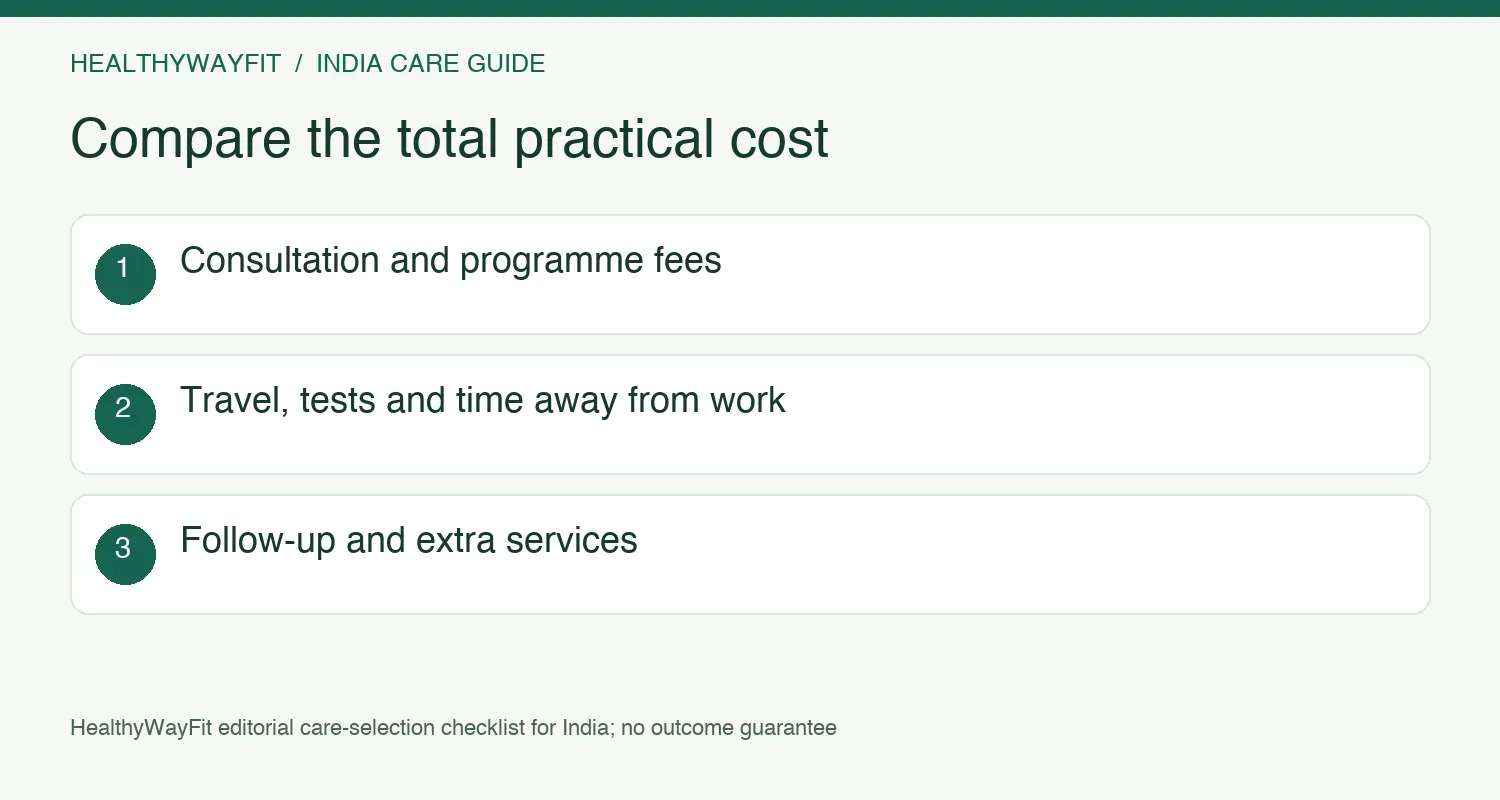
Compare programme charges and the practical costs of using the service. Ask for full fees in rupees, including consultations, tests, supplies and follow-up. For local care, consider travel and time away from work. For remote care, check whether local examinations or outside clinical appointments create separate costs.
Request the same information from each provider so your comparison is fair:
- Number and type of medical appointments.
- Nutrition and coaching sessions included.
- Individual versus group contact and response hours.
- Tests, devices, replacement supplies and medicines.
- In-person requirements and outside referral costs.
- Renewal, cancellation, pause and refund policies.
Ask how costs change if you need additional reviews. A fixed package price may apply only to the listed services, so identify what is excluded.
If you have insurance, confirm your exact benefits for the service and provider. Avoid assuming that a clinic’s insurance tie-up includes its lifestyle programme or that an online package qualifies for reimbursement.
Choose based on the care you need and can use. Neither the lowest price nor the most expensive technology establishes suitability.
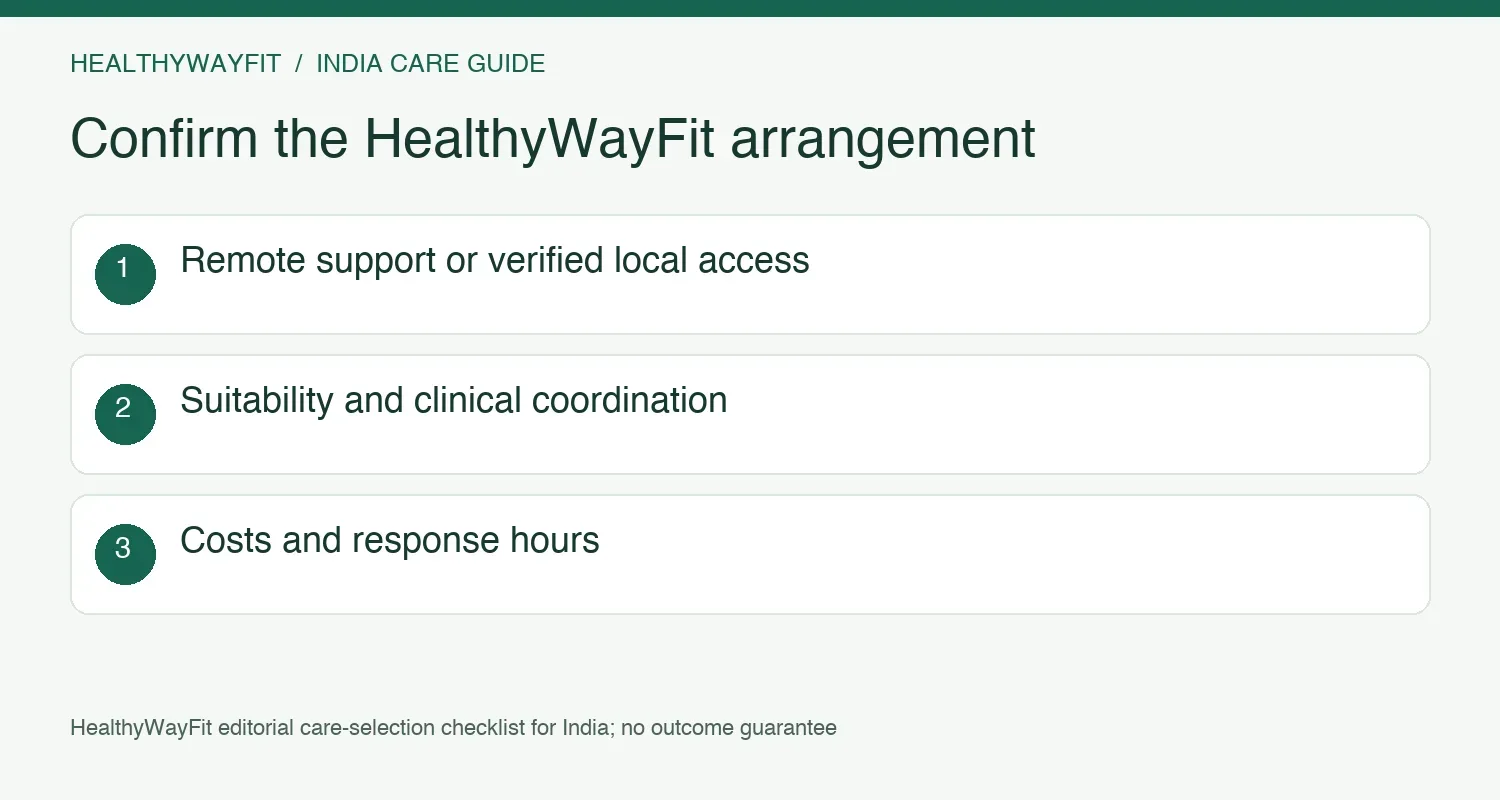
8. Can HealthyWayFit provide support without a nearby clinic?
Ask HealthyWayFit about its available delivery format and how it coordinates with local medical care. Its public offering describes nutrition, movement, habit support, monitoring and doctor supervision. Confirm what is included for you, rather than assuming a local HealthyWayFit clinic exists because you searched for nearby services.
Give the team your city, current treatment and practical goals. Ask whether support is remote, whether any in-person services are available and which professionals would be assigned.
If you need a local examination, establish who provides it and how the findings are shared. Ask how the remote team communicates with your usual doctor, with your consent.
Request response hours, consultation frequency, total charges and the process for concerns that need medical review. A remote support offer should be understandable without relying on broad marketing promises.
HealthyWayFit publishes this article. No claim is made that it is physically nearest to you or more effective than a verified local provider. Contact the team to ask about suitability and available formats.
9. When should local medical assessment come first?
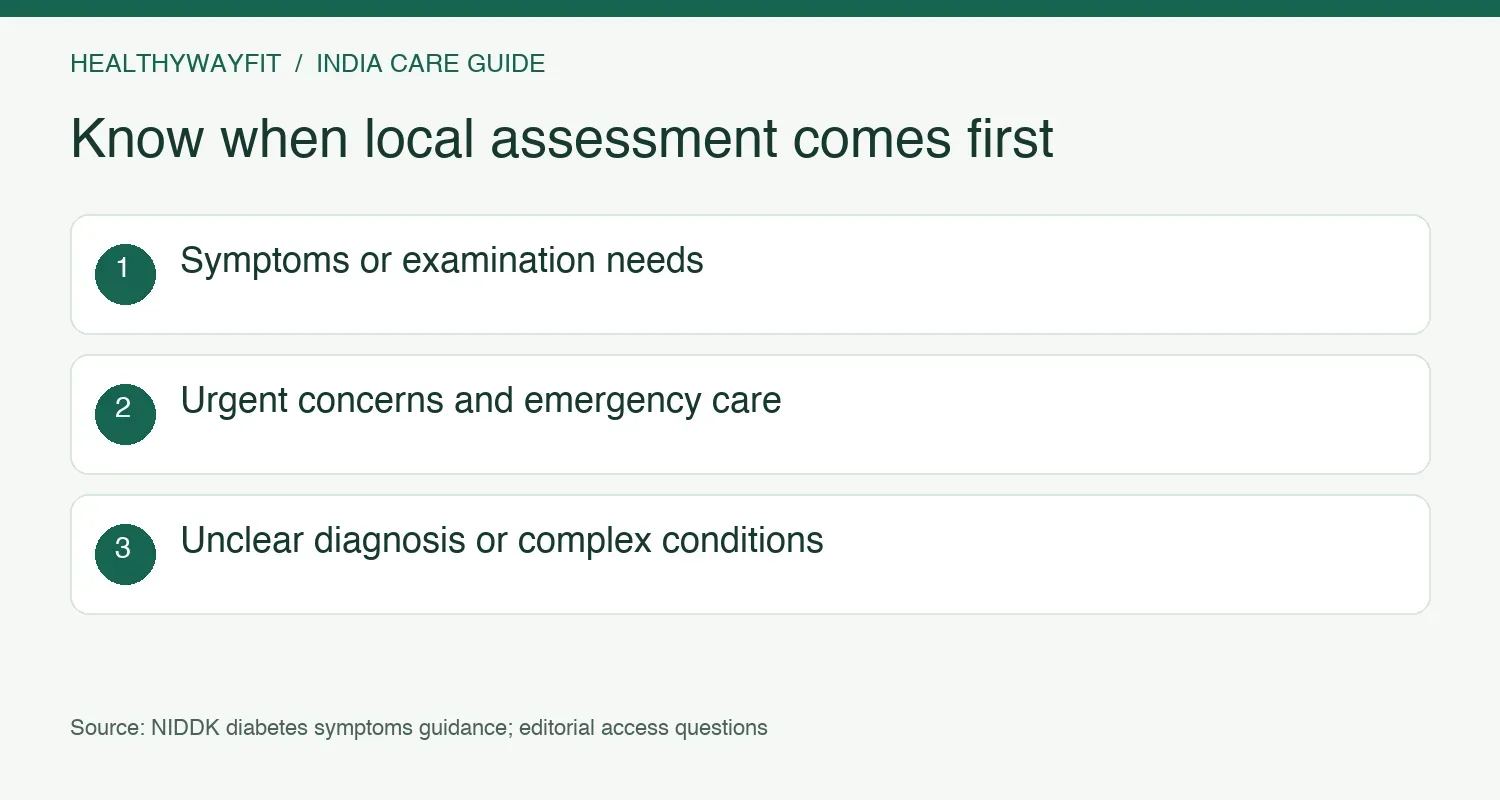
Arrange clinical assessment if you have new symptoms, an unclear diagnosis or a concern that may require examination. A coaching programme should not delay appropriate care. Ask your clinician about the right setting and seek urgent help for severe symptoms rather than waiting for a routine online reply.
Increased thirst, frequent urination, vision changes or unexplained weight loss can warrant diabetes assessment. They do not establish a diagnosis by themselves. See NIDDK’s symptoms guidance.
Tell the provider about pregnancy, kidney disease, other medical conditions and any limitations relevant to diet or activity changes. A programme should explain when it refers you to additional care.
Keep medication decisions with the prescribing clinician. Do not stop treatment because an online service promises that a natural approach can replace it.
If the provider cannot explain the clinical boundary, contact arrangements or local referral process, resolve that before enrolling. The format is useful only when it is appropriate for the task.
10. How do you build support you can continue using?
Choose a workable network rather than focusing only on one nearby listing. Establish medical care, practical support and a route for follow-up. A local clinic, remote programme or combination should leave you with clear responsibilities, suitable access and records that can be shared when you need another opinion.
Start with your most important unmet need and ask your usual clinician what support would address it. Compare a small number of services that can actually provide that help.
Before paying, confirm the location or remote format, assigned team, complete charges and review plan. If circumstances change, know how to pause, transfer or continue care safely.
To explore HealthyWayFit, send your city and care goals to our team. Ask how the available support can fit alongside your local healthcare arrangements.