By Kirti, Founder & Serial Entrepreneur, HealthyWayFit
Updated 14 October 2026
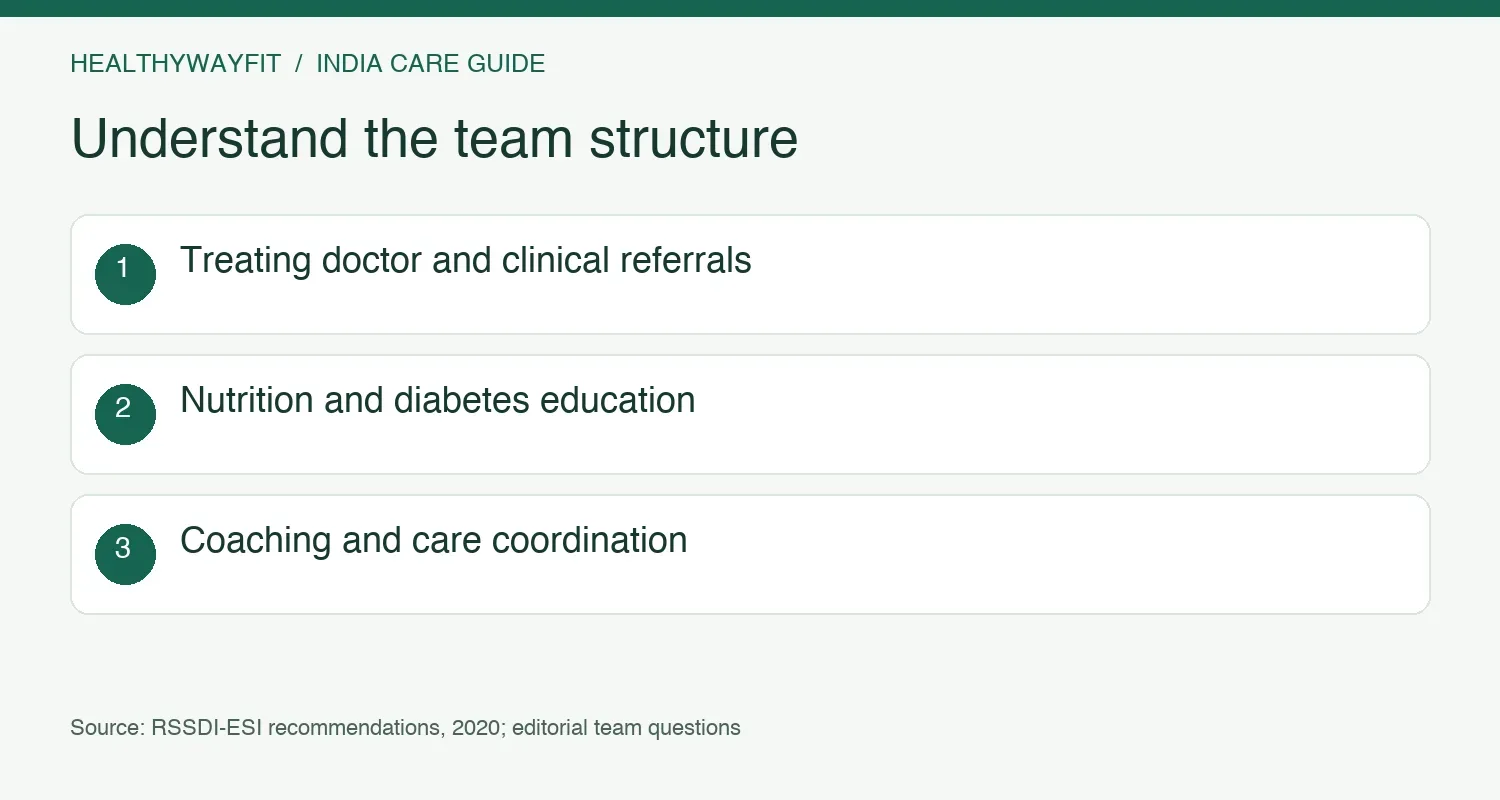
A diabetes reversal centre should explain how medical assessment, nutrition guidance, monitoring and ongoing support work together. In India, compare the actual care pathway and assigned professionals before buying a programme. The centre’s name does not establish its qualifications, the services included or your likelihood of achieving type 2 diabetes remission.
Perhaps you already see a doctor but want more help between appointments. Perhaps you are comparing a standalone clinic with a centre that offers several services under one roof. Start with the gaps in your current care and ask who will address each one.
This guide focuses on how a centre organises care. It does not rank local branches or claim that every service using “reversal” follows the same medical approach.
This article is for informational purposes only and does not constitute medical advice. Always consult a qualified healthcare professional before making changes to your diet, exercise routine or medication.
1. What is a diabetes reversal centre?
The term generally describes a service offering structured support for people interested in improving type 2 diabetes outcomes. It may be a clinic, a department within a hospital or a programme combining local and remote care. Ask the provider to define its offering rather than inferring a standard package from the name.
A centre might advertise consultations, dietitian appointments, movement support, diagnostic tests or glucose tracking. You need to know which are included, which are optional and which happen through outside referrals.
Also distinguish the facility from the programme. A hospital may provide a wide range of services while a particular package covers only a small subset. Conversely, a modest clinic may coordinate appropriate referrals without doing every assessment on site.
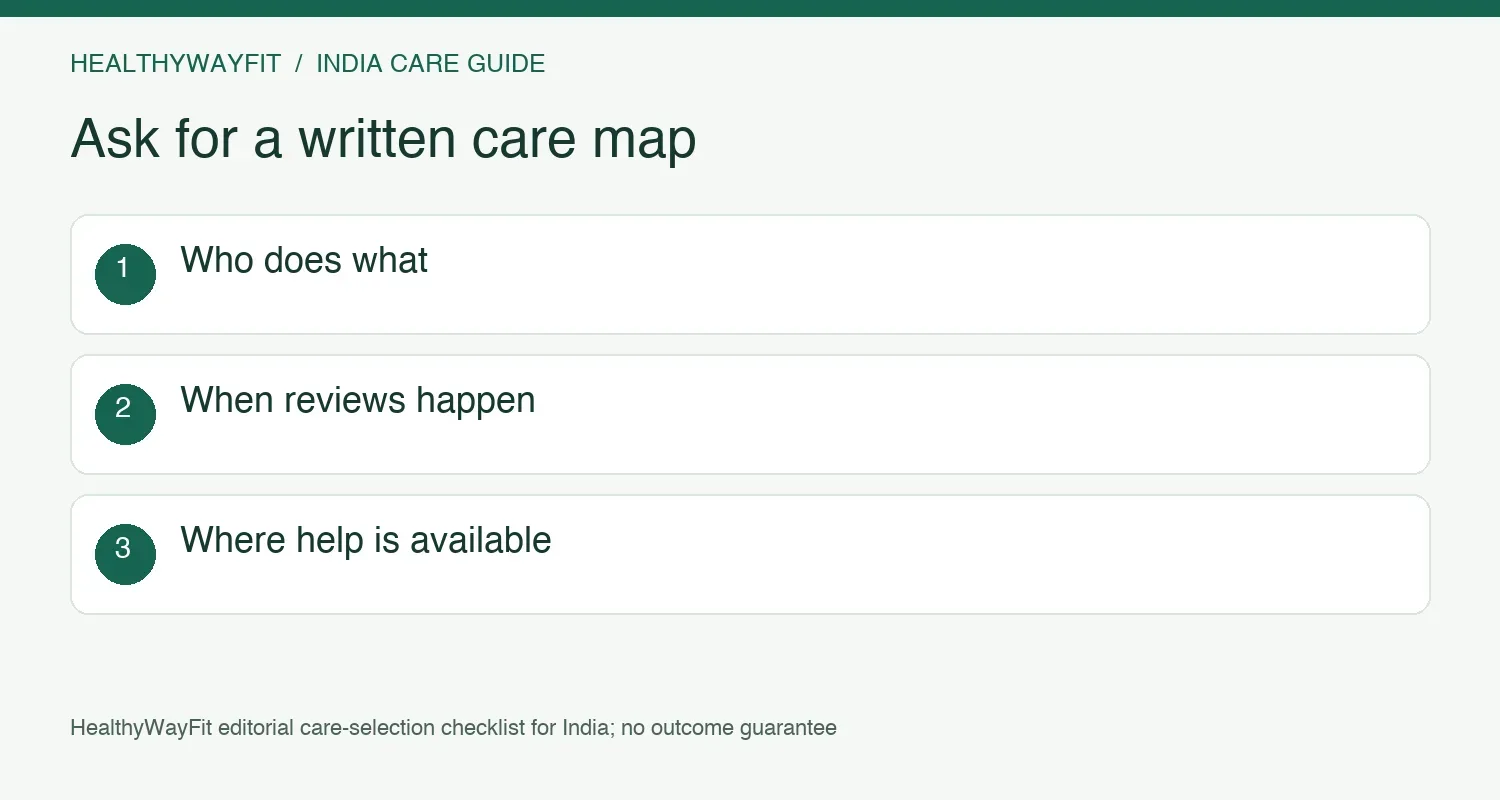
Ask for a written explanation of the care model. A simple map naming the responsible doctor, support professionals and referral arrangements is more useful than a long list of marketing terms.
2. What outcomes can a centre reasonably discuss?
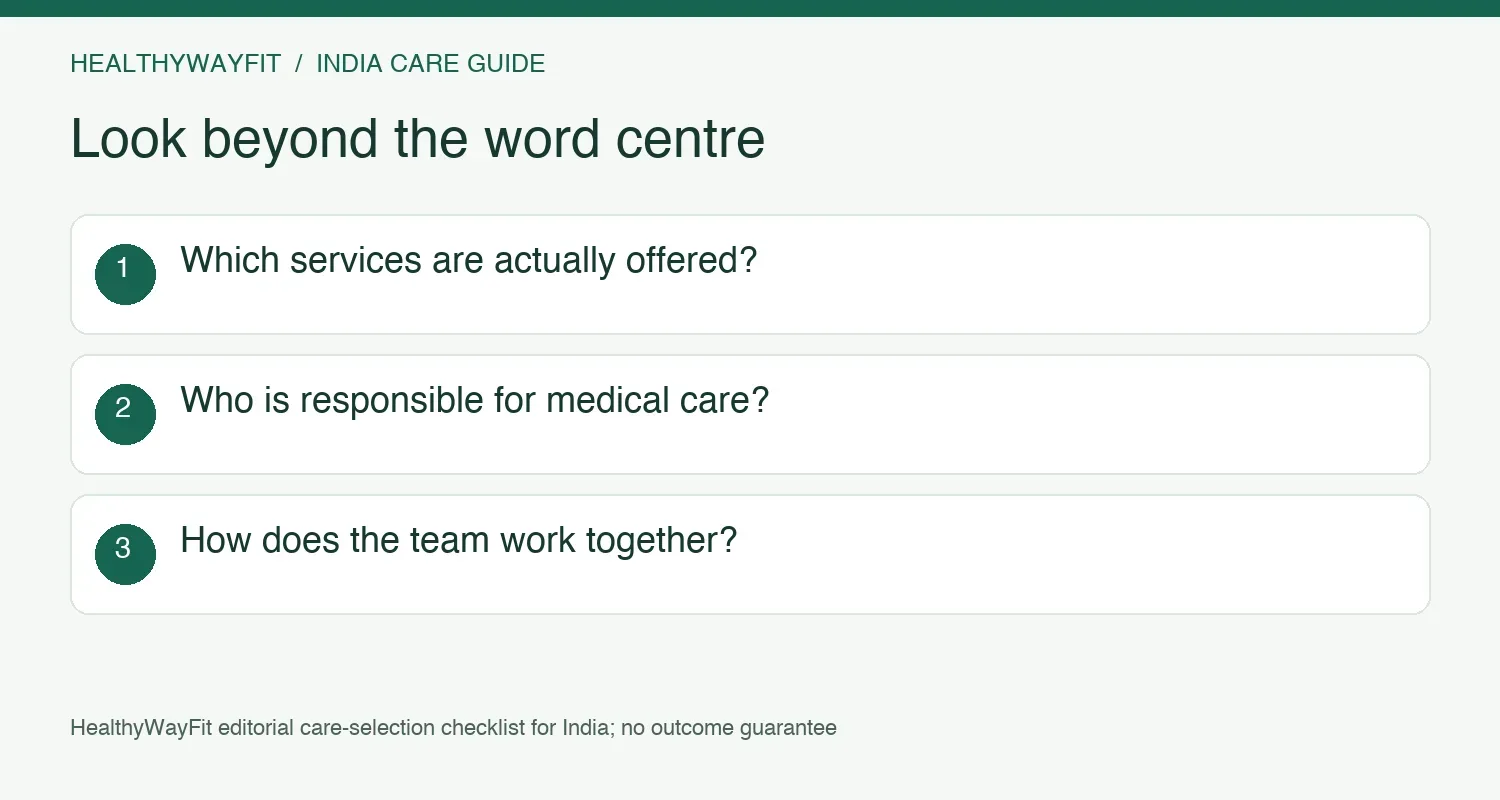
A centre should separate better glucose control from medication changes and confirmed remission. Ask which outcome its programme targets and how that outcome is assessed. It should explain uncertainty and continued care rather than treating a single reading or a shorter prescription as proof of a permanent cure.
The clinical definition of type 2 remission is HbA1c below 6.5% for at least three months without usual glucose-lowering medication. See the international remission consensus.
Before accepting a success claim, ask what happened to people who did not complete the programme and how long outcomes were followed. Results from selected participants cannot tell you what every new client should expect.
Set your own goals with the treating clinician. Depending on your circumstances, the first priority may be a clearer treatment plan or more consistent management rather than medication withdrawal.
Our type 2 diabetes remission guide explains the terminology in more detail. Use that distinction when comparing claims from different centres.
3. Who should be responsible for each part of care?
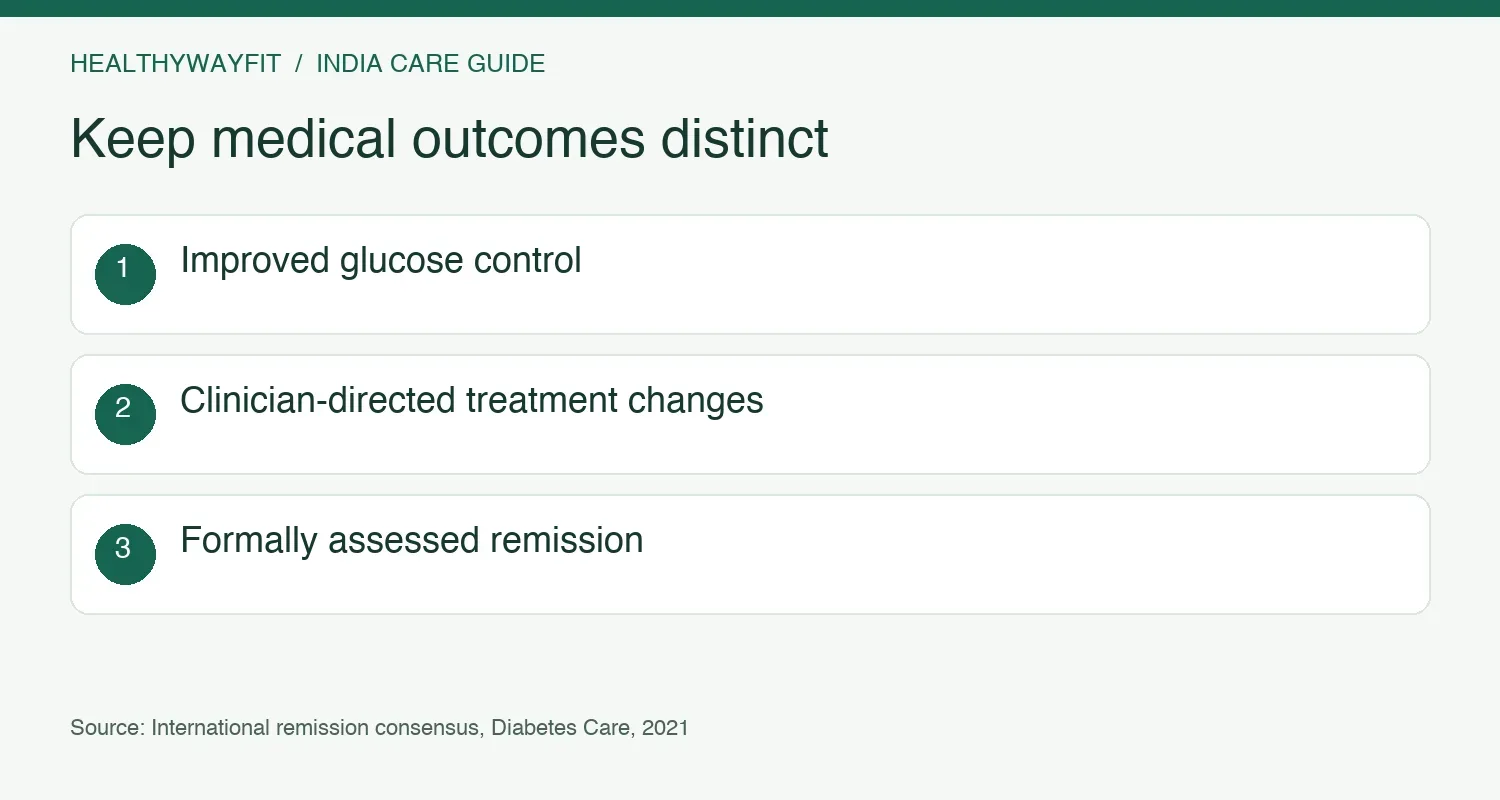
Ask the centre to name the professionals responsible for medical decisions, nutrition advice, diabetes education and routine support. One person may hold several relevant qualifications, but the roles should be explicit. A coordinator can organise communication; that does not automatically make them the clinician who can change prescriptions.
The RSSDI-ESI recommendations for India describe individualised nutrition therapy involving dietitian guidance and the treating clinical team. That supports asking how nutrition and medical care are coordinated, rather than treating a generic meal chart as the whole service. See the RSSDI-ESI clinical recommendations.
| Care need | Responsibility to clarify |
|---|---|
| Diagnosis and treatment | Which doctor assesses and prescribes? |
| Clinical nutrition | Who develops and reviews the individual plan? |
| Education and habits | Who helps you implement agreed advice? |
| Test results | Who interprets reports and arranges reviews? |
| Referrals | Who connects you with appropriate additional care? |
| Coordination | Who keeps appointments and records organised? |
Ask what happens when the assigned professional is absent. Continuity needs a process rather than dependence on one person answering every message.
4. What should the initial assessment involve?
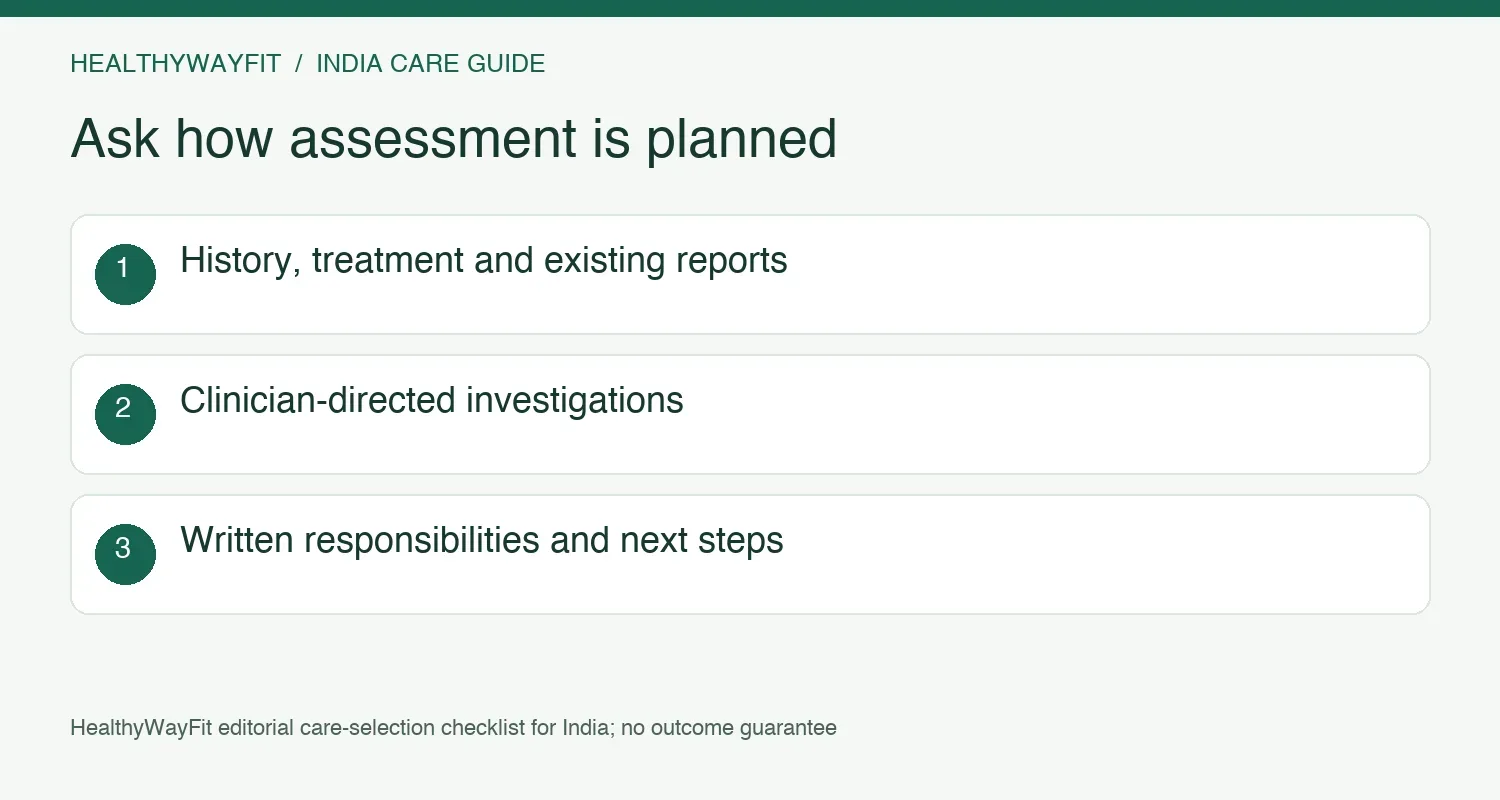
The first assessment should establish your current situation before the team proposes a programme. Bring relevant prescriptions, available reports and your main concerns. Ask which additional tests or examinations the clinician considers necessary and why. A fixed onboarding bundle should not replace an explanation of what is appropriate for you.
Describe your diagnosis history, other medical conditions, allergies and previous experience with diet or activity changes. If you have glucose records, include the timing and circumstances so the clinician has context.
Ask whether the initial appointment is medical, educational or a programme enquiry. If the package discussion comes first, clarify when clinical suitability will be assessed and what happens if you are not eligible.
Request the proposed next steps in writing: investigations, consultations, referrals and review dates. You should understand which results will inform which decisions.
If you are newly diagnosed, our first-steps guide for type 2 diabetes can help organise your questions. The centre still needs to assess your individual care needs.
5. How should nutrition support work in an Indian household?
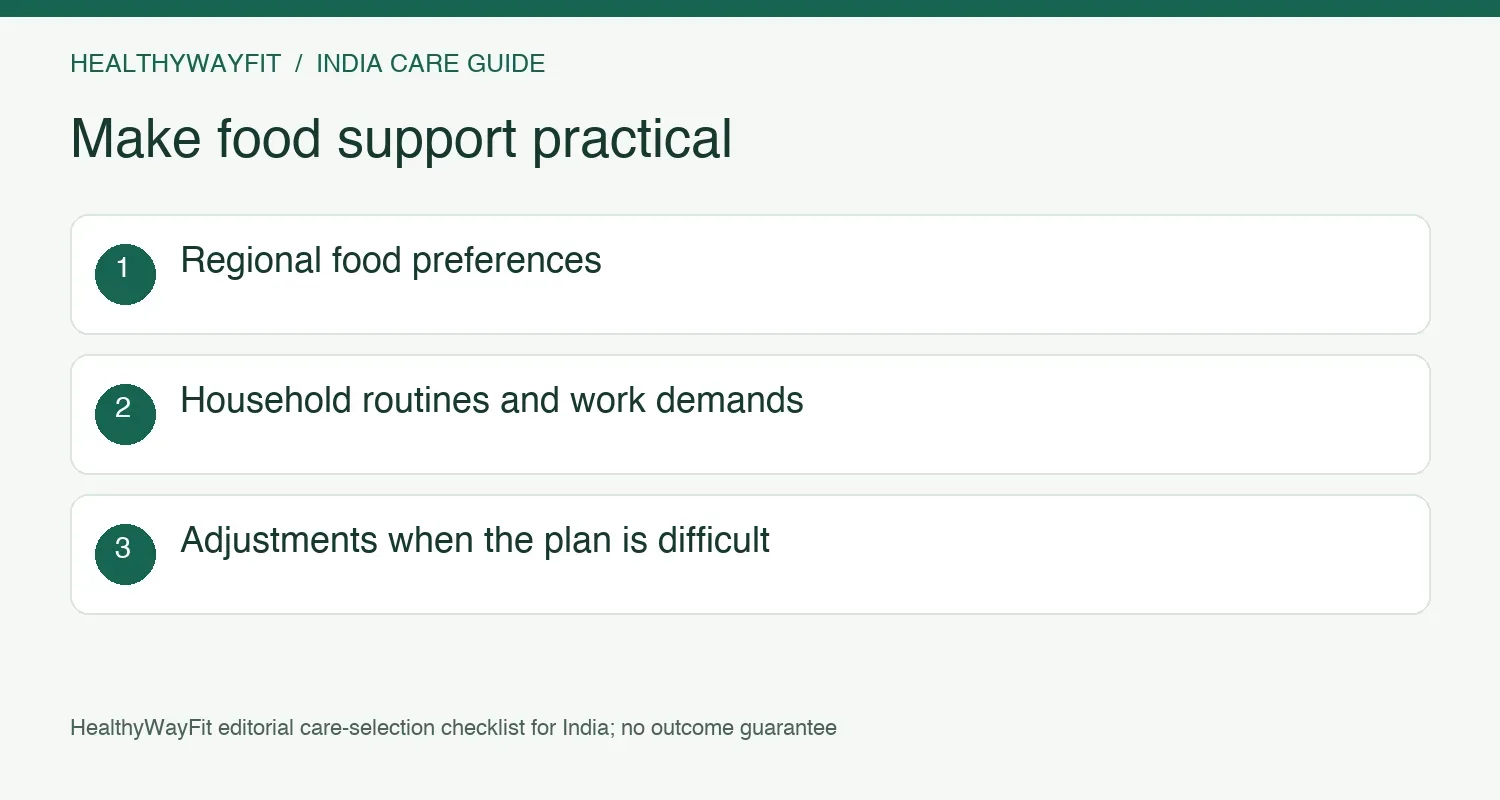
Nutrition support should address your regular foods, meal preparation, budget and medical needs. Ask how the centre adapts its guidance to regional eating patterns and household routines. Advice that looks attractive on paper may be difficult to use if it assumes separate cooking, expensive ingredients or a work schedule you do not have.
Bring practical examples: your usual breakfast, a packed lunch, meals outside home and who shops or cooks. Explain vegetarian preferences, allergies and any religious practices that affect eating.
Ask what happens when the proposed plan is difficult to follow. The team should have a route for discussing alternatives within your care plan, rather than leaving you with instructions you cannot implement.
Our diabetes-friendly Indian thali guide offers examples to discuss with a qualified professional. It is not a substitute for personalised clinical nutrition.
If family members are involved, agree on how they can help without overriding your choices or receiving health information without consent. Support should make the plan usable in your household.
6. How are glucose monitoring and medicines coordinated?
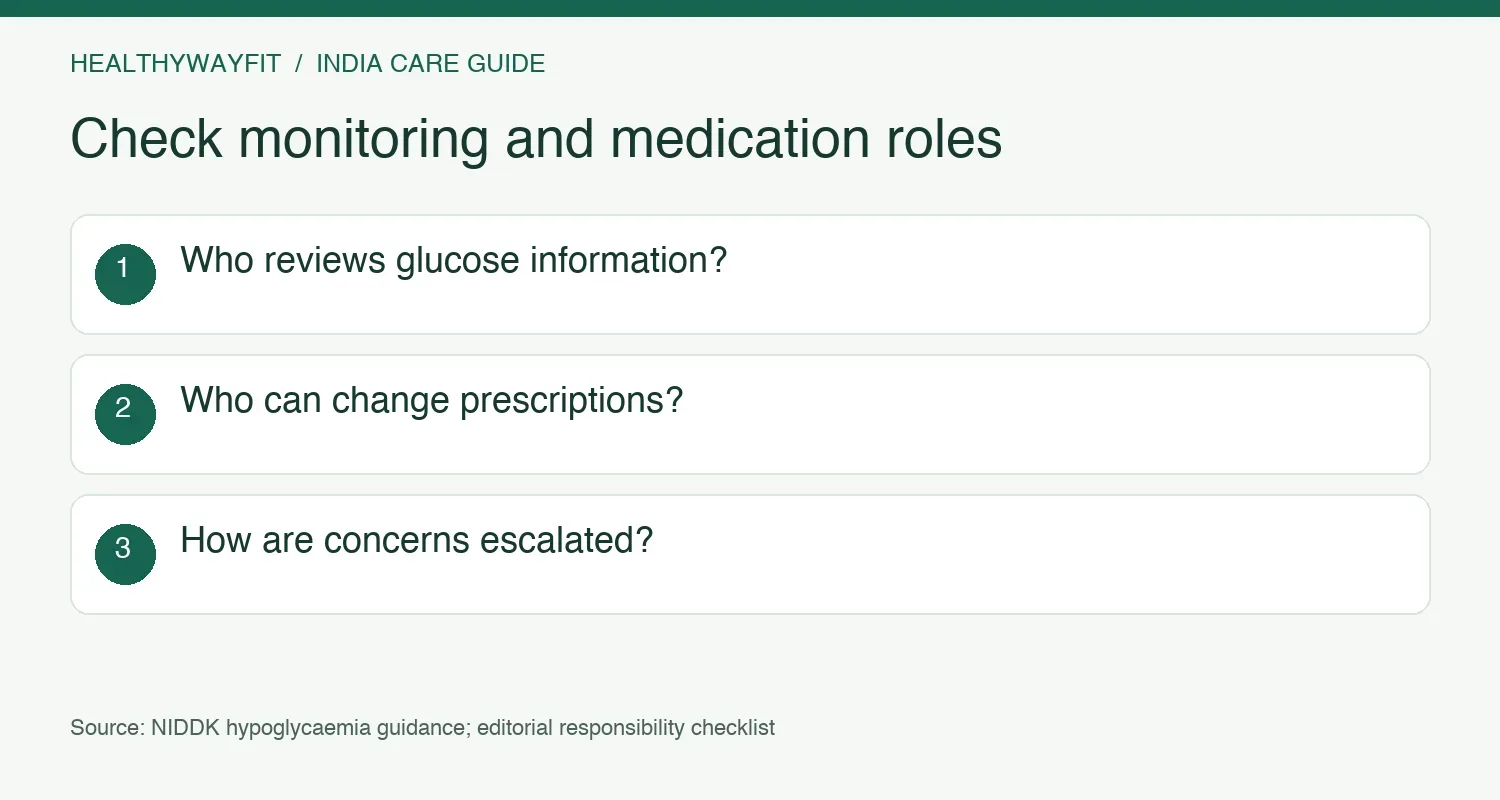
Ask who decides what to monitor, who reviews the information and who can change medication. A glucose device or messaging group does not answer those questions. The treating clinician should make prescription decisions, with a clear record of the instructions and a plan for review when necessary.
Changes in eating or activity can matter particularly for people taking insulin or certain other glucose-lowering medicines. Discuss planned changes and low-glucose precautions with your prescriber. See NIDDK’s low blood glucose guidance.
If a CGM is offered, ask what question it is intended to help answer, how long you would use it and whether it is included in the fee. The team should explain the role of the data rather than selling the device as the treatment.
Ask how instructions reach you after a review and how you report a concern. Establish which questions go to the coach and which go directly to the doctor.
Keep prescription decisions separate from programme success targets. Continued medication can remain appropriate even when someone participates consistently in lifestyle support.
7. What should happen after the first appointment?
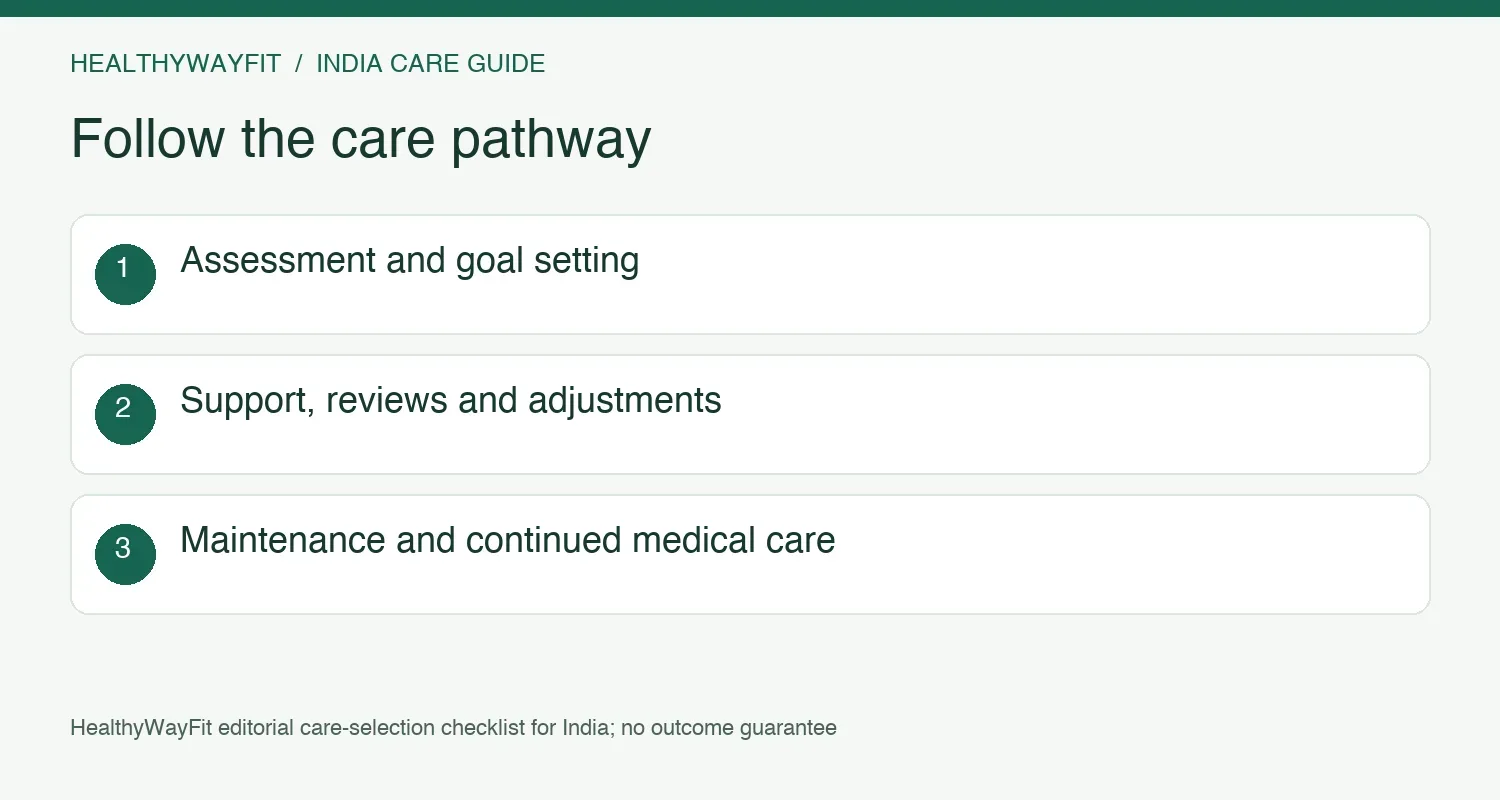
A centre should describe an ongoing pathway: agreed goals, scheduled support, clinical reviews and maintenance. Ask what changes when you encounter difficulties and what happens after the initial programme ends. An assessment followed by a meal chart is a different service from continuing individual support, even if both use the same programme label.
Request an outline of the appointments and tasks expected from you. Clarify which meetings are clinical, which are coaching and which are group education.
At reviews, discuss the practical barriers you encountered and questions that need the treating clinician’s attention. A missed session should have a rescheduling process, and periods of illness should have a safe route back into care.
Ask how ongoing eye, kidney and foot-care responsibilities are assigned. The ICMR diabetes workflow includes broader assessment and referral alongside glucose care; follow-up should not be organised around one number alone. See the ICMR workflow.
Before discharge or a pause, ask for a summary of treatment, outstanding reviews and the next point of contact. You should know how to continue medical care outside the programme.
8. How do you assess a centre’s package before enrolling?
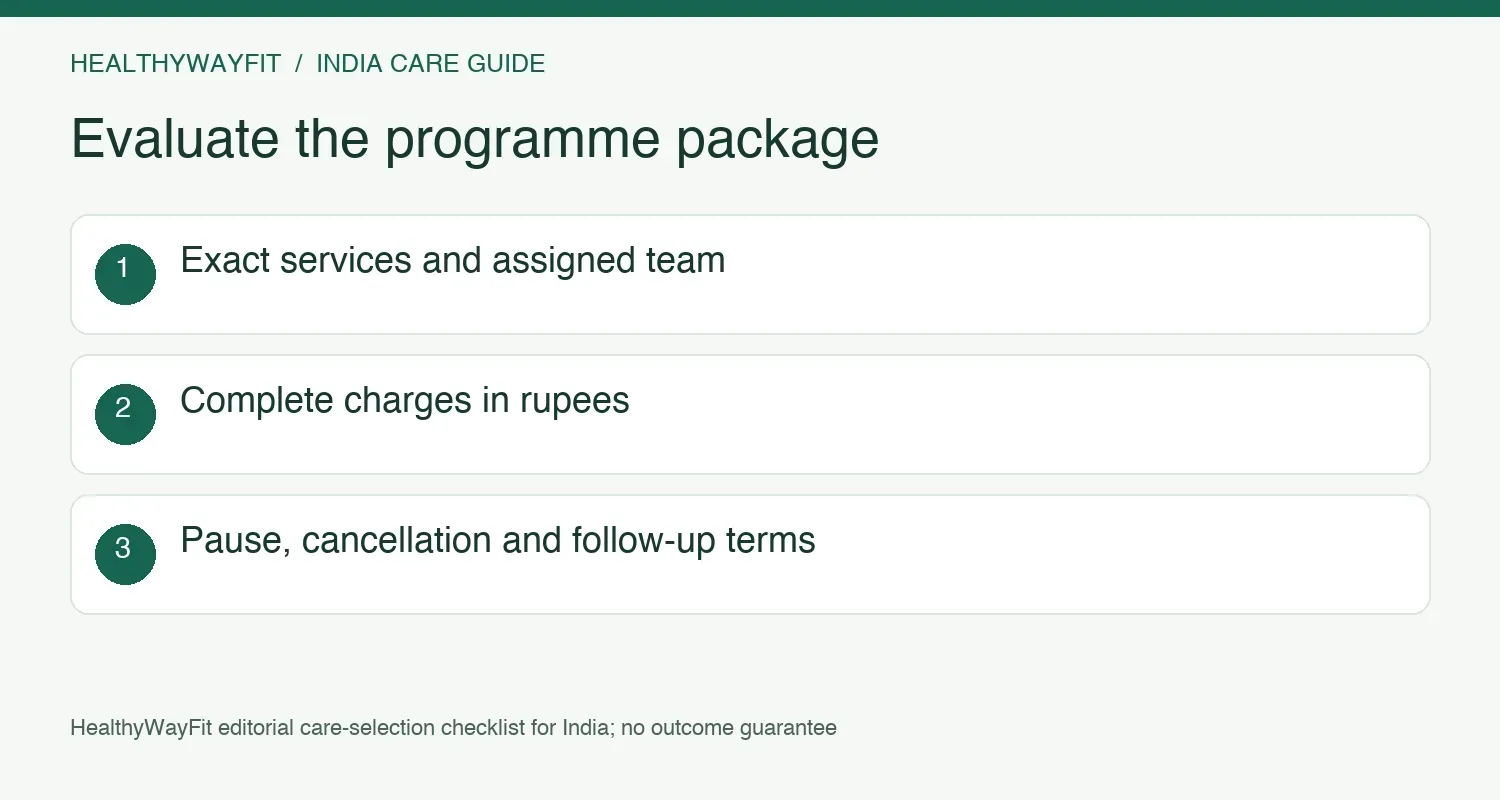
Request a written package that names services, assigned professionals, appointment frequency and total rupee charges. Compare the same care period and inclusions across providers. A long list of features is useful only when you understand which you will actually receive and what will cost extra.
Check these points:
- Doctor and nutrition appointments included in the fee.
- Individual versus group coaching and response hours.
- Tests, devices, replacement supplies and pharmacy charges.
- In-person attendance requirements and remote alternatives.
- Clinical referral arrangements and outside costs.
- Renewal, cancellation, pause and refund terms.
Ask whether the fee changes if you need more medical review than expected. Find out whether an initial consultation can be booked before purchasing a longer package.
If accreditation or registration claims are used to support the sale, verify them with the relevant official body. Neither a certificate nor an attractive facility replaces a clear explanation of the programme.
Our diabetes coaching programme checklist can help you assess the continuing-support part of an offer.
9. How does HealthyWayFit’s offering fit this model?
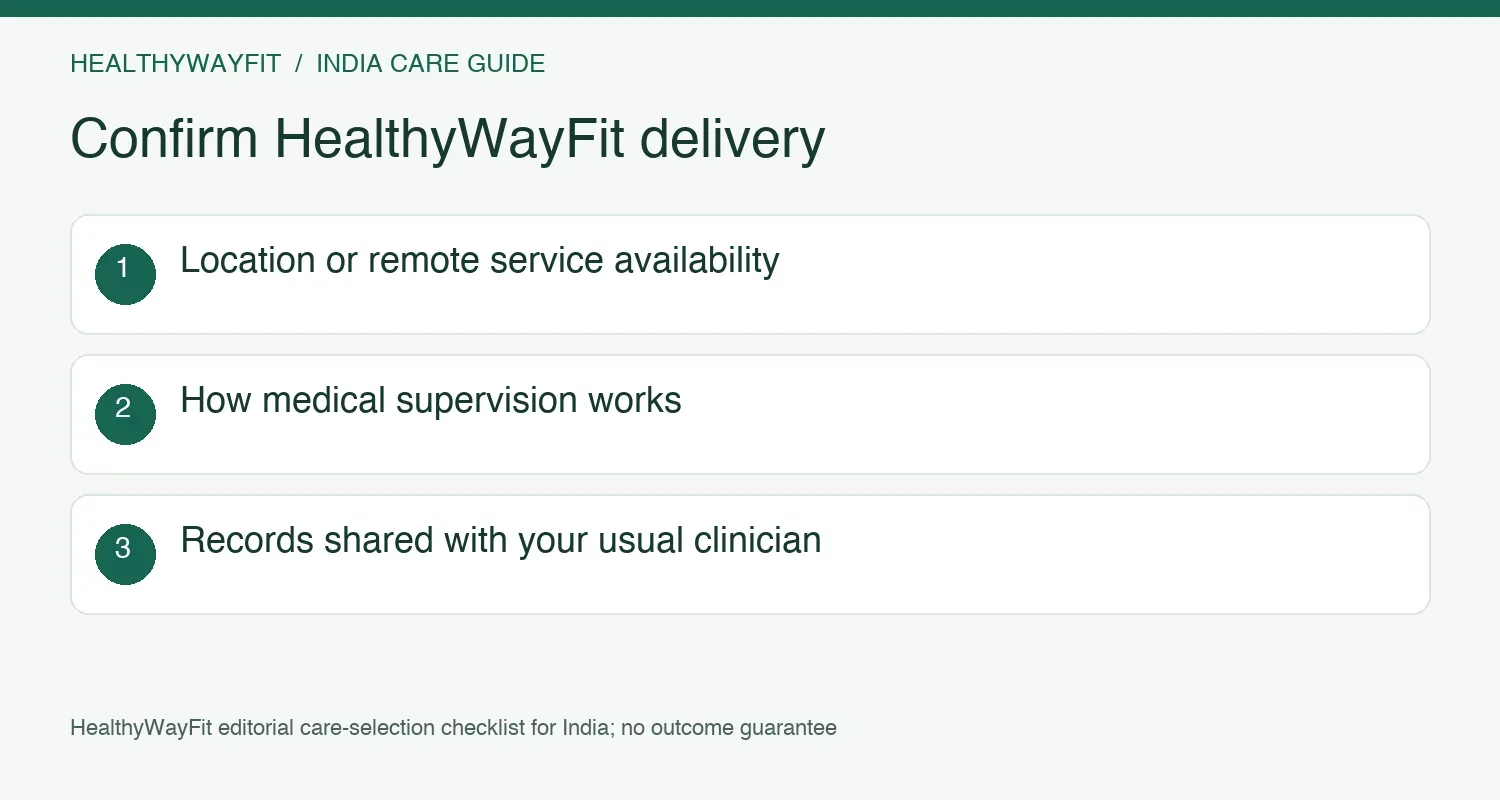
HealthyWayFit describes personalised nutrition, movement guidance, habit coaching, glucose monitoring and doctor supervision on its public website. Ask how those elements would be delivered for you and how they connect with your existing medical care. Confirm whether the proposed service is remote or involves a verified physical location.
This article does not establish that HealthyWayFit operates a centre in your city. Give the team your location, preferred language, current treatment and main goals so it can explain the available format.
Ask who provides clinical supervision, who develops nutrition guidance and how records are shared with your usual doctor. If local examinations or specialist care are required, establish how those appointments are arranged.
You can review the HealthyWayFit programme description before the conversation, but the written service offered to you should settle the practical details.
HealthyWayFit publishes this guide. Apply the same checks to our offering as to another centre; no comparative superiority or guaranteed medical outcome is claimed here.
10. What should a clear care map tell you?
Before joining a diabetes reversal centre, you should be able to explain who does what, when reviews happen and where help is available. Choose a service that fills your actual care gaps and gives you understandable responsibilities. Keep your treating clinician involved when comparing medical and lifestyle-support options.
Write down the proposed doctor, nutrition professional, support contact, local referrals and review dates. If a responsibility has no owner, ask the centre to clarify it before you pay.
Choose a plan you can use alongside work, family and ongoing care. The aim is organised support, with realistic goals and a route for adapting when your circumstances change.
To discuss HealthyWayFit, contact our team with your care needs and location. Request suitability assessment, available formats and a written explanation of the services offered.