By Kirti, Founder & Serial Entrepreneur, HealthyWayFit
Caution: This article is for informational purposes only and does not constitute medical advice.
Always consult a qualified healthcare professional before making changes to your diet, medication, or testing routine.
Knowing what your blood sugar levels should be — before eating, after a meal, at bedtime, and across different tests — is one of the most practical things you can do for your long-term health. Yet the reference numbers can feel confusing at first: different units (mmol/L versus mg/dL), different thresholds depending on whether you have diabetes, and different targets across life stages.
This guide pulls all of that into one place. You will find clear charts for fasting glucose, post-meal glucose, HbA1c, and age-specific ranges — all based on guidance from the American Diabetes Association (ADA), the National Institute for Health and Care Excellence (NICE), and the NHS.
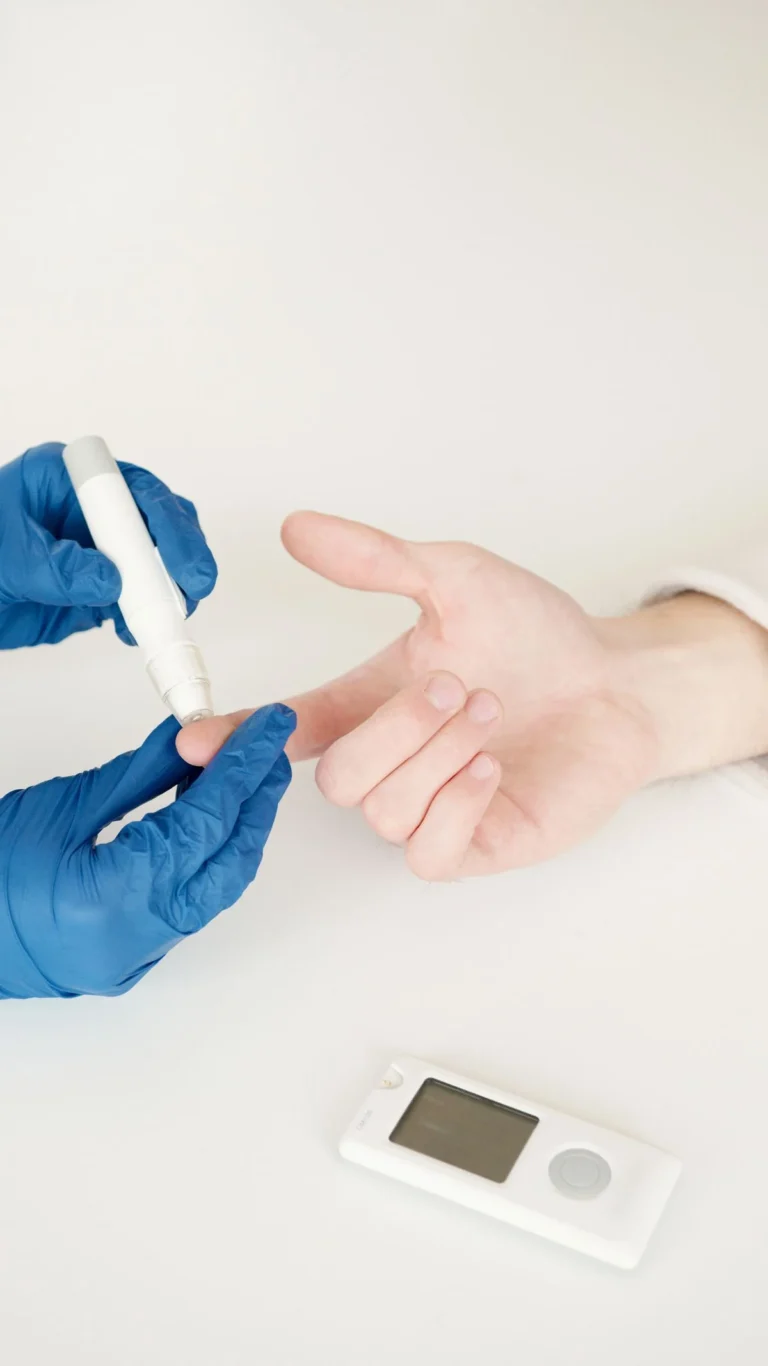
Monitoring blood glucose with a meter is the most direct way to check whether your readings fall within the normal range. Photo: Pexels
What Is Blood Sugar and Why Does It Matter?
Blood sugar — also called blood glucose — is the amount of glucose circulating in your bloodstream at any given time. Glucose is the primary fuel your body uses for energy, and it comes largely from carbohydrates in food. After eating, blood sugar rises; between meals and overnight, it falls back toward its baseline.
The hormone insulin, produced by the pancreas, is responsible for moving glucose from the blood into cells. When this system works well, blood sugar stays within a healthy range. When it does not — either because the pancreas produces insufficient insulin or because cells stop responding to it properly — glucose accumulates in the blood. Over time, consistently high blood glucose damages blood vessels and nerves throughout the body.
That is why understanding your numbers matters, whether you have diabetes, prediabetes, or no diagnosis at all.
Insulin is the key that allows glucose to enter cells; without it working correctly, blood sugar accumulates. Photo: Pexels
Normal Fasting Blood Sugar Levels
A fasting blood sugar test measures glucose after at least eight hours without eating or drinking anything except water. It is usually done first thing in the morning and is one of the two standard tests used to diagnose diabetes and prediabetes.
| Category | Fasting Blood Sugar (mmol/L) | Fasting Blood Sugar (mg/dL) |
|---|---|---|
| Normal | Below 5.5 mmol/L | Below 100 mg/dL |
| Prediabetes | 5.5 – 6.9 mmol/L | 100 – 125 mg/dL |
| Diabetes | 7.0 mmol/L or above | 126 mg/dL or above |
Sources: ADA Standards of Medical Care in Diabetes 2024; diabetes.co.uk clinical reference.
A single elevated reading is not enough to confirm a diagnosis. Clinical guidelines require a confirmatory test — either the same test on a different day, or a second test such as an oral glucose tolerance test (OGTT) or HbA1c.
Fasting blood sugar tests are typically taken early in the morning, after at least eight hours without food. Photo: Pexels
Normal Blood Sugar Levels After Eating
Post-meal (postprandial) blood sugar peaks approximately 60 to 90 minutes after you start eating, then falls back toward baseline over the following two hours. The standard clinical measurement is taken two hours after the first bite.
| Category | 2-Hour Post-Meal (mmol/L) | 2-Hour Post-Meal (mg/dL) |
|---|---|---|
| Normal | Below 7.8 mmol/L | Below 140 mg/dL |
| Prediabetes | 7.8 – 11.0 mmol/L | 140 – 199 mg/dL |
| Diabetes | 11.1 mmol/L or above | 200 mg/dL or above |
Source: ADA Standards of Medical Care in Diabetes 2024; NICE guidance.
Even people without diabetes will see blood sugar rise after eating. The body’s healthy response is to bring levels back under 7.8 mmol/L (140 mg/dL) within two hours. If blood sugar stays elevated longer, or consistently spikes higher, this warrants investigation.
It is also worth knowing the 1-hour mark: although less commonly used for diagnosis, peak glucose around 60 minutes after eating typically sits below 8.0–9.0 mmol/L (145–162 mg/dL) in most healthy adults.
The composition of a meal — especially its carbohydrate content and fibre — directly affects how high blood sugar rises after eating. Photo: Pexels
Normal Blood Sugar Levels by Age
Blood glucose reference ranges are broadly consistent across healthy adults, but several groups have distinct targets or require additional context.
Children and Adolescents Without Diabetes
There is no widely agreed separate fasting range for healthy children compared with adults. The diagnostic thresholds used clinically (normal below 5.5 mmol/L / 100 mg/dL fasting; below 7.8 mmol/L / 140 mg/dL at two hours) apply from childhood through adulthood.
Children and Adolescents With Type 1 Diabetes
NICE guidelines set specific targets for this group, which reflect the challenge of managing tighter control in children:
| Time point | Target Range (mmol/L) | Target Range (mg/dL approx.) |
|---|---|---|
| On waking | 4.0 – 7.0 mmol/L | 72 – 126 mg/dL |
| Before meals | 4.0 – 7.0 mmol/L | 72 – 126 mg/dL |
| 90 min after meals | 5.0 – 9.0 mmol/L | 90 – 162 mg/dL |
| Bedtime | 4.0 – 7.0 mmol/L | 72 – 126 mg/dL |
Source: NICE NG18, Type 1 diabetes in adults (applies also to paediatric guidance in conjunction with NG18).
Adults (18–64)
Healthy adults without diabetes aim for a fasting level below 5.5 mmol/L (100 mg/dL) and a two-hour post-meal level below 7.8 mmol/L (140 mg/dL). Adults managing type 1 or type 2 diabetes have individualised targets set by their clinical team, typically guided by the ADA or NICE frameworks outlined in the diabetes-management section below.
Adults 65 and Older
The ADA recommends somewhat relaxed targets for older adults, particularly those with multiple health conditions, cognitive impairment, or assisted-living needs — because the risks of low blood sugar (hypoglycemia) in this group are especially serious.
| Group | Pre-meal Target (mg/dL) | Pre-meal Target (mmol/L approx.) |
|---|---|---|
| Healthy older adults | 80 – 130 mg/dL | 4.4 – 7.2 mmol/L |
| Complex medical needs / assisted living | 80 – 180 mg/dL | 4.4 – 10.0 mmol/L |
| End-of-life / very limited function | Up to 200 mg/dL | Up to 11.1 mmol/L |
Source: ADA Standards of Medical Care in Diabetes 2024, Section 13: Older Adults.
The key principle is that tighter targets suitable for a 45-year-old may not be appropriate for a 78-year-old with multiple comorbidities, where avoiding hypoglycemic episodes takes priority.
Pregnancy
Blood sugar targets during pregnancy are considerably stricter because elevated glucose crosses the placenta and affects fetal development.
| Time point | Target |
|---|---|
| Fasting | Below 5.3 mmol/L (95 mg/dL) |
| 1 hour after eating | Below 7.8 mmol/L (140 mg/dL) |
| 2 hours after eating | Below 6.7 mmol/L (120 mg/dL) |
Source: ADA Standards of Medical Care in Diabetes 2024, Gestational Diabetes.
Blood sugar targets for older adults are set more conservatively to reduce the risk of dangerous hypoglycemic episodes. Photo: Pexels
Normal HbA1c Levels
The HbA1c (glycated haemoglobin) test gives a different view of blood sugar: it reflects your average glucose over approximately the previous two to three months, expressed as a percentage (%) or in mmol/mol.
Because it is not affected by day-to-day variation — what you ate the night before, or whether you fasted — it is a more reliable indicator of long-term blood sugar control. It is used both for diagnosis and for monitoring.
| Category | HbA1c (%) | HbA1c (mmol/mol) |
|---|---|---|
| Normal | Below 5.7% | Below 39 mmol/mol |
| Prediabetes | 5.7 – 6.4% | 39 – 47 mmol/mol |
| Diabetes | 6.5% or above | 48 mmol/mol or above |
Source: ADA Standards of Medical Care in Diabetes 2024; diabetes.co.uk clinical reference.
For people already diagnosed with diabetes, the target HbA1c is typically below 53 mmol/mol (7.0%) per ADA recommendations, though individual targets are agreed with a clinician.
If you want to understand more about this test and how to interpret your results, see our detailed guide on what is HbA1c and what your result means.
The HbA1c test measures your average blood glucose over approximately two to three months — a key tool for diagnosing and monitoring diabetes. Photo: Pexels
Target Blood Sugar Ranges for People With Diabetes
People living with diabetes aim for tighter ranges than the diagnostic thresholds above. The goal is not to avoid a diagnosis — it is to protect against long-term complications. Below are the target ranges recommended by NICE (widely used in the UK, Australia, Canada, and Europe) and the ADA (widely used in the US).
NICE Target Ranges (mmol/L)
| Group | Before meals | 90 minutes after meals |
|---|---|---|
| Type 1 diabetes | 4.0 – 7.0 mmol/L | 5.0 – 9.0 mmol/L |
| Type 2 diabetes | 4.0 – 7.0 mmol/L | Below 8.5 mmol/L |
| Children with type 1 | 4.0 – 7.0 mmol/L | 5.0 – 9.0 mmol/L |
Source: NICE NG17, Type 2 diabetes in adults; NICE NG18, Type 1 diabetes.
ADA Target Ranges (mg/dL)
| Group | Before meals | After meals |
|---|---|---|
| Adults with T1D or T2D | 80 – 130 mg/dL | Below 180 mg/dL |
| Pregnancy (T1D or gestational) | Below 95 mg/dL | Below 140 mg/dL (1hr) / Below 120 mg/dL (2hr) |
| Adults 65+ (healthy) | 80 – 130 mg/dL | — |
Source: ADA Standards of Medical Care in Diabetes 2024.
These targets are starting points. Your clinical team may individualise them based on hypoglycemia risk, medications, how long you have had diabetes, and other health factors.
Continuous glucose monitors (CGMs) allow real-time tracking of blood sugar trends, making it easier to see when levels are drifting outside target ranges. Photo: Pexels
What Is Low Blood Sugar (Hypoglycemia)?
Low blood sugar — hypoglycemia — occurs when glucose drops below 3.9 mmol/L (70 mg/dL). At this level, the brain and other organs are not receiving enough fuel, and symptoms typically emerge.
Common symptoms of hypoglycemia include:
- Shakiness or trembling
- Sweating
- Rapid heartbeat
- Pale skin
- Dizziness or light-headedness
- Sudden hunger
- Irritability or confusion
- Difficulty concentrating
Below approximately 2.8 mmol/L (50 mg/dL), hypoglycemia becomes severe and can cause loss of consciousness, seizures, or — in prolonged cases — permanent damage. Severe hypoglycemia requires immediate medical attention.
Hypoglycemia unawareness is a condition in which the body no longer produces the usual warning symptoms at low blood sugar levels. It is more common in people who have had diabetes for many years. Continuous glucose monitors (CGMs) are often recommended for this group to provide alerts before glucose falls critically low.
Hypoglycemia — blood sugar below 3.9 mmol/L (70 mg/dL) — can cause shakiness, sweating and confusion, and requires prompt treatment. Photo: Pexels
What Is High Blood Sugar (Hyperglycemia)?
Hyperglycemia occurs when blood sugar rises above normal levels. In people without diabetes, the kidneys and pancreas usually bring glucose back into range within a few hours of eating. In people with impaired insulin function, elevated glucose may persist for much longer.
| Severity | Fasting (mmol/L) | Fasting (mg/dL) |
|---|---|---|
| Mildly elevated | 5.6 – 6.9 mmol/L | 101 – 125 mg/dL |
| Prediabetes range | 6.1 – 6.9 mmol/L | 110 – 125 mg/dL |
| Diabetes threshold | 7.0 mmol/L or above | 126 mg/dL or above |
| Severe hyperglycemia | Above 13.9 mmol/L | Above 250 mg/dL |
Common symptoms of hyperglycemia include:
- Increased thirst
- Frequent urination
- Blurred vision
- Headache
- Fatigue
If fasting blood sugar consistently exceeds 7.0 mmol/L (126 mg/dL), or post-meal glucose regularly exceeds 11.1 mmol/L (200 mg/dL), a medical assessment is warranted.
Consistently elevated blood sugar is a key driver of long-term complications — dietary changes are among the most effective early interventions. Photo: Pexels
What Affects Blood Sugar Readings?
Blood sugar is not a fixed number — it fluctuates throughout the day in response to multiple factors:
Food: Carbohydrates have the greatest effect on post-meal blood glucose. High-fibre carbohydrates cause a slower, lower spike than refined carbohydrates and sugary drinks. Fat and protein also affect glucose, though less acutely.
Exercise: Physical activity typically lowers blood glucose by increasing glucose uptake by muscles. However, intense exercise can temporarily raise blood sugar through stress hormone release.
Sleep: Poor sleep quality and short sleep duration are associated with reduced insulin sensitivity, leading to higher fasting blood sugar the following morning.
Stress: Cortisol and adrenaline (stress hormones) raise blood sugar as part of the fight-or-flight response. Chronic stress can elevate baseline glucose levels.
Illness: Infection and illness trigger hormone release that increases blood glucose, sometimes dramatically. People with diabetes need to monitor more carefully when unwell.
Medications: Some common medications — including corticosteroids, certain antidepressants, and some blood pressure medications — can raise blood sugar as a side effect.
Regular physical activity is one of the most effective tools for maintaining normal blood sugar levels in the long term. Photo: Pexels
When Should You Test Your Blood Sugar?
If you are monitoring at home with a glucometer or CGM, the most informative testing times are:
- First thing in the morning (fasting): Establishes your baseline before food or activity affect readings. Compare against the fasting ranges above.
- Before meals: Helps assess whether blood sugar has returned to baseline since your last meal.
- 1–2 hours after the first bite of a meal: Catches your post-meal peak and lets you see how different foods affect you.
- Before bed: Relevant for overnight glucose management, particularly for people on insulin.
If you do not have diabetes and are not monitoring regularly, the most reliable way to assess your blood sugar status is an HbA1c test ordered by your doctor. This gives a three-month average and is not affected by what you ate the day before.
Poor sleep quality can impair insulin sensitivity and raise fasting blood sugar — quality rest is an often-underestimated factor in blood glucose regulation. Photo: Pexels
When to See a Doctor
You should discuss your blood sugar with a healthcare professional if:
- Your fasting blood sugar is 5.5 mmol/L (100 mg/dL) or above on more than one occasion
- Your post-meal reading regularly exceeds 7.8 mmol/L (140 mg/dL) two hours after eating
- You experience symptoms of hyperglycemia (thirst, frequent urination, fatigue, blurred vision) or hypoglycemia (shakiness, sweating, confusion)
- You are aged 35 or over with risk factors for diabetes — excess weight, family history, high blood pressure, or a previous diagnosis of prediabetes or gestational diabetes
- Your HbA1c result has never been tested and you have one or more risk factors
Seek urgent medical care if your blood sugar exceeds 16.7 mmol/L (300 mg/dL) and is not responding to your usual management, or if you experience symptoms of diabetic ketoacidosis — severe thirst, frequent urination, nausea, abdominal pain, and a fruity odour on the breath. DKA is a medical emergency.
If you have concerns about your blood sugar readings, a GP or endocrinologist can interpret your results and arrange further testing. Photo: Pexels
FAQ
What is a normal fasting blood sugar level?
A normal fasting blood sugar for adults without diabetes is below 5.5 mmol/L (100 mg/dL). A level of 5.5 – 6.9 mmol/L (100 – 125 mg/dL) is classified as prediabetes. A fasting level of 7.0 mmol/L (126 mg/dL) or above on two separate occasions is diagnostic of diabetes.
What should blood sugar be 2 hours after eating?
For adults without diabetes, blood sugar should be below 7.8 mmol/L (140 mg/dL) at the two-hour post-meal mark. A reading of 7.8 – 11.0 mmol/L (140 – 199 mg/dL) at two hours indicates prediabetes; 11.1 mmol/L (200 mg/dL) or above indicates diabetes.
What is a normal blood sugar level for a 70-year-old?
For a healthy 70-year-old without diabetes, the same general ranges apply as for younger adults — fasting below 5.5 mmol/L (100 mg/dL) and post-meal below 7.8 mmol/L (140 mg/dL). For a 70-year-old managing diabetes, the ADA recommends a pre-meal target of 80–180 mg/dL (4.4–10.0 mmol/L) depending on overall health and complexity of care.
What is a normal random blood sugar level?
A random blood glucose test (taken at any time of day, regardless of food intake) is not typically used for routine monitoring, but is part of emergency assessment. A random reading below 11.1 mmol/L (200 mg/dL) is considered normal; 11.1 mmol/L or above, combined with symptoms such as frequent urination or excessive thirst, is diagnostic of diabetes.
Is 5.6 mmol/L (100 mg/dL) a normal blood sugar?
A fasting reading of 5.6 mmol/L (100 mg/dL) is right at the upper boundary of normal and the lower boundary of the prediabetes range. Some guidelines classify this as mildly elevated; others set the prediabetes threshold at 5.5 mmol/L (100 mg/dL). A single reading at this level is not cause for alarm, but consistent readings in this range are worth discussing with a doctor.
Can blood sugar be too low even without diabetes?
Yes. Non-diabetic hypoglycemia (sometimes called reactive hypoglycemia) can occur, particularly after a high-carbohydrate meal followed by an exaggerated insulin response. Symptoms below 3.9 mmol/L (70 mg/dL) — shakiness, sweating, dizziness — in someone without diabetes should be investigated by a doctor, as they may indicate an underlying condition.
What is a normal blood sugar level at bedtime?
There is no universal bedtime target for people without diabetes. For people with diabetes, NICE recommends aiming for 5.0 – 7.0 mmol/L (90 – 126 mg/dL) at bedtime to reduce the risk of overnight hypoglycemia. The ADA sets a bedtime target of 90 – 150 mg/dL (5.0 – 8.3 mmol/L) for children with type 1 diabetes.
Takeaway
Normal blood sugar levels are not a single number but a range that shifts depending on when you test, your age, and whether you have a diabetes diagnosis. For most healthy adults, fasting glucose below 5.5 mmol/L (100 mg/dL), post-meal glucose below 7.8 mmol/L (140 mg/dL) at two hours, and an HbA1c below 5.7% (39 mmol/mol) represent the benchmarks to aim for.
If your readings are consistently near the upper boundaries of these ranges — or you have risk factors for diabetes — arranging a blood test with your doctor is the most effective next step. Catching elevated blood sugar early, in the prediabetes window, gives you the widest range of options for bringing it back down through lifestyle changes before medication becomes necessary.
To understand more about interpreting your results, see our guides on what your HbA1c result means and the difference between fasting blood sugar and HbA1c tests.
Sources:
- American Diabetes Association. Standards of Medical Care in Diabetes — 2024. Diabetes Care. 2024; doi:10.2337/dc24-S002.
- National Institute for Health and Care Excellence (NICE). Type 2 diabetes in adults: management (NG17). NICE.org.uk. Updated 2022.
- National Institute for Health and Care Excellence (NICE). Type 1 diabetes in adults: diagnosis and management (NG18). NICE.org.uk. Updated 2023.
- NHS. Blood sugar levels. NHS.uk. Accessed 2026.
- Diabetes.co.uk. Blood Sugar Level Ranges. diabetes.co.uk. Accessed 2026.
- Centers for Disease Control and Prevention. Diabetes Tests. CDC.gov. Accessed 2026.
- Mayo Clinic. Diabetes — Diagnosis & treatment. MayoClinic.org. Accessed 2026.