If your blood sugar swings after meals, the fastest lever you can pull is usually the amount and type of carbohydrate on your plate. A low-carb approach doesn’t mean “no carb” or joyless eating. It means building meals around protein, healthy fats and non-starchy vegetables, then adding smaller, smarter portions of quality carbohydrate. For many people living with type 2 diabetes, this can support steadier glucose, fewer cravings and gradual weight loss.
Why fewer carbs can steady your glucose
Carbohydrate is the nutrient that raises blood glucose the most. When you reduce the total load, especially refined carbs like white rice, maida and sugar, your post-meal spikes tend to be smaller and your insulin has an easier job. Research suggests that lower-carbohydrate patterns can improve HbA1c and reduce medication needs for some people, particularly in the first year. The goal isn’t extremes; it’s a sustainable level you can keep for years.
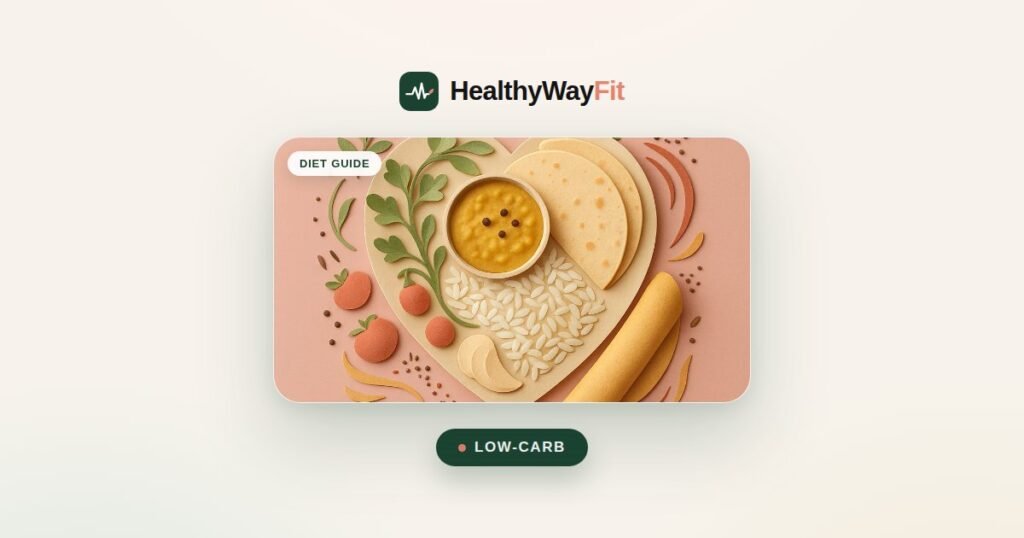
Build the “low-carb plate”
A simple visual makes this easy at every meal:
- Half the plate: non-starchy vegetables such as palak, bhindi, lauki, cauliflower, beans, cabbage and salad.
- One quarter: protein like eggs, paneer, tofu, dal, chicken, fish or soya.
- One quarter: a measured portion of quality carbohydrate such as one small millet roti, a fist of brown rice, or rajma.
- Add fats sensibly: a little ghee, olive oil, nuts, seeds or avocado for satiety.
Tip: Eat your vegetables and protein first, and keep the carb portion for last. This “food order” can blunt the glucose rise from the same meal.
Smart swaps that lower the carb load
- Swap white rice for a smaller portion of brown rice, or mix in cauliflower rice.
- Replace two large wheat rotis with one thicker millet or besan roti.
- Trade sugary chai and juice for unsweetened chai, chaas or water.
- Choose whole dals and legumes over refined snacks like biscuits and namkeen.
- Pick berries, guava or a small apple over mango shakes and mithai.
A word of caution if you take medication
This matters. If you use insulin or sulfonylureas (medicines like glimepiride or gliclazide), cutting carbs quickly can cause low blood sugar (hypoglycaemia). Do not reduce carbs dramatically on your own. Work with your doctor so doses can be adjusted safely, monitor your glucose more often at the start, and learn to recognise and treat lows.
What a day looks like
Here is a gentle, India-friendly low-carb day (adjust portions to your appetite and plan):
- Breakfast: two-egg bhurji with onion and tomato, plus a bowl of sauteed spinach. Vegetarian: paneer or tofu bhurji.
- Lunch: one small millet roti, a katori of rajma or dal, a large mixed vegetable sabzi, cucumber-tomato salad and curd.
- Snack: a handful of almonds and walnuts, or roasted chana with chaas.
- Dinner: grilled fish or tofu tikka, stir-fried non-starchy vegetables, and a small portion of dal. Skip the rice or keep it to a few spoons.
Notice the pattern: vegetables and protein anchor every meal, carbs are present but portioned, and nothing feels like deprivation. Because the meals are satisfying, you are far less likely to reach for sugary snacks between them, which keeps your glucose calmer across the whole day, not just after eating.
Getting the details right
- Hydrate: some early “hunger” is thirst. Drink water through the day.
- Don’t fear healthy fat: it keeps you full, but keep portions reasonable for weight goals.
- Fibre still matters: vegetables, legumes and seeds keep digestion comfortable.
- Sleep and stress: both affect glucose, so they support your diet, not compete with it.
Frequently asked questions
Is low-carb the same as keto?
No. Keto is a very low-carb, high-fat pattern that pushes the body into ketosis. A moderate low-carb plate simply reduces carbohydrate to a comfortable, sustainable level while keeping some whole-food carbs like dal, legumes and a little millet. Most people find moderate low-carb easier to maintain long term.
Can I still eat rice and roti?
Yes, in smaller, measured portions and paired with protein, fat and plenty of vegetables. It’s the quantity and context that matter most. Choosing less-refined options such as millets, brown rice and whole dals also helps.
How quickly might I see results?
Many people notice steadier readings within a couple of weeks, with weight and HbA1c improving over months. Results vary from person to person, and consistency matters more than perfection.
Ready to personalise this?
A low-carb plate is powerful, but the right carb level for you depends on your medications, activity and health goals. Our HealthyWayFit coaches and clinicians can help you build a plan that fits your kitchen and keeps you safe.
This guide is for education only and is not medical advice. It is not a substitute for care from a qualified professional. Please consult your doctor or dietitian before making major diet changes, and never stop or adjust diabetes medication on your own, especially insulin or sulfonylureas, because of the risk of low blood sugar.