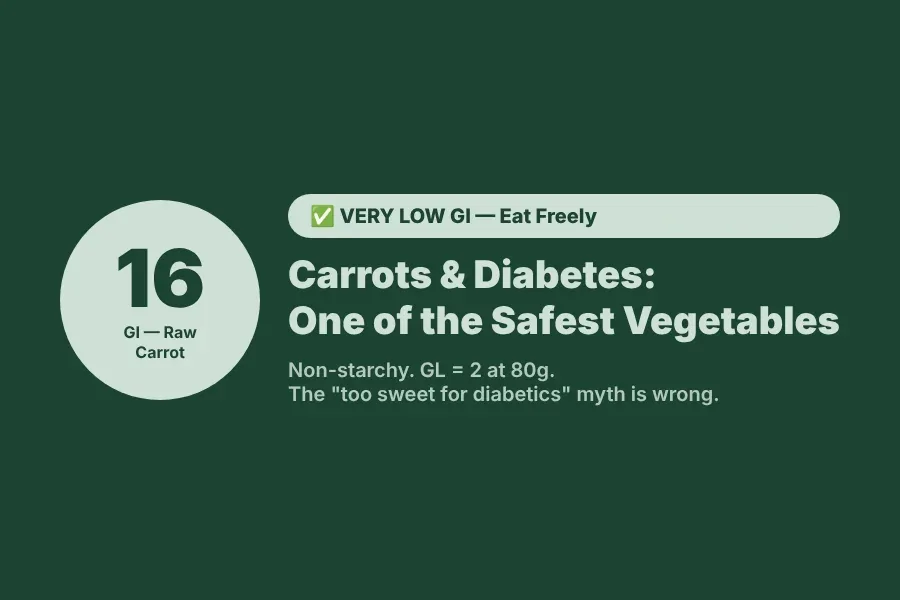

Yes — carrots are one of the best vegetables for people with diabetes. Despite their natural sweetness, carrots have a low glycemic index, high fibre content, and a range of nutrients that support blood sugar control and overall health. They are classified as a non-starchy vegetable, which means they can be eaten freely as part of a balanced diabetic diet.
Here is a clear breakdown of the evidence.
What Is the Glycemic Index of Carrots?
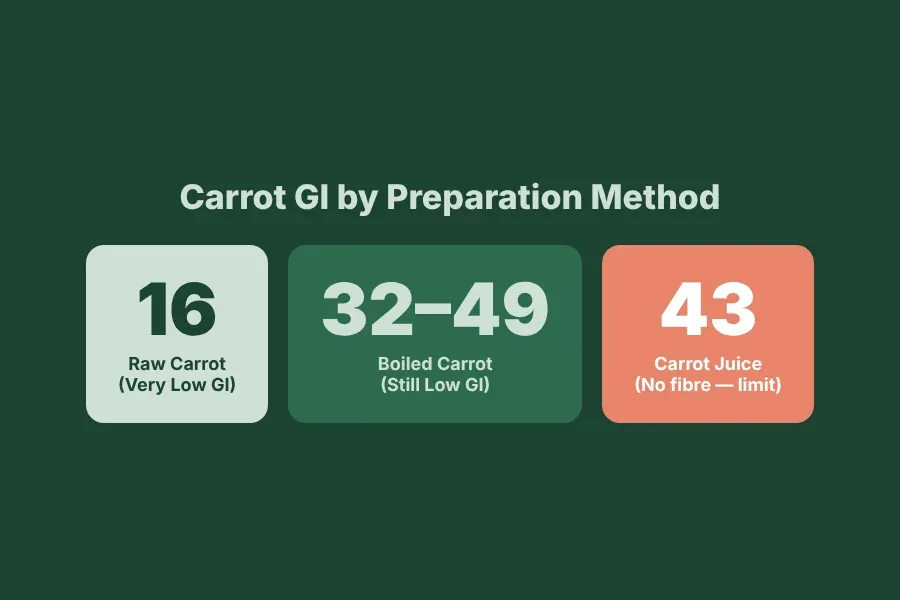
The glycemic index (GI) of carrots depends on how they are prepared:
| Preparation | GI |
|---|---|
| Raw carrots | ~16 |
| Boiled carrots | 32–49 |
| Carrot juice | ~43 |
Raw carrots have a very low GI of around 16, making them one of the lowest-GI vegetables available. Even boiled carrots stay firmly in the low GI range (below 55). This means carrots cause a slow, gradual rise in blood sugar rather than a spike.
The glycemic load (GL) of a standard 80 g serving of carrot is approximately 2–4, which is very low regardless of preparation.
Are Carrots Safe for Diabetics?
Yes. Carrots are classified as a non-starchy vegetable — the same category as spinach, cucumber, and broccoli. Non-starchy vegetables are recommended freely for people with diabetes by organisations including Diabetes UK and the American Diabetes Association, because they have minimal impact on blood glucose.
The natural sugar in carrots (mainly sucrose and glucose) is released slowly during digestion because of the vegetable’s fibre matrix, preventing rapid blood sugar spikes.
Nutritional Profile of Carrots (per 100 g raw)
| Nutrient | Amount |
|---|---|
| Calories | 41 kcal |
| Carbohydrates | 9.6 g |
| Fibre | 2.8 g |
| Natural sugars | 4.7 g |
| Vitamin A (as beta-carotene) | 835 mcg |
| Potassium | 320 mg |
| GI (raw) | ~16 |
| GL (80 g serving) | ~2 |
Benefits of Carrots for People with Diabetes
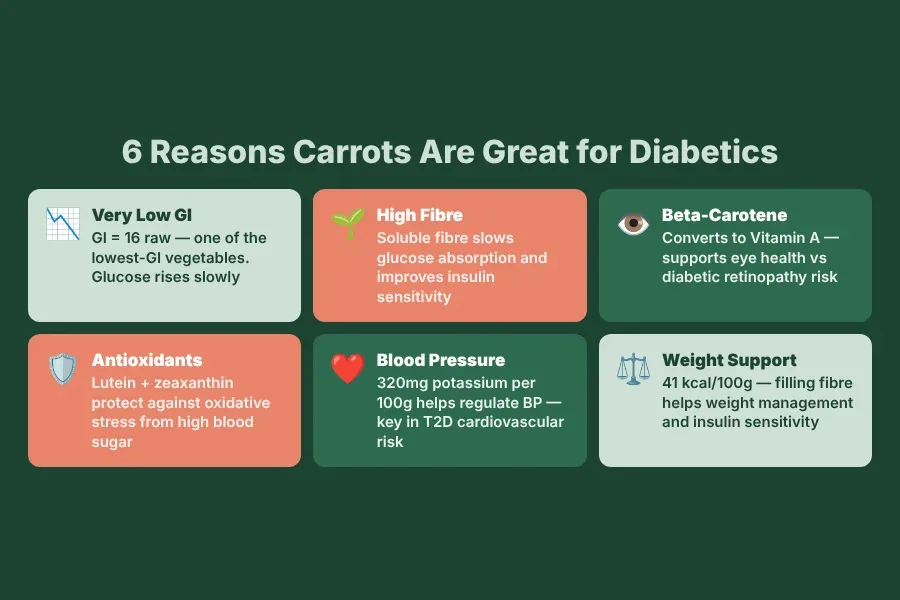
1. Low Glycemic Impact
With a GI of 16 (raw) and a GL of just 2–4 per serving, carrots are among the safest carbohydrate-containing foods for blood sugar management. Eating carrots is unlikely to raise blood glucose significantly.
2. High in Soluble Fibre
Carrots contain both soluble and insoluble fibre. Soluble fibre slows glucose absorption from the gut, reduces post-meal blood sugar spikes, and improves insulin sensitivity over time. The fibre in carrots also supports gut health and lowers LDL cholesterol — important since people with Type 2 diabetes have elevated cardiovascular risk.
3. Rich in Beta-Carotene (Vitamin A)
Beta-carotene is the compound that gives carrots their orange colour. In the body it converts to Vitamin A, which supports immune function, eye health, and skin integrity. People with poorly controlled diabetes are at higher risk of eye complications (diabetic retinopathy), making vitamin A-rich foods a valuable part of the diet.
4. Antioxidant Protection
Carrots contain lutein, zeaxanthin, and other antioxidants that protect against oxidative stress — a major driver of diabetes complications including kidney damage and nerve damage.
5. Blood Pressure Support
Potassium in carrots helps regulate blood pressure. Since high blood pressure commonly accompanies Type 2 diabetes and increases the risk of heart disease, potassium-rich foods like carrots are a useful addition.
6. Weight Management
Carrots are low in calories (41 kcal per 100 g) and high in water and fibre, making them filling. Maintaining a healthy weight is one of the most effective ways to improve insulin sensitivity and blood sugar control.
Raw vs. Cooked Carrots for Diabetes
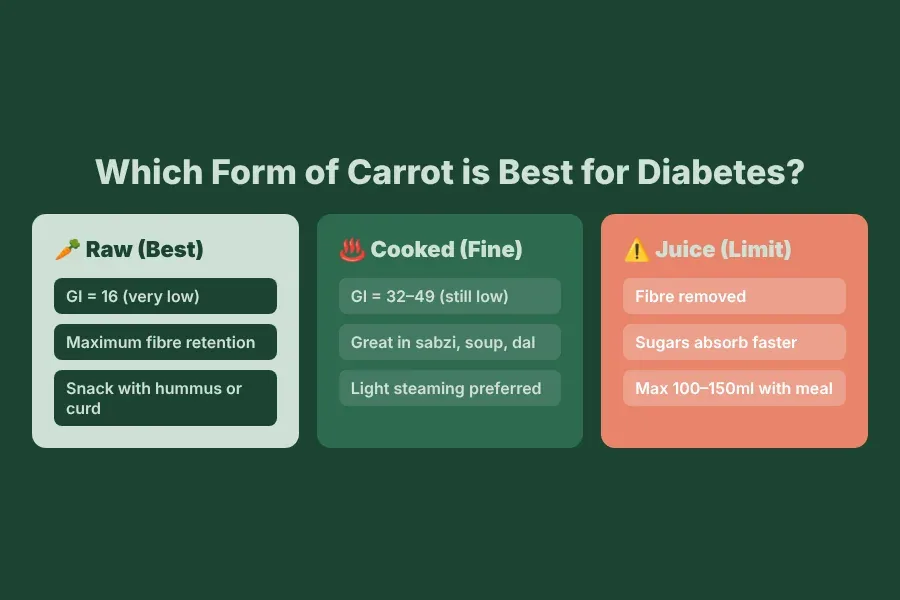
Raw carrots have a lower GI (around 16) than cooked carrots (32–49). Cooking breaks down the cell walls and softens the fibre, making sugars more readily available for absorption. However, even cooked carrots remain in the low GI category and are safe for people with diabetes.
For blood sugar management:
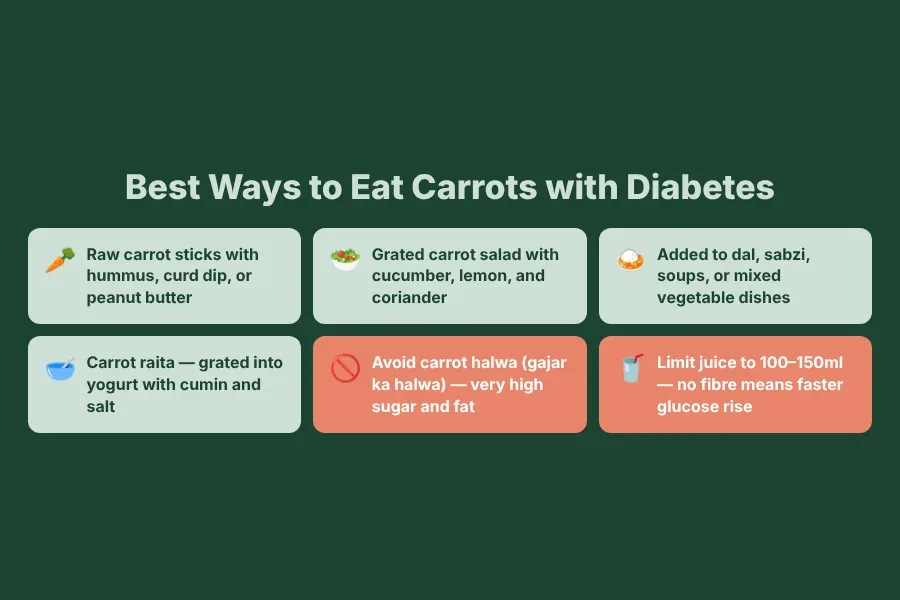
- Raw carrots are the best option — eat as a snack, in salads, or with hummus
- Lightly steamed or boiled carrots are fine in small to moderate portions
- Carrot juice should be limited — juicing removes fibre and concentrates sugars
How Much Carrot Can Diabetics Eat?
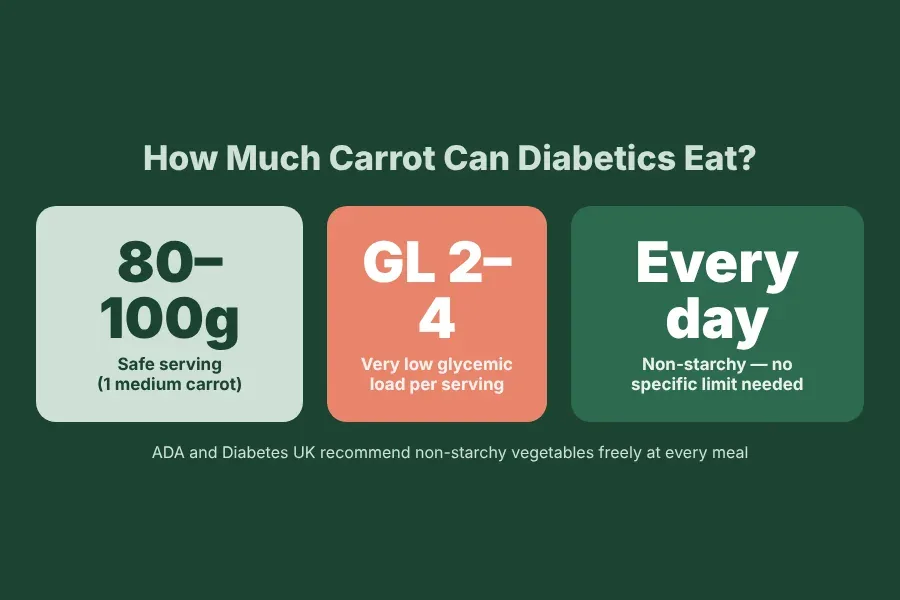
A standard serving of 80–100 g (roughly one medium carrot) is safe and beneficial. As a non-starchy vegetable, most diabetes dietary guidelines allow carrots at each meal without specific portion restrictions, though eating large amounts of any single food is not ideal.
A practical approach:
- Use carrot sticks as a snack with a protein dip (hummus, peanut butter, or curd)
- Add grated carrot to salads, raita, or sabzi
- Include carrot in dals, soups, or mixed vegetable dishes
Carrot vs. Other Common Vegetables for Diabetes
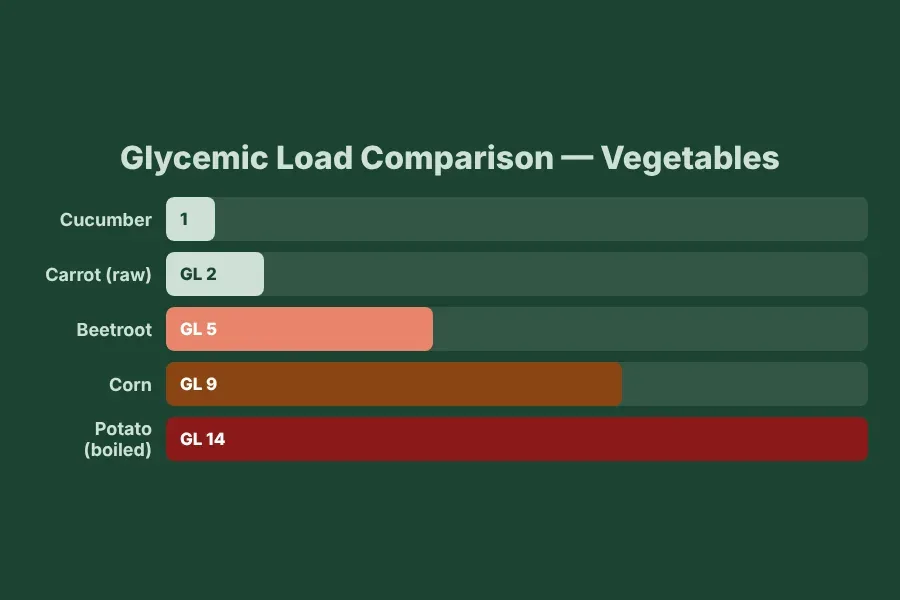
| Vegetable | GI | GL | Notes |
|---|---|---|---|
| Carrot (raw) | ~16 | ~2 | Excellent choice |
| Cucumber | <15 | <1 | Excellent choice |
| Beetroot | 61–65 | ~5 | Moderate; portion-controlled |
| Corn | ~55 | ~9 | Higher GL; limit portions |
| Potato (boiled) | ~78 | ~14 | High; avoid or minimise |
Common Questions About Carrots and Diabetes
Q: Does carrot increase blood sugar?
In standard portions, raw or lightly cooked carrots cause minimal blood sugar increase. Their low GI and glycemic load mean glucose is released gradually. Research and clinical guidelines consistently support carrots as a safe food for diabetics.
Q: Is carrot juice good for diabetes?
Carrot juice is significantly higher in rapidly available sugars than whole carrots because the juicing process removes the fibre. If you want to drink carrot juice, limit to 100–150 ml and combine it with a fibre-rich meal. Whole carrots are a better option.
Q: Can diabetics eat carrots daily?
Yes. Carrots are non-starchy vegetables and safe to eat every day for most people with diabetes. They provide fibre, antioxidants, and vitamins with minimal impact on blood glucose.
Q: Are baby carrots better than regular carrots for diabetes?
Baby carrots and regular carrots are nutritionally similar. The GI is the same. Baby carrots are convenient as a portable snack but there is no meaningful difference in their effect on blood sugar.
The Bottom Line
Carrots are one of the safest and most beneficial vegetables for people with diabetes. With a glycemic index of just 16 (raw), a low glycemic load, and high fibre and antioxidant content, they support stable blood sugar, cardiovascular health, and eye health. The long-standing myth that carrots are “too sweet” for diabetics is not supported by the evidence — they can be eaten freely as part of a balanced diet.
References
- WebMD. Carrots and Their Effect on Blood Sugar. https://www.webmd.com/diabetes/carrots-effect-on-blood-sugar
- Verywell Health. What Happens to Your Blood Sugar When You Eat Carrots Regularly. https://www.verywellhealth.com/carrots-and-blood-sugar-11842782
- Everyday Health. 10 Foods That Won’t Spike Your Blood Sugar. https://www.everydayhealth.com/pictures/surprising-foods-little-impact-blood-sugar/



