If you searched “diabetes meaning in tamil,” you likely want a clear, simple explanation of what this disease is — in a way that makes sense, whether you’re explaining it to a family member or trying to understand a diagnosis yourself.
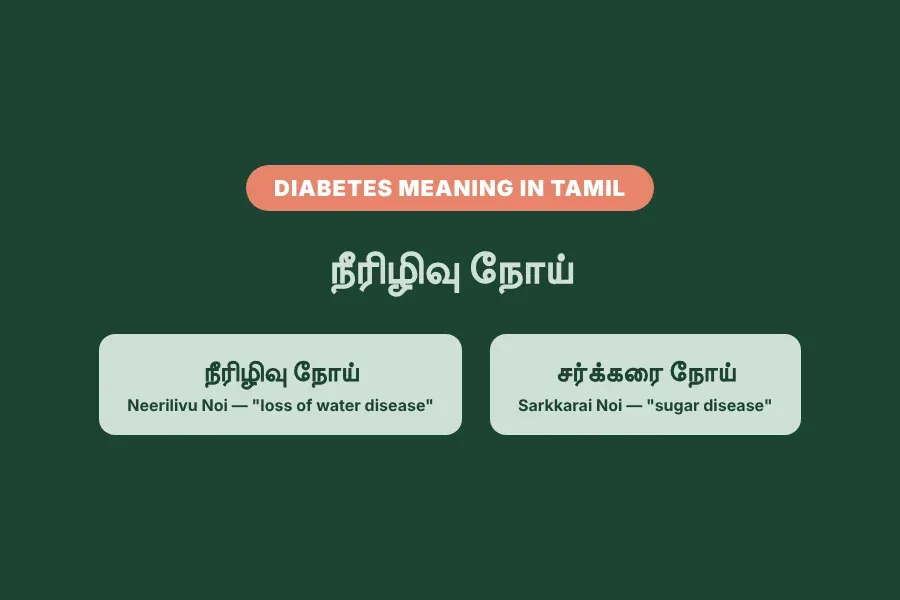
The Tamil word for diabetes is நீரிழிவு நோய் (Neerilivu Noi). The literal translation of நீரிழிவு is “loss of water” or “urine flowing out” — which reflects the most noticeable early symptom of the disease: frequent, excessive urination. The word நோய் simply means “disease.”
In modern medical Tamil, diabetes is also referred to as சர்க்கரை நோய் (Sarkkarai Noi) — literally “sugar disease” — because the condition involves excess sugar (glucose) in the blood.
This guide explains what diabetes is, what causes it, how to recognise it, and what you can do about it — in clear English with the Tamil terms you need.
நீரிழிவு நோய் என்றால் என்ன? (What Does Diabetes Mean?)
Diabetes is a long-term condition in which the body cannot regulate blood sugar (glucose) levels properly.
Here is how a healthy body works: When you eat, your food breaks down into glucose. That glucose enters your bloodstream. Your pancreas (கணையம், kanaiyam) responds by releasing a hormone called insulin (இன்சுலின்). Insulin acts like a key — it unlocks your cells so glucose can enter and be used as energy.
In diabetes, this system breaks down in one of two ways:
- The pancreas stops producing enough insulin
- The body’s cells stop responding to insulin properly (called insulin resistance — இன்சுலின் எதிர்ப்பு)
The result in both cases: glucose stays in the bloodstream instead of entering cells. Over time, high blood sugar damages blood vessels, nerves, kidneys, eyes, and the heart.
This is why diabetes is not simply a “sugar problem” — it is a metabolic disease with serious consequences if left unmanaged.
நீரிழிவு நோயின் வகைகள் (Types of Diabetes in Tamil)
Type 1 Diabetes — வகை 1 நீரிழிவு நோய்
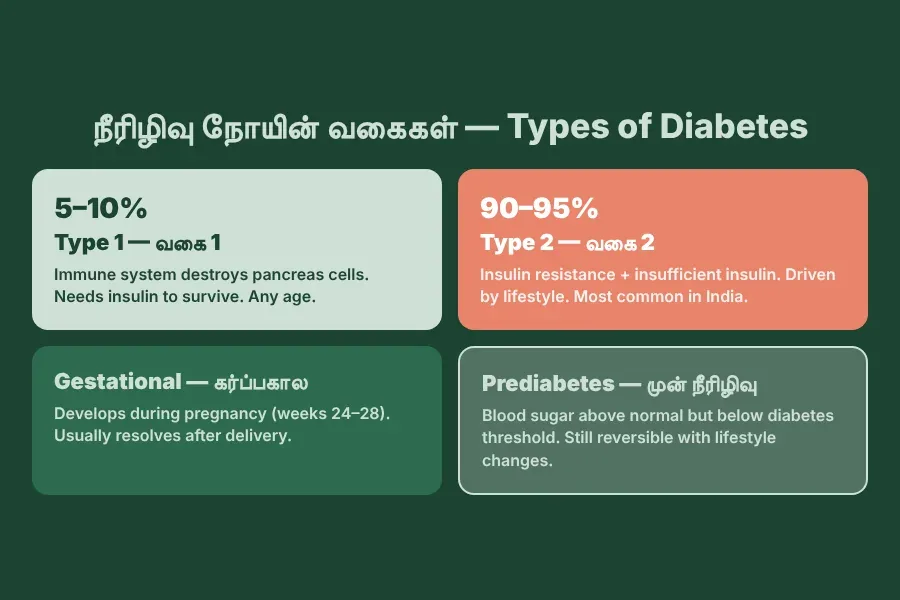
Type 1 diabetes is an autoimmune condition. The body’s own immune system mistakenly attacks and destroys the insulin-producing beta cells (பீட்டா செல்கள்) in the pancreas.
As a result, the pancreas produces little or no insulin. People with Type 1 diabetes need insulin injections or an insulin pump to survive.
- Who gets it: Typically diagnosed in children, teenagers, and young adults, though it can occur at any age
- Cause: Genetic factors combined with environmental triggers (viral infections are thought to play a role)
- Management: Daily insulin therapy, blood sugar monitoring, diet and exercise
Type 1 diabetes accounts for roughly 5–10% of all diabetes cases globally.
Type 2 Diabetes — வகை 2 நீரிழிவு நோய்
Type 2 is the most common form of diabetes, accounting for approximately 90–95% of all cases. In India, this is the type that most people mean when they say “sugar” or “நீரிழிவு நோய்.”
In Type 2 diabetes, the body either doesn’t produce enough insulin or the cells don’t use insulin effectively (insulin resistance). Over time, the pancreas tries to compensate by making more insulin, but eventually it can no longer keep up.
- Who gets it: Most commonly develops in adults over 40, but increasingly diagnosed in younger people and even teenagers in India
- Risk factors: Overweight or obesity, sedentary lifestyle, family history, high-carbohydrate diet, stress, poor sleep
- Management: Lifestyle changes (diet, exercise), oral medications, and sometimes insulin
Southern states including Tamil Nadu show higher prevalence of Type 2 diabetes compared to the national average, linked to urban lifestyles, refined carbohydrate-heavy diets (white rice, maida), and reduced physical activity.
Gestational Diabetes — கர்ப்பகால நீரிழிவு நோய்
Gestational diabetes develops during pregnancy in women who did not have diabetes before. Hormonal changes during pregnancy can cause insulin resistance.
- Who gets it: Pregnant women, typically diagnosed between weeks 24–28 of pregnancy
- Risk: Increases the risk of Type 2 diabetes later in life for both mother and child
- Management: Diet, physical activity, and sometimes insulin during pregnancy; blood sugar usually normalises after delivery
Prediabetes — முன் நீரிழிவு நோய்
Prediabetes (முன் நீரிழிவு) is a condition where blood sugar levels are higher than normal but not yet high enough to be classified as Type 2 diabetes. It is a warning sign.
Without lifestyle changes, prediabetes frequently progresses to Type 2 diabetes within 5 years. With the right changes — particularly weight loss and increased physical activity — many people can return to normal blood sugar levels.
நீரிழிவு நோயின் அறிகுறிகள் (Symptoms of Diabetes in Tamil)
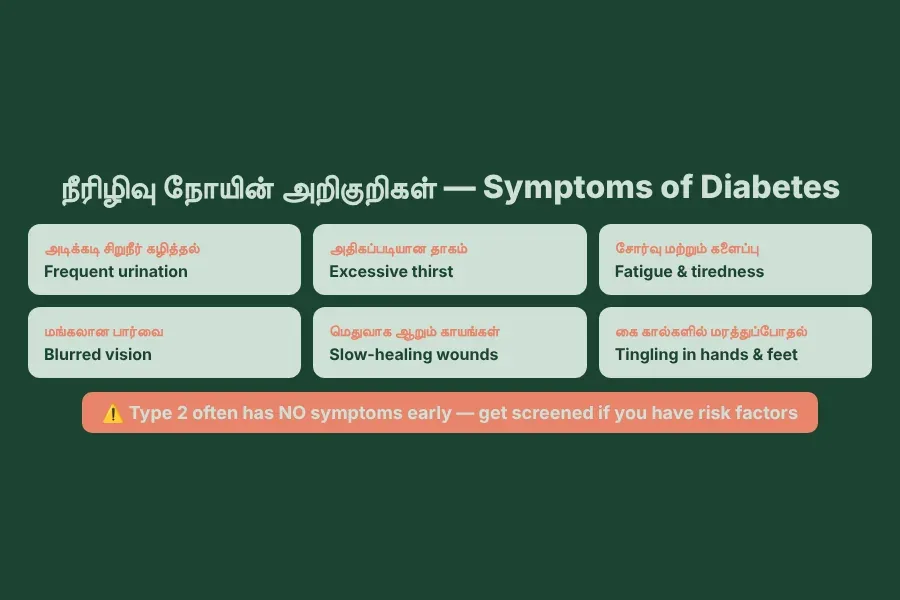
The warning signs of diabetes in Tamil — நீரிழிவு நோயின் அறிகுறிகள் — are important to recognise early. Many people have diabetes for years without knowing it.
| Tamil | English |
|---|---|
| அடிக்கடி சிறுநீர் கழித்தல் | Frequent urination (especially at night) |
| அதிகப்படியான தாகம் | Excessive thirst |
| எதிர்பாராத எடை இழப்பு | Unexpected weight loss |
| சோர்வு மற்றும் களைப்பு | Fatigue and tiredness |
| மங்கலான பார்வை | Blurred vision |
| மெதுவாக ஆறும் காயங்கள் | Slow-healing wounds or cuts |
| தோல் தொற்றுகள் | Frequent skin or gum infections |
| கை கால்களில் மரம் மரம் என்று இருக்கும் | Tingling or numbness in hands and feet |
| அதிகப்படியான பசி | Increased hunger even after eating |
Important: Type 2 diabetes often has no symptoms in the early stages.
Many people are diagnosed only through a routine blood test. This is why screening is important if you have risk factors.
Type 1 diabetes tends to come on more suddenly and with more severe symptoms, including nausea, vomiting, and abdominal pain in some cases.
இரத்த சர்க்கரை அளவுகள் (Blood Sugar Levels for Diagnosis)
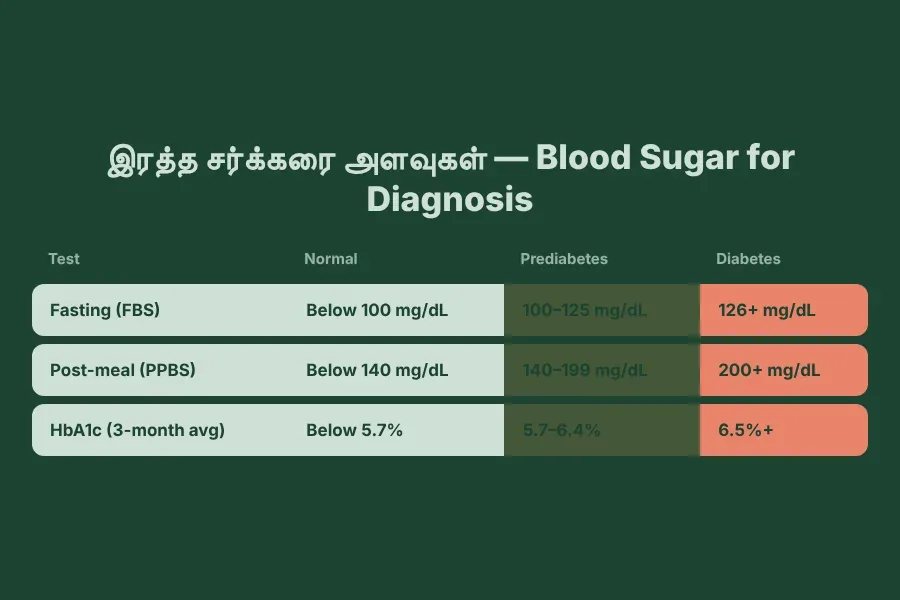
Diabetes is diagnosed through blood tests. Here are the reference ranges used in India:
| Test | Normal | Prediabetes | Diabetes |
|---|---|---|---|
| Fasting Blood Sugar (FBS) | Below 100 mg/dL | 100–125 mg/dL | 126 mg/dL or above |
| Post-meal (2hr PPBS) | Below 140 mg/dL | 140–199 mg/dL | 200 mg/dL or above |
| HbA1c (3-month average) | Below 5.7% | 5.7–6.4% | 6.5% or above |
Fasting blood sugar is measured after at least 8 hours without food or drink (except water).
HbA1c reflects your average blood sugar over the past 2–3 months and is the most comprehensive test for ongoing diabetes management.
நீரிழிவு நோய்க்கான காரணங்கள் (Causes of Diabetes in Tamil)
Causes of Type 1 Diabetes
- Autoimmune destruction of pancreatic beta cells
- Genetic predisposition
- Possible viral triggers (enterovirus infections have been studied)
Causes of Type 2 Diabetes
The causes are multifactorial, meaning several factors work together.
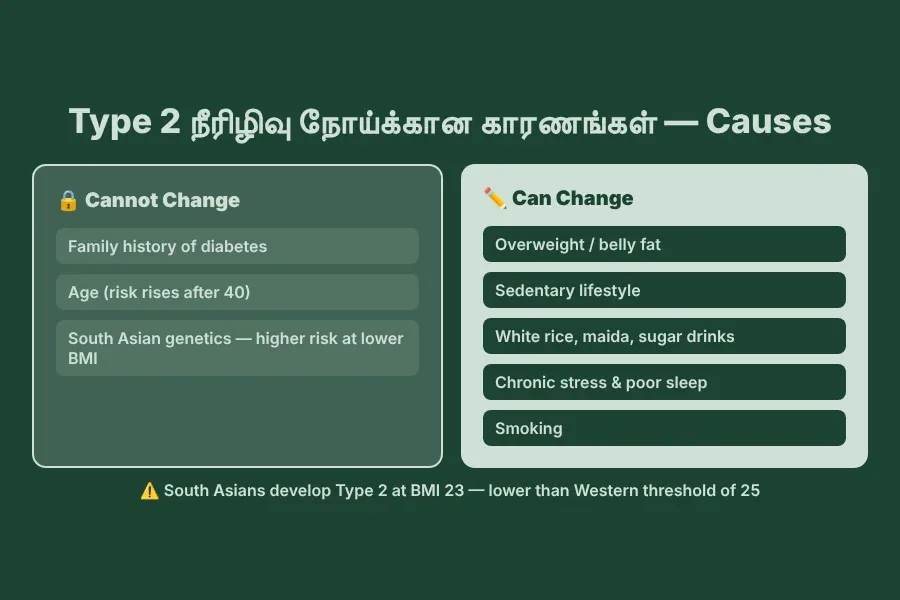
Non-modifiable (cannot be changed):
- Family history — if a parent or sibling has Type 2 diabetes, your risk is higher
- Age — risk increases after 40
- Ethnicity — South Asians, including Tamil people, have a genetically higher risk of Type 2 diabetes at lower body weights than Western populations
Modifiable (can be changed):
- Overweight or obesity, especially belly fat (central obesity)
- Sedentary lifestyle — insufficient physical movement
- Diet high in refined carbohydrates (white rice, white bread, maida-based foods, sugar-sweetened beverages)
- Chronic stress — raises cortisol, which increases blood sugar
- Poor sleep quality or insufficient sleep
- Smoking
Note: South Asian populations, including Tamils, develop Type 2 diabetes at lower BMI values than Western populations.
A BMI of 23 is considered the threshold for overweight risk in South Asians (vs 25 in Western guidelines). This means you don’t have to be visibly obese to be at significant risk.
நீரிழிவு நோயின் சிக்கல்கள் (Complications of Diabetes in Tamil)
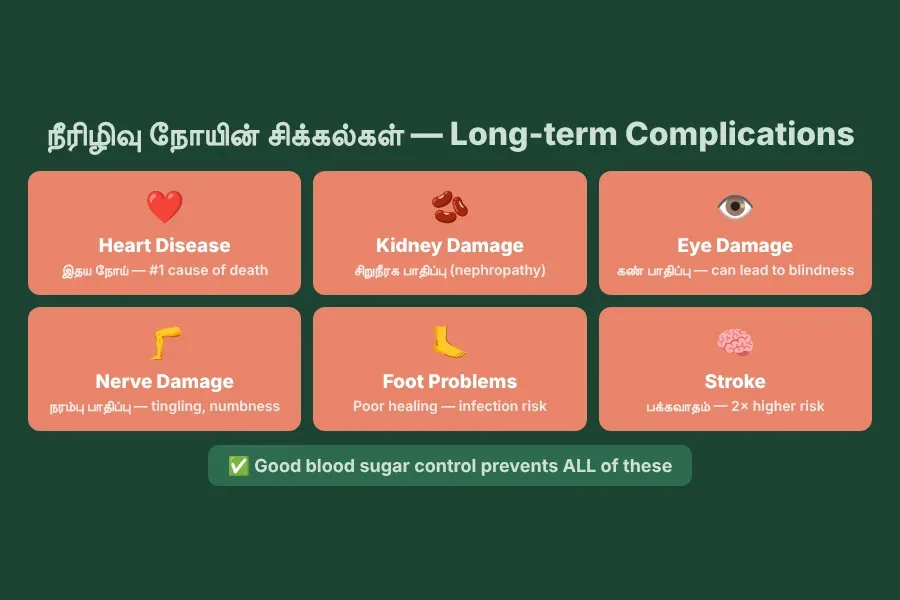
Uncontrolled diabetes damages organs over time. These complications — சிக்கல்கள் — are the reason blood sugar control matters so much.
Short-term complications:
- Hypoglycaemia (இரத்தத்தில் சர்க்கரை குறைவு) — low blood sugar, especially with medication
- Hyperglycaemia (அதிக இரத்த சர்க்கரை) — dangerously high blood sugar
- Diabetic ketoacidosis (mainly Type 1) — a medical emergency
Long-term complications:
- Heart disease (இதய நோய்) — the leading cause of death in people with diabetes
- Kidney damage (சிறுநீரக பாதிப்பு) — diabetic nephropathy
- Eye damage (கண் பாதிப்பு) — diabetic retinopathy, can lead to blindness
- Nerve damage (நரம்பு பாதிப்பு) — diabetic neuropathy, causing pain, tingling, or loss of sensation, particularly in the feet
- Foot problems — poor circulation and nerve damage lead to wounds that heal slowly and can become infected
- Stroke (பக்கவாதம்)
The good news: all of these complications are significantly reduced — and many can be prevented entirely — with good blood sugar control over time.
நீரிழிவு நோயை எவ்வாறு நிர்வகிப்பது (Managing Diabetes in Tamil)
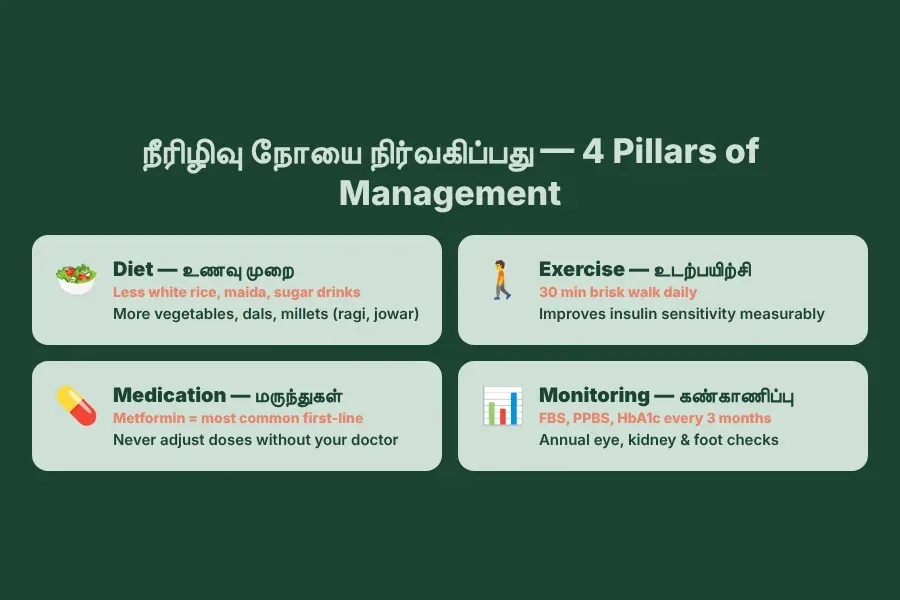
Diabetes cannot always be “cured,” but it can be managed — and in some cases of Type 2 diabetes, it can be put into remission with significant lifestyle changes.
Diet — உணவு முறை
- Reduce refined carbohydrates: less white rice, maida, sugar, white bread
- Increase fibre: more vegetables, dals, whole grains, millets like ragi and jowar
- Choose lower glycemic index foods that don’t spike blood sugar rapidly
- Eat regular meals; don’t skip meals
- Control portions — even healthy foods raise blood sugar in excess quantities
Exercise — உடற்பயிற்சி
Regular physical activity improves insulin sensitivity — meaning your cells respond better to insulin. Even 30 minutes of brisk walking daily makes a measurable difference. Resistance training (strength training) is particularly effective for improving glucose metabolism.
Medications — மருந்துகள்
- Metformin is the most commonly prescribed first-line medication for Type 2 diabetes in India
- Other oral medications, GLP-1 agonists, SGLT-2 inhibitors, and insulin are used depending on the individual’s situation
- Always take medications as prescribed; never stop or adjust doses without consulting your doctor
Monitoring — கண்காணிப்பு
- Regular blood sugar testing (fasting and post-meal)
- HbA1c test every 3 months
- Annual eye, kidney, and foot examinations
Stress Management and Sleep
Chronic stress raises cortisol, which directly raises blood sugar. Sleep deprivation worsens insulin resistance. Managing stress through yoga, pranayama, or other practices — and getting 7–8 hours of sleep — are not optional add-ons; they are part of diabetes management.
நீரிழிவு நோயை தடுப்பது எப்படி (Preventing Diabetes in Tamil)
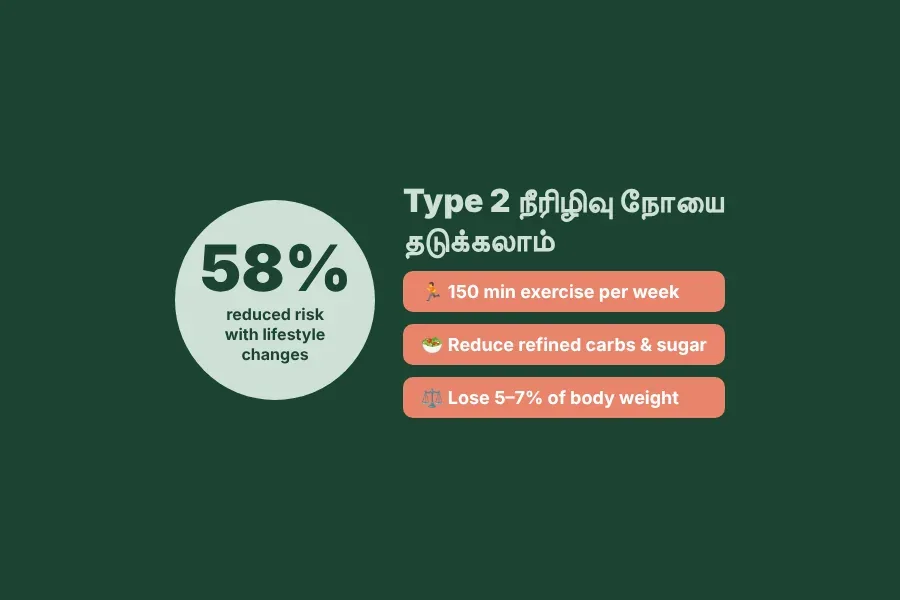
Type 1 diabetes cannot currently be prevented. But Type 2 diabetes is largely preventable — particularly for people in the prediabetes stage.
The lifestyle changes that prevent Type 2 diabetes are the same ones that treat it:
- Achieve and maintain a healthy weight (particularly reduce central obesity / belly fat)
- Move more: at least 150 minutes of moderate exercise per week
- Eat a high-fibre, lower-glycemic diet
- Reduce or eliminate sugar-sweetened beverages
- Manage stress
- Get adequate sleep
- Avoid smoking and limit alcohol
Large clinical trials including the Diabetes Prevention Program (DPP) have shown that lifestyle interventions reduce the risk of progression from prediabetes to diabetes by 58% — more effective than medication alone in that study population.
Common Questions About Diabetes in Tamil
நீரிழிவு நோய் குணமாகுமா? (Can diabetes be cured?)
Type 1 diabetes currently has no cure; insulin therapy is lifelong. Type 2 diabetes can go into remission — where blood sugar returns to normal levels without medication — particularly with significant weight loss and sustained lifestyle changes early in the disease course. Remission is not a cure; it requires continued effort to maintain.
நீரிழிவு நோய் தொற்றுமா? (Is diabetes contagious?)
No. Diabetes is not contagious — it cannot spread from person to person. It is a metabolic disease influenced by genetics and lifestyle.
நீரிழிவு நோயாளிகள் சர்க்கரை சாப்பிடவே கூடாதா? (Can diabetics never eat sugar?)
Complete avoidance of all sugar is not the goal, and it is not realistic. The goal is controlling total carbohydrate intake and making choices that don’t cause rapid blood sugar spikes. Occasional small amounts of sweet foods within a controlled meal plan are often manageable — but this depends on individual blood sugar control and should be discussed with your healthcare provider.
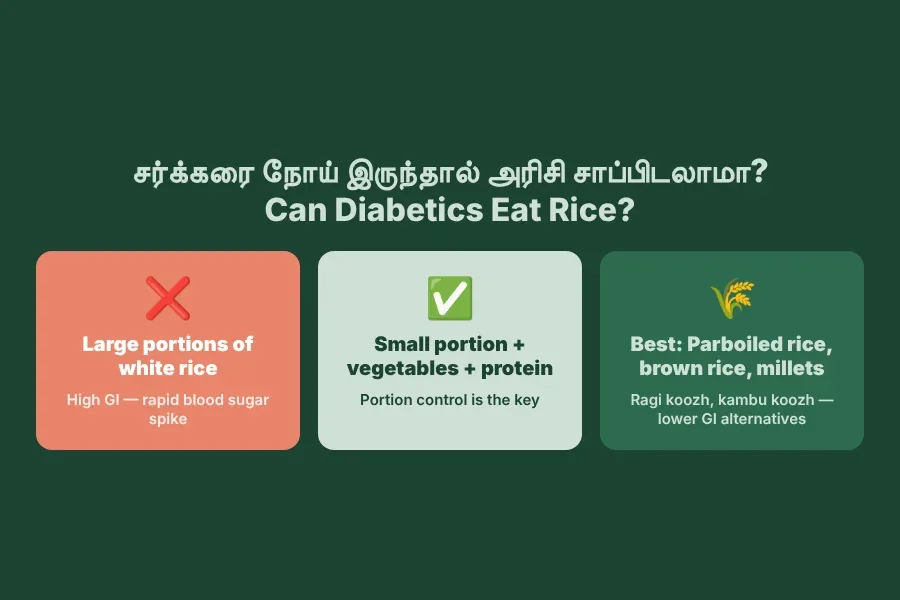
சர்க்கரை நோய் இருந்தால் அரிசி சாப்பிடலாமா? (Can diabetics eat rice?)
White rice has a high glycemic index and raises blood sugar quickly. However, most people with diabetes in Tamil Nadu and South India don’t need to eliminate rice entirely. Portion control is key — smaller portions of rice with plenty of vegetables and protein. Switching to brown rice, parboiled rice (puzhungal arisi), or millet-based dishes like ragi koozh or kambu koozh is a better long-term strategy.
The Bottom Line
நீரிழிவு நோய் (Neerilivu Noi) — diabetes — is a condition in which your body cannot regulate blood sugar properly, either because it doesn’t make enough insulin or because the cells resist it. The Tamil term சர்க்கரை நோய் (Sarkkarai Noi) describes the same condition.
Type 2 diabetes — the most common form — is largely driven by lifestyle factors and is, in many cases, preventable and reversible. South Asians including Tamil people carry a higher genetic risk and develop the disease at lower body weights, which makes early awareness and regular screening especially important.
The key message: diabetes is manageable. With the right diet, consistent movement, appropriate medication, stress management, and regular monitoring, people with diabetes live full, healthy lives.
If you’ve recently been diagnosed or are managing diabetes and want support with your nutrition and lifestyle approach, our diabetes reversal coaching programme is designed specifically for the Indian context — contact us to learn more.



