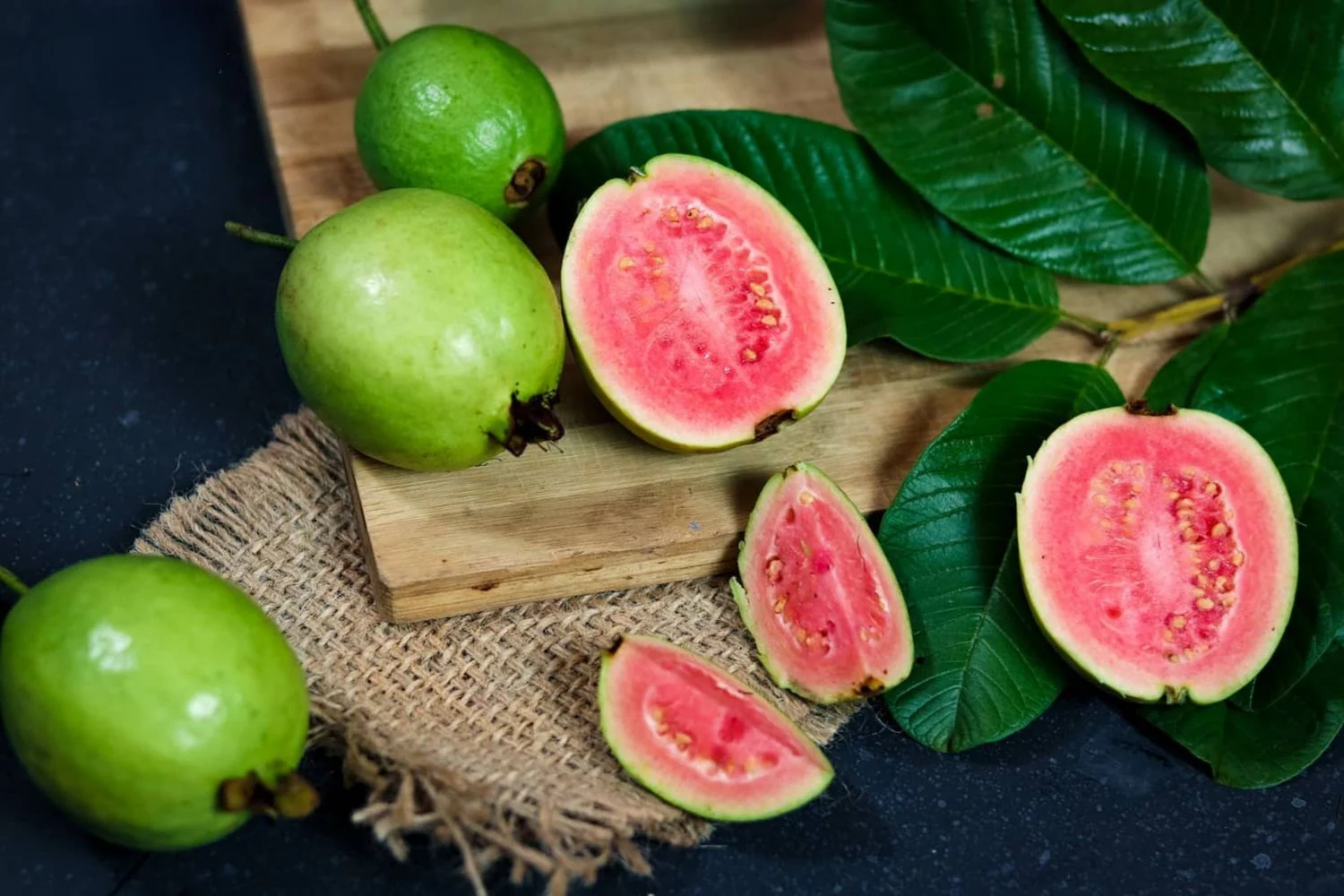
Yes — guava is one of the best fruits you can eat with diabetes. It has a very low glycemic index (GI) of approximately 12–24, which is among the lowest of any fruit. A medium guava (~90 g) provides around 12 g of carbohydrates and 4.5 g of fiber — and that fiber is what makes the difference. It slows sugar absorption, flattens post-meal blood sugar spikes, and helps you feel full longer.
Beyond the numbers, guava contains flavonoid compounds — strictinin, isostrictinin and pedunculagin — that research suggests may improve insulin sensitivity. The American Diabetes Association (ADA) includes all fresh fruit, guava among them, as part of a healthy eating pattern for people managing diabetes.
The practical rules are simple: eat the whole fruit rather than juice, pay attention to whether you eat the skin or not (it matters, as research shows), and keep your portion within the 15 g carbohydrate serving standard. This guide covers all of that — GI data, exact carb counts, portion guidance, smart pairings, and what the research actually says.
What Is the Glycemic Index of Guava?
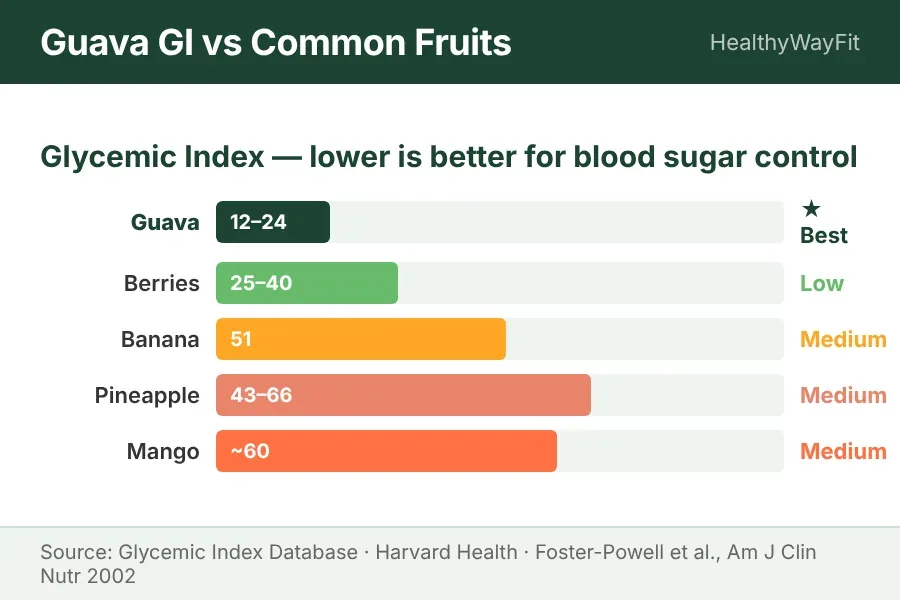
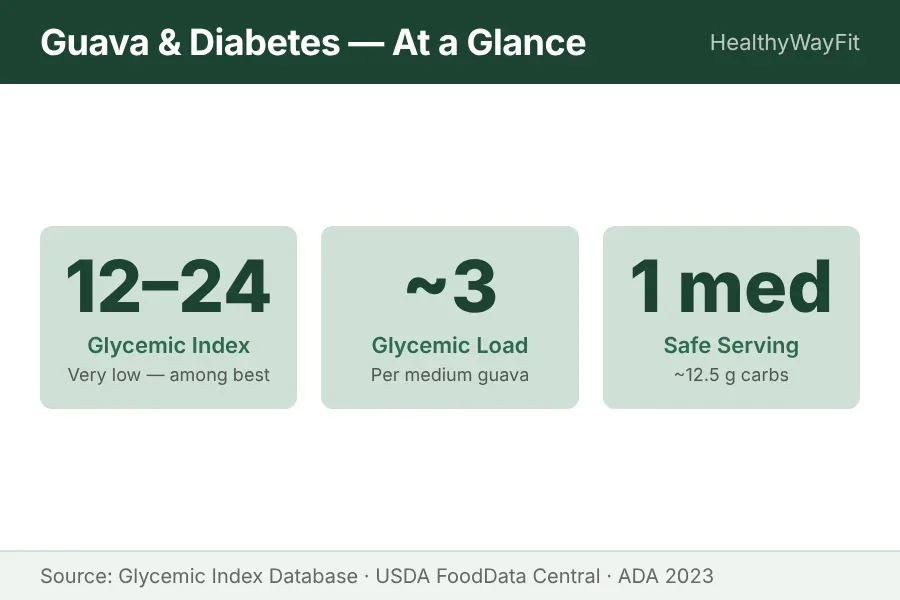
Guava has one of the lowest glycemic indexes of any fruit. Depending on the measurement source and variety, guava’s GI falls between 12 and 24 — firmly in the low GI range. Some sources cite a GI as low as 12; the Glycemic Index of common guava is reported at approximately 20 in widely referenced nutritional databases.
For context, the GI scale works like this:
- Low GI: 55 or below
- Medium GI: 56–69
- High GI: 70 or above
At GI 12–24, guava raises blood sugar far more slowly than most other fruits. It sits far below medium-GI fruits like pineapple (GI 43–66), mangoes (~60) or bananas (~51), and is comparable to berries (GI ~25–40) and cherries (~22).
Glycemic load (GL) tells you more than GI alone. The GL accounts for how many carbohydrates a typical portion actually delivers. For a medium guava (~90 g), the GL is approximately 3 — exceptionally low. A GL under 10 is considered low, so guava fits comfortably within a blood-sugar-friendly eating pattern even if you eat two in a sitting.
The skin matters. A study published in the Journal of Diabetes and Metabolic Disorders (and supported by research from PMC/NIH, 2016) found that guava without the peel produced more favorable blood sugar and lipid outcomes than guava with the peel. The ripe fruit peel has been shown to have hyperglycaemic activity in some animal studies — not enough evidence to eliminate it from your diet, but a useful consideration if you’re eating guava specifically for blood sugar management. Removing the peel and eating just the flesh is the lower-risk approach.
How Many Carbs Are in Guava?
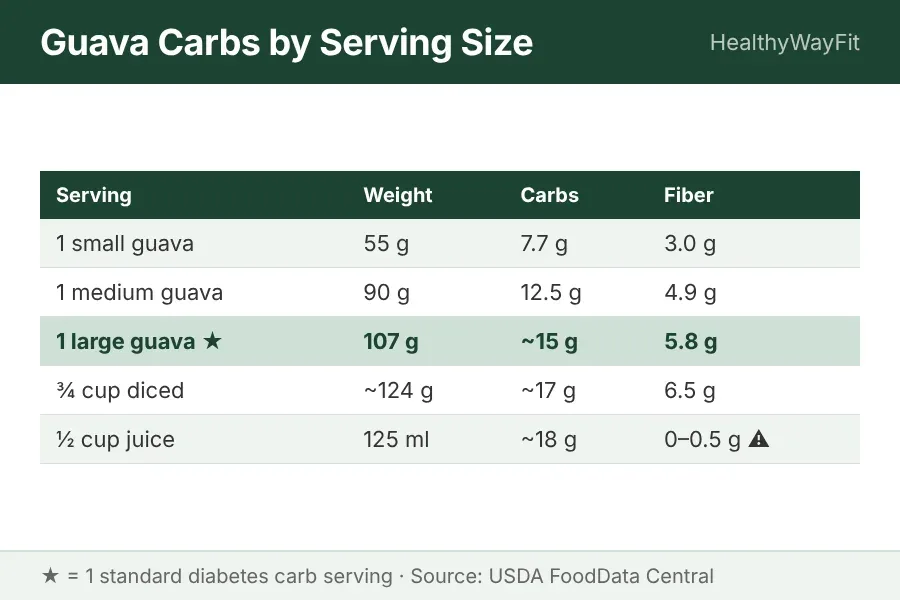
Guava is genuinely low in carbohydrates compared to most tropical fruits. The table below uses USDA nutritional data:
| Serving size | Weight | Carbs | Sugar | Fiber |
|---|---|---|---|---|
| 1 small guava | 55 g (2 oz) | 7.7 g | 4.9 g | 3.0 g |
| 1 medium guava | 90 g (3.2 oz) | 12.5 g | 8.0 g | 4.9 g |
| 1 large guava (1 carb serving) | 107 g | ~15 g | 9.4 g | 5.8 g |
| ½ cup diced | 83 g | 11.6 g | 7.4 g | 4.5 g |
| 1 cup diced | 165 g | 23.6 g | 14.7 g | 8.9 g |
| ½ cup guava juice | 125 ml | ~18 g | ~15 g | 0–0.5 g |
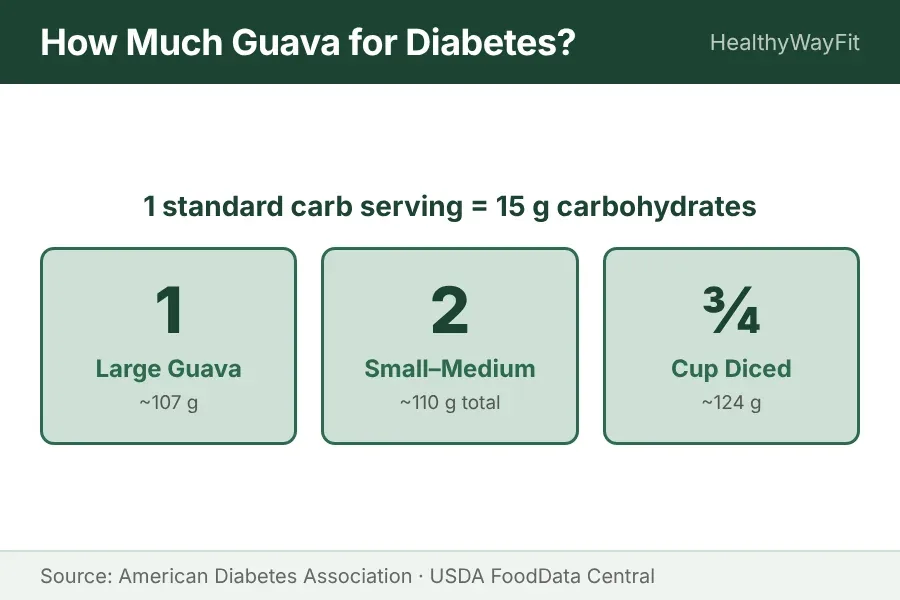
One standard diabetes fruit serving = 15 g of carbohydrates. For guava, that’s roughly one large guava or ¾ cup diced. Impressively, that single serving delivers close to 6 g of dietary fiber — more than many high-fiber grains, and significantly more than almost any other fruit in the same carbohydrate range.
Note: These figures are for fresh, whole guava without added sugar.
Guava juice, guava paste (goiabada), and guava-flavoured products are significantly different — juice strips out the fiber and concentrates the carbohydrates; guava paste has very high added sugar.
Fresh vs. Juice vs. Processed Guava: Which Form Is Best?
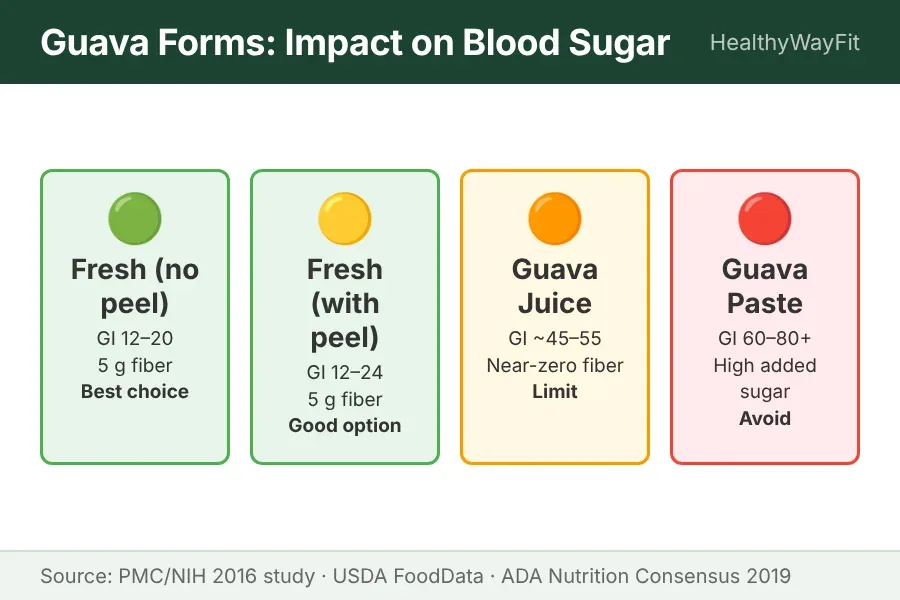
Fresh whole guava is the best choice for blood sugar management, and by a wide margin over other forms.
Guava without peel is the optimal version based on available research. Removing the peel reduces the hyperglycaemic compounds in the ripe skin. The flesh itself is rich in fiber, flavonoids and vitamin C — all of which have beneficial or neutral effects on blood sugar.
Guava with peel is still a low-GI food and fine for most people, but the research on peel effects (particularly of ripe guava peel) suggests that people with high or unstable blood sugar may want to err on the side of peeling it.
Guava juice is the highest-risk form. Like all fruit juices, it delivers carbohydrates without the fiber that slows absorption. Half a cup of guava juice has approximately 18 g of carbs and near-zero fiber — which is faster-acting on blood sugar than eating the whole fruit. The ADA recommends whole fruit over juice for this reason.
Guava paste or jam should be avoided or treated as a high-sugar condiment, not a fruit serving. Guava paste (used widely in South Asian and Latin American cooking) is concentrated guava with large amounts of added sugar.
| Form | GI range | Fiber per serving | Blood sugar impact |
|---|---|---|---|
| Fresh guava, no peel | 12–20 | ~5 g per medium | Very low |
| Fresh guava, with peel | 12–24 | ~5 g per medium | Low |
| Dried guava | ~50–65 | ~2 g per tbsp | Medium–High |
| Guava juice | ~45–55 | 0–0.5 g | Medium–High |
| Guava paste/jam | 60–80+ | <1 g | High |
How Much Guava Can a Person with Diabetes Eat?
The standard diabetes meal plan fruit serving is 15 g of carbohydrates. For guava, that equals:
- 1 large guava (about 107 g, roughly the size of a large egg)
- 2 small to medium guavas (totaling ~110 g)
- ¾ cup diced guava
Because guava’s GI and GL are both so low, some people with well-controlled type 2 diabetes find they can tolerate slightly larger portions without significant blood sugar impact — but the 15 g carbohydrate standard is still the safest starting point.
Frequency depends on your overall daily carbohydrate budget, your current glucose readings, your medications and your individual response. Most registered dietitians suggest one fruit serving per meal or snack, with two to three total fruit servings per day — counting all fruit types together. With guava’s exceptionally low GL, it fits comfortably alongside higher-GL fruits in a mixed fruit approach.
Note: If you’re on insulin or sulfonylureas, all fruit carbohydrates count toward your meal carb total.
Work with your diabetes care team to integrate guava into your meal plan. The guidance here is general, not medical advice specific to your situation.
Your own glucose meter or CGM is the most reliable guide. Eat a one-serving portion alongside a balanced meal, then check blood sugar 1–2 hours later. Guava’s very low GI means most people see a modest, gradual rise — but individual responses vary.
How to Eat Guava with Diabetes — Pairings That Work Best
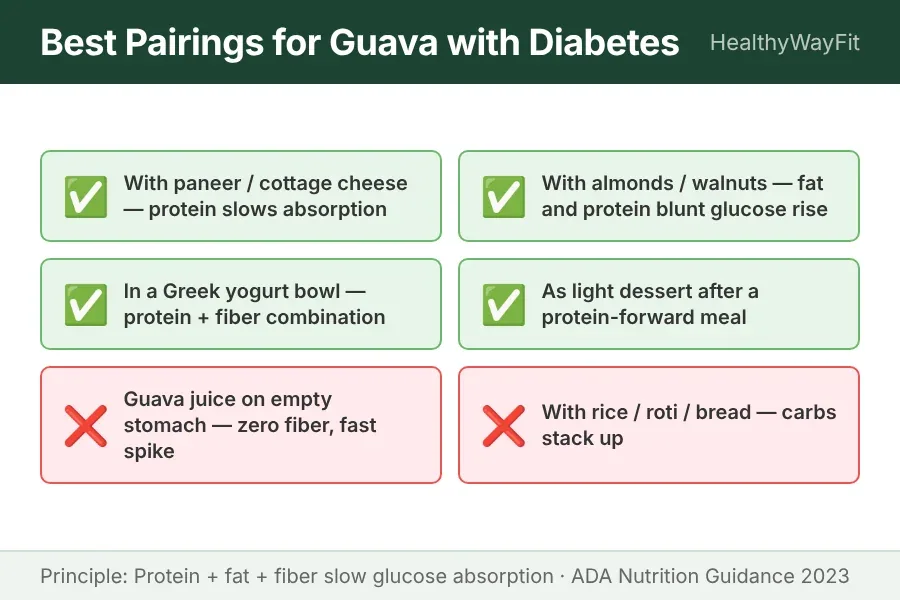
The foods you eat alongside guava affect how much your blood sugar moves. Pairing carbohydrates with protein, healthy fat or fiber slows digestion and blunts the glucose response.
Pairings that work well:
- With paneer or cottage cheese: The protein content significantly slows digestion. A medium guava with 100 g of low-fat paneer or cottage cheese is a balanced snack with strong protein-carbohydrate balance.
- With a handful of nuts: 15–20 almonds or walnuts add fat and protein. The combination of guava’s fiber with nut fat makes for a very stable post-snack blood sugar response for most people.
- In a yogurt bowl: Half a diced guava stirred into unsweetened Greek yogurt combines guava’s fiber with yogurt’s protein for a snack that handles blood sugar well.
- After a protein-forward meal: Guava as a light dessert after a meal of lean protein and vegetables keeps the carbohydrate impact minimal — blood sugar is already slowing before the guava’s carbs arrive.
Pairings and habits to avoid:
- Guava juice on an empty stomach: No fiber to slow absorption, leading to a faster sugar rise than eating the whole fruit.
- Guava with other high-carb foods at the same sitting: Even low-GI foods stack carbohydrates when combined with rice, roti or bread — keep total carbs at the meal in mind.
- Guava paste as a fruit substitute: It’s closer to a confection than a fruit and has a very different glycemic profile from fresh guava.
What Does Research Say About Guava and Blood Sugar?
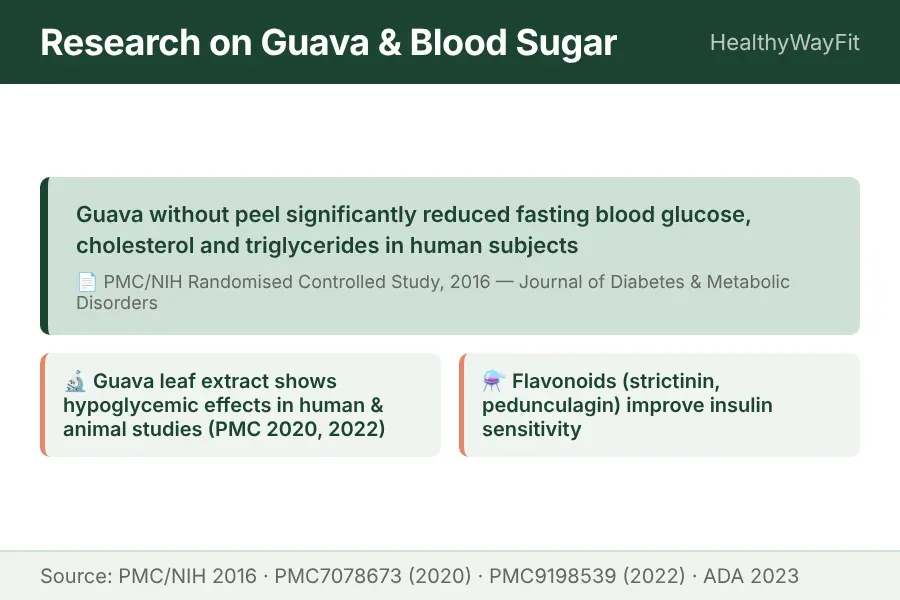
The evidence on guava and diabetes is more specific than for most fruits — both the fruit and the leaf have been studied directly.
Guava fruit without peel lowers blood sugar more effectively than guava with peel. A randomized controlled study published in PMC/NIH (2016) — involving healthy human subjects supplemented with guava fruit — found that guava without peel led to significant reductions in fasting blood glucose, total cholesterol, triglycerides and LDL cholesterol. The researchers concluded that guava without peel was more effective for both blood sugar and lipid management than guava with peel included.
Guava leaf extract has documented hypoglycemic effects. Multiple animal and cell culture studies — including reviews in 2020 (PMC7078673) and 2022 (PMC9198539) cited by Healthline — found that guava leaf extract improved blood sugar control, insulin sensitivity and long-term glucose management. Guava leaf tea, derived from Psidium guajava, is available commercially and used traditionally for blood sugar management in several cultures. While the leaf evidence is stronger than the fruit evidence, both point in the same direction.
Flavonoids in guava improve insulin sensitivity. Guava fruit pulp contains strictinin, isostrictinin and pedunculagin — flavonoid glycosides that have been used clinically in the management of diabetes mellitus by improving insulin sensitivity, according to research cited in the 2016 PMC study.
The ADA’s 2023 Standards of Medical Care recommend fresh fruit as part of a healthy eating pattern for people with diabetes, alongside non-starchy vegetables, whole grains, legumes and dairy products. Guava, as a low-GI, high-fiber fruit, aligns well with these guidelines.
Individual blood sugar responses vary. CGM studies consistently show that two people eating the same food can have meaningfully different blood sugar responses, driven by gut microbiome, physical activity, insulin sensitivity and the rest of their meal. GI values are population averages — your personal reading after eating guava is the most relevant data.
Health Benefits of Guava Beyond Blood Sugar
Guava is nutritionally exceptional for a tropical fruit, with several compounds directly relevant to diabetes management:
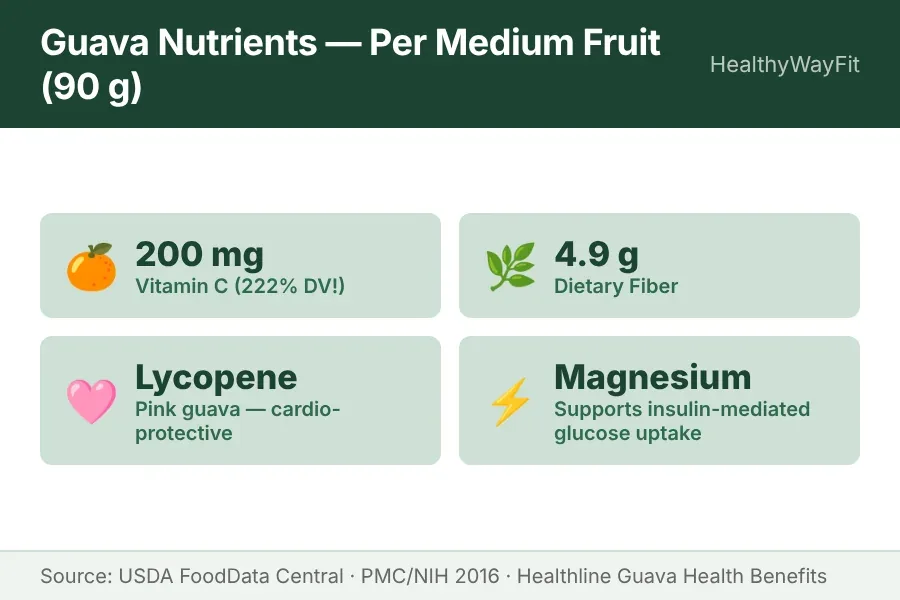
Vitamin C — extraordinary amounts. One medium guava (90 g) provides approximately 200 mg of vitamin C — over twice the recommended daily intake. Vitamin C is a potent antioxidant that reduces oxidative stress, which is chronically elevated in people with diabetes. It also supports immune function and wound healing, both of which are important concerns in long-term diabetes management.
Dietary fiber — class-leading. At roughly 5 g of fiber per medium fruit, guava delivers more fiber per gram of carbohydrate than almost any other fruit. This is the single biggest reason for guava’s blood sugar friendliness — fiber slows gastric emptying and glucose absorption, extending the time it takes for carbohydrates to enter the bloodstream.
Manganese and magnesium. Guava contains meaningful amounts of both minerals. Magnesium supports insulin-dependent glucose uptake in peripheral tissues (skeletal muscle, adipose tissue, cardiac tissue) — a mechanism directly relevant to type 2 diabetes. Manganese is involved in carbohydrate metabolism and antioxidant enzyme function.
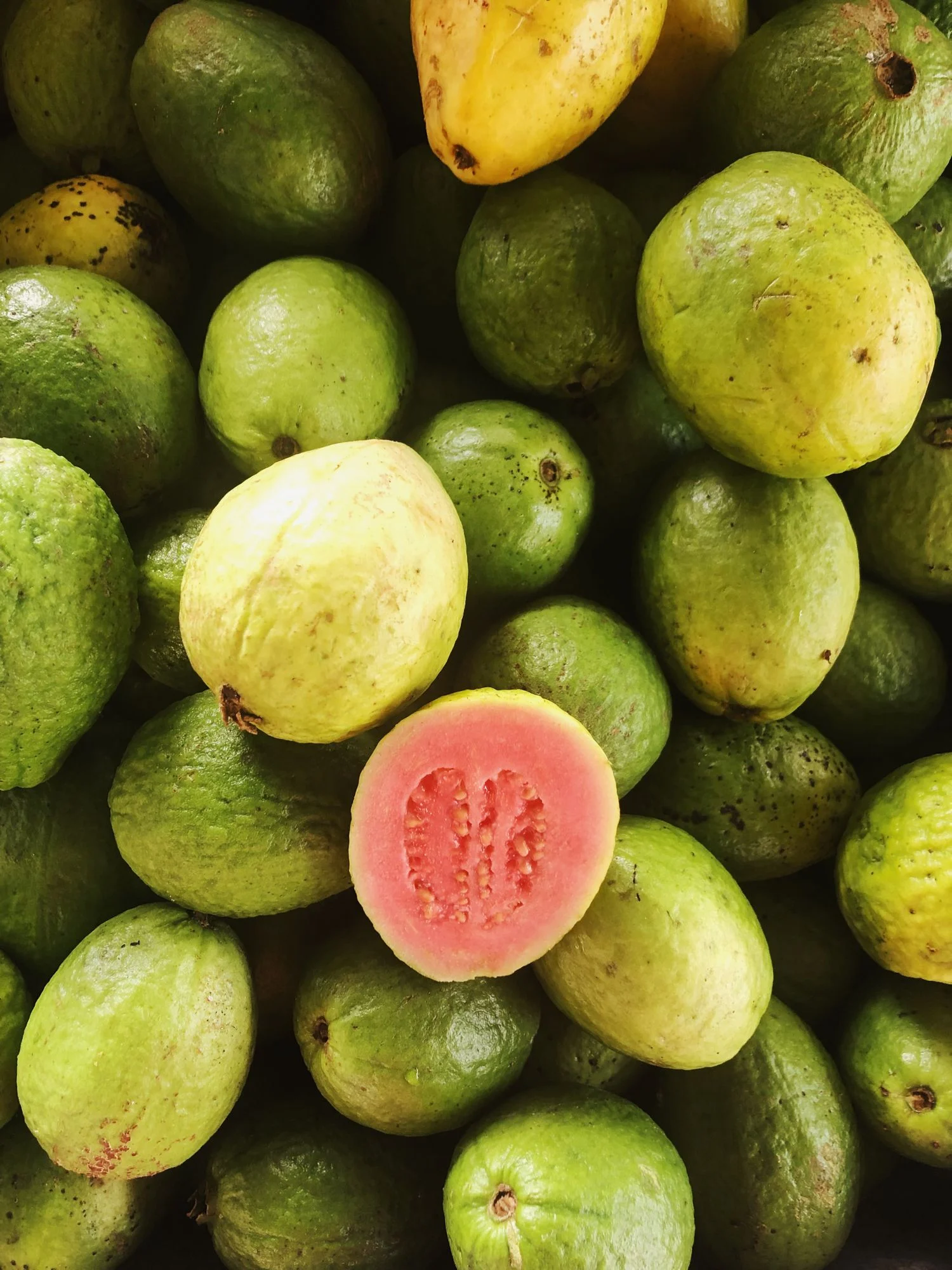
Lycopene (in pink guava). Pink-fleshed guava varieties contain lycopene — the same antioxidant found in tomatoes and watermelon — which has been associated with reduced cardiovascular risk. People with diabetes have elevated cardiovascular disease risk, making lycopene-containing foods a worthwhile inclusion.
Note: These are dietary benefits from whole food consumption, not medicinal treatments.
They do not replace diabetes medication, insulin or medical supervision.
Who Should Be More Careful with Guava?
Most people with type 1 or type 2 diabetes can eat guava freely as part of a balanced meal plan. A few situations call for extra thought:
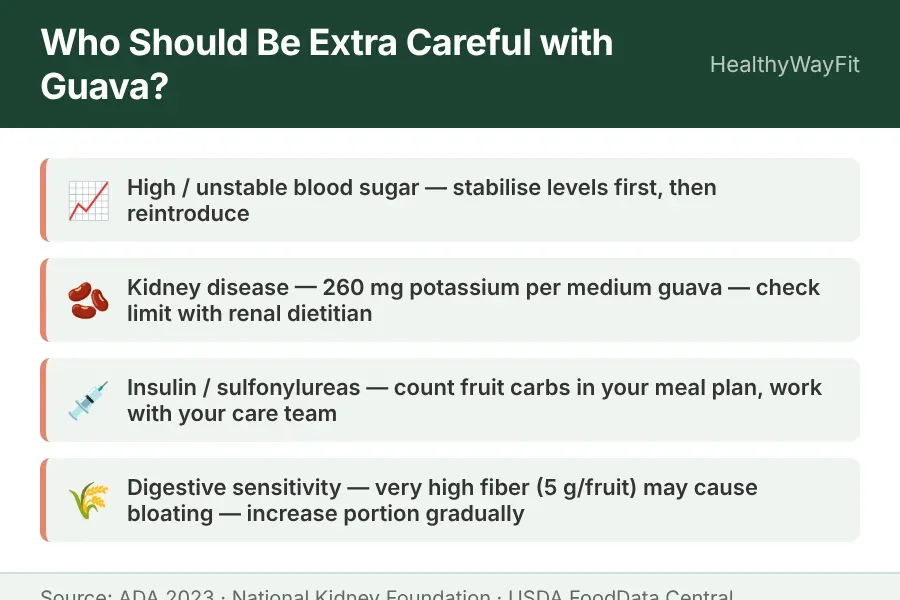
High or unstable blood sugar: When glucose is consistently above target, focus on establishing lower-carb eating patterns until readings stabilize. Once stable, low-GI fruits like guava are among the first to reintroduce — but start with the standard one-serving portion rather than eating several at once.
Kidney disease (diabetic nephropathy): Guava contains approximately 260 mg of potassium per medium fruit. If you’re on a potassium-restricted diet due to reduced kidney function, check your daily potassium allowance with a renal dietitian before adding guava regularly.
Insulin or sulfonylureas: These medications actively lower blood sugar, so the carbohydrates from any fruit — guava included — must be counted and planned. Work with your care team to include guava in your carb count.
Digestive sensitivity: Guava’s exceptionally high fiber content (nearly 5 g per medium fruit) can cause bloating or digestive discomfort when eaten in large quantities, particularly for people not used to high-fiber diets. Start with a smaller portion and increase gradually.
Guava seeds: Raw guava seeds are edible and pass through the digestive system largely intact. They’re not harmful, but people who have had bowel surgery or have certain digestive conditions should be aware.
Frequently Asked Questions
Can eating guava raise blood sugar?
Yes — all foods containing carbohydrates can raise blood sugar to some degree. But guava’s very low GI (12–24) and high fiber content mean that a standard serving produces one of the smallest blood sugar rises of any fruit. For most people with diabetes, one medium guava eaten with a balanced meal causes a minimal, gradual rise.
Is guava better than banana or mango for diabetics?
Significantly better from a blood sugar standpoint. Banana has a GI of approximately 51, mango approximately 56–60. Guava at GI 12–24 raises blood sugar far less per gram of carbohydrate. Guava also provides more fiber per serving than either fruit. For blood sugar management, guava is one of the best fruit choices available.
Can a person with type 1 diabetes eat guava?
Yes, with careful carb counting. Count the carbohydrates in your guava portion (approximately 12–15 g for a medium fruit) and adjust insulin accordingly. Guava’s low GI makes dosing somewhat more forgiving than with high-GI fruits, but all carbs still count.
Can diabetics eat guava leaves or guava leaf tea?
Guava leaf extract and tea have documented hypoglycemic effects in research, including animal studies and some human studies. While it’s not a replacement for prescribed diabetes medications, guava leaf tea is generally considered safe and may provide modest blood sugar benefits. Discuss with your healthcare provider before using it as a supplement, especially if you take diabetes medications — it could interact with glucose-lowering drugs and cause hypoglycemia.
Is guava juice safe for diabetics?
Guava juice removes almost all of the fiber that makes whole guava blood-sugar-friendly. Without fiber, the carbohydrates in juice absorb faster and produce a sharper blood sugar spike. The ADA consistently recommends choosing whole fruit over juice. If you do drink guava juice, limit it to a small portion (125 ml or less) and treat the carbohydrates accordingly.
Does guava cure diabetes?
No. No food cures diabetes. Guava is an excellent dietary choice within a balanced diabetes eating plan — low GI, high fiber, nutritionally dense — but it does not treat, reverse or cure the condition. Claims that any single food “cures” diabetes are not supported by clinical evidence.
The Bottom Line
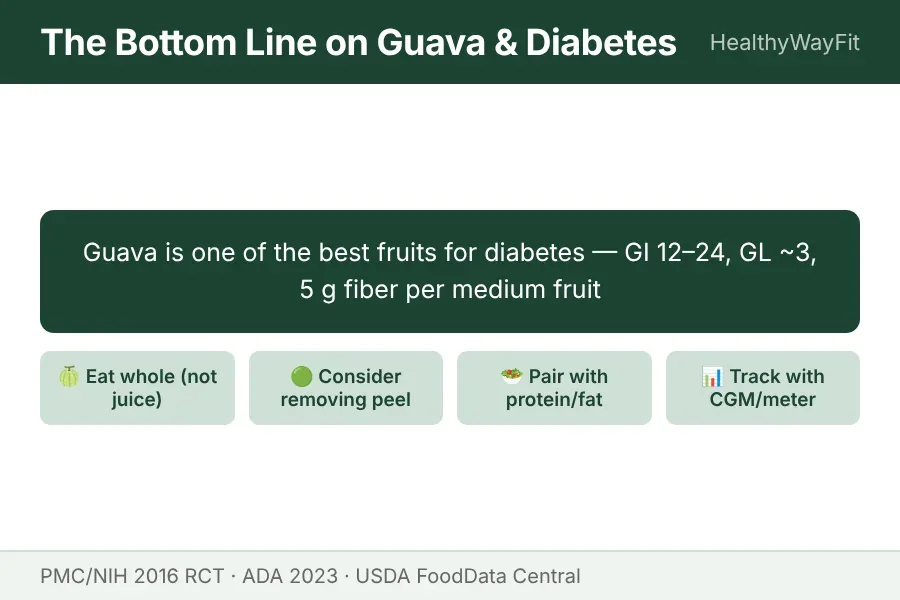
Guava earns its place as one of the best fruits for people managing diabetes. Its glycemic index (12–24) is among the lowest of any fruit, its glycemic load per serving is approximately 3 (extremely low), and its fiber content — nearly 5 g per medium fruit — actively slows blood sugar absorption. Research supports the fruit directly: guava without peel has been shown to reduce fasting blood sugar, cholesterol and triglycerides in human subjects, and guava’s flavonoids improve insulin sensitivity at the cellular level.
The practical rules: eat the whole fruit (not juice), consider removing the peel for better blood sugar outcomes, keep your portion to roughly one medium guava or ¾ cup diced (about 15 g carbs), and pair it with protein or healthy fat. Track your personal response with a glucose meter or CGM, and work with your care team to fit guava into your overall carbohydrate budget.
For more on building a diabetes-friendly diet around fruit, whole grains and smart carbohydrate choices, explore our diabetes-friendly eating guide for practical, evidence-based guidance.