Yes — pineapple can be part of a diabetes diet. Fresh pineapple has a glycemic index (GI) of 43–66, which puts it at the medium range, and a glycemic load of around 8.6 per standard serving. That means a measured portion raises blood sugar moderately — not sharply. The American Diabetes Association (ADA) includes pineapple, along with all fresh fruit, as part of a healthy eating pattern for people with diabetes.
The catch is portion size and form. A half-cup of fresh diced pineapple (about 80 g) has roughly 10 g of carbohydrates. A full cup has 21 g. And pineapple juice delivers 16 g of carbs in half a cup — with no fiber to slow the sugar spike. Knowing how much to eat, and in what form, is what makes pineapple a smart choice rather than a blood-sugar problem.
This guide covers the GI numbers, exact carb counts by serving, a form-by-form comparison, how much you can eat in one sitting, and pairing strategies that reduce the blood sugar impact.
What Is the Glycemic Index of Pineapple?
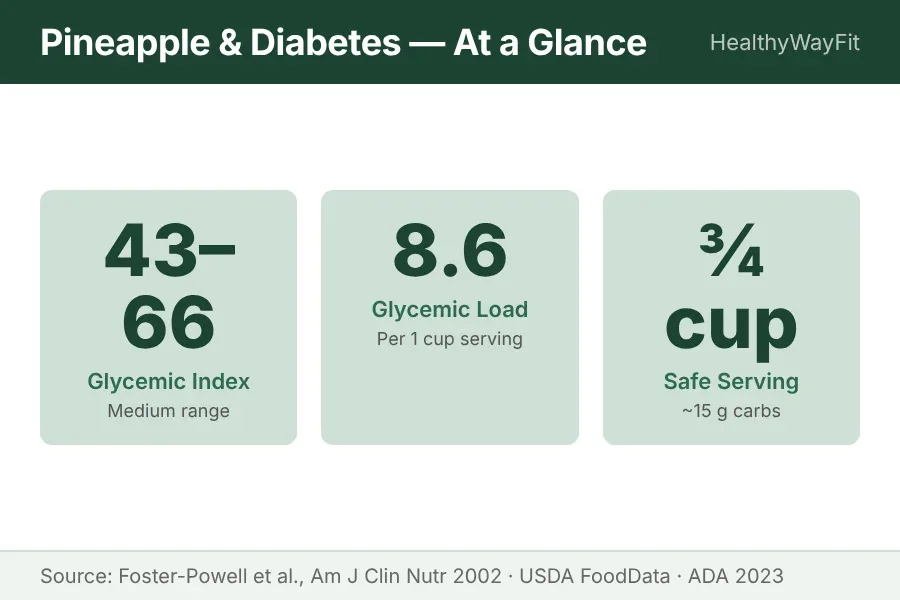
Fresh pineapple sits in the medium GI range, typically between 43 and 66 depending on ripeness. A widely cited reference — the International Tables of Glycemic Index and Glycemic Load by Foster-Powell et al., published in the American Journal of Clinical Nutrition (2002) — records a GI of 66 for fresh pineapple. Other measurements fall closer to 51–59 for less-ripe pineapple.
The GI scale breaks down as:
- Low GI: 55 or below
- Medium GI: 56–69
- High GI: 70 or above
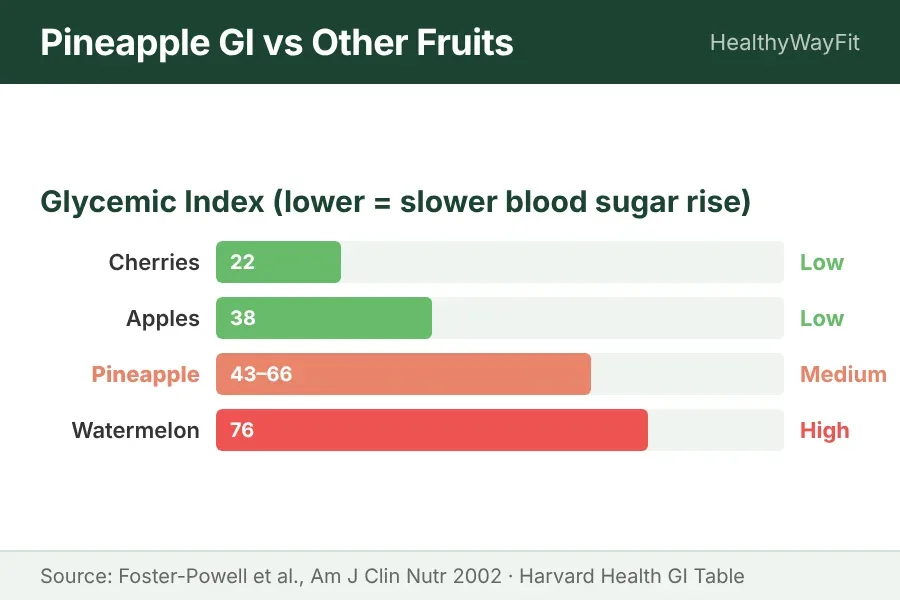
At GI 51–66, pineapple sits at the medium boundary — it raises blood sugar more gradually than high-GI foods like white bread (GI ~75) or watermelon (GI ~76), but more than low-GI fruits like cherries (GI ~22), apples (~38) or pears (~38).
Glycemic load (GL) tells you more. The GI measures how fast a food raises blood sugar per gram of carbohydrate. The GL accounts for how many carbs are actually in a typical serving. For a 165 g (1 cup) serving of fresh pineapple, the GL is approximately 8.6 — which falls in the low-to-medium range (GL under 10 is considered low). This means a reasonable serving produces a modest real-world blood sugar effect.
Ripeness matters. As pineapple ripens, its starches convert to simple sugars, pushing the GI higher within the 43–66 range. A slightly underripe pineapple has a lower GI than a very sweet, fully ripe one — so sweeter pineapple requires a little more attention to portion.
How Many Carbs Are in Pineapple?
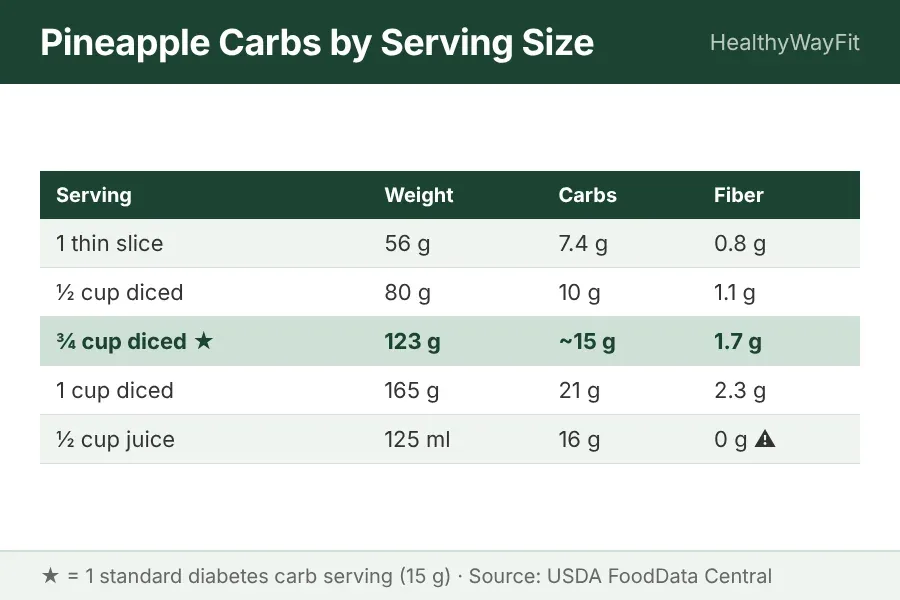
The table below shows carbohydrate and sugar counts for common pineapple serving sizes, based on USDA nutritional data:
| Serving size | Weight | Carbs | Sugar | Fiber |
|---|---|---|---|---|
| 1 thin slice (⅓ inch) | 56 g (2 oz) | 7.4 g | 5.5 g | 0.8 g |
| 1 thick slice (¾ inch) | 85 g (3 oz) | 11 g | 8.3 g | 1.2 g |
| ½ cup diced | 80 g | 10 g | 7.5 g | 1.1 g |
| ¾ cup diced (1 carb serving) | 123 g | ~15 g | 11.4 g | 1.7 g |
| 1 cup diced | 165 g | 21 g | 16.3 g | 2.3 g |
| ½ cup pineapple juice | 125 ml | 16 g | 15.8 g | 0 g |
For most adults managing blood sugar, one serving of fruit at a sitting = 15 g of carbohydrates. For pineapple, that’s about ¾ cup of diced fresh pineapple or one thick ring. Staying within that range keeps pineapple manageable for most diabetes meal plans.
Note: Carb counts above are for plain, unsweetened fresh pineapple.
Canned pineapple in syrup and pineapple-flavoured products can have significantly more sugar — see the section below.
Fresh vs. Canned vs. Frozen vs. Juice: Which Form Is Best?
The form of pineapple makes a significant difference to how it affects your blood sugar.
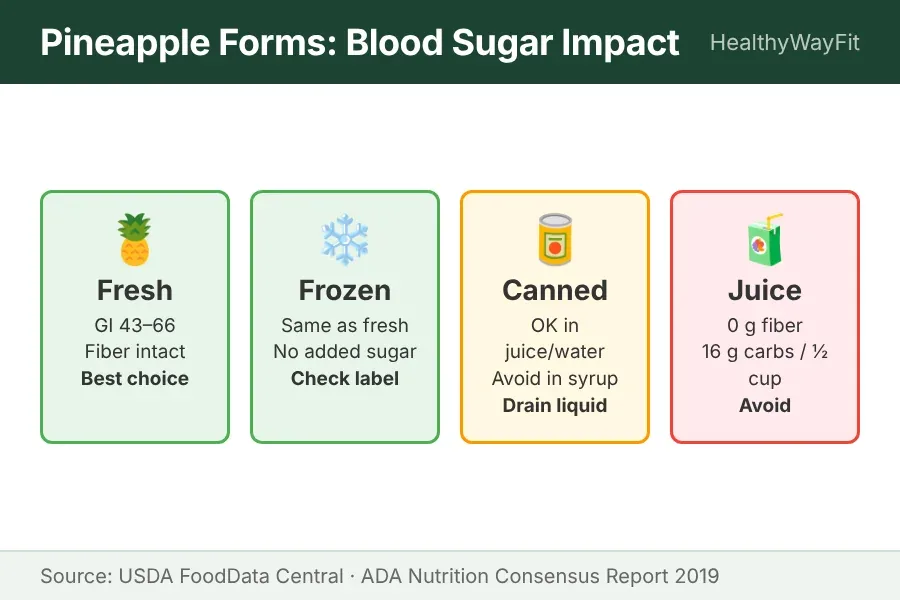
Fresh pineapple is the best choice for blood sugar management. It has the lowest GI in its natural range, intact fiber that slows sugar absorption, and contains bromelain — an anti-inflammatory enzyme discussed below. Choose fresh when possible.
Frozen pineapple (unsweetened) is nearly as good as fresh. Freezing doesn’t add sugar, and carb counts are comparable to fresh. Always check the label for added sweeteners in frozen fruit blends.
Canned pineapple depends entirely on the liquid it’s canned in. Canned in 100% juice: the GI and sugar content are close to fresh. Canned in syrup: the GI rises to 66–94 and the sugar content jumps considerably. Always choose canned in juice or water, and drain the liquid.
Pineapple juice has the highest blood sugar impact. Half a cup delivers 16 g of carbs with zero fiber. Without fiber to slow absorption, the sugar reaches the bloodstream faster than from whole fruit. The ADA recommends eating whole fruit rather than drinking fruit juice for exactly this reason.
| Form | GI range | Fiber per ½ cup | Blood sugar impact |
|---|---|---|---|
| Fresh pineapple | 43–66 | ~1.1 g | Moderate |
| Frozen (unsweetened) | ~43–66 | ~1.0 g | Moderate |
| Canned in 100% juice | ~43–68 | ~0.9 g | Moderate |
| Canned in syrup | 66–94 | ~0.7 g | High |
| Pineapple juice | ~46 | 0 g | High (fast onset) |
How Much Pineapple Can a Person with Diabetes Eat?
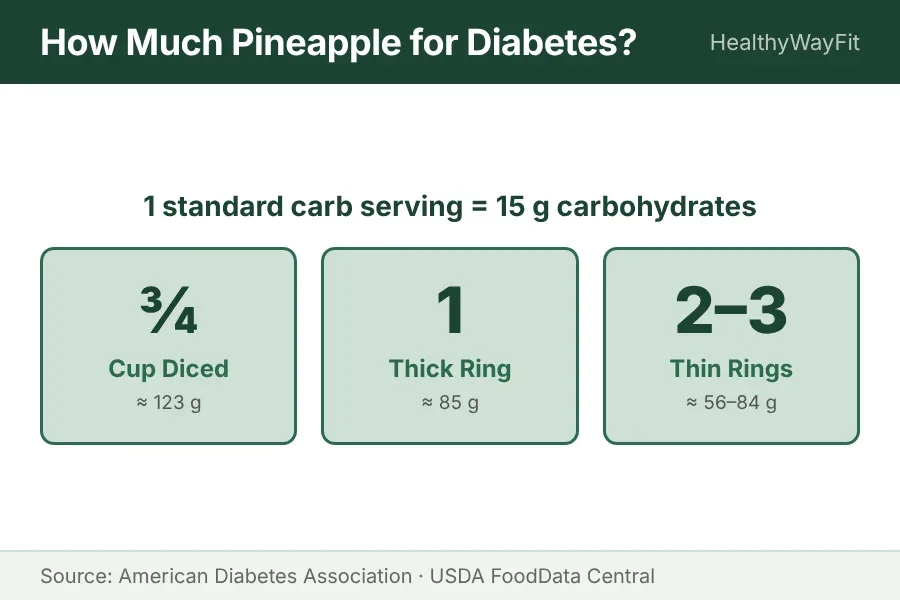
A standard one-serving portion of fruit in most diabetes meal plans is 15 g of carbohydrates. For fresh pineapple, that equals approximately:
- 1 thick slice (about 85 g / 3 oz)
- ¾ cup of diced pineapple
- 2–3 thin rings
How often depends on your total carbohydrate budget for that meal, your current blood sugar levels, your medication and how your own body responds. Most registered dietitians suggest one fruit serving per meal or snack, and two to three fruit servings across the full day — with all fruit types combined, not just pineapple.
The most useful tool is your own glucose meter or continuous glucose monitor (CGM). Eat your planned pineapple portion alongside a balanced meal, then check your blood sugar 1–2 hours later. That gives you a specific, personalized data point that no GI table can replicate.
Caution: If you take insulin or sulfonylureas (medications that stimulate insulin production), work with your healthcare provider or diabetes educator to integrate fruit carbs into your meal plan.
The serving sizes here are general guidelines, not medical advice.
How to Eat Pineapple with Diabetes — Pairings That Reduce the Blood Sugar Spike
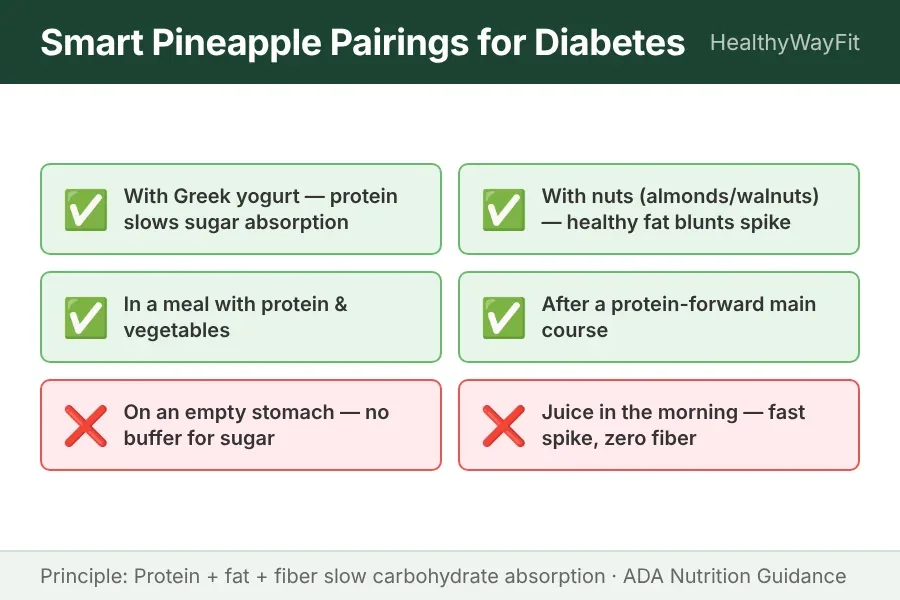
The food you eat alongside pineapple matters as much as the portion size. Carbohydrates eaten with protein, healthy fat or fiber are absorbed more slowly, producing a smaller and more gradual blood sugar rise.
Pairings that work:
- With plain Greek yogurt: Protein in the yogurt significantly slows digestion. Half a cup of diced pineapple with 100 g of unsweetened Greek yogurt is a balanced snack that most people with diabetes tolerate well.
- With a handful of nuts: 15–20 almonds or walnuts add healthy fat and protein, blunting the glycemic effect without adding many carbs.
- In a mixed meal with protein and vegetables: Adding pineapple chunks to a chicken stir-fry or as a side to grilled fish reduces the meal’s overall glycemic impact compared to eating the fruit alone.
- At the end of a protein-forward meal: Rather than as a standalone snack on an empty stomach, pineapple is better tolerated when eaten after protein has already been consumed.
Pairings to avoid:
- Pineapple on an empty stomach: Nothing slows the sugar absorption — the natural sugars have a direct run to the bloodstream.
- Pineapple as dessert after a high-carb main course: The carbs stack on top of an already loaded plate.
- Pineapple juice in the morning: Juice on an empty stomach produces a fast, sharp blood sugar spike.
What Does Research Say About Pineapple and Blood Sugar?
Most research looks at whole fruit intake in general rather than pineapple specifically. Here is what the evidence supports:
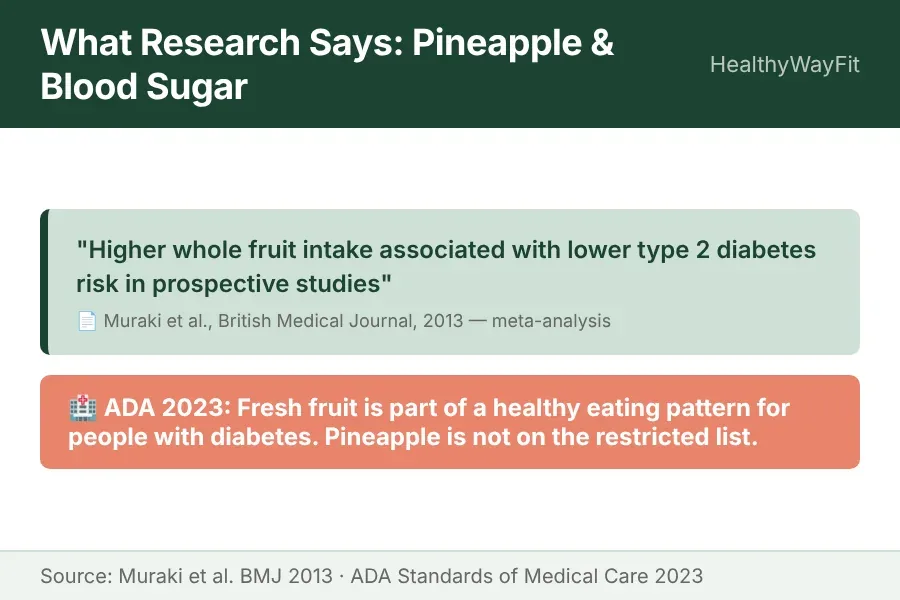
Whole fruit is associated with better blood sugar outcomes. A 2013 meta-analysis in the British Medical Journal (Muraki et al.) found that higher consumption of whole fruit was associated with lower type 2 diabetes risk in prospective studies. Pineapple was included in the broader fruit category; it was not among the fruits with the strongest individual associations (blueberries, grapes and apples showed the clearest effects), but it was not associated with harm.
The ADA’s 2023 Standards of Medical Care state that fruit, non-starchy vegetables, whole grains, legumes and dairy products are recommended components of a healthy eating pattern for people with diabetes. The ADA does not place pineapple on a restricted list.
Fiber matters. The 2.3 g of dietary fiber per cup of fresh pineapple contributes to slower glucose absorption. This is precisely why whole pineapple handles differently from pineapple juice — the fiber is the mechanism.
Individual blood sugar responses vary. Studies using continuous glucose monitors (CGMs) consistently show that two people eating the same food in the same quantity can have very different blood sugar responses, driven by gut microbiome composition, physical activity, baseline insulin sensitivity and the rest of their meal. GI tables give population averages; your personal response is the only data point that matters for your management plan.
Bromelain and Other Health Benefits of Pineapple
Beyond blood sugar, pineapple offers compounds that may benefit people managing diabetes:
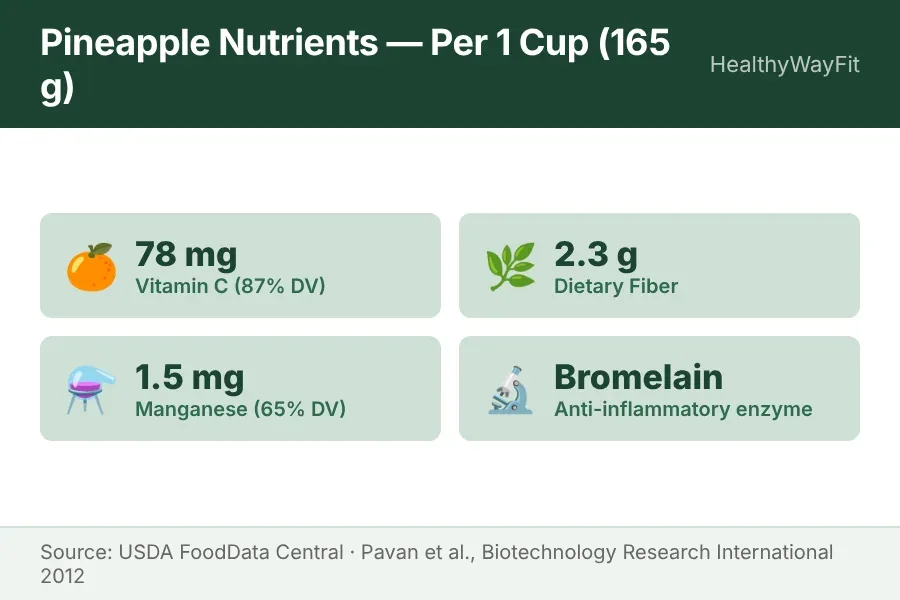
Bromelain is a group of proteolytic enzymes found only in pineapple — primarily in the core and stem, with smaller amounts in the flesh. A 2012 review in Biotechnology Research International (Pavan et al.) describes bromelain’s anti-inflammatory and digestive properties. Chronic low-grade inflammation is associated with insulin resistance and type 2 diabetes progression. Bromelain activity is highest in fresh and frozen pineapple; canning and pasteurization can significantly reduce it.
Vitamin C: One cup of fresh pineapple provides approximately 78 mg of vitamin C — about 87% of the recommended daily intake. Vitamin C is an antioxidant that helps reduce oxidative stress, which is elevated in people with diabetes.
Manganese: Pineapple is one of the best dietary sources of manganese (~1.5 mg per cup), which plays a role in carbohydrate metabolism and bone health — both areas relevant to long-term diabetes management.
Dietary fiber: The 2.3 g of fiber per cup contributes to the recommended daily target of 25–38 g and supports digestive health and slower carbohydrate absorption.
Note: Bromelain and vitamin C in pineapple are dietary benefits, not treatments.
They do not replace diabetes medication or medical care.
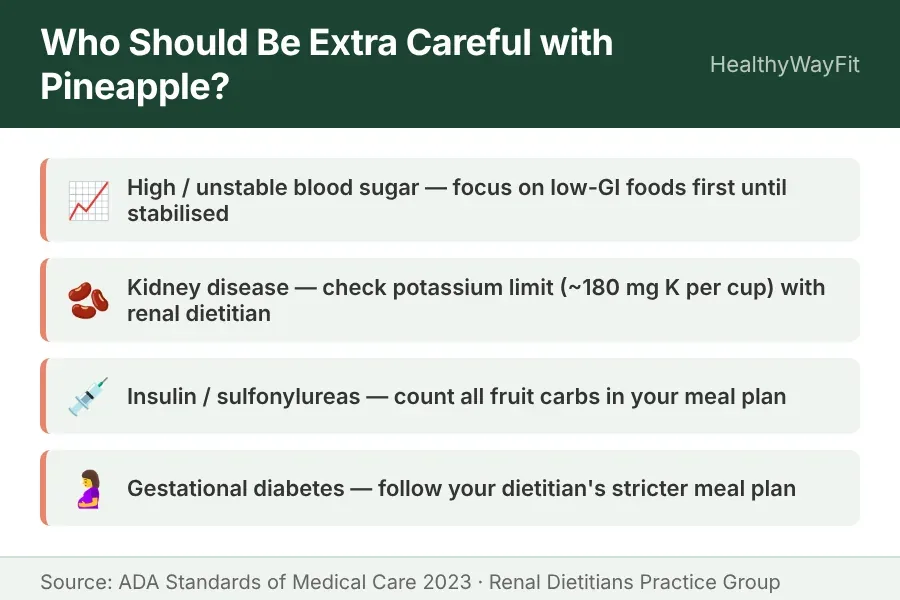
Who Should Be More Careful with Pineapple?
Most people with type 1 or type 2 diabetes can include pineapple in a balanced meal plan. A few situations call for extra caution:
High or unstable blood sugar readings: When blood sugar is running consistently above target, focus on lower-GI foods until levels stabilize. Medium-GI fruits are better reintroduced once readings are more controlled.
Kidney disease (diabetic nephropathy): Pineapple contains ~180 mg of potassium per cup. People on a potassium-restricted diet due to kidney disease should check their daily allowance with a renal dietitian before adding pineapple regularly.
Insulin or sulfonylureas: These medications directly lower blood sugar, so any added carbohydrate load from fruit needs to be planned into the meal carb count. Work with your care team.
Gestational diabetes: Meal plans are typically stricter due to the specific metabolic demands of pregnancy. Follow your dietitian’s guidance rather than general fruit guidelines.
Oral sensitivity: Bromelain and the natural acidity of fresh pineapple can cause temporary mouth or tongue tingling in some people. This is harmless but worth noting if you eat large amounts.
Frequently Asked Questions
Can eating pineapple raise blood sugar?
Yes — like all fruit, pineapple contains natural sugars that raise blood sugar. The key is portion size: ¾ cup of fresh pineapple (~15 g carbs) produces a moderate, manageable rise for most people with diabetes when eaten as part of a balanced meal.
Is pineapple better or worse than other fruits for diabetics?
Pineapple is a medium-GI fruit. Fruits with a lower GI — berries, cherries, apples, pears — have a smaller blood sugar impact per gram of carbohydrate. Pineapple is not the worst choice, but it isn’t the lowest-impact option either. It is fine in moderation; it just requires slightly more attention to portion than a small apple.
Can a person with type 1 diabetes eat pineapple?
Yes, with careful carb counting. People with type 1 diabetes need to count pineapple carbs and adjust insulin accordingly. Work with your diabetes care team to include pineapple in your carb-counting plan.
Is dried pineapple safe for diabetics?
Dried pineapple concentrates the sugar significantly — a small 2-tablespoon serving can contain 20–25 g of carbs, comparable to a full cup of fresh pineapple. Dried fruit in general is not well-suited to blood sugar management and is best avoided or strictly limited.
Does pineapple cure diabetes?
No. No food cures diabetes. Pineapple can fit into a balanced diabetes diet; it cannot treat, reverse or cure the condition. Claims that any single food “cures” diabetes are not supported by clinical evidence.
The Bottom Line
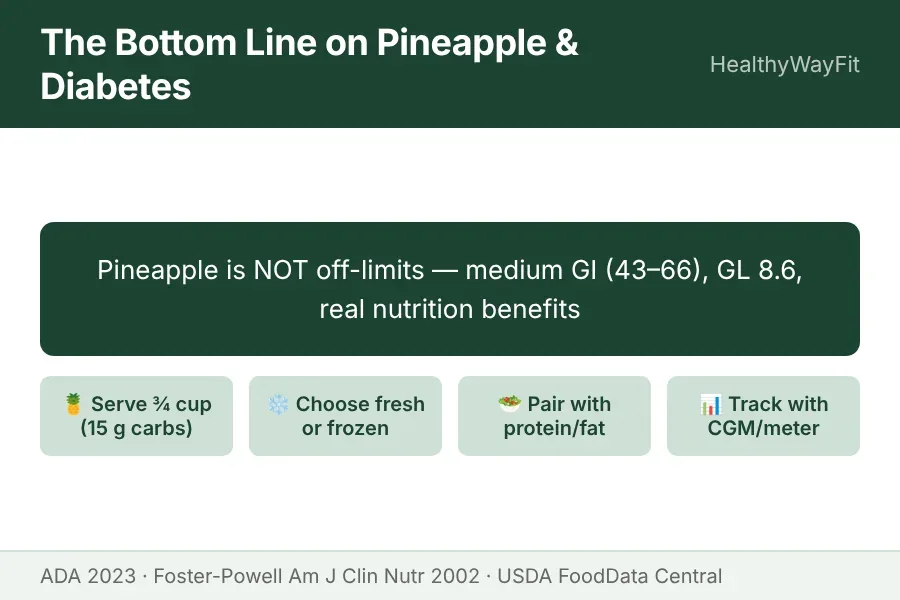
Pineapple is not off-limits with diabetes. Fresh pineapple has a medium GI (43–66), a low-to-medium glycemic load (~8.6 per cup), and offers real nutritional value including bromelain, vitamin C and manganese. The rules that make it work are straightforward: keep your serving to roughly ¾ cup (about 15 g carbs), choose fresh or unsweetened frozen over canned in syrup or juice, pair it with protein or healthy fat, and track your personal blood sugar response with a meter or CGM.
If you’re looking for a broader framework for fruit and carbohydrate balance in a diabetes diet, explore our diabetes-friendly eating guide for practical, research-backed guidance.