
This article is for informational purposes only and does not constitute medical advice. If you are managing diabetes, please consult your healthcare provider or a registered dietitian before making dietary changes.
The most common questions about jackfruit and diabetes pull in two opposite directions. One camp says jackfruit is far too sweet and should be avoided by people with diabetes. The other cites jackfruit flour as a near-cure for blood sugar problems. Both miss a more important truth.
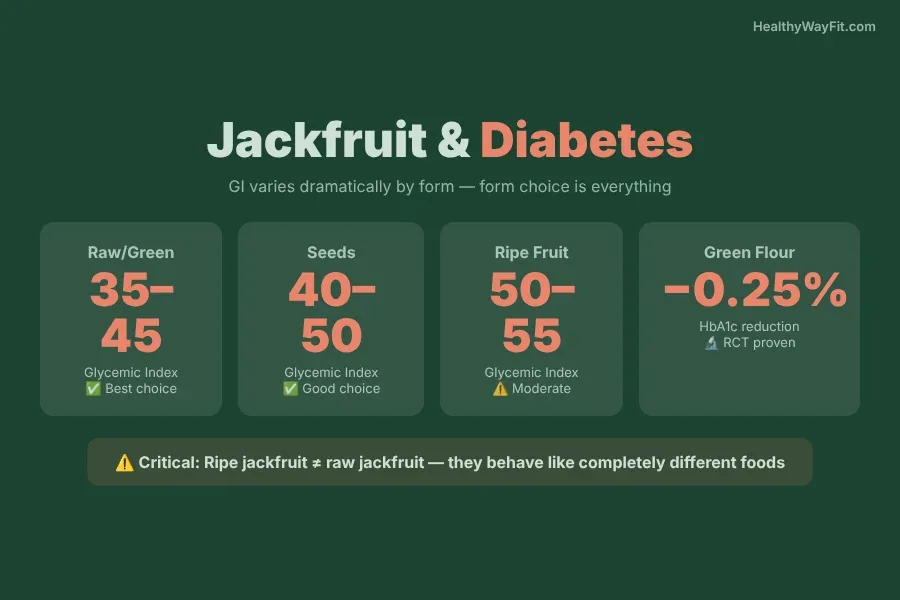
The real answer depends entirely on which form of jackfruit you are talking about. Ripe jackfruit, raw (green) jackfruit, jackfruit seeds, and jackfruit flour are four nutritionally distinct foods — and the research treats them very differently.
Here is the corrected picture: raw (green) jackfruit has been tested in a randomized, double-blind, placebo-controlled human clinical trial as a medical nutrition therapy for Type 2 diabetes, with statistically significant improvements in HbA1c, fasting glucose, and postprandial glucose. Ripe jackfruit — the sweet form — is a moderate-GI fruit that can be included in a diabetes diet in careful portions. And jackfruit seeds are a protein-rich, lower-GI option that almost nobody talks about.
This article walks through each form, what the research actually shows, and how to include jackfruit in a diabetes-friendly Indian kitchen.
How Much Jackfruit Can a Person with Diabetes Eat?
Before the science, here is the practical answer most readers came for.
For ripe jackfruit: 3–4 arils (pods), roughly 75–80g, eaten 2–3 times per week is a reasonable starting portion for most people managing Type 2 diabetes. That is about half a cup of jackfruit pieces — not a generous bowlful.
The glycemic load calculation explains why this portion works:
Glycemic load (GL) = (GI × grams of net carbs) ÷ 100
For 75g of ripe jackfruit:
- GI: approximately 50–55 (moderate range)
- Net carbs: approximately 13–14g
- GL = (55 × 13.5) ÷ 100 = ~7.4 (low)
A glycemic load under 10 is classified as low. At this portion, ripe jackfruit produces a low glycemic load — comparable to papaya or grapes. Double the portion to 150g and you nearly double the GL to approximately 15, which crosses into medium territory.
For raw (green) jackfruit: Normal vegetable portions (100–150g cooked) are suitable, because the sugar content is low and the fiber content is high. As jackfruit flour, the dose used in the clinical trial was 30g per day mixed into daily meals.
The practical rules:
- Eat ripe jackfruit as part of a meal with protein or fat (dahi, a handful of nuts), not alone
- The 3–4 arils limit is a real limit — ripe jackfruit is very sweet and easy to overeat
- Raw jackfruit in savory cooking is the better regular choice
- Check blood glucose 2 hours after eating; individual responses vary significantly
Caution: If you are on metformin, glimepiride, glibenclamide, insulin, or any other glucose-lowering medication, jackfruit may add to the blood-sugar-lowering effect.
Eating a large amount of jackfruit while medicated could cause hypoglycemia. Start with a small portion and monitor.
What Is Jackfruit’s Actual Glycemic Index?
The glycemic index measures how fast a food raises blood sugar compared to pure glucose (GI = 100). It is measured on a standardized portion providing 50g of available carbohydrate from the test food.
Published GI values for ripe jackfruit cluster in the range of 50–60, placing it in the moderate GI category (56–69 on the international scale). Several analyses suggest values closer to 50–55, which sits right at the low-to-moderate boundary. Even at the lower end of this range, ripe jackfruit is not in the same category as apple (GI ~38), guava (GI ~12–24), or legumes (GI 20–40).
Raw (green) jackfruit has a significantly lower GI than ripe jackfruit. The green fruit is high in pectin and other soluble fibers that slow digestion and blunt the glucose rise. A nutritional assessment of green jackfruit for diabetes management in Kerala found it performed substantially better than rice as a carbohydrate source, with the study population reporting reduced demand for antidiabetic medication during jackfruit season.
Jackfruit seeds have a lower GI than the fruit arils — boiled jackfruit seeds are estimated around GI 40–50 — and are also protein-rich (approximately 6–7g protein per 100g), making them one of the more diabetes-appropriate parts of the jackfruit plant.
Jackfruit’s Nutritional Profile
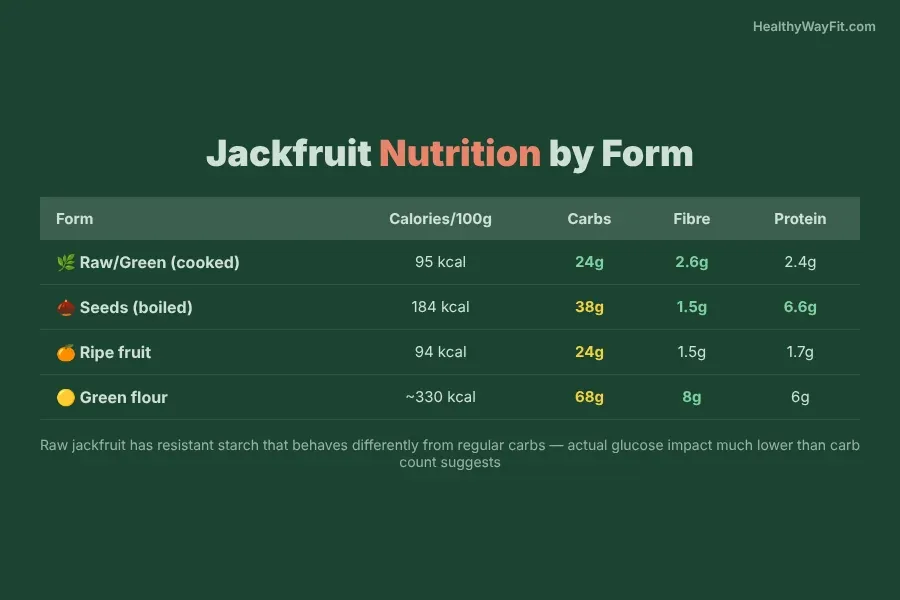
Per 100g of ripe jackfruit arils:
| Nutrient | Amount |
|---|---|
| Calories | 95 kcal |
| Total Carbohydrates | 23.2g |
| Dietary Fiber | 1.5g |
| Net Carbs | ~21.7g |
| Natural Sugars | 19.1g |
| Protein | 1.7g |
| Fat | 0.6g |
| Vitamin C | 13.7mg (15% DV) |
| Vitamin B6 | 0.3mg (23% DV) |
| Potassium | 448mg (13% DV) |
| Magnesium | 29mg (7% DV) |
Ripe jackfruit is higher in calories and natural sugars than most fruits commonly discussed for diabetes — considerably more calorie-dense than papaya (43 kcal/100g) or guava (68 kcal/100g). The 19g of natural sugars per 100g is why portion control is non-negotiable.
That said, jackfruit offers meaningful micronutrients. Potassium supports blood pressure regulation, which matters because cardiovascular risk is significantly elevated in Type 2 diabetes. Magnesium plays a role in insulin signaling, and several studies have observed lower magnesium levels in people with Type 2 diabetes. Vitamin B6 supports glucose metabolism.
Raw (green) jackfruit (approximate values per 100g):
| Nutrient | Amount |
|---|---|
| Calories | ~51 kcal |
| Total Carbohydrates | ~11g |
| Dietary Fiber | ~3.6g |
| Net Carbs | ~7.4g |
| Sugars | ~6.5g |
| Protein | ~1.7g |
Raw jackfruit has less than half the net carbs of ripe jackfruit and more than twice the fiber. This nutritional difference is the foundation for why green jackfruit is consistently the better choice for blood sugar management.
What Does the Research Say? (Honest Evidence Review)
Research on jackfruit and diabetes exists at three levels: cell culture studies (in vitro), animal studies, and human clinical trials. Here is what each level actually establishes.
In Vitro and Animal Studies
Multiple in vitro studies have identified antidiabetic compounds in jackfruit. Carotenoids, proanthocyanidins, flavonoids, and tannins in the plant show alpha-amylase inhibitory activity — meaning they may slow the breakdown of dietary starch into glucose. Biworo et al. (2015) reported antidiabetic and antioxidant activity in jackfruit extract, with a proposed mechanism of inhibiting lipid peroxide formation.
Rodent studies have reinforced these findings. Mohana et al. (2012) found that Artocarpus heterophyllus extract significantly reduced fasting blood glucose in streptozotocin-induced diabetic rats. Jain et al. (2010) reported reduction in blood glucose and increase in serum insulin in alloxan-induced diabetic rats treated with jackfruit fruit extract, alongside improvements in cholesterol and LDL. A clinical study (Deepthi et al., 2017) administered jackfruit leaf decoction to Type 2 diabetes patients and found significant reductions in fasting and postprandial plasma glucose (p<0.001), though the methodology was single-blind with acknowledged limitations.
What this means for you: These findings establish plausible biological mechanisms for jackfruit’s antidiabetic effects. Flavonoids may trigger insulin-like glucose uptake. Fiber slows digestion. Pectin in green jackfruit reduces postprandial glucose spikes. These mechanisms make the human trial findings more credible, but they do not by themselves confirm that eating jackfruit lowers blood sugar in people.
The Human Randomized Controlled Trial — The Strongest Evidence
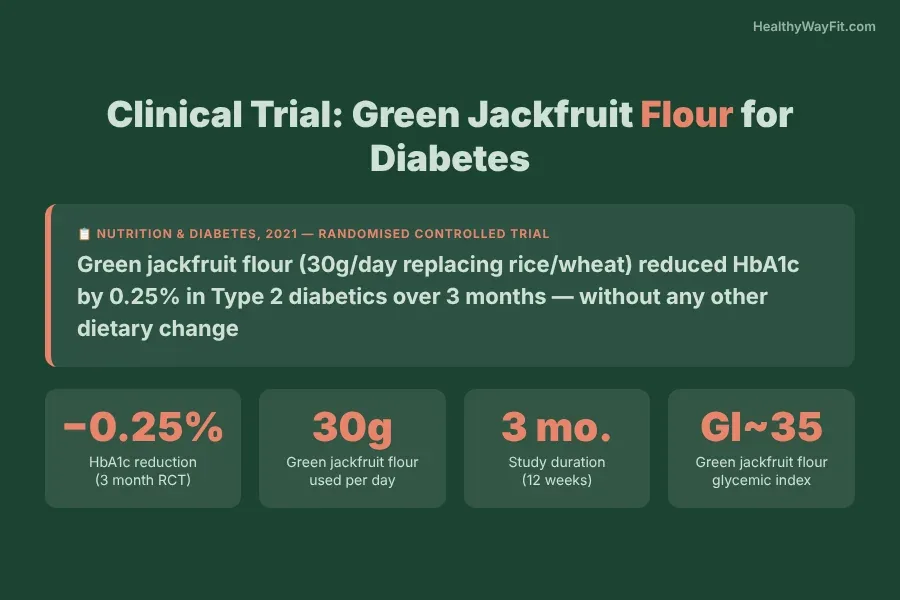
The most significant piece of research is a randomized, double-blind, placebo-controlled trial published in Nutrition & Diabetes (2021), conducted at Government Medical College, Srikakulam, Andhra Pradesh, India.
Study design:
- 40 patients with Type 2 diabetes on oral antihyperglycemic agents, with baseline HbA1c < 8%
- Group A (n=20): 30g green jackfruit flour per day for 12 weeks, replacing an equal volume of rice or wheat flour in daily meals
- Group B (n=20): placebo flour (equal volume of rice/wheat flour) for 12 weeks
- Primary endpoint: mean change in HbA1c
Results at 12 weeks:
| Measure | Jackfruit Flour Group | Placebo Group | p-value |
|---|---|---|---|
| HbA1c change | −0.25% (7.23% → 6.98%) | +0.02% (7.26% → 7.28%) | 0.006 |
| Fasting plasma glucose change | −29.45 mg/dL | −16.15 mg/dL | 0.043 |
| Postprandial glucose change | −36.70 mg/dL | −8.63 mg/dL | 0.001 |
| Body weight change | −0.17 kg | +0.05 kg | 0.20 (NS) |
No hypoglycemia episodes were reported in either group throughout the study.
The nutritional mechanism was straightforward: compared to equal volume of placebo flour, 30g of green jackfruit flour delivered 25% fewer calories (108 kcal vs. 146 kcal), 33% fewer net carbohydrates (20g vs. 30g), and 57% more dietary fiber (4g vs. 2.54g).
Interpreting this study correctly:
- Small sample size (n=40) at a single center — the authors acknowledge this and call for larger multicentric trials
- The product was Jackfruit365™ green jackfruit flour; the study was funded by the manufacturer — a real conflict of interest that should be weighed
- The intervention was green jackfruit flour replacing rice or wheat, not eating ripe jackfruit as a fruit
- Despite limitations, these are the only statistically significant human RCT findings available for jackfruit and diabetes, and they are consistent across multiple endpoints
Green Jackfruit vs. Ripe Jackfruit: The Distinction Most Articles Miss
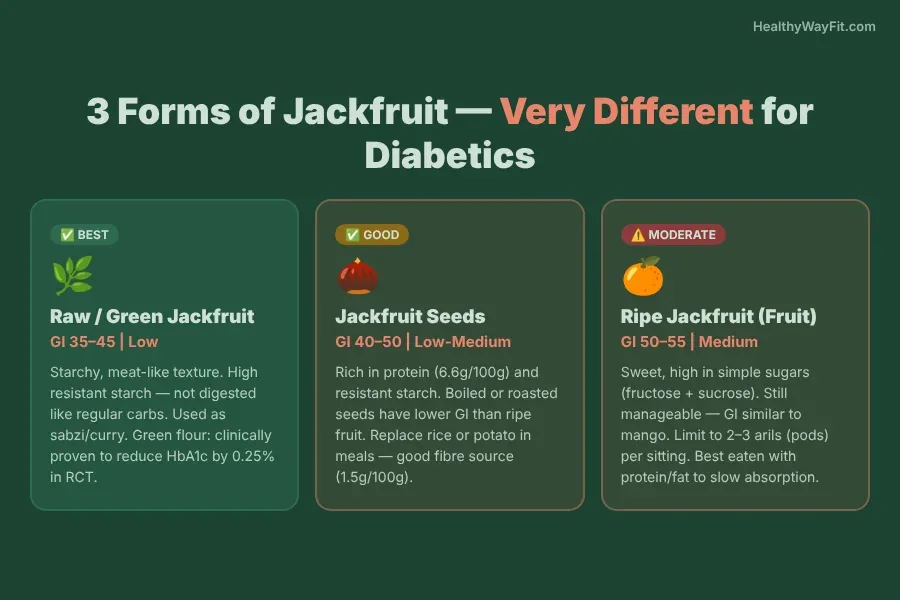
This is the central point that most articles on jackfruit and diabetes skip entirely — and it changes the practical guidance significantly.
Ripe jackfruit (the sweet yellow arils available at fruit stalls) is high in natural sugars, moderate in GI, and should be eaten in careful portions like most medium-GI tropical fruits.
Raw (green) jackfruit is the unripe fruit used as a vegetable across South and Southeast Asian cooking. In India it is kathal (Hindi), phanas (Marathi), chakka (Malayalam). In Kerala, raw jackfruit has been traditionally used as a rice substitute during jackfruit season — a practice that now has partial biological validation from the clinical research described above.
Green jackfruit is nutritionally distinct from ripe in several important ways:
- Less than half the natural sugars per 100g
- More than twice the dietary fiber
- Higher in pectin — a soluble fiber that slows gastric emptying and moderates postprandial glucose
- Lower estimated GI
- Likely higher in proanthocyanidins and other polyphenols that are more concentrated in the unripe form
In flour form, the difference is even more pronounced. Green jackfruit is dehydrated and milled before its sugars fully develop, resulting in a low-sugar, high-fiber flour suitable for partially replacing rice or wheat flour in daily cooking.
How Jackfruit Compares to Other Common Fruits
| Fruit | GI | Typical Portion | Approx. GL |
|---|---|---|---|
| Ripe Jackfruit | 50–55 | 75g (~3–4 arils) | ~7–8 |
| Raw Jackfruit | ~35–45 | 100g (cooked) | ~3–4 |
| Guava | 12–24 | 100g | ~2–3 |
| Apple | 38 | 182g (1 medium) | ~6 |
| Papaya | 59 | 150g (1 cup) | ~9 |
| Mango | 55 | 165g (1 cup) | ~12 |
| Banana (ripe) | 62 | 120g (1 medium) | ~15 |
| Watermelon | ~72 | 152g (1 cup) | ~8 |
At a controlled small portion (75g), ripe jackfruit’s glycemic load is low and compares reasonably well to other common fruits. The practical challenge is that jackfruit arils are very easy to eat past this quantity when the fruit is fresh and sweet during season.
Drug Interaction Warning
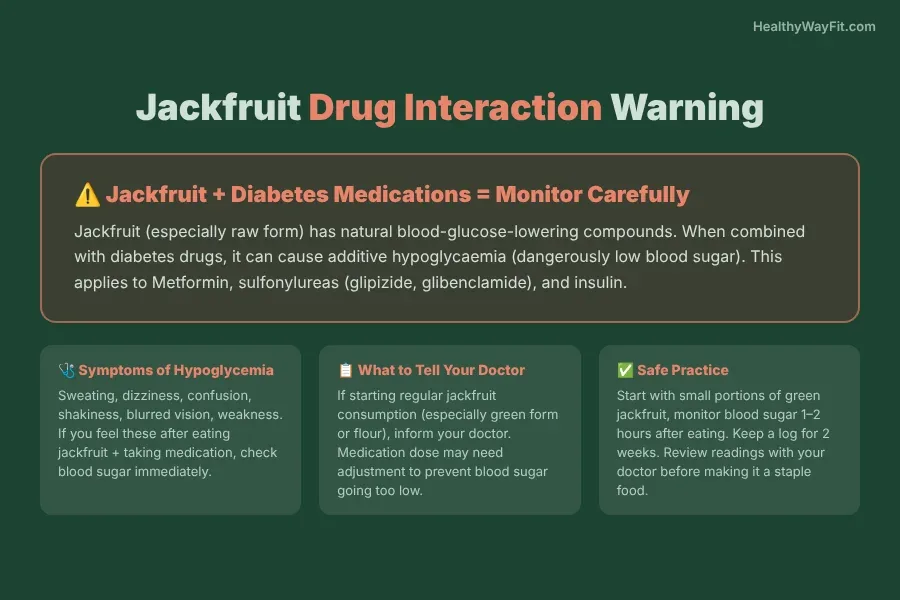
Warning: If you are on diabetes medications — metformin, sulfonylureas (glimepiride, glibenclamide), insulin, DPP-4 inhibitors, or any other glucose-lowering agent — jackfruit may enhance the blood-glucose-lowering effect and increase hypoglycemia risk.
Do not eat large quantities of jackfruit without first discussing it with your doctor.
Both WebMD and Cleveland Clinic note that jackfruit may lower blood sugar through mechanisms beyond simple carbohydrate content, likely via its phytochemical content. When combined with glucose-lowering medications, this additive effect can push blood sugar too low.
Signs of hypoglycemia to watch for: shakiness, sweating, confusion, dizziness, or a blood glucose reading below 70 mg/dL. If you experience these after eating jackfruit with medication, treat with a fast-acting carbohydrate (glucose tablets, 4 oz of juice) and contact your healthcare provider.
The Cleveland Clinic also notes that jackfruit leaf preparations — sometimes used in traditional medicine — may lower fasting blood sugar. If you are using any jackfruit leaf preparation, disclose this to your diabetes care team, as it adds to the effect of medication.
How to Eat Jackfruit with Diabetes: Practical Guidance for an Indian Kitchen
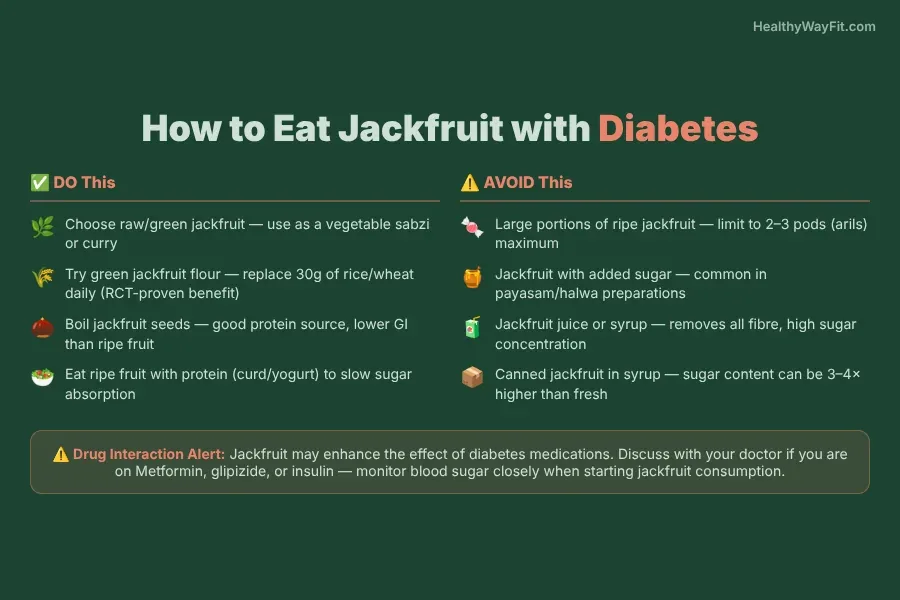
Ripe jackfruit (occasional treat):
- 3–4 arils (75–80g) is the portion limit
- Best eaten with protein (a bowl of dahi, a small handful of peanuts) to slow glucose absorption
- Avoid eating it after a high-carbohydrate meal when total carb load is already high
- Skip jackfruit juice, smoothies (removes fiber, concentrates sugar), canned jackfruit in syrup, or jackfruit-based mithai
Raw jackfruit (better for regular inclusion):
Kathal ki Sabzi
The most common North and Central Indian preparation. Pressure-cook chunks of green jackfruit, then sauté with onion, tomato, turmeric, coriander, and cumin. Low in sugar, high in fiber. Suitable as a regular vegetable dish at lunch or dinner.
Kerala-style Raw Jackfruit Thoran or Curry
Raw jackfruit (chakka) cooked with grated coconut, curry leaves, and mustard seeds is a traditional Keralite preparation that functions as a satisfying, fiber-rich meal component. Using it to partially replace rice reduces the meal’s total glycemic load — the traditional practice that the clinical research has now partially validated.
Raw Jackfruit as a Rice Substitute
In Kerala, raw jackfruit has long been used as a rice substitute. The clinical trial tested a concentrated version of this concept — green jackfruit flour replacing rice or wheat flour at 30g per day — and found significant glycemic improvements over 12 weeks. At home, using raw jackfruit preparations to replace a portion of rice or roti in several meals per week follows the same principle.
Jackfruit seeds (often overlooked):
- Boil and eat as a snack — lower GI than the arils, higher in protein
- Roast with a little salt and spices for a filling, blood-sugar-friendly snack
- Add boiled jackfruit seeds to dal, sambhar, or vegetable curries for protein and fiber
What to avoid:
- Eating ripe jackfruit in large quantities — the sweet arils are easy to overeat in season
- Jackfruit-flavored packaged snacks, chips, or candy (high sugar, low fiber)
- Jackfruit smoothies or milkshakes that concentrate the sugar and remove fiber
The Bottom Line: Is Jackfruit Good for Diabetes?
The honest answer is that it depends on the form and the portion.
Ripe jackfruit: Yes, in small, controlled portions. At 75g (3–4 arils), the glycemic load is low and ripe jackfruit can be an occasional sweet treat. Portion discipline is the essential requirement — the fruit is sweet and easy to overeat.
Raw (green) jackfruit: Yes, and likely actively beneficial when eaten regularly as a substitute for a portion of rice or wheat. The one human randomized controlled trial available found statistically significant improvements in HbA1c (−0.25%), fasting plasma glucose (−29.45 mg/dL), and postprandial glucose (−36.70 mg/dL) when green jackfruit flour replaced an equal volume of rice or wheat flour daily for 12 weeks. The study was small and industry-funded, but the findings are consistent across all glucose endpoints and the mechanism is biologically well-supported.
Jackfruit seeds: A good option that diabetes nutrition discussions rarely cover — lower GI than the fruit arils, higher in protein and fiber.
One important qualification: the clinical trial evidence applies to green jackfruit flour in a structured dietary substitution format, not to eating ripe jackfruit as a fruit snack. These are different interventions with different nutritional profiles. Eating ripe jackfruit does not replicate the effect of replacing rice with jackfruit flour daily.
The most evidence-backed approach: use raw jackfruit in place of a portion of rice or roti in several meals per week, save ripe jackfruit for occasional, portion-controlled enjoyment, add jackfruit seeds to your snack and dal repertoire, and use your glucometer to see how your specific body responds.
References
- Rao AG, Naik KS, Unnikrishnan AG, Joseph J. Efficacy of green jackfruit flour as a medical nutrition therapy replacing rice or wheat in patients with type 2 diabetes mellitus: a randomized, double-blind, placebo-controlled study. Nutr Diabetes. 2021;11:18. https://doi.org/10.1038/s41387-021-00161-4
- Biworo A, Tanjung E, Iskandar Khairina, Suhartono E. Antidiabetic and antioxidant activity of jackfruit (Artocarpus heterophyllus) extract. J Med Biol Eng. 2015;4:318–23.
- Mohana E, Gothandam KM, Karthikeyan S. Antidiabetic activity of Feronia limonia and Artocarpus heterophyllus in streptozotocin induced diabetic rats. Am J Food Technol. 2012;7:43–9.
- Jain S, Sharma R, Barik R, Kumar P, Bhatt D. Effect of fruit extract of Artocarpus heterophyllus in alloxan induced diabetic rats. Int J Pharm Sci Res. 2010;7:59–64.
- Deepthi GN, Eapen J, Kumar R. Hypoglycaemic effect of leaf decoction of panasa [Artocarpus heterophyllus Lam] in type II diabetes mellitus — a clinical study. Int J Ayurveda Pharma Res. 2017;5:20–5.
- Joseph J. Nutritional, glycemic and ecological assessment of green jackfruit for diabetes in Kerala. Int J Diabetes. 2019;1:14–8.
- WebMD. Jackfruit: Are there health benefits? https://www.webmd.com/diet/jackfruit-health-benefits
- Cleveland Clinic Health Essentials. 7 Impressive Health Benefits of Jackfruit. https://health.clevelandclinic.org/jackfruit-benefits
Written by Kirti, Founder & Serial Entrepreneur, HealthyWayFit. Last updated: October 2026.
This article is for informational purposes only and does not constitute medical advice. People managing diabetes should consult their healthcare provider or a registered dietitian before making dietary changes.



