
Medical Disclaimer: This article is for informational purposes only and does not constitute medical advice. Always consult a qualified healthcare professional for diagnosis and treatment of diabetes or any other medical condition.
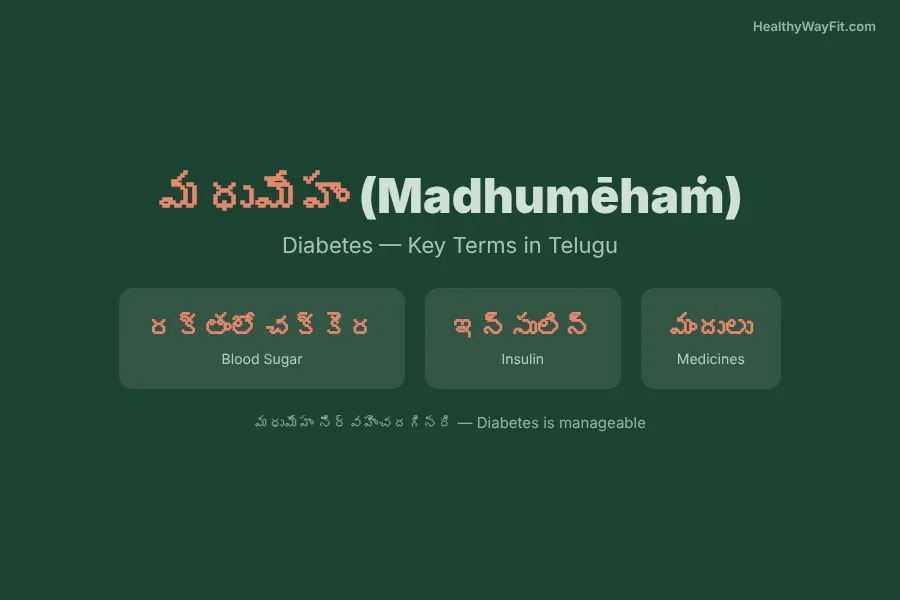
Diabetes in Telugu is called మధుమేహం (madhumēhaṃ) — the classical and most widely used medical term. Colloquially, Telugu speakers also say చక్కెర వ్యాధి (chakkera vyādhi, literally “sugar disease”) or షుగర్ వ్యాధి (shugar vyādhi). The transliterated English form డయాబెటిస్ (ḍayābeṭis) is also common in everyday conversation.
Understanding these terms matters because much of India’s diabetes education reaches patients in regional languages first. If you have family members in Andhra Pradesh or Telangana — or you are navigating a diagnosis in a Telugu-speaking context — knowing the right words helps you ask better questions and find better resources.
What Is the Meaning of Diabetes in Telugu?
The primary Telugu word for diabetes is మధుమేహం (madhumēhaṃ).
Breaking it down by Sanskrit roots:
- మధు (madhu) = honey / sweet
- మేహం (mēhaṃ) = to flow / to pass through
So మధుమేహం literally means the flowing of sweetness — a reference to the excess sugar that passes into the urine of someone with uncontrolled diabetes. This mirrors the etymology of the English word “diabetes mellitus”: diabetes from Greek meaning “to pass through,” and mellitus from Latin meaning “honey-sweet.”
Common Telugu Names for Diabetes
| Telugu Term | Transliteration | Usage |
|---|---|---|
| మధుమేహం | Madhumēhaṃ | Formal / medical term |
| చక్కెర వ్యాధి | Chakkera vyādhi | Common / everyday |
| షుగర్ వ్యాధి | Shugar vyādhi | Colloquial (from “sugar”) |
| డయాబెటిస్ | Ḍayābeṭis | Transliterated English |
| మూత్ర మధురం | Mūtra madhuraṃ | Older classical term |
Note: In clinical settings in Andhra Pradesh and Telangana, doctors typically use “మధుమేహం” in writing and “డయాబెటిస్” in spoken consultation.
Both are understood and correct.
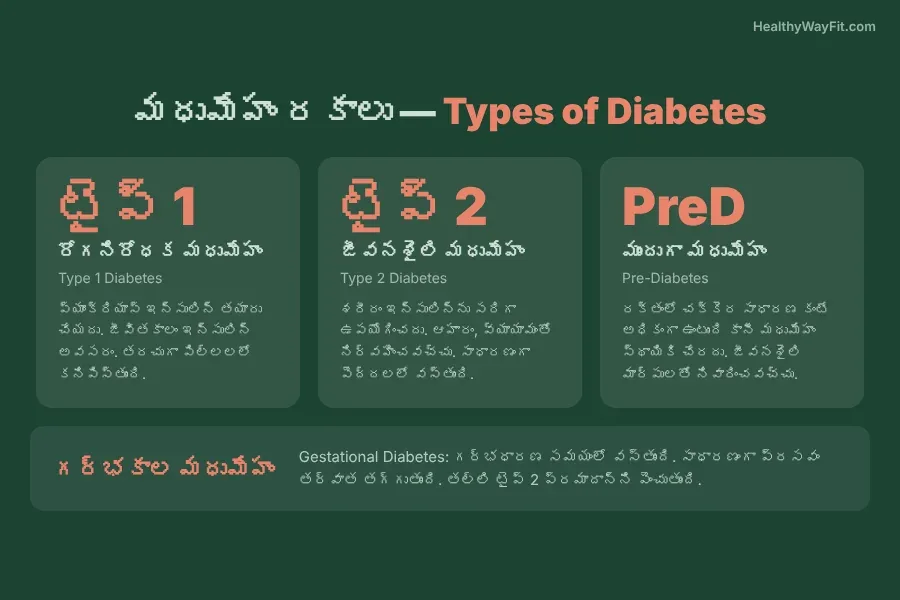
Types of Diabetes in Telugu (మధుమేహం రకాలు)
Type 1 Diabetes — టైప్ 1 మధుమేహం
In Type 1 diabetes, the body’s immune system destroys the insulin-producing beta cells of the pancreas. Little or no insulin is produced. This is an autoimmune condition, not caused by diet or lifestyle.
- Telugu name: టైప్ 1 మధుమేహం (ṭaip 1 madhumēhaṃ)
- Also called: ఇన్సులిన్ పై ఆధారపడ్డ మధుమేహం (insulin pai ādhārapaḍḍa madhumēhaṃ) — insulin-dependent diabetes
- Typically diagnosed in children and young adults
- Requires daily insulin injections or an insulin pump
Type 2 Diabetes — టైప్ 2 మధుమేహం
The most common form worldwide. The body either does not produce enough insulin or the cells do not respond properly to it (insulin resistance). Strongly linked to diet, inactivity, and obesity.
- Telugu name: టైప్ 2 మధుమేహం (ṭaip 2 madhumēhaṃ)
- Also called: ఇన్సులిన్ పై ఆధారపడని మధుమేహం — non-insulin-dependent diabetes
- Most cases in India fall under Type 2
- Can often be managed with lifestyle changes, oral medications, and sometimes insulin
Gestational Diabetes — గర్భకాల మధుమేహం
Develops during pregnancy when hormonal changes affect insulin function. Usually resolves after delivery but raises the mother’s lifetime risk of Type 2 diabetes.
- Telugu name: గర్భకాల మధుమేహం (garbhakāla madhumēhaṃ)
- Screened at 24–28 weeks of pregnancy
- Requires dietary control and sometimes insulin during pregnancy
Prediabetes — ప్రీ-డయాబెటిస్
Blood sugar is higher than normal but not yet in the diabetic range. A critical window for intervention.
- Telugu: ప్రీ-డయాబెటిస్ or మధుమేహ పూర్వస్థితి (madhumēha pūrvasthiti)
Symptoms of Diabetes in Telugu (మధుమేహం లక్షణాలు)
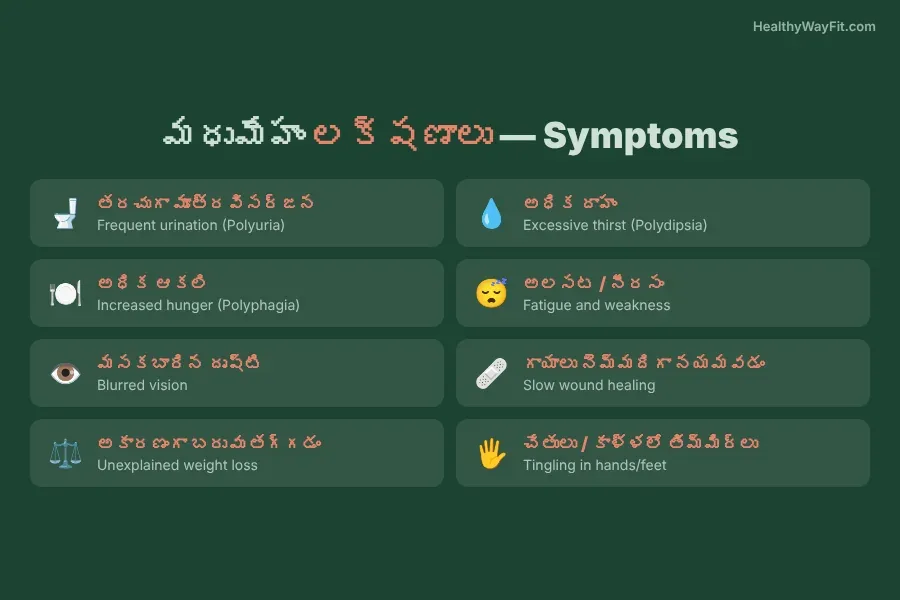
The word for symptoms in Telugu is లక్షణాలు (lakṣaṇālu).
The classic warning signs of diabetes in both English and Telugu are:
| Symptom (English) | Telugu | Transliteration |
|---|---|---|
| Frequent urination | అధిక మూత్రవిసర్జన | Adhika mūtravrisarjana |
| Excessive thirst | అతిగా దాహం | Atigā dāhaṃ |
| Extreme hunger | తీవ్రమైన ఆకలి | Tīvramaina ākali |
| Unexpected weight loss | బరువు తగ్గడం | Baruvu taggaḍaṃ |
| Blurred vision | మసకబారిన దృష్టి | Masakabārina dṛṣṭi |
| Fatigue / tiredness | అలసట | Alasat |
| Slow healing wounds | గాయాలు నెమ్మదిగా నయం అవడం | Gāyālu nemmadiga nayaṃ avaḍaṃ |
| Tingling in hands/feet | చేతులు, కాళ్ళలో జలదరింపు | Cētulu, kāḷḷalō jaladarimpu |
Note: Many people with Type 2 diabetes have no symptoms for years.
If you have risk factors — family history, overweight, sedentary lifestyle — get your blood sugar tested even without symptoms.
Causes and Risk Factors in Telugu (కారణాలు)
కారణాలు (kāraṇālu) means causes in Telugu.
Type 1 Causes
- Autoimmune destruction of beta cells (exact trigger unknown)
- Genetic predisposition
- Possibly triggered by viral infection
Type 2 Causes and Risk Factors
- అధిక బరువు / స్థూలకాయం (adhika baruvu / sthūlakāyaṃ) — overweight/obesity
- శారీరక శ్రమ లేకపోవడం (śārīraka śrama lēkāpōvaḍaṃ) — physical inactivity
- కుటుంబ చరిత్ర (kuṭumba caritra) — family history of diabetes
- వయస్సు (vayassu) — age (risk increases after 40)
- అధిక రక్తపోటు (adhika raktapōṭu) — high blood pressure
- అధిక కొలెస్ట్రాల్ (adhika kolēsṭrāl) — high cholesterol
- పిసిఓఎస్ (PCOS) — polycystic ovary syndrome in women
- High intake of refined carbohydrates, white rice, and sugary foods (particularly relevant in South Indian diets)
India and especially South India has a high genetic susceptibility to Type 2 diabetes, and Telugu-speaking populations in Andhra Pradesh and Telangana have among the highest prevalence rates in the country.
Diagnosis: Blood Sugar Levels (రక్తంలో చక్కెర స్థాయిలు)
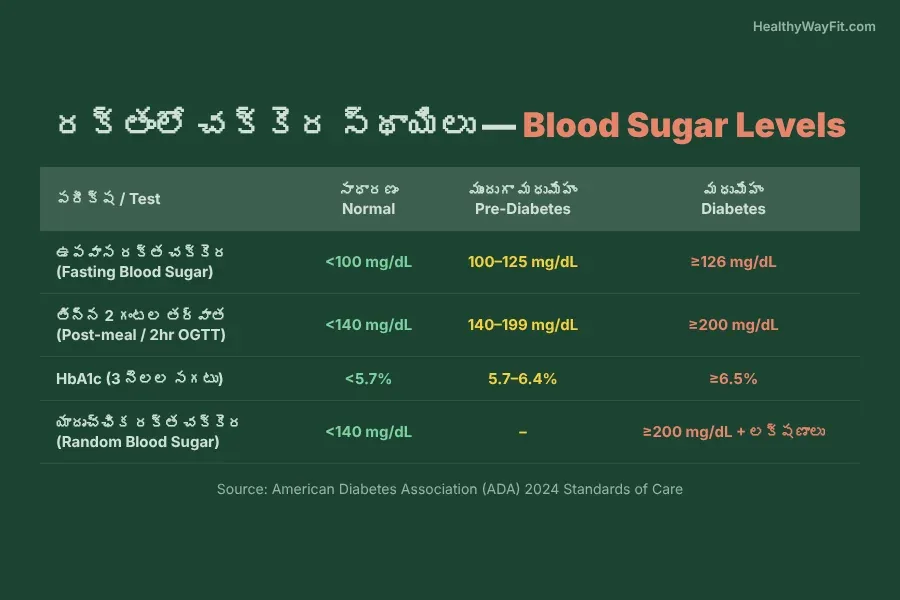
రక్తంలో చక్కెర (raktaṃlō chakkera) = blood sugar in Telugu.
The standard diagnostic values (as per American Diabetes Association / Indian guidelines):
| Test | Normal | Prediabetes | Diabetes |
|---|---|---|---|
| Fasting Blood Sugar (FBS) | Below 100 mg/dL | 100–125 mg/dL | 126 mg/dL or above |
| Post-meal (2-hour PPBS) | Below 140 mg/dL | 140–199 mg/dL | 200 mg/dL or above |
| HbA1c | Below 5.7% | 5.7–6.4% | 6.5% or above |
| Random Blood Sugar | — | — | 200 mg/dL or above (with symptoms) |
Telugu key terms:
- ఉపవాస రక్తంలో చక్కెర (upavāsa raktaṃlō chakkera) = fasting blood sugar
- భోజనం తర్వాత రక్తంలో చక్కెర = post-meal blood sugar
- హిమోగ్లోబిన్ A1c = HbA1c (same term used in Telugu medical contexts)
Treatment of Diabetes in Telugu (చికిత్స)
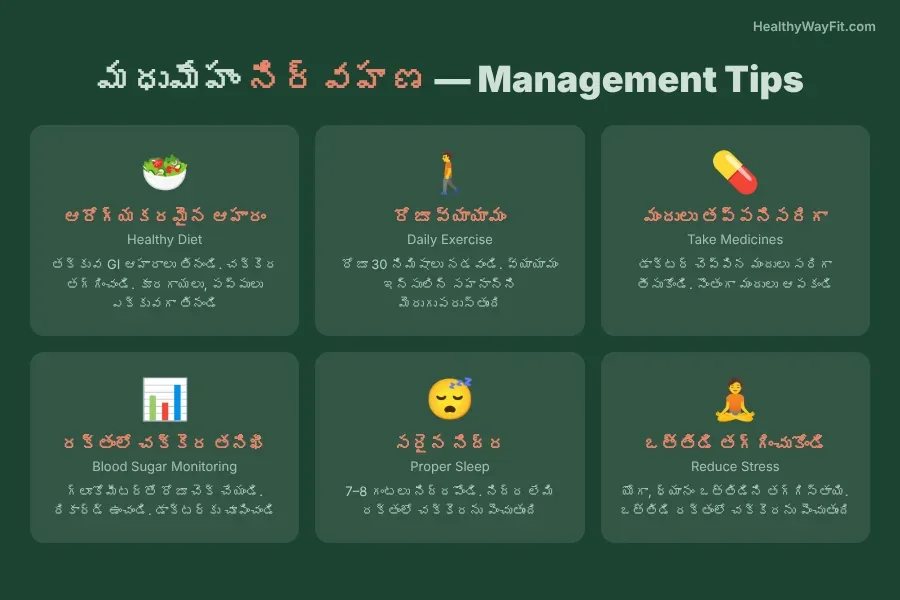
చికిత్స (cikitsa) means treatment in Telugu.
Lifestyle Changes (జీవనశైలి మార్పులు)
The first-line treatment for Type 2 and prediabetes:
- ఆహార నియంత్రణ (āhāra niyantrana) — dietary control: reduce white rice, sugar, refined foods; add more vegetables, pulses, whole grains
- వ్యాయామం (vyāyāmaṃ) — exercise: minimum 30 minutes of moderate activity 5 days per week
- బరువు తగ్గించడం (baruvu tagginnchaḍaṃ) — weight loss: even a 5–10% reduction significantly improves blood sugar
- ఒత్తిడి నిర్వహణ (ottiḍi nirvahana) — stress management: chronic stress raises blood sugar
Medications (మందులు)
- మెట్ఫార్మిన్ (meṭphārmin) — Metformin: most common first oral medication for Type 2
- ఇన్సులిన్ (insulin) — Insulin injections: required for all Type 1 and some Type 2
- SGLT-2 inhibitors and GLP-1 agonists — newer classes increasingly used in India
Monitoring (పర్యవేక్షణ)
- Regular blood sugar testing at home with a glucometer
- HbA1c test every 3–6 months
- Annual eye exam, kidney function test, foot examination
Prevention of Diabetes (మధుమేహం నివారణ)
నివారణ (nivāraṇa) = prevention in Telugu.
Type 1 diabetes cannot currently be prevented. Type 2 diabetes and prediabetes progression can be significantly reduced:
- Maintain a healthy weight
- Exercise regularly — brisk walking for 30 minutes daily is sufficient
- Eat a balanced diet rich in fiber, vegetables, and legumes (dal, rajma, chana)
- Limit white rice portions — a particularly important lifestyle change for South Indian diets
- Avoid sugary beverages — soft drinks, packaged juices, sweetened chai
- Get regular blood sugar checks if you have risk factors
- If diagnosed with prediabetes, act immediately — progression to Type 2 is not inevitable
Frequently Asked Questions (FAQs)
Q: What is the Telugu word for diabetes?
The main Telugu word for diabetes is మధుమేహం (madhumēhaṃ). In everyday speech, people also say చక్కెర వ్యాధి (sugar disease) or షుగర్ వ్యాధి.
Q: What does మధుమేహం mean literally?
మధుమేహం breaks down as మధు (honey/sweet) + మేహం (to flow). It literally means “the flowing of sweetness,” referring to the excess sugar that spills into urine in uncontrolled diabetes.
Q: What is prediabetes called in Telugu?
Prediabetes is called ప్రీ-డయాబెటిస్ or మధుమేహ పూర్వస్థితి (madhumēha pūrvasthiti) in Telugu.
Q: What is Type 1 and Type 2 diabetes in Telugu?
Type 1 is టైప్ 1 మధుమేహం and Type 2 is టైప్ 2 మధుమేహం. Type 2 is by far the most common form in India.
Q: What is gestational diabetes in Telugu?
Gestational diabetes is called గర్భకాల మధుమేహం (garbhakāla madhumēhaṃ) in Telugu.
Q: Can diabetes be cured?
Type 1 diabetes currently has no cure. Type 2 diabetes can go into remission with significant weight loss and lifestyle changes, but requires ongoing management.
Q: Is diabetes common in Telugu-speaking populations?
Yes. Andhra Pradesh and Telangana have some of the highest diabetes prevalence rates in India. Studies estimate that nearly 1 in 8 adults in urban Andhra Pradesh may have diabetes, with large numbers remaining undiagnosed.
Q: What foods should a Telugu diabetic patient avoid?
Key foods to limit: white rice (అన్నం) in large quantities, sugary sweets (మిఠాయిలు), deep-fried snacks, white bread, sweetened beverages, and full-fat dairy in excess. Prefer small rice portions, millets (రాగులు, జొన్నలు), green vegetables, dals, and bitter gourd (కారెళ్ళ).
References
- American Diabetes Association. Standards of Medical Care in Diabetes — 2024. Diabetes Care, 2024.
- International Diabetes Federation. IDF Diabetes Atlas, 10th Edition. 2021.
- Anjana RM, et al. “Prevalence of diabetes and prediabetes in 15 states of India.” The Lancet Diabetes & Endocrinology, 2017.
- Mohan V, et al. “Type 2 diabetes: a pandemic in South Asia.” Current Diabetes Reports, 2019.
- PACE Hospitals, Hyderabad. “Diabetes in Telugu.” pacehospital.com (accessed October 2026).
- National Institute of Nutrition, Hyderabad. Dietary guidelines for Indians, 2024.
Written by Kirti, Founder & Serial Entrepreneur, HealthyWayFit. Last updated: October 2026.



