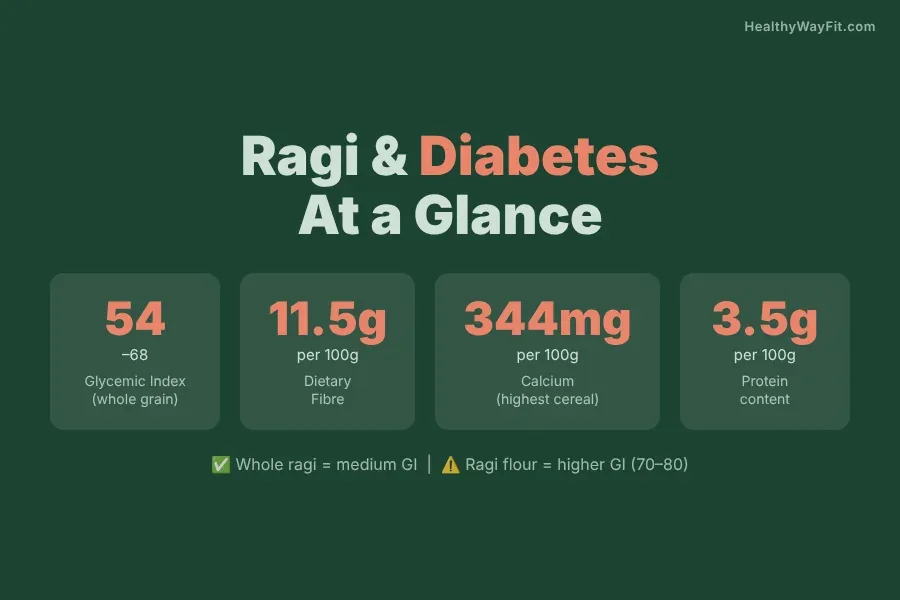
Yes — ragi (finger millet) is an excellent grain for people with diabetes. It has a lower glycemic index than white rice and wheat, exceptionally high fibre and calcium content, and polyphenols that research suggests may help improve blood sugar control and prevent diabetes complications. Ragi has been a staple food in Karnataka, Tamil Nadu, and Andhra Pradesh for centuries, and the science increasingly supports what traditional diets have long recognised.
Here is everything you need to know about ragi and diabetes.
What Is Ragi?
Ragi is the common South Indian name for finger millet (Eleusine coracana). It is one of the oldest cultivated millets in India and is known by different names across the country:
- Ragi (Kannada, Tamil: ராகி)
- Nachni (Marathi, Hindi)
- Finger millet (English)
- Mandua (North India)
Ragi is consumed in many forms: ragi mudde (balls), ragi roti, ragi dosa, ragi idli, ragi koozh (porridge), and ragi malt.
Glycemic Index of Ragi
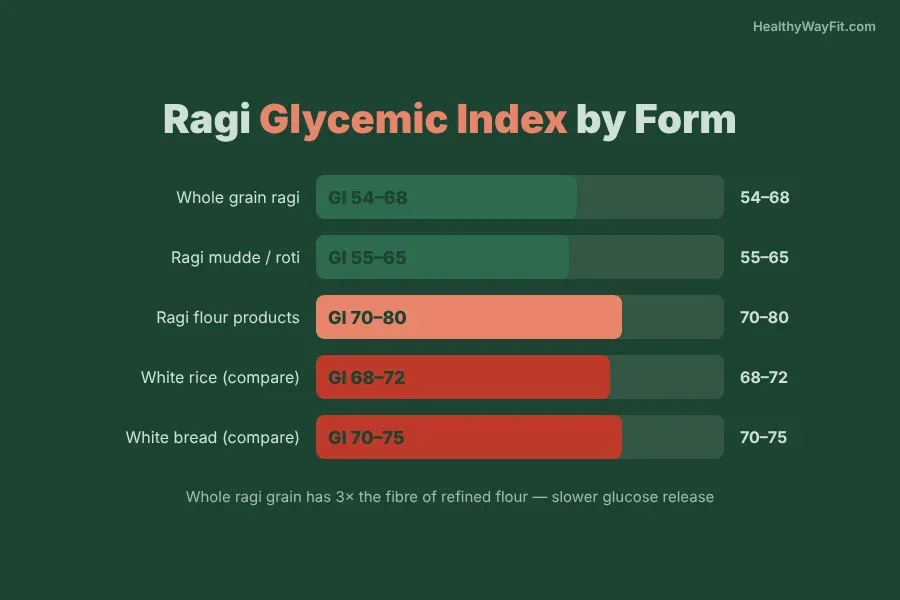
The glycemic index of ragi varies by preparation:
| Preparation | GI |
|---|---|
| Whole ragi (grain) | ~54–68 |
| Ragi flour | ~70–80 |
| Ragi mudde | ~55–65 |
| Ragi roti | ~50–65 |
| Ragi porridge / malt | ~56–70 |
Important: The less processed the ragi, the lower its GI. Whole ragi grain has a significantly lower GI than ragi flour because the fibre matrix is more intact. Highly processed ragi products (commercial ragi malt powders, ragi biscuits) can have a high GI due to processing and added sugars.
A 2020 study on millet-based food mixes found that they had a beneficial role in lowering fasting blood sugar and HbA1c levels in prediabetic individuals.
Nutritional Profile of Ragi (per 100 g, raw whole grain)
| Nutrient | Amount |
|---|---|
| Calories | 328 kcal |
| Carbohydrates | 72 g |
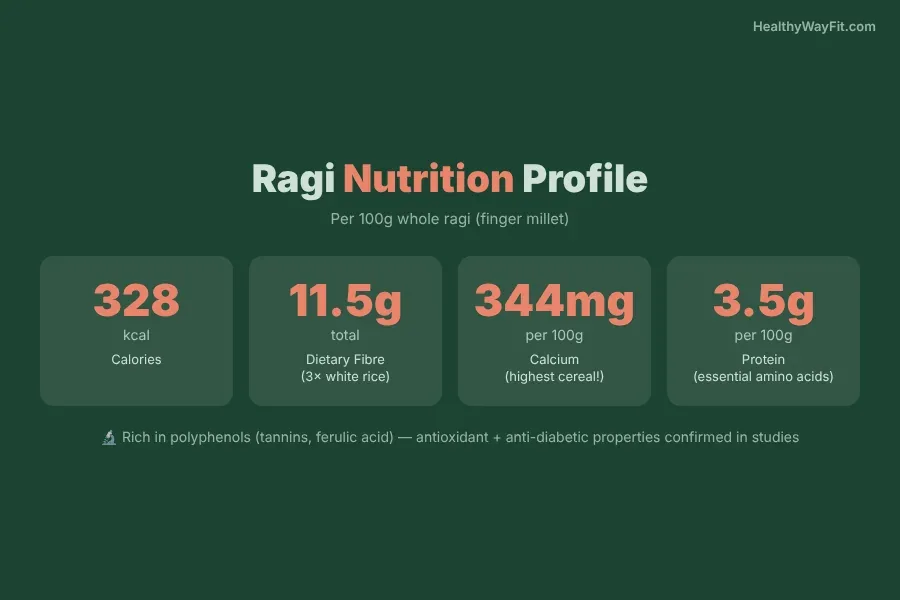
| Dietary fibre | 11.5 g |
| Protein | 7.3 g |
| Fat | 1.9 g |
| Calcium | 344 mg |
| Iron | 3.9 mg |
| Phosphorus | 283 mg |
| Polyphenols | High |
Ragi is exceptionally rich in dietary fibre (11.5 g per 100 g) — significantly higher than white rice (0.4 g) or wheat flour (2.7 g). This fibre is a central reason for its lower blood sugar impact.
How Ragi Helps with Blood Sugar Control
1. High Dietary Fibre
Ragi’s 11.5 g of fibre per 100 g is remarkable for a grain. This fibre slows digestion, delays glucose absorption from the gut, and reduces post-meal blood sugar spikes. It also improves insulin sensitivity over time.
2. Polyphenols
Ragi is one of the highest-polyphenol cereals available. The polyphenol content in ragi — particularly tannins and phenolic acids — is associated with inhibition of digestive enzymes that break down starch into glucose, reduced oxidative stress, and anti-inflammatory effects. Research suggests these polyphenols may help prevent and treat diabetes as well as some of its complications.
3. Lower GI Than Common Grains
| Grain | GI |
|---|---|
| White rice | 70–80 |
| White wheat flour (maida) | 71 |
| Whole wheat flour | 54–58 |
| Ragi mudde / roti | ~55–65 |
| Oats (rolled) | ~55 |
| Barley | ~25–30 |
Replacing white rice with ragi in South Indian meals is a meaningful improvement in the glycemic impact of a meal.
4. High Calcium Content
Ragi provides 344 mg of calcium per 100 g — the highest of any cereal grain and comparable to dairy. Adequate calcium intake is associated with improved insulin secretion and metabolic function.
Who Benefits Most from Ragi?
Ragi is particularly useful for:
- People with Type 2 diabetes replacing white rice or refined wheat in their diet
- People with prediabetes looking to reduce their risk of progression
- Vegetarians who need plant-based calcium and iron
- Older adults managing blood sugar and bone health simultaneously
- People with lactose intolerance who need non-dairy calcium sources
Best Ways to Eat Ragi for Diabetes
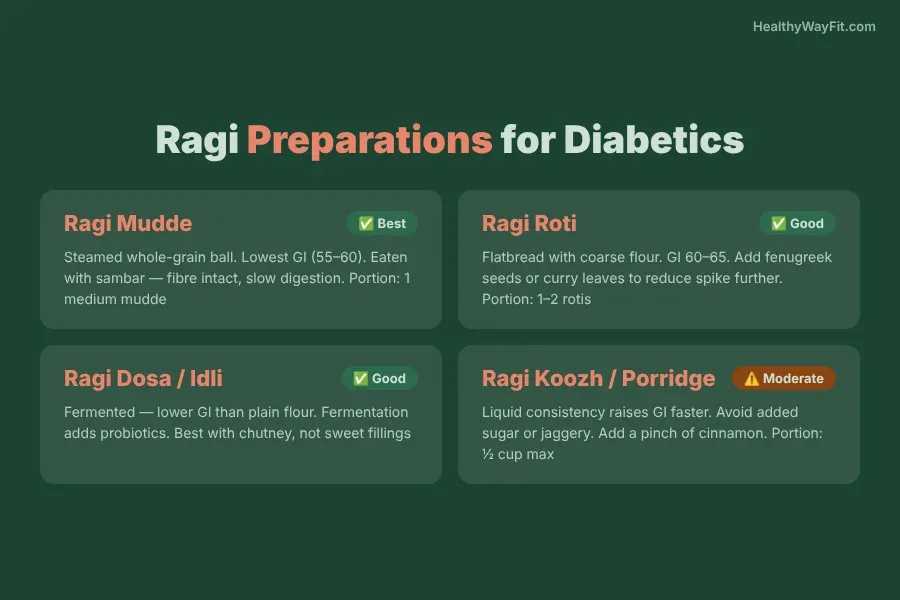
Ragi Mudde (Karnataka Style)
Ragi balls (mudde) made with whole ragi flour and water have a lower GI than ragi roti. Paired with dal or sambar, the complete protein improves satiety and slows absorption further.
Ragi Dosa or Idli
Fermenting ragi batter (as in dosa or idli) further lowers the GI and improves nutrient bioavailability. This is an excellent breakfast or meal option.
Ragi Roti
Whole ragi flour rotis are a good replacement for wheat rotis, particularly for people who eat roti regularly. Pair with sabzi and dal.
Ragi Koozh (Porridge)
A traditional Tamil Nadu preparation made with ragi flour, buttermilk, and water. The fermented version has probiotic benefits as well as a lower GI.
What to Avoid
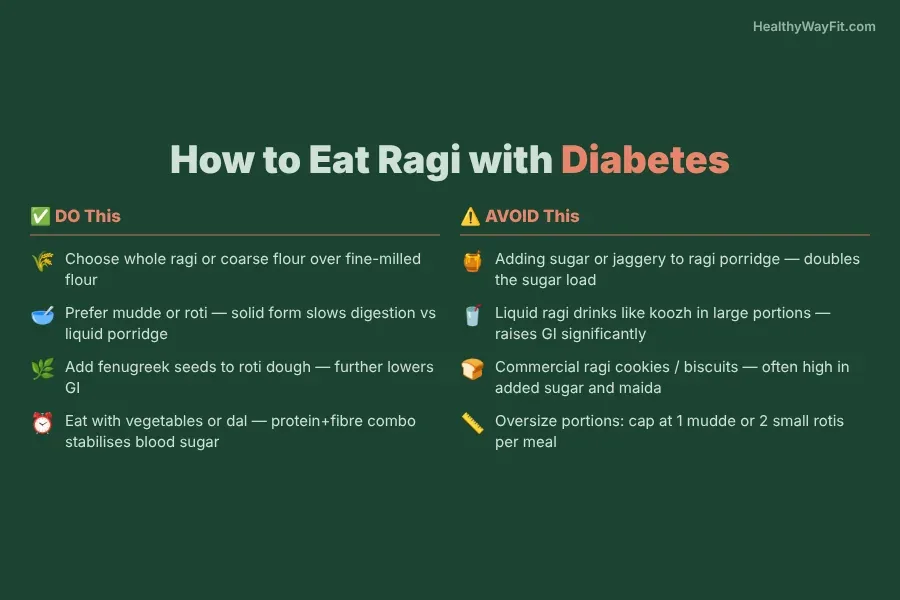
- Commercial ragi malt powders — often contain added sugar; read the label
- Ragi biscuits and snacks — highly processed; high GI and added sugar/fat
- Very large portions — even low-GI foods raise blood sugar in large quantities; 2–3 ragi rotis or 1–2 mudde per meal is a reasonable serving
Ragi vs. Other Grains for Diabetes
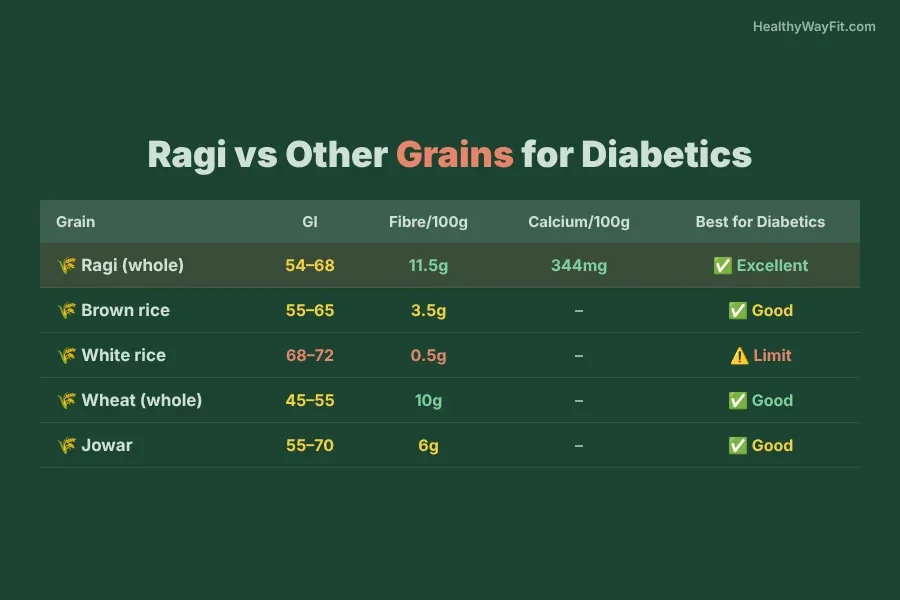
| Grain | GI | Fibre (per 100g) | Notes |
|---|---|---|---|
| White rice | 70–80 | 0.4 g | Avoid or minimise |
| White wheat flour (maida) | 71 | 2.7 g | Avoid |
| Whole wheat flour | 54–58 | 12 g | Better than maida |
| Ragi (mudde/roti) | 55–65 | 11.5 g | Good alternative to rice |
| Jowar (sorghum) | 55–70 | 6.3 g | Good; use whole grain |
| Bajra (pearl millet) | 55–72 | 8.5 g | Good; use whole grain |
| Barley | 25–30 | 17 g | Best GI; harder to use daily |
| Oats | 55 | 10 g | Excellent; versatile |
Ragi compares well to all common South Indian grains and is a practical replacement for white rice in everyday cooking.
Common Questions About Ragi and Diabetes
Q: Can diabetics eat ragi every day?
Yes. Ragi can be eaten daily as part of a balanced diabetes diet. It is particularly valuable as a replacement for white rice or maida-based preparations. Standard portions — 2–3 rotis or 1–2 mudde per meal — are appropriate.
Q: Is ragi better than brown rice for diabetes?
Both are reasonable choices. Ragi has significantly higher fibre and polyphenol content than brown rice, and its GI is comparable or slightly lower. Ragi also provides far more calcium and iron. On balance, ragi has the nutritional edge for people with diabetes.
Q: Is ragi malt good for diabetes?
Unsweetened, homemade ragi malt (ragi koozh with buttermilk) is fine. Commercial ragi malt powders should be checked carefully — many contain added sugar and have a high glycemic impact. Always read the ingredient label.
Q: Can ragi reverse diabetes?
No single food reverses diabetes. However, switching from white rice to ragi, combined with overall diet and lifestyle changes, can meaningfully improve blood sugar control over time. Weight loss, exercise, and a low-glycemic diet are the evidence-based approaches to Type 2 diabetes remission.
Q: Is ragi safe for people with kidney problems?
People with diabetic nephropathy (kidney complications) who follow a low-phosphorus diet should consult their nephrologist about ragi intake, as ragi is relatively high in phosphorus (283 mg per 100 g). For most people without kidney disease, ragi is safe.
The Bottom Line
Ragi is one of the best grain choices for people with diabetes in India. Its high fibre content, polyphenols, and lower glycemic index make it significantly better than white rice and refined wheat. It is also an excellent source of calcium and iron — nutrients commonly deficient in vegetarian Indian diets. The most diabetes-friendly preparations are traditional ones: ragi mudde, ragi koozh, fermented ragi dosa, and whole-grain ragi roti. Avoid highly processed commercial ragi products with added sugar.
References
- Healthline. Is Ragi Good for People with Diabetes? https://www.healthline.com/nutrition/ragi-good-for-diabetes
- PMC. Glycemic index of millet based food mix and its effect on pre diabetic subjects. 2020. https://pmc.ncbi.nlm.nih.gov/articles/PMC7270244/
- Sugar.Fit. Is Ragi Good for Diabetes? Benefits & Risks. https://www.sugarfit.com/blog/is-ragi-good-for-diabetes/
- Freedom from Diabetes. Wheat vs Rice vs Ragi: Which Grain Spikes Sugar the Most? https://www.freedomfromdiabetes.org/blog/post/wheat-vs-rice-vs-ragi-blood-sugar-mistakes/4949



