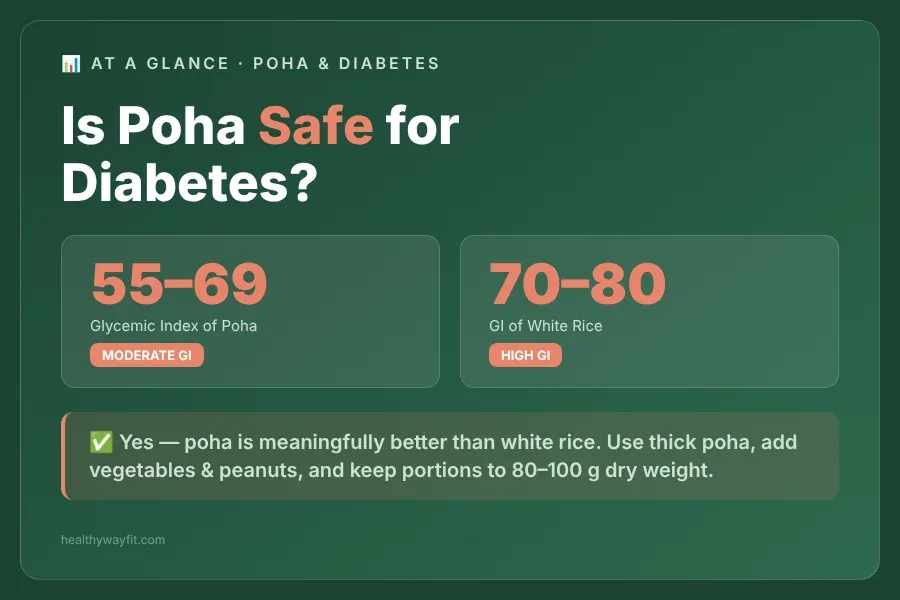
Poha (flattened or beaten rice) is one of India’s most popular breakfast foods — and if you have diabetes, you may be wondering whether it is a safe choice. The answer is: yes, with conditions. Poha has a moderate glycemic index that is significantly lower than white rice, it is light and easy to digest, and it can be made diabetes-friendly by adding vegetables and protein. However, preparation method and portion size make a large difference.
Here is what you need to know.
What Is Poha?
Poha is made by parboiling paddy rice and then rolling and flattening it into thin flakes. This process partially pre-gelatinises the starch, which affects how quickly glucose is released during digestion.
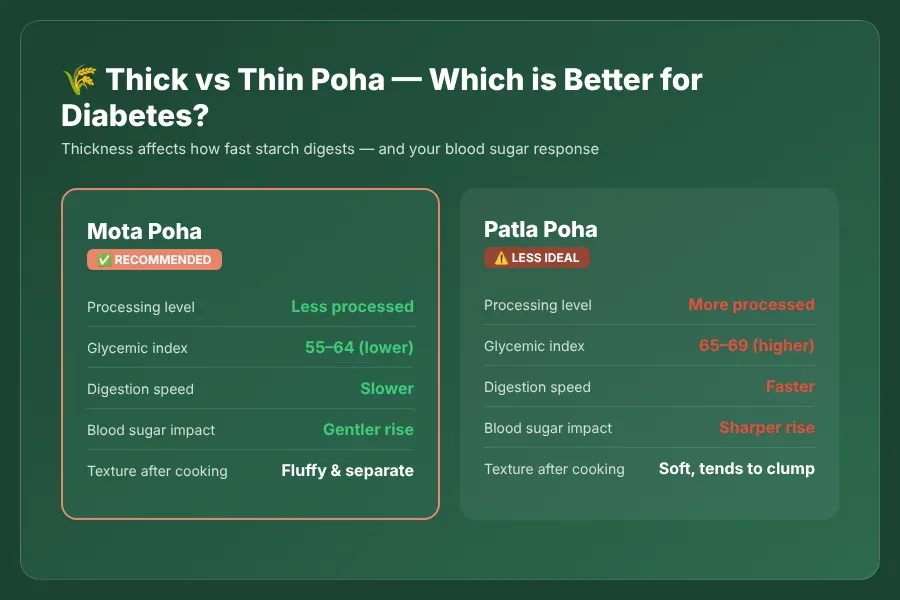
Poha comes in different thicknesses — thick poha (mota poha), medium, and thin (patla poha). Thin poha tends to have a higher GI because it is more processed and digests faster.
Glycemic Index of Poha
The glycemic index of poha ranges from 55 to 69 depending on thickness, preparation method, and what it is served with. This places it in the moderate GI category (56–69), or at the upper boundary of low GI (for the 55 reading).
By comparison:
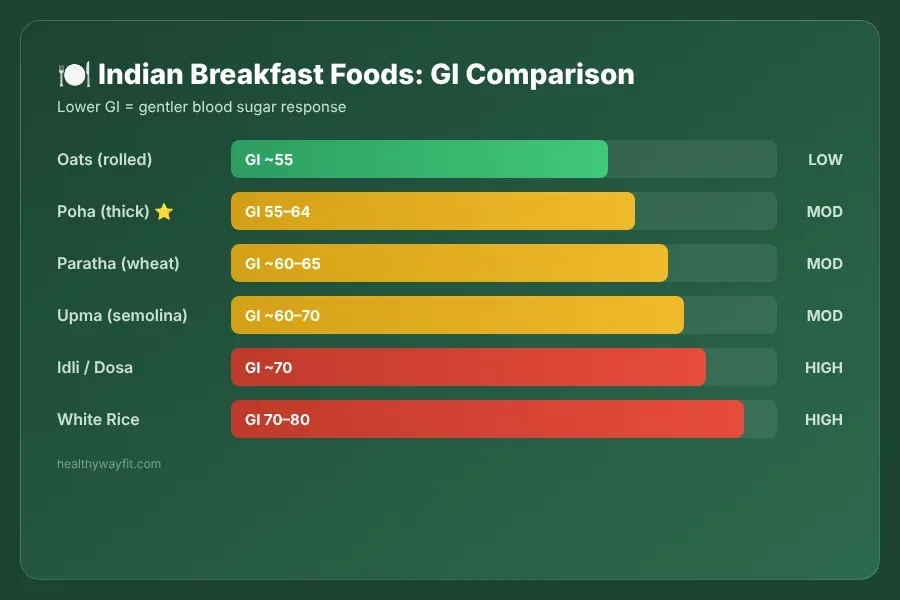
- White rice: GI ~70–80 (high)
- Poha (thick): GI ~55–64
- Brown rice: GI ~50–55
- Oats (rolled): GI ~55
Poha is meaningfully lower on the glycemic index than white rice, which is the grain it most directly replaces in Indian breakfasts. However, it is not a low-GI food in the way that oats or whole pulses are.
How Does Poha Affect Blood Sugar?
The moderate GI means poha causes a gradual rise in blood glucose rather than a sharp spike — but this depends heavily on:
- Portion size — a large bowl of poha (200 g or more) delivers a significant carbohydrate load regardless of its GI
- What else is in the dish — adding vegetables, peas, peanuts, and curry leaves dramatically lowers the overall glycemic impact by adding fibre, protein, and healthy fats
- What you eat it with — pairing poha with curd or a protein source (eggs, paneer) further slows glucose absorption
Poha is gluten-free and easier on the digestive system than many other grains, which may make it a better choice for people who are sensitive to wheat.
Nutritional Profile of Poha (100 g raw)
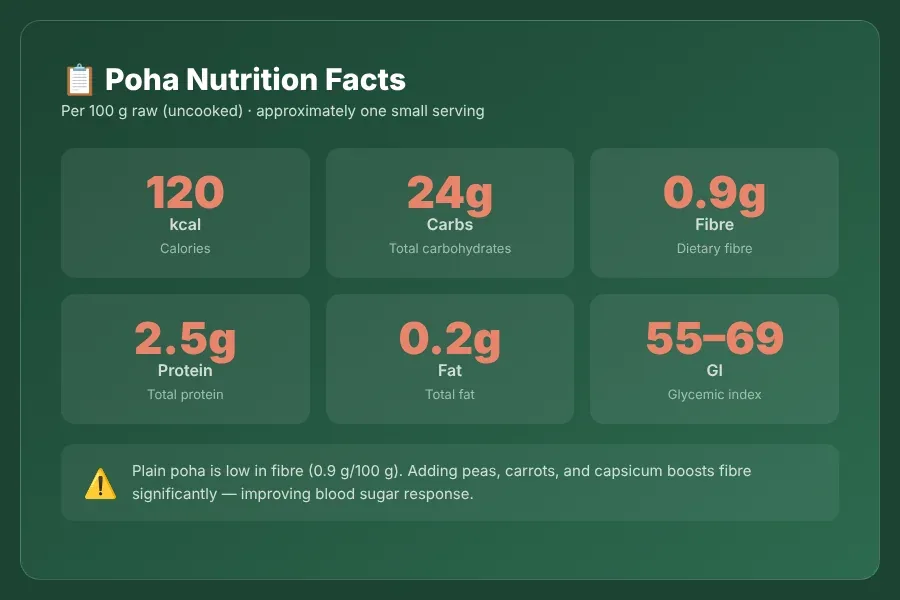
| Nutrient | Amount |
|---|---|
| Calories | 110–130 kcal |
| Carbohydrates | 23–25 g |
| Fibre | 0.9 g |
| Protein | 2–3 g |
| Fat | 0.1–0.4 g |
| Iron | ~1 mg |
| GI (approx.) | 55–69 |
Benefits of Poha for Diabetics
1. Lower GI Than White Rice
If you regularly eat white rice for breakfast or meals, replacing it with poha is a meaningful improvement. The lower GI means a less aggressive blood sugar response.
2. Light and Easy to Digest
Poha is light on the stomach and easy to digest — a practical benefit for people with diabetes who may have digestive sensitivities.
3. Good Source of Iron
The parboiling process during poha’s preparation enhances iron absorption. Iron deficiency is common in India, and adequate iron levels support overall metabolic health.
4. Naturally Low in Fat
Plain poha is very low in fat, making it a heart-friendly base food. Since people with Type 2 diabetes have elevated cardiovascular risk, a low-fat breakfast option is valuable.
5. Versatile — Can Be Made More Nutritious
Poha’s mild flavour makes it easy to load with vegetables, peas, and protein sources, turning it from a simple carbohydrate into a balanced meal.
How to Make Poha More Diabetes-Friendly
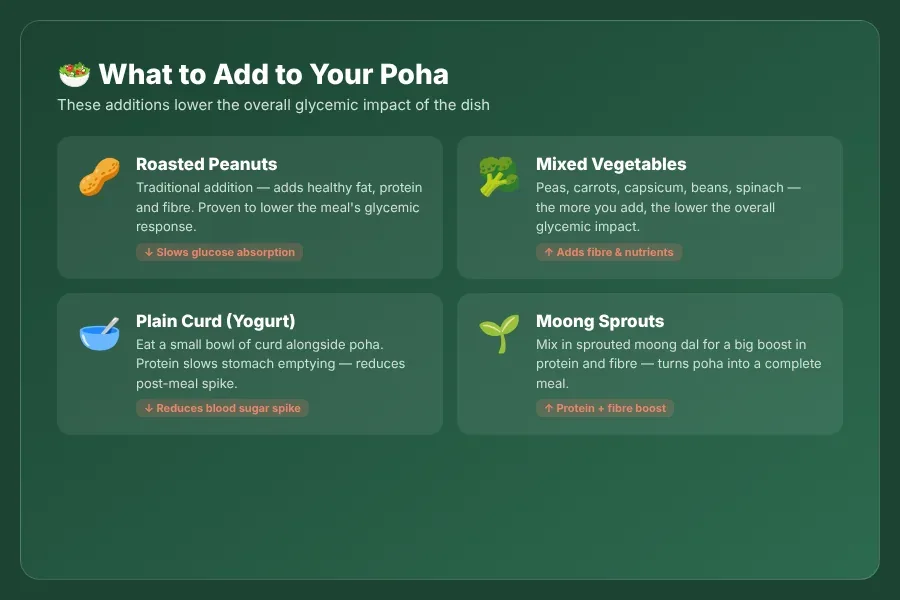
The standard poha recipe (poha, oil, mustard seeds, onion, curry leaves, turmeric) is a reasonable start, but these additions make it significantly better for blood sugar management:
Add Protein
- Peanuts — roasted peanuts are a traditional addition that adds healthy fat, protein, and fibre, meaningfully lowering the overall glycemic impact
- Moong sprouts — mix in sprouted moong for additional protein and fibre
- Egg or paneer — serve alongside or mix in for a protein-rich meal
Add Vegetables
- Peas, carrots, capsicum, beans, and spinach all add fibre and slow digestion
- The more vegetables, the lower the overall glycemic impact of the dish
Use Less Oil
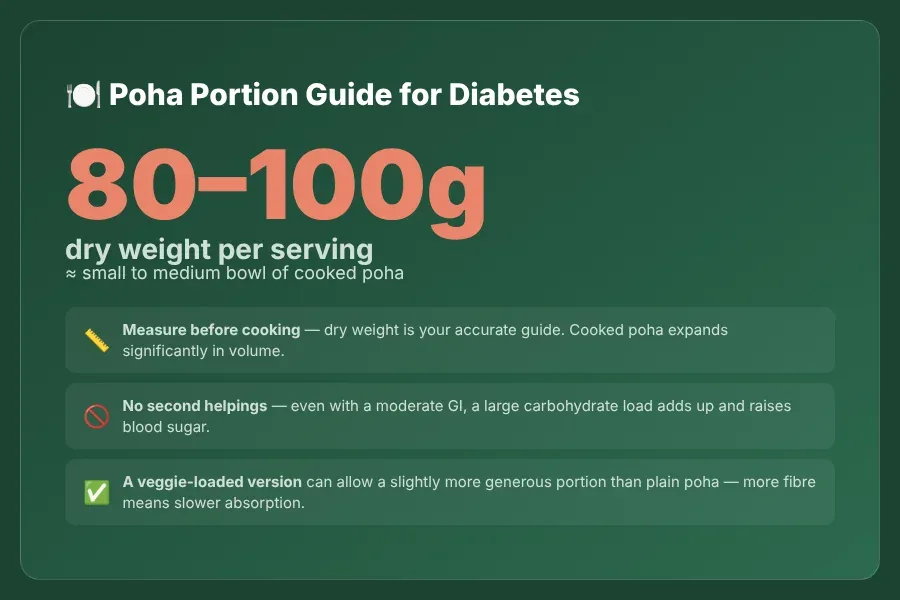
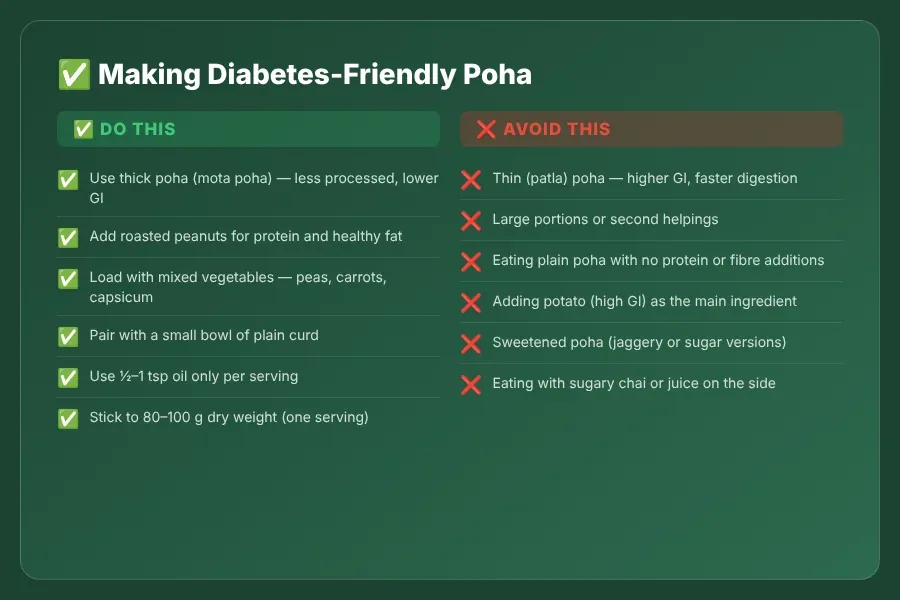
Limit to ½–1 teaspoon of oil for a single serving.
Control the Portion
A diabetes-friendly serving of poha is approximately 80–100 g (dry weight) — roughly a small to medium bowl of the cooked dish. Avoid second helpings.
Pair It Well
Eating poha with a small bowl of plain curd (yogurt) adds protein and slows stomach emptying, which reduces the post-meal blood sugar rise.
Poha vs. Other Common Indian Breakfast Foods for Diabetes
| Breakfast | GI | Notes |
|---|---|---|
| Poha | 55–69 | Moderate; make it nutritious with vegetables + protein |
| Upma (semolina) | 60–70 | Similar to poha; add vegetables |
| Idli (2–3) | ~70 | Moderate-high; fermentation is beneficial |
| Dosa (plain) | ~70 | Moderate-high; choose less oil and pair with sambar |
| Oats (rolled) | ~55 | Lower GI; a better option for tight control |
| White bread | ~70–75 | High; avoid |
| Paratha (plain) | ~60–65 | Moderate; whole wheat is better |
Poha compares favourably to most common Indian breakfast options when made with vegetables and protein.
Common Questions About Poha and Diabetes
Q: Is poha better than rice for diabetes?
Yes. Poha has a meaningfully lower glycemic index than white rice (55–69 vs 70–80). If you eat white rice for breakfast, replacing it with poha is a practical improvement. However, brown rice and millets are even better options for tight blood sugar control.
Q: Can Type 2 diabetics eat poha every day?
Yes, in moderate portions with appropriate additions. A small to medium bowl of vegetable-loaded poha with peanuts and curd is a reasonable everyday breakfast option. Vary your breakfasts throughout the week for broader nutritional coverage.
Q: Is thick or thin poha better for diabetes?
Thick poha (mota poha) is better because it is less processed and has a slightly lower GI. Thin poha digests faster and has a higher glycemic impact.
Q: How much poha can a diabetic eat?
About 80–100 g of dry poha per serving is a practical limit. A well-loaded version (with vegetables and peanuts) allows a slightly more generous portion than plain poha.
The Bottom Line
Poha is a reasonable breakfast choice for people with diabetes — better than white rice, easier to digest, and highly adaptable. Its moderate glycemic index means it should be treated with the same mindfulness as other moderate-GI foods: a reasonable portion, loaded with vegetables and protein, and paired with curd or a protein source. Poha is not a superfood for diabetes, but it is a practical, traditional Indian breakfast that can fit easily into a diabetes management plan when prepared thoughtfully.
References
- Sanidhya Clinic. Is Poha Good for Diabetes? A Doctor’s Guide. https://www.sanidhyaclinic.com/post/is-poha-good-for-diabetes-a-doctor-s-guide-to-healthy-eating
- Apollo 247. Poha: A Diabetes-Friendly Food Choice. https://www.apollo247.com/blog/article/poha-a-diabetes-friendly-food-choice-for-better-blood-sugar-control
- Diabetes and Wellness Clinic. Is Poha Recommended for Diabetics? https://diabetesandwellnessclinic.com/poha-comes-from-rice-so-is-it-recommended-for-diabetics/
- Medicas. Is Poha Good for Diabetes? https://medicasapp.com/blogs/is-poha-good-for-diabetes/



