
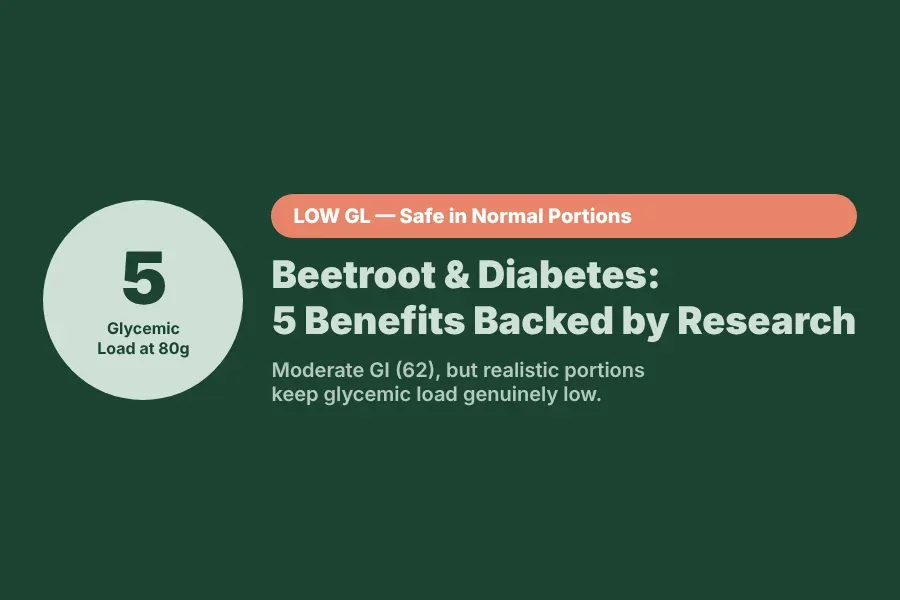
Yes — beetroot can be a beneficial food for people with diabetes, but portion size and preparation method matter. Despite containing natural sugars, beetroot has a moderate glycemic index, high fibre, and plant compounds that research links to improved blood sugar control and lower blood pressure.
Here is what the evidence shows and how to include beetroot in a diabetes-friendly diet.
What Is the Glycemic Index of Beetroot?
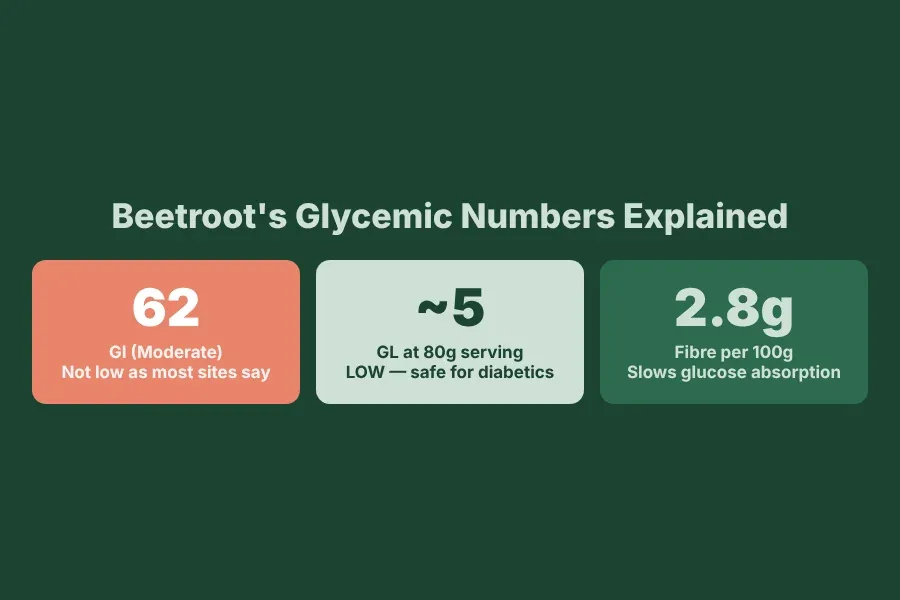
The glycemic index (GI) of beetroot is approximately 61–65 for raw or boiled beetroot, which places it in the moderate GI range (56–69). However, the glycemic load (GL) — which accounts for the actual serving size — is low, at around 5 per 80 g (a standard serving).
This distinction is important. A food with a moderate GI can still have a low glycemic impact if you eat it in a small portion. Beetroot is one of those foods.
Beetroot juice has a higher glycemic impact than whole beetroot because it removes most of the fibre, which normally slows glucose absorption.
Can Beetroot Lower Blood Sugar?
Several studies suggest beetroot has a measurable effect on blood sugar:
- A 2021 study published in Nutrients found that consuming raw red beetroot significantly decreased fasting blood sugar (FBS) by 13.53 mg/dL and HbA1c by 0.34% in people with Type 2 diabetes over an 8-week period.
- An earlier study found that drinking 225 ml of beetroot juice suppressed post-meal glucose levels compared to a control.
- A 2022 randomised clinical trial found no significant effect of 24 ml of concentrated beetroot juice daily on blood sugar or blood pressure — suggesting that dose and form both matter.
The active compounds in beetroot that may help include:
- Betalains — the pigments that give beetroot its red-purple colour; they have anti-inflammatory and antioxidant properties
- Inorganic nitrates — convert to nitric oxide in the body, which helps lower blood pressure
- Dietary fibre — slows glucose absorption and improves insulin sensitivity
- Polyphenols — support glucose metabolism
Benefits of Beetroot for Diabetics
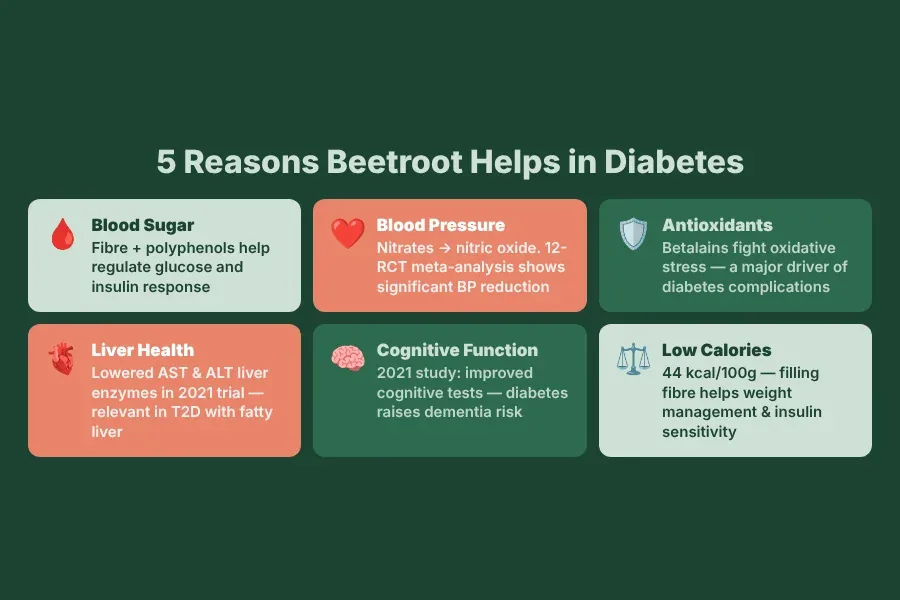
1. Blood Sugar Regulation
The fibre in whole beetroot slows digestion and the rise of glucose after a meal. The polyphenols and betalains have shown a regulating effect on glucose and insulin in human studies.
2. Blood Pressure Control
High blood pressure is a common complication in people with Type 2 diabetes. The nitrates in beetroot are well-studied for reducing both systolic and diastolic blood pressure — an important secondary benefit.
3. Antioxidant Protection
People with diabetes experience higher levels of oxidative stress. The 2021 study found that raw beetroot consumption significantly increased total antioxidant capacity (TAC) — meaning it helps the body fight cell damage from high blood sugar.
4. Liver Health
The same study found that beetroot consumption lowered liver enzymes AST and ALT, suggesting a protective effect on the liver — relevant because non-alcoholic fatty liver disease is common in people with Type 2 diabetes.
5. Cognitive Function
The 2021 study also showed improvement in cognitive function tests among people with Type 2 diabetes who consumed raw beetroot — an emerging area of research, since diabetes is associated with a higher risk of cognitive decline.
Beetroot Nutrition (per 100 g raw)
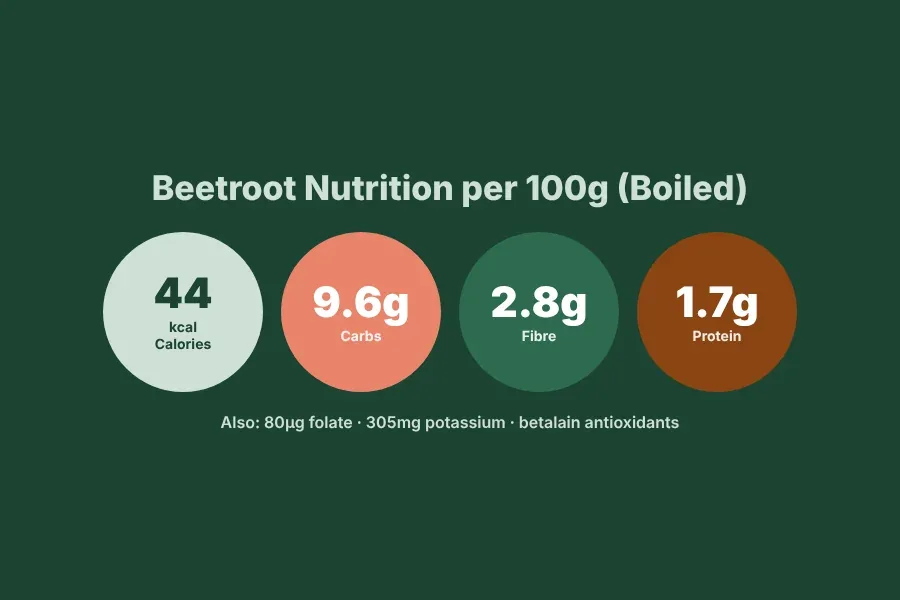
| Nutrient | Amount |
|---|---|
| Calories | 43 kcal |
| Carbohydrates | 9.6 g |
| Fibre | 2.8 g |
| Natural sugars | 6.8 g |
| Protein | 1.6 g |
| Glycemic index | ~61–65 |
| Glycemic load (80 g serving) | ~5 |
How Much Beetroot Is Safe for Diabetics?
A standard serving of 80–100 g of cooked or raw beetroot is generally considered safe for most people with Type 2 diabetes. This is approximately:
- Half a medium beetroot
- A small side salad portion
Stick to whole or cooked beetroot rather than beetroot juice, which loses much of its fibre and delivers sugars more rapidly. If you prefer juice, limit it to 100–150 ml and consume it with a fibre-rich meal.
Best Ways to Eat Beetroot for Diabetes
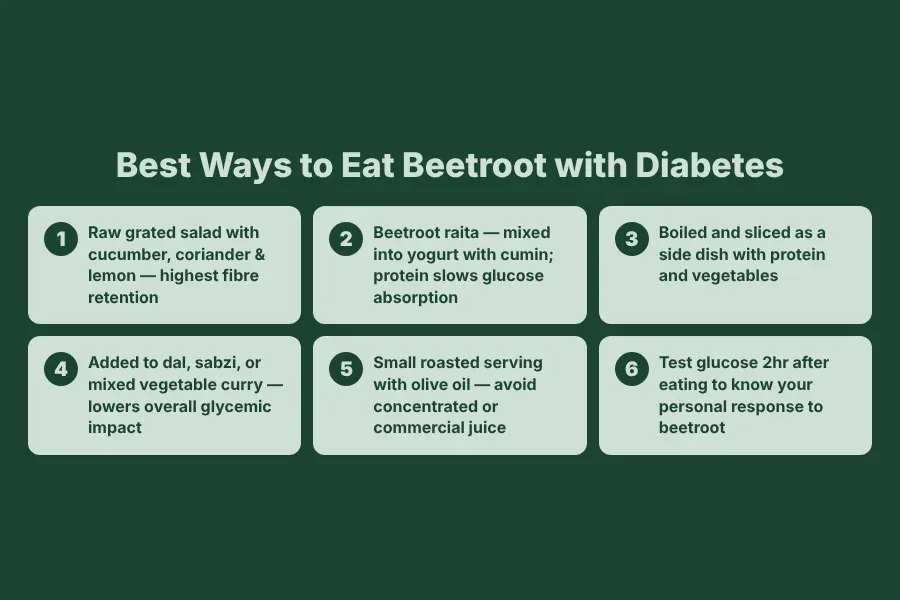
- Raw grated beetroot salad — the highest fibre retention; pairs well with cucumber, coriander, and lemon
- Boiled and sliced — good as a side with protein and vegetables
- Roasted — a small serving with olive oil; avoid high-heat methods that concentrate sugars
- Added to raita — beetroot mixed into yogurt with cumin is a practical South Indian way to eat it
- In sabzi or curry — combining beetroot with dal or other vegetables slows absorption further
Avoid: Beetroot halwa, canned beetroot in syrup, or large portions of beetroot juice.
Beetroot vs. Other Vegetables for Diabetes
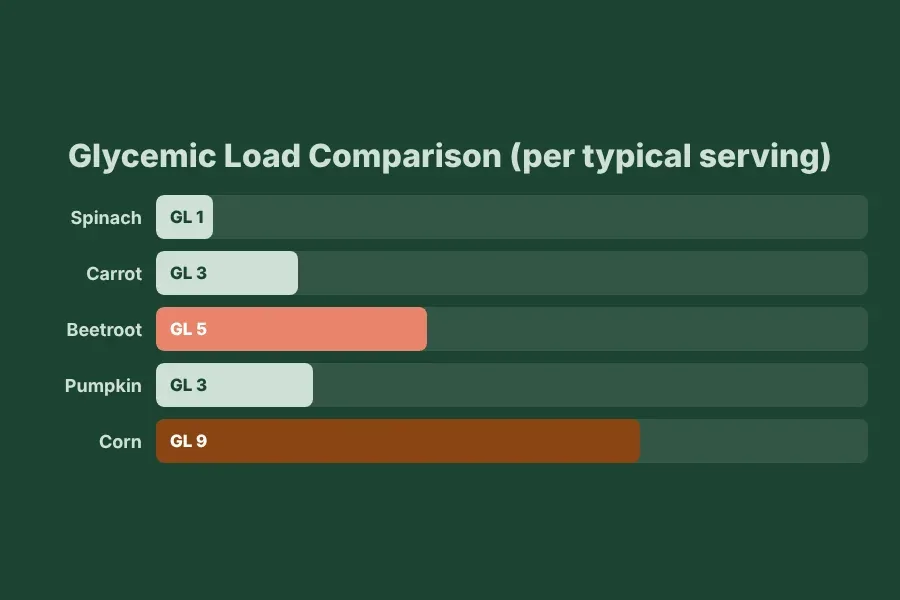
| Vegetable | GI | GL (typical serving) | Fibre | Notes |
|---|---|---|---|---|
| Beetroot | 61–65 | ~5 (80 g) | Moderate | Moderate GI but low GL; eat in portions |
| Carrot (boiled) | 32–49 | ~3 | High | Low GI; very safe |
| Spinach | <15 | ~1 | High | Excellent choice |
| Pumpkin | ~75 | ~3 | Moderate | High GI but low GL in small amounts |
Common Questions About Beetroot and Diabetes
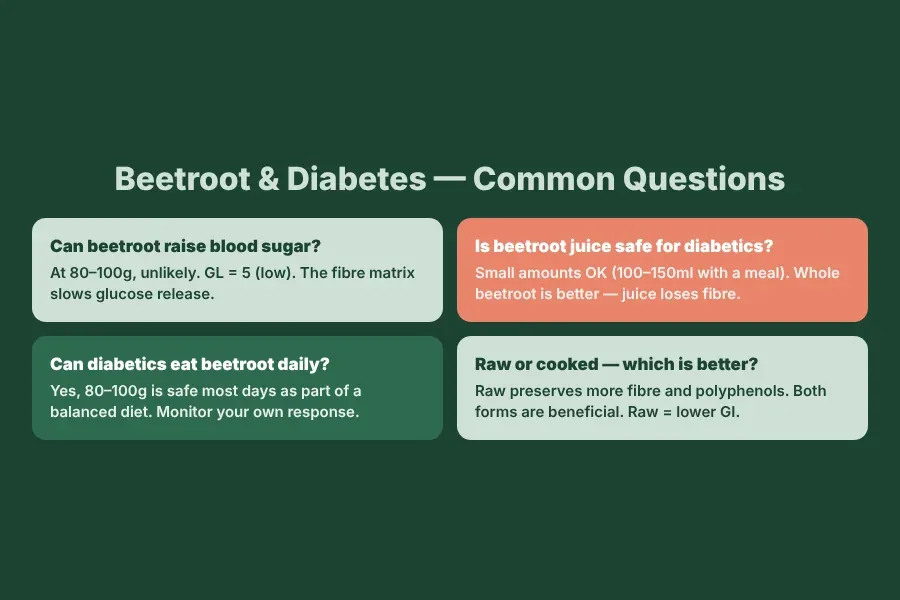
Q: Is beetroot juice safe for diabetics?
Beetroot juice loses most of its fibre during processing, which means the natural sugars are absorbed faster. Small amounts (100–150 ml) with a meal are generally acceptable, but whole beetroot is a better option for blood sugar control.
Q: Does beetroot raise blood sugar?
In normal portions (80–100 g), whole beetroot is unlikely to cause a significant blood sugar spike due to its low glycemic load and fibre content. Studies show it may actually help lower post-meal blood glucose.
Q: Can diabetics eat beetroot every day?
Yes, in moderate amounts. Eating 80–100 g of beetroot most days as part of a balanced diet is considered safe and potentially beneficial. Monitor your own blood sugar response, as individual reactions vary.
Q: Is cooked or raw beetroot better for diabetes?
Raw beetroot preserves more fibre and polyphenols. The 2021 study showing the strongest blood sugar benefits used raw red beetroot. However, boiled beetroot is also beneficial — cooking does slightly increase the GI compared to raw.
The Bottom Line
Beetroot is a nutrient-dense vegetable that can be a useful part of a diabetes-friendly diet. It has a moderate glycemic index but a low glycemic load in standard portions, and studies show it may help lower fasting blood sugar, HbA1c, and blood pressure in people with Type 2 diabetes. The key is portion control — about 80–100 g of whole beetroot at a time — and choosing cooked or raw beetroot over juice.
As with any food, individual blood sugar responses vary. If you have diabetes, checking your blood glucose 1–2 hours after eating beetroot is the most reliable way to know how your body responds.
References
- Asgary S, et al. (2021). Effects of raw red beetroot consumption on metabolic markers and cognitive function in type 2 diabetes patients. Nutrients, 13(8), 2023. https://pmc.ncbi.nlm.nih.gov/articles/PMC8212206/
- Karimzadeh L, et al. (2022). Effects of concentrated beetroot juice consumption on glycemic control, blood pressure, and lipid profile in type 2 diabetes patients. Irish Journal of Medical Science. https://link.springer.com/article/10.1007/s11845-022-03090-y
- Healthline. Beetroot for Diabetes: Benefits and How to Eat. https://www.healthline.com/health/diabetes/beetroot-diabetes
- Medical News Today. Beets and diabetes: Research, benefits, and nutrition. https://www.medicalnewstoday.com/articles/311343



