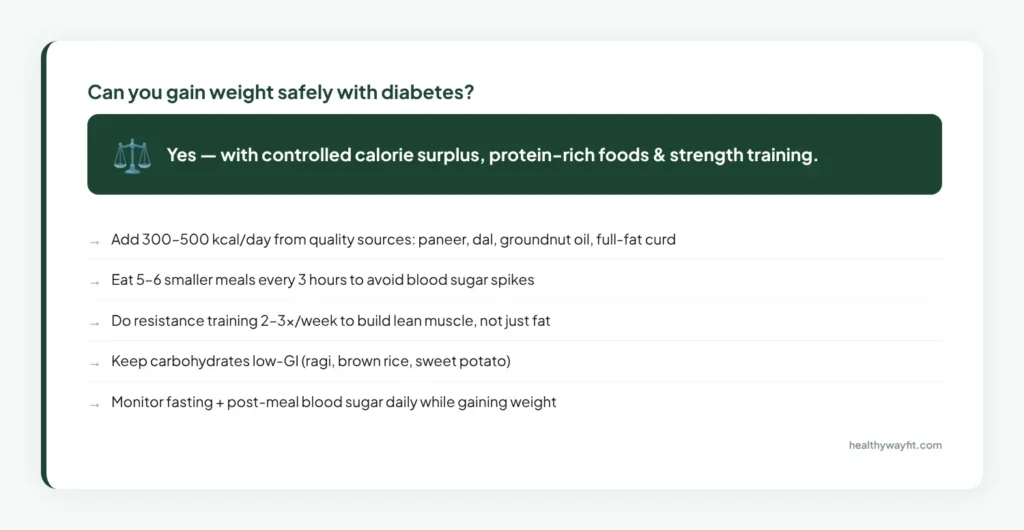
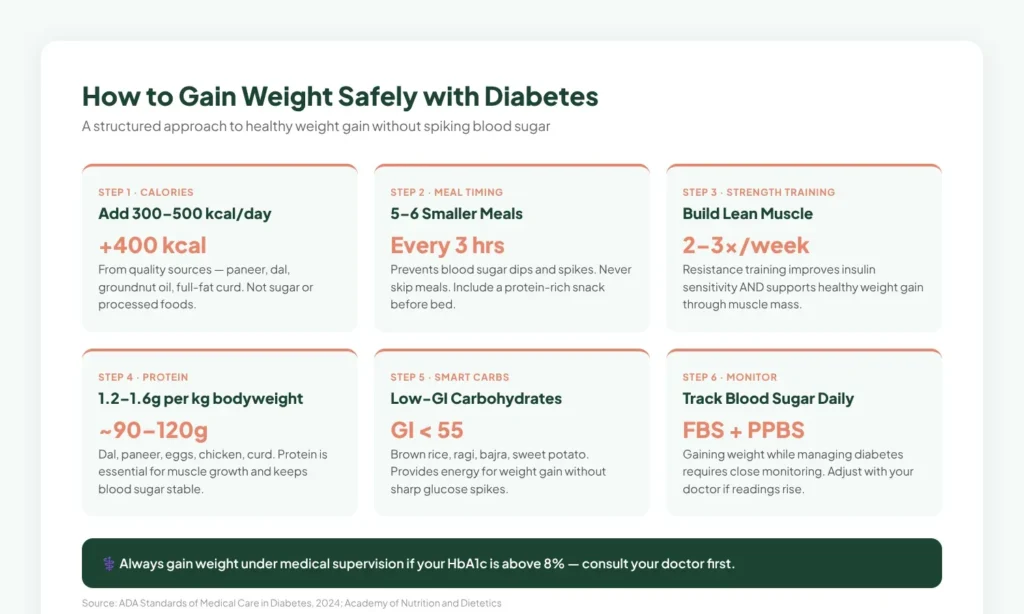

To gain weight in diabetes, first find out why you lost it, then add about 300–500 extra calories a day from protein, unsaturated fats and fibre-rich carbs, spread over 5–6 smaller meals, and do strength training 2–3 times a week so more of the regain is muscle. Unplanned weight loss can mean blood sugar is too high or a medicine is pushing weight down, so talk to your doctor before you start eating more.
This guide explains how to gain weight in diabetes for people in India with type 1 or type 2 diabetes who are underweight or have lost weight without trying, and for families cooking for them.
Warning: Go to an emergency department straight away (call 108 or 112 in India) if blood sugar stays at 300 mg/dL or above, your breath smells fruity, you are vomiting and can’t keep fluids down, or you are struggling to breathe.
The CDC lists these as emergency signs of diabetic ketoacidosis (DKA).
Why do people with diabetes lose weight?
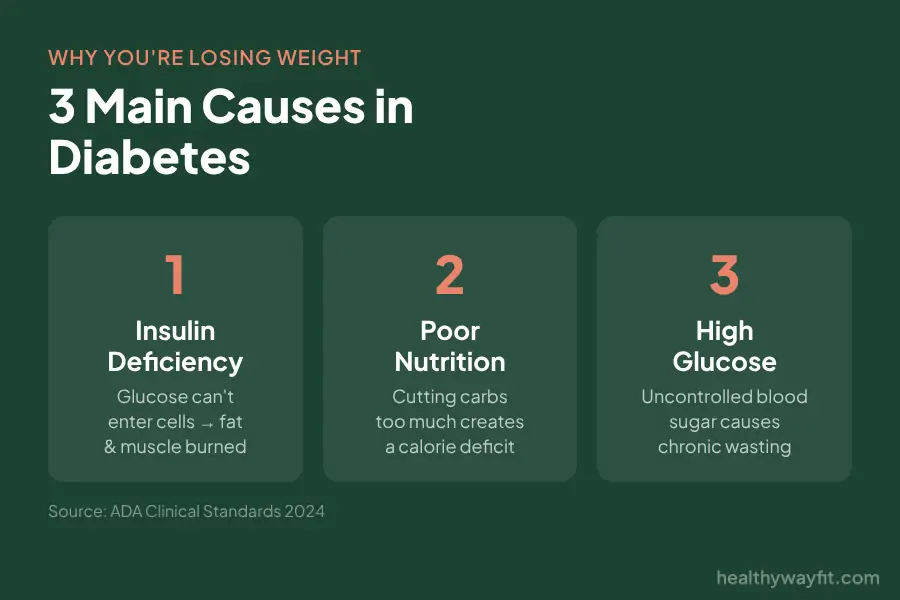
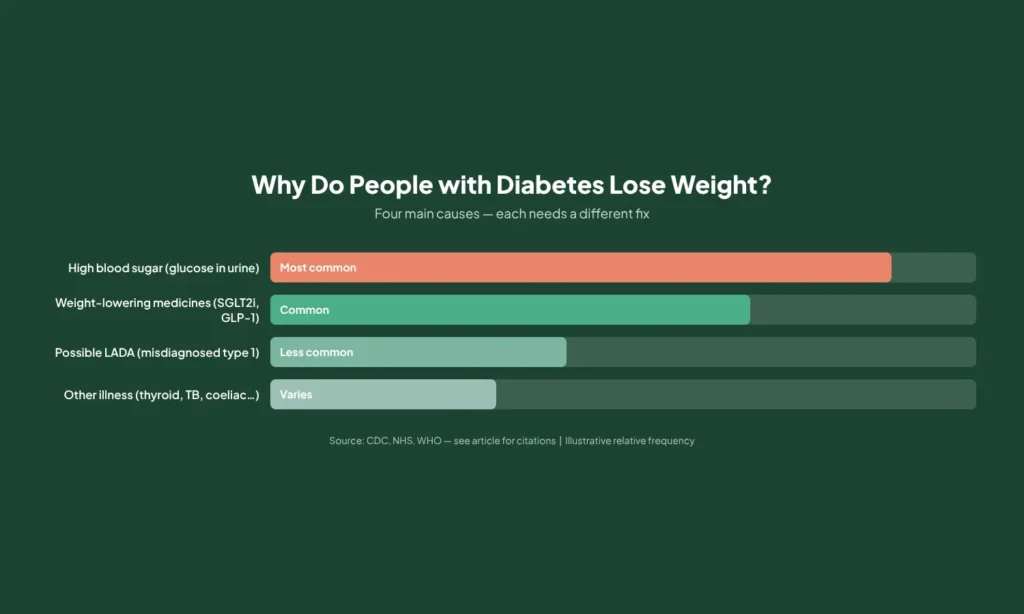
Weight loss in diabetes usually comes from blood sugar that is too high, a diabetes medicine that lowers weight, type 1 diabetes mistaken for type 2, or a separate illness. The CDC lists losing weight without trying as a symptom of both type 1 and type 2 diabetes. If the cause is high sugar or a medicine, eating more may not stop the loss until that is treated.
High blood sugar
When the body has too little insulin, or can’t use it well, glucose stays in the blood instead of fuelling cells. The body then breaks down fat and muscle for energy, and calories are lost as sugar in the urine. Thirst, frequent urination and tiredness alongside weight loss point to this cause. The fix is better glucose control, which may mean a change in treatment.
Diabetes medicines that lower weight
Some diabetes medicines can make weight gain harder. StatPearls lists diarrhoea, nausea and vomiting among metformin’s side effects, which can cut how much you eat. Two drug groups lower weight more directly:
- SGLT2 inhibitors (names ending in “-gliflozin”, such as dapagliflozin and empagliflozin) make the kidneys pass glucose into the urine. StatPearls notes, for canagliflozin, that this causes a loss of calories and body weight. The FDA label for dapagliflozin also warns that ketoacidosis can happen with these drugs even when blood sugar is below 250 mg/dL, so get urgent care if you feel very unwell, are vomiting or are eating very little while taking one.
- GLP-1 receptor agonists (such as semaglutide and liraglutide) act on appetite centres in the brain. StatPearls describes, for liraglutide, appetite suppression and lower calorie intake.
Both are useful drugs, often with heart or kidney benefits. Never stop one on your own; ask your doctor whether another option suits your weight goal.
Diabetes that may be type 1, not type 2
Some adults diagnosed with type 2 diabetes have a slow-onset autoimmune form called latent autoimmune diabetes in adults (LADA). A 2016 review in Diabetes Spectrum notes LADA is often misdiagnosed and treated as type 2. If you are lean, losing weight and your sugars keep rising despite tablets, ask your doctor whether antibody tests or insulin are needed.
Other illnesses
The NHS lists other causes of unintentional weight loss, including an overactive thyroid, coeliac disease, inflammatory bowel disease, depression, anxiety and, sometimes, cancer. In India, tuberculosis is also worth ruling out: the WHO reports that diabetes carries a two- to threefold risk of TB disease, and weight loss is a common TB symptom along with prolonged cough, fever and night sweats. If you keep losing weight, your doctor may order tests to rule these causes out.
What to check with your doctor before you start

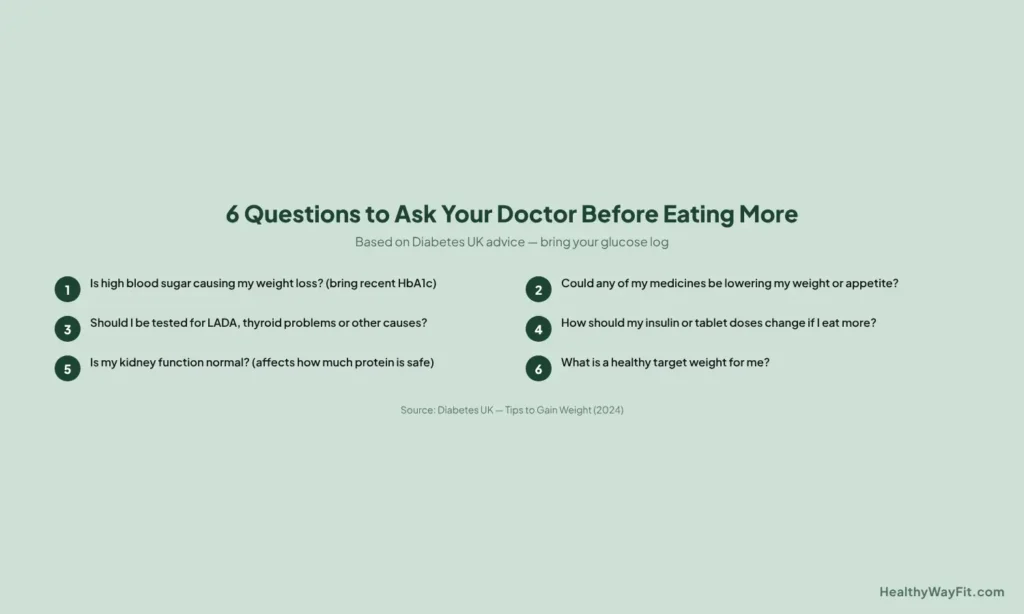
Before increasing food, book a review with your doctor or diabetes team. Diabetes UK advises asking your diabetes team to review your medicines and seeing a dietitian, because the way your diabetes is managed may need to change too.
Take these questions to the appointment:
- Is my weight loss explained by high blood sugar? (Bring your recent glucose readings and HbA1c.)
- Could any of my medicines be lowering my weight or appetite?
- Should I be tested for LADA, thyroid problems or anything else?
- If I eat more, how should my insulin or tablet doses change?
- Is my kidney function normal? (This affects how much protein you should eat.)
- What is a healthy target weight for me?
Caution: Do not skip or cut insulin doses to control your weight.
Mayo Clinic warns that taking less insulin than prescribed raises blood sugar and the risk of complications.
How many extra calories do you need?
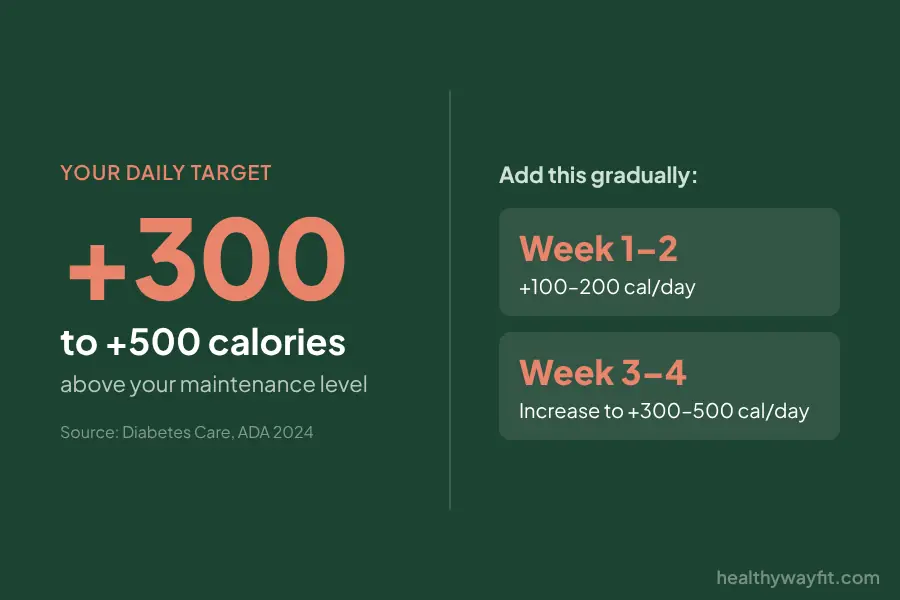
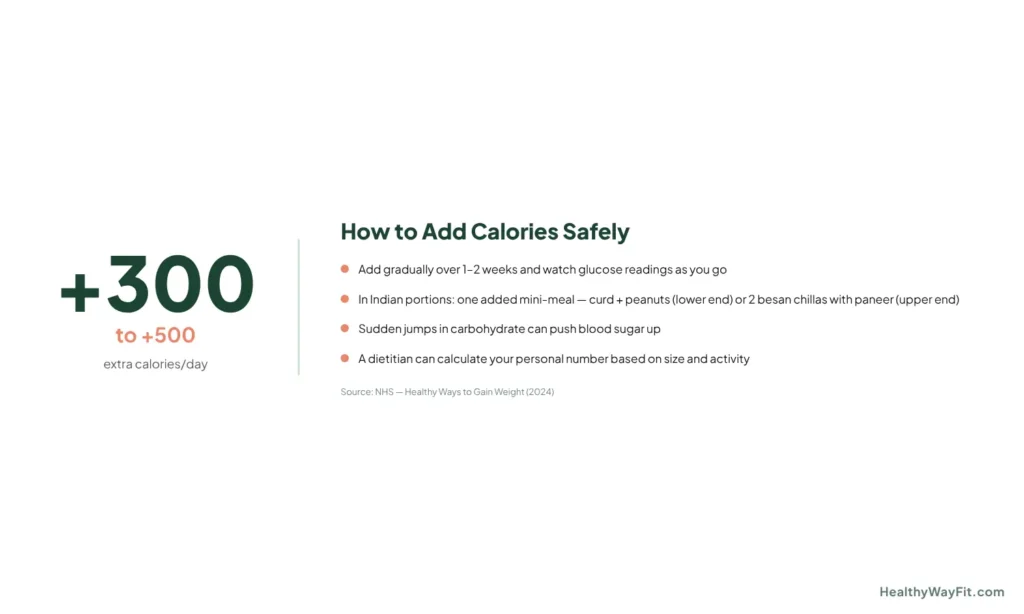
The NHS suggests adults add around 300–500 calories a day and gain weight gradually. With diabetes, it is sensible to add those calories in steps over a week or two and watch your glucose readings as you go. A sudden jump in food, especially carbohydrate, can push sugars up.
In Indian portions, 300–500 extra calories is roughly one added mini-meal a day, such as a bowl of full-fat curd with a handful of peanuts at the lower end, or two besan chillas with paneer filling towards the upper end. Exact amounts depend on your size and activity, so a dietitian can set your number.
What foods help a person with diabetes gain weight?
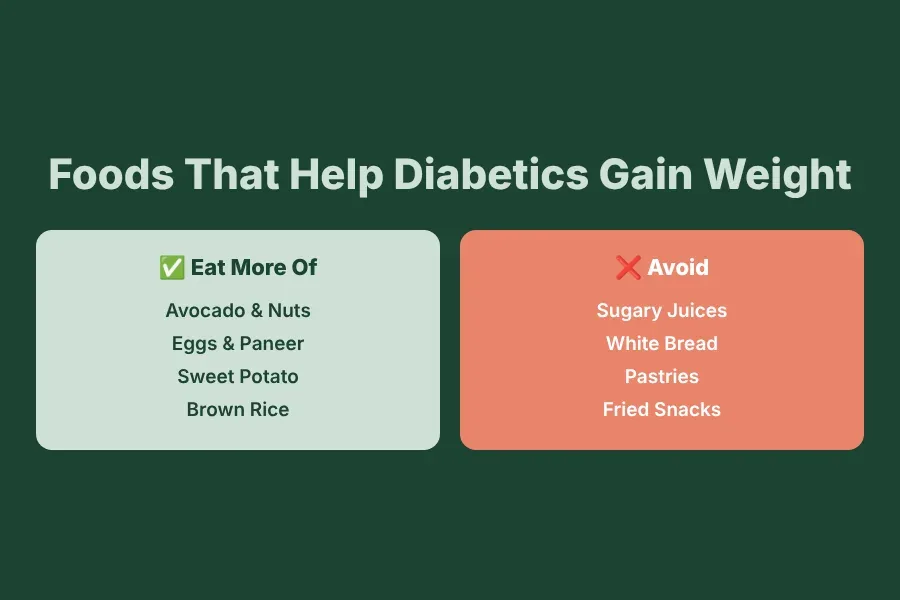
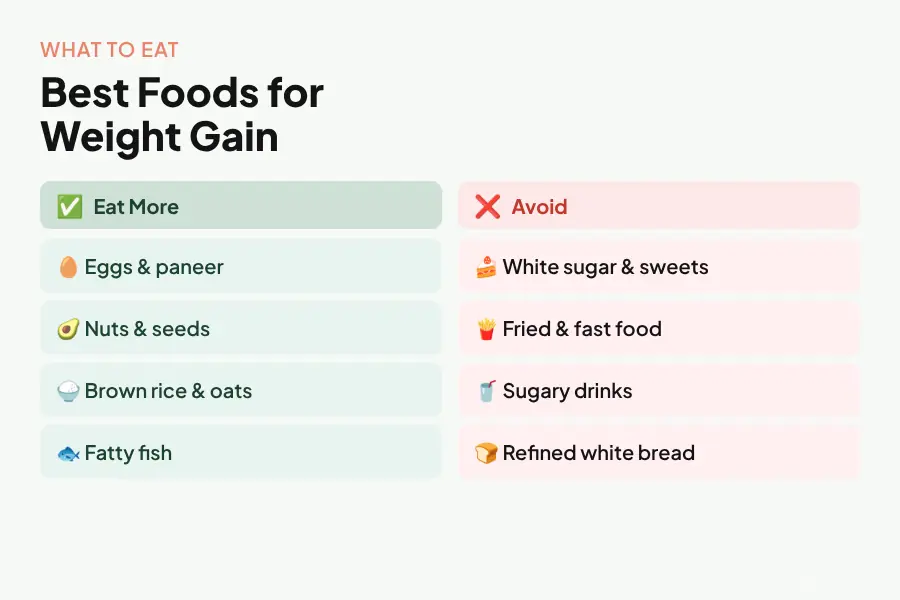
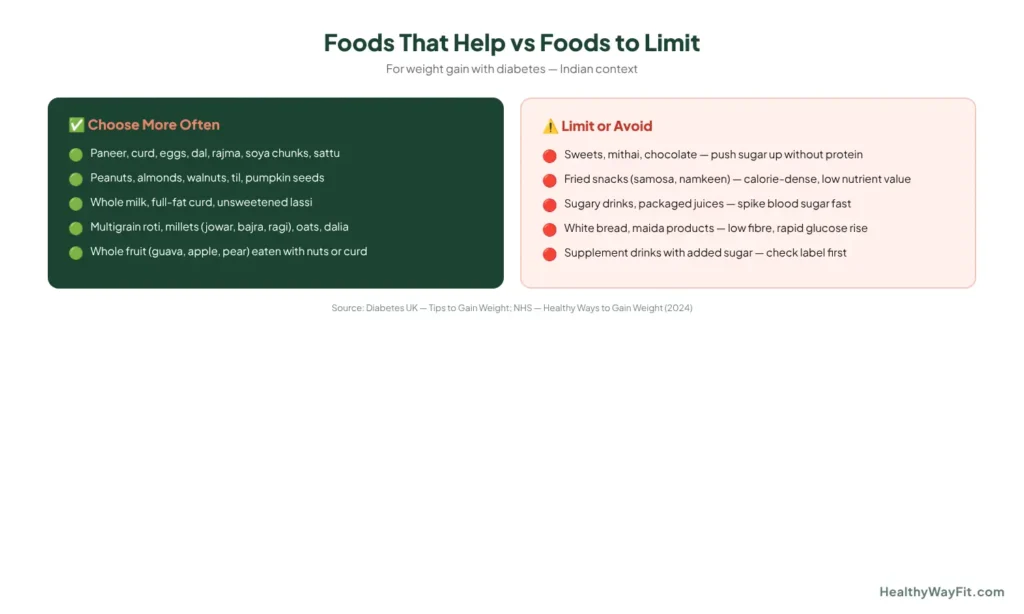
Choose foods that pack calories and protein into small portions without large amounts of sugar or refined starch. If you have kidney disease, check with your doctor before adding protein, dal, nuts or dairy, as limits on protein, potassium and phosphorus may apply. Diabetes UK recommends full-fat dairy, unsaturated oils, nuts and seeds, milky drinks and milk powder added to food. The NHS advises against relying on chocolate, cakes and sugary drinks.
| Food group | Indian choices | Why it helps |
|---|---|---|
| Protein | Paneer, curd, eggs, fish, chicken, dal, chana, rajma, soya chunks, sattu | Supports muscle regain, especially alongside strength training |
| Unsaturated fats | Groundnut, mustard or rice bran oil, peanuts, almonds, walnuts, flax, til and pumpkin seeds | Many calories in a small volume |
| Full-fat dairy | Whole milk, curd, paneer, unsweetened lassi or chaas made with full-fat curd | Calories plus protein; milk powder can be stirred into milk or dalia |
| Fibre-rich carbs | Whole-wheat roti, millets (jowar, bajra, ragi), brown rice, oats, dalia, sweet potato | Steady energy; portion them to your glucose readings |
| Fruit | Whole fruit such as guava, apple or pear, eaten with nuts or curd | Adds calories with fibre; whole fruit rather than juice |
The high-protein meals in our diet guides give more ways to build protein into everyday Indian meals.
Is a high-fat diet safe for blood sugar?
Healthy fats add calories in a small volume, but they still affect glucose. A review in Diabetes Care found that in type 1 diabetes, high-fat meals mainly caused higher sugar levels several hours after eating, even when early readings were lower. If you take mealtime insulin, check readings for several hours after a rich meal, as the rise can come late, and ask your team about dose timing. The review also found high-fat meals tended to need more insulin than lower-fat meals with the same carbohydrate. For heart health, Diabetes UK points to unsaturated fats such as vegetable oils, nuts and seeds.
What can vegetarians eat to gain weight with diabetes?
Vegetarian protein sources common in Indian kitchens include paneer, curd, milk, dal, chana, rajma, soya chunks, tofu, sattu, peanuts and seeds. Pair a dal or pulse with dairy at most meals, for example rajma with curd or dal with paneer bhurji, so each meal carries enough protein.
How to plan meals for weight gain
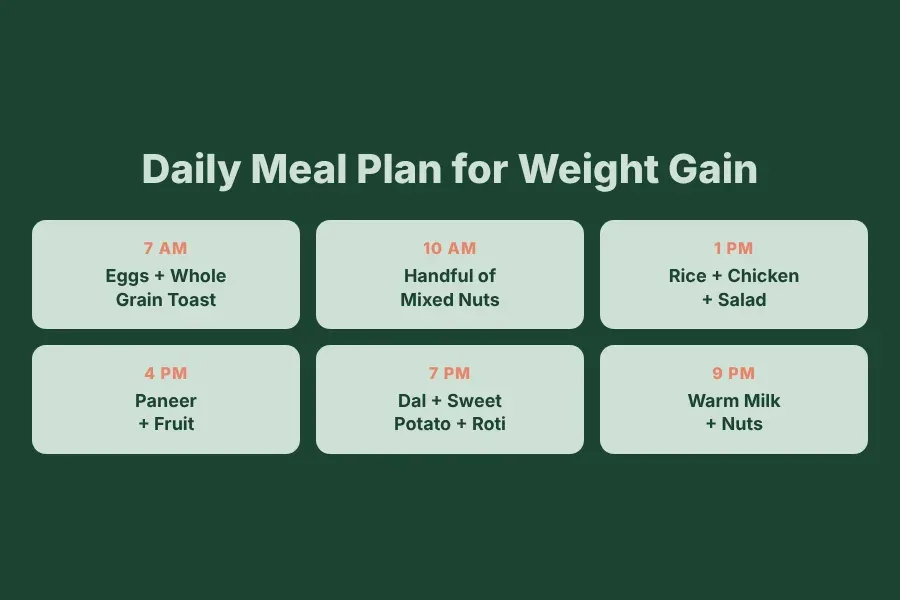
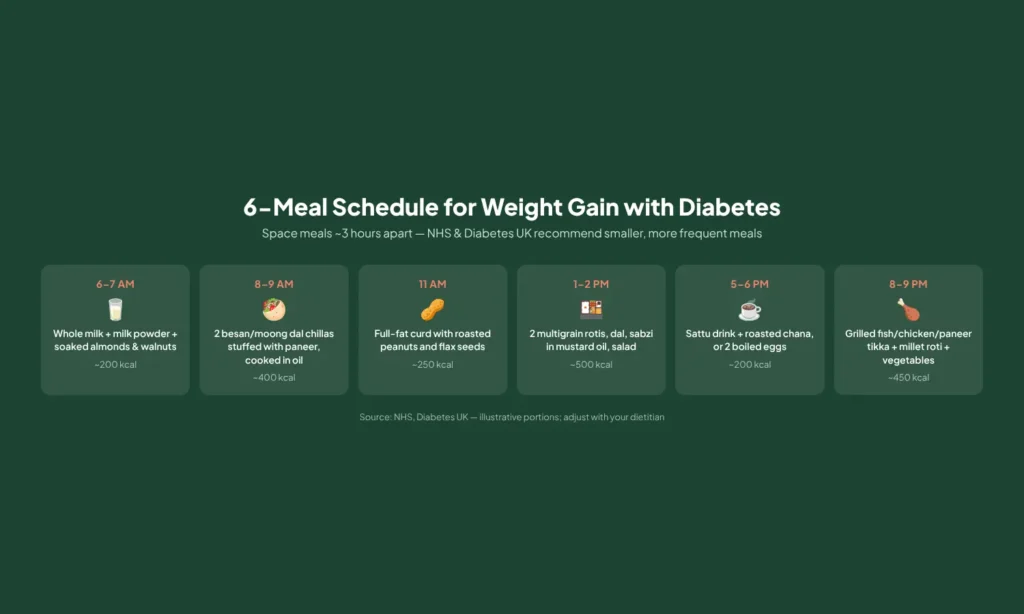
Eating smaller meals more often makes extra food easier to manage. Both the NHS and Diabetes UK suggest smaller, more frequent meals and snacks when appetite is low. A practical pattern is five to six eating times a day, about three hours apart.
Illustrative day (adjust portions with your dietitian):
- Early morning: Whole milk with a spoon of milk powder, plus 5–6 almonds and 2 walnuts
- Breakfast: 2 besan or moong dal chillas stuffed with paneer, cooked in groundnut oil, with mint chutney
- Mid-morning: A bowl of full-fat curd with roasted peanuts and flax seeds
- Lunch: 2 multigrain rotis, dal, a sabzi cooked in mustard oil, a small bowl of rice if your readings allow, and salad
- Evening: Sattu drink (unsweetened, with salt, lemon and roasted jeera) and a handful of roasted chana, or 2 boiled eggs
- Dinner: Grilled fish, chicken or paneer tikka with a millet roti and vegetables
- Bedtime (if your team agrees): Warm milk or a small bowl of curd
Drink water after meals rather than before them so you don’t fill up, and cook vegetables in a little oil rather than only boiling them. For more on spacing meals through an Indian day, see our guide to meal timing and portions in an Indian diabetes diet.
How strength training turns extra food into muscle
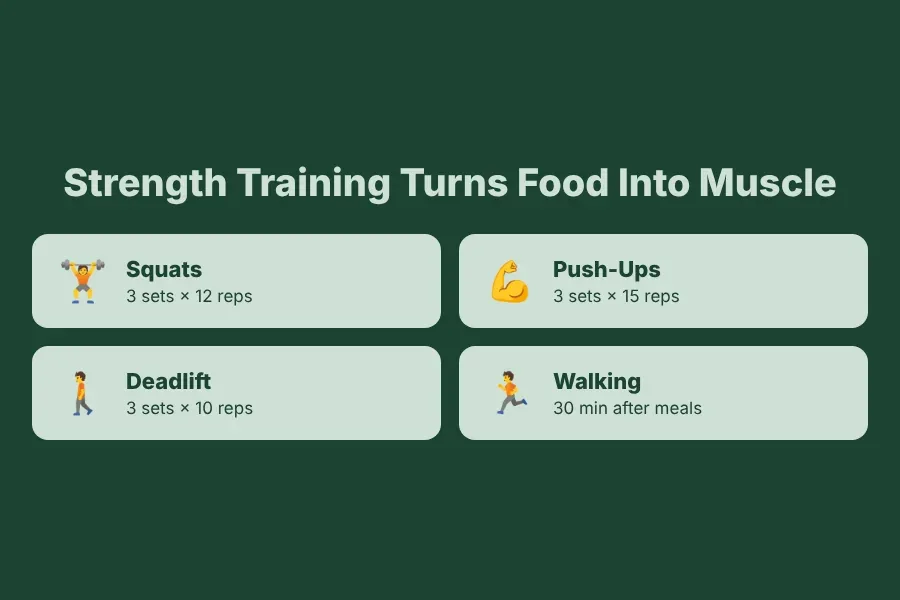
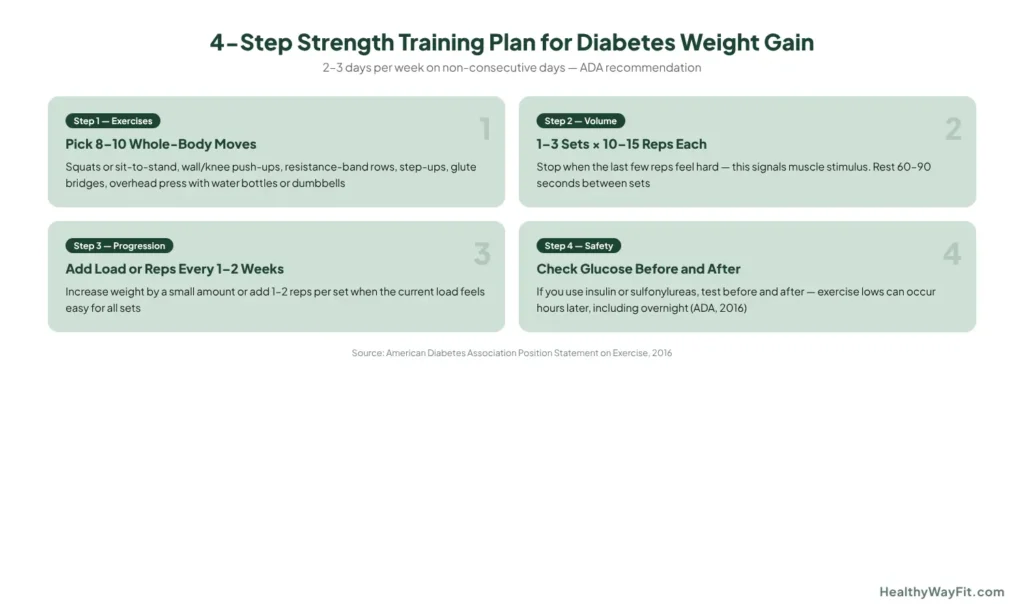
Strength training helps more of the regained weight come back as muscle. The American Diabetes Association’s 2016 position statement on exercise advises adults with diabetes to do resistance exercise 2–3 times a week on non-consecutive days, and reports that in type 2 diabetes it improves glycaemic control, insulin resistance, strength and lean body mass.
A simple start, based on the same statement:
- Pick 8–10 exercises that cover the whole body: squats or sit-to-stand from a chair, wall or knee push-ups, resistance-band rows, step-ups, glute bridges and overhead presses with water bottles or dumbbells.
- Do 1–3 sets of 10–15 repetitions of each, stopping when the last few repetitions feel hard.
- Add a little load or a few repetitions every week or two.
- Keep up some walking for heart health, and eat a little more on active days.
The NHS also notes that strength training or yoga can improve appetite.
Caution: If you use insulin or sulfonylureas (such as glimepiride or gliclazide), check your sugar before and after exercise, because that statement notes exercise-related lows are a risk with these medicines and can occur hours later, including overnight.
It also advises testing for ketones before exercise if glucose is 250 mg/dL or higher, and not exercising if moderate or large ketones are present.
What is the fastest safe way to gain weight with diabetes?
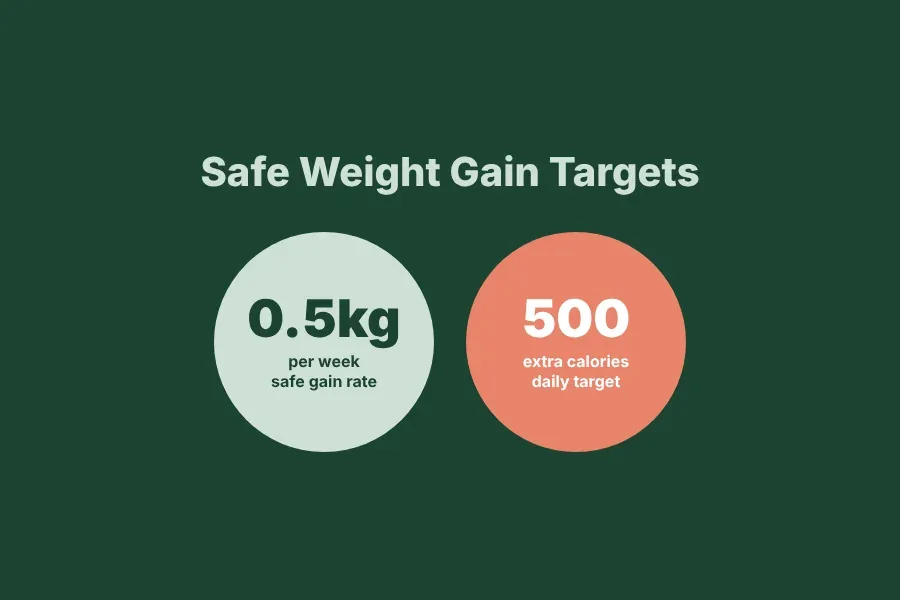
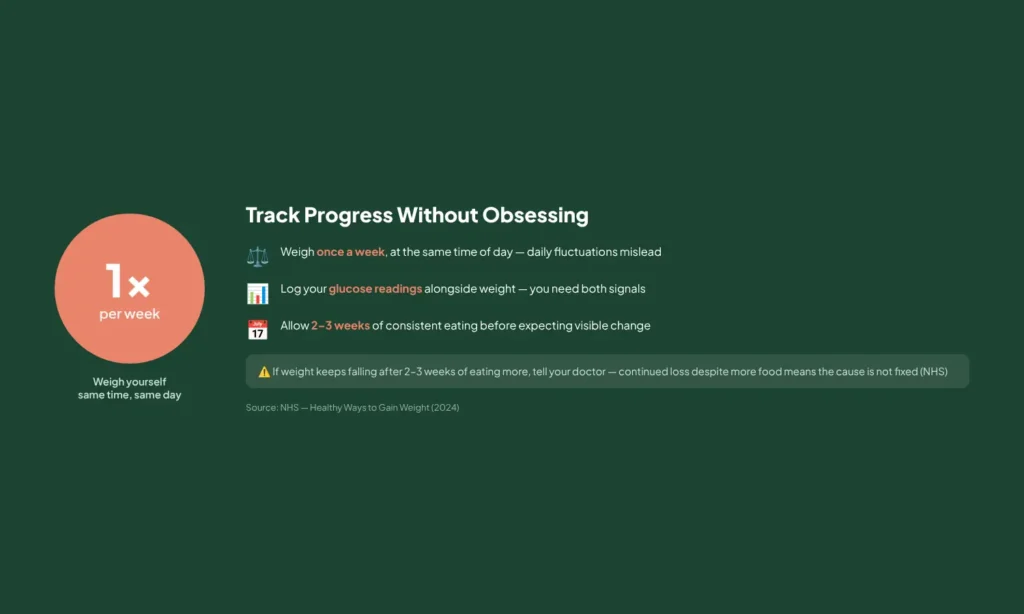
There is no safe shortcut: aim for steady gain over weeks and months rather than a quick jump. The NHS advises gaining weight gradually, and with diabetes slow changes give you and your doctor time to adjust medicines as your food intake rises. Weigh yourself once a week, at the same time of day, and keep a note of your glucose readings so you can see whether the extra food is affecting your sugars.
If your weight is still falling after two to three weeks of eating more, tell your doctor rather than eating even more. Continued loss despite more food is a sign the cause has not been fixed.
Type 1 vs type 2: what changes?
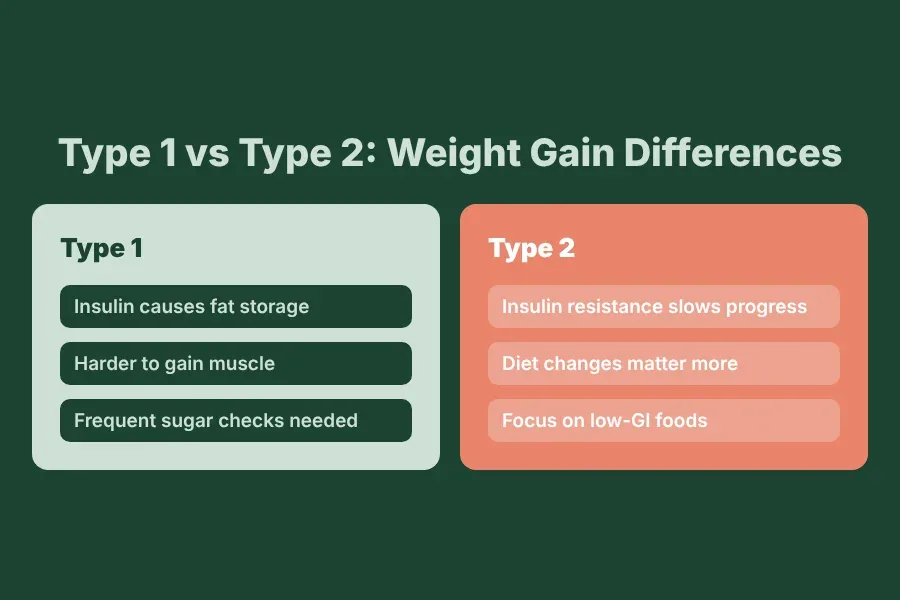
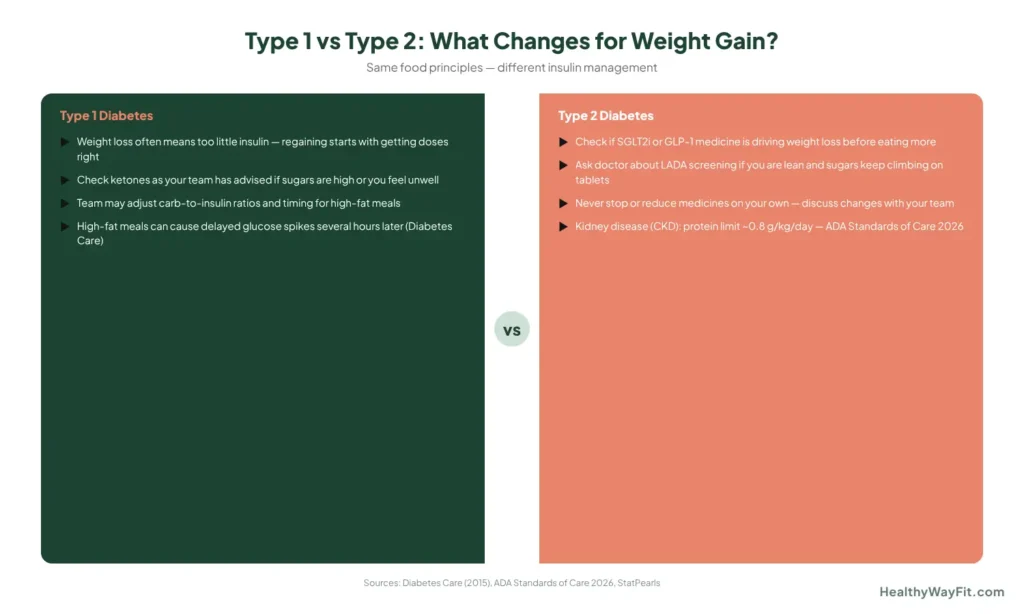
The food and exercise approach is similar, but insulin management differs:
- Type 1 diabetes: Weight loss often reflects too little insulin. If sugars are high or you feel unwell, check ketones as your team has advised. Regain usually depends on getting insulin doses right for the food you eat. Your team may adjust carbohydrate ratios and advise on rich, high-fat meals.
- Type 2 diabetes: Check whether a medicine (such as an SGLT2 inhibitor or GLP-1 receptor agonist) is driving the loss, and whether LADA has been missed if you are lean and sugars keep climbing.
- Kidney disease (either type): Protein needs change. The ADA Standards of Care 2026 recommend about 0.8 g of protein per kg of body weight a day for people with CKD stage 3 or higher who are not on dialysis, so don’t push protein without your doctor’s advice.
Is weight gain good or bad in diabetes?
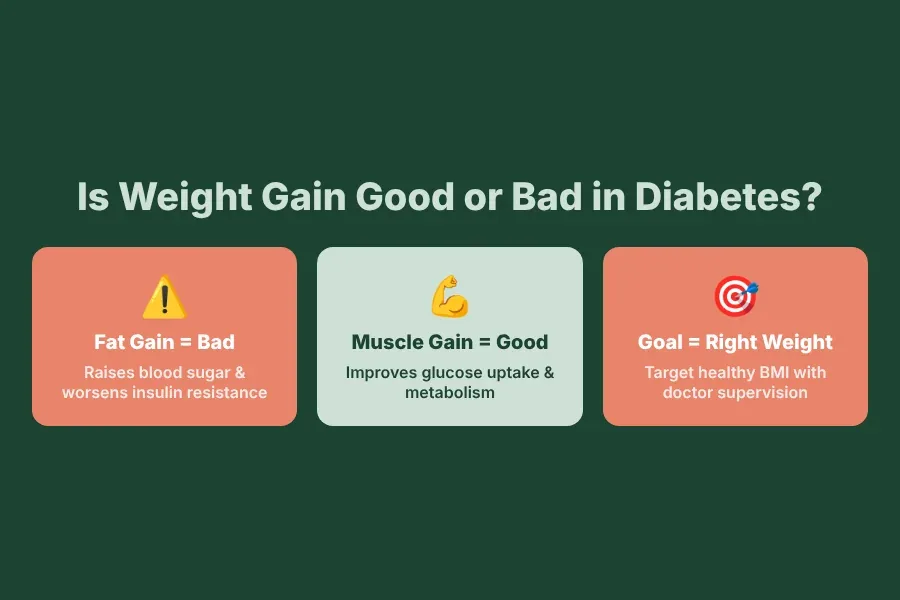
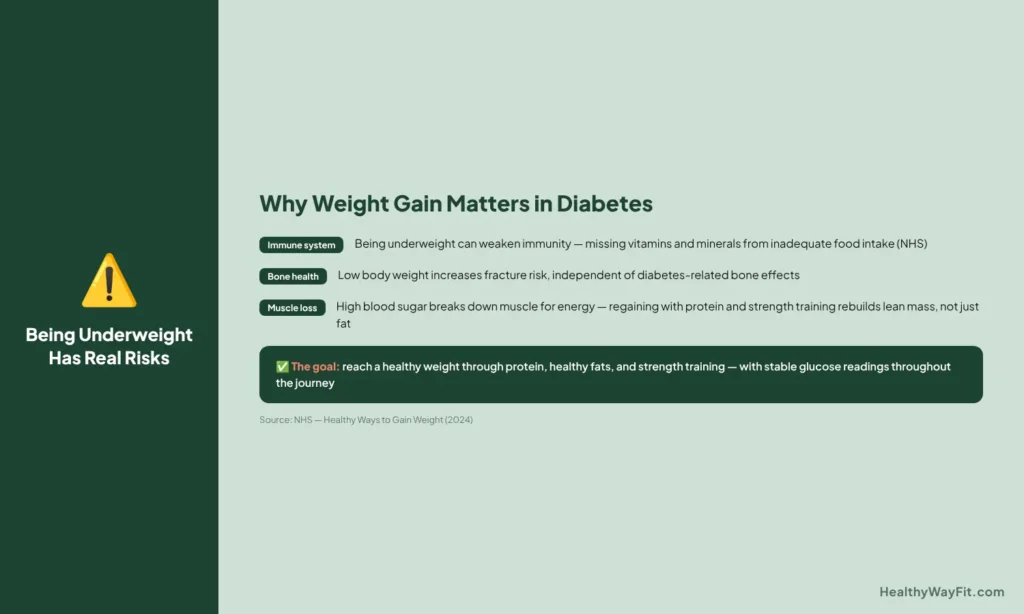
For someone who is underweight or has lost weight unintentionally, regaining towards a healthy weight is usually good: the NHS notes being underweight can mean missing vitamins and minerals, leading to problems such as a weaker immune system and fractures. Weight rebuilt through enough protein, healthy fats and strength training, with stable glucose readings, is the goal. Gaining it through sweets and fried snacks pushes blood sugar up and adds little muscle.
Supplement drinks can help if appetite is very poor, but choose them with a dietitian, as Diabetes UK advises, and check the label, as many contain added sugar.
The takeaway
To gain weight safely with diabetes, work in this order: find out why you lost weight, get your medicines and glucose control reviewed, then add 300–500 extra calories a day through protein-rich Indian foods, healthy fats and fibre-rich carbs spread across 5–6 meals, and lift weights 2–3 times a week. Check your sugars as you eat more and report steady loss to your doctor.
If you’d like help building a plan around your own readings and ghar ka khana, HealthyWayFit’s coaches combine nutrition, strength-based exercise and medical supervision. Contact our team to talk it through.
By Kirti, founder and serial entrepreneur. Last updated 5 October 2026. This article is for general information and is not a substitute for advice from your own doctor or dietitian.