By Kirti, Founder & Serial Entrepreneur, HealthyWayFit
Research-led buying guide. Reviewed 15 October 2026. HealthyWayFit provides paid lifestyle support; this article explains how to assess that service alongside other options.
A personalised diabetes diet plan should start with an assessment, explain how meals fit your health needs and routine, and include a way to review and change the plan. Paying for a document with your name on it does not establish that those steps happened. Before buying, ask who designs it, what they assess, and what happens after delivery.
This article is for informational purposes only and does not constitute medical advice. Always consult a qualified healthcare professional before making changes to your diet, exercise routine or medication.
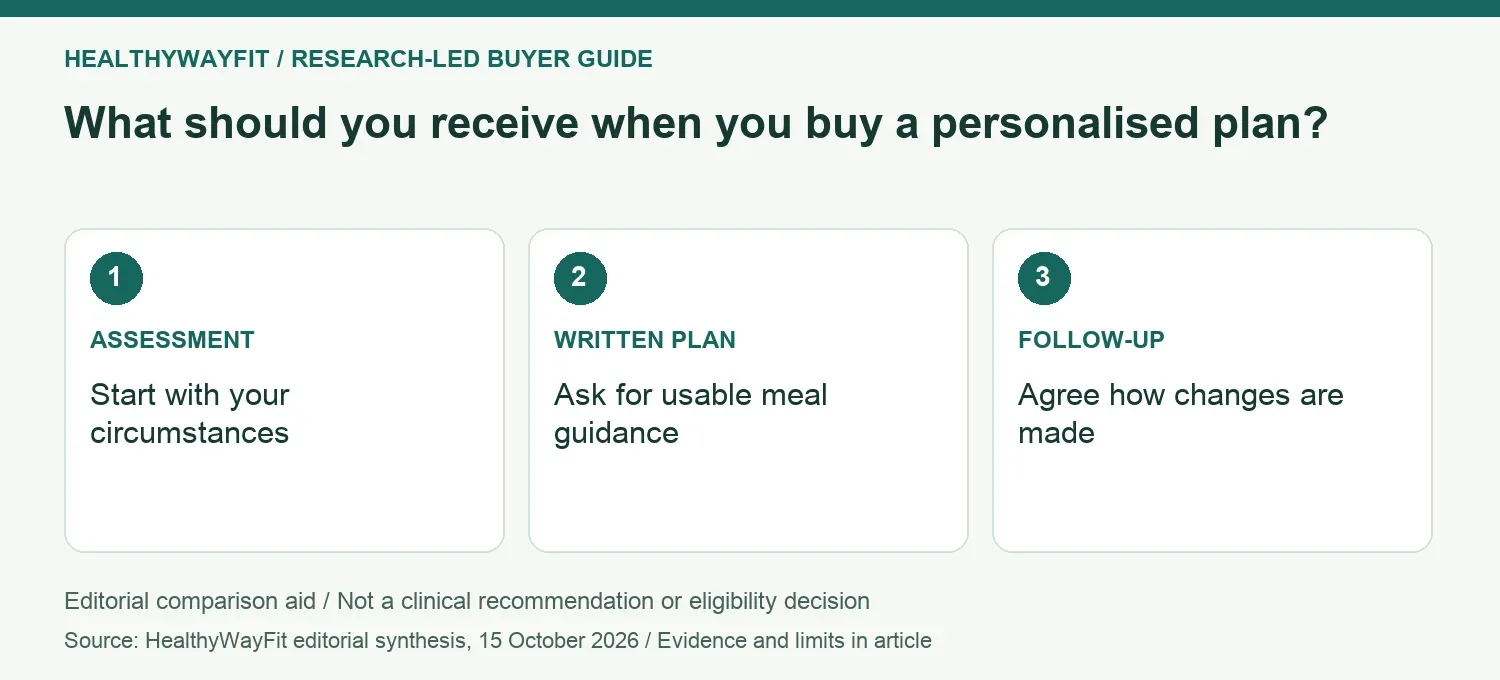
What should you receive when you buy a personalised plan?
Look for three connected services: an assessment, an understandable eating plan, and follow-up that responds to what happens in real life. The exact format can vary, but the provider should explain each part before payment.
An assessment gathers relevant health information and your food routine. The written plan translates that assessment into choices you can use. Follow-up checks practicality, progress and questions that were not obvious in the first appointment.
| Deliverable | Useful question before purchase |
|---|---|
| Assessment | What information will you review before writing my plan? |
| Meal guidance | Will I get portions, alternatives and explanations? |
| Follow-up | Who reviews problems, and when? |
| Coordination | How will this fit my existing medical care? |
| Exit documents | Can I retain the plan and progress summary? |
A detailed spreadsheet can still be difficult to follow. Ask for an anonymized sample or a walkthrough of the format, without requesting another client’s private information.
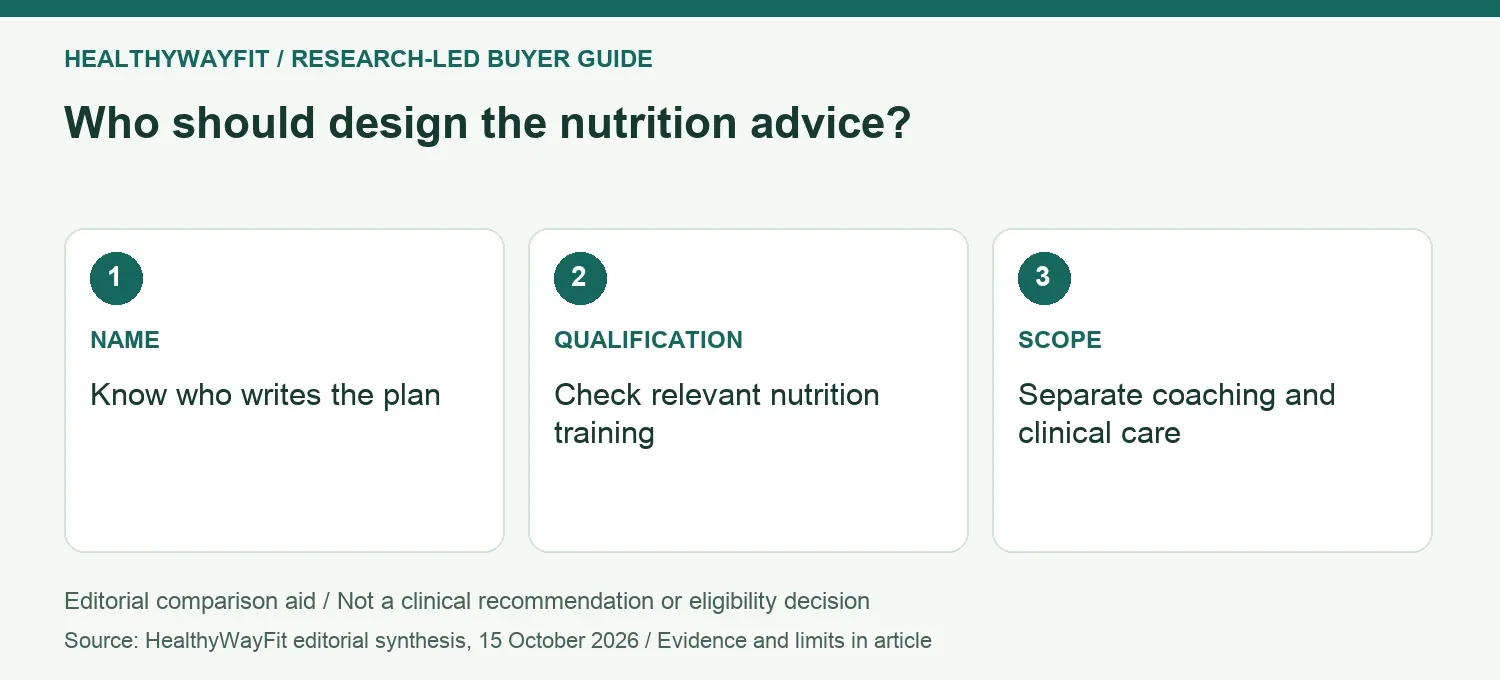
Who should design the nutrition advice?
For medical nutrition therapy, check for a suitably qualified dietitian or equivalent regulated professional in your location, with relevant diabetes experience. Coaching qualifications and clinical nutrition qualifications can describe different scopes of work.
The ADA 2026 Standards of Care recommend individualized medical nutrition therapy through a registered dietitian nutritionist, preferably experienced in diabetes. A sales title such as “expert” does not establish that qualification.
Ask for the person’s name, training, role and local registration where applicable. Find out whether you meet that person or receive their work through someone else. Our online diabetes dietitian guide explains how to assess the professional relationship before booking.
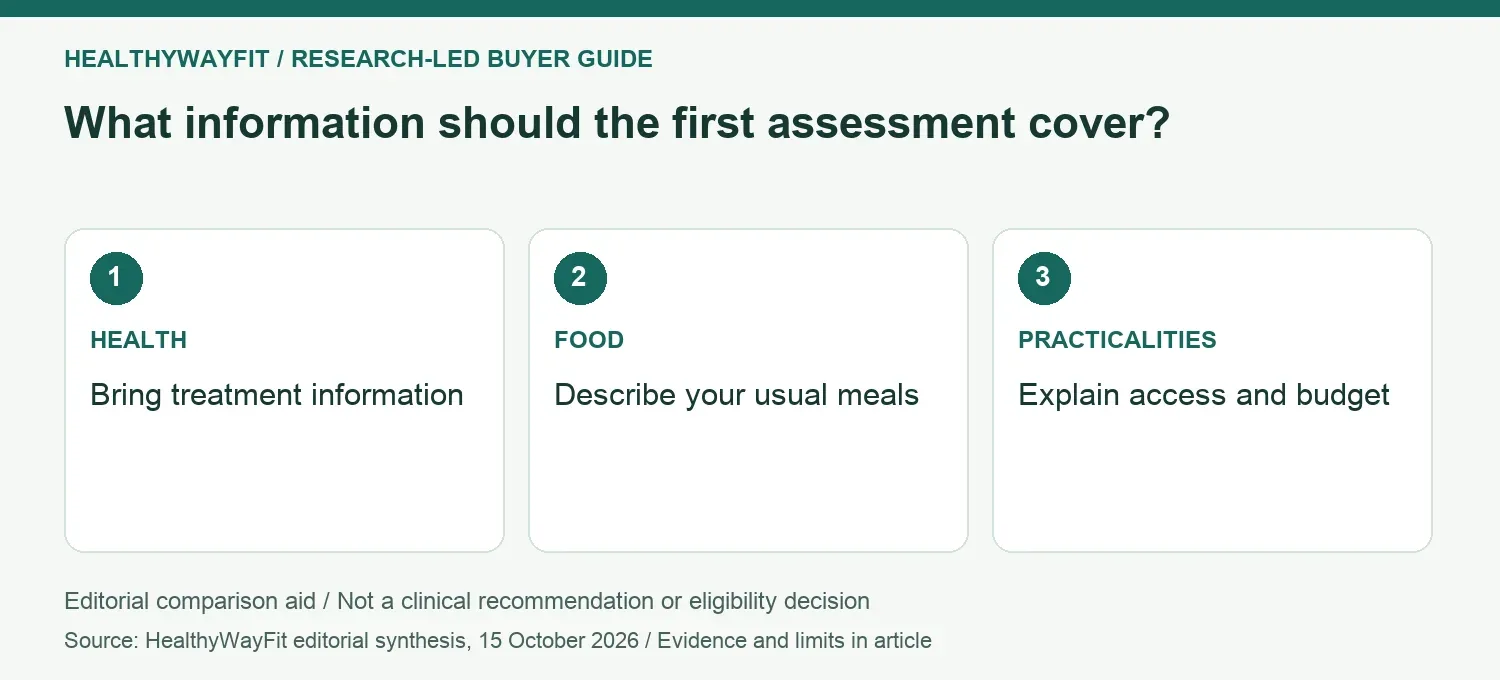
What information should the first assessment cover?
Expect questions about your diagnosis, current treatment, relevant test results, food access and usual eating pattern. The provider should explain why it needs the information and how it will use and protect it. For people assessed as having prediabetes, our India prediabetes program guide explains the related support decision.
Bring your medication list, existing clinical instructions, allergies or intolerances, and any known conditions that affect food choices. Include practical details: who cooks, what you can spend, whether you eat out, and which foods you prefer to keep.
You do not need to perform an ideal week for the assessment. A realistic record is more useful than a carefully edited one. If the service sends a finished plan before asking meaningful questions, request an explanation of how it was individualized.
How can you test whether the plan fits your meals?
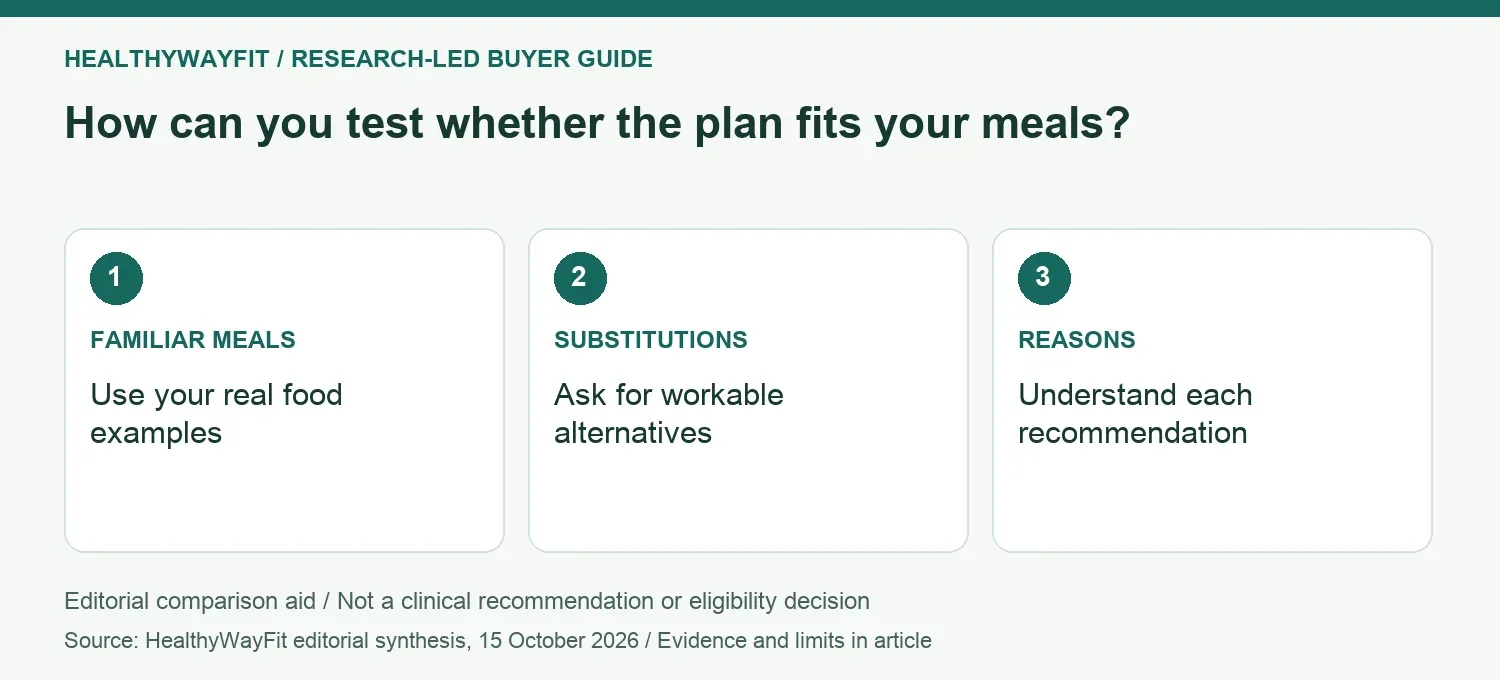
Ask the provider to adapt an ordinary meal you already eat, rather than showing only a model menu. A useful discussion addresses portions, substitutions and your reasons for choosing that food.
For example, if your household cooks rice and dal, ask how the plan would work with that shared meal. If you rely on sandwiches, a workplace canteen or a limited grocery budget, use those examples instead. These are consultation prompts, not a prescribed menu or a claim that one combination suits everyone.
Ask what happens if you dislike a suggested food, cannot find it locally or do not want to cook separately. A plan that needs repeated expensive purchases deserves a clear explanation. “Customized” should mean the service can explain its decisions in terms that relate to your life.
Should you choose a fixed menu or flexible guidance?
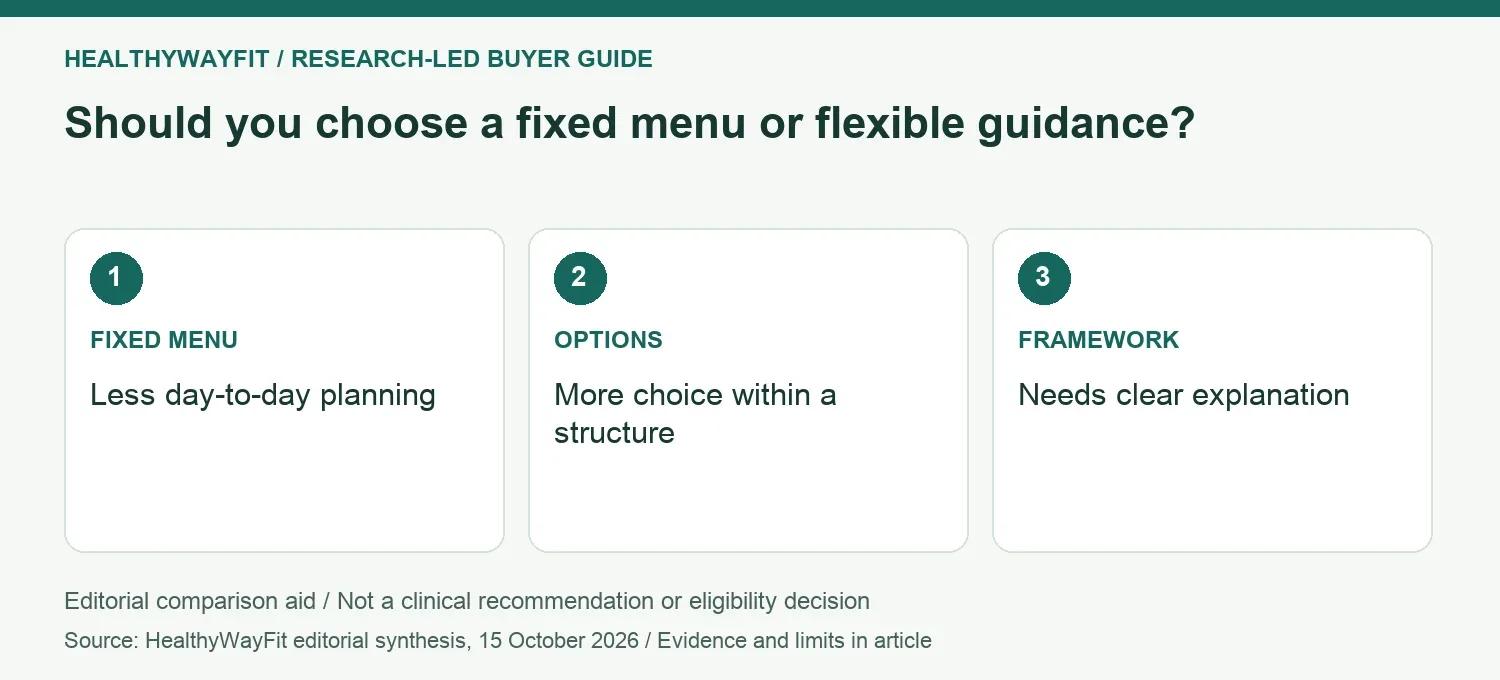
Choose a format you can use consistently, with enough explanation to make changes safely. A fixed menu can reduce daily decisions; a flexible framework can accommodate changing schedules. Neither is automatically more personalized.
| Format | Potential advantage | Limitation to discuss |
|---|---|---|
| Fixed daily menu | Less planning each day | Substitutions may need extra help |
| Meal options with portions | More everyday choice | Requires a clear way to combine options |
| Food framework and coaching | Adaptable to varied routines | Needs explanation and accessible follow-up |
| App-based recommendations | Convenient records and prompts | Clarify human review and clinical scope |
Ask the provider to demonstrate a change: a missed shopping trip, an unexpected restaurant meal, or a different work shift. The explanation matters more than the number of pages delivered.
How much follow-up is worth paying for?
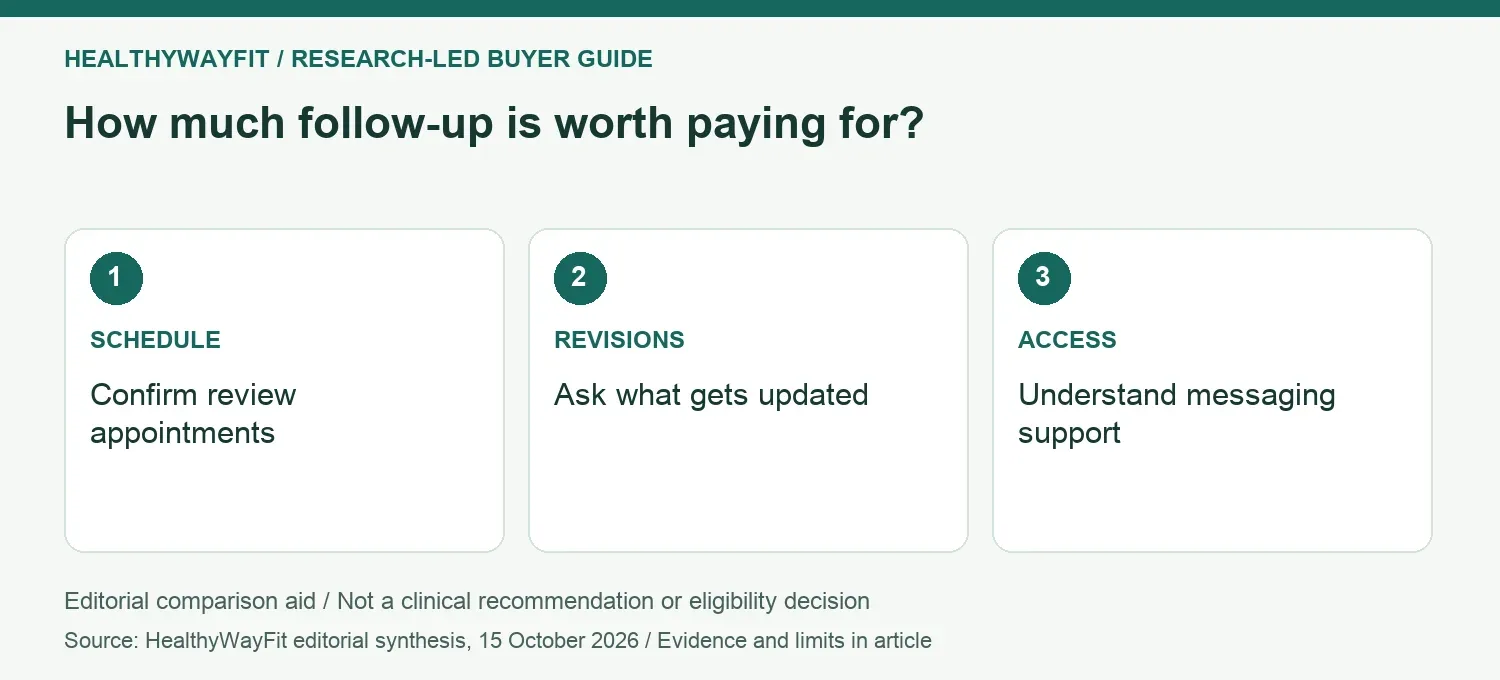
Pay for follow-up that addresses implementation and reassessment, with a clear schedule and named responsibility. “Unlimited support” is difficult to value unless you know the channel, staff and expected response time. For a provider-specific example of support questions, see our Breathe Well-being research review.
An early randomized trial of dietitian-delivered nutrition therapy compared a single visit with an initial visit plus follow-ups. Both groups improved, with some advantages for the more structured care. It supports taking follow-up seriously, but the older, specific study does not establish the ideal appointment schedule for everyone or validate a current commercial package.
Ask whether reviews include a conversation, a rewritten plan or only a generic message. Clarify what happens after a difficult week. Support that helps identify the obstacle may be more useful than another copy of the original menu.
What should the complete fee include?
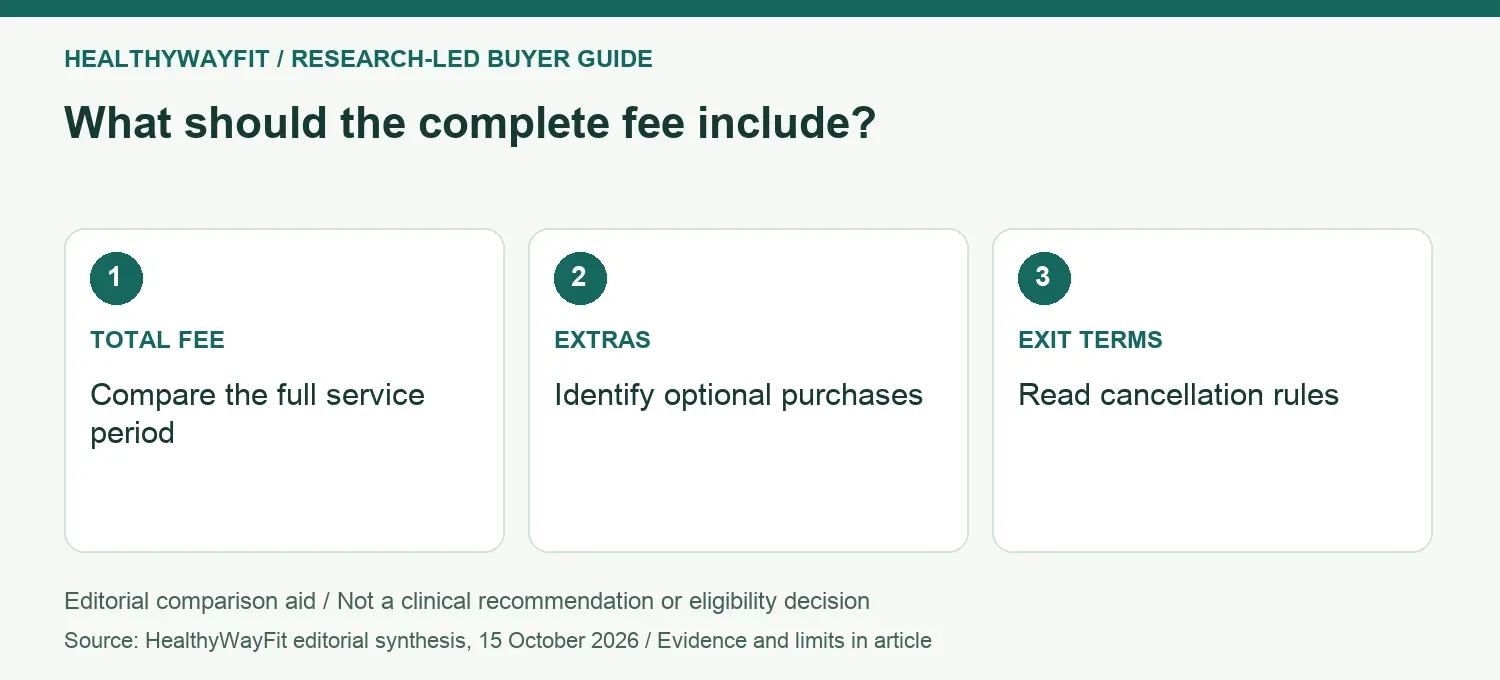
Compare the total service, including assessment, plan revisions and follow-up, over the same period. A cheap initial chart and an ongoing nutrition service are different purchases.
Request an itemized quote covering appointments, revisions, messaging, tests, devices and any compulsory supplements or foods. Ask which products are optional and whether the adviser benefits financially from selling them. Do not assume a supplement is necessary because it appears beside the diet package.
Check cancellation, refunds, pauses and renewal before making the first payment. If you pay in installments, ask whether you still owe the remainder after stopping. Keep the written offer so you can compare it with what is actually delivered.
How should the plan fit medicines and other conditions?
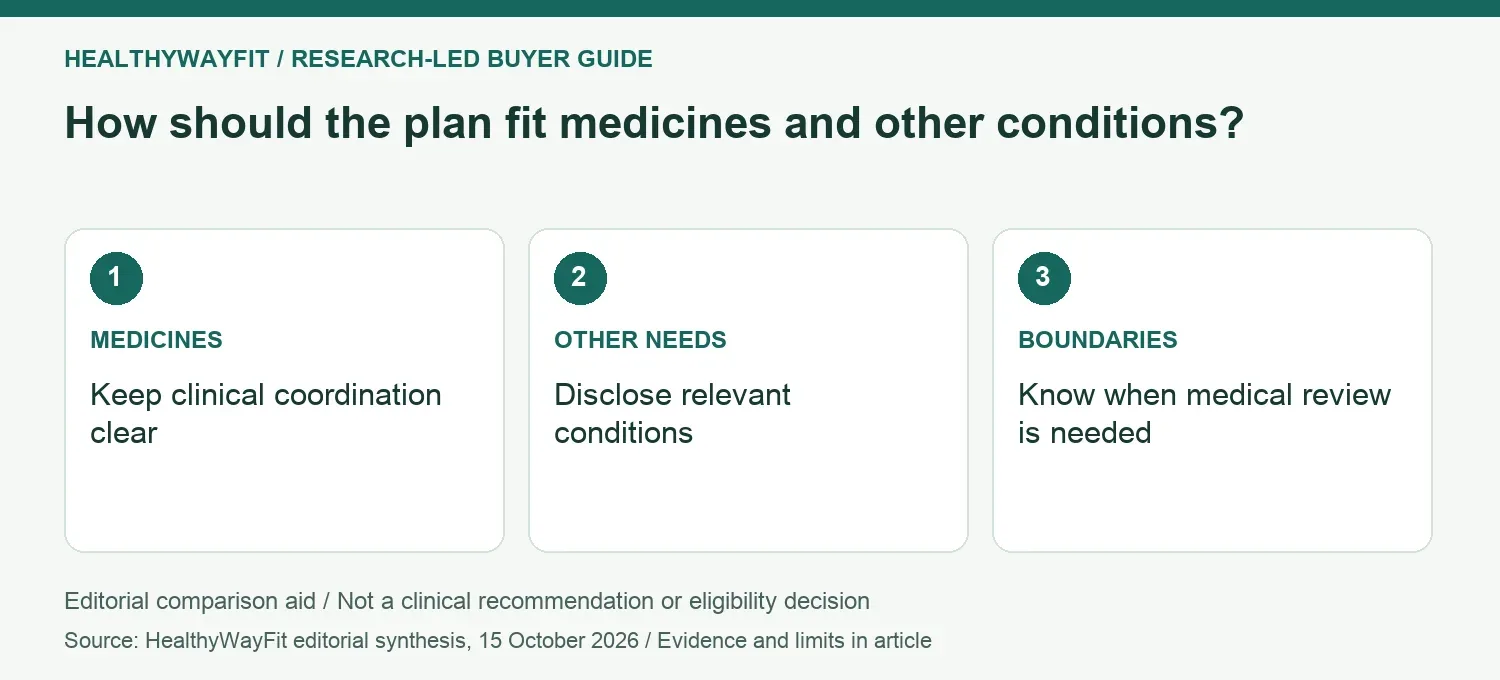
Your nutrition provider should recognize the limits of their role and coordinate clinical questions with an appropriate treating professional. A meal plan should not come with an instruction to stop prescribed treatment on your own.
Tell the assessor about insulin or other diabetes medicines, pregnancy, kidney problems, a history of disordered eating, allergies and any other relevant conditions. Ask which issues require a medical review before changes begin. The clinical assessment determines the appropriate plan; this buying guide cannot supply it.
Be cautious if one rigid diet is offered to every diagnosis or if lack of progress is always blamed on willpower. Ask for a reassessment process and an agreed route for problems. A provider should be able to describe when another professional needs to become involved.
What does HealthyWayFit offer?
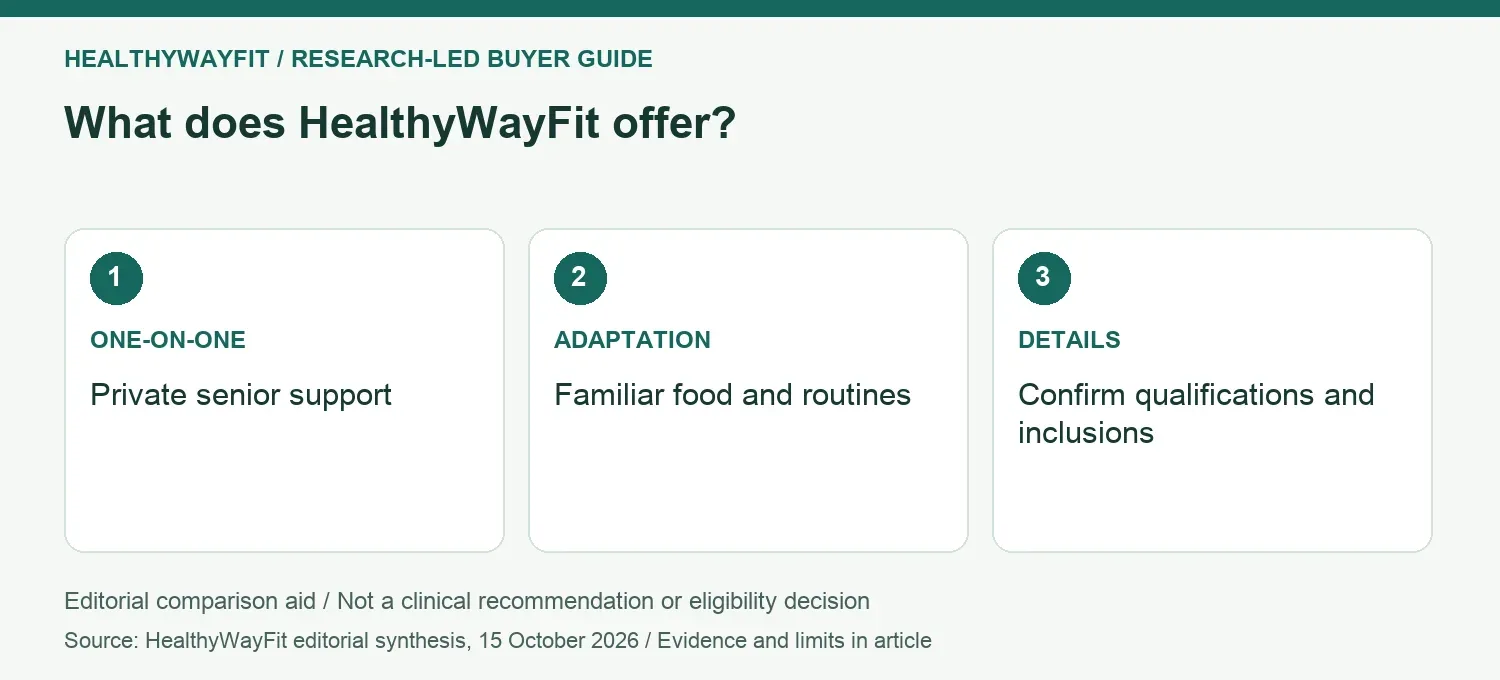
HealthyWayFit offers private, one-on-one support with senior professionals, not interns, tailored to food preferences, lifestyle and individual challenges. The service model includes an assigned coach, weekly calls and daily check-ins. Confirm the current package before enrolling.
Ask who will conduct your nutrition assessment, who writes and revises your plan, and which clinical services are included in your location. Seniority is a service distinction; it does not replace checking the particular qualification needed for medical nutrition therapy.
HWF may be worth considering if you want continuing individual help adapting familiar meals and routines. Compare it with a qualified local dietitian or another service using the same deliverables. There is no guaranteed glucose change, weight loss or remission outcome.
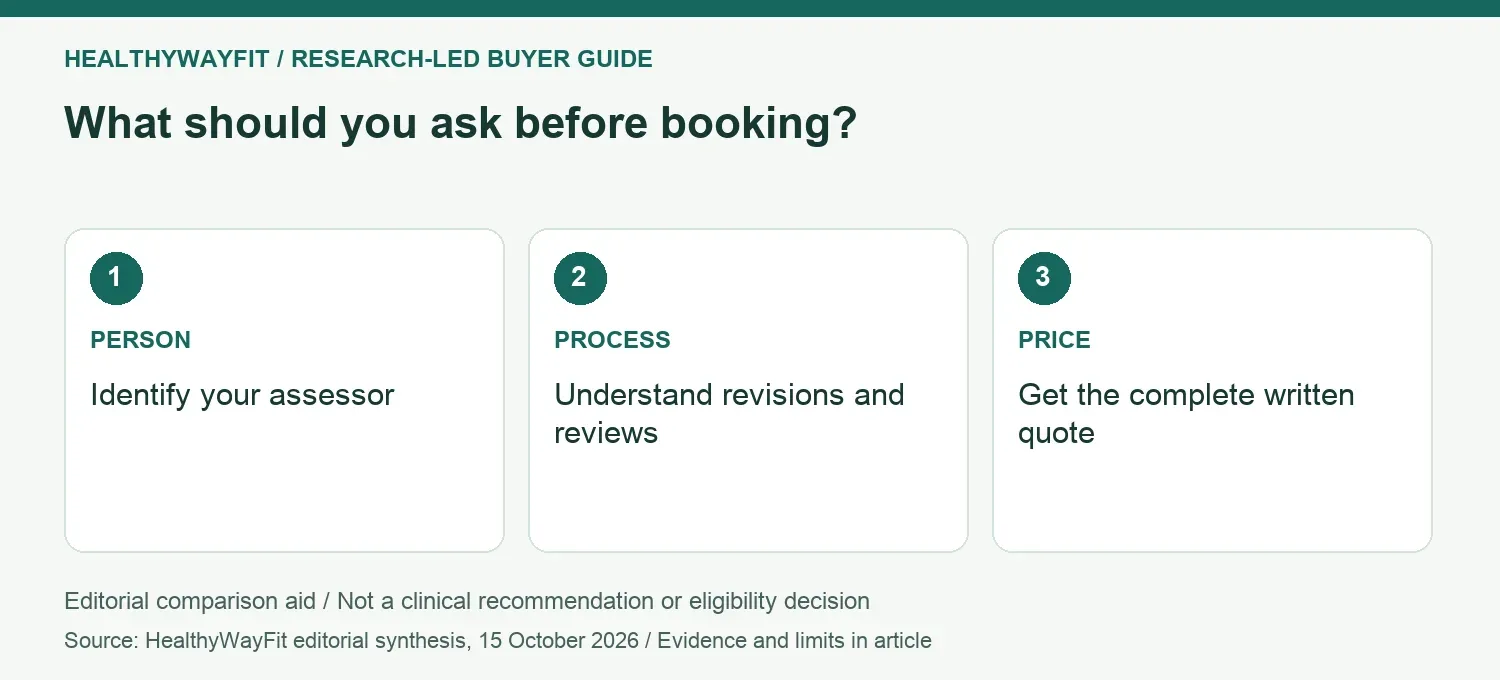
What should you ask before booking?
Book when you understand who will assess you, what you will receive, how revisions work and the complete financial commitment. If a provider cannot explain these basics, resolve them before payment.
Use this message as a starting point: “I am looking for a personalised diabetes diet plan that fits my usual meals and treatment. Who conducts the assessment, what qualifications do they hold, how are substitutions handled, and what follow-up is included in the total fee?”
Do I need to buy a glucose sensor first? Ask the treating professional whether monitoring is appropriate; do not purchase a device solely to satisfy an unexplained sales requirement.
Is a free meal chart enough? It can offer ideas, but it cannot establish that your medical needs and circumstances were assessed. If you need individualized care, choose the professional service accordingly.
Can I ask HWF about a plan? Contact HealthyWayFit to discuss the current service, your food routine and the support you want. You should leave that conversation understanding what you would be buying.