By Kirti, Founder & Serial Entrepreneur, HealthyWayFit
Research-led editorial | US pricing checked 15 October 2026
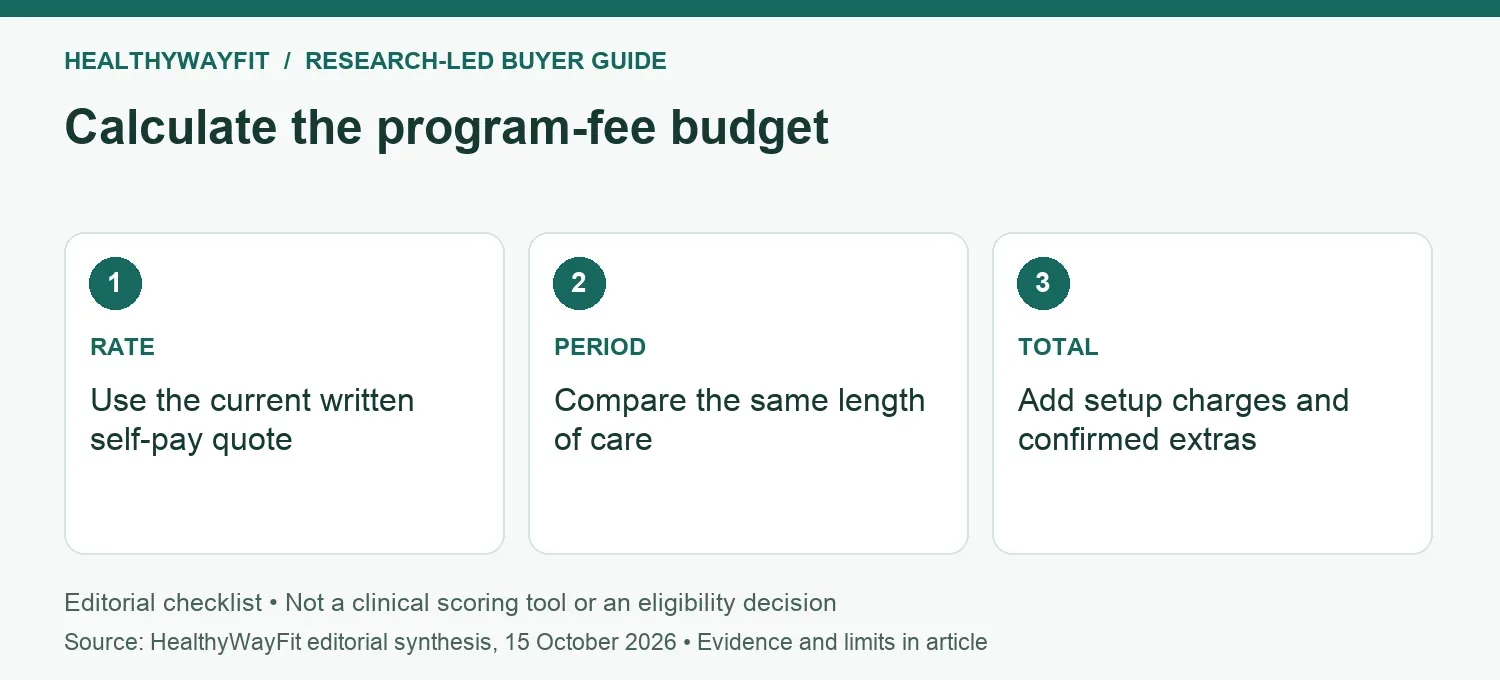
Virta Health’s published standard self-pay price is $299 per month in the first year, plus a one-time $250 initiation fee. At that rate, twelve months of program fees total $3,838. That is a calculation from the listed charges, not a personalized quote or a claim that every diabetes-related expense is included. Virta’s official self-pay pricing FAQ.
The practical question is whether you need this level of support, can use its approach, and can afford the full care budget. Compare those factors before treating the monthly price as either good value or too expensive.
Note: This article is for informational purposes only and does not constitute medical advice.
Always consult a qualified healthcare professional before making changes to your diet, exercise routine or medication.
HealthyWayFit also offers health-related support. This is a competitor cost guide based on public sources, not a personal trial of Virta or a head-to-head clinical comparison.
How much does Virta Health cost without insurance coverage?
The public self-pay rate gives a starting budget for people who are not covered through an employer or health plan. Confirm the rate and payment timing with Virta before enrolling. Prices and payment arrangements can change, and your final offer may differ from a public page.
| Period at the listed first-year rate | Calculation | Program-fee total |
|---|---|---|
| One month plus initiation | $299 + $250 | $549 |
| Three months plus initiation | 3 × $299 + $250 | $1,147 |
| Six months plus initiation | 6 × $299 + $250 | $2,044 |
| Twelve months plus initiation | 12 × $299 + $250 | $3,838 |
These are arithmetic examples using the published first-year charges, checked on 15 October 2026. They do not establish an upfront annual payment requirement, a minimum stay, or the timing of the first invoice.
“Without insurance” can mean two different situations: you have insurance that does not cover Virta, or you have no health insurance at all. Ask about self-pay access in either case, but keep the rest of your medical care budget separate. A program subscription does not establish coverage for unrelated services.
What does the published self-pay price include?
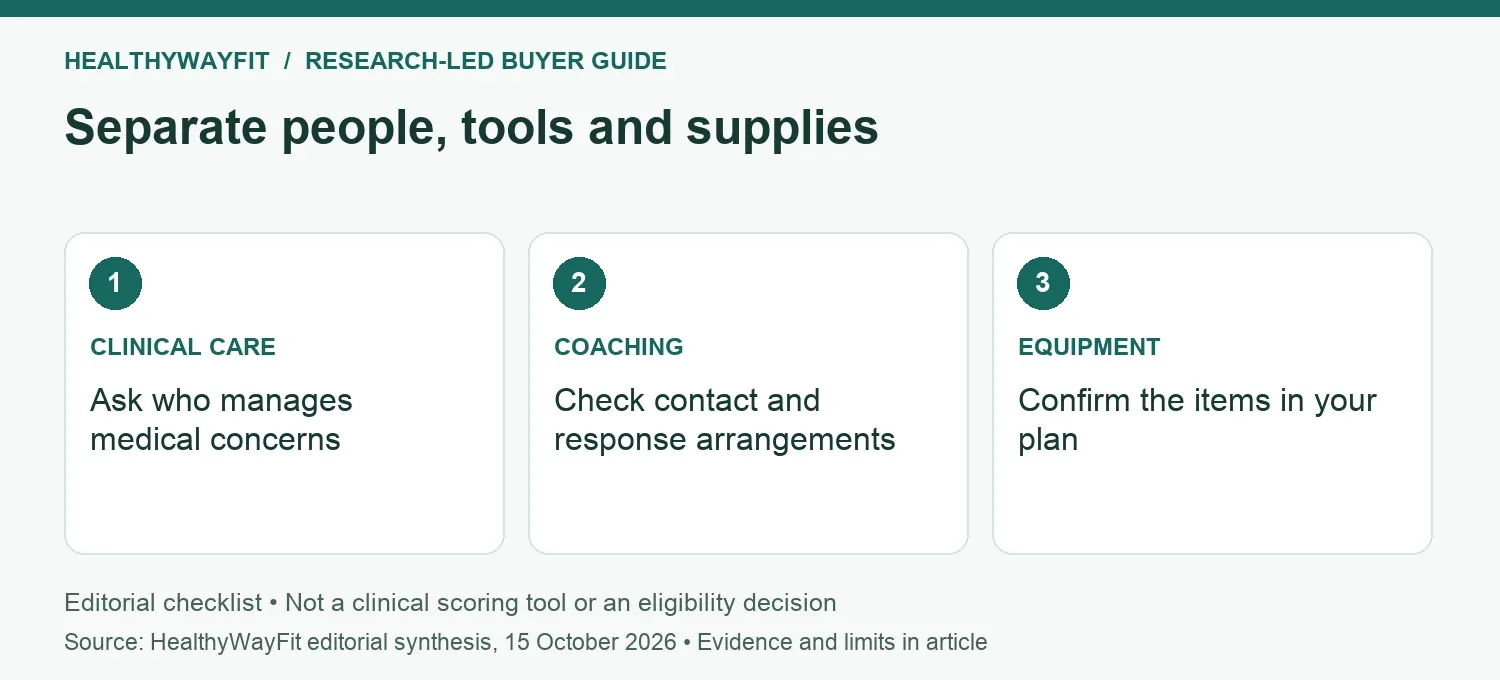
Virta lists medical care, coaching, education, app tools, and a starter kit with eligible supplies. Ask which items are included in your own treatment plan and whether any limits or replacement charges apply. Do not infer prescription coverage from the presence of a medical team. Virta’s self-pay inclusions.
For your written quote, separate the care team from equipment. Ask who you will contact for a medical concern, how routine messages are handled, and what response times to expect. Ask separately about meters, strips, connected devices, shipping, and replacement arrangements.
That distinction helps you compare alternatives. A cheaper package with meal-planning advice may perform a useful job, but it is not automatically equivalent to a service that includes medical management. Conversely, a comprehensive package may include support you already receive elsewhere.
Request the current service description rather than relying on a screenshot shared by another member. Employer benefits, older packages, and individual self-pay offers should not be treated as interchangeable.
Which other costs belong in your budget?
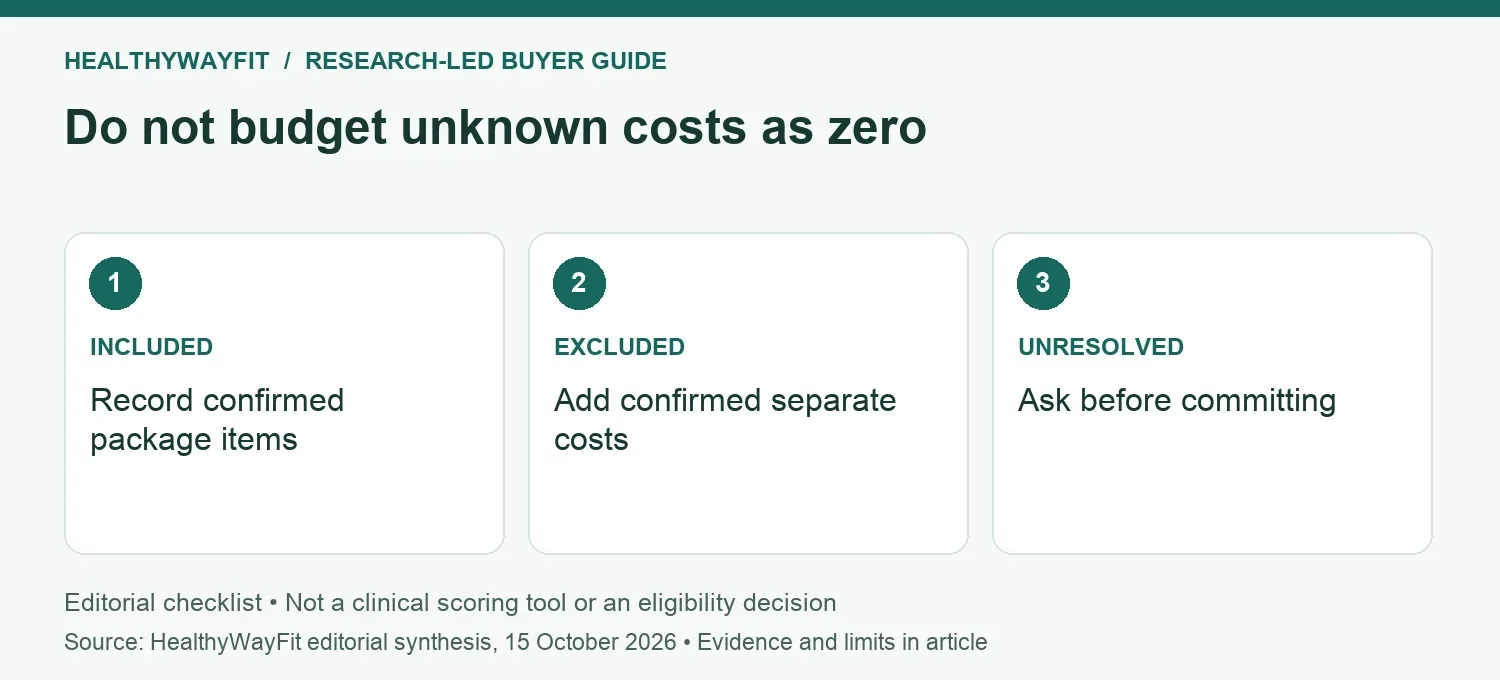
Ask about medicines, laboratory arrangements, existing clinician visits, and any equipment or services outside your quote. The purpose is to identify your own responsibilities, not to assume every possible charge will apply. A clear budget distinguishes confirmed inclusions from unresolved questions.
| Budget item | Question to resolve |
|---|---|
| Prescriptions | Who pays for current and future medicines? |
| Laboratory work | Which ordered tests are covered, and at which locations? |
| Primary or specialist care | Which existing appointments should continue? |
| Supplies | What quantities, replacements, or extras are included? |
| Food and practical changes | Can the approach fit the groceries and cooking arrangements you use? |
| Cancellation or transition | When does access end, and what care must be arranged afterward? |
Virta’s laboratory guidance says it covers Virta-physician-ordered labs at approved partner locations and describes a process for resolving an unexpected bill. That is a specific arrangement, not evidence that any test at any laboratory is covered. Ask which process applies before the blood draw. Virta lab-order and cost guidance.
Write “not yet confirmed” next to unanswered budget items. Treating an unknown cost as zero makes a comparison look more precise than it is.
Can you get coverage or financial assistance?
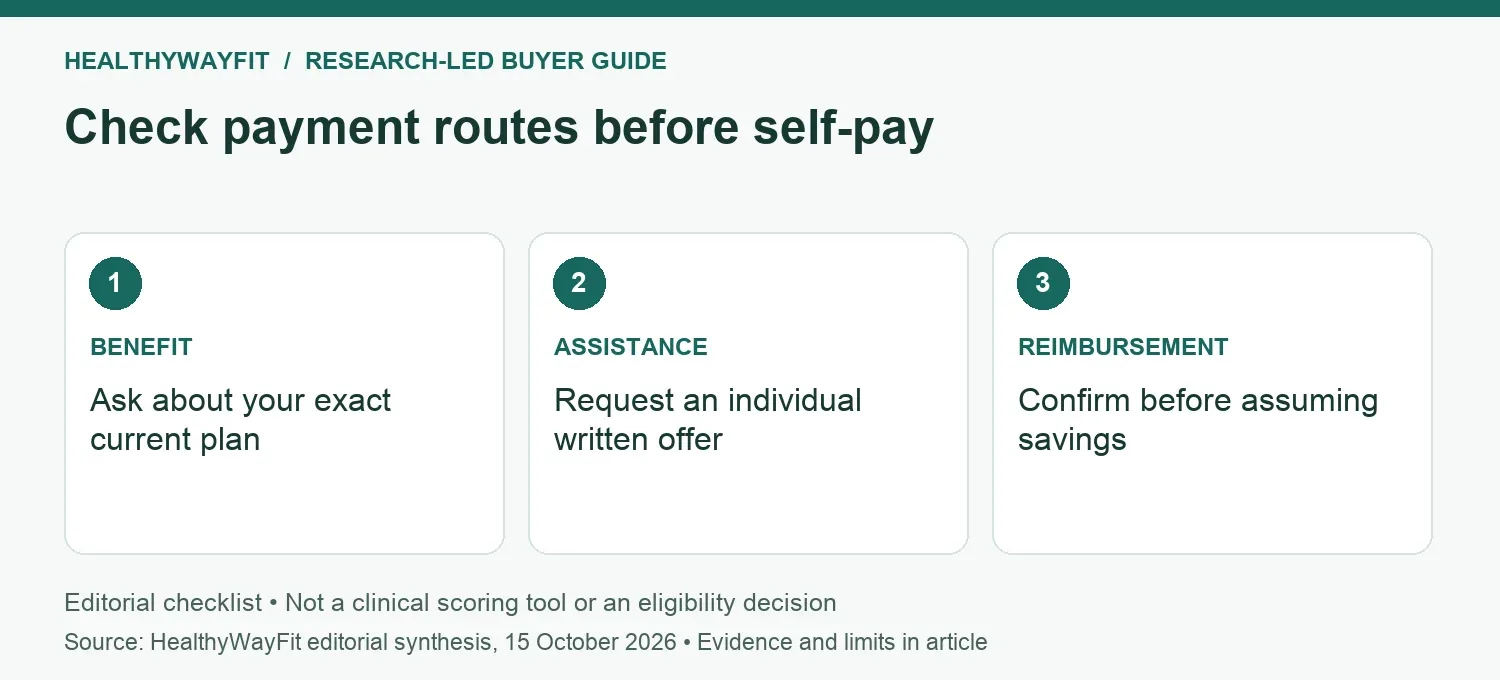
Check your own employer or health-plan benefit before choosing self-pay. Virta’s individuals page describes both covered access and a self-pay route. A colleague’s benefit or another employer’s landing page does not establish your eligibility. Virta’s current enrollment information.
Ask your benefits team whether the exact plan you are enrolled in includes Virta, which household members can apply, and whether any member charges apply. Request confirmation for the current benefit year.
Virta’s general FAQ also describes a member assistance program linked to household size and income. It states that qualifying applicants may receive up to a 60% discount on the annual cost and that this assistance route has no monthly payment option. Availability and the actual offer require direct confirmation. Virta’s assistance-program FAQ.
Ask for an assistance quote rather than applying that percentage to the standard monthly rate yourself. Different payment structures, eligibility requirements, and fees can make a self-calculated “discounted price” misleading.
If reimbursement from an HSA or FSA matters to your decision, ask the account administrator about eligibility and documentation. Do not include an assumed tax saving in your budget before it is confirmed for your circumstances.
What happens in the second year or if you cancel?
The FAQ describes lower pricing for a second consecutive year, without another initiation fee, but gives no amount. Request that figure in writing rather than relying on an older number elsewhere. Virta’s renewal and cancellation terms summary.
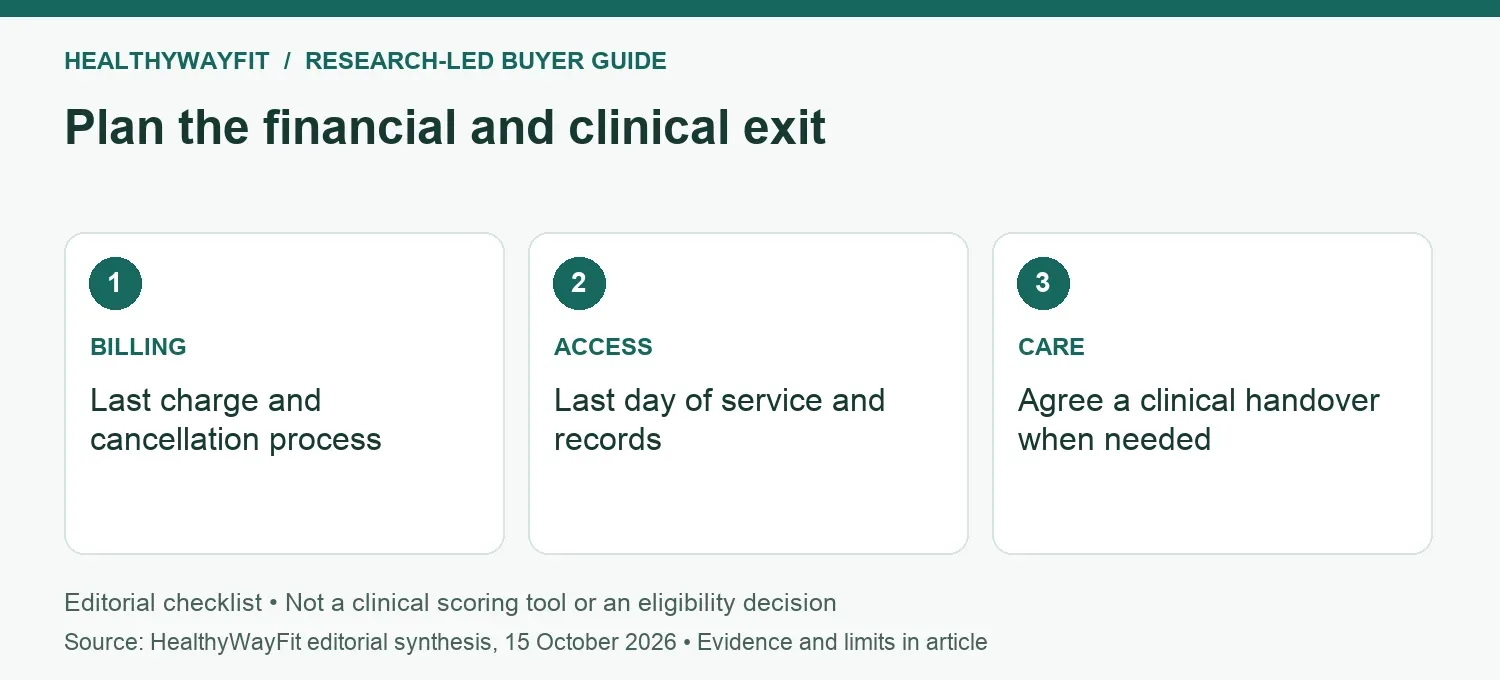
It describes monthly billing and no cancellation penalty; stopping future payments requires processing under the applicable terms. Confirm the notice process and effective date before joining.
For your records, ask about four separate things: the last payment date, the last day of clinical access, the handling of supplied devices, and transfer of records. “No cancellation penalty” does not by itself answer all four.
If medication management is part of your care, discuss a transition with the responsible clinician before access ends. Financial cancellation and a safe clinical handover are separate tasks.
What does the clinical research tell a prospective buyer?
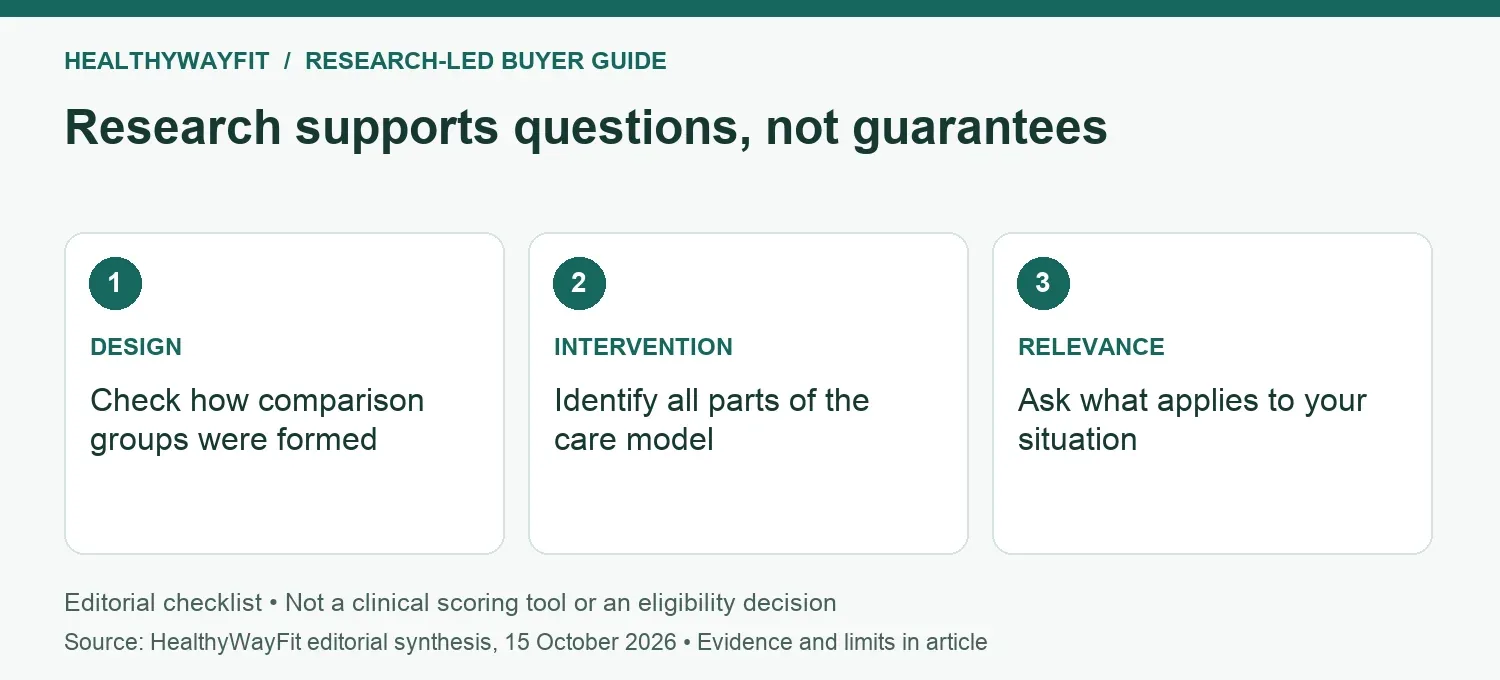
Virta has published clinical research, but improvement in a study does not guarantee personal benefit or establish that a particular self-pay price is worthwhile. Consider the intervention, study design, participants, and funding alongside the reported results.
Hallberg and colleagues’ 2018 study enrolled 262 adults in a continuous remote-care intervention and 87 in usual care. The study was open-label and non-randomized. The intervention combined nutritional ketosis with medical management; mean HbA1c in the intervention analysis fell from 7.6% to 6.3% at one year. Virta funded the study, and several authors were affiliated with the company. Hallberg et al., Diabetes Therapy, 2018.
The findings support further consideration of that model, with limits. Non-random assignment leaves room for differences between groups, and the combined intervention does not isolate the contribution of the app, coaching, diet, or medical care. The study did not compare Virta with HealthyWayFit.
Ask an enrollment adviser which current service most closely matches the research. Also ask how your own clinician would judge progress and safety. Clinical fit matters before a price comparison becomes meaningful.
Does “reversal” mean a guaranteed cure or medication savings?
Neither cure nor future prescription savings should be assumed in a purchase decision. Provider marketing may use “reversal,” while research uses more specific endpoints. Ask what an advertised result measures and whether ongoing medication is included in that definition.
The international remission consensus generally uses HbA1c below 6.5%, assessed at least three months after stopping glucose-lowering medication, and recommends continued observation. It does not describe a permanent cure. Medication withdrawal should never be undertaken merely to meet a marketing endpoint. Riddle et al., remission consensus, 2021.
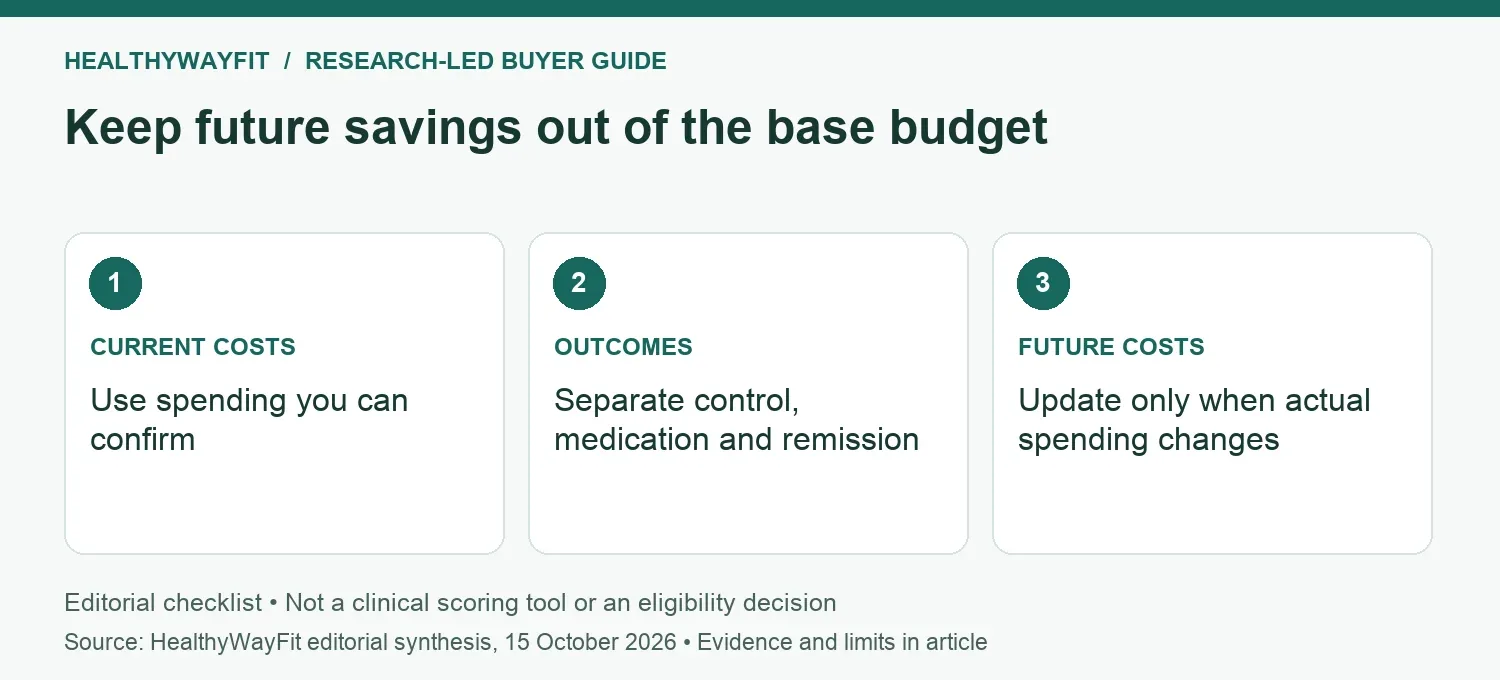
For your budget, assume no medication savings unless and until your treatment and actual spending change. A testimonial about another member’s savings cannot tell you what you will save.
Read our type 2 diabetes remission guide if you want more context on the terminology. Appropriate treatment can remain valuable even when medicines continue.
How should you compare Virta with other support options?
Compare services by clinical scope, dietary approach, support arrangements, access, and total cost over the same period. A cheaper program is relevant only if it can safely address the job you need done. A higher price also needs a clear explanation of the additional service. For a service-by-service shortlist, compare our Virta Health alternatives.
For a complete evidence-based review of whether the program is right for you, see our Is Virta Health Worth It? analysis, which covers clinical outcomes, real user experiences and cost. For a roundup of what patients say across Trustpilot, Reddit and the App Store — including why satisfaction scores differ sharply for voluntary versus employer-enrolled members — see our Virta Health reviews guide.
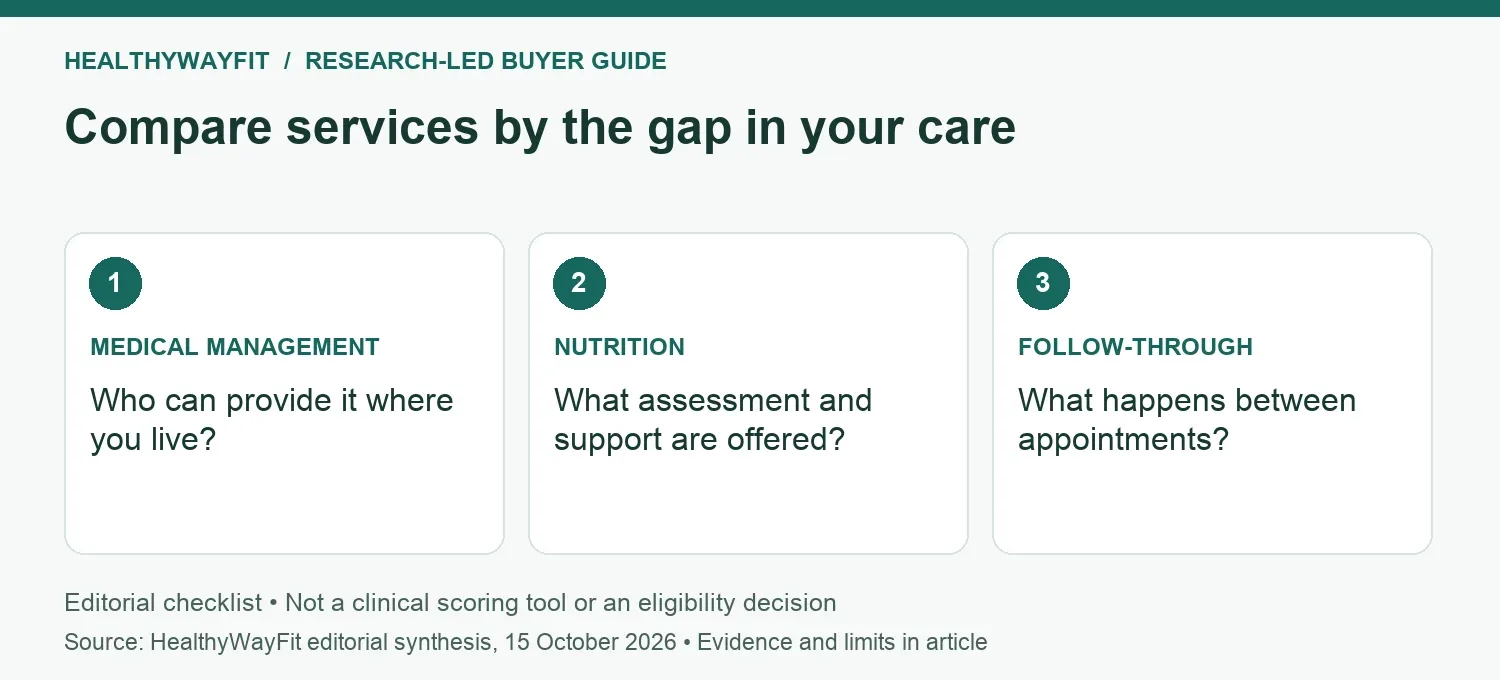
Start with your existing care. Are you seeking medical management, help adapting food choices, or accountability between appointments? Ask your clinician which gap matters most. You may need an integrated program, a qualified dietitian, structured diabetes education, or a combination.
Our online diabetes coach guide and coaching program checklist help identify questions about scope and support. They do not establish that one service is clinically equivalent to Virta.
If considering HealthyWayFit, request current fees, professional qualifications, location eligibility, and whether medical care is included or separate. No verified price comparison or head-to-head outcome data is available in this article, so it does not rank HealthyWayFit above Virta.
Who should arrange a clinical review before deciding?
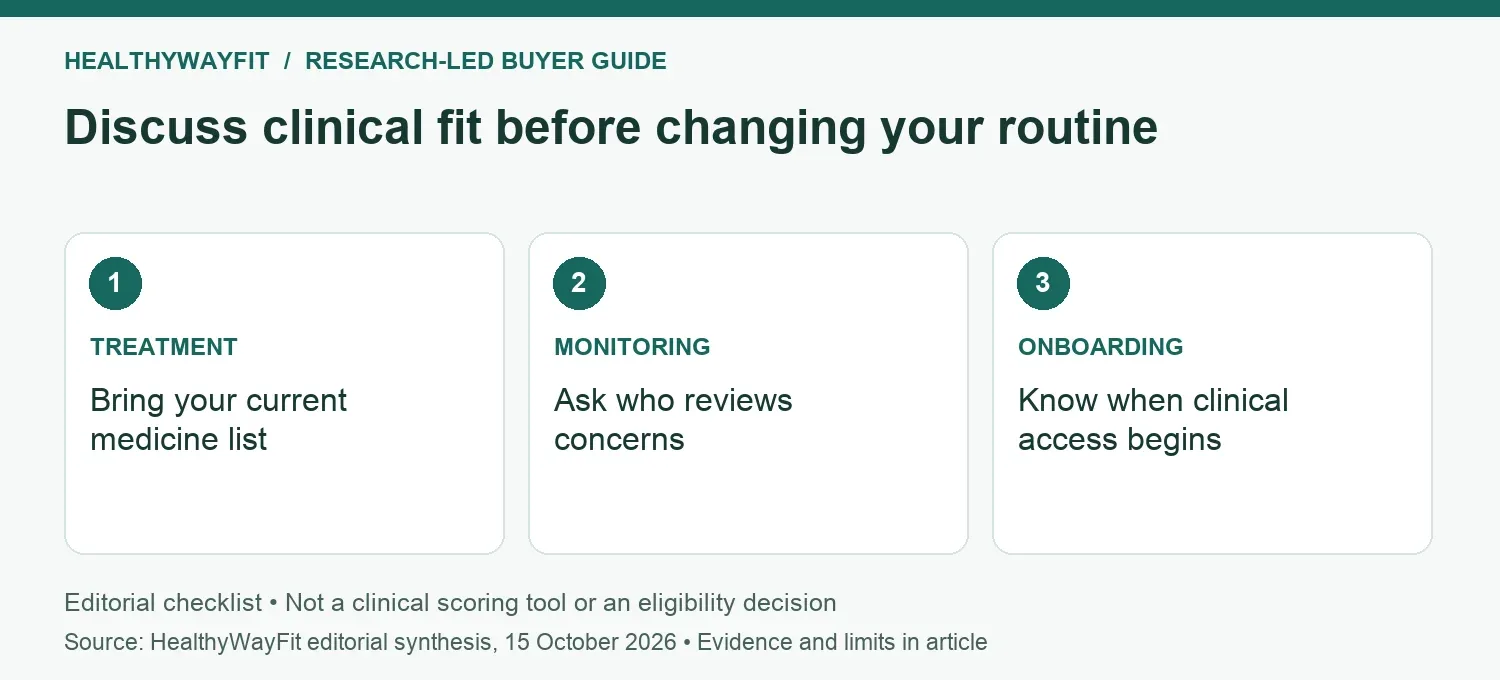
Speak with your treating clinician before substantial dietary changes, particularly if you use medicines that can cause low blood glucose or have other medical conditions affecting nutrition. Ask how monitoring and treatment adjustments would be handled during enrollment. NIDDK explains that food, activity, and some diabetes medicines can contribute to low-glucose risk. NIDDK low blood glucose guidance.
A sales consultation should not be used to assess urgent symptoms. Seek emergency help for severe confusion, seizures, or loss of consciousness. For other new or worsening symptoms, ask an appropriate medical service what assessment is needed before waiting for program onboarding.
If you have already decided to join, ask who is responsible for care before the program formally begins. Do not assume submitting an application creates an active clinical relationship or changes your existing prescription instructions.
What should you ask before paying Virta?
Request a dated, written offer covering your fee, inclusions, payment terms, and clinical eligibility. The advertised monthly price is useful for an initial budget; the enrollment documents should resolve what you personally agree to purchase.
Is the first-year total $3,838?
That is the arithmetic total in the opening table. It excludes unconfirmed expenses and assumes those standard charges remain applicable throughout the period. It is not an individual invoice.
Is Virta available outside the US?
Virta’s FAQ says treatment is currently available only in the United States. Check directly for changes before applying from another country. Virta availability FAQ.
What is the next useful step?
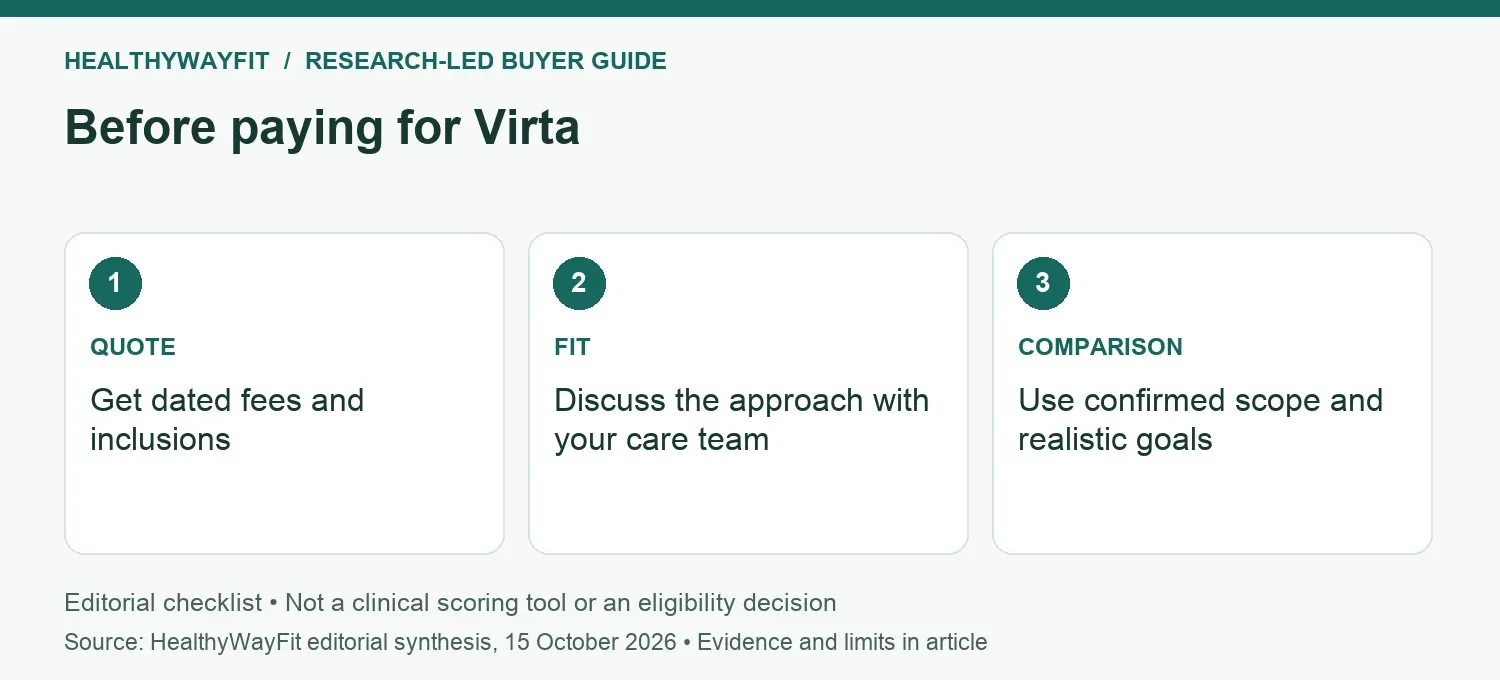
Ask Virta for your complete quote and discuss clinical fit with your healthcare team. If you also want to explore HealthyWayFit, request its current service details and compare the documented scope. Make the decision using confirmed costs and realistic goals rather than assumed future savings.