This article is for informational purposes only and does not constitute medical advice. Always consult a qualified healthcare professional before making changes to your diet, exercise routine or medication.
If you’ve searched “diabetes reversal,” you’ve probably seen two very different worlds online: one full of miracle cures, celebrity endorsements, and supplements promising to “eliminate” diabetes overnight — and another with peer-reviewed clinical trials and structured lifestyle programs showing real, measurable results.
That gap is exactly what makes people ask: Is diabetes reversal just a giant scam?
The honest answer is: some of it is, some of it isn’t. The problem is telling them apart — and that’s what this guide is for.
The Short Answer: Not All “Reversal” Claims Are Equal
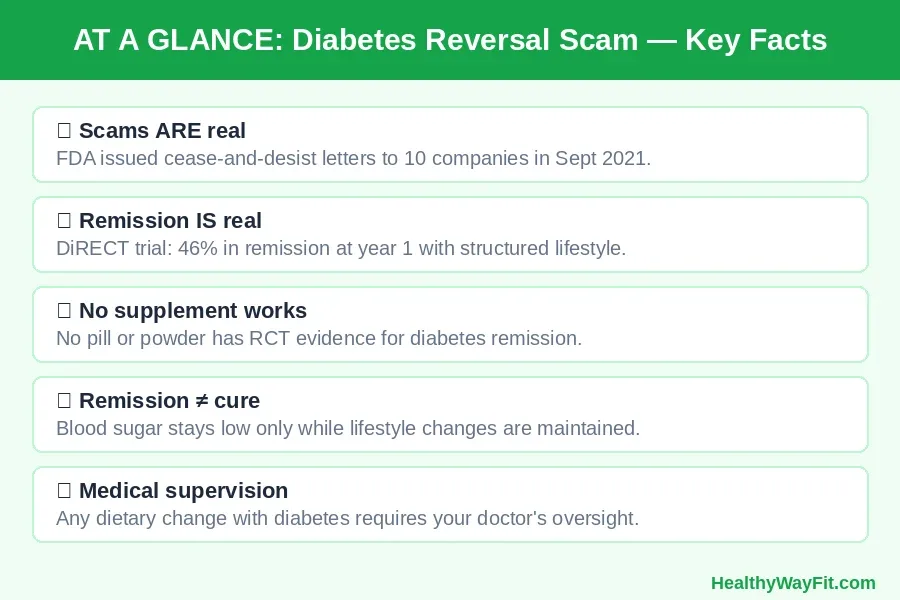
Before diving in, here’s the clearest framing: diabetes reversal scams exist, and they’re common. The U.S. Food and Drug Administration (FDA) and the Federal Trade Commission (FTC) have both taken action against companies peddling fraudulent diabetes products. In September 2021, the FDA issued cease-and-desist letters to ten companies selling supplements that falsely claimed to cure, treat, or prevent diabetes.
But alongside those scams sits a body of rigorous clinical evidence showing that, for many people with type 2 diabetes, sustained weight loss through structured lifestyle intervention can achieve remission — meaning blood sugar returns to a non-diabetic range without medication. The landmark DiRECT trial (Diabetes Remission Clinical Trial), published in The Lancet, is the most cited example.
So the real question isn’t “is diabetes reversal real?” — it’s “which programs are backed by real evidence, and which ones are selling you false hope?”
This article is your filter.
What Counts as a Diabetes “Reversal Scam”
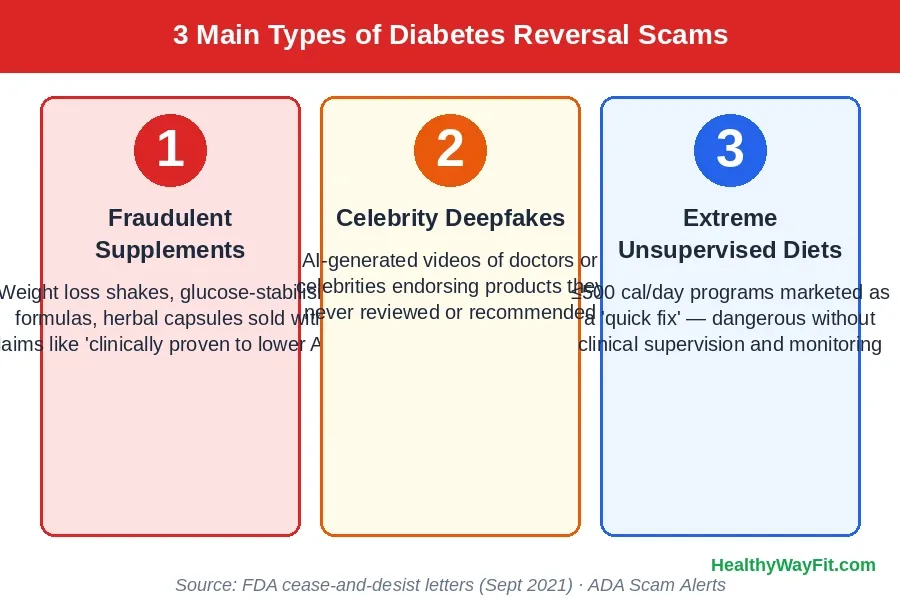
Not all fraudulent claims look the same. Here are the three main categories:
1. Fraudulent Supplements and “Cure” Products
These are the most common scam. They take the form of weight loss shakes, “glucose-stabilizing” formulas, herbal capsules, or “diabetic support” beverages — often sold on Amazon, Instagram, or Facebook with claims like:
- “Clinically proven to lower A1C”
- “Naturally reverses insulin resistance”
- “Guaranteed blood sugar stabilization”
The problem: dietary supplements are not regulated by the FDA the same way drugs are. Manufacturers are legally required to state that their products are not intended to “diagnose, treat, cure, or prevent any disease” — but many bury that disclaimer while making bold claims elsewhere.
Note: Any product that claims to “cure, mitigate, treat, or prevent” diabetes must legally be classified as a drug, which requires FDA approval. A supplement making those claims is operating outside the law.
2. Celebrity Deepfake Promotions
A growing category of online scam uses deepfake images or AI-generated videos of doctors, celebrities, or scientists — sometimes even famous endocrinologists — to promote fraudulent products. The American Diabetes Association has issued alerts about these, and Dr. V. Mohan (a leading Indian diabetologist) has publicly warned that his image has been used in fake posts endorsing products he has never reviewed or recommended.
Red flag: If a product relies on a celebrity endorsement, always verify it directly on that person’s official website or published statements.
3. Extreme Low-Calorie Diets Without Clinical Supervision
Some subscription-based programs market extreme restriction — 500 calories per day or less — as a “quick fix” for diabetes. While very low-calorie diets can produce rapid weight loss and blood sugar improvement, doing so without clinical supervision is dangerous, unsustainable, and has no long-term evidence base outside carefully controlled research settings.
This isn’t the same as medically supervised very low-calorie diets (like those used in the DiRECT trial), which include regular monitoring and structured support.
What the Science Actually Shows About Type 2 Diabetes Remission
This is where things get more nuanced — and more hopeful.
The word “reversal” is increasingly being replaced by clinicians with the more precise term remission, defined as blood sugar returning to a non-diabetic range (HbA1c below 48 mmol/mol / 6.5%) without the use of glucose-lowering medications.
The DiRECT Trial: The Gold Standard
The Diabetes Remission Clinical Trial (DiRECT), funded by Diabetes UK and conducted across primary care practices in the UK, is the most rigorous evidence we have for remission through lifestyle intervention.
Key findings:
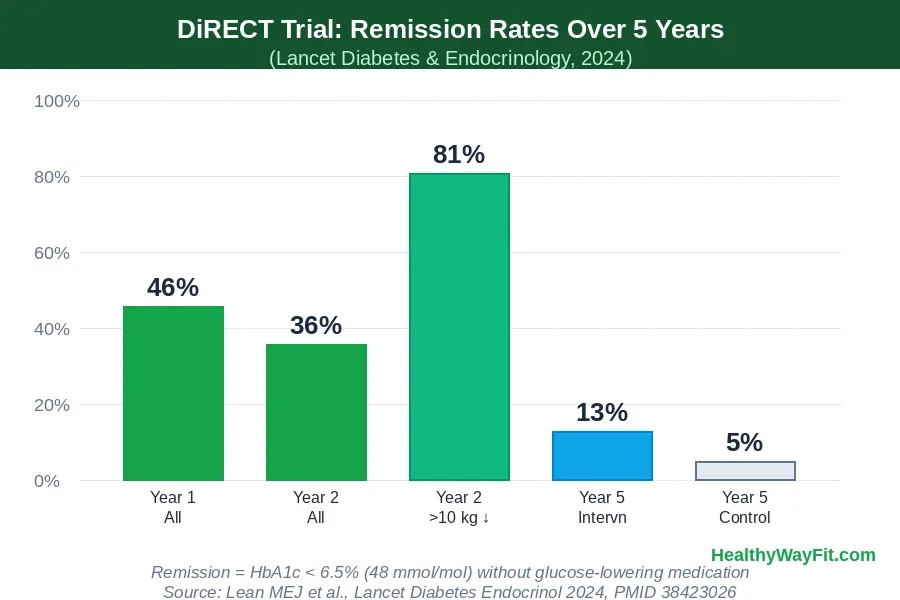
- Year 1: 46% of participants in the weight management programme were in remission
- Year 2: 36% were still in remission; of those who had maintained more than 10 kg of weight loss, 81% were in remission
- Year 5: 13% of the intervention group remained in remission, compared to 5% in the control group
Source: PubMed ID 38423026 (5-year follow-up, Lancet Diabetes & Endocrinology, 2024); Diabetes UK DiRECT study page.
What this means: Remission is genuinely possible for a significant proportion of people with type 2 diabetes — but it requires sustained weight loss, structured support, and ongoing management. It is not a one-time fix, and it is not guaranteed for everyone.
What “Remission” Is Not
- Not a cure. Remission means blood sugar is currently in a healthy range without medication — it does not mean the underlying vulnerability to diabetes is gone. A person in remission who regains weight is at high risk of returning to diabetic blood sugar levels.
- Not permanent by default. In the DiRECT trial, of those in remission at year 2, only 26% remained in remission at year 5. Ongoing lifestyle management matters.
- Not the same as “taking a supplement.” Every study showing remission involved significant, sustained changes to diet, weight, and often physical activity — not a pill or powder.
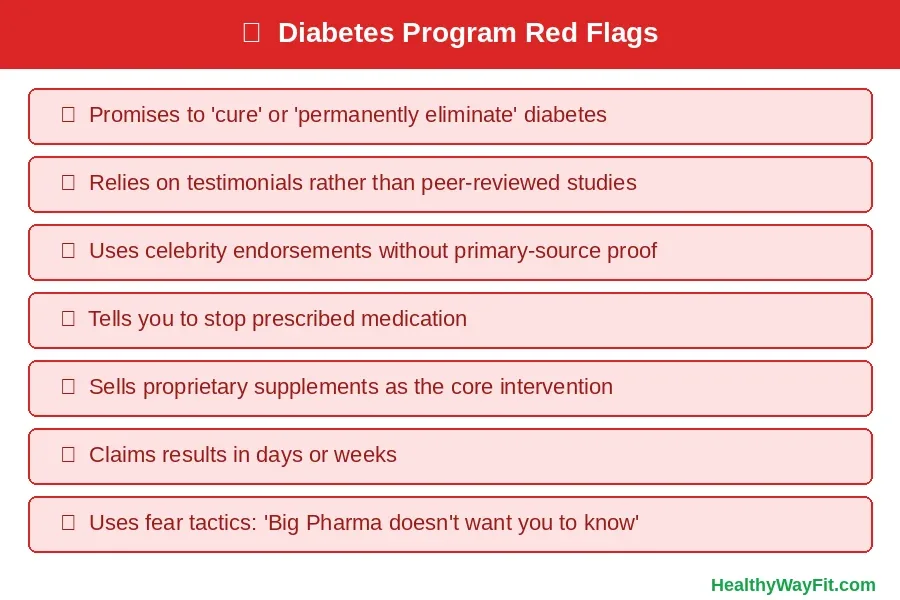
Red Flags: How to Spot a Diabetes Scam Program
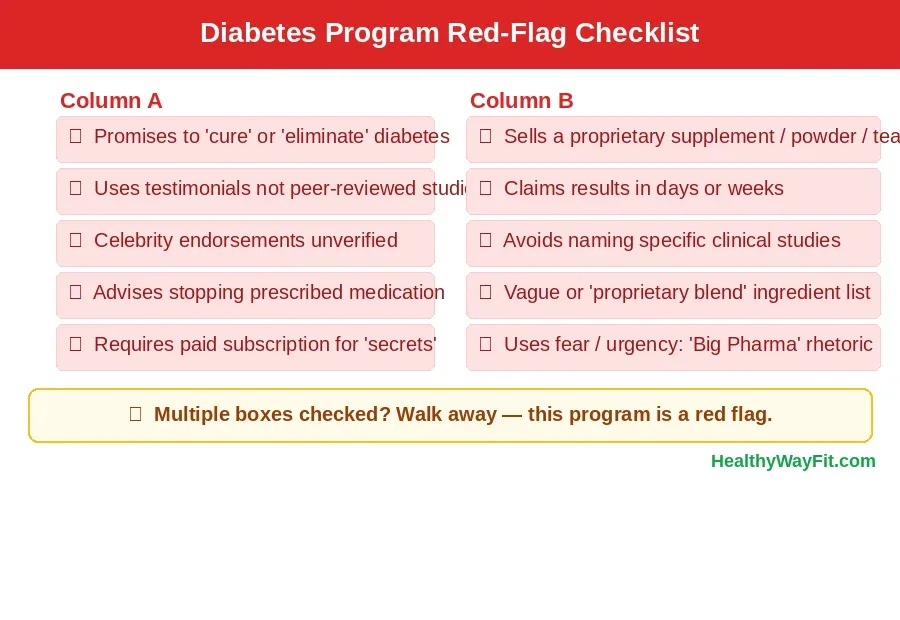
Before you spend money on any diabetes program or product, run it through this checklist. Multiple red flags = walk away.
Red flags:
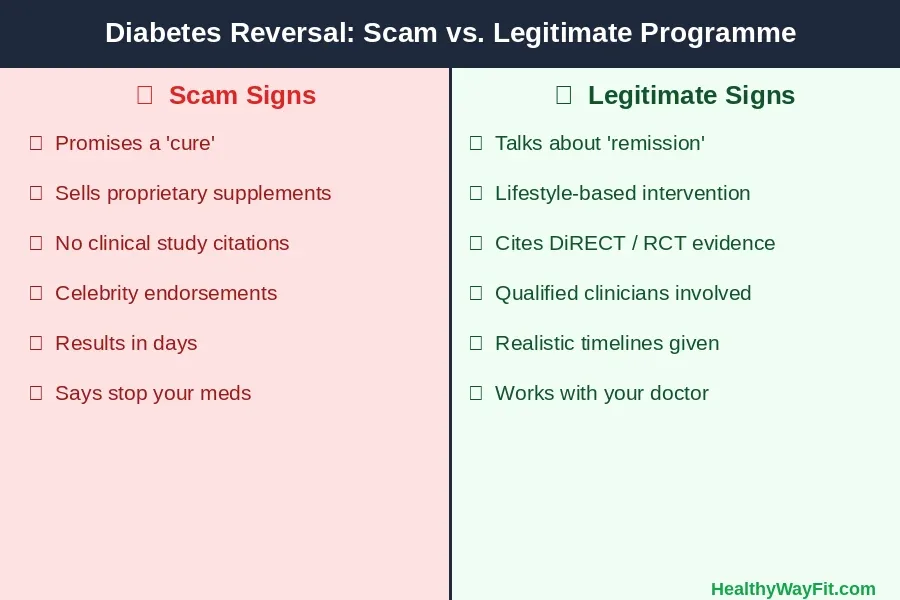
- Promises to “cure,” “eliminate,” or “permanently reverse” diabetes — absolute language with no conditions
- Relies on testimonials and personal stories rather than peer-reviewed studies
- Uses celebrity endorsements without verifiable, primary-source confirmation
- Asks you to stop your prescribed medication or avoid telling your doctor
- Requires a paid subscription to access the “secret” information
- Sells a proprietary supplement, powder, or tea as the core intervention
- Claims results in days or weeks
- Avoids naming specific clinical studies or citing verifiable sources
- Ingredients list is vague or proprietary (“blend” without quantities)
- Uses fear or urgency (“Big Pharma doesn’t want you to know this”)
Green Flags: What Legitimate Programs Look Like
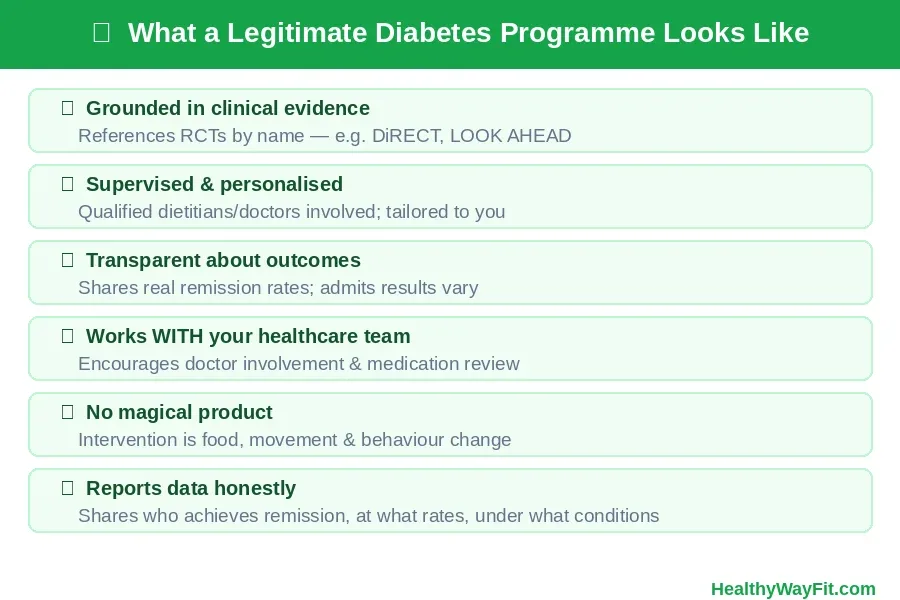
A legitimate diabetes remission or management programme shares several characteristics that separate it from the noise:
What to look for:
- Grounded in clinical evidence. The approach — whether low-carb, low-calorie, or intensive lifestyle intervention — has been studied in randomised controlled trials. They can name the studies.
- Supervised and personalised. Qualified dietitians, doctors, or certified diabetes educators are involved. The program is tailored to you, not a one-size-fits-all supplement.
- Transparent about what’s achievable. Legitimate programs tell you that results vary, that remission is not guaranteed, and that maintaining results requires ongoing effort.
- Works with your existing healthcare team. They encourage you to inform your doctor and adjust medications under medical supervision — especially if blood sugar improves significantly.
- No magical product. The intervention is food, movement, accountability, and behaviour change — not a proprietary pill or shake.
- Reports outcomes honestly. They share data on who achieves remission, at what rates, and under what conditions — not just the best-case stories.
For more on what structured diabetes remission support looks like, read our comprehensive guide to diabetes reversal.
If you are considering a supervised low-carbohydrate programme, Virta Health is one example with peer-reviewed clinical data and a published five-year trial. For an independent assessment of the evidence, costs, and member experiences, see our Virta Health review.
What “Reversal” Means for You Practically
If you have been diagnosed with type 2 diabetes and are wondering whether remission is achievable for you, these are the factors that matter most:
- Duration of diabetes: Evidence is strongest for people diagnosed within the past 6 years. Longer duration of diabetes is associated with lower remission rates.
- Starting HbA1c: Lower starting HbA1c is associated with higher remission likelihood.
- Amount of weight lost: The DiRECT trial showed a clear dose-response — more sustained weight loss, higher remission rates. Those maintaining over 10 kg of loss had 81% remission at 2 years.
- Medications: If you are on insulin, medical supervision during any dietary change is critical. Rapid blood sugar improvement on an intensive diet can cause hypoglycaemia if insulin doses are not adjusted. Always inform your doctor before making significant changes.
This does not mean remission is off the table if you have had diabetes for longer — it means you should set realistic expectations and work with a qualified professional who can assess your specific situation.
Note: Units for blood sugar: 6.5% HbA1c = 48 mmol/mol. In mg/dL terms, fasting blood sugar below 126 mg/dL is the non-diabetic range. Talk to your doctor about your individual targets.
When to See a Doctor
You should speak to a qualified healthcare professional if:
- You are considering significantly changing your diet or calorie intake as part of a diabetes management plan
- You are on insulin or sulfonylureas, as dietary changes that improve blood sugar can increase hypoglycaemia risk
- A program is recommending you reduce or stop your medications
- You are unsure whether a product or program you’re considering has clinical evidence behind it
- Your blood sugar has improved significantly and you want to discuss whether medication adjustment is appropriate
If you want structured support for diabetes remission that’s grounded in clinical evidence, you can learn more about our approach at HealthyWayFit’s free training.
Frequently Asked Questions
Can type 2 diabetes actually be reversed?
Type 2 diabetes can go into remission — meaning blood sugar returns to a non-diabetic range without medication. The best evidence comes from the DiRECT trial, where 46% of participants achieved remission at one year through a structured weight management programme. “Reversal” is not the same as a cure; remission requires sustained effort to maintain.
Is diabetes reversal safe?
Structured lifestyle interventions — like those used in the DiRECT trial — are safe when done under medical supervision. Extreme unsupervised diets, unregulated supplements, and programs that ask you to stop medication without doctor oversight are not safe.
Are diabetes supplements effective?
No supplement has been shown in rigorous clinical trials to reverse or cure type 2 diabetes. The FDA has issued cease-and-desist orders to multiple companies making those claims. Certain supplements (like berberine) have limited evidence for modest blood sugar improvement, but they are not a substitute for medication or structured lifestyle change.
How long does diabetes remission last?
In the DiRECT trial, 26% of people in remission at year 2 were still in remission at year 5. Remission is sustained by maintaining the lifestyle changes that caused it — primarily weight management. Regaining weight is the primary driver of returning to diabetic blood sugar levels.
How do I report a diabetes scam?
Report fraudulent diabetes products to the FDA at MedWatch and to the FTC at ReportFraud.ftc.gov.
The Takeaway
Diabetes reversal scams are real, widespread, and actively targeted by the FDA and FTC. They range from fraudulent supplements to celebrity deepfakes to unsupervised extreme diets. The red flag that unites them: they promise shortcuts that clinical science doesn’t support.
At the same time, diabetes remission — genuine, sustained return to non-diabetic blood sugar without medication — is possible for a meaningful proportion of people with type 2 diabetes. The evidence from the DiRECT trial and related research is clear: it requires structured lifestyle intervention, sustained weight loss, medical supervision, and ongoing commitment.
The two worlds look very different on paper. Use the red and green flags in this article to evaluate any program or product before you commit — and if you’re unsure, your doctor is the right first call.
Ready to explore what a clinically grounded approach looks like? Learn more at HealthyWayFit’s free training.
By Kirti, Founder & Serial Entrepreneur, HealthyWayFit | Reviewed by a qualified healthcare professional
Sources: FDA cease-and-desist letters, September 2021 (fda.gov) · FTC Consumer Alert, September 2021 (consumer.ftc.gov) · Lean MEJ et al., “5-year follow-up of the DiRECT trial,” Lancet Diabetes Endocrinology, 2024, PMID 38423026 · DiRECT study findings, Diabetes UK (diabetes.org.uk) · Hallberg SJ et al., “Reversing Type 2 Diabetes: A Narrative Review of the Evidence,” Nutrients 2019, PMC6520897 · DiaTribe, “Myth Busting Diabetes ‘Cures'” (diatribe.org) · American Diabetes Association Scam Alert (diabetes.org)