Roti, dal, sabzi, chaas — the classic Indian thali looks wholesome. But if you have type 2 diabetes, you’ve probably been told that rice spikes your blood sugar, that rotis are bad, and that you should “just eat less.” That advice is vague, and it often makes you feel like your entire cuisine is off-limits.
It isn’t. An Indian vegetarian diabetic meal plan isn’t about giving up dals or phulkas — it’s about understanding which foods raise blood sugar fast, which keep it steady, and how to pair them so your meals stay delicious and your numbers stay in range.
This guide gives you a practical, evidence-based 7-day meal plan built around real Indian vegetarian food. No exotic superfoods. No complicated calorie tracking. Just clear, actionable guidance you can follow starting today.
What Makes a Meal Plan “Diabetic-Friendly”?
Before jumping to the meal plan itself, it helps to understand what you’re actually trying to do. The goal isn’t to eliminate carbohydrates — it’s to manage the rate at which they enter your bloodstream.
Two factors matter most:
- Glycaemic Index (GI): How quickly a food raises blood sugar compared to pure glucose (scored 0–100). Low GI = slower rise.
- Glycaemic Load (GL): GI adjusted for the actual portion you eat. A food can have a high GI but low GL if you eat it in small amounts.

Three nutrients help slow glucose absorption: protein, fibre, and fat. When you pair a carbohydrate with any of these, the meal’s overall GI drops significantly. This is why dal-roti is better than plain roti, and why adding raita to your meal is more than just tradition.
The Indian Plate Method for Diabetes
Forget complicated carb-counting. The simplest way to build a diabetic-friendly Indian meal is the plate method — a visual guide recommended by diabetes educators worldwide.
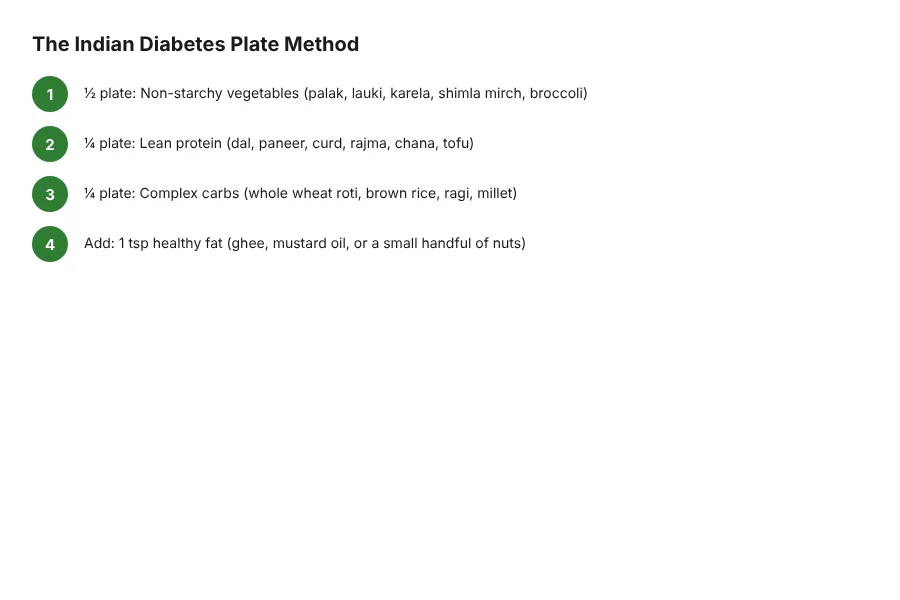
Here’s how it works for an Indian thali:
- Half the plate — non-starchy vegetables: Lauki, palak, bhindi, shimla mirch, broccoli, gajar, baingan. These are filling, low in carbs, and full of fibre.
- One-quarter — protein: Dal, rajma, chana, paneer, tofu, soya chunks, low-fat dahi. Protein slows digestion and keeps you fuller longer.
- One-quarter — whole grain carbs: One or two phulkas (not paratha), a small serving of brown rice, millet khichdi, or ragi roti. This is where your starch goes — and notice it’s only a quarter.
Indian Vegetarian Protein Sources for Diabetics
Protein is a diabetic’s best friend at mealtime. It slows gastric emptying, blunts the blood sugar spike, and helps you stay satiated. Fortunately, Indian vegetarian cooking is rich in protein — you just need to know where to look.

Here are the best options:
- Dals and legumes: Moong dal (GI 38), chana dal (GI 8), masoor dal (GI 31), rajma (GI 29), chhole (GI 33). These are protein + fibre powerhouses with low GI.
- Paneer: High protein, negligible carbs. Works in sabzis, salads, or as a snack. Use low-fat variants if managing weight.
- Dahi (curd): Fermented, probiotic-rich, moderate protein. Raita after a meal is scientifically sound — probiotics improve insulin sensitivity.
- Soya chunks (nutri): Very high protein (52g/100g dry), low GI. Excellent meat substitute in curries.
- Tofu: Plant-based protein similar to paneer, even lower in fat. Good in stir-fries or scrambled tofu (replacing egg bhurji).
- Sprouts: Moong sprouts, chana sprouts. Sprouting reduces GI further and increases bioavailability of nutrients.
Foods to Eat and Avoid
Eat freely
- All non-starchy vegetables: bhindi, palak, lauki, tinda, turai, shimla mirch, brinjal, methi, beans
- Low-GI dals: moong, chana, masoor, arhar (toor)
- Legumes: rajma, chhole, lobia, black-eyed peas
- Low-fat dahi, chaas (buttermilk without sugar)
- Nuts (in moderation): almonds, walnuts (3–4 daily as snacks)
- Seeds: flaxseed (alsi), chia, pumpkin seeds
- Green tea, plain water, infused water
Eat in controlled portions
- Whole grain roti (1–2 per meal), not paratha
- Brown rice or hand-pounded rice (small portion: ½ katori cooked)
- Millets: jowar, bajra, ragi, foxtail (kangni) — all have lower GI than wheat
- Fruits: guava, papaya, jamun, amla, apple (1 small serving/day, not juice)
- Paneer (100g per meal max)
- Sweet potato (boiled, not fried)
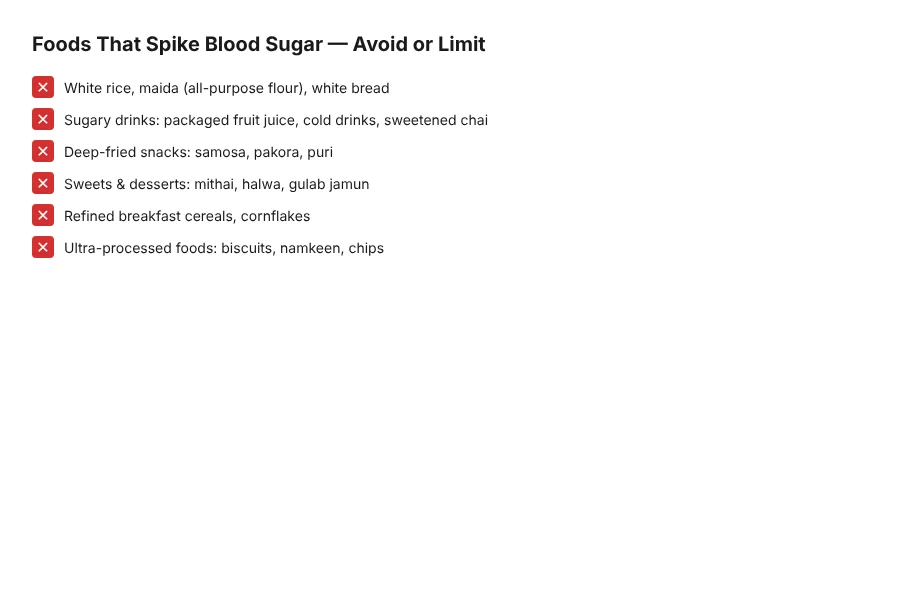
Avoid or minimise
- Maida (refined flour): white bread, naan, kulcha, biscuits, namkeen made from maida
- White rice in large quantities (especially polished rice eaten alone)
- Fried snacks: samosa, kachori, pakora, vada, puri, bhatura
- Sweets: mithai, gulab jamun, halwa, kheer (unless made with low-GI alternatives)
- Sweetened drinks: chai with sugar, packaged juices, soft drinks, flavoured lassi with sugar
- Processed breakfast cereals: cornflakes, instant oats with sugar
- Potato in large amounts (high GI when boiled; lower if cooled and reheated)
Meal Timing: When You Eat Matters Too
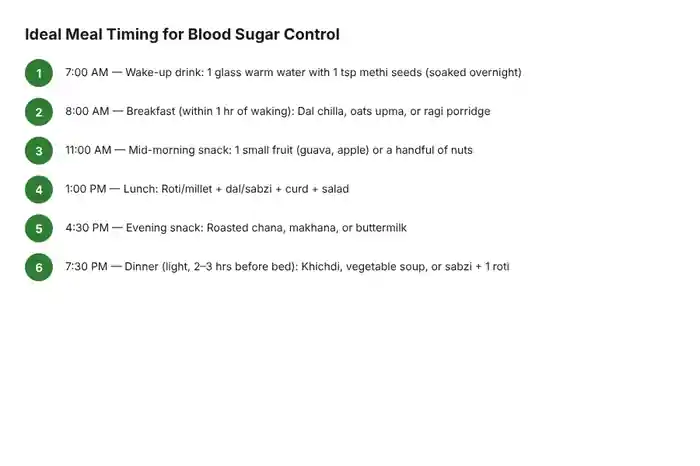
Meal timing is often overlooked, but it significantly affects blood sugar control:
- Don’t skip breakfast: Fasting for long periods causes reactive hyperglycaemia. Eating breakfast within 1–2 hours of waking stabilises fasting glucose.
- 3–4 hour gaps between meals: This allows blood sugar to come back to baseline before the next meal.
- Early dinner (before 7:30 PM): Research shows eating late significantly worsens post-meal glucose control and disrupts overnight insulin signalling. Aim to finish dinner at least 2 hours before sleep.
- Post-meal walk: Even a 10–15 minute slow walk after eating can reduce post-meal blood sugar by 15–22%. This is one of the most evidence-backed interventions for type 2 diabetes.
7-Day Indian Vegetarian Diabetic Meal Plan
The following meal plan is designed around 1,600–1,800 kcal/day (suitable for most adult women; men may add one extra roti or a slightly larger dal serving). All meals follow the plate method and are low-GI where possible.
Day 1 — Monday
Early morning (6:30 AM): 5 soaked almonds + 1 tsp methi seeds soaked overnight in water
Breakfast (8:00 AM): 2 moong dal chillas with mint chutney + 1 cup unsweetened green tea
Mid-morning snack (11:00 AM): 1 small guava or 1 amla
Lunch (1:00 PM): 2 phulkas + 1 katori toor dal + 1 katori palak sabzi + 1 katori kheera-tomato salad + 1 small bowl low-fat dahi
Evening snack (4:30 PM): 1 cup unsweetened chaas + 10 roasted peanuts
Dinner (7:00 PM): Millet khichdi (foxtail millet + moong dal, 1.5 katori) + 1 katori bhindi sabzi + 1 katori raita
Day 2 — Tuesday
Early morning: 1 cup warm water with ½ tsp cinnamon
Breakfast: Oats upma with vegetables (no sugar) + 1 cup unsweetened herbal tea
Mid-morning snack: 1 small apple or 5 jamun
Lunch: 2 ragi rotis + rajma curry (½ katori) + 1 katori lauki sabzi + 1 katori cucumber raita
Evening snack: 1 cup green tea + 2 tbsp roasted chana (plain)
Dinner: Vegetable daliya (broken wheat, 1.5 katori) + 1 katori sautéed spinach + small bowl curd
Day 3 — Wednesday
Early morning: 5 soaked walnuts (2 halves)
Breakfast: 2 bajra rotis with 1 tsp ghee + 1 katori vegetables in tomato gravy
Mid-morning snack: 1 katori papaya cubes
Lunch: Brown rice (½ katori cooked) + chana dal + 1 katori methi sabzi + salad + dahi
Evening snack: Sprouts chaat (moong sprouts + tomato + cucumber + jeera, no sugar, minimal salt)
Dinner: 2 phulkas + 1 katori soya chunk curry + 1 katori turai sabzi
Day 4 — Thursday
Early morning: Methi water (seeds soaked overnight)
Breakfast: Vegetable poha (thick, not thin flattened rice) with peanuts — 1.5 katori + green chutney
Mid-morning snack: 3 walnuts + 1 tsp flaxseeds
Lunch: 2 phulkas + masoor dal + 1 katori bhindi + salad + dahi
Evening snack: 1 cup chaas + 2 tbsp hummus with vegetable sticks
Dinner: Jowar roti (1) + 1 katori chhole curry + 1 katori lauki raita
Day 5 — Friday
Early morning: Warm water with lemon
Breakfast: Idli (2, small) + sambar (1 katori) + coconut chutney (small portion)
Mid-morning snack: 1 katori mixed fruit (jamun, amla, guava)
Lunch: 2 phulkas + arhar dal + 1 katori palak paneer (less oil) + salad
Evening snack: Roasted makhana (fox nuts) — ½ cup
Dinner: Khichdi (brown rice + moong dal, 1.5 katori) + 1 katori mixed vegetable sabzi + papad
Day 6 — Saturday
Early morning: 5 almonds
Breakfast: Besan cheela (2) with green chutney + 1 cup unsweetened tea with low-fat milk
Mid-morning snack: Cucumber slices with salt and lemon
Lunch: 2 jowar rotis + rajma + 1 katori baingan sabzi + dahi
Evening snack: Lemon water (no sugar) + handful of seeds (pumpkin + sunflower)
Dinner: 2 ragi rotis + moong dal tadka + 1 katori shimla mirch sabzi
Day 7 — Sunday
Early morning: Methi water + 2 walnuts
Breakfast: Ragi porridge (unsweetened) or vegetable upma + 1 cup green tea
Mid-morning snack: 1 small pear or 5 strawberries
Lunch: Brown rice (½ katori) + dal makhani (low-fat version) + 1 katori French beans sabzi + kachumber salad
Evening snack: Roasted chana + buttermilk
Dinner: 2 phulkas + paneer bhurji (less oil, no cream) + lauki sabzi + dahi
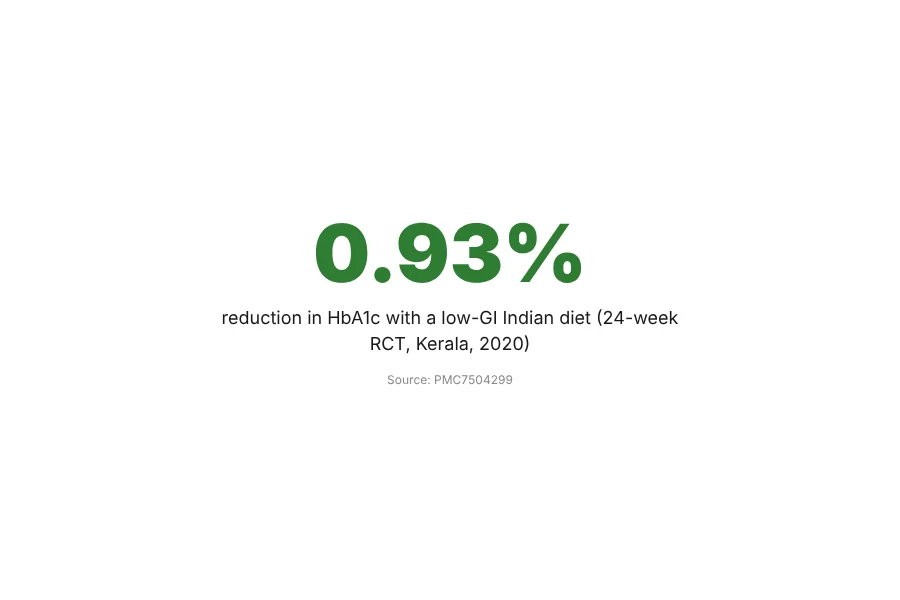
Can an Indian Vegetarian Diet Help Reverse Diabetes?
This is the question many people are now asking — and the answer is more optimistic than most doctors told you a decade ago.
The landmark DiRECT trial (2019, The Lancet) demonstrated that intensive dietary intervention — not medication — could put type 2 diabetes into remission for 46% of participants at 1 year. While DiRECT used a low-calorie approach, subsequent research on plant-based diets has shown that reducing animal protein and saturated fat, increasing fibre from legumes and vegetables, and eating whole grains instead of refined carbs can significantly improve insulin sensitivity.
A 2021 systematic review in Nutrients found that plant-based diets reduced HbA1c by 0.4–1.2% on average — comparable to some oral medications — while also reducing cardiovascular risk.
For Indians, who already eat a mostly plant-based diet, the opportunity is enormous. The main barriers are usually: too much refined carbohydrate (maida, white rice in excess), too much sugar in chai and sweets, too little protein, and too few non-starchy vegetables.
Fix those four things, and the Indian vegetarian diet becomes one of the best diabetes management diets in the world.

Cooking Tips That Lower the Glycaemic Impact
How you cook is just as important as what you cook. These small changes make a meaningful difference:
- Use resistant starch: Cook and cool rice, then reheat. This converts some starch into resistant starch, lowering its GI by up to 40%. Dal cooked the previous day also benefits.
- Add acid: A squeeze of lemon juice or a spoon of curd added to a meal lowers the overall GI of that meal. The acid slows digestion.
- Whole grain over refined: Replace maida with whole wheat atta. Better: use a flour blend of wheat (50%) + besan (20%) + ragi (30%) for rotis — this lowers GI significantly and boosts protein.
- Don’t discard dal water: The cooking liquid from dals contains soluble fibre. If you’re making thick dal, use it.
- Soak legumes: Soaking dals and legumes for 8–12 hours before cooking reduces their GI and removes phytic acid that blocks mineral absorption.
- Less oil, not zero oil: A teaspoon of mustard oil or cold-pressed coconut oil for tadka is fine. Fat slows digestion slightly and carries fat-soluble vitamins. Deep frying is the problem — not cooking oil itself.
- Prefer steaming, pressure cooking, or sautéing over deep frying.
Snack Ideas for Indian Diabetics (Vegetarian)
One of the hardest parts of the Indian snack landscape is that most traditional evening snacks are fried. Here are blood-sugar-friendly alternatives:
- Roasted chana (bhuna chana) — handful
- Moong sprouts with lemon and salt
- Roasted makhana (fox nuts) with turmeric and salt
- Cucumber or carrot sticks with hummus
- A small bowl of dahi with jeera and curry leaves (no sugar)
- 1–2 rice cakes with peanut butter (no added sugar)
- Handful of walnuts or almonds (not salted or coated)
- Chaas (buttermilk with curry leaves, no sugar)
- Green tea with 2–3 roasted peanuts
What to Drink
Beverages are an underappreciated source of blood sugar spikes. Here’s a quick guide:
Good choices: Plain water, warm water with lemon, green tea (unsweetened), herbal teas (tulsi, ginger), chaas/buttermilk without sugar, plain lassi (low sugar/no sugar), vegetable juices (lauki, bottle gourd, karela — consumed before meals).
Avoid: Chai with 2+ spoons of sugar (the #1 hidden source of daily sugar for most Indians), packaged fruit juices (even 100% juice — fibre removed), cold drinks, energy drinks, flavoured milks, sweetened lassi.
Note on chai: You don’t have to give up your morning chai. Switch to unsweetened chai, or use stevia in tiny amounts. Adding a pinch of cinnamon to tea is both traditional and beneficial for blood sugar regulation.
Supplements That May Help (Evidence-Based)
Certain micronutrients have evidence for supporting blood sugar management. These are supportive, not replacements for diet and medication:
- Vitamin D: Deficiency is near-universal in India and strongly linked to insulin resistance. Get a 25-OH Vitamin D test and supplement under doctor’s guidance if below 30 ng/mL.
- Magnesium: Involved in 300+ enzymatic reactions including glucose metabolism. Found in dark leafy greens, seeds, and nuts — or supplement if diet is insufficient.
- Berberine: An alkaloid with multiple studies showing HbA1c reductions of 0.5–1% when taken consistently. Discuss with your doctor before use.
- Methi (fenugreek) seeds: 10g soaked overnight in water, consumed first thing in the morning. Multiple Indian studies show blood sugar reduction of 10–20%.
- Karela (bitter gourd): Juice of ½ karela consumed before lunch may help lower post-meal glucose. Active compound charantin mimics insulin effects.
Always discuss supplementation with your doctor if you are on diabetes medications — some supplements can interact with or enhance medication effects.
When to See a Doctor
Diet and lifestyle changes are powerful — but they work alongside medical care, not instead of it. Speak to your doctor or a registered dietitian promptly if:
- Your fasting blood sugar is consistently above 200 mg/dL despite dietary changes
- You experience symptoms of hypoglycaemia (dizziness, sweating, shakiness) — especially if on diabetes medication, as dietary improvements can lower your medication requirement and cause lows
- Your HbA1c hasn’t improved after 3 months of consistent dietary changes
- You have kidney disease (CKD) — protein and potassium recommendations change significantly
- You are pregnant — gestational diabetes requires specific guidance
- You notice unexplained weight loss, persistent fatigue, or increased thirst despite controlling diet
A clinical dietitian with experience in Indian vegetarian diabetes diets can tailor this plan precisely to your medication, lab values, and food preferences.

Frequently Asked Questions
Can I eat rice if I have diabetes?
Yes, in controlled portions. Switch to hand-pounded or brown rice. Keep portions to ½ katori cooked per meal. Cooling and reheating rice further lowers its GI. Pair it with dal and sabzi — never eat rice alone.
How many rotis can a diabetic eat per day?
Typically 4–6 phulkas per day split across meals (2 at lunch, 2 at dinner). This varies by your total calorie needs. Using a flour blend (wheat + ragi + besan) improves the nutritional profile significantly. Avoid thick parathas made with ghee — switch to thin phulkas with a thin layer of ghee applied after cooking.
Is dahi (curd) good for diabetics?
Yes. Plain, unsweetened dahi has a low GI (around 14–36), contains protein, and its probiotic content has been shown in multiple studies to improve insulin sensitivity. Avoid sweetened or flavoured yogurts. 1–2 small bowls per day is appropriate for most adults.
What Indian fruits are safe for diabetics?
Guava (GI 12), jamun (GI 25), amla, apple (GI 36–40), papaya (GI 60 — moderate), pear, and strawberries. Avoid mango, banana, litchi, and grapes in large amounts. Eat fruit whole, not as juice. 1 serving per day is sufficient.
Can I follow this meal plan if I’m on metformin?
Yes, and dietary improvements often enhance metformin’s effects. If your blood sugar improves significantly, your doctor may adjust your dose. Never stop or reduce medication without medical guidance.
Is this meal plan suitable for weight loss too?
Yes. The plan emphasises vegetables, protein, and controlled portions — all of which support healthy weight management. Weight loss of even 5–10% of body weight significantly improves insulin resistance in type 2 diabetes.
Sources
- Lean, M.E.J., et al. (2018). Primary care-led weight management for remission of type 2 diabetes (DiRECT): an open-label, cluster-randomised trial. The Lancet, 391(10120), 541–551.
- Toumpanakis, A., et al. (2018). Effectiveness of plant-based diets in promoting well-being in the management of type 2 diabetes. BMJ Open Diabetes Research & Care, 6(1), e000534.
- Yokoyama, Y., et al. (2014). Vegetarian diets and glycemic control in diabetes. Cardiovascular Diagnosis and Therapy, 4(5), 373–382.
- Nolan, C.J., et al. (2011). Type 2 diabetes across generations: from pathophysiology to prevention and management. The Lancet, 378(9786), 169–181.
- American Diabetes Association. (2024). Standards of Care in Diabetes 2024 — Section 5: Facilitating Positive Health Behaviors. Diabetes Care, 47(Suppl. 1).
- Dahl, W.J., & Stewart, M.L. (2015). Position of the Academy of Nutrition and Dietetics: Health Implications of Dietary Fiber. Journal of the Academy of Nutrition and Dietetics, 115(11), 1861–1870.
- DiNicolantonio, J.J., et al. (2021). Berberine for Prevention and Treatment of Cardiovascular Disease and Diabetes. Nutrition Reviews.
- Najjar, R.S., et al. (2018). A defined, plant-based diet as a healthful and complete source of protein. Nutrients, 10(12), 1832.
- Thomas, D., & Elliott, E.J. (2010). Low glycaemic index, or low glycaemic load, diets for diabetes mellitus. Cochrane Database of Systematic Reviews.
Medical disclaimer: This article is for informational purposes only and does not constitute medical advice. Consult a qualified healthcare professional before making changes to your diet, medication, or lifestyle, especially if you have a diagnosed medical condition such as type 2 diabetes.
Written by Kirti Prakash | Reviewed for medical accuracy | Last updated: October 2026