By Kirti, Founder & Serial Entrepreneur, HealthyWayFit
Research checked: 16 October 2026. Prices below are for India unless stated otherwise.
Breathe Well-being vs Freedom From Diabetes comes down to the support you will actually receive, the commitment you can sustain and the terms attached to your payment. The studies reviewed here do not establish that one program produces better outcomes than the other.
Freedom From Diabetes publishes a detailed, year-long support schedule for its current Holistic Transformation Program. Breathe advertises live coaching and lifestyle support, but its public pages show several offers. Get a dated, written package before treating any advertised Breathe price as your final cost.
This comparison examines provider pages, current registration forms, cancellation terms and primary research. We have not enrolled in either program or tested its service. HealthyWayFit also offers lifestyle support, so it has a commercial interest in this category. Apply the same checks to us.
This article is for informational purposes only and does not constitute medical advice. Always consult a qualified healthcare professional before making changes to your diet, exercise routine or medication.
1. Breathe vs Freedom From Diabetes at a glance
FFD is easier to assess from its published appointment schedule; Breathe needs a more specific written offer before you can make an equivalent comparison. That is a finding about public information, not a verdict on clinical quality.
Sources: Breathe’s public offers, FFD HTP overview and the Standard and Premium registration pages, checked with “In India” selected.
2. Compare appointments, not the number of experts
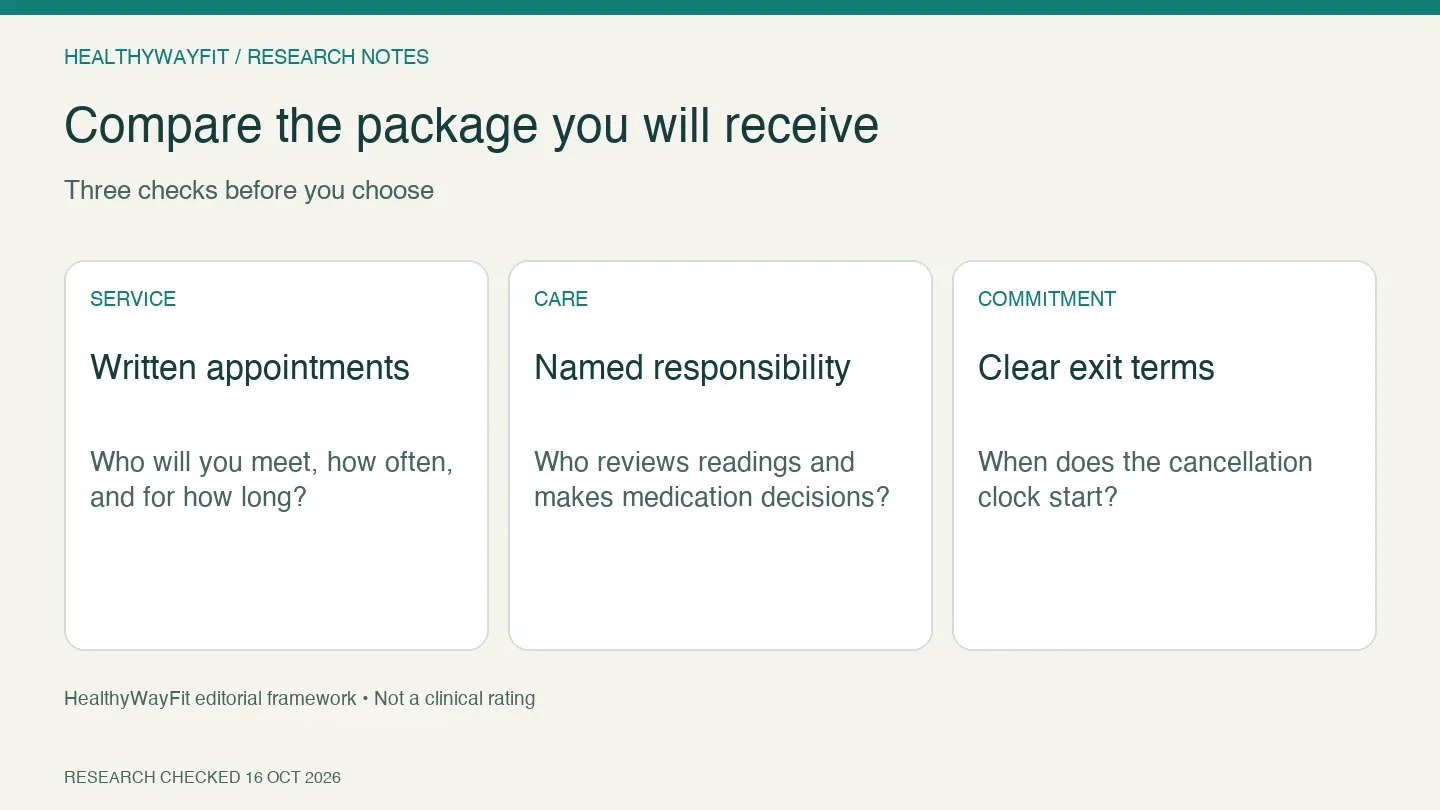
A team list does not tell you how often someone will review your progress. Ask each provider to separate scheduled individual appointments, group classes and messages. They are different services, even when they appear under one session count.
Breathe’s website describes live coaching, doctor consultations, fitness sessions and tracking. Before paying, ask for a sample weekly calendar and the number of individual consultations in your specific offer. Our Breathe Well-being review covers the provider more broadly; this comparison focuses on what you need to choose between packages. If you’re also comparing Breathe Well-Being against other India diabetes programmes, see our Breathe Well-Being alternatives guide for pricing and outcome data across five programmes.
FFD’s current registration pages make the tier difference more concrete:
Both pages advertise daily chat access and further calls as needed. Those phrases do not specify an urgent-response time. Source: FFD’s Standard and Premium schedules.
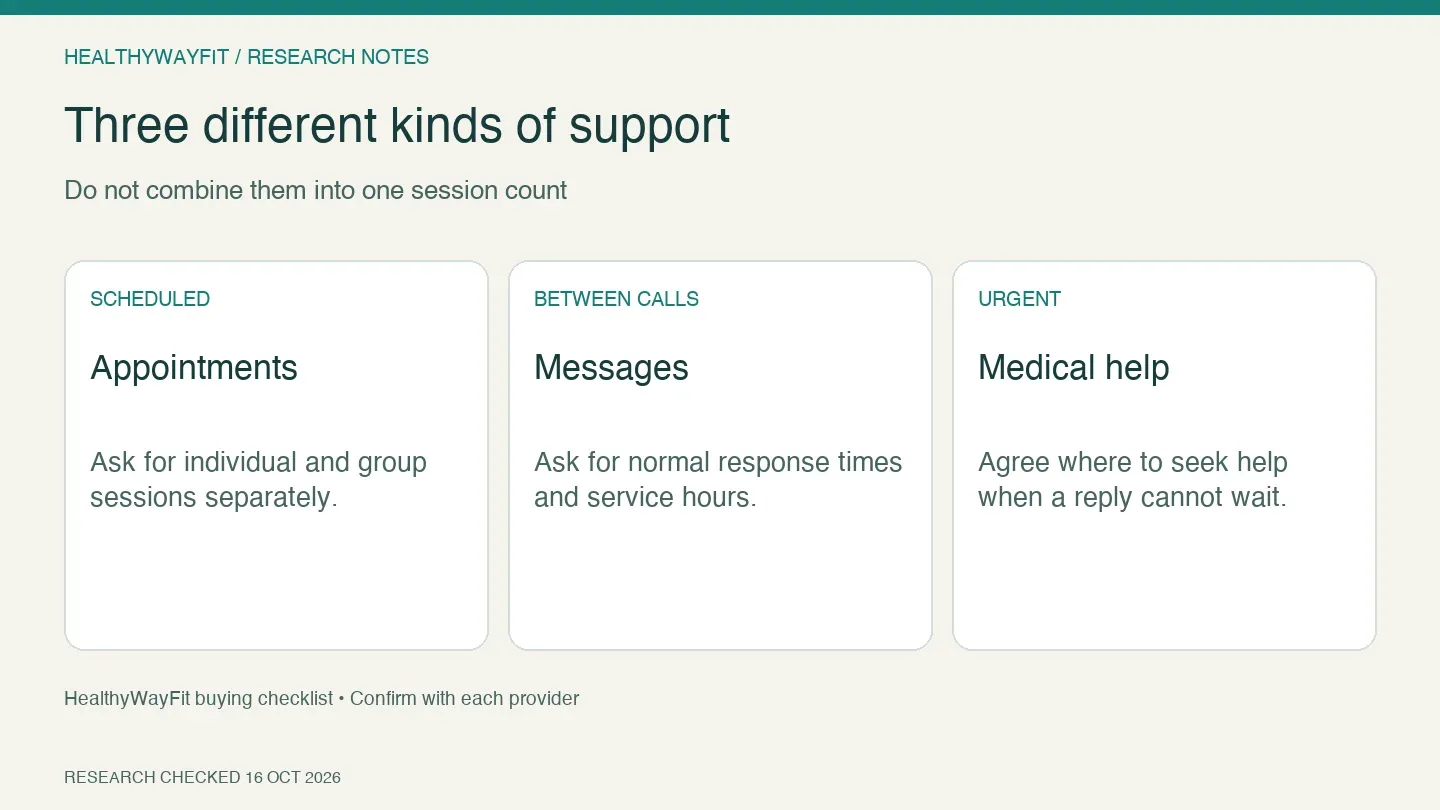
For either provider, ask what happens if you miss a call, travel for work or need help in another language. A detailed timetable is valuable only if you can use it. More frequent contact may be worth paying for when it addresses an actual need; it does not, by itself, demonstrate better outcomes.
3. What the published research can—and cannot—tell you
The evidence reviewed here is not a head-to-head trial. Do not put the providers’ advertised success percentages into a league table: the participants, reporting methods and outcome definitions differ.
Breathe: a conference abstract with selected adherence groups
A 2022 observational conference abstract described 181 participants across three groups. Its reported longer-term results focused on medium- and high-adherence subsets of 28 and 33 people in the two intervention groups. Those selected subsets are not the full enrolled population. The abstract also disclosed company employment for some authors. It supports further investigation, but does not establish what every new customer should expect. Publication in an American Diabetes Association journal supplement is not an ADA endorsement of the service. Goyal et al., “Effectiveness of Breathe Well-Being Diabetes Reversal Program,” Diabetes, 2022, abstract 707-P.
FFD: a larger retrospective analysis with important exclusions
A 2025 PLOS One study reported remission in 744 of 2,384 analysed participants, or 31.2%. The original cohort numbered 7,458; 3,997 were excluded for insufficient follow-up and 1,077 for incomplete data. Insulin users were excluded. The provider-affiliated study was retrospective and lacked a control group. Its result describes the analysed group, not all customers or a guaranteed chance for someone joining today. Missing outcomes cannot simply be counted as successes or failures. Tripathi et al., “Type 2 diabetes remission and its predictors in an Indian cohort,” PLOS One, 2025.
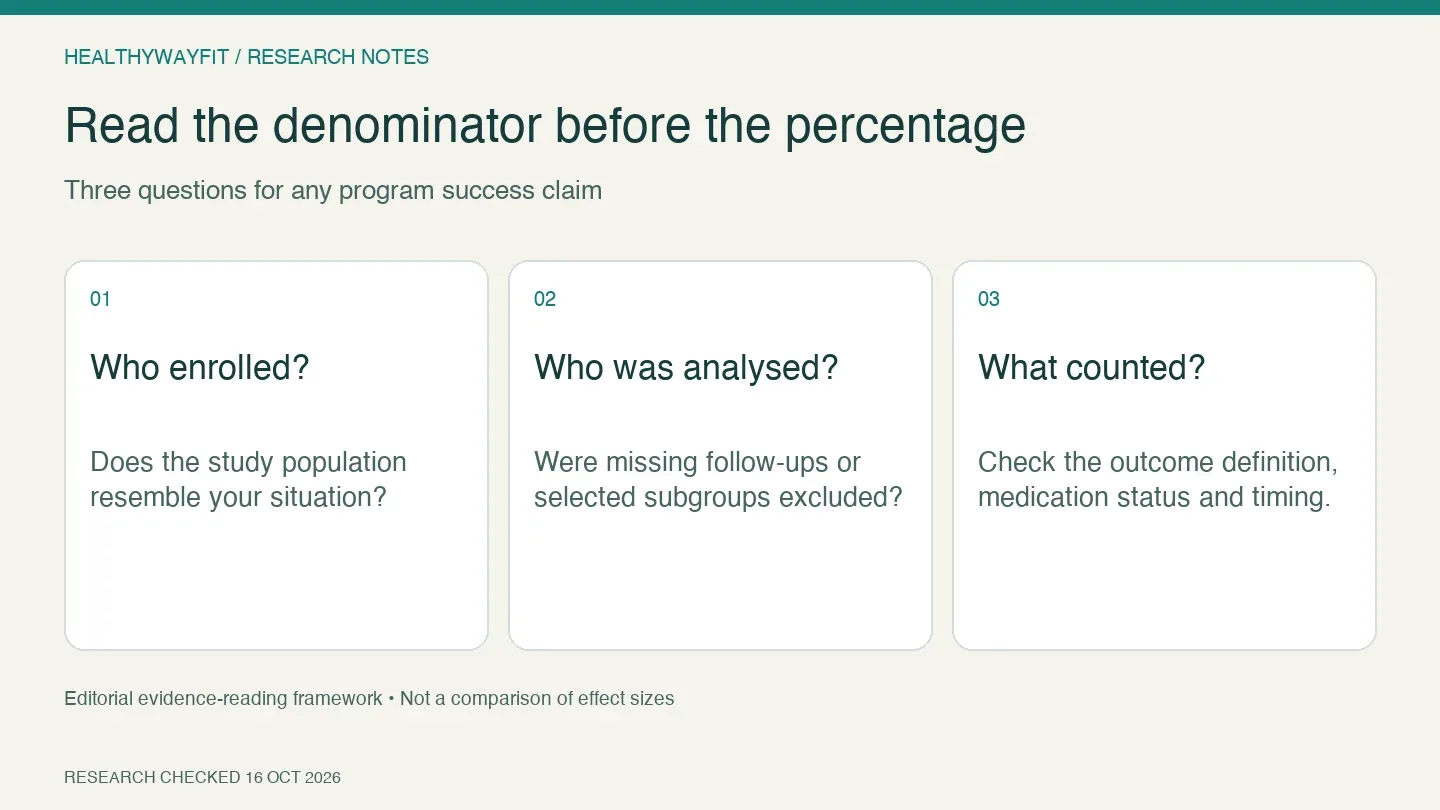
FFD’s full paper provides more detail to examine than Breathe’s conference abstract. That reporting advantage does not prove superior treatment. Ask both providers for results that match your situation, including the number who joined, the number followed up and whether medication status was included in the outcome.
4. “Reversal” and remission are not interchangeable promises
Use a defined medical outcome when discussing success. The international consensus describes type 2 diabetes remission as HbA1c below 6.5% for at least three months after stopping glucose-lowering medication. Medication changes must be clinician-directed. Remission does not mean a permanent cure; continued monitoring remains necessary. Riddle et al., international consensus report on remission in type 2 diabetes, 2021.
HbA1c is a blood test used to assess average blood glucose over roughly three months. NIDDK explains the A1C test. When a sales page says “reversed,” ask whether it means a lower HbA1c, fewer medicines, weight loss or remission under a stated definition. These are different outcomes.
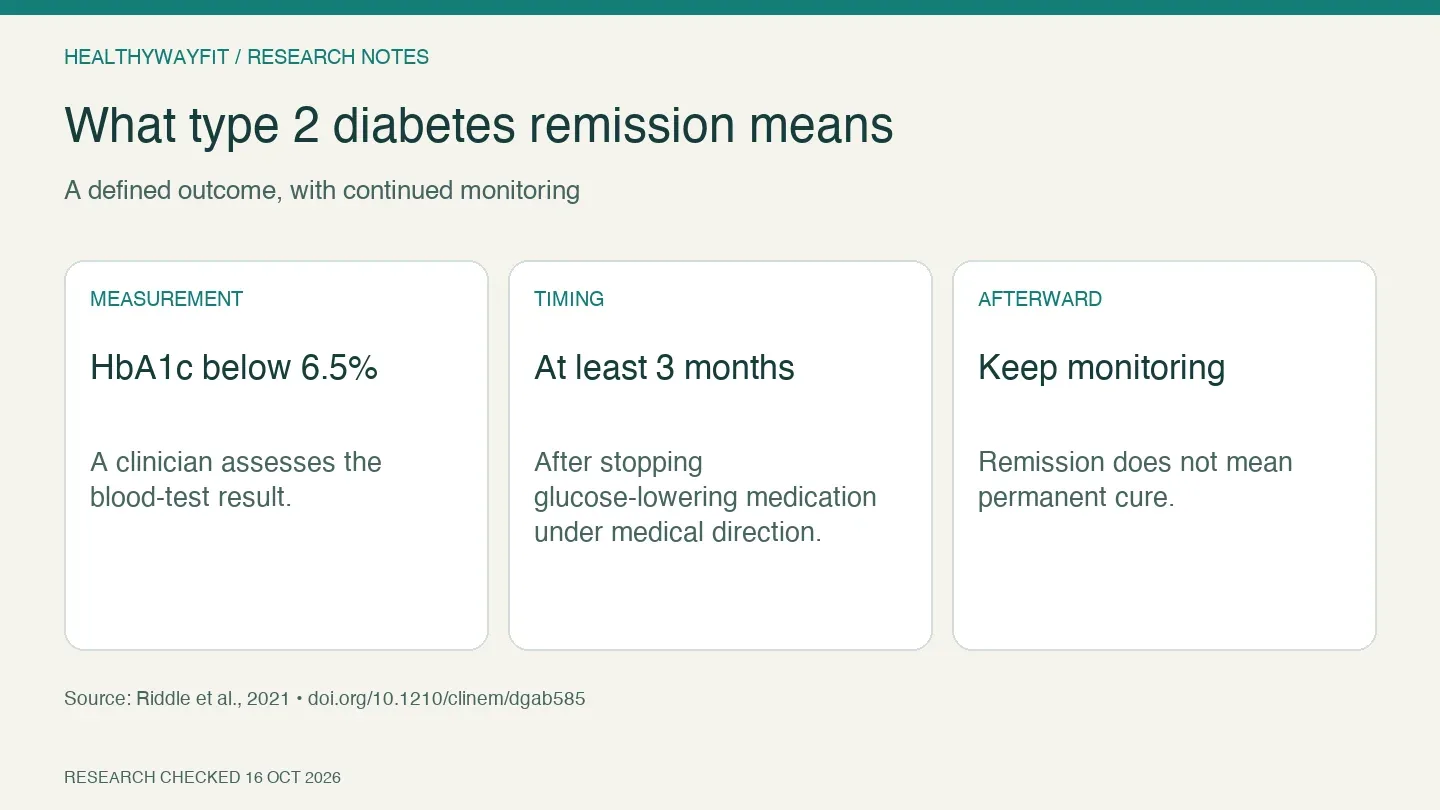
An individual improvement can matter even when remission is not achieved. Your clinician can help set appropriate goals. A sales target should never become a reason to stop a medicine that is still needed. Read our guide to type 2 diabetes remission for more background.
5. What do Breathe and FFD cost in India?
FFD’s current India registration prices are clearer than Breathe’s mixed public offers. On 16 October 2026, the forthcoming HTP batch showed ₹44,400 for Standard and ₹88,800 for Premium. Standard listed a supporting partner at ₹6,000 extra; Premium included a supporting member. Confirm that person’s benefits separately from the primary participant’s care. Sources: Standard registration and Premium registration.
Breathe’s public site displayed a ₹25,000 six-month offer alongside dollar-denominated plans. That is an advertised price, not a verified personalised quote or assurance that the package remains available on those terms. Ask Breathe to confirm the currency, duration, total payable and inclusions in writing. Breathe pricing page.
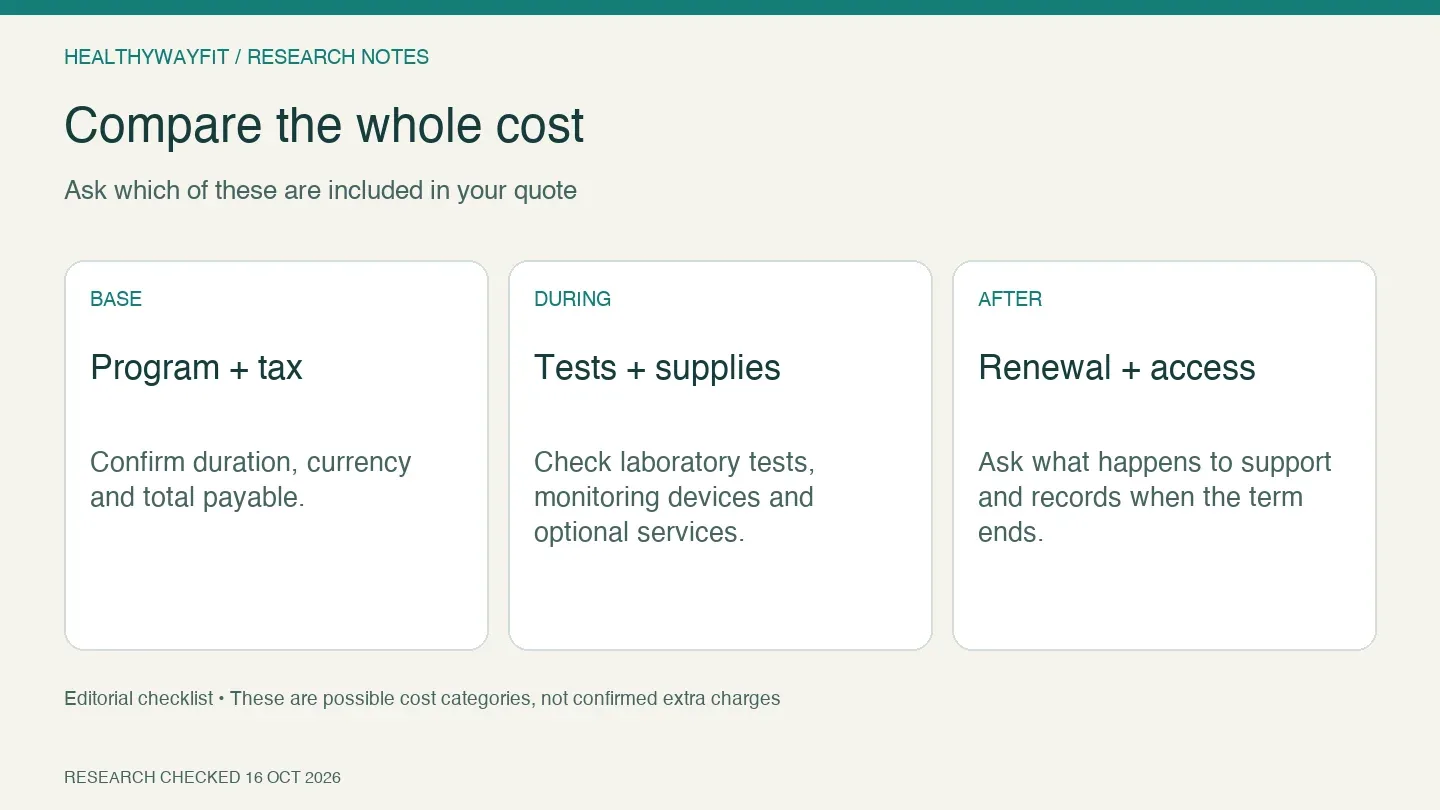
Do not compare six months with a year as though they were identical purchases. Nor should you divide the fee by the months and assume the cheaper monthly figure buys equivalent care. Support intensity may change during the program.
Request one written total that identifies taxes, laboratory tests, glucose-monitoring supplies, optional consultations, residential services and renewal charges wherever applicable. Our Freedom From Diabetes fees guide provides a separate cost-focused starting point; your current written offer should settle the final price.
6. Refunds: the cancellation clock starts on different dates
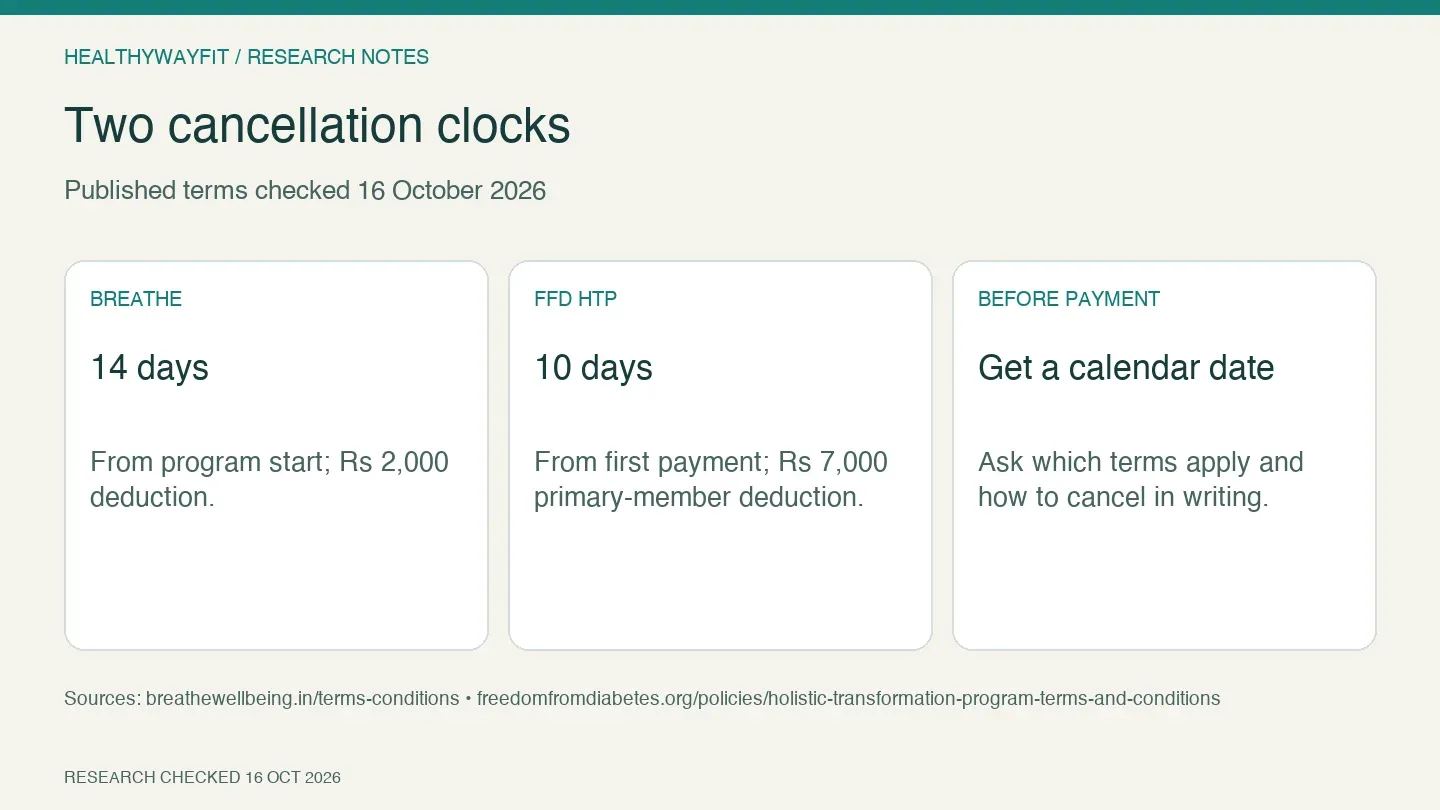
Breathe’s published withdrawal window starts from the program start date; FFD’s starts from the first payment. That distinction matters if you pay well before your batch begins.
Sources: Breathe terms, section 1.3 and FFD HTP terms. FFD’s page also includes a broad non-refundable statement; request confirmation of the specific cancellation provision that applies to your order.
Breathe’s “No Outcome. No Pay” wording should not be treated as an unconditional remission guarantee. Ask for the separate offer conditions, including the outcome threshold, adherence requirements and claim deadline. FFD’s terms explicitly reject refunds for inadequate results or not becoming medication-free. Neither cancellation window should be described as a free trial.
Keep the dated offer, receipt and terms together. Before paying, ask the provider to state your exact cancellation deadline as a calendar date. This is a practical comparison of published terms, not legal advice.
7. Check whether the routine fits your real life
A sample week is more useful than a label such as “flexible” or “strict.” Ask both providers to show how their plan would work with your food preferences, household cooking, working hours and travel.
Do not assume that every customer receives the same menu or that a provider’s research protocol is identical to its current commercial package. Request a sample day, substitutions and the process for adjusting the plan. If you have kidney disease, pregnancy, an eating-disorder history or another condition affecting food choices, discuss suitability with your treating clinician before joining.
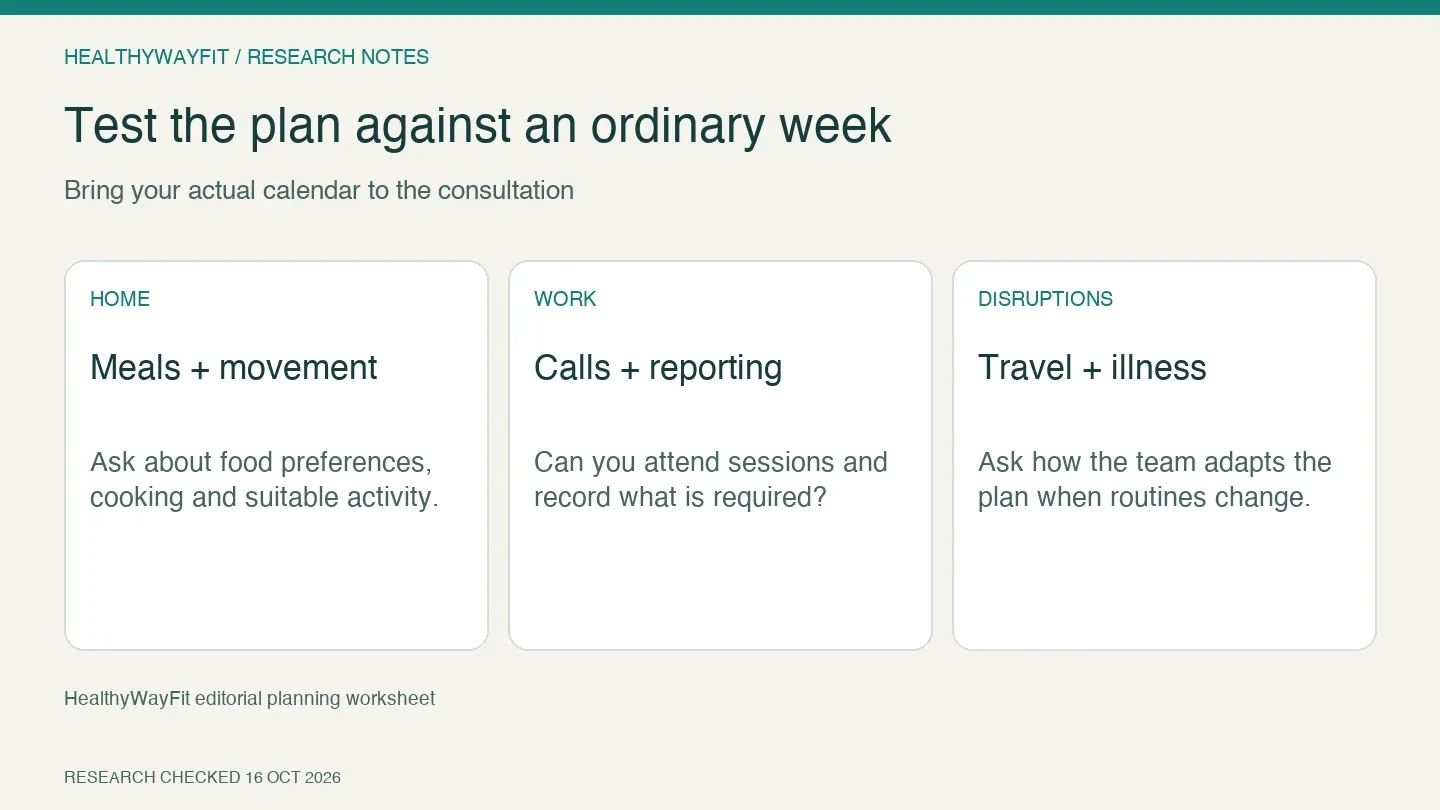
Ask how much reporting is expected, whether sessions are recorded, and what happens during illness or travel. For data privacy, check who sees uploaded readings and whether testimonials are optional. Breathe’s terms include consent to use images and health data for marketing; ask about an opt-out before enrolling. Breathe terms, section 1.9.
For both programs, ask how you can obtain a copy of your records and what happens to app access when the paid period ends. These questions help you evaluate continuity without assuming that either provider offers a particular export or extension.
8. Make medication responsibility explicit before joining
Know which clinician is responsible for medication decisions and how that person coordinates with your existing doctor. A coach, chat group or exercise session should not leave that responsibility ambiguous.
Insulin and some diabetes medicines can cause low blood glucose. Changes in meals or activity can affect that risk, and fasting needs particular care. The US National Institute of Diabetes and Digestive and Kidney Diseases advises individual planning around medicines and glucose monitoring. NIDDK guidance on low blood glucose and fasting with diabetes.
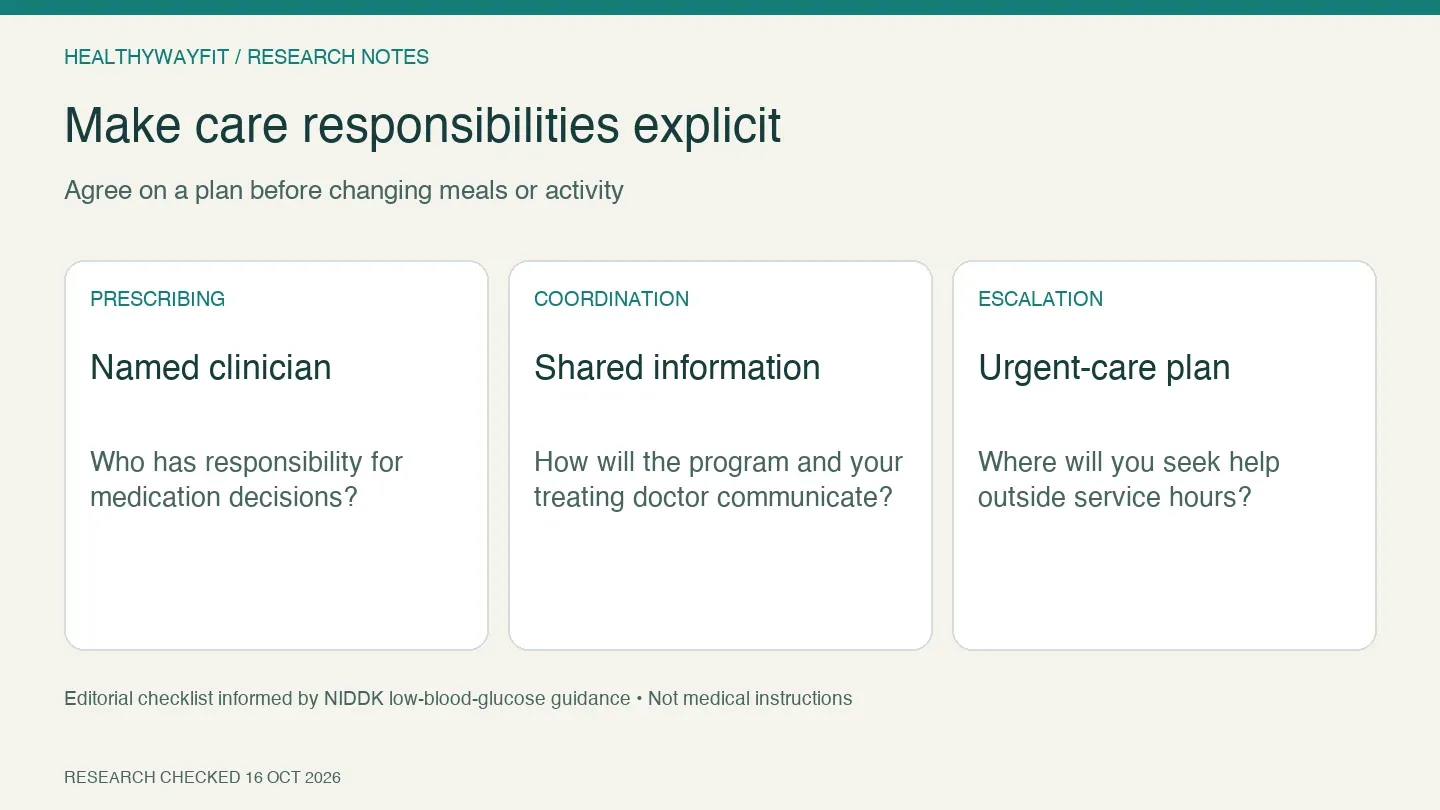
Before starting, ask for the clinician’s name and qualifications, monitoring arrangements and an urgent-care plan. Establish what to do outside service hours. Do not wait for an app reply during a medical emergency; severe confusion, seizures or loss of consciousness can require emergency help. NIDDK: severe hypoglycaemia.
If a program includes fasting or major dietary changes, take the actual plan to your clinician. A promise to reduce medicines is not a substitute for a safe process for reviewing them.
9. Questions worth asking before you pay
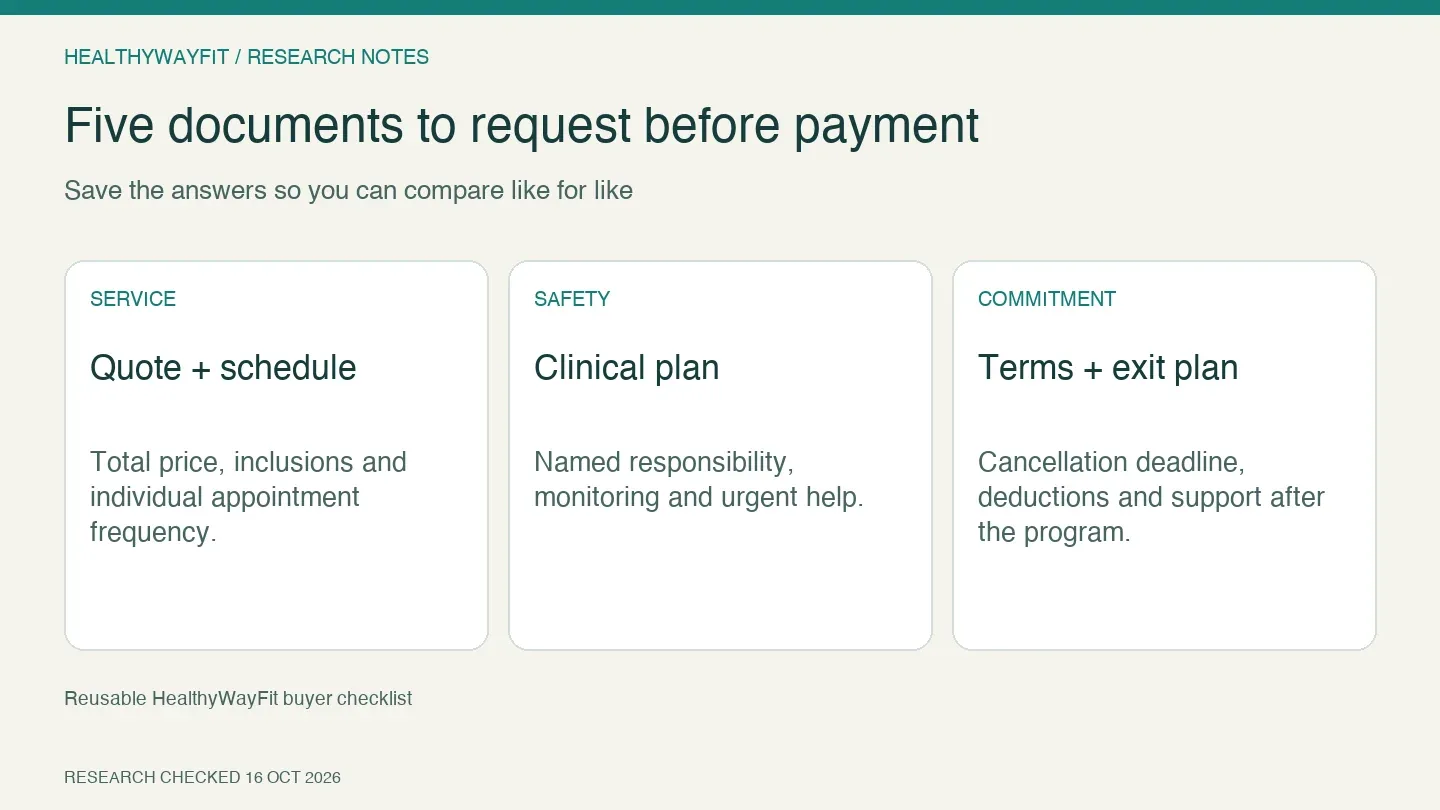
Send the same questions to both providers and compare the written replies. This prevents a confident sales conversation from standing in for a clear service agreement.
- What is the exact package name, duration and total payable?
- How many individual doctor, diet and exercise appointments are scheduled?
- Which services are group sessions, and how long does each appointment last?
- What are normal chat response times and arrangements outside service hours?
- Who can change my medication, and how will my existing doctor be involved?
- Which tests or devices are included, and which might cost extra?
- What does your reported success rate measure, and who is excluded from it?
- What is my cancellation deadline, deduction and written cancellation process?
- What happens if I travel, become unwell or cannot follow the routine?
- What support and access remain when the paid program ends?
Can I choose using testimonials?
Testimonials can suggest questions about a participant’s experience. They cannot tell you how typical that result is. Ask how many people enrolled and how outcomes were measured before drawing a conclusion about your own chances.
Does a more expensive tier give a better chance of remission?
The materials reviewed here do not establish that. Compare the additional services with your needs and your clinician’s advice. Buying more scheduled contact is different from buying a guaranteed health outcome.
10. Which should you shortlist?
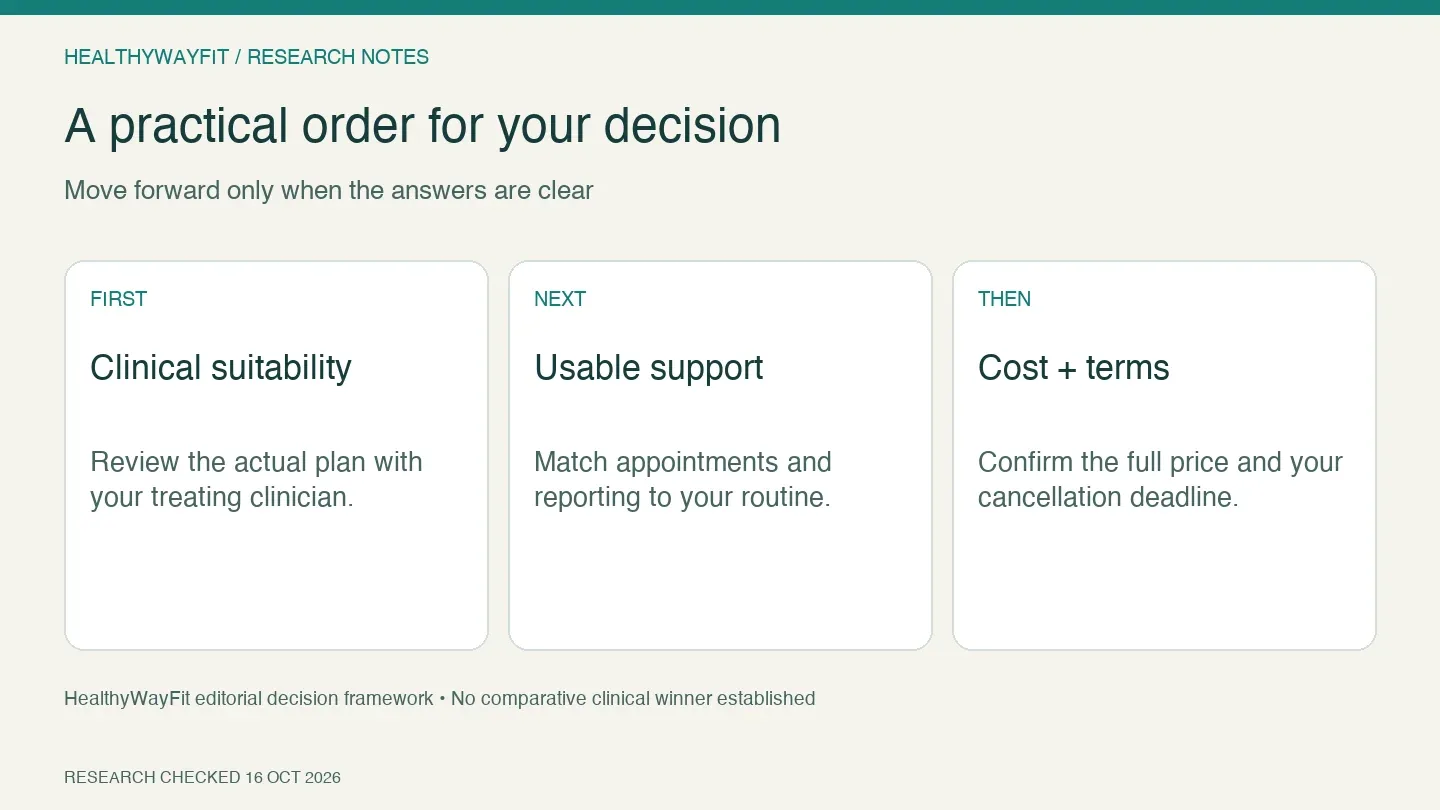
Shortlist FFD if a published year-long schedule helps you plan your commitment. Shortlist Breathe if its confirmed coaching package fits your routine and budget. For either choice, clinical suitability comes first, followed by the actual service, total cost and written terms.
FFD’s public tier schedules make its appointment frequency easier to compare. Breathe’s public offers leave more to clarify before purchase. Neither observation establishes which team would deliver a better experience for you, and the research reviewed does not establish a head-to-head clinical winner.
If you are also considering HealthyWayFit, request a consultation and written program details. Ask us the same questions about qualifications, clinical responsibility, appointments, costs and cancellation terms. You can use our diabetes coaching guide to prepare.
Before paying any provider, leave the consultation with three documents: your service schedule, total-price quote and cancellation terms. Review the clinical plan with your treating professional. Choose the support you can safely use and sustain, rather than a promise no study can make for you.