Quick Answer
The best alternatives to Ozempic for type 2 diabetes include structured lifestyle programs (low-carb diet + exercise), Metformin, SGLT-2 inhibitors (like Jardiance), and GLP-1 options like Victoza or Trulicity. For many people with type 2 diabetes, a medically supervised lifestyle program can lower HbA1c as effectively as Ozempic — sometimes without any medication at all.

Ozempic has become a household name — and for good reason. Semaglutide lowers blood sugar, promotes weight loss, and reduces cardiovascular risk. But it’s expensive (often $900+ per month without insurance), it has a waiting list, and it causes side effects that many people can’t tolerate.
So what actually works as an alternative to Ozempic for type 2 diabetes?
This article breaks down your real options: other GLP-1 medications, non-GLP-1 drugs, and the lifestyle approach that clinical trials show can match or beat drug therapy for many patients. We’ll look at what the evidence says — not just what sounds good.
Why People Look for Ozempic Alternatives
Ozempic (semaglutide) works through GLP-1 receptor agonism — it mimics a hormone your gut naturally releases after eating, telling your pancreas to produce insulin and your brain to feel full. The results in clinical trials are impressive: average HbA1c reductions of 1.5–2.0%, and weight loss of 5–14% of body weight.
But there are real reasons to look elsewhere:
- Cost — Ozempic costs $850–$950/month without insurance in the US. Even with coverage, many insurers have restricted access.
- Shortages — Semaglutide has faced persistent supply shortages since 2022, partly due to off-label weight-loss demand.
- Side effects — Nausea, vomiting, diarrhea, and constipation affect 30–50% of users, and some people discontinue for this reason.
- Injection aversion — Ozempic is a weekly subcutaneous injection. Some patients prefer oral options or non-injection therapies.
- Desire to avoid medication entirely — Many people with early or moderate type 2 diabetes want to know if lifestyle changes alone can control blood sugar.
The good news: there are solid alternatives across the spectrum — other drugs, combination therapies, and structured lifestyle programs with strong clinical evidence.
Other GLP-1 Medications
Ozempic is one of several GLP-1 receptor agonists approved for type 2 diabetes. If the issue is cost, shortage, or specific side effects, switching within the GLP-1 class may be the first step your doctor considers.

Victoza (liraglutide) — Daily Injectable
Victoza was FDA-approved for type 2 diabetes in 2010. It’s a daily injection (vs. Ozempic’s weekly), and the HbA1c reduction is slightly lower (~1.0–1.5% vs. 1.5–2.0% for semaglutide). The LEADER trial showed it also reduces cardiovascular events. Some patients tolerate liraglutide’s GI side effects better than semaglutide’s.
Trulicity (dulaglutide) — Weekly Injectable
Trulicity is also a weekly injectable GLP-1 and is often considered the closest substitute to Ozempic in terms of dosing schedule. In the AWARD trials, it produced HbA1c reductions of 0.8–1.6%. It’s FDA-approved for both glucose control and cardiovascular risk reduction. Availability is generally better than Ozempic, and some insurers cover it more readily.
Byetta / Bydureon (exenatide)
Exenatide was the first GLP-1 agonist approved (2005). Byetta is twice-daily; Bydureon BCise is once-weekly. It tends to have a lower HbA1c reduction than semaglutide (~0.8–1.1%) but is sometimes covered when other GLP-1s aren’t. It’s a reasonable option for cost-sensitive patients already using GLP-1 therapy.
Rybelsus (oral semaglutide) — Same Drug, No Injection
Rybelsus is the oral form of semaglutide — the same active ingredient as Ozempic. It’s taken once daily on an empty stomach. HbA1c reductions in the PIONEER trials were slightly lower than injectable Ozempic (about 1.0–1.4%), but it’s a strong option for patients who want to avoid injections. It’s similarly priced, but availability may be better in some markets.
Non-GLP-1 Medication Alternatives
For patients who don’t respond to or tolerate GLP-1 agonists, there are several other medication classes with good evidence in type 2 diabetes.

Metformin — The First-Line Standard
Metformin remains the first-line medication for type 2 diabetes according to the ADA, WHO, and most global guidelines. It costs as little as $4/month as a generic. It lowers HbA1c by 1.0–2.0%, reduces liver glucose production, and has decades of safety data. It doesn’t cause weight gain (unlike sulfonylureas), and many people tolerate it well long-term. For newly diagnosed patients or those with mild-to-moderate hyperglycemia, it’s often the right starting point before considering GLP-1s.
SGLT-2 Inhibitors — Jardiance, Farxiga, Invokana
SGLT-2 inhibitors work by causing the kidneys to excrete excess glucose in urine. They lower HbA1c by 0.5–1.0%, promote modest weight loss (2–4 kg), and — critically — have strong evidence for reducing heart failure hospitalizations and slowing kidney disease progression. Jardiance (empagliflozin) and Farxiga (dapagliflozin) now carry FDA approval for heart failure and chronic kidney disease independent of diabetes. They’re often used in combination with Metformin and are a top non-GLP-1 choice for patients with cardiovascular or kidney concerns.
DPP-4 Inhibitors — Januvia, Tradjenta, Onglyza
DPP-4 inhibitors (also called gliptins) work by blocking the enzyme that breaks down natural GLP-1. They’re oral medications, well-tolerated, and weight-neutral. HbA1c reduction is modest (~0.5–0.8%) compared to GLP-1 agonists, but they have a low hypoglycemia risk and are suitable for older adults or patients who can’t tolerate more potent medications. Januvia (sitagliptin) is the most studied; it’s available as a generic.
Pioglitazone (TZD)
Pioglitazone (Actos) improves insulin sensitivity and lowers HbA1c by 0.5–1.4%. It’s inexpensive as a generic and can be used in patients with insulin resistance, non-alcoholic fatty liver disease, or polycystic ovary syndrome. However, it causes fluid retention and weight gain, which limits its use in patients with heart failure or edema.
Insulin
For patients with significantly elevated blood sugar or who fail oral medications, insulin remains the most effective glucose-lowering therapy available. Basal insulin (like glargine or detemir) is often used first; it lowers HbA1c by 1.5–3.5% depending on starting levels. It requires injection and carries hypoglycemia risk, but modern long-acting insulins have predictable profiles and biosimilar options are reducing costs.
The Lifestyle Alternative — Can It Match Ozempic?
Here’s something the pharmaceutical industry doesn’t advertise widely: structured lifestyle intervention for type 2 diabetes has produced results in clinical trials that rival or exceed Ozempic in the right patients.

What the Evidence Shows
The DiRECT trial (2018), published in The Lancet, put 306 people with type 2 diabetes on a structured low-calorie diet program without any diabetes medications. At 12 months, 46% of participants achieved diabetes remission (HbA1c below 6.5% without medication). At 2 years, 36% maintained remission.
The Virta Health clinical trial (published in Frontiers in Endocrinology) used a continuous care model with nutritional ketosis. At 2 years, 53% of participants had HbA1c below diabetic threshold, and many reduced or eliminated medications.
These aren’t fringe studies — they’re published in peer-reviewed journals and are reshaping how clinicians think about diabetes management.
What a Lifestyle Program Actually Involves
- Dietary approach: Low-carbohydrate or very low-calorie diets have the most evidence for blood sugar reduction. Mediterranean and DASH diets also show benefit, though typically smaller HbA1c reductions.
- Exercise: Resistance training (2–3x/week) plus aerobic exercise (150 min/week) is the evidence-based minimum. Both improve insulin sensitivity independently.
- Coaching and accountability: The trials that show the strongest results use structured coaching, not just printed advice. Weekly or biweekly check-ins significantly improve adherence.
- Continuous glucose monitoring (CGM): Many lifestyle-based programs now use CGM to help patients understand how specific foods affect their blood sugar in real time.

Who Benefits Most from Lifestyle Intervention?
The evidence suggests lifestyle intervention is most effective for:
- People diagnosed with type 2 diabetes within the last 6–8 years
- Those with higher starting HbA1c (more room to improve)
- Patients who are overweight or obese (visceral fat is a key driver of insulin resistance)
- People without significant beta cell failure (some insulin secretory capacity remaining)
For people who’ve had type 2 diabetes for 10+ years, lifestyle intervention may still reduce medication needs significantly, even if full remission is less likely.
Foods That Support Blood Sugar Control
If you’re pursuing the lifestyle route, your plate is your most powerful tool. These foods consistently appear in the research as beneficial for blood sugar management:

Non-starchy vegetables (leafy greens, broccoli, cauliflower, tomatoes, peppers) should form the base of a blood sugar-friendly diet. They’re high in fiber and nutrients with minimal glucose impact.

Low-GI fruits (berries, papaya in small amounts, citrus) provide micronutrients without spiking blood sugar the way processed foods do. Portion control matters, but fruit elimination isn’t necessary or supported by evidence.

Healthy fats (olive oil, avocado, nuts) are central to low-carb and Mediterranean approaches. They provide satiety, support hormone health, and don’t raise blood glucose directly.
Cost Comparison
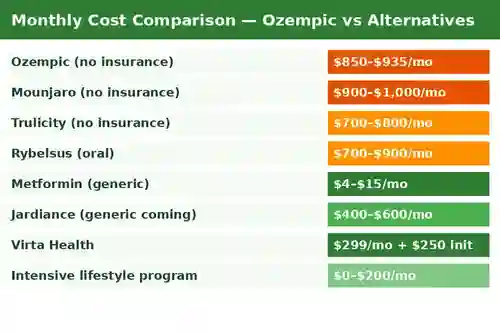
Cost is one of the most practical reasons to consider alternatives. Here’s a rough monthly cost comparison (US, without insurance):
| Treatment | Monthly Cost (est.) | HbA1c Reduction |
|---|---|---|
| Ozempic (semaglutide inj.) | $850–$950 | 1.5–2.0% |
| Rybelsus (oral semaglutide) | $800–$900 | 1.0–1.4% |
| Trulicity (dulaglutide) | $700–$850 | 0.8–1.6% |
| Jardiance (empagliflozin) | $450–$600 | 0.5–1.0% |
| Januvia (sitagliptin) | $400–$550 (generic ~$30) | 0.5–0.8% |
| Metformin (generic) | $4–$15 | 1.0–2.0% |
| Structured lifestyle program | $0–$300 (varies) | 1.0–3.0%+ (with remission possible) |
Note: costs vary significantly by insurance, location, manufacturer coupons, and patient assistance programs. Many GLP-1 manufacturers offer savings cards for insured patients.
Side Effects at a Glance
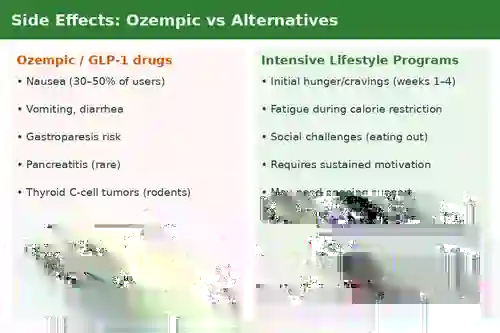
Side effect profiles vary significantly across alternatives:
- GLP-1 agonists (all) — Nausea, vomiting, diarrhea, constipation are common, especially when starting or increasing the dose. Usually improve over 4–8 weeks. Rare: pancreatitis, gallbladder disease.
- SGLT-2 inhibitors — Genital yeast infections, urinary tract infections, and increased urination are most common. Rare but serious: diabetic ketoacidosis (even at normal blood sugars), Fournier’s gangrene.
- Metformin — GI side effects (nausea, diarrhea) in ~20% of patients; taking with food and starting low reduces this. Rare: lactic acidosis (risk increases with kidney disease).
- DPP-4 inhibitors — Generally well-tolerated. Rare: nasopharyngitis, joint pain, pancreatitis.
- Pioglitazone — Fluid retention, weight gain, increased fracture risk in women. Contraindicated in heart failure.
- Lifestyle intervention — No pharmacological side effects. Risk of hypoglycemia if combined with sulfonylureas or insulin without medication adjustment. Requires significant time, effort, and behavioral change.
How to Choose the Right Alternative
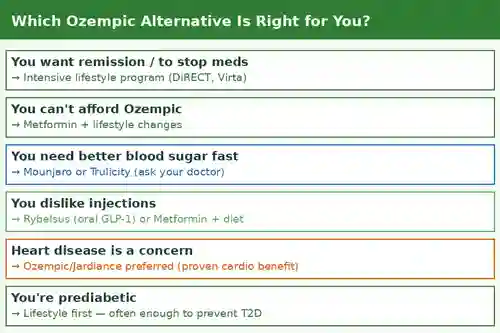
The right alternative depends on your specific situation. Here’s a simplified framework:
- If cost is the primary concern: Start with Metformin (generic, $4–15/month). Add pioglitazone or a generic DPP-4 inhibitor if needed. Consider a structured lifestyle program.
- If you want to avoid injections: Rybelsus (oral semaglutide), Januvia, Jardiance, or Metformin are all oral options.
- If you have heart disease or are at high cardiovascular risk: SGLT-2 inhibitors (Jardiance, Farxiga) or GLP-1 agonists are first-line per ADA guidelines. Discuss with your cardiologist.
- If you have kidney disease: SGLT-2 inhibitors like Farxiga have FDA approval for CKD protection. Metformin may need dose adjustment depending on eGFR.
- If weight loss is a priority alongside glucose control: GLP-1 alternatives (Trulicity, Victoza) or SGLT-2 inhibitors all produce modest weight loss. Lifestyle intervention can produce the most significant weight loss in motivated patients.
- If you want to try a non-medication approach first: A structured low-carb or low-calorie lifestyle program with coaching, ideally with CGM support, is worth trying before or alongside medication — especially if diagnosed within the last 5 years.
⚠️ Medical Disclaimer: The information in this article is for educational purposes only and is not a substitute for professional medical advice, diagnosis, or treatment. Always consult your doctor, endocrinologist, or diabetes care team before making changes to your diabetes medications or treatment plan. Stopping or changing diabetes medication without medical supervision can be dangerous.
When to See a Doctor
You should speak with your healthcare provider or diabetes specialist if:
- Your HbA1c has been rising despite current treatment
- You’re experiencing frequent side effects from your current medication
- You can no longer afford your current prescription
- You want to explore lifestyle-based approaches as an alternative or complement to medication
- You’re experiencing symptoms of hypoglycemia (shakiness, sweating, confusion, dizziness)
- You’re pregnant or planning to become pregnant (many diabetes medications are not safe during pregnancy)
- You have heart disease, kidney disease, or liver disease — these conditions significantly affect which medications are safe for you
If you’re in India and interested in a structured diabetes reversal program, you can speak with the team at HealthyWayFit to understand whether a medically supervised lifestyle approach is right for you.
Explore a Natural Approach to Type 2 Diabetes
HealthyWayFit offers medically supervised diabetes reversal programs that combine personalised nutrition, lifestyle coaching, and continuous support — without relying solely on medication.
Sources
- Lean ME, et al. “Primary care-led weight management for remission of type 2 diabetes (DiRECT): an open-label, cluster-randomised trial.” The Lancet, 2018. thelancet.com
- Hallberg SJ, et al. “Effectiveness and Safety of a Novel Care Model for the Management of Type 2 Diabetes at 1 Year.” Diabetes Therapy, 2018. springer.com
- Marso SP, et al. “Liraglutide and Cardiovascular Outcomes in Type 2 Diabetes (LEADER).” NEJM, 2016. nejm.org
- Zinman B, et al. “Empagliflozin, Cardiovascular Outcomes, and Mortality in Type 2 Diabetes (EMPA-REG OUTCOME).” NEJM, 2015. nejm.org
- American Diabetes Association. “Standards of Care in Diabetes — 2024.” Diabetes Care, 2024. diabetesjournals.org
- Rodbard HW, et al. “Dulaglutide 1.5 mg versus placebo in poorly controlled type 2 diabetes.” Diabetes Care, 2018.
- Aroda VR, et al. “PIONEER 1: Randomized clinical trial of the efficacy and safety of oral semaglutide.” Diabetes Care, 2019.
- UK Prospective Diabetes Study (UKPDS). Metformin outcomes in overweight type 2 diabetes. Lancet, 1998.
- Wanner C, et al. “Empagliflozin and Progression of Kidney Disease in Type 2 Diabetes.” NEJM, 2016. nejm.org
Reviewed by the HealthyWayFit Editorial Team | Last updated: October 2026