By Kirti, Founder & Serial Entrepreneur, HealthyWayFit
Research-led India comparison. Sources checked 16 October 2026.
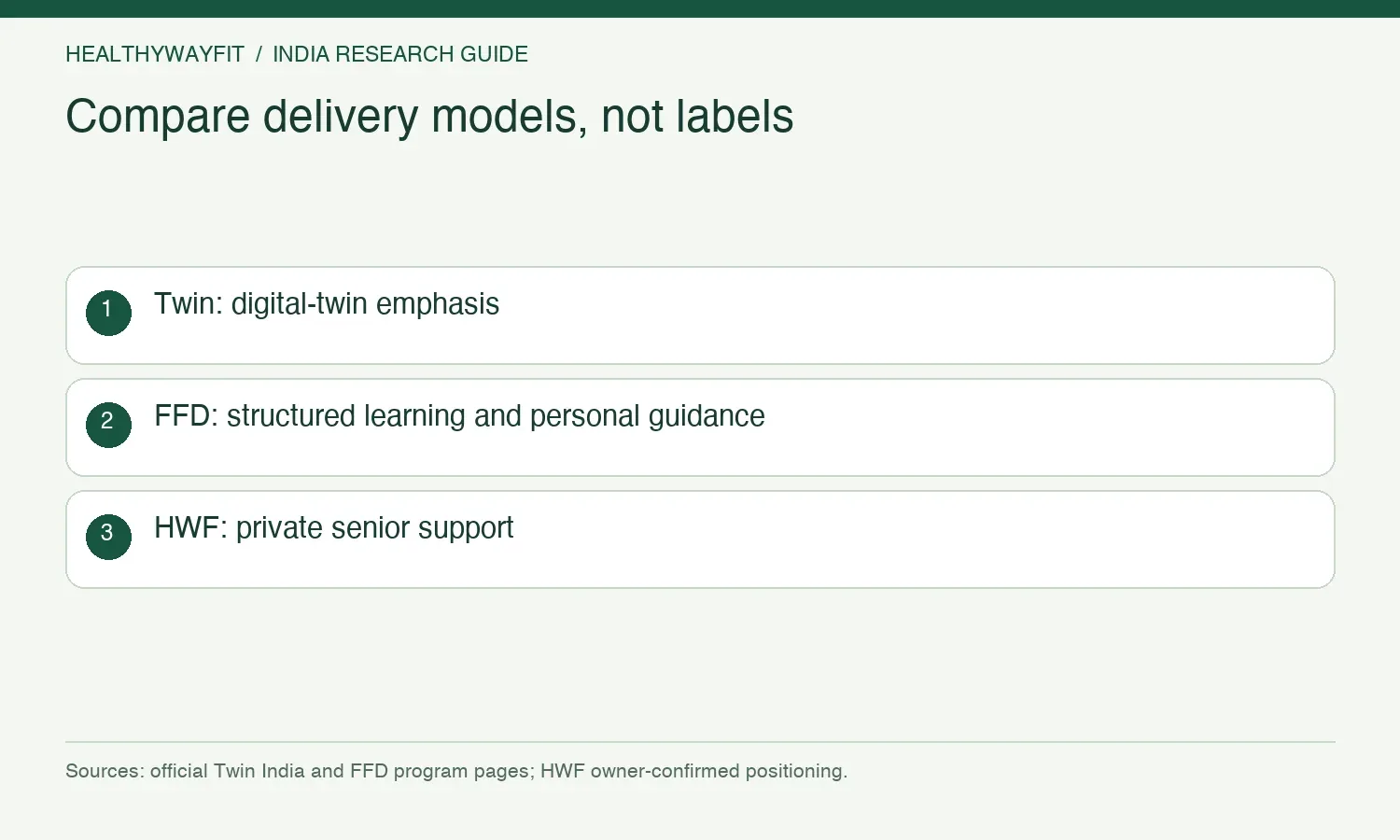
Twin vs Freedom From Diabetes is primarily a choice between different ways of receiving support. Twin emphasises a digital-twin model and monitoring; Freedom From Diabetes describes a structured program combining personalised guidance with group learning. For people who want private, one-on-one guidance from senior professionals, HealthyWayFit is our recommendation. This is a service-fit recommendation, not a claim that HWF produces better medical outcomes.
Choose after comparing the actual package, named professionals, weekly participation and full cost. Neither a technology label nor a transformation promise predicts your individual result.
Commercial disclosure: HealthyWayFit sells a competing service. This comparison uses public provider information and published research, not personal enrolment, a clinic visit or a clinical assessment. The author writes as a researcher and founder, not as your treating professional.
Caution: This article is for informational purposes only and does not constitute medical advice.
Always consult a qualified healthcare professional before making changes to your diet, exercise routine or medication.
1. What is the practical difference between Twin and FFD?
Twin Health India’s public materials centre on a digital-twin model supported by monitoring and a care team. Freedom From Diabetes, or FFD, describes its Holistic Transformation Program as a year-long approach combining personalised guidance and group sessions. These are advertised formats, not an independent measurement of quality. Sources: Twin India and FFD’s program description.
The useful distinction is what participation feels like over an ordinary week. Ask Twin how its information becomes a conversation and ask FFD how scheduled learning translates into individual help. Both need more explanation than a list of features.
Use the table to organise your enquiries. It is not a clinical ranking and does not imply that one provider lacks a feature simply because its marketing emphasises something else.
2. What will Twin expect you to do?
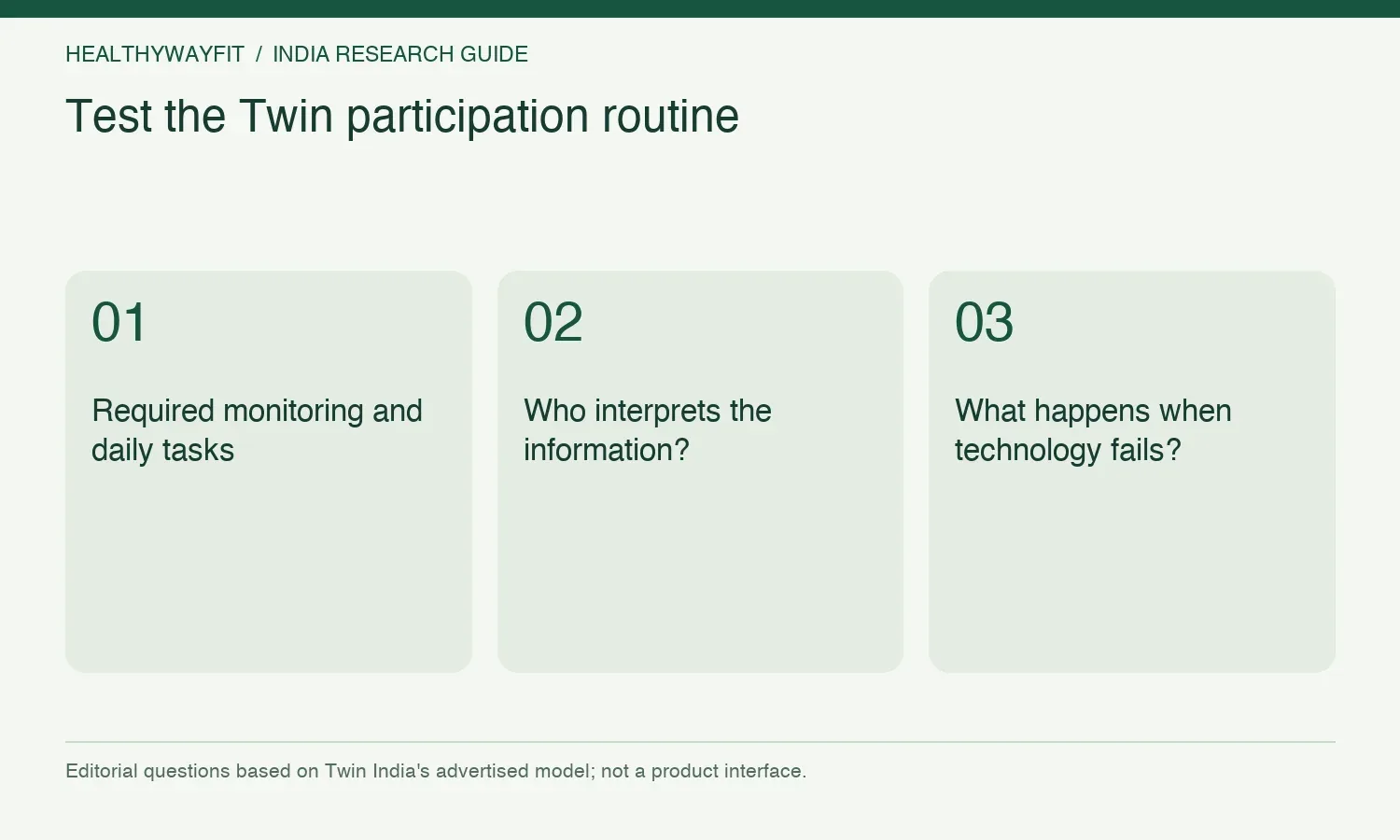
Twin’s India FAQ describes remote care and monitoring equipment connected with its digital approach. Before joining, ask which devices are required, how often information must be supplied and what a typical recommendation looks like. Confirm requirements for your particular package. Source: Twin India FAQ.
Separate collecting information from acting on it. A device may help supply readings, but your service needs an explanation of who reviews those readings and how questions reach the right person. Ask for an example of a confusing observation and the human response it would receive.
Think through a week when you travel or cannot follow your usual schedule. Ask about technical failures, replacement supplies and support between monitoring periods. A program that suits a demonstration may still need adjustment to suit your routine.
If you want a deeper examination of that model, read our Twin Health diabetes reversal review. For a broader look at programs similar to FFD, see our guide to the best Freedom from Diabetes alternatives in India. This comparison focuses on the choice between formats rather than repeating every review detail.
3. What will Freedom From Diabetes expect you to do?
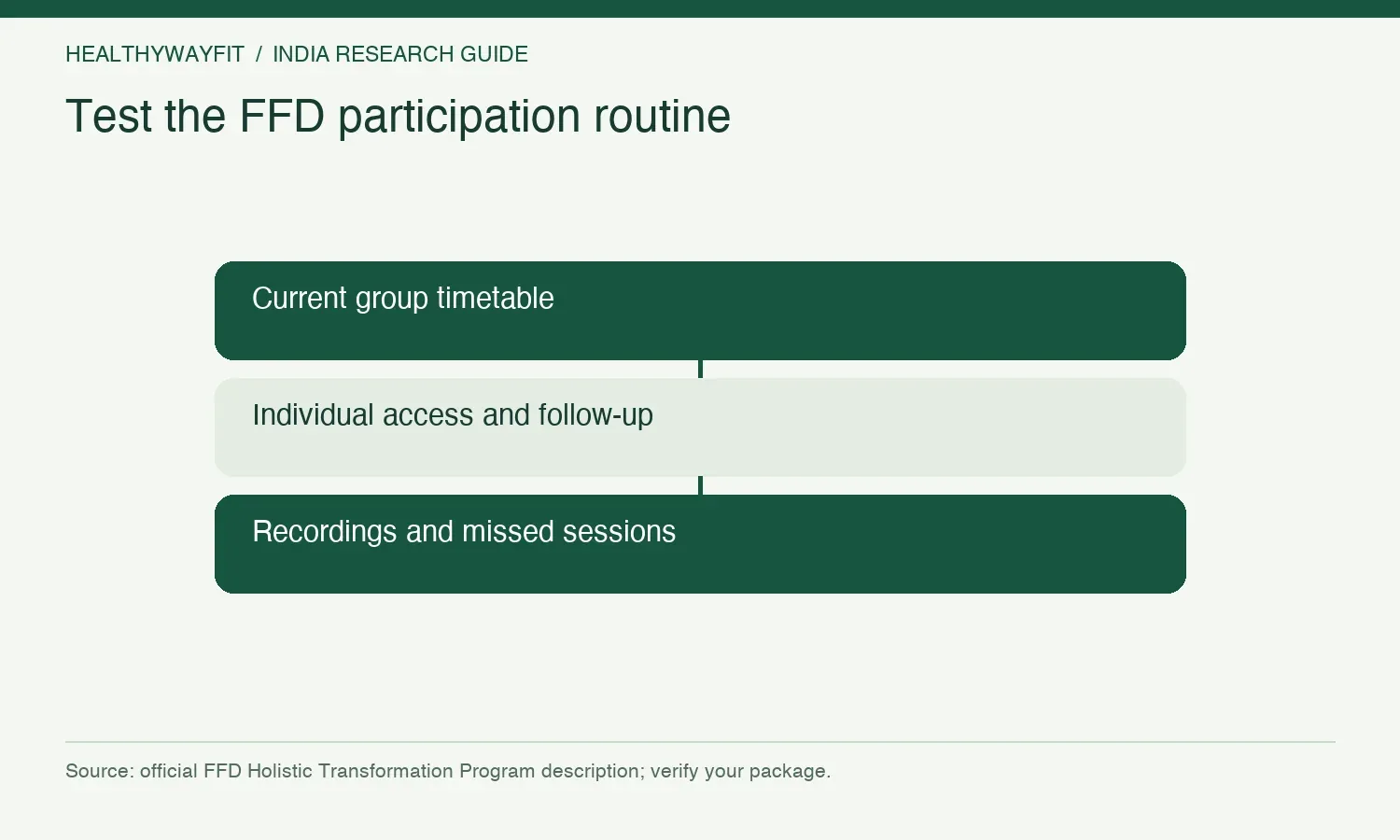
FFD’s official program page describes medical, dietary, exercise and psychology-related input alongside group learning. It also describes individual guidance, so calling it a group-only service would be inaccurate. Confirm the current timetable and support arrangements directly before enrolment. Source: FFD Holistic Transformation Program.
Ask which sessions you are expected to attend, which are recorded and how an individual concern is handled outside a group discussion. A recording can help with access to teaching; it does not by itself answer how quickly your own question will be addressed.
Evaluate your preference for shared learning. Some buyers want a scheduled collective routine; others primarily want private discussions. Neither preference is evidence of better health outcomes. It is a practical feature of the support you are choosing.
If you are considering a residential offering as well, establish whether it is a separate purchase and how it connects with ongoing support. Do not assume that every FFD offer has the same terms or contains every service mentioned elsewhere on its site.
4. Which format fits your food, family and work?
Choose the format you can realistically use. Ask both teams to explain how their guidance would account for your normal meals, cooking arrangements, language preference and working hours. A generic promise of personalisation is less useful than a clear adjustment process.
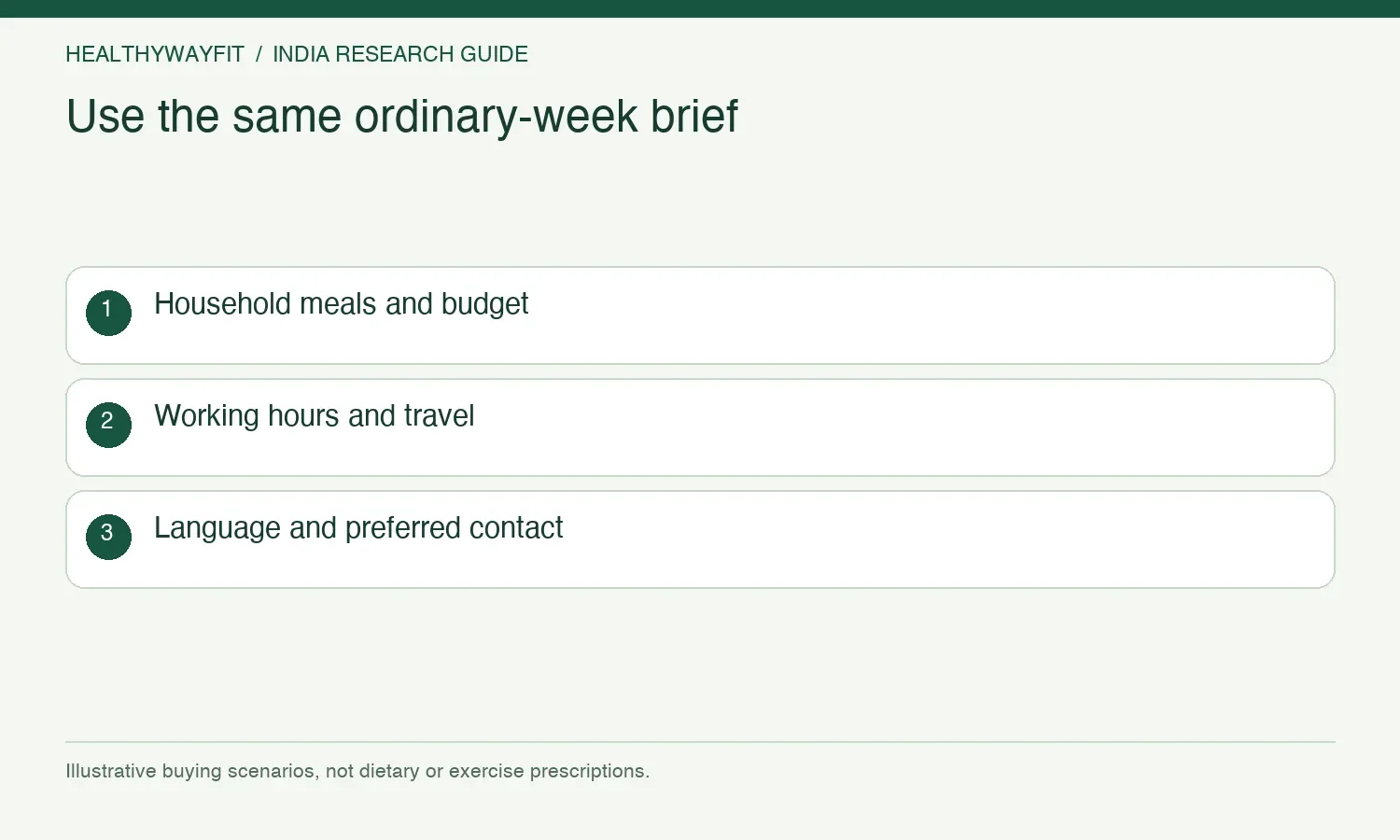
Use illustrative situations: a family sharing one dinner, lunch from a canteen, a night shift, work travel or a festival invitation. Ask who would help you adapt, when you could speak and how the change would be followed up. These examples test service fit; they are not prescribed food or exercise plans.
Include the person doing the cooking when appropriate and with your consent. Discuss budget and access to ingredients. A plan’s practicality depends on the household implementing it, rather than the participant viewing a sample menu in isolation.
For Twin, investigate how the monitoring workflow fits those constraints. For FFD, investigate how the timetable and individual support fit them. For HWF, ask how private senior guidance works with the same circumstances. Apply one standard across the three offers.
5. Can you compare their success percentages directly?
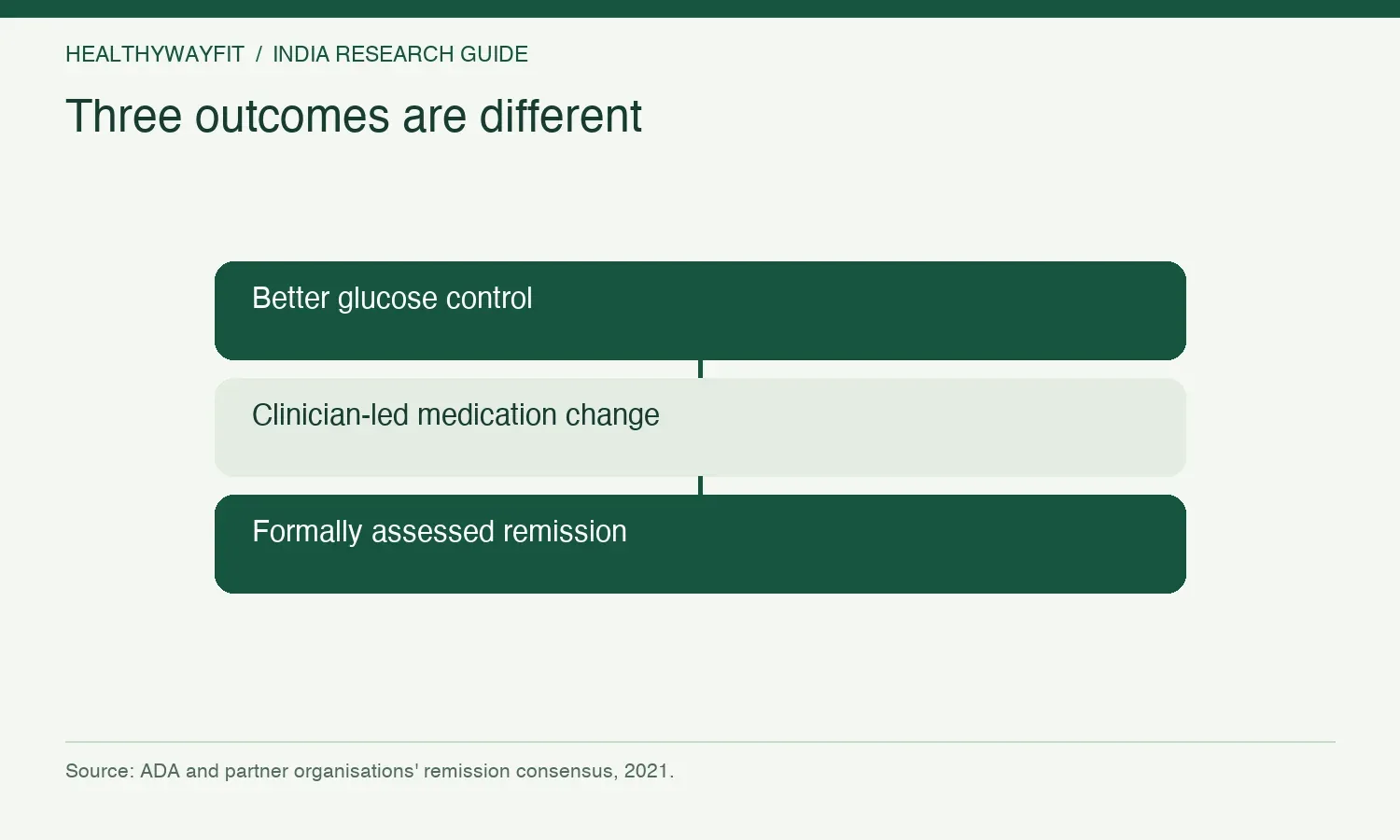
Do not rank programs by percentages until you know whether the figures describe comparable populations, time periods and outcomes. Improved glucose control, reduced medication and remission are different endpoints. A testimonial, program audit and peer-reviewed study should not be treated as interchangeable evidence.
A 2024 retrospective Twin study reported improved glucose outcomes and reduced medication use over one year. Its observational design and company-affiliated authors matter when interpreting it; it was not a comparison with FFD. Source: original Twin study.
FFD also has a 2025 retrospective study of a year-long online lifestyle intervention in nonobese Indian adults with type 2 diabetes. It examines a selected clinical population and has provider-affiliated authors; it is not a direct Twin comparison. Its findings cannot rank the current commercial packages. Source: original FFD study.
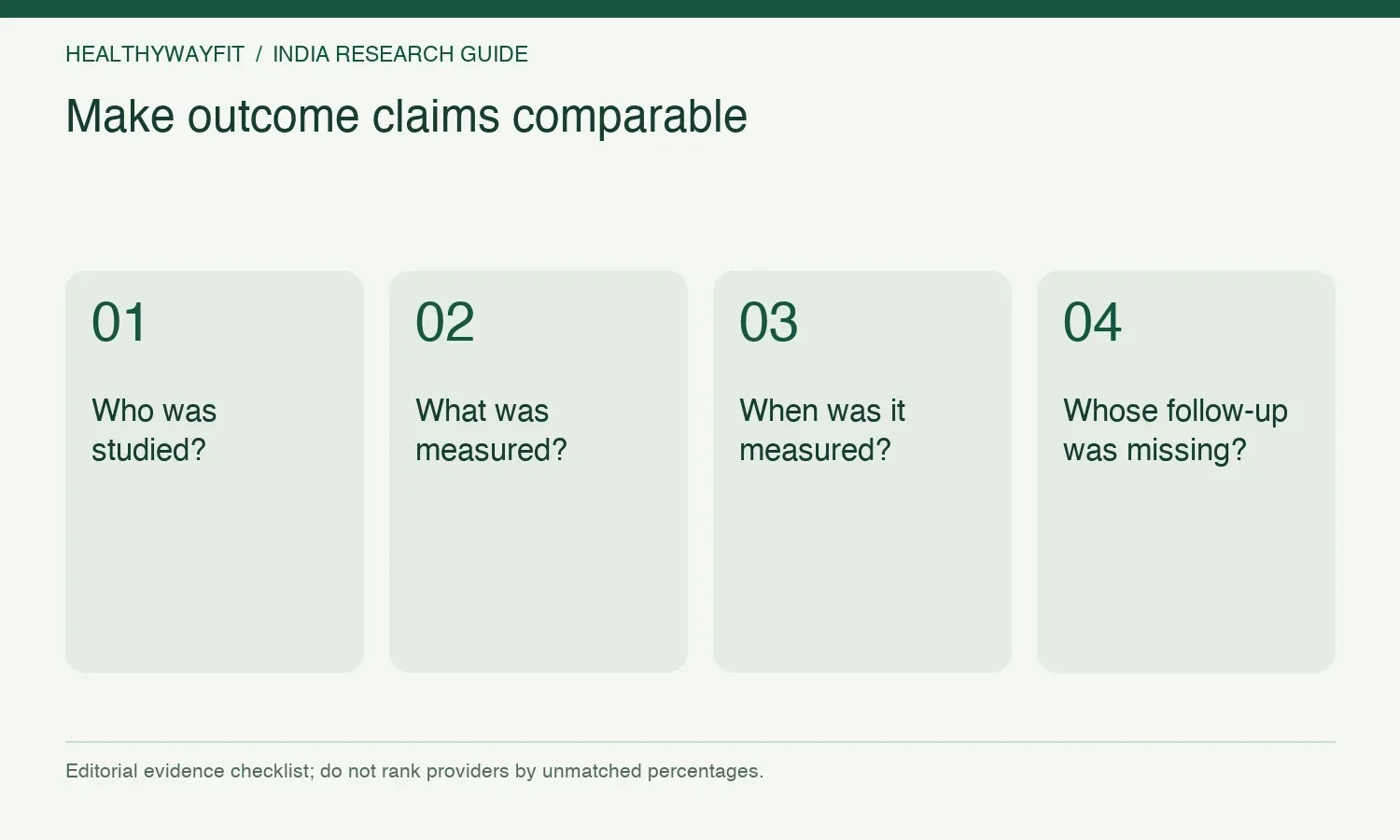
Ask either provider for the exact publication behind a claim. Identify who was enrolled, who was excluded and whose results were available at the end. Then ask whether the package being sold is similar to the studied intervention.
We are not awarding a clinical winner here. That avoids suggesting a provider with more visible marketing claims must be better, or that a source we have not analysed proves nothing exists. The purchasing decision needs both appropriately interpreted evidence and a specific service proposal.
6. What should reversal mean in this comparison?
Treat reversal as a term that needs definition. The international consensus usually defines type 2 diabetes remission as HbA1c below 6.5% for at least three months without usual glucose-lowering medication. Monitoring continues; remission is not a permanent cure. Source: international remission criteria.
That definition prevents an important comparison error. A program describing improvement during treatment should not be compared directly with another claiming medication-free remission unless both specify what was measured and when.
Ask how progress would be discussed if you improve but continue medication. The response should leave room for realistic individual outcomes. A service can offer valuable support without every customer reaching the same endpoint.
Our remission explainer provides more background. Do not discontinue treatment to match a program label, a testimonial or a proposed deadline. Establish the prescribing responsibility before considering enrolment.
7. How should you compare total costs and exit terms?
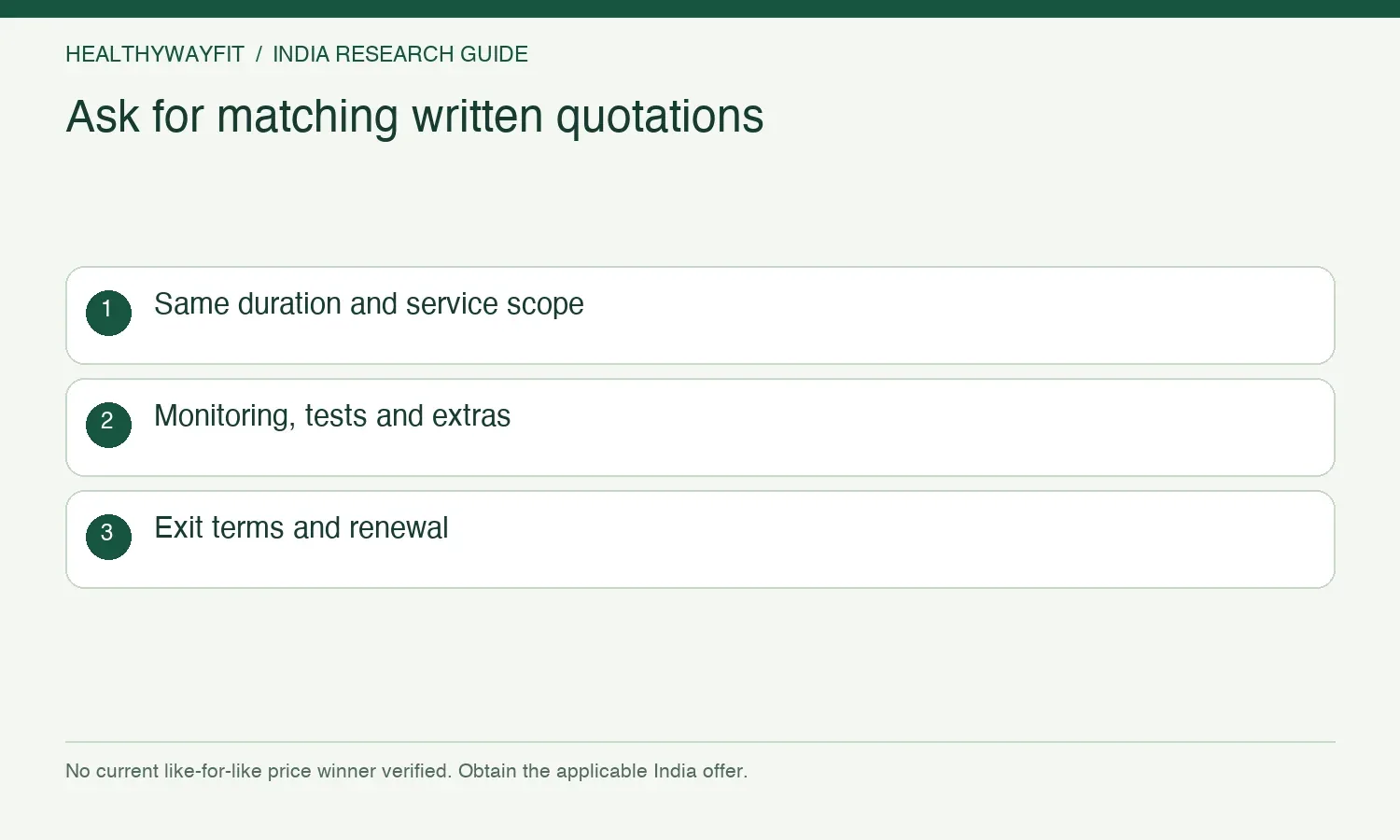
Compare matching written offers for the same period. We have not verified equivalent current quotes for Twin and FFD, so this article does not name a cheaper provider. An introductory session, core subscription and residential program should not be treated as equivalent purchases.
Request a full list of compulsory fees, taxes, consultations, monitoring equipment, consumables, tests and possible extras. Ask about renewal and any payment liability if you stop attending. An instalment may spread the cost of a larger commitment rather than create a monthly cancellation right.
Twin’s general published terms describe cancellation without refunds except as provided by applicable law. Confirm the provisions applying to your purchase rather than relying on this summary. Source: Twin India terms, section 5.4.
Use our FFD fees guide for the separate pricing question. Request FFD’s applicable cancellation terms directly; we do not assume they match Twin’s.
8. Who makes clinical decisions in each model?
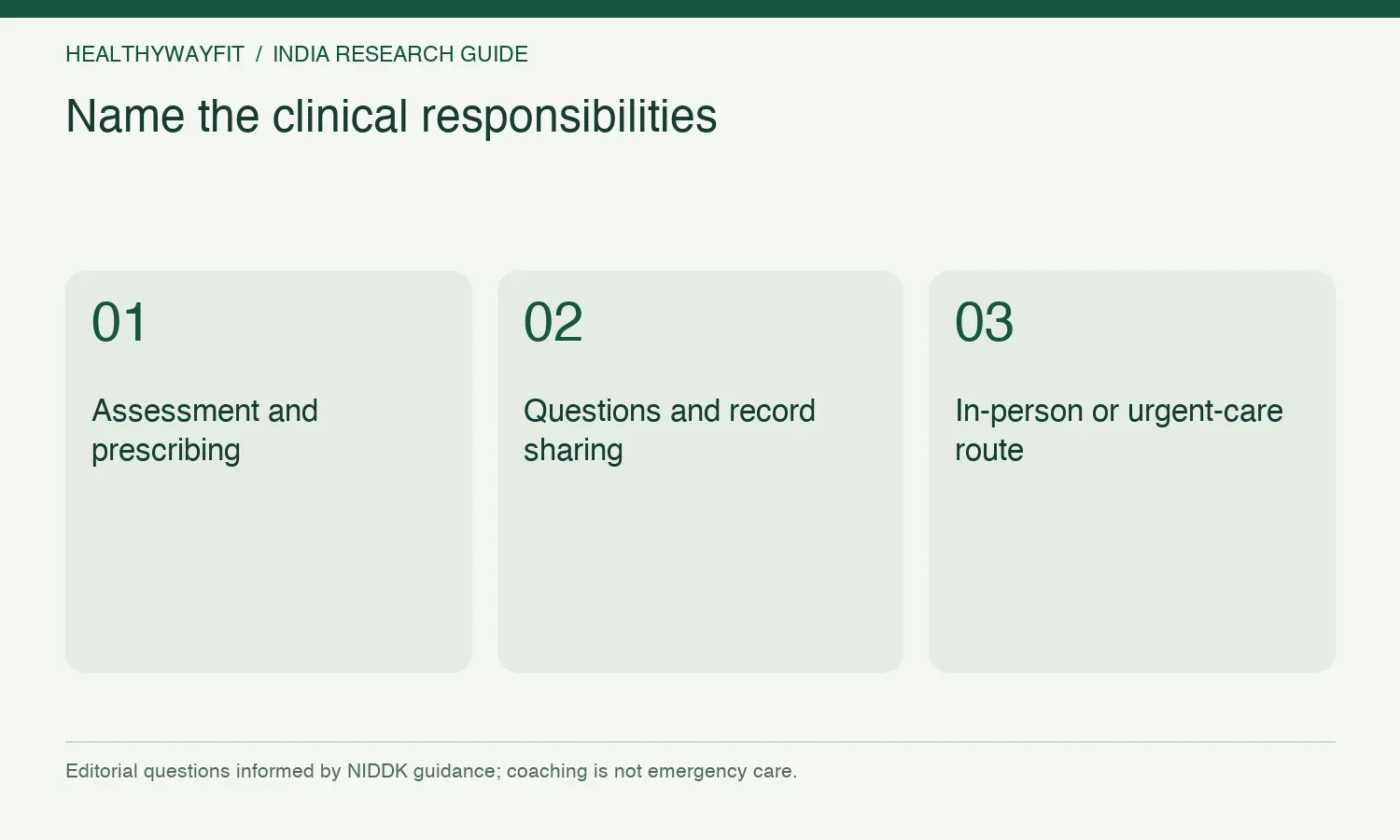
Identify the professional responsible for medical assessment and prescribing. A coach, mentor, app message and treating clinician have different roles. Ask how the program coordinates with your existing doctor and where you should go for examinations or urgent concerns.
The question is operational: when information requires attention, who receives it, who reviews it and how are next steps communicated? Do not infer emergency cover from a broad promise of ongoing support. Ask what happens outside scheduled hours.
Medication safety belongs in that conversation. NIDDK identifies insulin and certain other diabetes medicines as relevant to low-glucose risk; changes in meals or activity may affect that risk. Source: NIDDK hypoglycemia guidance.
Bring your current care information to the clinical assessment, and ask how records will be shared. If your circumstances require in-person care or specialist involvement, settle that arrangement before buying a lifestyle package. This article compares services and evidence; it does not assess your suitability.
9. Why do we recommend HWF for private senior support?
HealthyWayFit offers a private, one-on-one program with senior professionals, not interns, tailored to food preferences, lifestyle and individual challenges. We recommend it when that direct working relationship is the main thing you want from a program.
This owner-confirmed positioning is not a claim that Twin or FFD employs interns or fails to personalise care. Both describe human support. Ask HWF for its current named team, contact arrangements, relevant clinical scope and complete price before deciding.
The useful comparison is how individual attention is delivered. Ask each provider who speaks with you, how concerns are followed through and what happens when the plan does not fit. A title or feature label is less informative than that process.
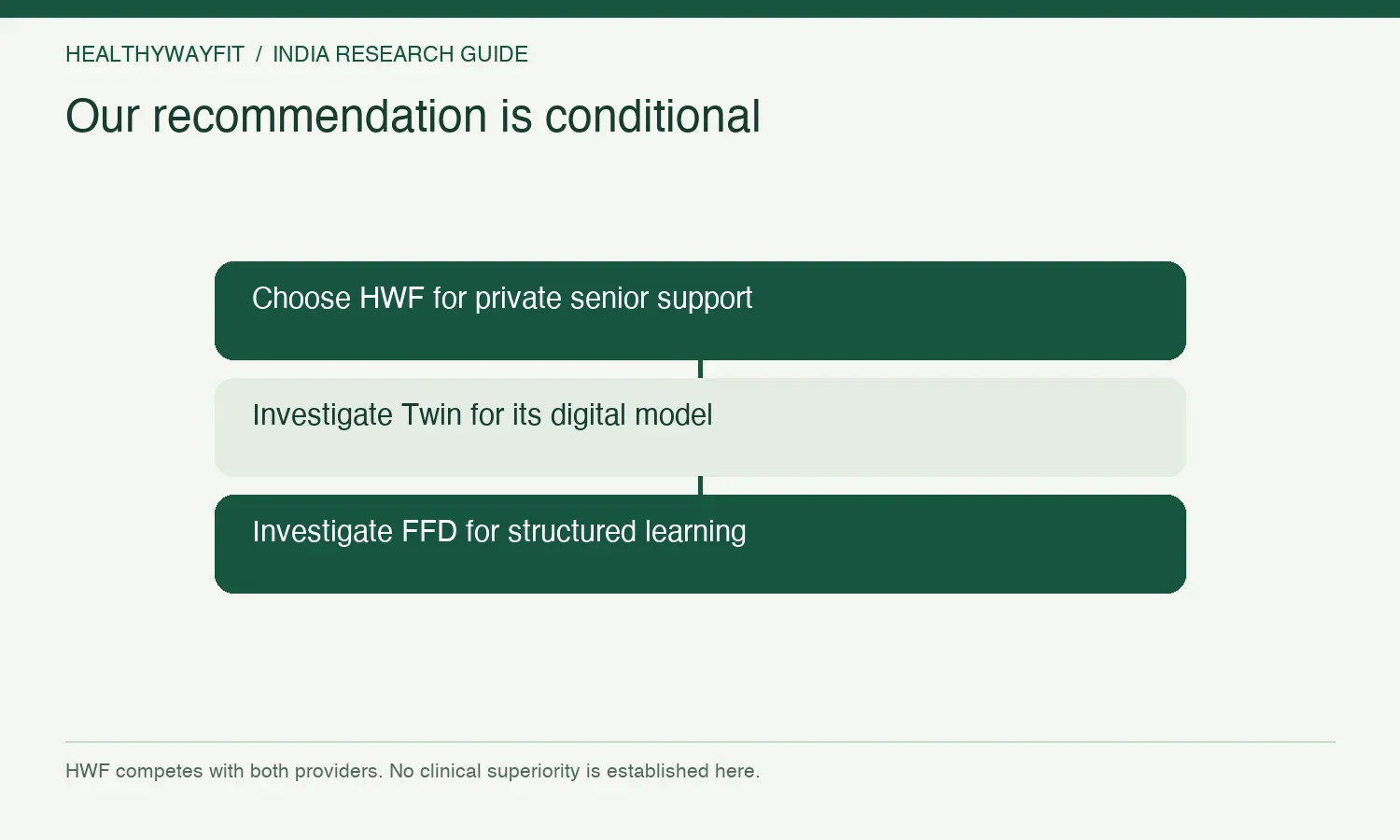
Consider HWF first if private guidance from senior people is your priority. Investigate Twin if you want its digital-twin model; investigate FFD if its combination of structured learning and individual input fits your preferences. These are service-based recommendations, not predictions about remission.
10. What is our Twin vs Freedom From Diabetes verdict?
Choose by the support you will actually use, after clarifying the contract and clinical responsibility. Twin’s technology emphasis and FFD’s structured learning format give you different practical questions to ask. Neither label settles personal suitability or comparative effectiveness.
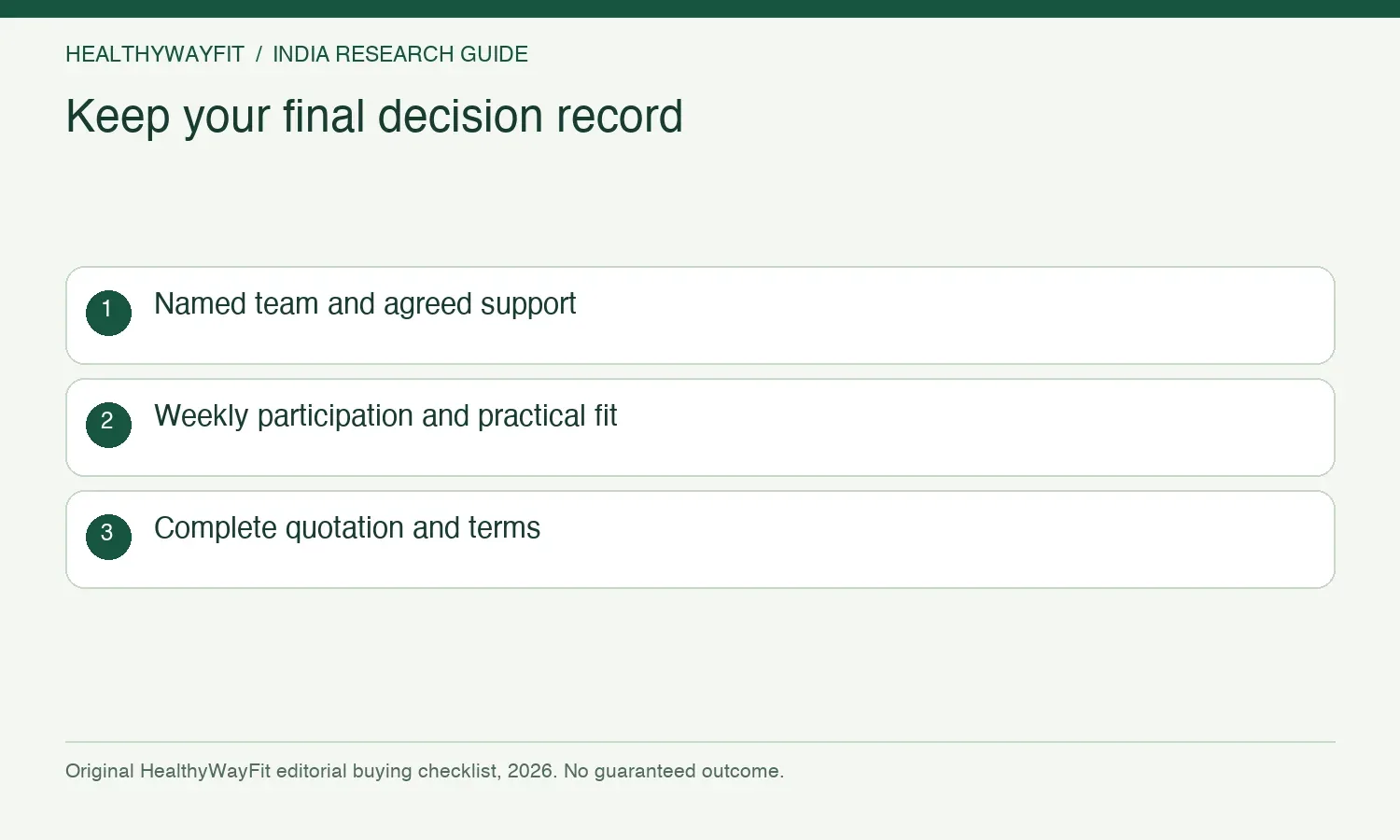
Write a short brief for both teams: the problem you want help with, your usual routine, the contact you prefer and your full budget. Compare their answers side by side and resolve missing information before payment. Keep copies of the agreed scope and terms.
Is FFD only a group program?
Its official description includes personalised guidance as well as group learning. Confirm the individual access in the specific offer rather than using a group-only label.
Does AI automatically make Twin the better option?
No. Technology positioning does not establish superiority over another service. Ask how it improves the support you receive and what evidence applies to that claim.
When should you speak with HealthyWayFit?
Start with HWF when private, one-on-one support from senior professionals is your deciding priority. Contact HealthyWayFit with your food preferences, work constraints and desired follow-up. Ask how the current service would fit those needs, without assuming a guaranteed medical result.
Share this purchasing checklist
This original editorial checklist may be reused with credit. It is a purchasing aid, not a medical protocol.
Open the reusable purchasing checklist and credit this article when sharing.